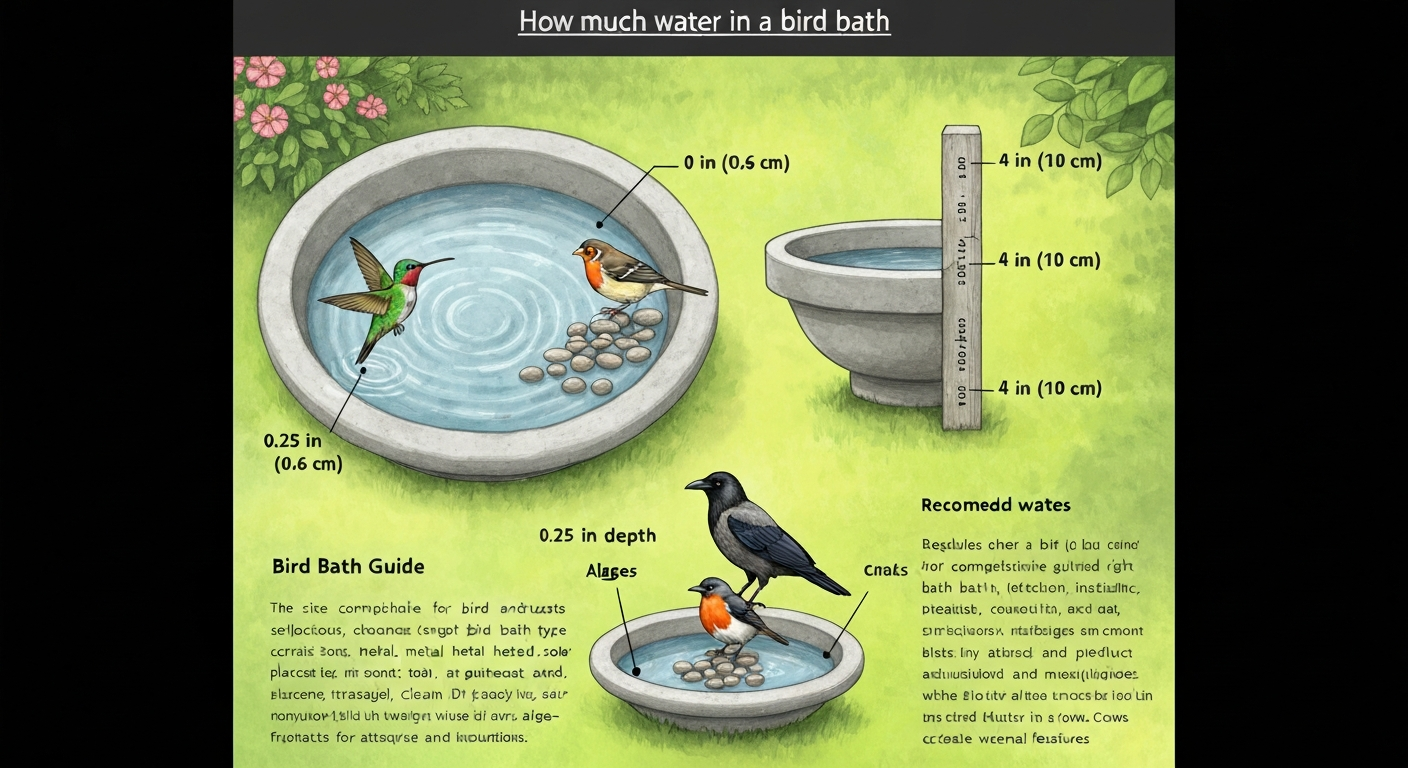
Fill your bird bath to between 1 and 2 inches (2.5 to 5 cm) of water for most backyard birds. That puts a 16-inch diameter basin at roughly 0.87 to 1.74 US gallons (3.3 to 6.6 liters), and a 20-inch basin at about 1.4 to 2.7 gallons (5.3 to 10.2 liters). Hummingbirds need barely any standing water at all, around a quarter inch (0.6 cm), while larger birds like crows can handle up to 4 inches (10 cm). The single most important rule: never fill deeper than 4 inches (10 cm) in any backyard bath. For detailed guidance on exact depths for different species, see bird bath how deep. If you want a quick recap and guidelines by species, see our short guide on how deep should a bird bath be. For a quick primer on what are bird baths, see the related overview.
How Much Water in a Bird Bath: Depth, Volume, Species Tips

Why depth and total water volume actually matter
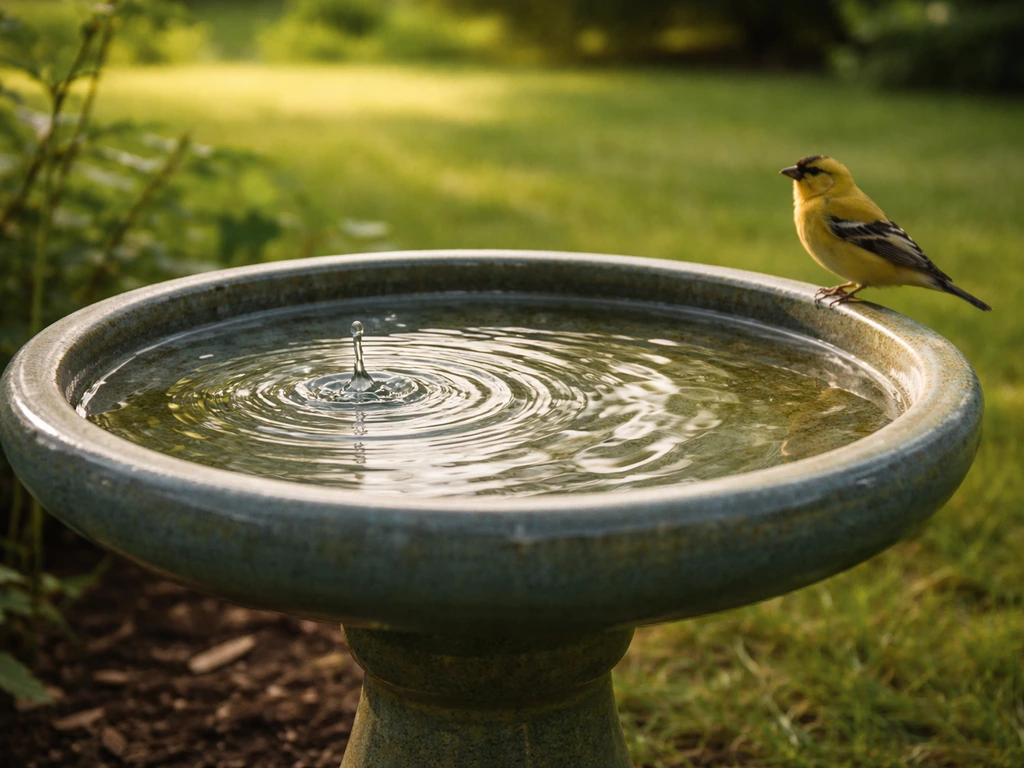
Birds bathe differently from how we swim. They wade in, ruffle their feathers, splash water over their backs, and rely on being able to stand with their head well above the surface. For more detail on how bird baths work and the difference between moving and standing water, see how do bird baths work. A bath that is too deep is not just unhelpful, it is dangerous. A small finch that slips into 3 inches of water can struggle to escape, especially with wet feathers. That is why the National Audubon Society recommends a maximum of 2 inches (5 cm) for general-purpose baths, and the RSPB sets their absolute upper limit at 4 inches (10 cm) only for larger species.
Total water volume matters for a second, often overlooked reason: freshness. A small 12-inch saucer holds less than half a liter at a 1-inch fill, which means it goes stale, algae-covered, and mosquito-friendly fast, especially in summer heat. A larger basin stays fresher for longer and needs refilling less often, though you still need to change the water every one to two days in warm weather. Understanding the volume your specific bath holds helps you judge how quickly contamination builds up and how much fresh water you need to keep on hand.
Depth also determines which species visit. Birds seem to read the water surface before committing, which is why adding large pebbles or a flat rock to a deeper bath is such a reliable trick, it gives them visible stepping stones and lets them gauge depth before they wade in. I have noticed a dramatic uptick in visits from nervous species like warblers the moment I added a couple of flat creek stones to my concrete bath.
Recommended water depths by species
Different birds have very different comfort zones when it comes to water depth. Here is a practical breakdown based on guidance from the Audubon Society, the RSPB, and species-specific research.
| Species / Group | Recommended Depth (inches) | Recommended Depth (cm) | Notes |
|---|---|---|---|
| Hummingbirds | ~0.25 in | ~0.6 cm | Prefer misting or a barely-wet dish; moving water misters are more effective than standing water |
| Small songbirds (finches, sparrows, wrens) | 0.5 – 1 in | 1.3 – 2.5 cm | The sweet spot for the widest range of common backyard visitors |
| Medium songbirds (robins, thrushes) | 1 – 2 in | 2.5 – 5 cm | Still comfortable wading; add pebbles for shallower entry zones |
| Doves, starlings | 1.5 – 2.5 in | 3.8 – 6.4 cm | Prefer a wide, open basin with a gradual slope |
| Crows, jays, pigeons | Up to 4 in | Up to 10 cm | Largest safe depth for backyard baths; deeper center with shallower edges ideal |
| Fledglings (any species) | 0.25 – 0.5 in | 0.6 – 1.3 cm | Young birds have not yet learned to judge water; keep very shallow during fledging season |
One thing I want to flag specifically about hummingbirds: they rarely use a traditional standing-water bath the way other birds do. They prefer to fly through a mist or land briefly on a wet leaf or very shallow dish. If attracting hummingbirds is a priority, a dedicated mister attachment or a micro-shallow dish with just enough water to wet the bottom is far more effective than filling a standard bath to even half an inch.
Actual fill volumes for common basin sizes
These numbers assume a flat-bottomed, cylinder-shaped basin, which is a reasonable approximation for most saucer-style and pedestal-top baths. Real bowls are shallower and curved, so your actual volume will typically be a bit less, use these as a useful upper-bound guide. All volumes use the formula V = π × r² × h, converted at 1 cubic inch = 0. For quick conversions use the Cubic inches to liters converter, InchCalculator Cubic inches to liters converter — InchCalculator. 01639 liters and 1 US gallon = 231 cubic inches.
| Basin Diameter | Fill Depth | Volume (US gallons) | Volume (liters) |
|---|---|---|---|
| 12 inches (30 cm) | 0.5 in (1.3 cm) | 0.14 gal | 0.53 L |
| 12 inches (30 cm) | 1 in (2.5 cm) | 0.29 gal | 1.08 L |
| 12 inches (30 cm) | 2 in (5 cm) | 0.57 gal | 2.17 L |
| 16 inches (41 cm) | 0.5 in (1.3 cm) | 0.43 gal | 1.65 L |
| 16 inches (41 cm) | 1 in (2.5 cm) | 0.87 gal | 3.29 L |
| 16 inches (41 cm) | 2 in (5 cm) | 1.74 gal | 6.58 L |
| 20 inches (51 cm) | 1 in (2.5 cm) | 1.36 gal | 5.13 L |
| 20 inches (51 cm) | 2 in (5 cm) | 2.72 gal | 10.27 L |
| 24 inches (61 cm) | 1 in (2.5 cm) | 1.96 gal | 7.41 L |
| 24 inches (61 cm) | 2 in (5 cm) | 3.92 gal | 14.82 L |
The practical takeaway: even a generously-sized 24-inch bath filled to the recommended 1 to 2 inch range holds under 4 gallons. That is why daily refilling in summer is genuinely important, you are not wasting water, you are maintaining a small volume that can evaporate or go stale within 24 to 48 hours. If you’re also wondering how much are bird baths, see our short guide on typical prices and what affects cost.
How to measure depth and calculate volume yourself
You do not need a science kit for this. A standard ruler and a little arithmetic cover most baths. Here is how I do it depending on the bath shape.
Round, shallow saucer or pedestal-top basin
- Measure the inside diameter of the basin rim to rim in inches. Divide by 2 to get the radius (r).
- Fill the bath to your target depth and place a ruler vertically at the center. Read the depth in inches (h).
- Calculate: V (cubic inches) = 3.14159 × r² × h
- Convert to liters: multiply cubic inches by 0.01639
- Convert to US gallons: divide cubic inches by 231
- Example: 18-inch basin (r = 9), filled to 1.5 inches — V = 3.14159 × 81 × 1.5 = 381.7 in³ = 6.25 L = 1.65 gal
Rectangular or square baths
- Measure the inside length (L) and inside width (W) in inches.
- Fill to your target depth (h) and measure it with a ruler.
- Calculate: V (cubic inches) = L × W × h
- Convert to liters by multiplying by 0.01639, or to gallons by dividing by 231
- Example: 18 × 14 inch rectangular bath, filled to 1.5 inches — V = 18 × 14 × 1.5 = 378 in³ = 6.20 L = 1.64 gal
Deep curved bowls (spherical or hemispherical basins)
For a bath with a noticeably curved, bowl-like interior, the cylinder formula will overestimate the actual volume. Use the spherical cap formula: V = π × h² × (R − h/3), where h is the water fill depth and R is the radius of the sphere the bowl approximates (roughly half the inside diameter for a hemispherical bowl). For most practical purposes, the cylinder formula still gives a useful ceiling estimate, and the real volume will be 10 to 30 percent less depending on how pronounced the curve is.
Filling different bird bath types
Concrete baths
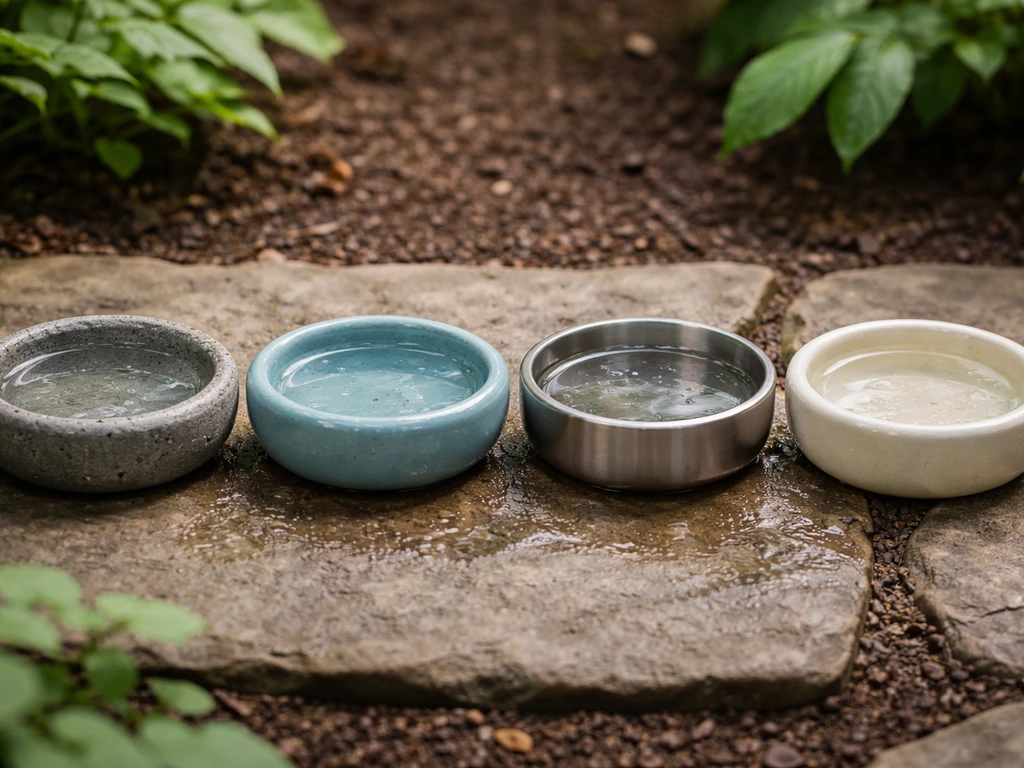
Concrete baths are the most forgiving to fill because the material is heavy and stable. For more on how materials, manufacturing, and design affect price, see our guide on why are bird baths so expensive. If you want a quick guide to common materials and their pros and cons, see what are bird baths made of. The main issue is that new or freshly sealed concrete can leach lime into the water, raising the pH and potentially irritating birds. If you have a brand-new concrete bath, fill it, let it sit for 24 to 48 hours, then drain and scrub with a white-vinegar solution (1 part vinegar to 9 parts water) and rinse thoroughly before birds use it. Established concrete baths just need that daily refill and a weekly scrub. Watch the surface for green or brown algae patches, concrete's rough texture is great for grip but also traps algae beautifully.
Ceramic and glazed baths
Ceramic and glazed basins are smooth, which means they are easier to clean but also more slippery for birds. If your ceramic bath has steep, smooth sides, toss in a few flat pebbles or a rough-textured stone before filling. Fill to 1 to 1.5 inches and check that the pebbles bring at least part of the floor to within half an inch of the surface, that creates the very shallow entry zone that nervous small birds prefer. The glaze also means water beads and evaporates slightly slower, but you still need to change it every day or two.
Metal baths
Metal baths (copper, galvanized steel, cast iron) are durable and look great, but they have one major quirk: they heat up fast in direct sun. A metal basin in full afternoon sun can reach temperatures that are uncomfortable or even dangerous for birds. Position metal baths in partial shade, especially in summer, and check water temperature with your hand before you consider it bird-ready. Copper has a natural antimicrobial effect that can slow algae growth, but it does not eliminate the need for regular cleaning. Fill to the same 1 to 2 inch standard.
Pedestal baths
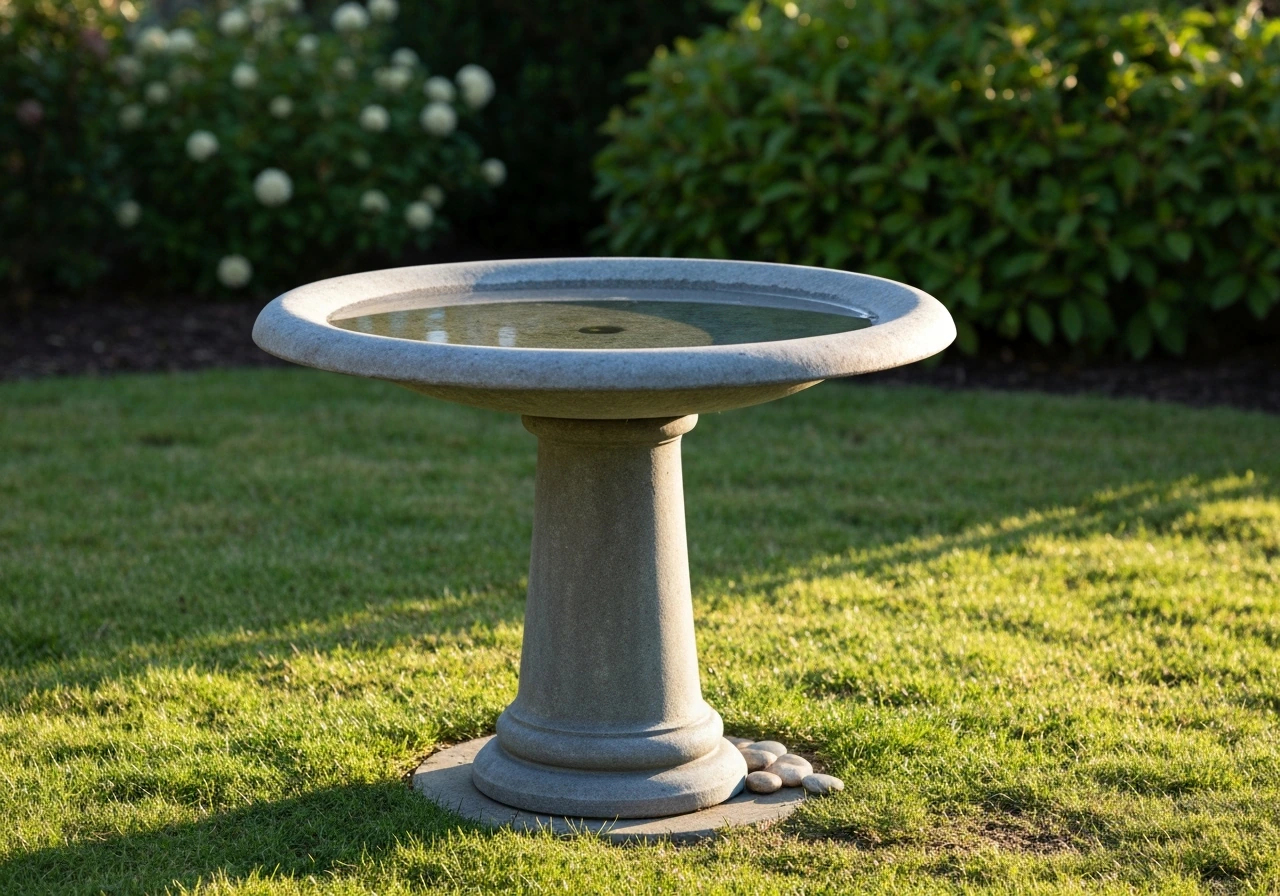
The pedestal style is the classic backyard bird bath, and filling it is straightforward. If you also want guidance on pedestal height and placement, see our page on how tall should a bird bath be. The basin usually sits at a slight tilt unless the pedestal is perfectly level on firm ground, check this before filling, because a 1-inch tilt across a 20-inch basin creates a significant depth variation from one side to the other. I use a small bubble level on the basin rim before every seasonal setup. Fill to 1 to 2 inches at the deepest point, not the shallow side, which means your shallowest point might only be half an inch. That is actually a feature: it gives birds a natural range of depths to choose from.
Ground-level and basin bowls
Ground-level baths, including simple terracotta saucers and dedicated ground-level basins, attract a different set of species, particularly thrushes, doves, and ground-feeding sparrows. They are also more vulnerable to debris and contamination. Keep the fill at 1 to 1.5 inches and plan to change water more frequently, leaf litter, dirt, and droppings accumulate much faster at ground level. A daily rinse and refill is realistic with these.
Heated and solar bird baths: special filling and temperature considerations
Heated baths are one of the best investments you can make for winter bird activity, but they require a bit more attention to water levels than unheated baths. Most submersible and in-bowl deicers (like those from Farm Innovators, K&H, and API) are thermostatically controlled and activate automatically when the ambient temperature drops below about 35°F (roughly 2°C). They are typically rated between 50 and 250 watts depending on your climate and basin size.
The critical rule with any heated bath: never run the heating element without water in the basin. Most modern units have auto-shutoff protection if they run dry, but it is still bad practice and can void the warranty. In cold weather, water evaporates more slowly but birds drink more, check and top off the bath every day. The heating element needs to stay submerged, so the fill level also matters mechanically, not just for the birds.
Always plug heated baths into a GFCI-protected outdoor outlet. This is not optional, it is the standard safety recommendation from Cornell Lab, every major manufacturer, and basic outdoor electrical safety practice. Never add antifreeze, glycerin, or any chemical to a bird bath to prevent freezing. Both are toxic to birds and other wildlife.
Solar bird baths with integrated fountain pumps are excellent for summer use and for adding moving water, which attracts more species and reduces mosquito breeding. However, most solar pumps require a minimum water depth to function, check the manufacturer specification, which is commonly 1.5 to 3 inches for the intake to work properly. This means a solar-pumped bath naturally needs a slightly higher fill level than a static bath. Keep that in mind when setting the maximum fill depth: the pump's minimum depth and the birds' maximum safe depth have to overlap, so choose a basin that is wide enough to give birds shallow-edge access even at the higher fill needed by the pump.
Design tricks for serving multiple species at once
The single biggest upgrade you can make to any bird bath is creating a range of depths in a single basin, rather than one uniform fill level. This lets hummingbirds, finches, robins, and larger birds all use the same bath. There are several practical ways to do this.
Pebbles and flat stones
This is the most accessible option and the one Audubon explicitly recommends. Place a mix of pebble sizes and one or two flat rocks across the basin floor. The tops of the pebbles sit at different heights, creating micro-zones: barely-wet surfaces for hummingbirds and fledglings, a half-inch zone for finches, and the open deeper center for robins and larger birds. Use smooth river stones rather than sharp gravel to avoid foot injuries. I typically place the largest flat stone near one edge to give nervous birds a landing pad before they commit to the water.
Shallow inserts and secondary dishes
A terracotta saucer or a small plastic plant tray placed inside a larger basin creates a permanent shallow zone. Fill the outer basin to 1.5 to 2 inches and the inner saucer will stick up at just 0.25 to 0.5 inches. This works especially well in a wide, deep decorative basin that would otherwise be too deep for small birds. It is also easy to swap out or clean separately.
Gradual slopes and shelf edges
If you are choosing a new bath or building one yourself, look for (or design) a basin with a gradual slope from the rim down to the center rather than steep sides dropping to a flat floor. The RSPB specifically calls out sloping sides as a key design feature. A bath that starts at zero depth at the rim edge and reaches maximum depth only at the center serves every species and every age group naturally, without needing any added rocks or inserts.
Drippers, misters, and water wigglers
Adding movement to the water surface is one of the highest-return upgrades for a bird bath. Moving water is more visible to birds flying overhead, it attracts species that would skip a static bath, and it prevents mosquito larvae from completing their life cycle (most container-breeding mosquitoes need still water). A simple solar-powered water wiggler or a hose-connected dripper costs very little and makes a significant difference. If you want to target hummingbirds specifically, a fine-mist hose attachment is more effective than any depth adjustment to a standing-water bath.
Fledgling safety during nesting season
From late spring through midsummer, fledglings start showing up at baths before they have developed the coordination or instinct to judge water depth. During this period, roughly May through July depending on your region, I reduce my fill depth to 0.5 inches maximum and make sure the pebble coverage is generous. A fledgling that tumbles into 2 inches of water and cannot right itself can drown quickly. Keeping a shallower fill during fledging season is one of the most impactful safety adjustments you can make.
Seasonal and maintenance adjustments to water level
In summer, evaporation is the main challenge. A 16-inch basin filled to 1.5 inches holds roughly 1.3 gallons (just under 5 liters), which can drop noticeably in a single hot afternoon. Check your bath in the morning and again in the evening during heat waves. Algae growth accelerates in warm weather too, so the Cornell Lab and Penn State Extension recommendation to change water every one to two days in warm weather is not excessive, it is genuinely necessary. Scrub the basin weekly with a diluted white-vinegar solution (1 part vinegar to 9 parts water) for routine algae and mineral removal, and do a deeper disinfection with a weak bleach solution (or a bird-safe commercial disinfectant) monthly, rinsing thoroughly before refilling.
In winter (in regions where freezing is a concern), the challenge shifts to keeping water liquid rather than managing depth. A thermostatically controlled deicer rated at 50 watts handles mild winters well; colder climates may need 80 to 150 watts or more. Keep the basin filled to at least the heater's minimum submersion depth, typically the same 1 to 2 inch range that works for birds, and check daily since birds drink heavily in cold weather when other water sources are frozen. If you do not have a heater, refreshing the water with lukewarm (not hot) water each morning can keep a brief thaw window for birds, though it requires commitment on cold days.
Mosquito prevention comes down to two things: keep the water moving and change it frequently. The CDC and EPA both support using Bti-based larvicides (like Mosquito Dunks) in standing water as a bird-safe chemical option, but if you are already changing your water every one to two days and have a dripper or pump running, you are unlikely to have a meaningful larval population to worry about. Mosquitoes need approximately seven to ten days of still water to complete development from egg to adult.
FAQ
Quick answer: how much water should be in a bird bath?
Keep water shallow. For most backyard birds fill so maximum usable depth is about 1–2 inches (2.5–5 cm). For hummingbirds and very small songbirds aim ~1/4 inch (≈0.6 cm). Larger birds (pigeons, crows) may use up to ~4 inches (≈10 cm), but typical baths should not exceed ~4 inches.
Why is depth more important than total volume?
Birds judge safety by depth more than overall volume—shallow water lets small birds bathe without risk of drowning, and shallow slopes enable perching. Volume matters only for refill frequency and freeze/evaporation management: large volume holds temperature longer and needs less frequent topping, but depth remains the key to attract and protect small species.
How do I measure depth and volume for my bird bath?
Measure the shortest vertical distance from the rim to the basin bottom to get full depth, then decide maximum usable depth (fill height). For flat saucers approximate volume with cylinder formula V = π·r^2·h (r in inches, h = fill depth in inches). Convert cubic inches to liters by multiplying by 0.016387. Example: 16-inch diameter (r=8 in), 1 in depth: V ≈ π·8^2·1 ≈ 201 in³ ≈ 3.29 L (≈0.87 US gal).
Practical fill-volume examples for common sizes (approximate)
8 in diameter saucer: 1 in depth ≈0.82 L (0.22 gal). 16 in diameter saucer: 1 in depth ≈3.29 L (0.87 gal). 30 in diameter shallow basin: 1 in depth ≈11.6 L (3.06 gal). Double depth multiplies volume by 2. Use these to estimate how much water to add to reach your chosen depth.
How should I adjust water level for specific species?
Hummingbirds: very shallow or use misters/drippers (~0.25 in / 0.6 cm). Small passerines (finches, sparrows): 0.5–1 in (1.3–2.5 cm). Medium songbirds (robins, thrushes): 1–2 in (2.5–5 cm). Large birds (pigeons, crows): up to ~4 in (10 cm). To accommodate multiple species, use a shallow shelf or stones so small birds can access shallow water while central area is slightly deeper.
How often should I refill and clean the bird bath?
Refill daily or every 1–2 days in hot weather (evaporation/contamination). Scrub and rinse weekly to remove algae and biofilm. For disinfection use a weak bleach solution (follow product guidance—commonly dilute; rinse thoroughly) or vinegar solution (≈1:9 vinegar:water) for routine scale removal. Always rinse completely before refilling.