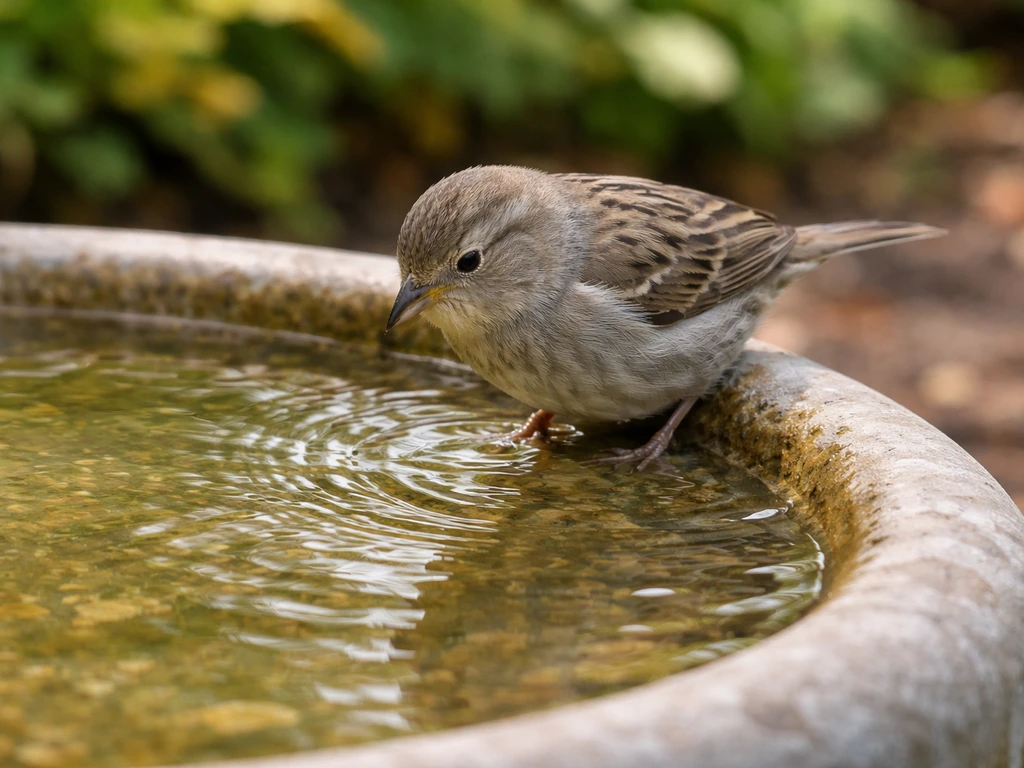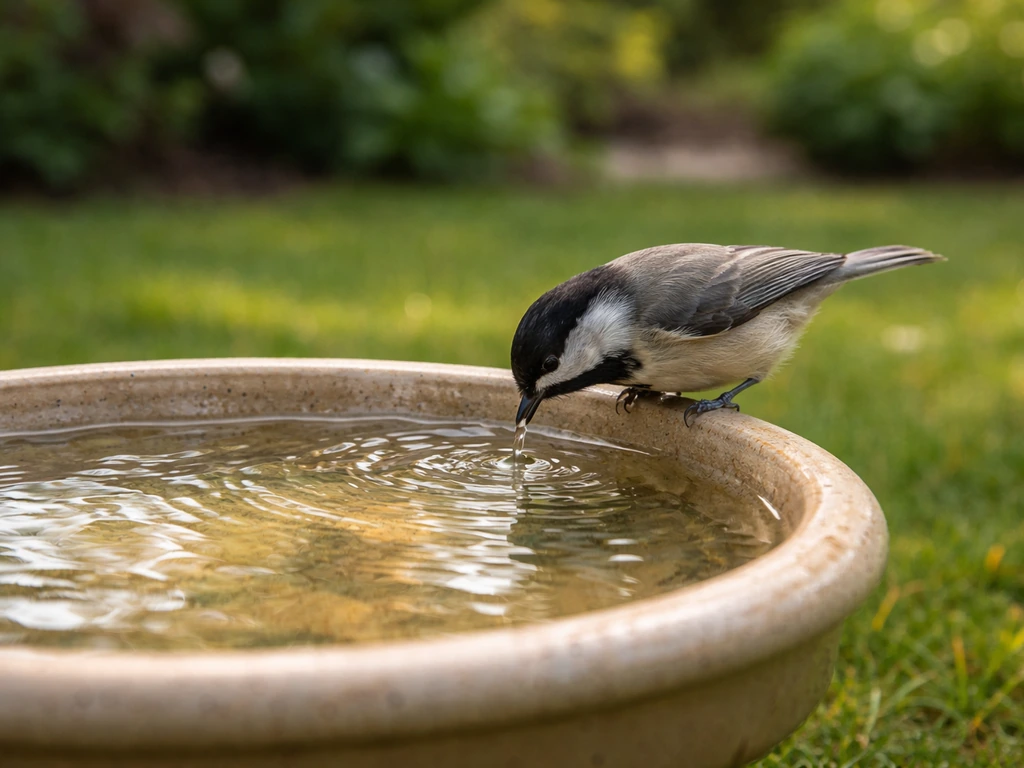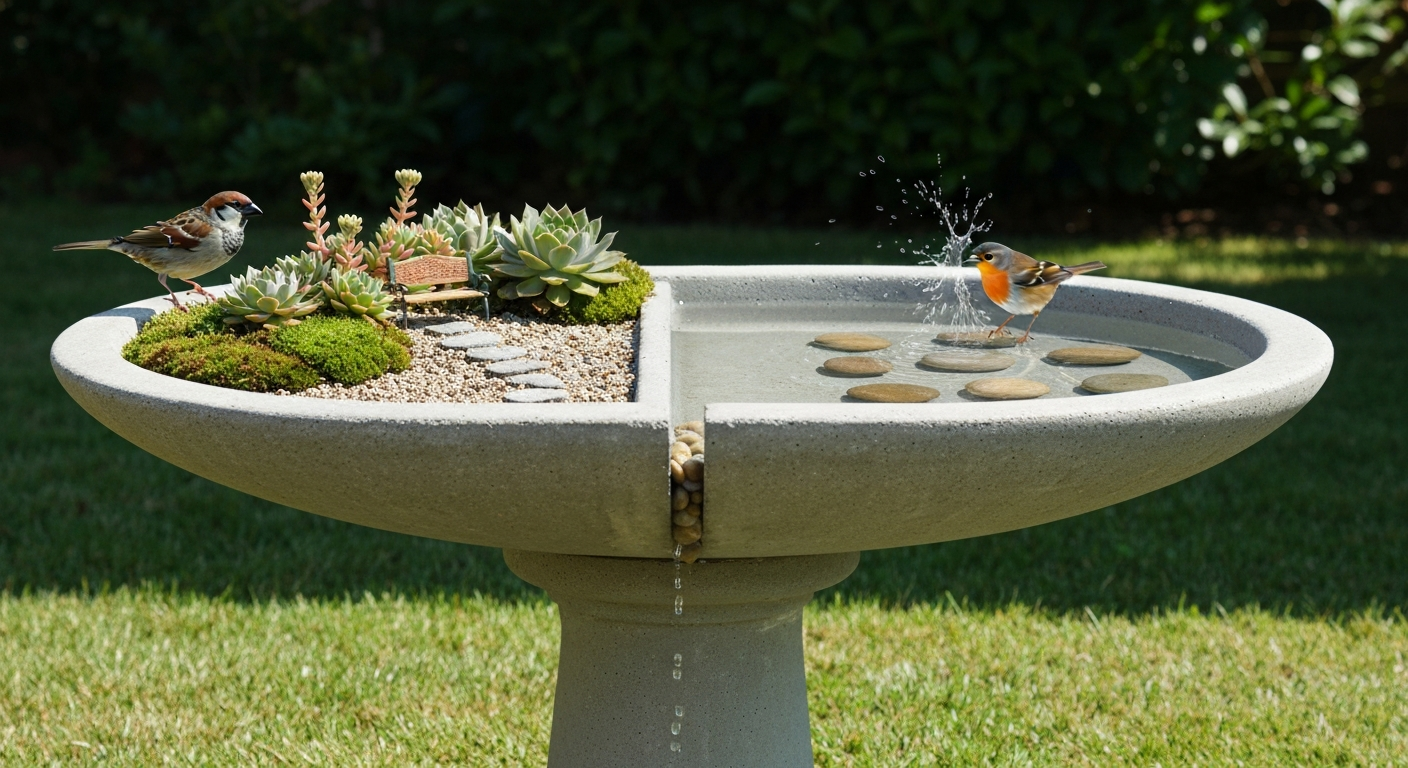
A bird bath should sit about 24 to 36 inches (2 to 3 feet) off the ground, and the basin itself should be 24 to 36 inches wide with a depth of no more than 2 inches in the center. If you're still figuring out what are bird baths and how they work, start with the basics of size, depth, and placement.
How Tall Should a Bird Bath Be Off the Ground

Marcus Henley
28 Apr 2026
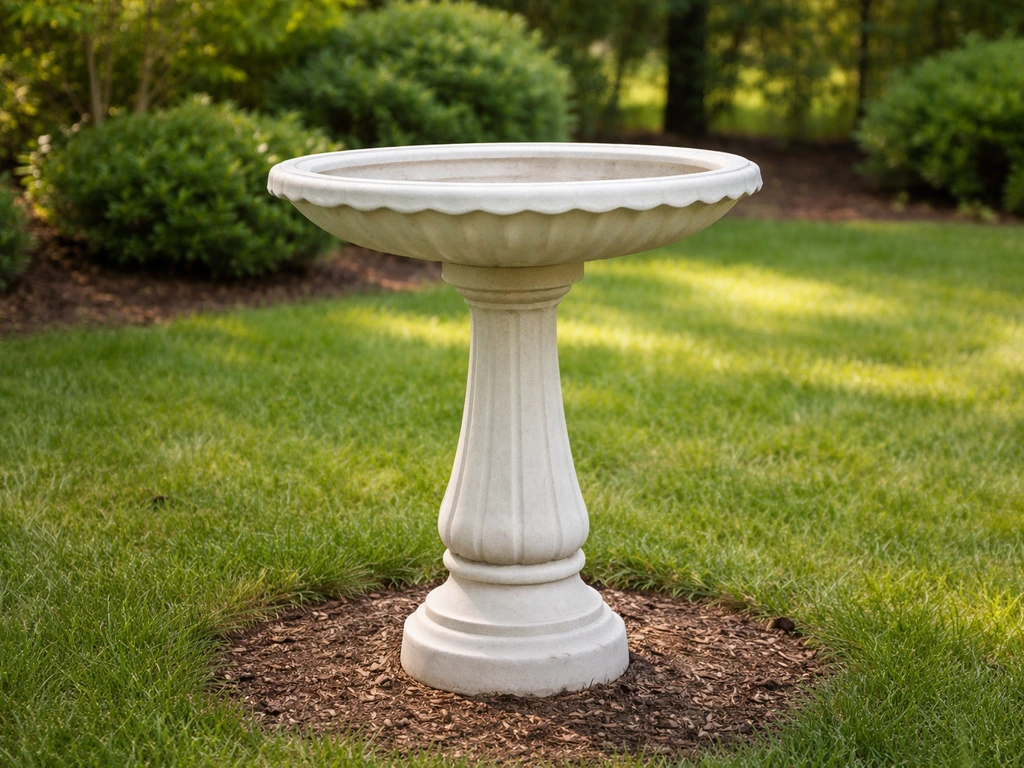
If you're also shopping, you may be wondering how much are bird baths and what price range to expect for different styles what are bird baths. Bird baths are often expensive because materials, craftsmanship, and durability requirements can vary a lot by style and design why are bird baths so expensive.
That height range works for the vast majority of backyard songbirds, keeps cats and other predators at a manageable distance, and still lets ground-feeding birds like robins and mourning doves hop up without trouble. If you can only pick one number, aim for 30 inches off the ground and you'll cover most situations.
The ideal height for a bird bath
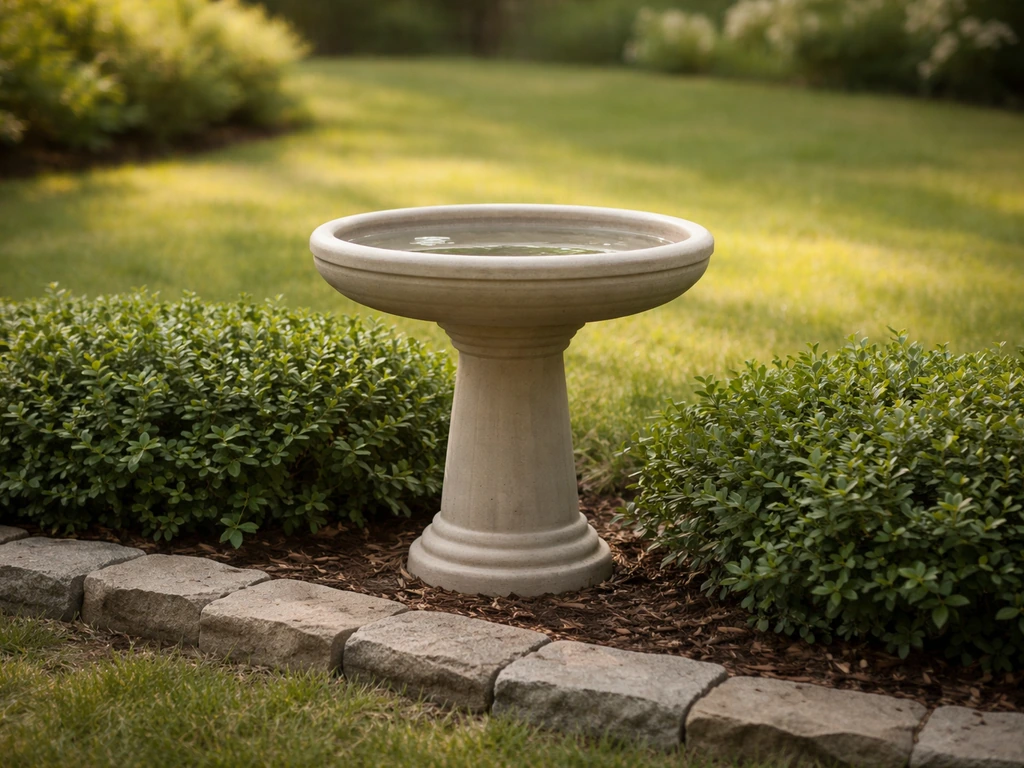
The 24-to-36-inch range isn't arbitrary. It mimics the height of a low shrub or a typical garden wall, which birds already associate with safe perching spots. At that height, a bird has a clear sightline in all directions while it drinks or bathes, which is the main thing they're checking for. A bath that sits too low on the ground puts birds in a vulnerable crouch position. Too high and you'll mostly see larger, bolder birds while the timid species skip it entirely.
If predator pressure is a real issue in your yard (and if you have outdoor cats nearby, it is), lean toward the higher end of that range, around 30 to 36 inches. The extra height doesn't eliminate the risk entirely, but it gives birds more reaction time. For yards without cats, 24 to 28 inches works just as well and actually makes cleaning and refilling easier for you.
Typical bird bath dimensions at a glance
Most commercially sold pedestal bird baths fall within a pretty consistent size range. Knowing the averages helps you evaluate whether a product you're looking at is well-proportioned or awkwardly sized for real bird use.
| Dimension | Typical Range | Recommended Sweet Spot |
|---|---|---|
| Height off ground | 18 to 36 inches | 28 to 32 inches |
| Basin diameter | 14 to 24 inches | 18 to 24 inches |
| Basin depth (center) | 1.5 to 3 inches | 1.5 to 2 inches |
| Basin depth (edge) | 0.5 to 1 inch | 0.5 to 0.75 inch |
| Total structure height (pedestal + basin) | 24 to 40 inches | 28 to 34 inches |
One thing worth calling out: many decorative bird baths are sold with basins that are 3 or even 4 inches deep at the center. Audubon also recommends keeping the bird-bath water shallow, noting that about an inch of water is enough for simple DIY basins. Birds won't use that depth. The Audubon Society recommends no more than about 2 inches deep at the center, with water often kept at just 1 to 1.5 inches. If you buy a bath with a deeper basin, add a layer of gravel or flat stones in the center to bring the usable water depth back into the safe range. This also gives birds a non-slip footing, which they strongly prefer.
Matching height to the birds you want to attract
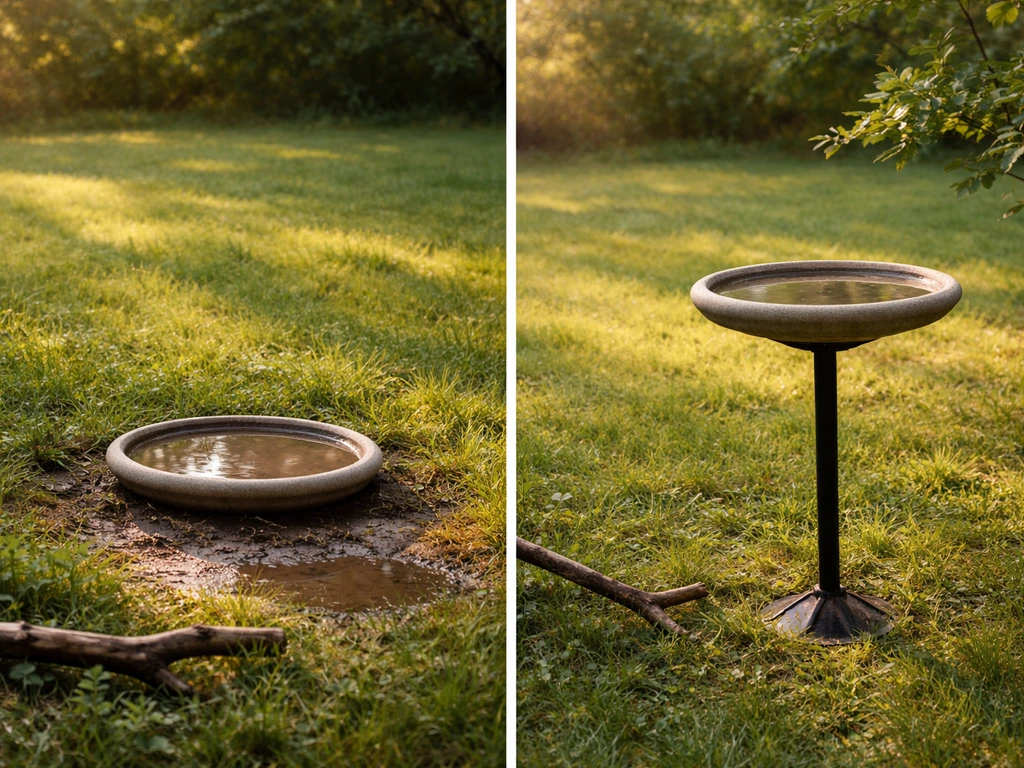
Different bird species have different comfort zones when it comes to height. Ground-feeding birds like robins, towhees, and mourning doves naturally drink from puddles, so they're comfortable at lower heights (18 to 24 inches). Mid-canopy birds like chickadees, finches, and warblers are fine with the 24-to-36-inch range. Larger, bolder species like crows and jays will use almost anything but prefer open, unobstructed access at any height.
- Ground-level or very low (6 to 18 inches): Robins, sparrows, towhees, mourning doves, and other ground feeders. Use a shallow dish or tray set on flat stones. High predator risk, so only use this in well-protected spots.
- Low pedestal (18 to 24 inches): Works for most songbirds including robins, cardinals, and juncos. Good for yards with dense plantings that buffer against cat access.
- Standard pedestal (24 to 36 inches): The all-around sweet spot for warblers, chickadees, finches, nuthatches, and cardinals. Best default choice for most backyards.
- Elevated or hanging (36 inches and above): Best for attracting smaller, more skittish species. Hummingbirds especially prefer a very shallow mister or dripper at this height rather than a standard basin.
- Hanging bird baths (suspended from a hook or branch): Height is adjustable and can work for multiple species, but requires a very stable setup so it doesn't swing during use.
If you're specifically trying to attract hummingbirds, a standard pedestal basin probably won't do it. Hummingbirds bathe by flying through mist or shallow moving water, so a misting attachment on a shallow dish hung at eye level (around 4 to 5 feet) works far better than any still-water setup.
How wide and big should your bird bath be?
Width matters just as much as height. A basin that's too small means only one bird can use it at a time, which reduces how often birds visit and how long they stay. For a general backyard setup, you want a basin with at least 18 inches in diameter. Twenty-four inches is better if you have the space, since multiple small birds can bathe at the same time while others wait on the rim.
The basin shape matters too. Wider, shallower bowls that taper gently from the rim toward a slightly deeper center (no more than 2 inches) mimic the puddle-in-a-rock-depression shape that birds evolved to use. RSPB’s example “perfect” bird bath design uses an upturned dustbin lid and emphasizes [very shallow, gently sloping sides with a maximum depth of about 10 cm](https://web-cdn. rspb.
org. uk/helping-nature/what-you-can-do/activities/make-the-perfect-bird-bath) (about 4 inches), while keeping the basin wide for easy bird access. Different bird baths are made from different materials, which affects their durability, weight, and how well they handle weather what are bird baths made of. Steep-sided or narrow basins are harder for birds to gauge the depth and harder to grip the edges of.
The RSPB's guidance on this is practical: an upturned dustbin lid or a wide, flat saucer on a stable base is genuinely effective because it gets the geometry right even if it looks low-tech.
- Minimum useful diameter: 14 inches (okay for a single small bird at a time)
- Better all-purpose diameter: 18 to 24 inches (fits multiple birds, easier to maintain)
- Diameter for larger species like crows or jays: 24 inches or wider
- Ideal depth at the rim: 0.5 to 0.75 inches
- Ideal depth at the center: 1.5 to 2 inches
- Slope: gradual, not steep, so birds can wade in rather than jump in
There's a natural connection here to how much water you actually put in the bath. Even if the basin is 3 inches deep at the center, keeping the water level at just 1 to 1.5 inches solves a lot of usability problems. This is related to depth guidance that goes hand in hand with sizing decisions, so it's worth thinking through water level alongside basin dimensions.
How to install or adjust your bird bath to the right height
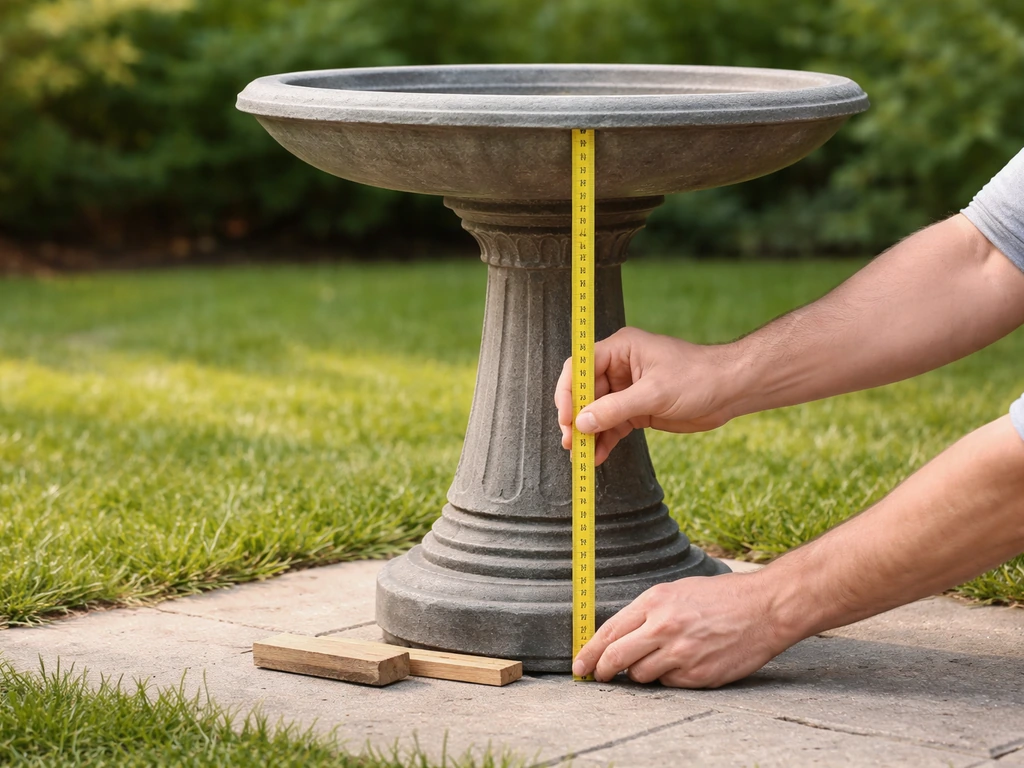
Whether you're setting up a new bird bath or fixing one that isn't getting much traffic, getting the height right is a quick process. Here's how I approach it.
- Measure from the ground to the top of the basin rim. This is your working height, not the overall structure height. Aim for 28 to 32 inches as a starting point.
- If you're using a pedestal bird bath, check whether the pedestal is adjustable or whether you can add a base extender. Some metal and resin pedestals come with screw-in extensions, or you can set the pedestal on a flat paving stone to add 1 to 2 inches.
- If you're using a DIY or improvised setup (like a wide dish on stacked bricks or pavers), build your stack to roughly 26 to 30 inches and test it. Stacked brick is easy to adjust by adding or removing a course.
- For a ground-level dish, set it directly on tamped soil or flat stone with no elevation. Surround it with a clear open area of at least 3 to 4 feet in all directions so birds can see approaching threats.
- For a hanging bath, use an S-hook on a shepherd's crook or branch so the bottom of the basin hangs at 30 to 36 inches from the ground. Check that it hangs level and doesn't swing more than an inch or two in a light breeze.
- After setup, fill the basin to 1 to 1.5 inches of water and observe for a few days. If birds consistently avoid it, try raising or lowering by 3 to 4 inches before making any other changes.
One adjustment I always recommend: place a large flat stone or two inside the basin after you've filled it. This raises the effective floor for small birds, gives them non-slip footing, and makes the whole setup look more naturalistic. If your basin is deeper than 2 inches at the center, this is basically mandatory, not optional.
Placement, stability, and keeping birds safe at any height
Height off the ground is only part of the equation. Where the bath sits in your yard, and how stable it is, affects whether birds actually feel safe enough to use it. A wobbly pedestal bath at the perfect height will get far fewer visitors than a rock-solid bath at a slightly imperfect height.
For stability, pedestal baths should sit on a level, firm surface. Concrete pavers make a better base than bare soil, which can shift after rain and tip the bath. If you're using a heavy concrete bath (which I prefer for stability), set it on compacted gravel or a paver to keep it from settling unevenly over time. For lightweight resin baths, fill the base with sand or water if the design allows it, as this prevents tipping in wind.
Placement relative to cover matters alongside height. Washington Department of Fish and Wildlife and other wildlife agencies consistently recommend positioning a bird bath within about 10 feet of shrubs or low tree branches. This gives birds a quick escape route if a predator appears, but keep the bath itself at least 5 feet away from dense ground cover where a cat could crouch and ambush. That combination, elevated bath plus nearby-but-not-adjacent cover, is the sweet spot for both safety and bird confidence.
Also consider the sun exposure at different heights. A bath on the ground stays in shade longer, which slows algae but also makes it less visible to passing birds. A bath at 30 inches in a partly sunny spot dries out faster in summer but also catches the eye of birds flying over. In hot climates, a bit of afternoon shade at any height will keep the water cooler and reduce evaporation, meaning you refill less often. In colder climates, a sunny south-facing position helps prevent freezing and is especially valuable if you're running a heated bird bath through winter.
Finally, don't overlook visibility from inside your home. One of the best reasons to get the height right is so you can actually watch birds use the bath. A bath at 28 to 32 inches is typically at a comfortable viewing angle through a window. Set it up where you'll see it from a spot you already spend time, and you'll be much more likely to notice when it needs cleaning or refilling, which is the biggest factor in keeping birds coming back regularly. Set it up where you'll see it from a spot you already spend time, and you'll be much more likely to notice when it needs cleaning or refilling, which is the biggest factor in keeping birds coming back regularly, how do bird baths work.
FAQ
What if I cannot fit the 24 to 36 inch height range in my yard?
If your yard layout forces you outside the usual 24 to 36 inch band, prioritize safety and footing. Many birds still use baths slightly lower (around 18 to 24 inches) if there is open visibility and no nearby cat-friendly hideouts. If you go higher than 36 inches, compensate by keeping water very shallow (about 1 to 1.5 inches) and using non-slip footing (flat stones or a rough texture) so small birds can grip the edge.
How do I choose the water level if the basin is deeper than 2 inches at the center?
A good rule of thumb is to keep the “usable” water depth shallow regardless of how deep the basin is. Even with a basin that is deeper in the center, aim for about 1 to 1.5 inches of water in the bath, then test with a gentle hand feel (water should not be deep enough for a bird to lose footing). If the basin is deeper than about 2 inches at the center, add gravel or flat stones to raise the floor.
If I get the height right, will a wobbly base still keep birds away?
Height and stability are linked. A bath that is perfectly placed at the right height but wobbles will reduce visits. Use a level, firm base (pavers or compacted gravel) and make sure the pedestal cannot rock. If the product feels light for its size, add sand to the base if the design allows it to reduce tipping in wind.
What height should I use if I want both ground-feeding birds and smaller songbirds?
For mixed species, start with a mid-range height near 30 inches and shallow water. If you mainly want ground-feeders, consider lowering the bath closer to 24 inches and placing it near (but not inside) open shrub cover. If you have high predator pressure from outdoor cats, lean higher (about 30 to 36 inches) and keep the bath itself away from dense ground cover that could enable an ambush.
Does sun exposure change how tall the bird bath should be?
Morning and evening algae growth depends on sun and water movement more than height. Still, a bath that sits in full sun dries faster and can become less inviting if you do not refill often. In hot climates, add afternoon shade (even partial) to keep water cooler, and plan to top up more frequently if your bath is in a bright, exposed spot.
How should I set bird bath height if it is near windows or screens?
Yes, glass and other transparent surfaces can reduce safe approach. Birds often avoid visible “unsafe” areas reflected from windows or confuse reflections as open space. Place the bath where you can watch it, but avoid positioning it where the window view shows confusing reflections, and consider adding nearby shrubs 10 feet or so away to provide a clear escape path.
Is the recommended height different if I use a heated bird bath in winter?
Consider water temperature management and visibility. In colder climates, a sunnier south-facing location helps reduce freezing, which matters as much as height. If you use a heated setup, keep the basin shallow and ensure the heater does not create hot spots that birds avoid.
How do I adjust height and placement if I have outdoor cats nearby?
If you have outdoor cats, the key is combining elevation with escape options. Aim for the higher end of the range (around 30 to 36 inches) and keep the bath at least about 5 feet away from dense ground cover where a cat could crouch. Place it near shrubs or low branches within roughly 10 feet to give birds a quick route to safety.
Will a correctly sized and positioned pedestal bird bath attract hummingbirds?
Hummingbirds are the exception. Most pedestal bird baths will not work well for them because they prefer mist or moving shallow water. For hummingbirds, use a misting attachment on a shallow dish hung around eye level (roughly 4 to 5 feet), then keep water fresh and shallow rather than relying on still water at pedestal-bath height.
If birds are ignoring my bird bath, what should I adjust first besides height?
If birds seem hesitant, check for practical issues you can fix without changing everything. First, confirm water depth is about 1 to 1.5 inches, add a non-slip stone insert, and ensure the pedestal does not wobble. Then verify placement relative to cover (near escape shrubs, but not adjacent to dense crouch spots). Height is helpful, but these factors often determine whether birds use the bath regularly.