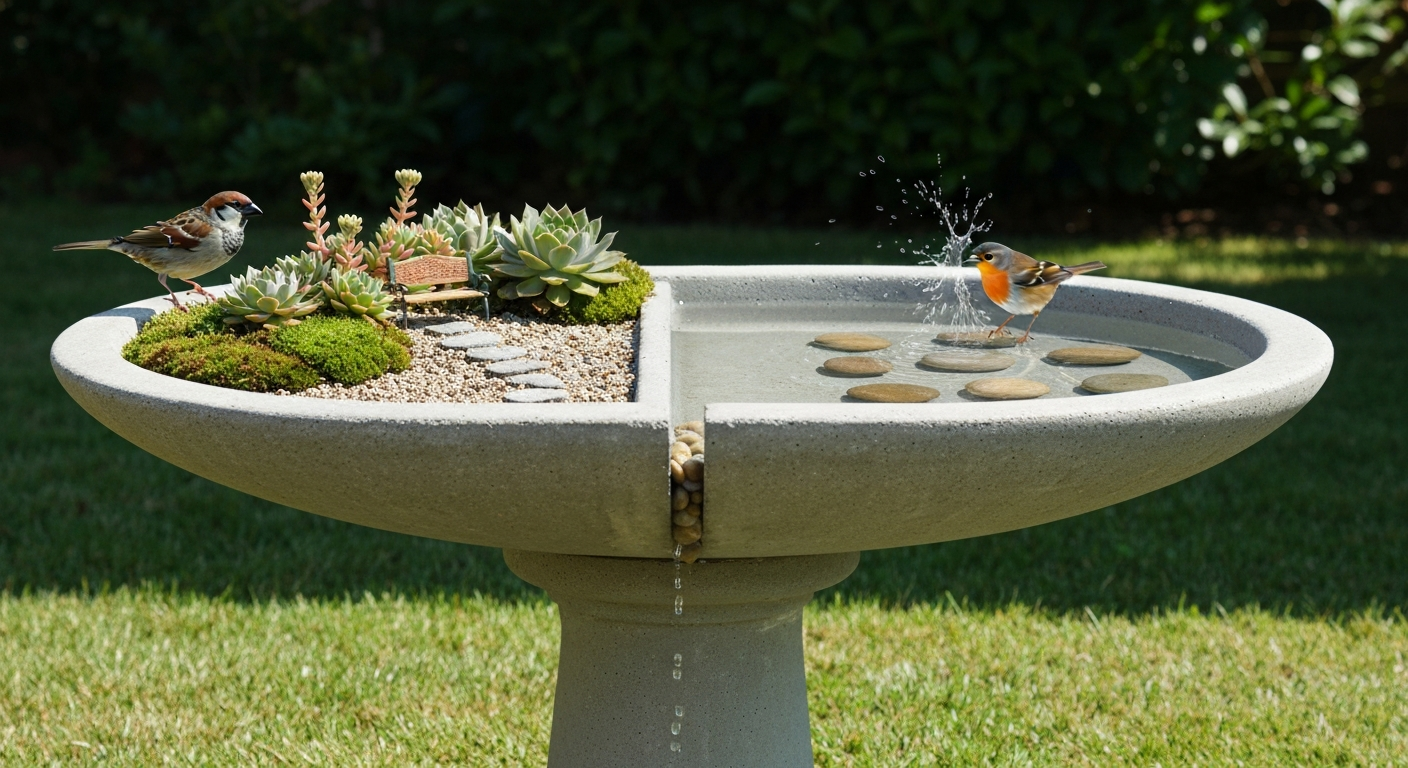
A bird bath is a shallow, water-filled basin that gives backyard birds a place to drink, bathe, and cool down. Ornithology Education notes that bird baths work best when you provide fresh water every few days, more often in warm weather, for drinking and bathing. That's the short definition. But the more useful answer is what they're actually for: birds need fresh water every single day, and a well-placed bird bath can turn your yard into a reliable stop on their daily routine. You might spend a lot of energy on feeders and never notice much traffic, but adding clean water can change that fast. Birds that won't touch a seed feeder will still visit a good bird bath.
What Are Bird Baths For? Purpose, Types, and Setup

Marcus Henley
10 Apr 2026
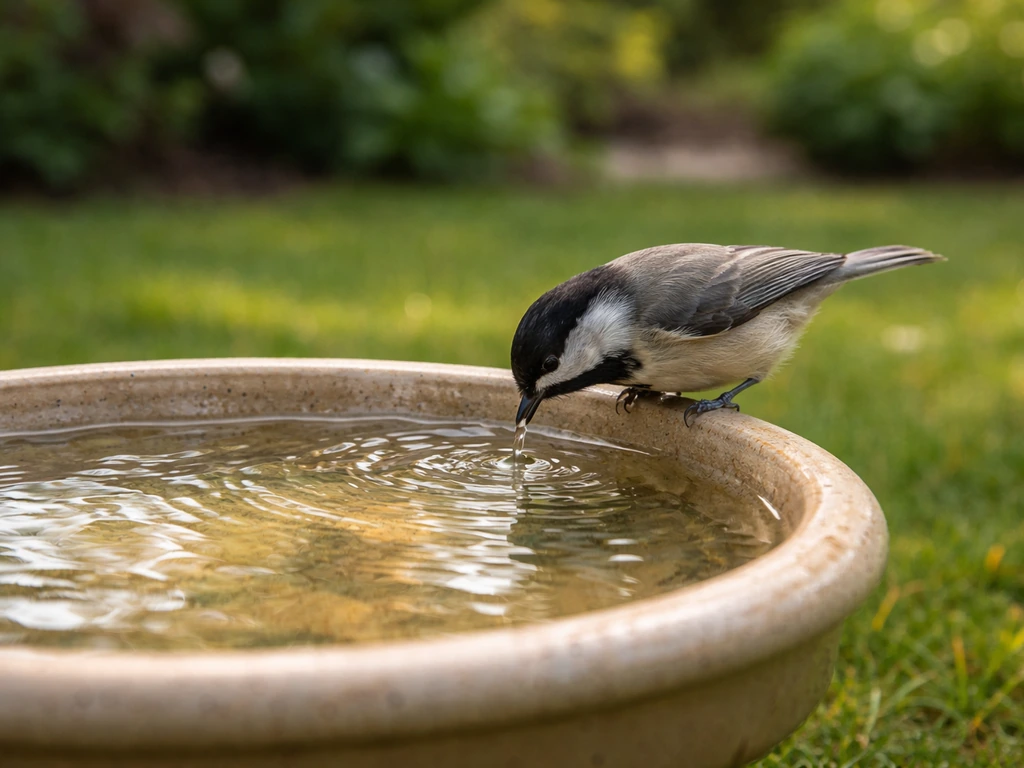
This guide covers everything that follows from that basic definition: what makes a bird bath worth buying, how to place it, how to keep birds coming back, and how to handle the seasonal headaches like freezing, algae, and mosquitoes. Whether you're setting up your first bath or trying to figure out why birds are ignoring the one you already have, this should get you moving in the right direction.
What a bird bath actually is and what it does
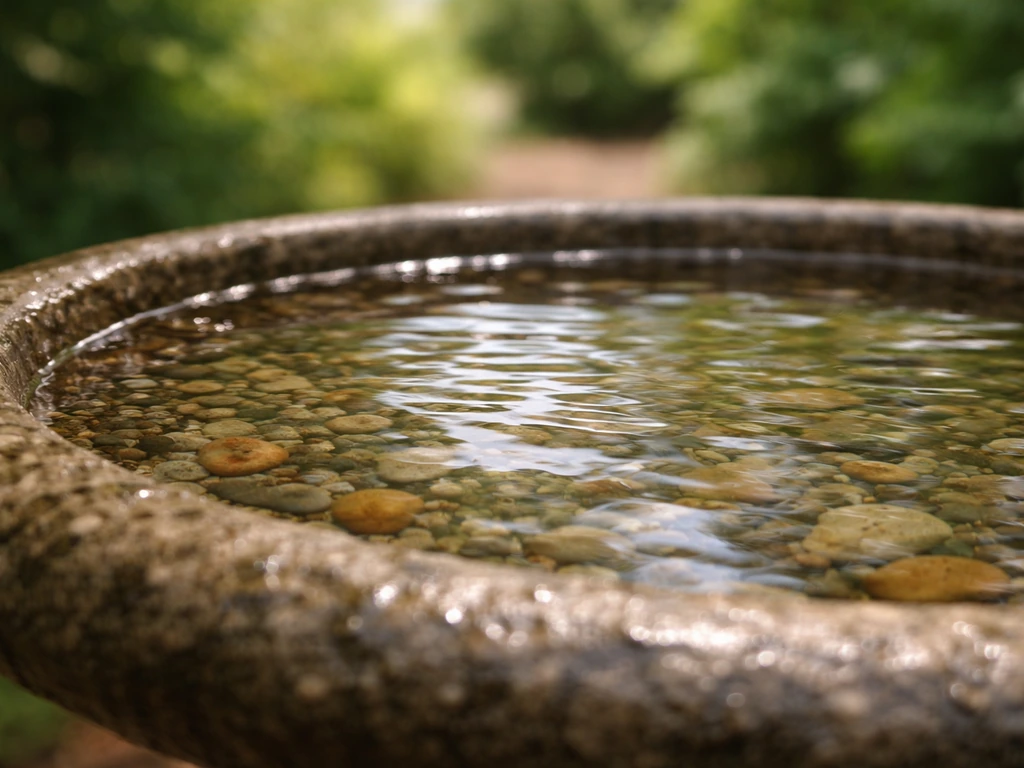
At its core, a bird bath is an artificial shallow pond, a basin filled with water that sits somewhere accessible to birds. The concept is that simple, but the purpose matters. Birds use water differently than we might expect. They drink from the edges, splash and preen in shallow sections, and in hot weather use it to regulate body temperature. According to the Cornell Lab of Ornithology, dependable fresh water is one of the most attractive things you can add to a backyard habitat because birds need it for both hydration and feather care. Clean feathers insulate better and fly better, so bathing isn't just comfort, it's maintenance.
If you're curious about the mechanics behind all this, how bird baths work as a habitat feature is worth understanding before you buy or build one. The short version: water movement, depth, and placement all affect whether birds feel safe enough to use the bath at all.
Choosing the right type of bird bath
The material and style of your bird bath affect durability, maintenance, and how attractive it is to birds. There is no single best option, it really depends on your climate, yard setup, and budget. Here's how the main types compare:
| Type | Durability | Weight | Winter Performance | Maintenance | Best For |
|---|---|---|---|---|---|
| Concrete | Very high | Heavy | Can crack in hard freezes | Low-moderate | Permanent installations, traditional look |
| Ceramic / Glazed | Moderate | Medium | Cracks easily if water freezes inside | Low | Decorative yards, mild climates |
| Metal (copper, galvanized) | High | Medium-heavy | Handles cold well, conducts heat in summer | Low-moderate | Modern aesthetics, durability |
| Plastic / Resin | Low-moderate | Light | Better freeze resistance than ceramic | Very low | Budget setups, easy moving |
| Heated | High (depends on build) | Medium-heavy | Designed for freezing temps | Moderate (cord management) | Cold-climate year-round use |
| Solar | Moderate-high | Light-medium | No heating function, powers a fountain | Low | Adding water movement without electricity |
If you're in a cold climate and want to keep the bath running through winter, a heated bird bath is worth every penny. These have a built-in thermostat that kicks on when temps drop near freezing, keeping water liquid without running your electricity bill up too much. Solar bird baths, on the other hand, use a small panel to power a fountain or dripper, which is great for attracting birds with moving water but won't do anything for freezing temps.
Concrete is the classic choice for good reason: it's heavy enough that it won't tip in wind, the rough texture gives birds solid footing, and it lasts for decades with basic care. Ceramic looks beautiful but it's the first thing I'd warn against in zones that get hard winters. If water freezes inside a glazed ceramic bowl, it will crack. If you're weighing materials more carefully, there's a deeper look at what bird baths are made of that breaks down the trade-offs by material in more detail.
Before you settle on a type, it's also worth knowing that prices vary a lot. Entry-level plastic baths can cost under $20, while decorative concrete or copper models can run into the hundreds. If sticker shock has you wondering why bird baths are so expensive, the material, weight, and finish are usually the main drivers. And for a broader sense of what you'll actually spend, checking how much bird baths cost across different styles can help you set a realistic budget before you shop.
Where to put your bird bath
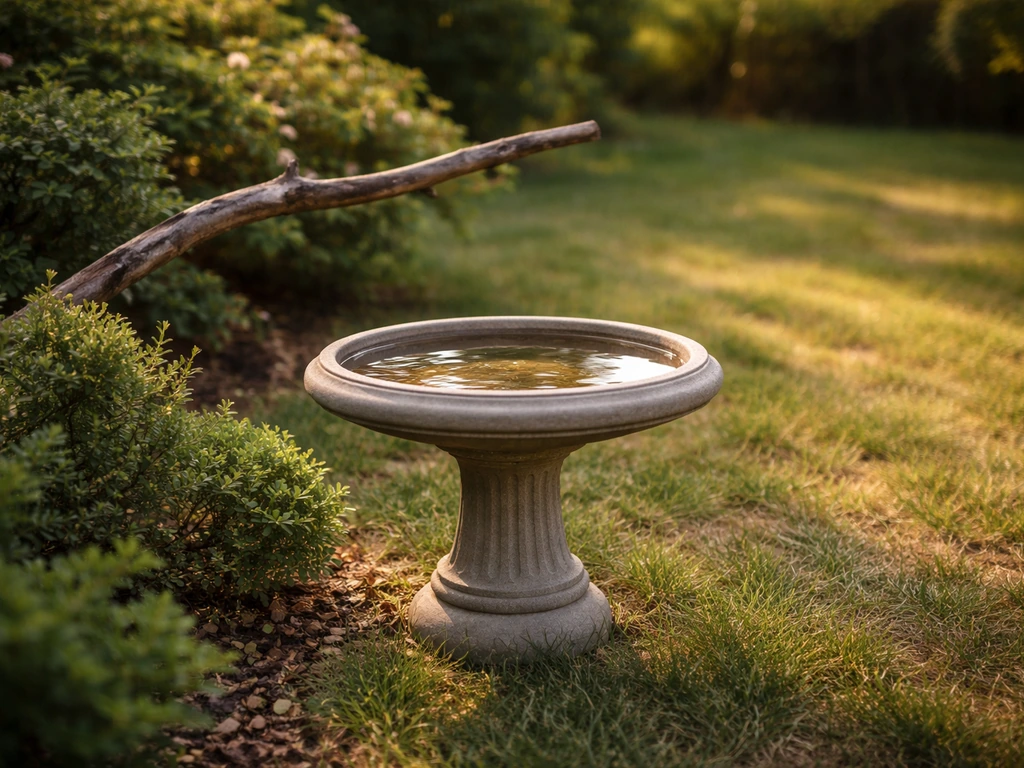
Placement is probably the single biggest factor in whether birds actually use a bird bath. You can have a perfect basin with clean water, and if it's in the wrong spot, birds will ignore it. Here's what to think through:
- Visibility: Birds need to see the bath from the air and from nearby perches. Open areas work better than spots tucked under dense cover.
- Safety from cats and predators: Place the bath at least 5 to 10 feet away from shrubs or brush where cats could hide and ambush birds. Birds are most vulnerable when wet.
- Escape routes: Position the bath within about 10 feet of trees or shrubs so birds can flee quickly if startled, but far enough that a predator can't use that cover to sneak up.
- Sun vs. shade: Partial shade is ideal. Full sun causes water to heat up fast and evaporate quickly, while full shade can encourage algae and makes the bath harder for birds to spot. Morning sun with afternoon shade is the sweet spot in most yards.
- Near existing bird activity: If you have feeders, placing the bath in the same general area (but not directly under feeders, since debris and droppings will foul the water fast) works well.
- Ground level vs. pedestal: Ground-level baths attract more species, including ground-feeding birds like robins and sparrows. Pedestal baths are safer from cats and offer better visibility for birds.
Height matters more than most beginners realize. How tall a bird bath should be affects which species feel comfortable using it and how exposed the birds are to predators. Pedestal models at around 24 to 36 inches off the ground are a solid middle ground for most yards.
Getting birds to actually use the bath
Water depth is the number one reason birds skip a bath. The National Wildlife Federation points out that birds will drink from the edge of a bath but won't bathe if the water is too deep. For bathing, the water needs to be shallow, typically no more than 1 to 2 inches in the deepest part of the basin. Many commercial baths are too deep right out of the box.
If your basin is on the deeper side, add a flat rock or a layer of gravel to the center to create a shallow wading area. This gives small birds a safe spot to stand and splash without submerging. For more guidance on this, how deep a bird bath should be covers the right range for different species in practical terms.
Moving water is one of the best upgrades you can make. Birds detect dripping and splashing sounds from a distance, and that sound alone will pull them in. A simple dripper or wiggler that attaches to your garden hose costs around $10 to $20 and makes a noticeable difference. Solar-powered fountains work well for the same reason. If you want to know exactly how much water to put in a bird bath, the general rule is to keep it between 1 and 2 inches deep and refill daily in warm weather to keep it fresh and at the right level.
Texture also matters. Smooth glass or glazed ceramic is slippery for birds, especially when wet. Rough-textured concrete or adding small stones gives them proper footing. If you have a slick basin, a layer of sand or gravel on the bottom solves the problem cheaply.
Keeping the water clean and the basin fresh
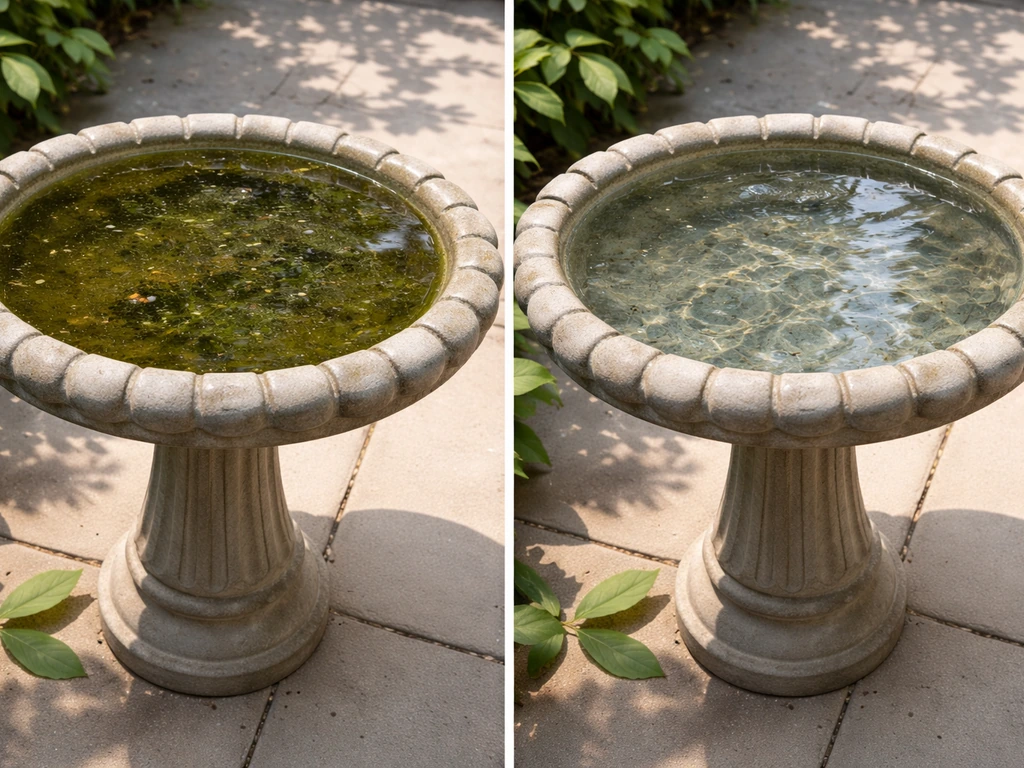
A dirty bird bath is worse than no bird bath at all. Stagnant, algae-coated water can spread disease among birds, and once they associate your bath with bad water, they'll stop coming. Here's the maintenance schedule I actually follow:
- Refill with fresh water every 1 to 2 days in warm weather, daily in summer heat above 85°F.
- Scrub the basin with a stiff brush every 3 to 5 days to break up algae and biofilm before they get established.
- Do a deeper clean weekly: empty the bath, scrub with a 9-parts-water to 1-part-bleach solution, rinse thoroughly at least three times, and let it air dry before refilling.
- In fall, remove leaves and debris daily since decomposing organic matter accelerates algae growth.
- Inspect for cracks or chips seasonally, especially after winter. Cracked basins hold bacteria and can injure birds' feet.
Algae thrives in warm, still, sunlit water. The best prevention is a combination of partial shade, water movement (a dripper or fountain), and frequent water changes. Enzyme-based bird bath cleaners are safe for birds and help slow algae without bleach, which is worth using between deep cleans. Avoid any soap, detergent, or chlorine tablet products sold for pools, those are toxic to birds.
Handling the seasons: freezing, heat, and everything in between
Winter is when most backyard birders either give up on their bath or accidentally damage it. In freezing temperatures, water in a ceramic or unglazed concrete bath can expand and crack the basin. If you're in a climate where temps regularly drop below 32°F, you have three options: bring the bath inside, use a heated bath, or add a submersible de-icer to your existing basin. De-icers designed for bird baths cost $20 to $40 and plug into a standard outlet. They're thermostatic, so they only run when needed.
Don't pour boiling water on a frozen ceramic basin to thaw it. The thermal shock will crack it. Warm water works, but the better fix is just keeping it from freezing in the first place with a de-icer. Also avoid adding salt or antifreeze to bird bath water. Both are harmful to birds.
In summer, the challenge flips. Full sun can push water temperatures above 100°F in a dark-colored basin, which discourages birds and speeds up bacterial growth. Moving the bath to a shadier spot in summer or adding an umbrella-style shade is a simple fix. Top off water levels in the morning before the heat of the day, and check again in late afternoon.
Spring and fall are the easiest seasons, but spring brings pollen and debris. Check more often during pollen season since a thick yellow film can accumulate fast and needs to be rinsed out daily.
Mosquitoes, pests, and keeping your bird bath safe
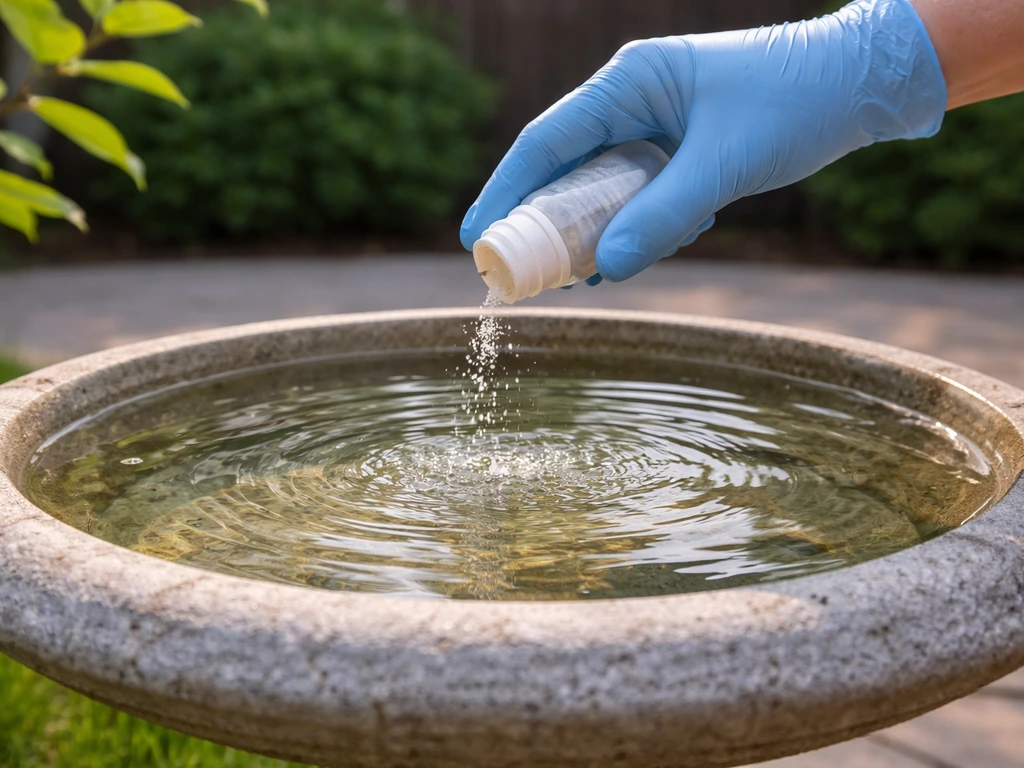
Standing water is a mosquito breeding ground, and a bird bath that sits untouched for more than a few days is exactly the kind of habitat they need. Mosquitoes lay eggs in still water and larvae can hatch within 24 to 48 hours in warm weather. The fix is straightforward: change the water every one to two days and use a dripper or fountain to keep the water moving. Mosquitoes won't lay eggs in moving water.
If you can't change water frequently, Bacillus thuringiensis israelensis (Bti) dunks are safe for birds, pets, and wildlife and kill mosquito larvae without affecting anything else. Use Mosquito Dunks or Mosquito Bits as directed to control mosquito larvae in standing water types, and The Pond Guy says floating Mosquito Dunks provide up to 30 days of continuous protection (label-and-conditions dependent). One small dunk can treat a bird bath for up to 30 days. You can find them at most hardware and garden stores.
Beyond mosquitoes, watch for raccoons, squirrels, and neighborhood cats using or fouling the bath. A tall pedestal helps with cats. Raccoons will knock things over, so make sure the bath is stable and heavy, or place it where raccoons can't easily reach. If you notice dead birds near your bath, stop using it immediately, clean it with bleach solution, and contact your local wildlife agency. Shared water sources can spread avian diseases like salmonellosis, so cleanliness isn't optional, it's a responsibility.
When birds still won't show up (and how to attract specific species)
If you've set up a bird bath and birds are ignoring it, run through this checklist before giving up. The most common culprits are water that's too deep, a location that feels exposed or unsafe, no sound or movement to attract attention, or a basin that's too slippery. Adding a dripping water source is usually the fastest fix. The sound of dripping water carries surprisingly far and birds respond to it almost immediately in most yards.
Give a new bath at least two to three weeks before writing it off. Birds are cautious around new objects in their territory. Once one bird uses it and others see, the traffic tends to build quickly.
Attracting hummingbirds
Hummingbirds don't bathe like other birds. They prefer very shallow water, sometimes just a thin film, and they love misters and fine-spray fountains. A standard pedestal bird bath is usually too deep for them. If you want hummingbirds specifically, look for a mister attachment that creates a fine spray they can fly through, or use a very shallow dish (half an inch of water or less) with a mister. Place it near flowering plants they're already visiting.
Attracting crows
Crows are smart and they like large, open baths where they can see clearly in all directions. They also have a habit of dunking food in water, so your bath will get dirty fast if crows are regulars. A larger basin, at least 18 to 24 inches in diameter, works better for them. Ground-level placement often suits crows since they're comfortable foraging on the ground. Expect to clean more often if crows adopt your bath as their spot.
For most other common backyard species like robins, sparrows, finches, and cardinals, a standard 15 to 18 inch basin at pedestal height with 1 to 2 inches of water is all you need. Fresh water and a reliable schedule matter more than anything else. Birds are creatures of habit, and once they know your bath is a consistent source of clean water, they'll work it into their daily routine without much more effort on your part. That consistency is really what a good bird bath is all about.
Also worth a look as you dial in your setup: bird bath depth as it applies to specific species preferences, since what works for a crow won't work for a hummingbird, and getting that right is often the difference between a bath that gets used constantly and one that sits empty.
FAQ
What are bird baths used for besides bathing?
Bird baths are mainly a reliable daily water source, birds drink at the edges and then preen and cool off, if you keep the water fresh and at the right depth, you can also help birds recover feathers faster after wet weather.
How often do I need to refill what are bird baths for (drinking vs bathing)?
For bird bathing, plan on refilling daily in warm weather, even if the basin looks clean, in cooler weather you can often stretch to every 1 to 2 days, but only if you keep up with algae checks and odor.
What are bird baths for if I have a shallow yard or no garden hose?
You can still use them by choosing a basin that’s easy to top off by hand, a small dripper powered by a gravity line (or a lightweight solar bubbler for sound and movement) helps a lot when you cannot reach the bath frequently.
Why do birds drink from the edge but not bathe, what are bird baths doing wrong?
The usual reason is water that is too deep or too slick, add a flat rock or gravel to create a shallow wading zone (aim for about 1 to 2 inches at the deepest point) and rough up the bottom so feet can grip.
What are bird baths for in winter, do birds use them when water freezes?
They may still visit for a quick drink, but if the water is fully frozen they cannot bathe, heated baths and thermostatic de-icers keep a usable liquid surface without you manually thawing the basin.
How can I tell if my bird bath is “too dirty” before birds stop using it?
If you see a thick film, strong discoloration, or the water turns cloudy, treat that as a use-stopping condition, before it gets that far, do shorter rinses more often and scrub the basin during a deep clean so bacteria and slime do not rebuild quickly.
Are bird bath cleaners and algaecides safe, and what should I avoid?
Use products intended specifically for bird baths, enzyme-based cleaners are typically safer than pool chemicals, avoid anything marketed with chlorine tablets, detergents, or antifreeze ingredients, those can harm birds and contaminates the water.
What are bird baths for when I notice dead birds nearby?
Stop using the bath immediately, remove standing water, and disinfect the basin with a bleach solution before restarting, then contact your local wildlife authority because shared water sources can spread disease.
Can I use a mister or fountain even in freezing weather, what are the limits?
Moving water helps in summer, in winter avoid setups that can ice over and crack the basin, for frozen climates use a heated option or thermostatic de-icer and keep splash components from turning into ice blocks.
Do all birds like the same depth, what are bird baths for across species?
No, hummingbirds often prefer extremely shallow water or fine spray, while larger songbirds will use a pedestal bath with about 1 to 2 inches, if you want multiple species, start with a shallow setup and add a gentle wading area.
Next Article
How to Make a Fairy Garden in a Bird Bath: Safe Build & Care
Create a bird-safe fairy garden in a bird bath: step-by-step build, plant choices, safety, care, troubleshooting