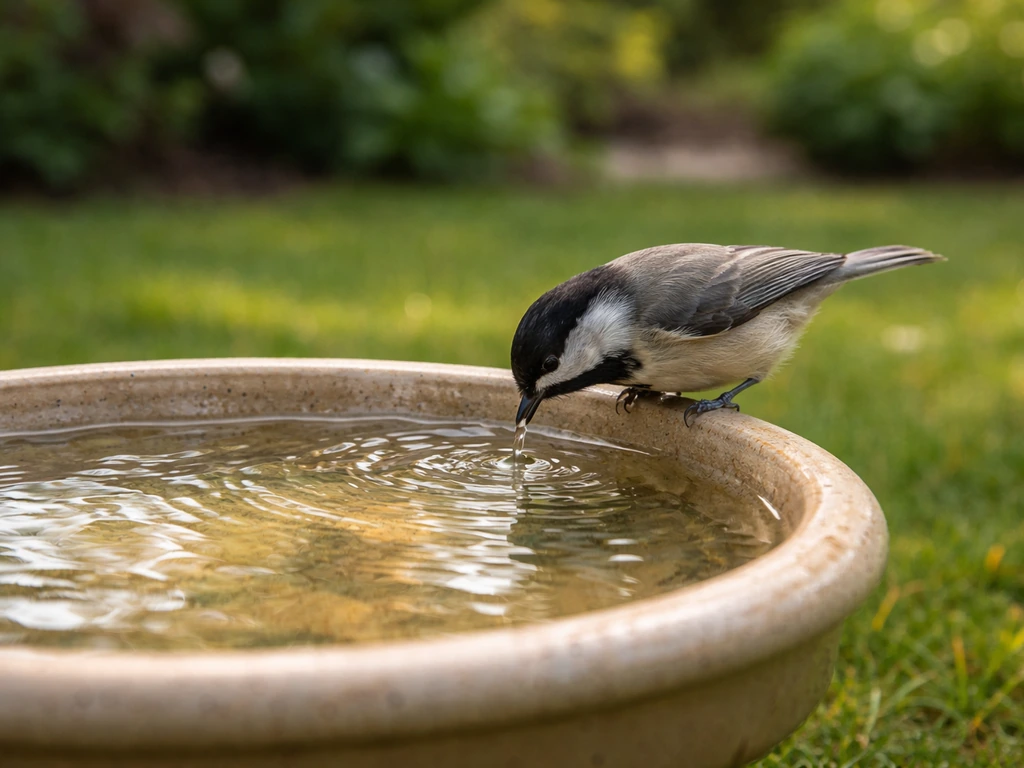
The sweet spot for bird bath depth is 1 to 2 inches of water, with the absolute ideal sitting right around 1 to 1.5 inches at the center. That single number answers most people's questions. But if you want birds to actually use your bath confidently, rather than just peek at it from the edge, the details behind that number matter a lot. Let me walk you through everything: how to measure what you actually have, why going deeper backfires, and how to adjust any bath you own today.
How Deep Should a Bird Bath Be Exact Water Depth Guide

Marcus Henley
17 Apr 2026
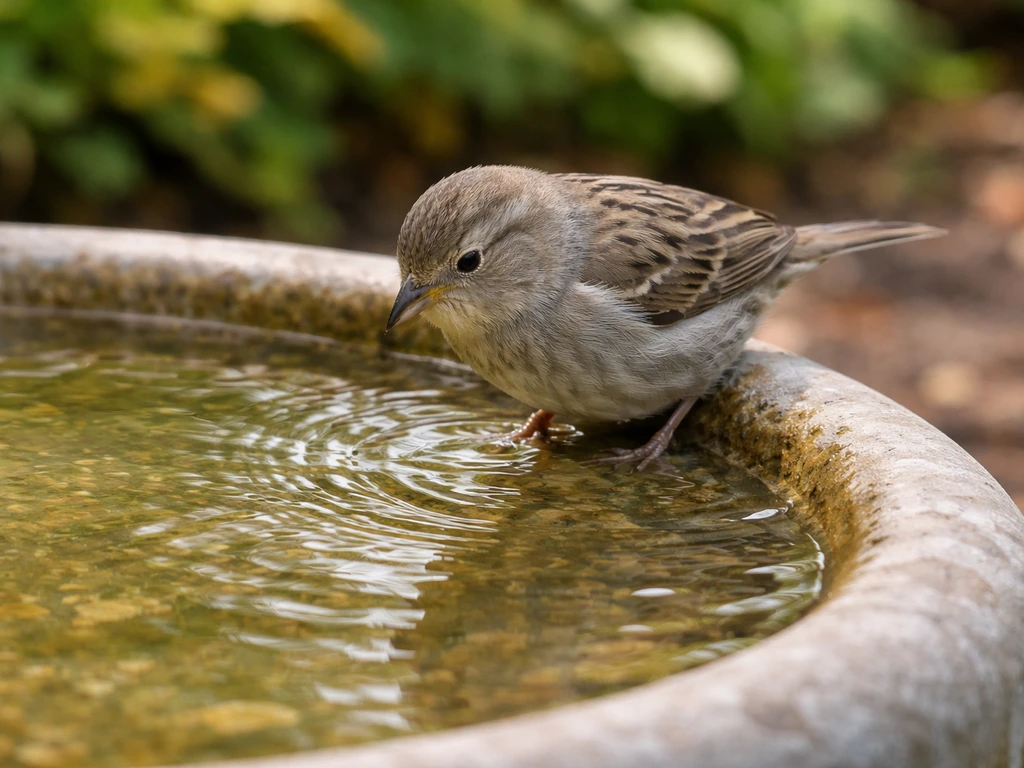
The right depth for most backyard birds
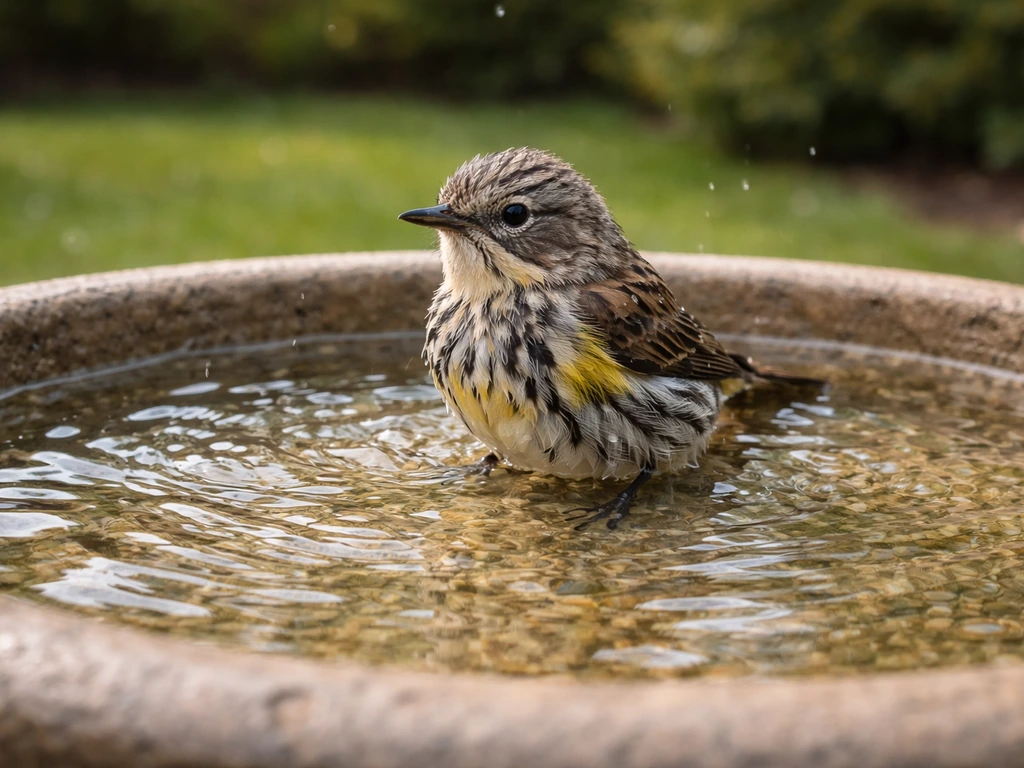
Most sources land in the same tight range. Audubon recommends water depth of about 1 inch to 1.5 inches (2.5 to 3.8 cm). Georgia DNR says 1.5 to 2 inches at the deepest point is the gold standard. The National Wildlife Federation caps it at 3 inches, and the Washington Department of Fish and Wildlife puts the typical usable range at 1 to 3 inches. National Wildlife Federation recommends that birdbaths be only one to three inches deep so songbirds can get in the water and bathe their feathers. If you split all of that, you get a practical target: aim for 1.5 inches of water in the center of your bath. That gives small songbirds like sparrows, finches, and chickadees room to stand comfortably, splash, and wet their feathers without feeling like they are wading into something over their heads.
Why that number? Birds do not submerge when bathing. They stand in shallow water, flutter their wings, and flick water over their backs. The Washington Department of Fish and Wildlife puts it plainly: most birds bathe in water no deeper than their legs. So the depth you need is really just enough to let them wet their belly feathers while keeping their feet firmly on the bottom. One to two inches does exactly that.
How to measure the depth in your specific bath
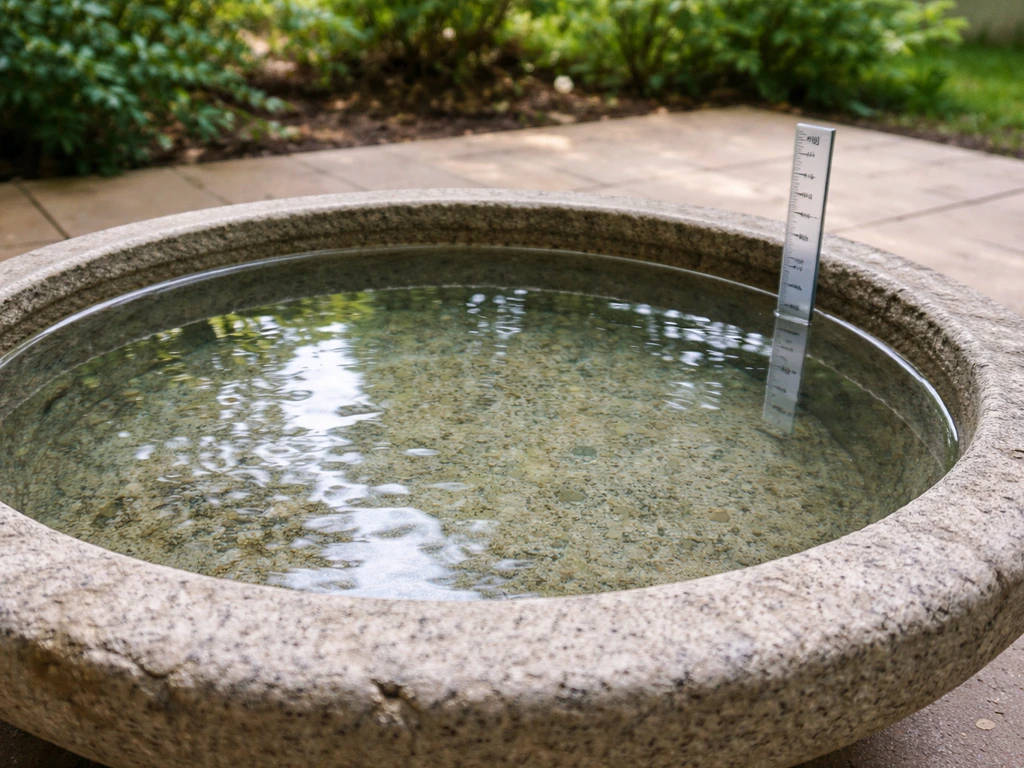
Grab a ruler or even just a pencil. Fill your bath, then stick the ruler straight down at the deepest point of the basin, which is usually the center. Read the water level against the ruler. That is your actual usable depth, not the depth of the bowl itself. A bowl that is 4 inches deep but only filled to 1.5 inches of water is perfect. A bowl that is 2 inches deep and filled to the brim is too full. The distinction matters because a lot of people confuse container depth with water level, and they are not the same thing.
If your bath has a gradual slope rather than a flat bottom (which is actually ideal design), measure at multiple points: at the shallow rim and at the deepest center. You want the outer edges to be just a half inch or so, and the center no more than 2 inches. That gradient is what lets birds of different sizes find their own comfortable spot to stand. How much water you should put in a bird bath depends on this shape more than anything else, so knowing your basin's profile is the first real step.
How deep can a bird bath actually be (without causing problems)
The upper safety limit most experts agree on is 3 inches of water. The RSPB nudges that slightly higher, saying a maximum basin depth of about 10 cm (roughly 4 inches) is acceptable, but only when the sides slope very gradually so birds never suddenly step into deep water. RSPB also recommends very shallow sloping sides and a wider basin, so birds do not step into deeper water RSPB recommends a maximum basin depth of about 10 cm (roughly 4 inches). UC ANR draws a firm line at 3 inches. Think of 3 inches as the absolute ceiling for usable water depth, not an aspiration.
Here is the thing about deeper baths: a deeper bowl is not inherently bad, but filling it all the way up is. You can own a 6-inch-deep decorative basin and still run it at a perfectly safe 1.5 inches of water. The container depth and the water level you maintain are two entirely separate decisions. Where people go wrong is assuming they need to fill the bath to the rim.
What "too deep" actually looks like in real life
If your bath water is too deep, birds will tell you in pretty obvious ways. The clearest sign is birds standing on the rim and leaning down to drink but never stepping in to bathe. When the bowl is too deep, birds often stick to the edge and use it as a drinking station only, which is exactly what Wikipedia's bird bath summary describes. You get drinkers but no bathers, and you lose most of the behavior that makes a bird bath worth having.
You might also notice fewer species visiting, smaller birds avoiding the bath entirely, or birds splashing awkwardly and flying off quickly rather than settling in for a proper wash. Larger birds like robins and jays might still wade in at 2.5 to 3 inches, but anything smaller will hesitate. Safety is a real concern too: if a small bird loses its footing and slides into water that is deeper than its legs, it can struggle to get out, especially if the basin sides are steep and slick.
Surface traction compounds the depth problem. A glazed ceramic bath, even at the right depth, can become treacherous when wet. The Washington Department of Fish and Wildlife specifically flags glazed ceramic as slippery for birds. So when you are evaluating whether your bath is actually usable, think depth and surface together, not depth alone. Understanding how bird baths work as a functional system helps here, because usability is about the whole setup, not just one measurement.
How full should a bird bath be (water level vs. container depth)
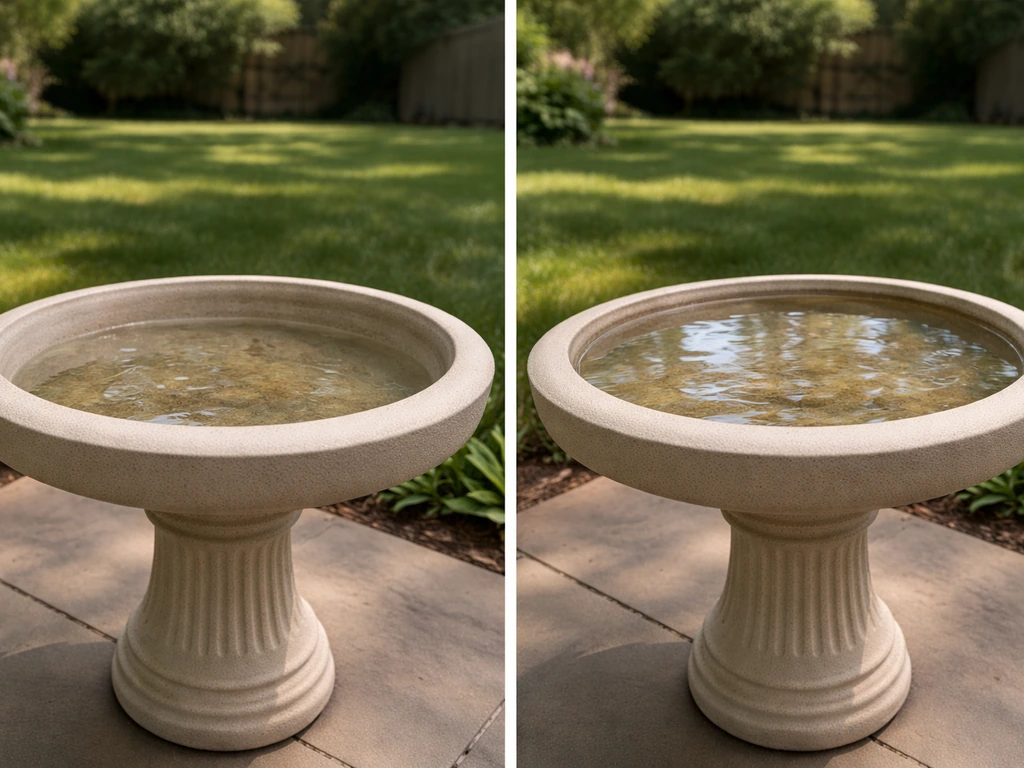
Fill your bath to 1 to 2 inches of water at the deepest point, full stop. Do not fill it to the rim unless the rim height itself is only 1 to 2 inches, which is uncommon. Leave a visible gap between the water surface and the top edge of the basin. That gap also gives birds a dry perch surface to land on before stepping in, which many birds prefer. Robins especially seem to like standing at the rim edge first, checking the water, then wading in.
One practical caveat: in hot summer weather, shallow water evaporates fast. Georgia DNR notes that in summer, a shallow bath can lose all its water in a single day. That is not a reason to fill it deeper. It is a reason to check it daily and top it off, or invest in a larger-capacity basin that still stays shallow but holds more surface area of water. More width, not more depth, is the right solution to evaporation.
Depth guidance across different bath types
The target water depth is the same regardless of bath type, but how each bath material and style behaves around that target varies quite a bit. Here is how to think about depth management across the most common setups.
| Bath Type | Depth Challenge | Recommended Approach |
|---|---|---|
| Concrete | Often cast with a flat bottom and uniform depth; can be rough (good traction) | Fill to 1.5 inches; roughness helps birds grip, so no extra liner usually needed |
| Ceramic (glazed) | Slippery when wet, steep sides on some decorative models | Fill to 1–1.5 inches max; add gravel or flat stones to improve grip and reduce effective depth |
| Metal (copper, galvanized) | Can be very deep on decorative models; heats up fast in sun | Fill conservatively at 1 inch; shade placement matters, water warms and evaporates quickly |
| Heated (electric) | Basin depth is fixed by product design; heater keeps water liquid in winter | Maintain 1–2 inches regardless of season; add a stone near the heater element so birds can perch |
| Solar (fountain-style) | Moving water distributes differently; pump intake must stay submerged | Keep water at 1.5–2 inches minimum for pump function; check pump specs and depth together |
| DIY / dish / saucer | Usually very shallow by design; may not hold enough water on hot days | Fill to the basin max if under 2 inches; check and refill daily in summer |
If you are still exploring which type of bath to buy, it is worth understanding what bird baths are made of before committing, since the material shapes not just aesthetics but how you manage depth and safety long term. Concrete and rough-cast stone are genuinely forgiving because birds can grip the surface; glazed ceramic and polished metal require more depth management compensation.
A quick note on heated baths in winter
If you run a heated bath through winter (which I highly recommend for keeping birds watered when natural sources freeze), the same 1 to 2 inch target applies. You do not need to run it any deeper just because it is cold. Adding a flat stone near the heating element gives birds a dry perch to stand on while drinking if they are nervous about getting their feet wet in freezing air.
Test, adjust, and troubleshoot after you set your depth
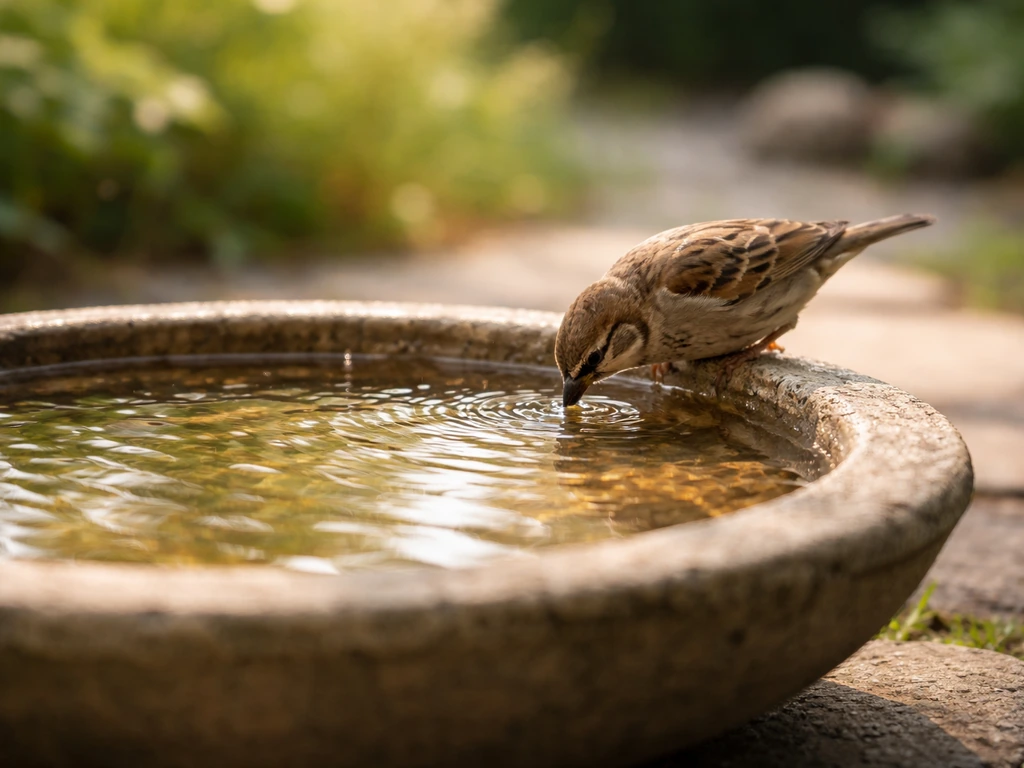
Once you set your water level, give it two or three days and watch what happens. Are birds bathing, or just drinking from the edge? Are small birds visiting at all? The feedback loop is usually pretty quick. Here are the most common problems people hit after adjusting depth, and what to do about each one.
- Birds are drinking but not bathing: the water is likely still too deep, or the surface is too slippery. Reduce the water level by half an inch and add a few flat stones or a handful of gravel to the basin floor. The National Wildlife Federation specifically recommends lining the bottom with gravel or stones if the bath is too deep or too slippery.
- No birds at all: check placement first (too exposed, too close to shrubs where cats hide), then recheck depth. A bath that looks perfect but is in the wrong spot will sit empty. You may also want to revisit how tall the bird bath should be, since height affects which species feel safe approaching it.
- Small birds avoid it but larger birds use it fine: you have probably got the water at 2 to 3 inches. Drop it to 1 to 1.5 inches and add a few small stones near the center to create a shallow landing spot.
- Water disappears quickly: this is a summer evaporation problem, not a depth problem. Refill daily, move the bath to a shadier spot, or switch to a wider basin that holds more total water at the same shallow depth.
- Algae building up fast: shallow baths in full sun grow algae quickly. Clean the bath at least once a week, more often in summer. The University of Florida IFAS program recommends flushing with fresh water at least weekly, which also prevents mosquito larvae from developing in standing water.
- Bath looks green or slimy after a few days: this is normal with shallow water in warm weather. A good scrub with a stiff brush and a diluted white vinegar rinse (no soap) resets it quickly. Then keep up the weekly cleaning routine.
If you find yourself constantly fighting evaporation or algae, it might be worth thinking about whether your current bath is the right fit for your yard conditions. How much bird baths cost varies widely, and sometimes a simple upgrade to a wider or differently shaped basin solves depth and maintenance issues at once without spending a lot. There are solid options at every price point.
The simplest summary you can act on right now
Fill your bird bath to 1 to 2 inches of water, targeting 1.5 inches at the center as your default. Measure it with a ruler. If birds are not bathing, go shallower or add stones. If the water disappears in a day, refill it and consider a shadier spot or wider basin. Do not worry about the basin being too deep as a container, worry about the water level you choose to maintain in it. That is the only number that actually matters to the birds.
If you are just getting started and want to understand the basics before buying anything, what bird baths are is a good starting point. And if you are already set up and want to go deeper (pun intended) on water volume management, the full breakdown on bird bath depth considerations covers more edge cases and advanced setups. But for most people with most baths: 1.5 inches, topped off daily, cleaned weekly. That is it.
One last thing worth knowing: even a perfectly set depth will not fix a bath that birds simply cannot find useful. If you want to understand the full picture of what makes a bird bath actually work for birds, why some bird baths cost so much more than others gets into quality design features, including the basin shapes and slopes that naturally create the shallow gradient zones that make depth management almost automatic.
FAQ
If my bird bath bowl is 4 inches deep, how do I know whether it’s the right depth for birds?
No, the rule is based on the water you actually pour in. A deep decorative bowl can still be perfect if you only maintain 1 to 2 inches at the lowest point, typically the center. The container depth (how tall the sides are) is different from usable water depth (how much water is sitting in the basin).
Can I use stones to fix a bird bath that’s too deep? What’s the safest way?
Add stones only if they create a stable platform while keeping the surrounding water shallow. Choose rough, grippy stones (not smooth marbles or slick glass) and place them so the water remains about 1 to 2 inches deep at the deepest accessible spot. Avoid stacking so high that small birds step down into deeper water and get stuck.
My birds drink but don’t bathe, the depth seems right, what else should I check?
You will usually see faster problems with depth plus slippery surfaces. Glazed ceramic and polished metal can become hard to grip when wet, so birds may avoid bathing even if the water level is correct. If you notice birds standing to drink but not bathing, check both depth and how slippery the surface feels when wet.
How can I tell quickly whether my bird bath is too deep for the birds that visit?
If it’s too deep for small birds, they tend to use the rim as a drinking perch and avoid stepping in. A practical test is to watch whether birds ever put both feet into the water for more than a second or two. If they never do, lower the water level immediately and target closer to 1 inch at the center for shy small species.
In winter, should I fill a heated bird bath deeper so birds can bathe?
Yes, but do it by adjusting water level, not by refilling higher. In freezing conditions, you still aim for 1 to 2 inches at the deepest point, and you can add a flat stone near the heat source to give nervous birds a dry, grippy perch before they step into cold water.
What should I do if my bird bath water disappears too quickly, but I don’t want to make it deeper?
Yes, width and basin shape help, even when depth is correct. If shallow water keeps evaporating or the bath gets algae quickly, a wider basin often holds enough water without exceeding the 3-inch safety ceiling. The main idea is more surface area for stability, not deeper water.
Do I need to measure depth in multiple spots, or is the center enough?
Yes. A bath that is within the depth target at one point can still be unusable if the sides are steep. Measure at multiple points (rim and deepest center) and make sure the deepest spot stays within the 1 to 2 inch range, with outer edges shallow enough that birds can find a comfortable stance.
Is it ever okay to let the water reach 3.5 or 4 inches in a bird bath?
For most setups, treat 3 inches as the absolute maximum usable depth. Even if a bath’s sides are gradually sloped, consistently going above that raises the chance of trouble if a small bird slips. If you want to accommodate larger birds too, keep the center shallow and let them access naturally shallower areas rather than relying on deep water.
If I keep topping off, will depth drift too low in summer?
Usually, yes. If the water drops below your target, depth may fall to zero or become too shallow for comfortable bathing, which can reduce splashing behavior. In summer, plan to top it off daily, and consider a larger or wider basin so the depth stays in range without you overfilling to the rim.
Can cleaning problems look like a depth problem, and what’s the best way to troubleshoot?
Clean frequency can change how inviting the bath feels, but it does not replace the depth target. If you frequently scrub algae and you still get only rim-drinkers, lower the water level closer to 1 to 1.5 inches at the center, then watch for changes over 2 to 3 days.
Next Article
What Are Bird Baths For? Purpose, Types, and Setup
Purpose, types, and setup tips for bird baths to attract backyard birds with clean drinking and bathing water.