
Most bird baths cost somewhere between $20 and $250, with the sweet spot for a decent quality pedestal model sitting around $60 to $100. If you want a heated or solar-powered bath with all the extras, budget $150 to $300 or more once you factor in accessories and running costs. The exact number depends heavily on what material you choose, whether you need a separate stand, how big the basin is, and whether the bath needs power.
How Much Are Bird Baths Cost Guide by Type and Features

Marcus Henley
1 May 2026
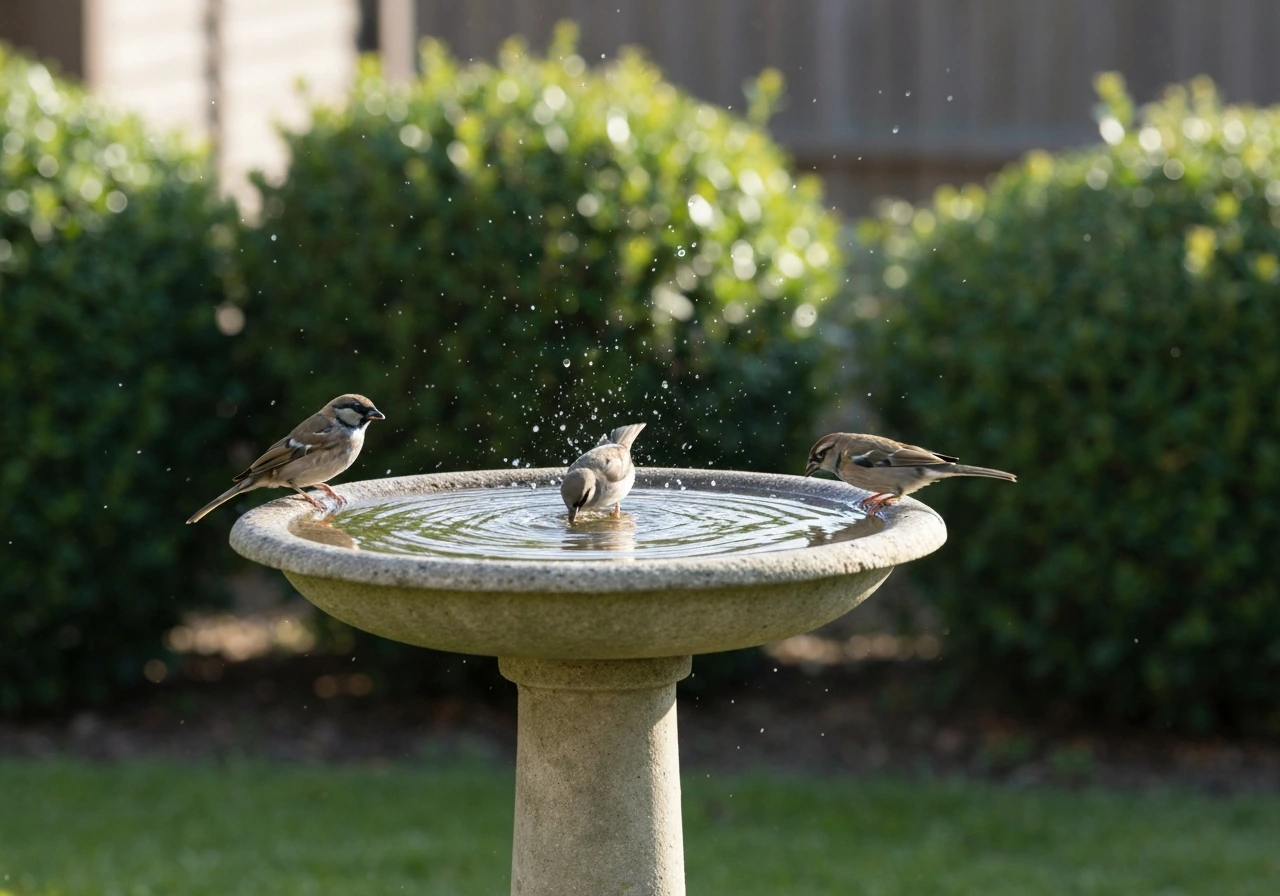
Typical bird bath price ranges by type
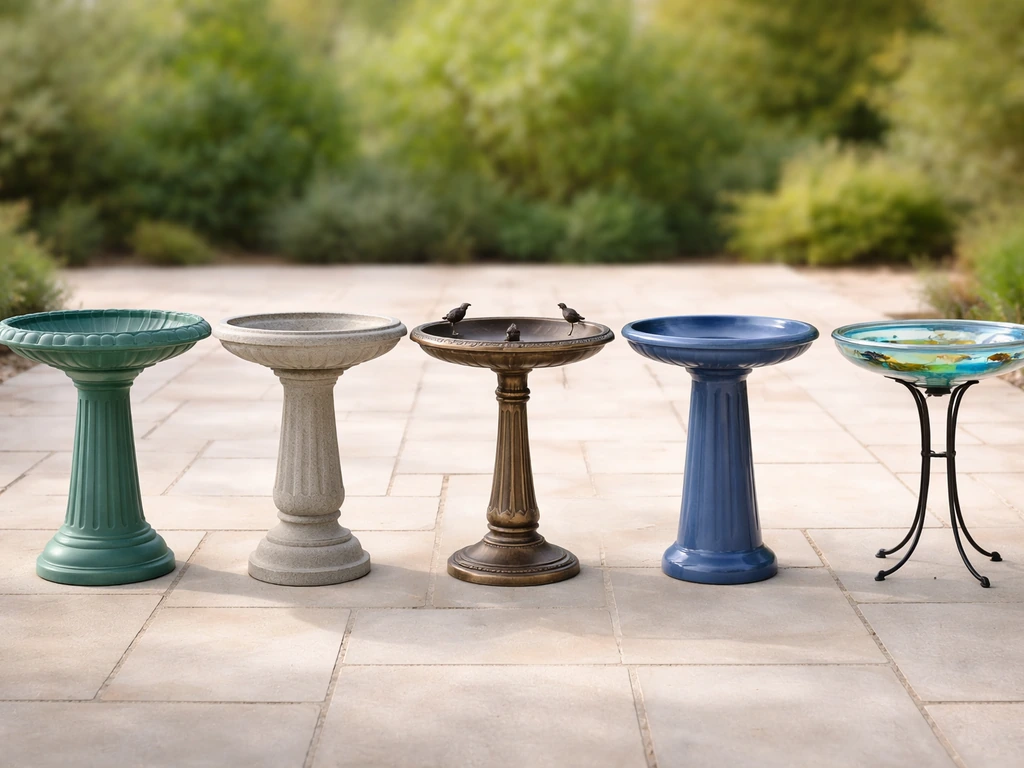
Prices vary a lot depending on where you shop and what style you pick. Lowe's lists a typical bird bath price around $65, with the full range running roughly $21 to $245. Here's how that breaks down by type:
| Type | Typical Price Range | What You Get |
|---|---|---|
| Plastic / Resin pedestal | $20 to $60 | Lightweight, basic bowl on a pedestal, easy to move |
| Ceramic / Glazed bowl | $50 to $130 | More decorative, heavier, sold with or without a stand |
| Concrete / Stone | $60 to $200+ | Durable, very heavy, often sold as bowl only |
| Metal (cast iron, bronze-style) | $80 to $250+ | Sturdy and decorative, mid to high-end pricing |
| Solar fountain/pedestal | $50 to $150 | Built-in pump and panel, runs without electricity |
| Heated (electric) | $80 to $200 | Thermostatically controlled, needs an outdoor outlet |
Resin and plastic models are the most affordable entry point and work fine for most backyard setups. A 28-inch tall resin pedestal bath from a brand like Outsunny or Alpine Corporation sits comfortably in the $30 to $65 range at Walmart or Lowe's. Ceramic bowls run a bit more, often around $110 for a decent one. Concrete and metal options can push past $200 once you add a pedestal base, but they last for years if maintained properly.
What changes the cost: size, material, features, and brand
Size is a big driver. A 14-inch basin costs a fraction of a 20-inch one, and basin diameter directly affects how many birds can use it at once. Speaking of depth, bird baths work best at 1 to 2 inches of water depth with a gradual slope, so the shape of the bowl matters as much as the size. A wider, shallow basin is actually more functional than a deep narrow one, even if it costs more.
Material is the other major cost factor. If you're wondering what bird baths are made of, the material you choose affects durability, maintenance, and how well the bath holds up in different weather. Plastic and resin are cheap but can fade and crack after a few years in direct sun. Concrete lasts much longer but is heavy, porous, and needs sealing to prevent algae from embedding in the surface. Ceramic looks great but chips more easily than people expect, especially through freeze-thaw cycles. Metal finishes, like the bronze-style pedestal baths from brands like Good Directions at Home Depot, cost more but hold up well over time and look genuinely attractive in the yard.
Features like built-in drippers, textured landing surfaces, or decorative elements all add to the price. Brand name plays a role too. A generic resin pedestal bath from a no-name brand might cost $25, while the same basic shape from an established brand with better UV protection and a warranty runs $50 to $70.
Extra costs to budget for: bases, delivery, and installation
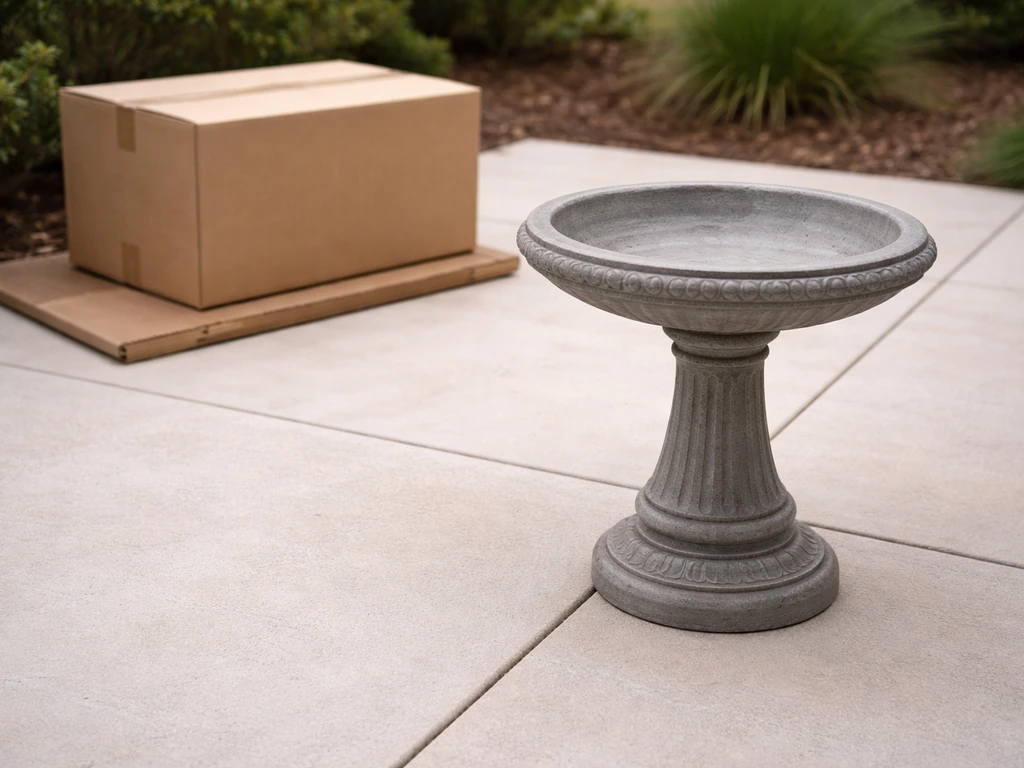
One thing that catches a lot of buyers off guard is that many bird bath bowls are sold separately from their stands or pedestals. Standalone birdbath bases start around $37 at Walmart for a basic polyresin pedestal, and they can run $60 to $100 for more substantial metal or concrete versions. Always check whether the listing you're looking at includes a stand before hitting buy.
Delivery is another line item worth thinking about. Lightweight resin baths ship cheaply or qualify for free shipping. Concrete or stone baths can weigh 30 to 80 pounds or more, and some retailers charge $25 to $75 in shipping fees, or require freight delivery. If you have a local garden center or home improvement store nearby, picking up in person often saves money and lets you check the finish quality before buying.
Most bird baths are true DIY installs. You place the pedestal, set the bowl, level it, and fill it with water. No professional help needed. That said, heavier concrete baths benefit from a stable flat surface or paver base to prevent sinking or tipping. If you're mounting a wall-hung bath or running an outdoor power line to a heated model, factor in $50 to $150 or more for an electrician if you don't already have a weatherproof GFCI outlet close to the intended spot.
Heated and solar bird baths: true total cost and power needs
Heated bird baths are worth the investment if you live somewhere that gets hard freezes. The most common models use around 150 watts and have a thermostatically controlled heater that kicks on when the water temperature drops to about 40°F. The API 970 and API 600 series are well-known examples, offering a 20-inch heated basin on a 30-inch metal stand at that 150-watt rating. These models typically cost $80 to $150 at retail.
Running a 150-watt heated bath all winter adds roughly $10 to $20 per month to your electricity bill, depending on your local rate and how cold it gets. The heater doesn't run constantly, it cycles based on the thermostat, so actual energy use is lower than the rated wattage suggests. Smaller options like the K&H Thermo-Birdbath use an 80-watt removable heater in a 1-gallon basin, which costs less to run and works well in moderate climates. If you're in a severe cold region, the higher-wattage 150-watt models are better suited. You'll also want a heavy-duty outdoor extension cord rated for outdoor winter use if your outlet isn't right next to the bath.
Replacement parts for heated baths add to the long-term cost. A replacement heated dish like the D14BH runs about $100 on its own, with a 60-watt heater that can keep water open down to -20°F. It's worth knowing this upfront so a cracked bowl doesn't surprise you mid-winter.
Solar bird baths are a completely different animal. They use a small solar panel (typically 7V and around 1.4 watts) to run a low-powered pump (0.6 to 1.1 watts) that keeps water moving. Some higher-end units step up to 8 watts of solar power with a 3000mAh battery backup so the pump keeps running after the sun goes down. Solar models cost $50 to $150 upfront and have no ongoing electricity cost. The tradeoff: they don't heat the water, and the pump stops working in low light. They're ideal for warmer months and mild climates. Think of solar as a way to prevent mosquitoes and attract birds with movement, not as a cold-weather solution.
Ongoing maintenance costs and seasonal expenses
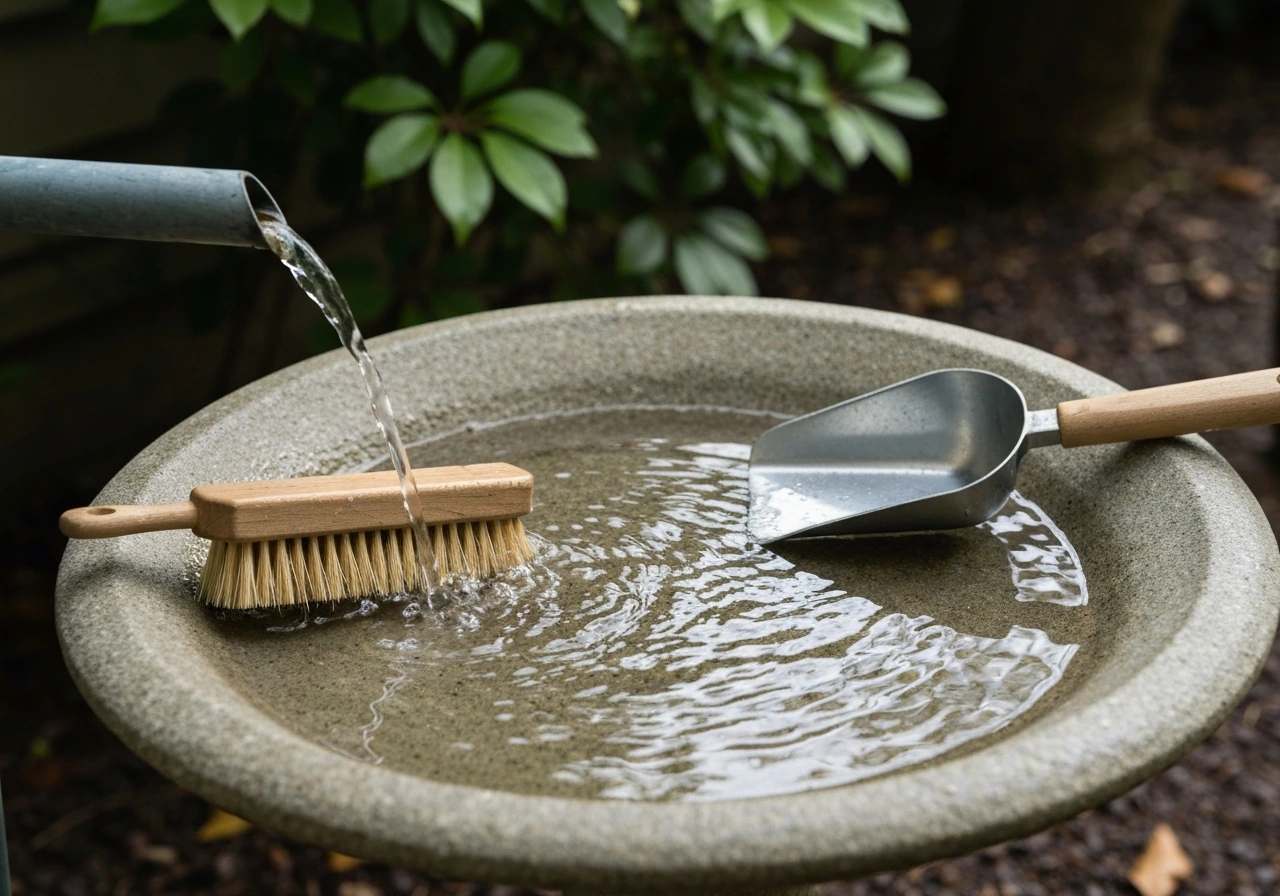
Buying the bath is only the start. Keeping it clean is a recurring commitment, both in time and in supplies. So, if you have been wondering why are bird baths so expensive, ongoing cleaning and seasonal supplies are a big part of the real cost Keeping it clean is a recurring commitment. Wild Birds Unlimited recommends emptying and scrubbing the bath every other day and rinsing it well. Audubon suggests replacing the water daily or every other day to prevent mosquito larvae, algae, and bacteria. That frequency sounds intense, but it takes about five minutes once you get into the habit.
The basic cleaning kit costs almost nothing: a stiff brush dedicated to the bath (not one you use indoors), a bottle of diluted white vinegar or a small container of oxygen bleach, and access to a hose. Expect to spend $10 to $20 upfront on supplies that last the whole season. If algae builds up fast in your yard because of sun exposure or warm temperatures, an enzyme-based algae inhibitor made for bird baths costs around $10 to $15 and extends the time between deep cleans.
Mosquitoes are a real issue in standing water. If you're not running a solar pump or dripper to keep the water moving, Bti dunks (Bacillus thuringiensis israelensis) are a cheap, bird-safe solution. A Stark Bro’s Mosquito Dunks uses blank" rel="noopener noreferrer">Bti (Bacillus thuringiensis israelensis), and one dunk floating in a birdbath can help prevent mosquito generation for about 30 days or longer under typical conditions. EPA product facts for Mosquito Dunks state that the product kills mosquito larvae in standing water and that each Dunk treats up to 100 square feet of surface water for about 30 days Bti dunks (Bacillus thuringiensis israelensis) are a cheap, bird-safe solution. A pack of dunks runs about $10 and treats the water for 30 days per dunk. A solar-powered bubbler, if not already built into your bath, costs $15 to $40 as an add-on and doubles as a bird attractant since birds are drawn to moving water.
In winter, if you have a non-heated bath, you're either running a separate de-icer (typically $25 to $50 for a submersible model) or accepting that the bath goes dormant. Concrete baths need to be emptied and covered or stored before the first hard freeze to prevent cracking. Ceramic bowls are especially vulnerable and often need to come inside. Budget $15 to $30 for a weather-resistant cover if you plan to leave the pedestal out year-round.
How to choose the right bird bath for your budget and yard
Start with your climate and how cold your winters get. If you are new to the idea, understanding what bird baths are and how they work can help you choose the right setup for local birds what are bird baths. If you're in a zone that rarely freezes, a simple resin pedestal bath in the $30 to $65 range is all you need. If you want to attract birds year-round in a cold climate, budget $120 to $200 total for a heated model plus cord and outlet access.
Next, think about placement. Placement affects both cost and bird activity. Bird baths should be placed about 6 to 10 feet from dense shrubs so birds have a clear sightline for predators but still have nearby cover. For most backyard birds, aim for a bath height that keeps the rim around 2 to 3 inches above the ground, then adjust based on the birds you see most often how tall should a bird bath be. If your ideal spot is far from an outlet, a solar model removes the wiring cost entirely. If the ground is uneven or soft, factor in $10 to $20 for a concrete paver base to keep the pedestal stable and prevent tipping.
For most backyard birders starting out, here's a practical budget breakdown to work from:
| Setup Type | Estimated Total Budget | Best For |
|---|---|---|
| Basic resin pedestal + brush + vinegar | $40 to $80 | Beginners, mild climates, small yards |
| Ceramic or concrete bowl + separate stand | $100 to $180 | Those wanting durability and looks |
| Solar pedestal with built-in pump | $70 to $150 | Mosquito prevention, no outlets nearby |
| Heated pedestal + winter cord + paver base | $130 to $220 | Cold climates, year-round bird feeding |
| High-end metal or stone + professional leveling | $200 to $350+ | Permanent feature, large gardens |
If you're unsure where to start, a mid-range resin or ceramic pedestal bath in the $60 to $100 range covers most needs. It's light enough to reposition if the first spot doesn't attract birds, easy to clean, and won't break the bank if you decide to upgrade later. Shop in person at Lowe's, Home Depot, or a local garden center when possible so you can check the basin depth and stability before buying. Online retailers like Walmart and Wayfair have a wider selection and often lower prices, but check return policies carefully for heavier concrete or ceramic models in case the finish is different than expected.
Whatever you pick, the basin depth and water level matter more than the price tag. For most bird bath setups, that basin depth and water level determine whether smaller birds can safely stand and drink comfortably, so use a bird bath how deep guide to choose the right amount of water. A shallow, gently sloping basin that sits at 1 to 2 inches of water will attract more birds than an expensive deep bowl. And keeping that water fresh every couple of days makes the single biggest difference in whether birds actually use it. If you are wondering how do bird baths work, the key is that the water attracts birds, but it only stays appealing when the level and cleanliness are maintained water fresh every couple of days.
FAQ
How much are bird baths if I only want something temporary for a starter season?
For short-term use, you can usually stay in the $20 to $45 range by choosing a basic resin or plastic bowl and pedestal setup. To avoid replacing it quickly, prioritize UV-stabilized resin, a removable basin for easier cleaning, and a model that does not require special parts if the bowl cracks.
What is the real total cost if the stand and bowl are sold separately?
Plan on a combined budget, not the listed “bird bath” price. Typical stand-only prices start around the high $30s, and bowls often cost nearly as much as the stand, so a complete pedestal-ready setup commonly lands around $60 to $150 depending on material and brand.
Do bird baths usually cost more after the first year?
Yes, mainly due to maintenance and seasonal replacements. Expect recurring costs for cleaning supplies (roughly $10 to $20 per season) and, for heated models, the possibility of replacement parts like a heater dish if the basin cracks, which can run about $100 for a replacement heated bowl.
Are heated bird baths worth the cost in mild winter areas?
If your winters rarely drop below freezing, a heated bath often costs more than it saves. You may get better value using a non-heated bath with movement (solar pump, dripper, or bubbler) plus a basic cover, since heating is mainly justified when ice formation becomes frequent.
How much electricity do I really pay for a heated bird bath?
Even though many heated models are rated around 150 watts, they cycle on and off based on a thermostat, so your bill increase is usually lower than the full wattage suggests. A practical estimate is about $10 to $20 per month during winter, but local electricity rates and how often temperatures fall far below freezing are the biggest swing factors.
Will a solar bird bath save money if I live somewhere cloudy?
In cloudy or low-light conditions, solar pumps may not run long enough to keep water moving, which reduces both bird activity and mosquito control. If you frequently get extended low sun, consider higher-end solar units with battery backup, or plan for an add-on bubbler and more manual topping and cleaning.
What extra costs should I expect for delivery of heavy bird baths?
Concrete and stone options can add $25 to $75 in shipping, and some retailers may require freight delivery. If you cannot pick up locally, factor delivery into your budget, and check return costs for heavy items in case the finish or basin size is not what you expected.
How much should I budget for the right water depth and basin shape?
You typically do not need an expensive bath to get the correct depth, but you do need the right basin design. Target a shallow, gently sloped basin that can hold about 1 to 2 inches of water; if the bowl is deeper than that, you may end up adding rocks, liners, or awkward filling choices that reduce usability for smaller birds.
What should I spend on cleaning supplies to keep costs predictable?
Budget roughly $10 to $20 at the start of the season for a dedicated stiff brush plus diluted vinegar or oxygen bleach. If algae builds up quickly in your yard, adding an enzyme-based algae inhibitor (around $10 to $15) can help stretch the time between deeper cleanings.
Do I need mosquito treatment if I have a dripper or pump?
Movement reduces mosquito risk, but it does not eliminate it in every situation, especially if water still pools or the pump runs intermittently. If you are not sure, Bti dunks are a low-cost, bird-safe option, and you can use them alongside a pump to cover gaps during low-flow periods.
What winterization costs should I plan for if I have a non-heated bath?
Expect to spend for protection or de-icing. Many birders either buy a submersible de-icer (commonly $25 to $50) or plan to empty and cover the bath and possibly store it before hard freezes, plus about $15 to $30 for a weather-resistant cover if it stays outside.
How much is a good “don’t regret it” budget for year-round birding?
For year-round use in colder climates, many people land around $120 to $200 total for a heated setup, then add small costs for cord management and seasonal supplies. For milder winters, a mid-range $60 to $100 pedestal bath with good placement and regular water changes often provides the best value.
How much should I add to my budget if my yard is uneven?
If the pedestal would sit on soft or uneven ground, add about $10 to $20 for a concrete paver base to prevent sinking or tipping. This is especially important for heavier materials like concrete or metal styles, where wobbling makes the bath harder to keep level.
Next Articles
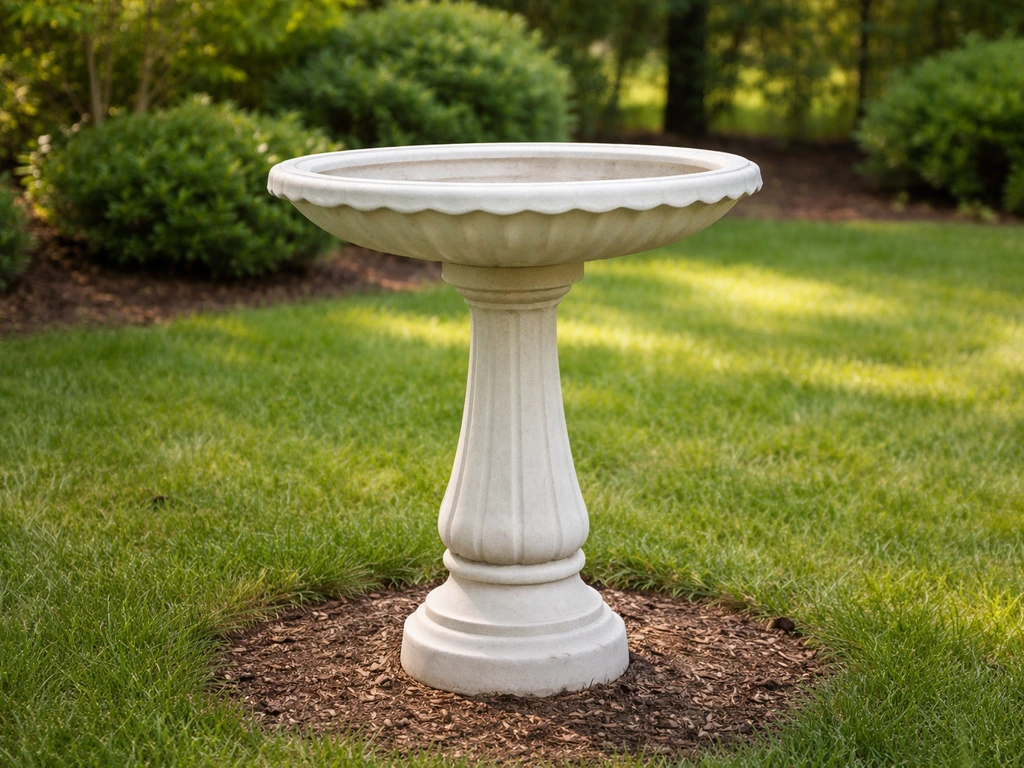
How Tall Should a Bird Bath Be Off the Ground
Best bird bath height off the ground, plus ideal width and sizing tips for safe, stable backyard bird access.
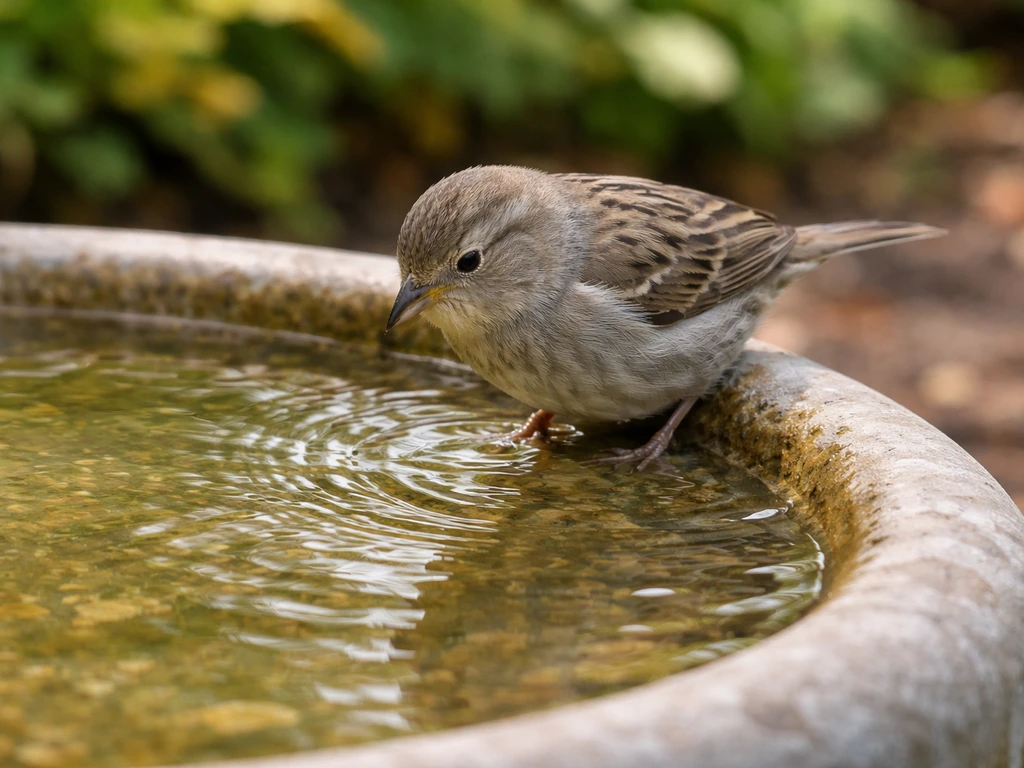
How Deep Should a Bird Bath Be Exact Water Depth Guide
Exact bird bath water depth targets, safe limits for deeper baths, and steps to measure and adjust water level for landi
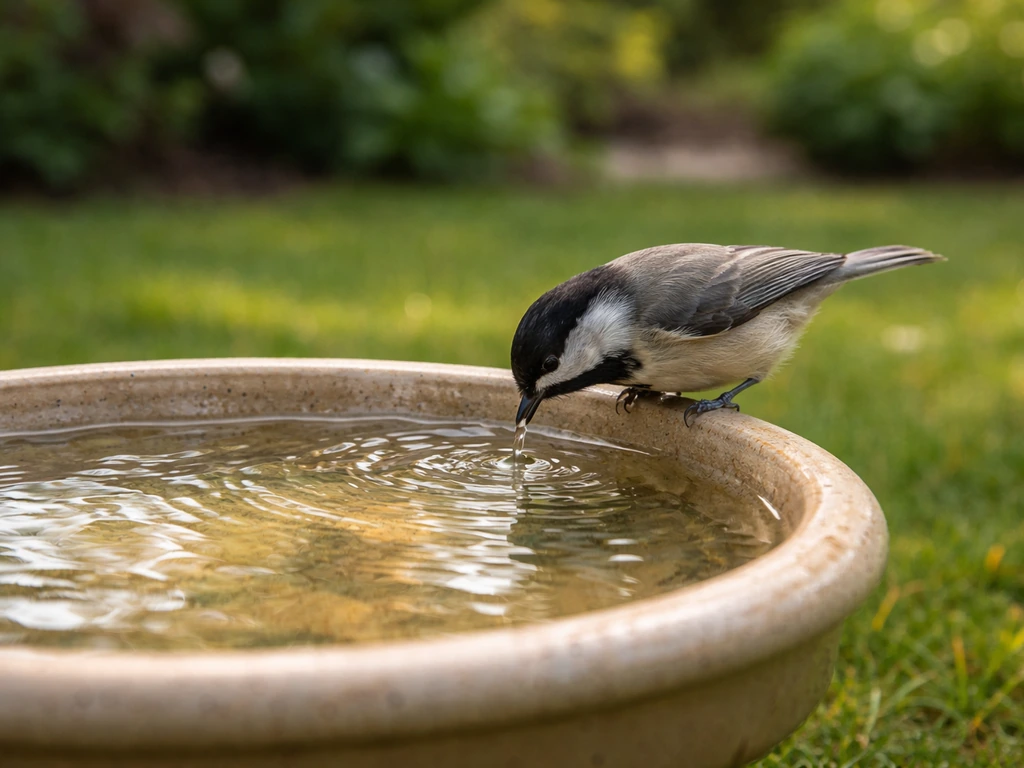
What Are Bird Baths For? Purpose, Types, and Setup
Purpose, types, and setup tips for bird baths to attract backyard birds with clean drinking and bathing water.