The bowl top is the part of a bird bath that actually does the work. It holds the water, determines how many birds can bathe at once, controls how safe and comfortable the experience is for them, and takes the brunt of weather, algae, and freeze-thaw cycles. Getting the bowl top right, whether you are buying a complete bath or replacing just the basin on an existing pedestal, makes a bigger difference to bird activity in your yard than almost any other single decision.
Bird Bath Bowl Top: Choose, Install, Maintain & Optimize

Marcus Henley
13 Aug 2026
Why the bowl top is the most important part of your bird bath
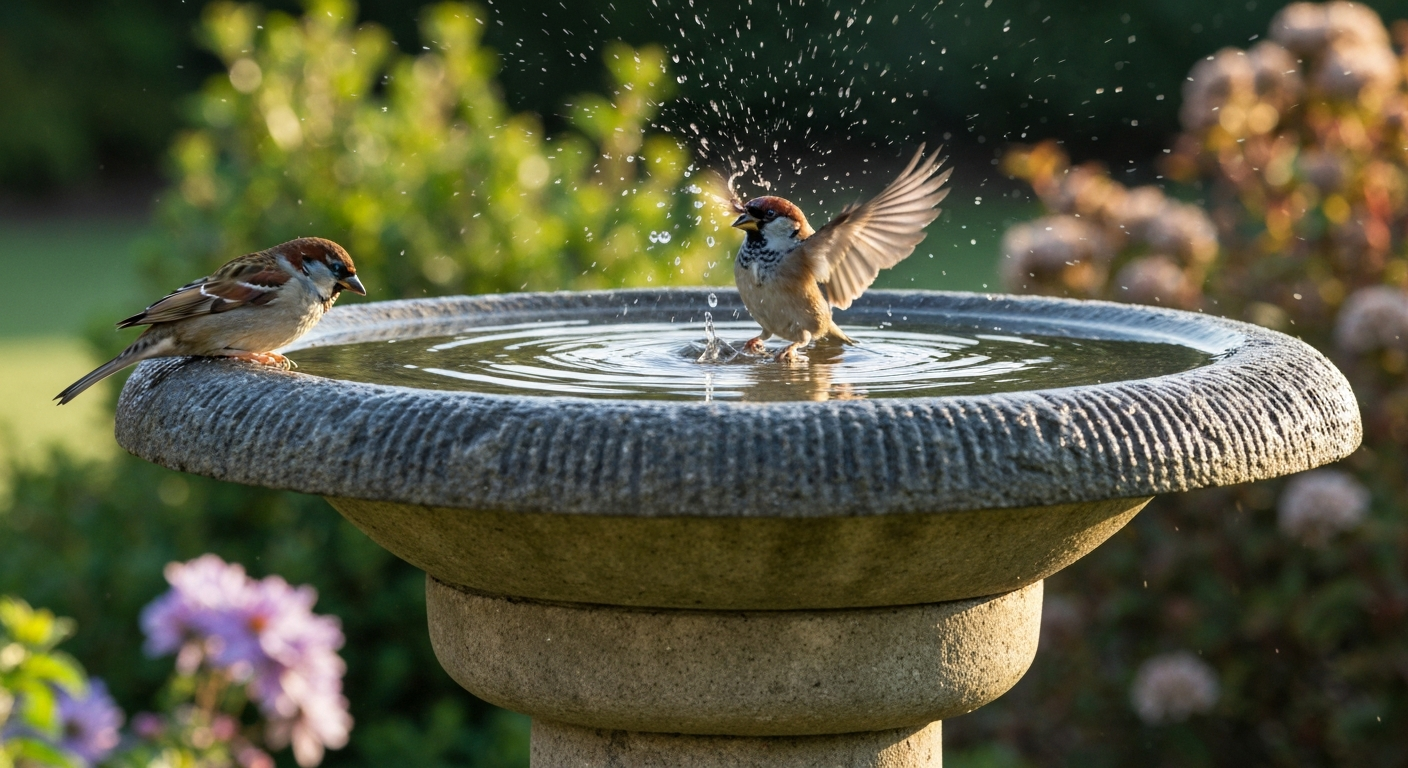
Most people focus on where to put a bird bath or what it looks like, but birds care almost entirely about the bowl itself. Is the water the right depth? Are the sides slippery or textured enough for small feet to grip? Is the basin large enough for a few birds to share? Cornell Lab recommends no more than 2 inches of water at the deepest point, sloping from about 1 inch at the edges. A steep-sided, too-deep bowl is the single most common reason backyard birders wonder why birds ignore their bath. The bowl top is also the component that cracks, chips, stains, or fills with algae first, so it is the piece you will replace and maintain most often.
What exactly is a bird bath bowl top?
A bird bath bowl top (also called the basin, dish, or top only) is the shallow water-holding dish that sits on a pedestal, hangs from a hook, rests on a stump, or mounts to a wall. It is sold as part of a complete bath or, very commonly, as a standalone replacement piece. The base and the bowl top are often made by different manufacturers and sold separately, which is why 'top only' and 'replacement top' are such common search terms. Understanding the material differences helps you pick one that survives your climate and attracts the birds you want.
Concrete
Concrete is heavy, stable, and naturally textured, which birds love. The rough surface gives small songbirds good footing and the weight keeps the bowl from tipping in wind. The downside is porosity. Concrete absorbs water into its pores, and in climates with hard freezes, that trapped water expands and cracks the bowl. Low-porosity, properly cured concrete (tested under ASTM C642) fares much better, but most mass-market concrete birdbaths are not high-performance mixes. Sealing a concrete bowl top with a penetrating concrete sealer reduces absorption, slows algae buildup, and meaningfully improves freeze resistance. Plan to re-seal once a year or as the label directs.
Ceramic and glazed clay
Glazed ceramic bowls look beautiful and are easy to clean because the smooth glaze resists algae adhesion. The catch is freeze-thaw performance. Even vitrified ceramics can have micro-pores that absorb water, and a hard freeze can crack a bowl that looks perfectly solid. Products labeled 'frost-resistant' or 'UV/frost resistant' (common on brands like Sunnydaze sold at Home Depot and Lowe's) are specifically formulated or fired to a higher standard, but that claim is product-specific. Always confirm the manufacturer's frost-resistance warranty before leaving a glazed ceramic bowl outside through a northern winter.
Metal (stainless steel and copper)
Metal bowls do not crack from freezing and are non-porous, but they heat up fast in direct sun, which can make the water uncomfortably warm and speed up evaporation. For stainless steel specifically, grade matters: 316/316L stainless contains molybdenum and resists pitting and chloride corrosion far better than the more common 304 grade, especially in coastal or salty-air environments. Copper is sometimes marketed for its antimicrobial properties because copper ions do inhibit algae, but never add copper sulfate to a birdbath as an algaecide since it can be toxic to birds and aquatic life. Solid copper components used as directed by the manufacturer are a different and safer situation.
Plastic and resin
High-density polyethylene (HDPE) and rotomolded plastic bowls are lightweight, essentially non-porous (water absorption around 0.01%), and will not crack from freezing. They are the easiest to move, clean, and store for winter. The trade-off is UV degradation: cheaper plastic bowls become brittle and faded within a few seasons unless they are made with a UV-stabilized grade. Resin bowls styled to look like stone or concrete split the difference, offering freeze resistance with better aesthetics, though they can feel cheap up close.
| Material | Freeze-thaw risk | Weight | Texture for birds | Algae resistance | Typical lifespan |
|---|---|---|---|---|---|
| Concrete | High if unsealed | Very heavy | Excellent (rough) | Poor (porous) | 5-20+ years if sealed |
| Glazed ceramic | Medium (frost-resistant versions lower) | Moderate | Good (slightly smooth) | Good (glazed surface) | 3-10+ years |
| Stainless steel (316) | Very low | Light to moderate | Fair (smooth) | Good (non-porous) | 10-20+ years |
| Copper | Very low | Moderate | Fair (smooth) | Excellent (antimicrobial) | 10-20+ years |
| HDPE/plastic | Very low | Very light | Fair-poor (smooth) | Moderate | 3-8 years (UV-stabilized) |
Size, depth, and drainage: getting the dimensions right
Cornell Lab recommends water no deeper than 1 inch at the rim sloping to about 2 inches at the center. Audubon puts the ideal depth for small birds at around 1 inch, noting that steep or slippery sides actively deter them. The National Wildlife Federation adds a hard ceiling of 3 inches maximum. I keep stones in any bowl deeper than 1.5 inches so small birds have somewhere to stand without submerging. The stones also add texture that mimics a natural puddle edge, which increases confidence for first-time visitors.
For diameter, most solo songbirds need at least 12 inches of basin, but a 16-to-20-inch bowl allows several birds to bathe at once and reduces competition, which matters if you want to see real activity. Larger bowls in the 20-to-24-inch range attract crows and larger species. If you are targeting hummingbirds specifically, a small, very shallow (0.5-to-1-inch deep) bowl or a misting attachment works better than a standard basin since hummingbirds prefer to fly through mist rather than stand in water.
Drainage is worth thinking about before you buy. A bowl with a center drain hole lets you flush and refill quickly, which matters because mosquitoes can hatch from standing water in as little as 48 hours under warm conditions and complete their life cycle in 7 to 10 days. Even without a drain hole, changing the water every one to three days in summer prevents breeding. If you plan to convert the bowl into a fountain or run a pump, a pre-drilled center hole in the 1/4-to-3/8-inch range is ideal for routing tubing.
Measuring for a replacement top: getting the fit right before you buy
Replacement tops are widely available as 'top only' or 'bowl only' products, but compatibility is not automatic. Before you order anything, take four measurements of your existing setup.
- Outer diameter of the bowl: measure across the widest point of the rim edge, not the water area.
- Inner basin diameter: the actual water-holding area from inside rim to inside rim.
- Seat or pedestal contact diameter: if your bowl rests in a cup or collar on the pedestal, measure the diameter of that seating area, because a bowl that is too narrow will rock or fall.
- Drain hole size (if present): measure the existing hole if you plan to reuse the same pump tubing or drain plug.
Most 'universal' replacement trays and bowls assume a pedestal seat diameter in the 8-to-12-inch range and an outer bowl diameter of 16 to 20 inches, but these are not rigid standards. Write down all four numbers before shopping. If your pedestal has a specific seating collar, a bowl that is even an inch narrower than the collar will wobble dangerously. Some pedestals use a lip-and-groove system; others just use gravity and a flat top surface. When in doubt, a slightly larger bowl that overhangs the pedestal evenly is safer than one that sits inside a collar it does not fill properly.
Where to buy a replacement bowl top
Replacement tops are easier to find than most people expect. Lowe's carries ceramic and metal bath tops in-store and online, including Sunnydaze and similar brands with listed dimensions you can check against your measurements. Home Depot stocks comparable lines. Local garden centers sometimes carry concrete and ceramic replacement basins and the staff can often help you match a top to a common pedestal style. For the widest selection of sizes, shapes, and price points, online retailers like Amazon and Walmart have dedicated 'bird bath replacement top' and 'bowl only' categories where you can filter by diameter. For help narrowing options, see our roundup of the best bird bath choices to match different materials, sizes, and budgets. Prices range from roughly $20 for a basic plastic or small plastic tray up to $150 or more for a large decorative glazed ceramic or copper basin.
When reading online product listings, look for these specifics: outer diameter, basin depth, material and whether it is UV or frost rated, and whether the seat diameter is listed. Listings that omit the seat or pedestal contact diameter require a follow-up question to the seller or a check of the Q&A section before you order. Buying locally has the obvious advantage of being able to return a bowl that does not fit without shipping hassle.
Step-by-step: choosing, buying, and installing a new bowl top
- Measure your existing base as described above: outer bowl diameter, inner basin diameter, pedestal seat diameter, and drain hole size. Write them down.
- Decide on your material based on your climate (freeze risk), weight preference, and how much maintenance you want to do. Sealed concrete or frost-rated ceramic for permanence; plastic or resin for easy winter storage.
- Choose your size: 16 to 20 inches outer diameter for most songbirds, 20 to 24 inches if you want to attract crows or multiple birds at once, smaller for hummingbird-specific setups.
- Confirm depth: aim for 1 inch at the edges sloping to no more than 2 inches in the center. If the bowl you find is deeper, plan to add flat stones inside.
- Order or buy your bowl, verifying the seat diameter matches your pedestal contact area within about 0.5 inches.
- Before placing the bowl, clean the top surface of the pedestal and remove any debris or old sealant residue.
- Set the bowl on the pedestal and check for rocking. A bowl that rocks can be stabilized with a thin bead of non-toxic outdoor silicone sealant between the bowl and the pedestal top, or with rubber furniture pads.
- Use a small level to confirm the bowl is sitting flat. Even a slight tilt will cause the water to pool on one side, reducing the usable shallow-water area.
- Fill with water to your target depth, add stones if needed, and check again that the rim is level before calling it done.
- If you are in a freeze-thaw climate and using concrete or ceramic, apply a penetrating concrete or masonry sealer to a new concrete bowl or confirm frost-resistance certification on ceramic before the first cold season.
Converting your bowl top into a fountain
Moving water attracts substantially more birds than still water. Cornell Lab and Audubon both emphasize this, and from my own experience the difference is dramatic: a dripper or small fountain can triple the number of species stopping by. Converting a plain bowl top into a fountain is straightforward if you plan ahead.
The simplest approach is a submersible fountain pump placed in the bowl. A small 80-to-120 GPH pump is plenty for a standard 16-to-20-inch basin. The pump sits on the bowl floor, the cord runs over the rim or through a notch, and the spray head sits at or just above water level. This requires no drilling and is reversible.
For a cleaner look, drill a center hole in the bowl (1/4-to-3/8 inch, sized to your tubing) to route the pump tubing or power cord up through the pedestal. Use a diamond-tipped drill bit for ceramic or a masonry bit for concrete, keep the bit wet during drilling to prevent cracking, and work slowly. Seal around the hole with waterproof silicone after routing the tubing. A fountain-top attachment (a decorative spray head or bubbler that threads onto the pump outlet) gives you a range of spray patterns from a gentle bubble to a small geyser. Fountain-top attachments are sold separately and most use standard 3/8-inch or 1/2-inch barb fittings that match common small pumps.
Solar-powered fountain pumps are a popular no-cord option. They work well in full-sun locations and most include a small panel that sits beside or clips to the bowl rim. The limitation is intermittent operation when clouds pass, which means the fountain stops and starts throughout the day. For consistent movement, a corded pump on a GFCI outlet is more reliable. If you want to explore fountain-specific bowl tops designed with pump housing built in, those are covered in more detail as a related topic. See bird bath vs fountain for a detailed comparison of fountain-specific tops and conversion trade-offs.
Heated and solar-equipped tops for year-round use
In climates where temperatures drop below freezing regularly, a standard bowl top will ice over within hours. Birds need liquid water in winter just as much as in summer, and a heated bowl top or a separate de-icer can keep your bath open when everything else freezes.
Built-in heated bowl tops
Some manufacturers sell bowl tops with a heating element molded into the basin. These are typically plastic or resin (since a heating element embedded in ceramic or concrete raises cracking and electrical risks) and are rated for outdoor GFCI outlet use. They maintain water at just above freezing, typically around 35 to 40°F, which is enough to keep ice from forming without wasting energy warming the water significantly. Look for thermostatically controlled models that only draw power when the temperature drops near freezing, since these use far less electricity over a winter than always-on designs.
Separate de-icer units for existing bowls
If you already have a bowl top you like, a submersible de-icer (also called a birdbath heater) drops into your existing basin and plugs into a GFCI outdoor outlet. These are available in wattages from about 50W to 250W depending on your typical cold. Most have a built-in thermostat that activates at 35-to-40°F and turns off above that. De-icers work well in concrete and plastic bowls; use caution with thin ceramic since the localized heat near the element can stress the glaze over time.
Solar options and their limits
Solar-heated bird bath tops exist but are primarily effective for mild shoulder-season frost rather than hard northern winters. In climates where temperatures regularly drop below 20°F (-7°C), solar cannot keep up with the heat loss from the water. In USDA zones 7 and warmer, a solar-equipped dark-colored basin in a south-facing location can extend the ice-free season meaningfully without any electrical connection.
When to winterize instead of heat
If you live where it stays below freezing for weeks at a time and bird activity at your bath is low, storing the bowl top indoors is often the more practical choice. Ceramic and concrete tops that are not rated frost-resistant should always come inside before a hard freeze. Drain, clean, and store them in a garage or shed. Bring a spare plastic bowl outside as a temporary winter station if you want to keep water available.
Cleaning, algae, and mosquito control
The National Wildlife Federation recommends changing bird bath water every one to two days in warm weather, and I would say that is the single most important maintenance habit you can build. Beyond mosquito prevention (eggs hatch in 48 hours, adults emerge in 7 to 10 days), fresh water simply attracts more birds. Stagnant, green-tinged water deters most species.
For scrubbing, use a stiff-bristle brush and plain water for weekly cleanings. For a deeper clean when algae is established, a diluted white vinegar solution (roughly 1 part vinegar to 9 parts water) works well and is bird-safe once rinsed thoroughly. Avoid soap, bleach in strong concentrations, or copper sulfate algaecides, all of which are harmful to birds. For tips on preventing and removing bird bath top mold, consult a dedicated guide. A sealed concrete or glazed ceramic surface is significantly easier to scrub clean than an unsealed porous concrete surface where algae gets into the pores.
Placement, creative mounting, and bird-attraction tips
Where you put the bowl top matters almost as much as the bowl itself. The National Wildlife Federation recommends placing a bird bath near shrubs or low cover so birds have somewhere to retreat quickly if a predator appears, but not so close that a cat can use the shrubs as a launch point. A distance of about 5 to 10 feet from cover is a good balance.
Beyond a traditional pedestal, bowl tops can rest on flat tree stumps (a naturally textured, earthy-looking option that looks deliberate and works well in wooded yards), on wall-mounted brackets, on low garden tables, or directly on the ground for species like robins and mourning doves that prefer ground-level water. A bowl top on a tree stump is one of the easiest DIY placements: cut the stump level, confirm it is stable, and set the bowl directly on it with a rubber furniture pad underneath for grip.
For hummingbirds, add a mister attachment to any shallow bowl top. Hummingbirds are drawn to the sound and spray of a mister and will hover through the fine droplets. For crows and larger corvids, use a wider and slightly deeper bowl (up to 3 inches deep is acceptable) placed in an open area with good sightlines. For small warblers and migrants, moving water from a dripper or small fountain is the most effective attractor, particularly during fall migration.
Troubleshooting common bowl top problems
- Cracking after winter: the bowl was not sealed (concrete) or was not frost-rated (ceramic) and freeze-thaw expansion caused damage. Seal concrete annually and store non-frost-rated bowls indoors before the first hard freeze.
- Wobbling on the pedestal: the bowl seat diameter is too small for the pedestal collar, or the pedestal top is uneven. Use rubber furniture pads or a thin bead of outdoor silicone to stabilize.
- Algae returning quickly after cleaning: the bowl surface is too porous (unseal concrete) or the bath is in full sun with no water movement. Seal the surface, add a small fountain pump, and clean every 3 to 5 days in summer.
- Birds ignoring the bath: water is too deep, sides are too steep, or no nearby cover. Add stones to create shallow zones (1 inch), place the bath within 5 to 10 feet of shrubs, and add a dripper or fountain.
- Water evaporating too fast: metal bowls in direct sun heat quickly and evaporate fast. Move to partial shade or switch to a lighter-colored concrete or ceramic bowl.
- Leaking through the bowl: a crack (most common in concrete or ceramic) or a poorly sealed drain hole. Minor cracks in concrete can be filled with hydraulic cement or a waterproof concrete patch; ceramic cracks generally mean it is time to replace the bowl.
DIY bowl top ideas worth trying
A large glazed terracotta saucer (the kind sold as a plant tray in 16-to-18-inch sizes) makes an excellent bird bath bowl top for a few dollars. It sits flat on any stable surface, has a gentle slope, and the unglazed interior of terracotta gives birds good traction. You can paint the outside with exterior paint for color. A large shallow ceramic mixing bowl from a thrift store works the same way. For a fountain conversion, drill a center hole with a diamond bit, route a small pump tube through it, and seal with waterproof silicone. For more bird bath top ideas, see a curated collection of DIY and store-bought options to suit any yard.
If you want something more durable and custom-shaped, hypertufa (a mix of Portland cement, peat moss, and perlite) makes a lightweight, frost-tolerant, naturally textured bowl that birds love. Mold it in a large mixing bowl lined with plastic, let it cure for several weeks, then seal it before use. It weighs a fraction of cast concrete and has a natural, mossy appearance that blends into garden plantings beautifully.
FAQ
What is a "bird bath bowl top" and what materials are commonly used?
A bird bath bowl top is the removable basin portion of a bird bath (the part that holds water). Common materials: concrete (heavy, durable but porous unless sealed), glazed ceramic (attractive, variable freeze resistance), metal (stainless steel or copper—durable but can heat in sun), and plastic/HDPE (lightweight, nonporous, UV‑stabilized versions last outdoors). Each material has tradeoffs for weight, freeze resistance, slipperiness, and maintenance.
How deep and large should the bowl top be for most backyard birds?
Aim for shallow water: edges about 1 inch (2.5 cm) and a maximum of ~2 inches (5 cm) in the middle for most small birds; up to 3 inches (7.5 cm) for larger species. Bowl diameter 12–20 inches suits many species; smaller saucers (8–10 in) attract small songbirds; larger, shallow bowls attract robins and larger visitors. Provide stones or gradual slopes so birds can access multiple depths.
How do I measure my existing pedestal or base to buy a replacement top (top‑only)?
Measure: 1) bowl outer diameter; 2) inner diameter where water sits; 3) bowl lip thickness and any flange or seat used by the pedestal; 4) bowl’s underside seat diameter (the flat ring or recess that rests on the pedestal). Record any mounting hole(s) or notches. Bring these measurements to the store or match product specs online—look for listings that include seat diameter or list as "universal" with compatible ranges.
Where can I buy replacement bird bath tops and what should I check before buying?
Buy from garden centers, big‑box retailers (Lowe’s, Home Depot), birding retailers, or online marketplaces. Before buying check: exact diameters (outer and seat), bowl depth, material, weight (pedestal capacity), whether it has a predrilled drainage or pump hole, frost‑resistance claims, and return policy. For heavy concrete or ceramic tops verify the pedestal can safely support the weight.
How do I install a replacement top on a pedestal or other base—step‑by‑step?
1) Clean base and seat area; remove debris. 2) Confirm seat diameter matches bowl recess. 3) If heavy, get a helper. Lower bowl straight down onto the seat so it sits evenly. 4) If bowl wobbles, add a weather‑resistant rubber or silicone gasket or silicone bead to the seat to level and cushion. 5) If required for stability, use non‑permanent exterior silicone sealant sparingly between pedestal and bowl (allow future removal). 6) Fill partially with water and confirm stability before full use.
Can I convert a bowl top into a fountain or add a pump? How?
Yes. Common options: 1) Submersible pump: choose a pump rated for the bowl size and flow; place pump at bowl bottom, route cord through existing drain hole or under the pedestal; hide tubing in pedestal. 2) Drill a small center hole (1/4"–3/8" depending on tubing) for tubing/cord if bowl material allows—use appropriate drill bit (masonry for concrete/ceramic) and seal around tubing with waterproof silicone. 3) Add a dripper or bubbler attachment designed for bird baths. Ensure electrical safety (GFCI outlet), weatherproof cord routing, and that flow creates subtle movement—small drips or gentle ripples attract birds more than high jets.
Next Articles
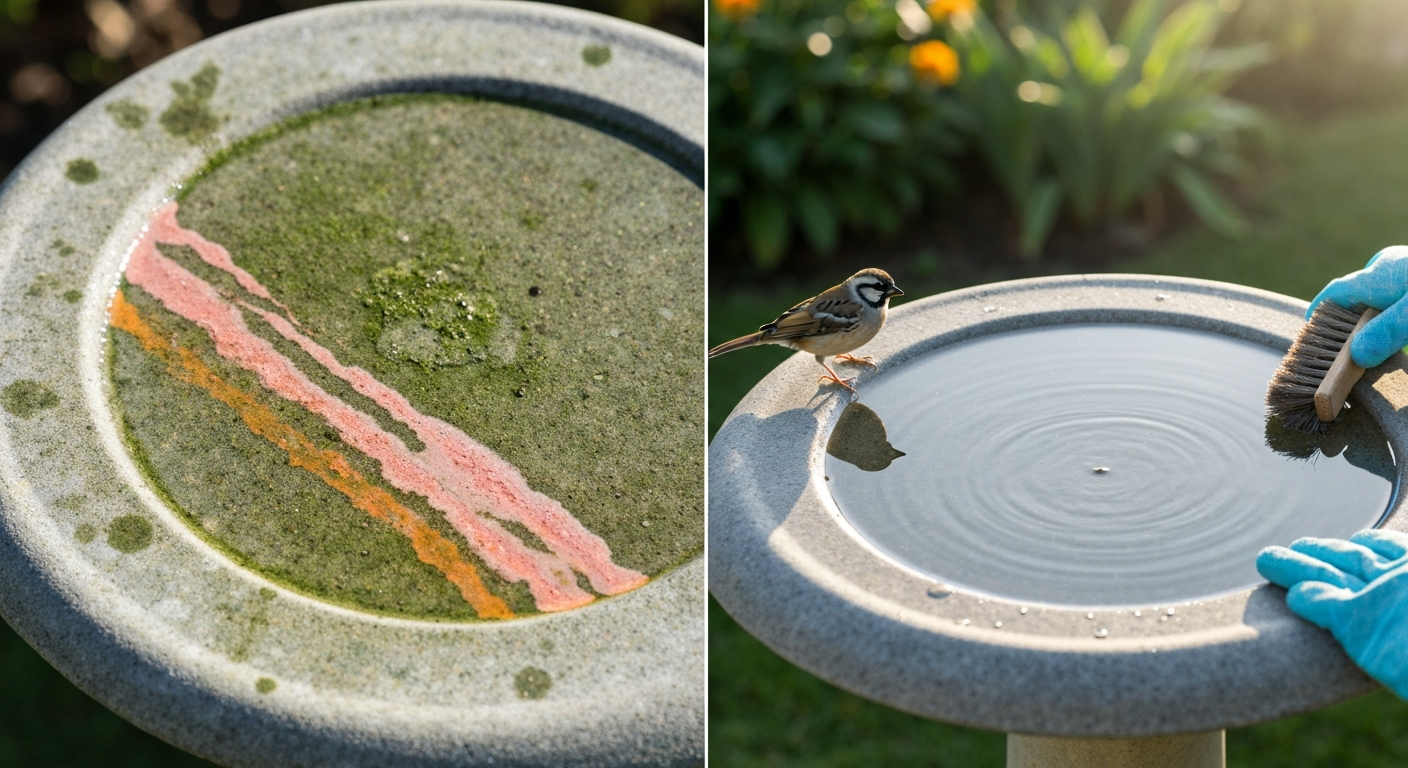
bird bath top mold: identify, clean, prevent & replace guide
Remove mold from bird bath tops: step-by-step safe cleaning, material-specific methods, prevention and replacement tips.
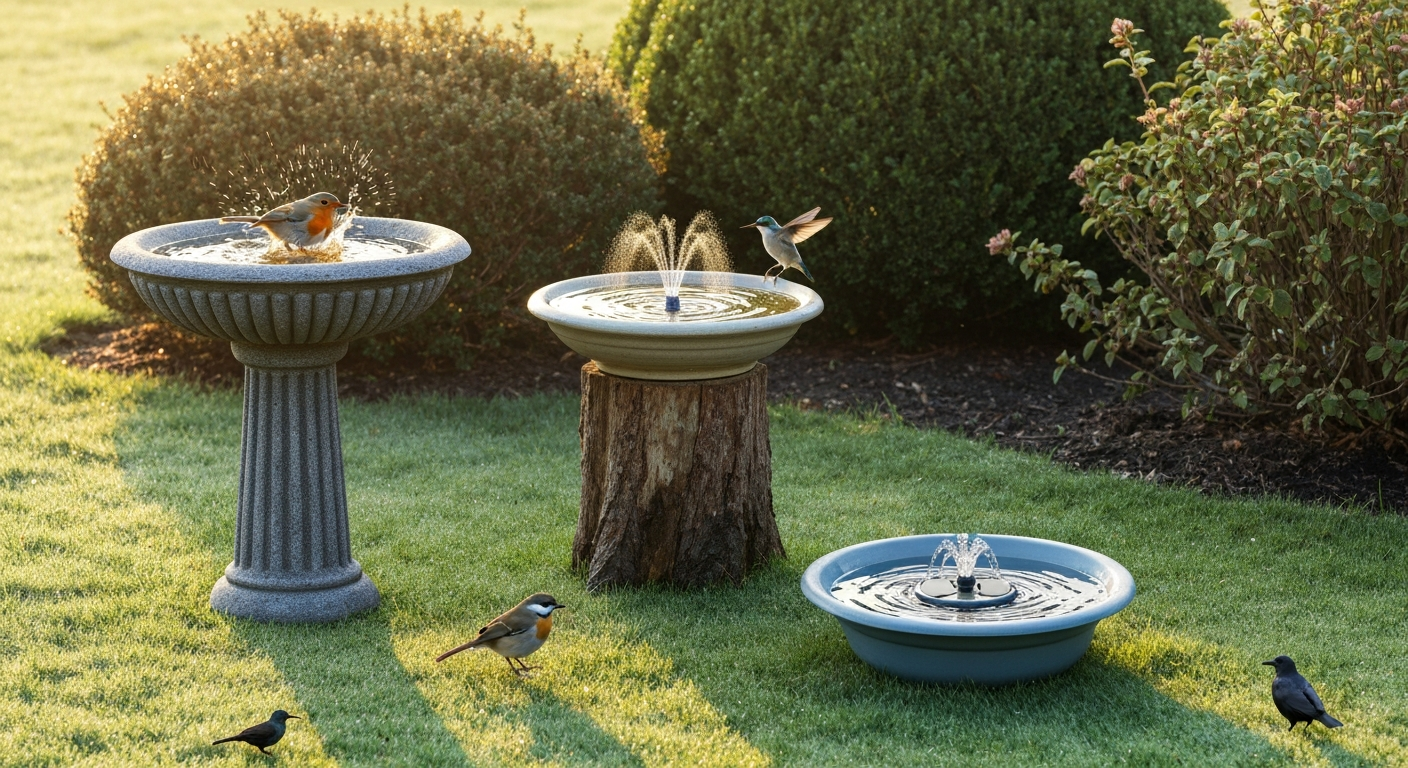
Bird Bath Top Ideas: Materials, Mounts, DIY & Care Tips & Guide
Bird bath top ideas: choose, build, install and maintain tops, fountains, heated/solar inserts and DIY tips to attract鸟
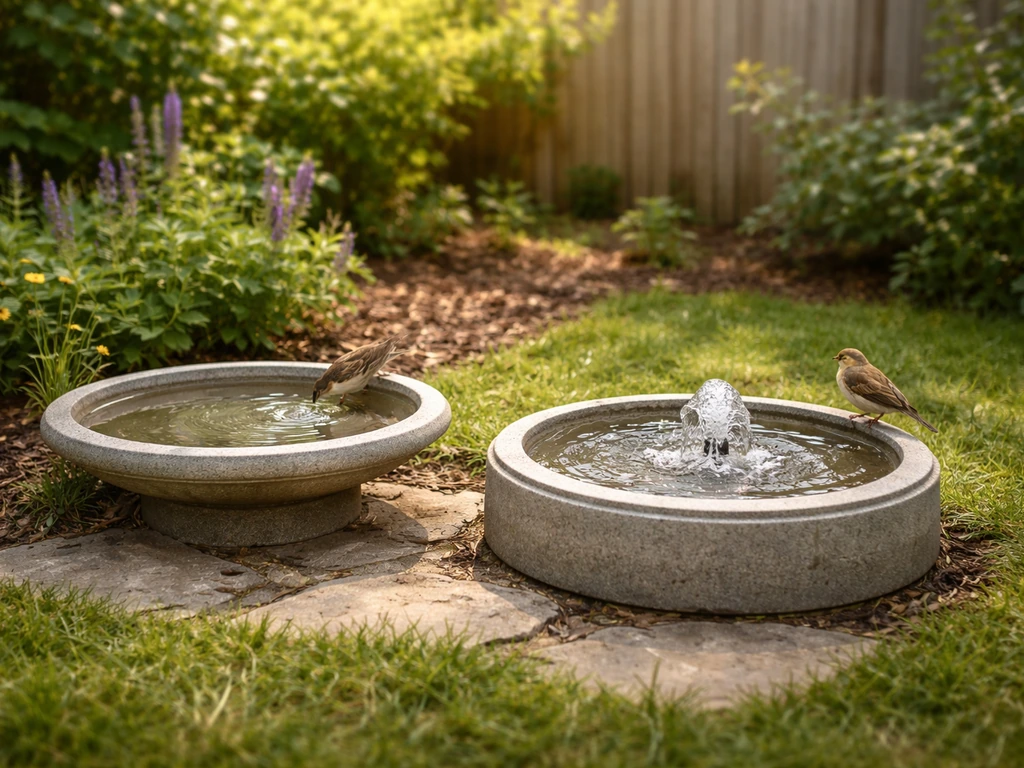
Bird Bath vs Fountain: Which Attracts More Backyard Birds?
Compare bird bath vs fountain for backyard birds, including placement, maintenance, noise, mosquitoes, freezing, and set