The best bird bath is shallow, wide, textured, and placed where birds feel safe. That is the short answer. Everything else, the material, the style, the heater, the cleaning routine, is just detail work that gets you from a bath birds ignore to one that gets a dozen visitors before breakfast. Let me walk you through all of it so you can make a real decision today.
Bird Bath Best Choice: Types, Setup, and Maintenance Tips

Marcus Henley
22 Mar 2026
How to Choose the Best Bird Bath
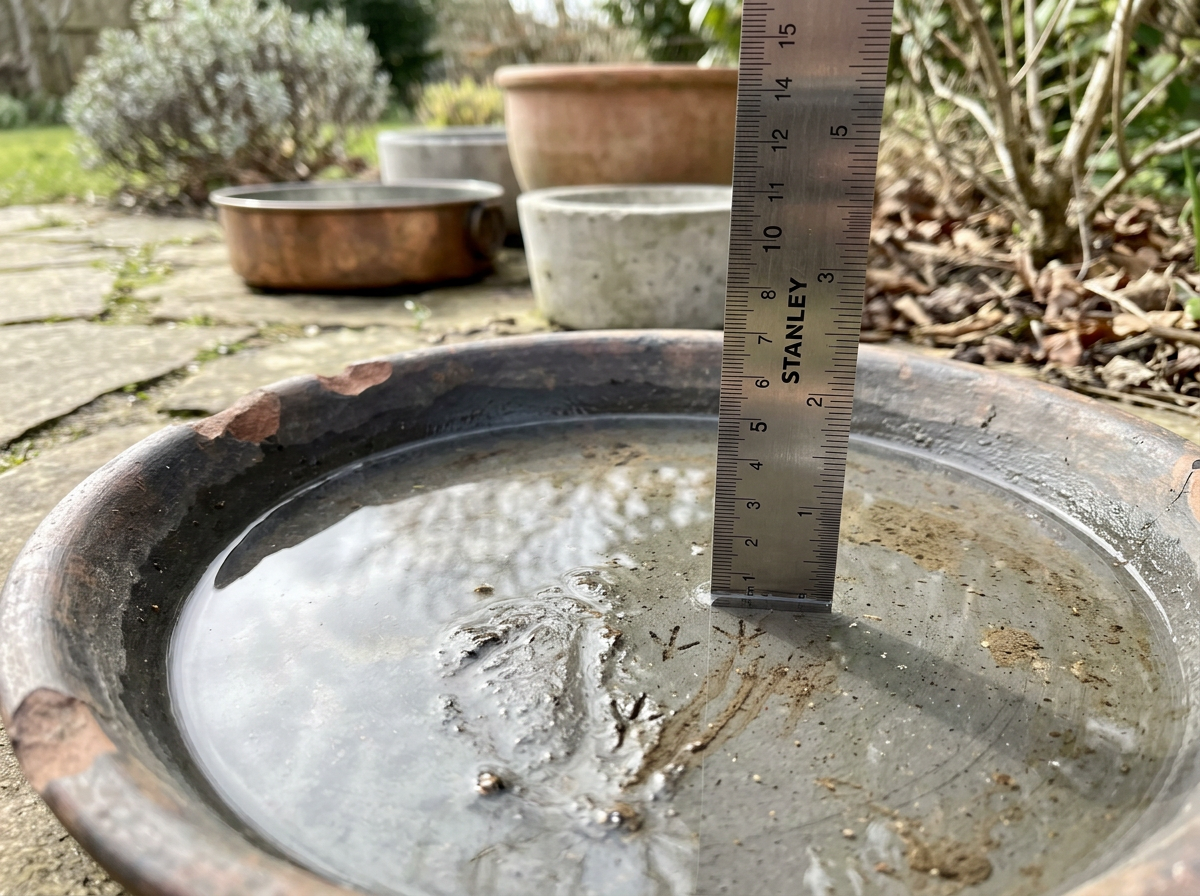
Start with depth, because this is the single biggest reason bird baths fail. Audubon recommends keeping water at about 1 to 1.5 inches (2.5 to 3.8 cm) deep, and the RSPB puts the maximum at around 10 cm (roughly 4 inches). The sweet spot that works for the widest range of species, from tiny finches to larger thrushes, is somewhere between 2.5 cm and 10 cm. Go deeper than that and smaller birds will avoid it entirely. If your current bath is too deep, just add a flat rock or two to raise the floor.
Width matters almost as much as depth. The RSPB recommends a basin wider than 30 cm (about 12 inches) so multiple birds can use it at the same time. A bigger surface also means more edge space, which is where most birds prefer to stand while they drink. If you can go wider, do it.
The sides of the basin should slope gently rather than drop steeply. This is not just an aesthetic preference; sloping sides help birds move confidently from the rim into shallow water and back out. A bath that looks like a bowl of cereal is safer and more attractive than one shaped like a bucket.
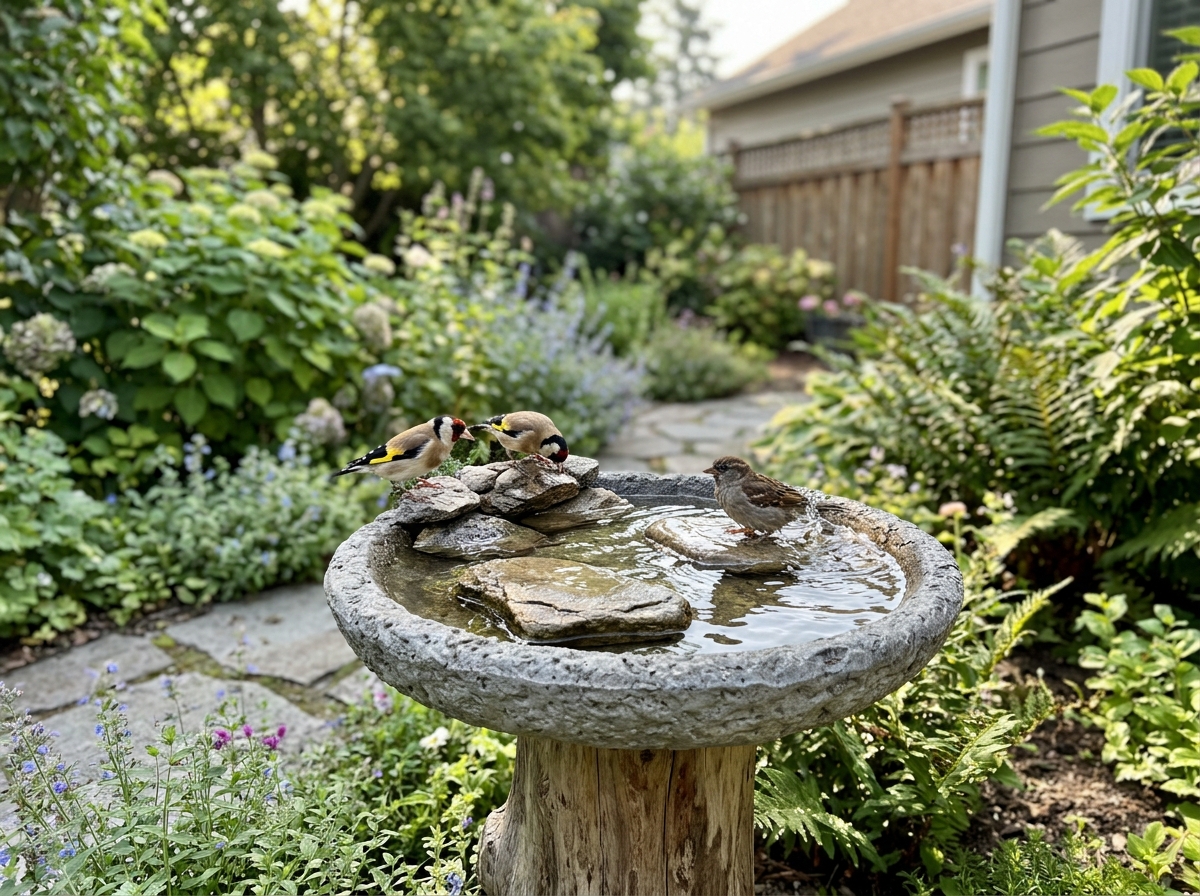
Texture on the basin floor is also worth paying attention to. A smooth, slippery surface makes birds nervous and they will leave quickly. Look for a textured or rough finish, even a basic polyresin bath in a weathered stone finish does this well. If you already have a smooth bath, roughing up the surface with coarse sandpaper or placing a flat, rough stone inside will help.
Material Comparison
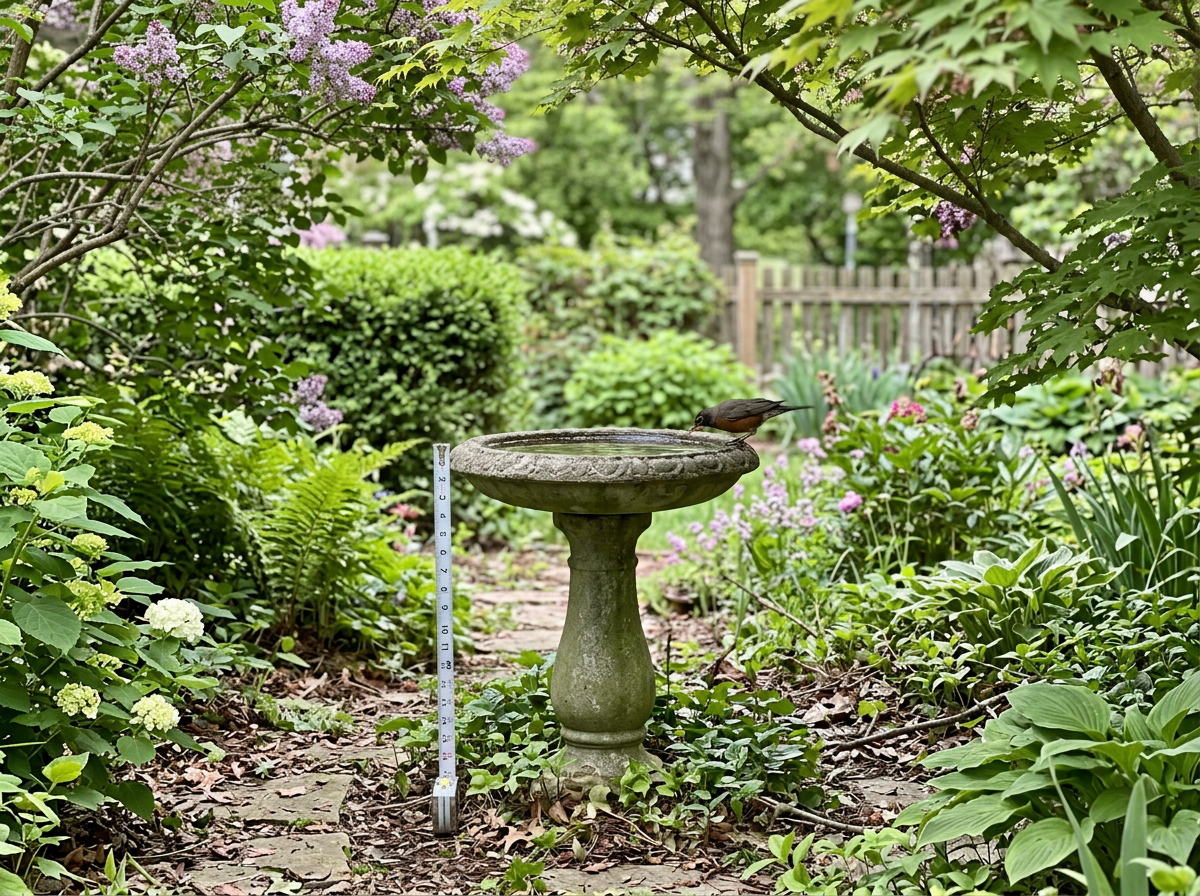
Material affects durability, weight, freeze resistance, and how much maintenance you will do. Here is a straightforward breakdown to help you decide.
| Material | Durability | Freeze Resistance | Weight | Best For |
|---|---|---|---|---|
| Concrete / Stone | Very high | Low (cracks when wet and frozen) | Heavy | Stable, permanent setups in mild climates |
| Ceramic / Mosaic | Moderate | Low (chips and cracks in freeze/thaw cycles) | Moderate | Aesthetics, warm climates |
| Polyresin / Resin | High | Good | Light to moderate | Most climates, easy to move |
| Plastic | Moderate to high | Good (does not shatter) | Light | Budget setups, cold climates |
| Glass | Low to moderate | Very low (highly susceptible to frost damage) | Moderate | Decorative, indoor-adjacent use only |
If you live somewhere that freezes regularly, concrete, stone, ceramic, glass, and mosaic baths are all at real risk of cracking when water inside them expands as it freezes. Plastic and polyresin hold up much better in those conditions. If you love the look of stone or ceramic, a de-icer (more on that below) can reduce freeze damage by keeping the water from freezing solid in the first place.
Style and Height
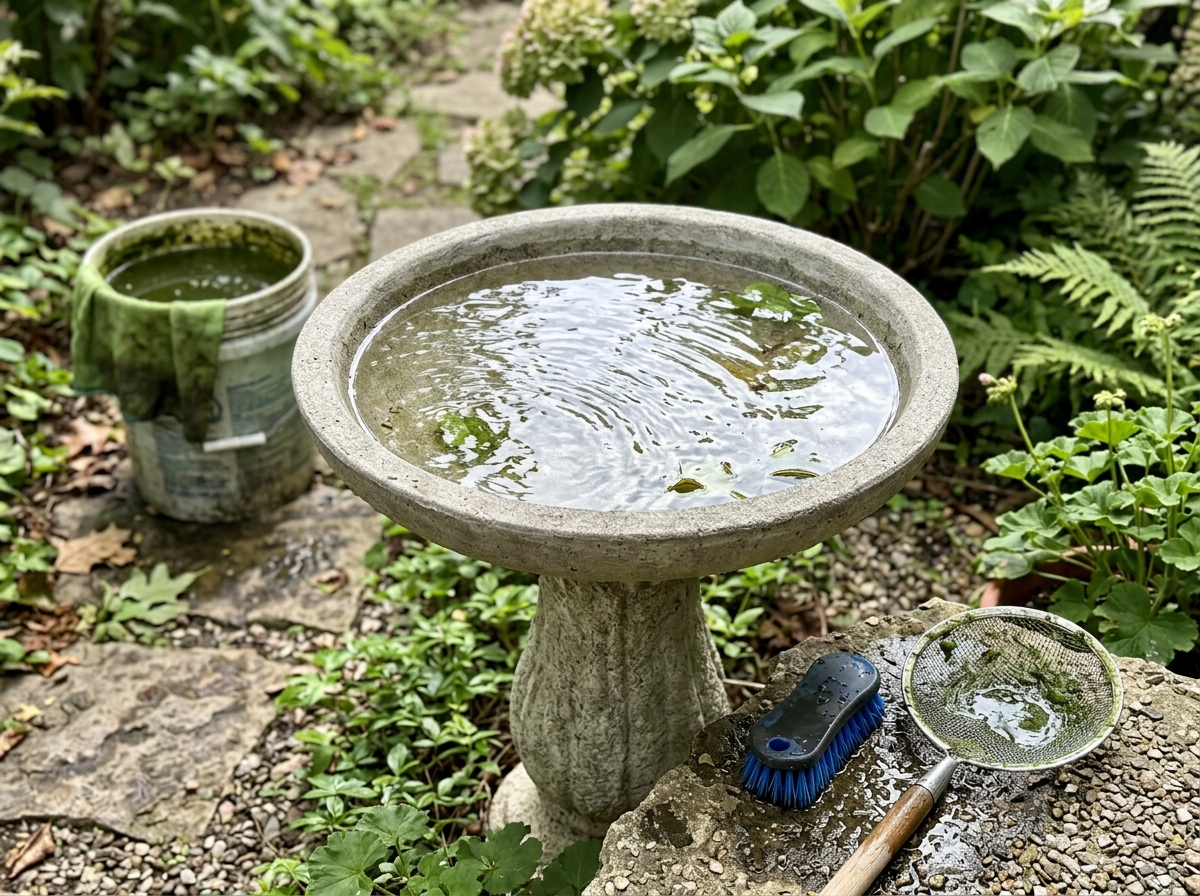
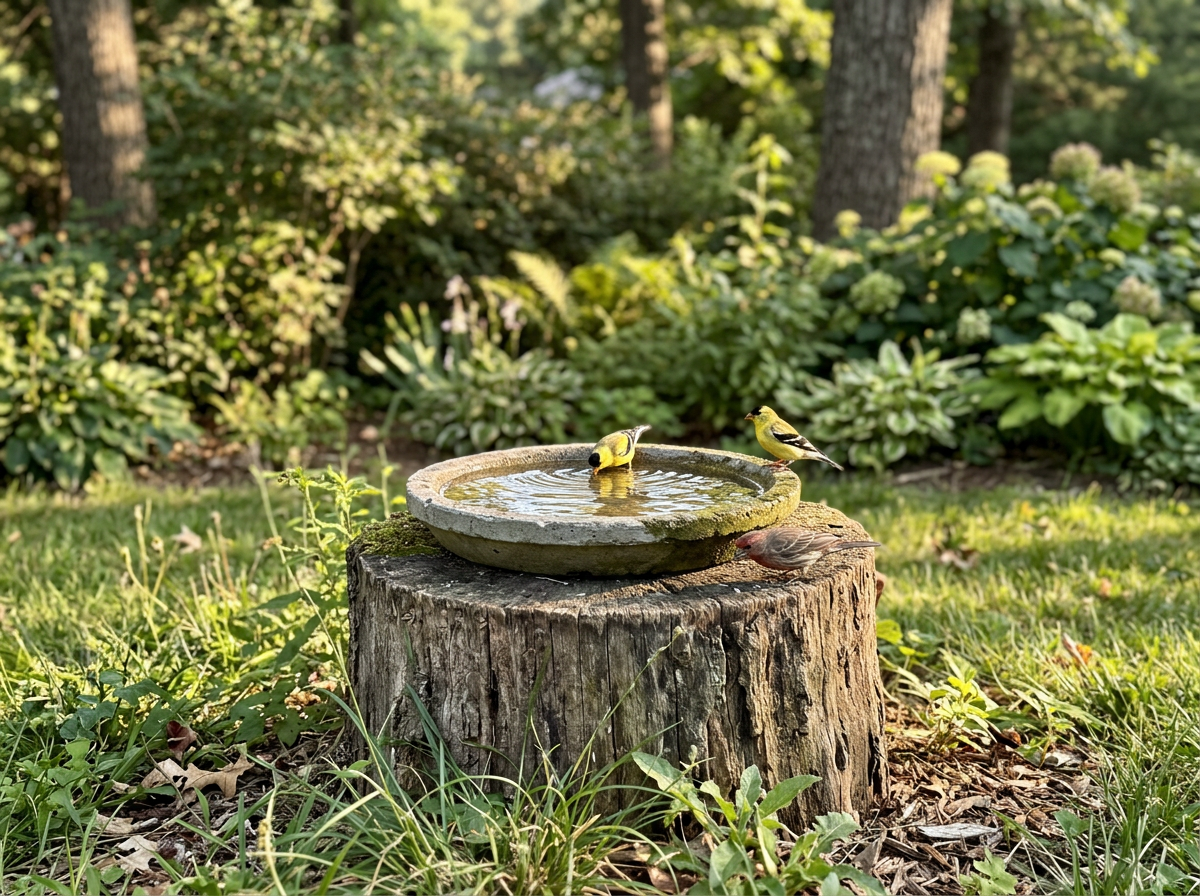
Pedestal baths are the classic choice and work well because they give birds a clear sightline in all directions. Ground-level baths actually attract more species since many birds prefer drinking and bathing at ground level, but they are easier for cats to approach. Hanging baths are fine for small birds but tend to splash water out quickly. If you want to try something creative, a bird bath on top of a tree stump can work beautifully and feels very natural in a garden setting. The style is less important than depth and placement, so pick what fits your yard and then get the specs right.
Where to Place Your Bird Bath for Maximum Visitors
Placement is where a lot of people go wrong, and it is usually fixable in ten minutes. Birds need two things from a bath location: a clear view of approaching predators and a quick escape route. Those two needs pull in slightly different directions, so the goal is to find a middle ground.
Most guidance lands on roughly 10 feet (about 3 metres) from low-growing shrubs or cover. That gives birds a place to retreat to if something spooks them, without giving a hiding cat or hawk a launch pad for ambush. blank" rel="noopener noreferrer">UF/IFAS Extension specifically recommends about 10 feet from low-growing shrubs so birds can spot approaching predators early. The Los Angeles Times bird bath guidance puts nearby plants at 3 to 6 feet, which works if the cover is not dense enough to conceal a predator. I generally aim for the 10-foot mark and adjust from there based on what I observe.
Shade matters seasonally. In summer, partial shade slows evaporation, keeps the water cooler and more appealing, and reduces algae growth. In winter or cool weather, a sunnier spot helps keep water from freezing as quickly and may make birds more comfortable. If you can only pick one position, partial shade (morning sun, afternoon shade) tends to work year-round better than full sun or full shade.
Height and visibility also play a role. A bird bath that is tucked behind a fence or buried in dense plantings is basically invisible to passing birds. You want it in a spot where a bird flying overhead can actually see the water glinting. Movement helps too, which is one reason fountain-style baths and baths with drippers or wigglers attract more birds. If you are deciding between a bird bath vs fountain, the main difference is that fountains use moving water which many birds find easier to notice from a distance. Moving water is visually and audibly obvious from a distance in a way that a still pan of water is not.
Keep the bath away from your bird feeders if possible. Feeders create husks, droppings, and debris that fall into the water and make it dirty faster. A few feet of separation keeps both cleaner for longer.
Keeping the Water Clean and Fresh
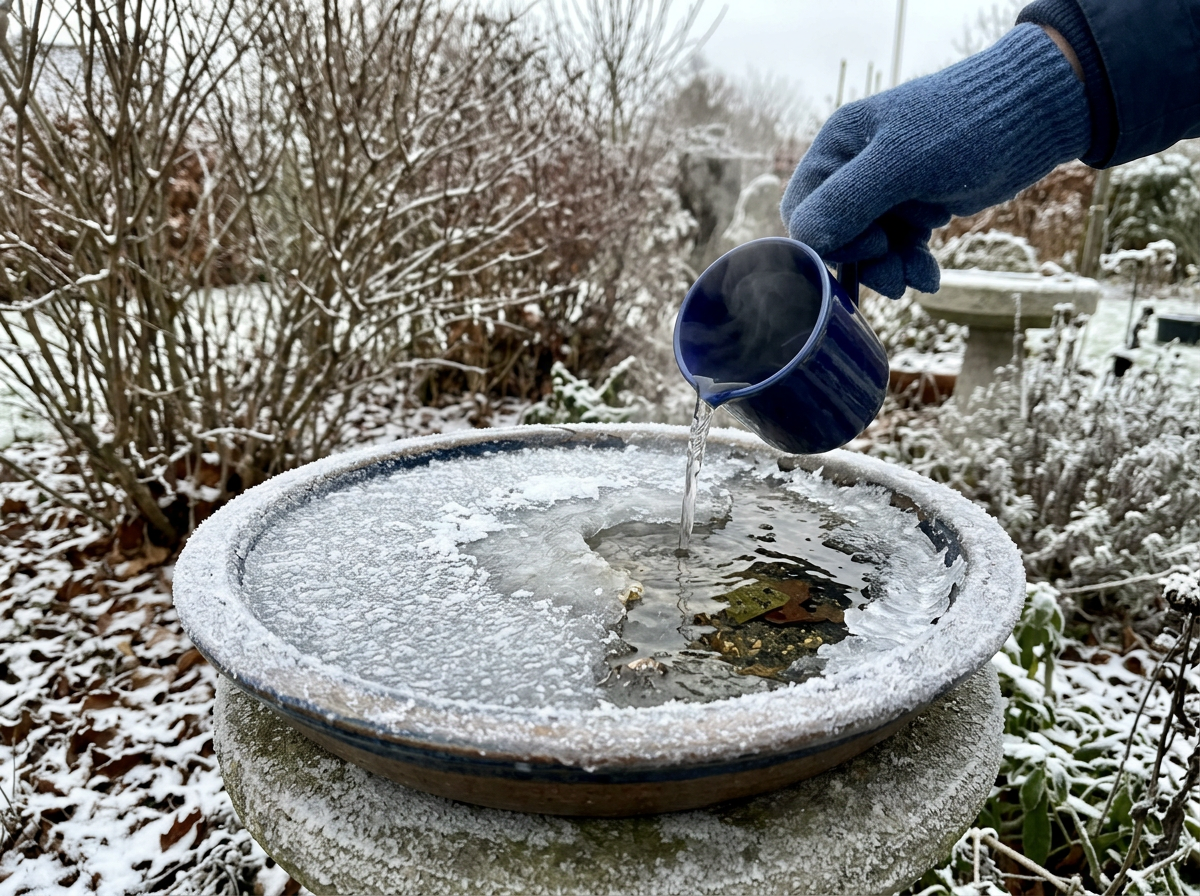
This is the part most people underestimate. A bath with old, green, or stagnant water will not attract birds, full stop. And beyond bird appeal, standing water is a mosquito breeding ground. Here is what the evidence actually recommends.
The RSPB says ideally you should provide clean water every day, and their product guidance specifically says to rinse the basin daily, remove droppings and debris, and refill. That is the gold standard. Realistically, if you can manage every two to three days, you will stay ahead of algae and mosquito larvae. Clark County Mosquito Control recommends changing bird bath water at least twice a week to prevent mosquito breeding. Illinois mosquito guidance says every 3 to 4 days is sufficient. Aim for every 2 to 3 days as your practical target.
For cleaning the basin itself, skip the bleach and soap. Bleach residue is harmful to birds, and soap leaves a film. The recommended approach from Audubon (via Oregon Master Gardeners) and widely backed up elsewhere is a solution of 9 parts water to 1 part white vinegar. If you notice bird bath top mold or a slick film forming, increase scrubbing and refresh the water more often. Scrub the basin with a stiff brush, rinse thoroughly until the vinegar smell is completely gone, then refill. Do a proper scrub like this at least once a week, more often in warm weather when algae grows faster.
- Empty old water and knock out any leaves, droppings, or debris
- Scrub the basin with a stiff brush and a 9: 1 water-to-vinegar solution
- Rinse completely until no vinegar smell remains
- Refill with fresh, clean water to the correct depth (1 to 1.5 inches)
If algae keeps coming back fast, try moving the bath to a spot with slightly less direct afternoon sun. You can also add a small solar-powered agitator or dripper, since moving water resists algae significantly better than still water.
Managing Heat, Freezing, and Other Climate Challenges
Hot Weather
In summer heat, water evaporates quickly and warms up fast, making it less appealing to birds and speeding up algae and bacterial growth. Check and top up the water daily. Shade helps enormously here. If you can place the bath where it gets morning sun but is shaded by early afternoon, you will dramatically reduce evaporation and keep temperatures in a range birds actually prefer. A light-colored or light-reflective basin also stays cooler than dark materials in direct sun.
Cold Weather and Freezing
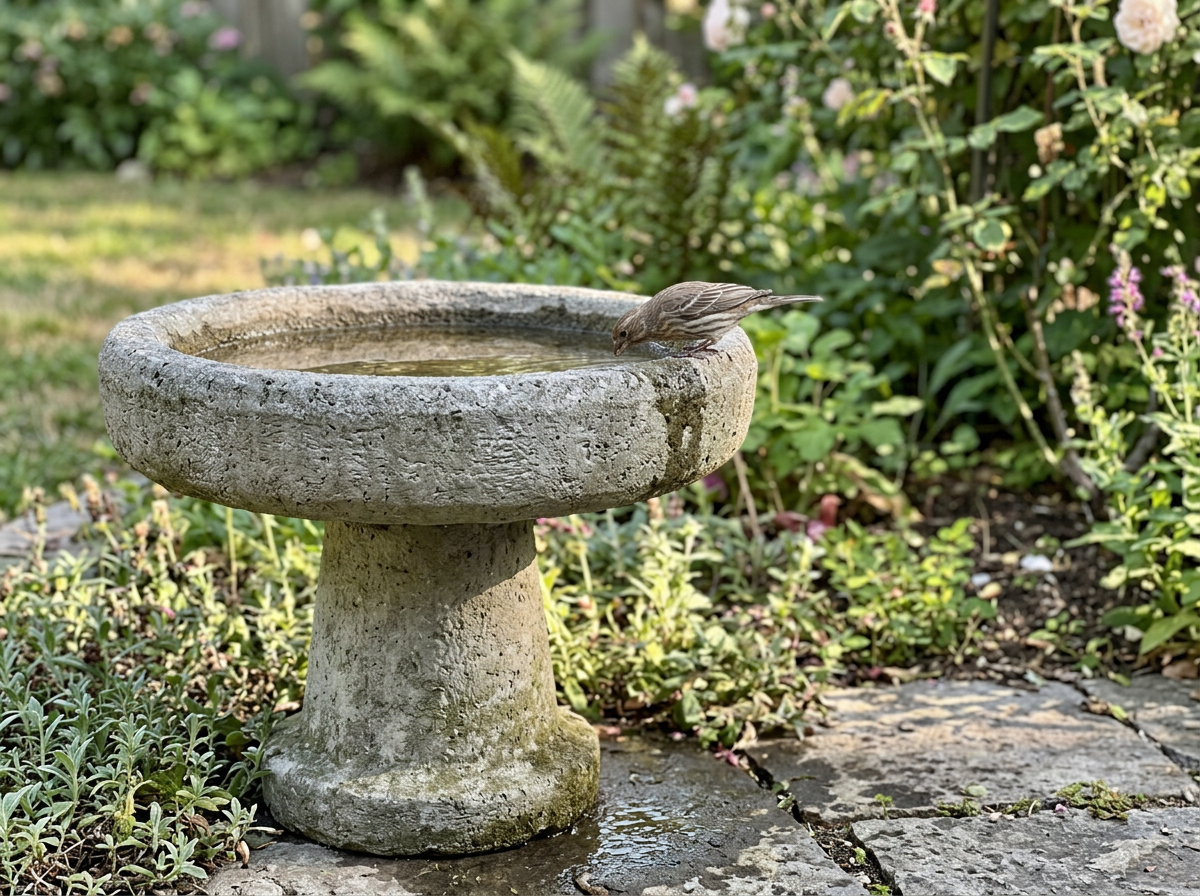
This is where a lot of bird bath setups just stop working for months. Birds need water in winter just as much as in summer, but if the bath is a solid block of ice, it is useless. There are a few options depending on how cold your winters get.
The simplest low-tech fix for mild freezes is to pour warm (not boiling) water into the basin in the morning to melt surface ice, then let the birds use it during the warmer part of the day. You can also keep a small ball or rubber object floating in the water; even a slight breeze will keep it moving and slow ice formation on the surface. If a thin crust of ice forms overnight, gently breaking it with a blunt object is the immediate fix.
For consistently freezing climates, a thermostatically controlled bird bath de-icer or heated bird bath is the most reliable solution. A quality de-icer includes a built-in thermostat that activates automatically when temperatures drop near freezing (typically around 35°F / 2°C) and shuts off when not needed, saving energy. This also protects porous materials like concrete and ceramic from freeze-thaw cracking, since it prevents the water from freezing solid inside the basin.
What you should never add to bird bath water to prevent freezing: salt, antifreeze, glycerin, or any other chemical additive. These are toxic or harmful to birds and should not be used under any circumstances.
Your Ongoing Maintenance Schedule
Consistency is the whole game with bird baths. A good bath that gets neglected for two weeks becomes a mosquito nursery and an algae tank. Here is a simple schedule that covers everything without taking over your life.
| Frequency | Task |
|---|---|
| Daily (ideally) | Rinse basin, remove debris and droppings, refill with fresh water |
| Every 2 to 3 days | Full water change to prevent mosquito larvae and bacterial growth |
| Weekly | Scrub basin with 9:1 water-vinegar solution, rinse thoroughly, refill |
| Seasonally (fall) | Check basin for cracks, install de-icer if winters are cold, consider moving to a sunnier location |
| Seasonally (spring) | Deep clean the basin, remove and store de-icer, reposition for summer shade if needed |
| As needed | Top up water lost to evaporation, check for algae or discoloration between cleans |
If you are in a cold climate and have a concrete, ceramic, mosaic, or stone bath, store it indoors over winter or use a de-icer to prevent freeze damage. Plastic and polyresin baths can generally stay outside year-round with just normal care.
Why Birds Are Ignoring Your Bath (and How to Fix It)
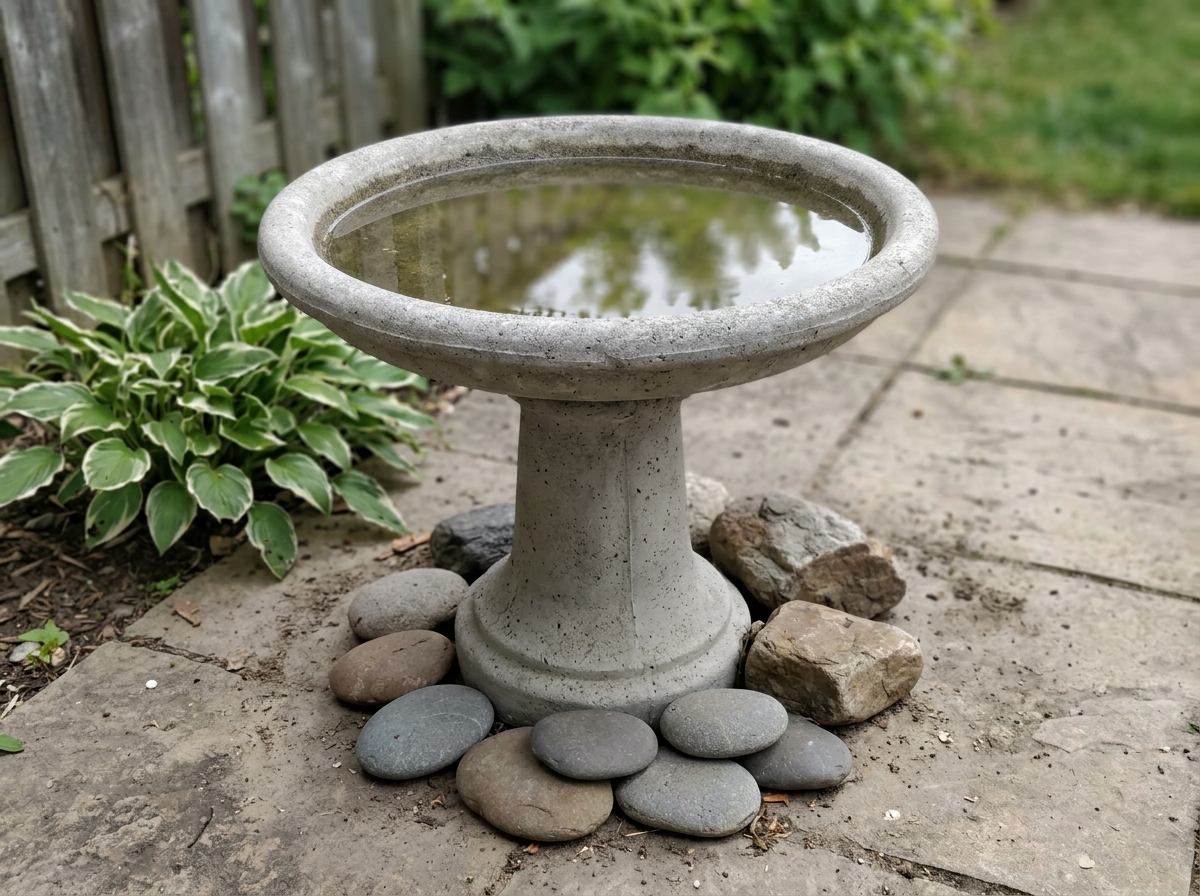
If you have had a bird bath set up for a few weeks and barely any birds are using it, something specific is usually wrong. Here are the most common issues I see and what to do about each one.
- Water is too deep: The most common problem. Add flat rocks or pebbles to bring the water level up and create a shallower area near the edge. Target 1 to 1.5 inches of water depth.
- The basin is too slippery: Birds do not like smooth surfaces they cannot grip. Add a rough flat stone, or apply waterproof sandpaper to the bottom of the basin.
- Placement is wrong: If the bath is too exposed with no cover nearby, birds will feel unsafe. Move it closer to shrubs or a tree (but keep about 10 feet of clearance from dense, low cover). If it is hidden or tucked away, move it somewhere more visible.
- Water is stale or green: Dirty water is a deal-breaker. Empty it, scrub with vinegar solution, rinse completely, and refill. Then stick to the every-2-to-3-day water change schedule.
- Water is not moving: Still water is much less noticeable to birds than moving water. Adding a solar dripper, a small recirculating pump, or even a DIY dripper from a punctured bottle hung above the bath can make a dramatic difference.
- Too much sun or too much shade: Full sun heats water and grows algae fast. Full shade makes the bath harder for birds to spot. Aim for partial shade, ideally morning sun and afternoon shade.
- Cats or predators nearby: If a cat regularly visits your yard and the bath is near low cover, birds will avoid it. Move the bath to a more open spot with clear sightlines around it.
- Bath is too close to feeders: Debris from feeders dirties the water fast and can make birds associate the area with contamination. Move the bath at least a few feet away.
- You just installed it: Birds are cautious. A new bath in a new location can take one to three weeks before local birds discover and trust it. Be patient, keep the water clean, and give it time.
One thing worth experimenting with: if you have a bird bath fountain top or a separate replacement bowl that you can try in a different spot, do it. A practical option is experimenting with a bird bath fountain top to increase visible and moving water. If you are brainstorming bird bath top ideas, swapping the fountain top or bowl can be an easy, low-effort experiment. If you are comparing solutions like a bird bath top only, keep the focus on safe depth, clean water, and stable footing so birds will actually use the updated setup bird bath top ideas. Sometimes a two-foot shift in position makes all the difference. Birds have specific ideas about where they feel safe, and what works in one yard may not translate directly to another. Try a spot, observe for a week, and adjust if needed. That trial-and-error approach is honestly how most successful bird bath setups come together.
The bottom line is that the best bird bath is the one that is shallow enough, wide enough, clean enough, and placed somewhere birds actually feel comfortable. Get those four things right and you will have regular visitors. Get even two or three of them right and you will see improvement fast. Start with depth and cleanliness today, adjust placement based on what you observe, and the birds will follow.
FAQ
Can I fix a bath that is too deep by adding rocks or pebbles?
Yes, but only in limited form. If you use rocks, keep them flat and rough-textured so birds can stand securely, and ensure the bath floor plus rock height still leaves the water in the target depth range (around 1 to 1.5 inches at the shallow side). Also avoid placing large unstable stones that could shift, because a sudden wobble or a sharp edge makes birds stop using the bath.
Is it okay to use a homemade or repurposed container as a bird bath?
You can, but positioning and water management matter more than the container. If the bowl is smooth, add a textured insert (like a rough stone) so birds can grip the surface, and confirm the standing water is still shallow (roughly 1 to 1.5 inches). For drainage-free items, change water on the same schedule as any bath, otherwise algae and mosquitoes build up quickly.
What cleaning products are safe, and do I need bleach to prevent algae?
Most bird-safe disinfectants are still unnecessary for routine care, and residue is the problem. For regular cleaning, vinegar and thorough rinsing are usually enough, and you should avoid soap and bleach because residues can irritate birds. If you must deep-clean due to persistent slime, scrub aggressively with the vinegar solution, rinse until there is no vinegar smell, then refill.
Do fountains and drippers always attract more birds than still water?
Not always, and “clean” water can still fail if movement is wrong. Fountain-style setups help birds notice the bath, but noisy or high-splash jets can deter smaller birds. If birds are hesitant, reduce splash by lowering the flow, choose a gentle dripper or wiggler, and keep the water level shallow enough for comfortable standing.
Can I run a bird bath only during warmer hours, or do I need it available year-round?
A daytime-only bath can work, but winter and cool mornings often determine whether birds can rely on the water. Plan for at least partial ice prevention, either with a thermostatic de-icer in freezing climates or simple surface-melting routines in mild freezes. If you only treat the bath after it is already fully frozen, birds may give up before the water becomes usable.
What should I check if birds visit my yard but ignore the bird bath?
If you see lots of insects but few birds, the likely issue is not just “dirty water,” it is water stagnation plus visibility. Stand water with larvae means you need more frequent changes, and algae can hide the reflective water surface from passing birds. Also confirm the bath is visible from above and not blocked by dense plants or a fence line.
Should I cover a bird bath to keep it clean or prevent debris?
Yes, but it is a tradeoff. In winter, a cover can reduce debris and evaporation, yet it can also reduce visibility and slow birds from approaching if it makes the bath look unfamiliar. If you cover the bath, remove the cover daily during the warmest part of the day, or use a way that does not fully seal airflow and water access.
What can I add to bird bath water to stop it freezing?
Stay away from chemicals in the water, including salt, antifreeze, and other additives, even if they are marketed for preventing freezing. In freezing weather, use safe physical or device-based solutions like a thermostatic de-icer, or for mild freezes, melt surface ice with warm (not boiling) water. This avoids contaminating the water and keeps the basin material from being damaged by freezing-thawing.
How far should I move the bird bath if it is not getting visitors?
Often the fastest fix is to adjust the bath’s micro-location, not replace it. Shift the bath a short distance, about 2 feet, and observe from dawn for a week, because birds respond to perceived safety and sightlines. Also check that the nearest shrubs or cover create a quick escape route without becoming a dense ambush zone.
Next Article
Bird Bath on Top of Tree Stump: Setup and Leveling Guide
Step-by-step setup for a bird bath on a tree stump, including leveling, mounting, drainage, cleanliness, and winter care