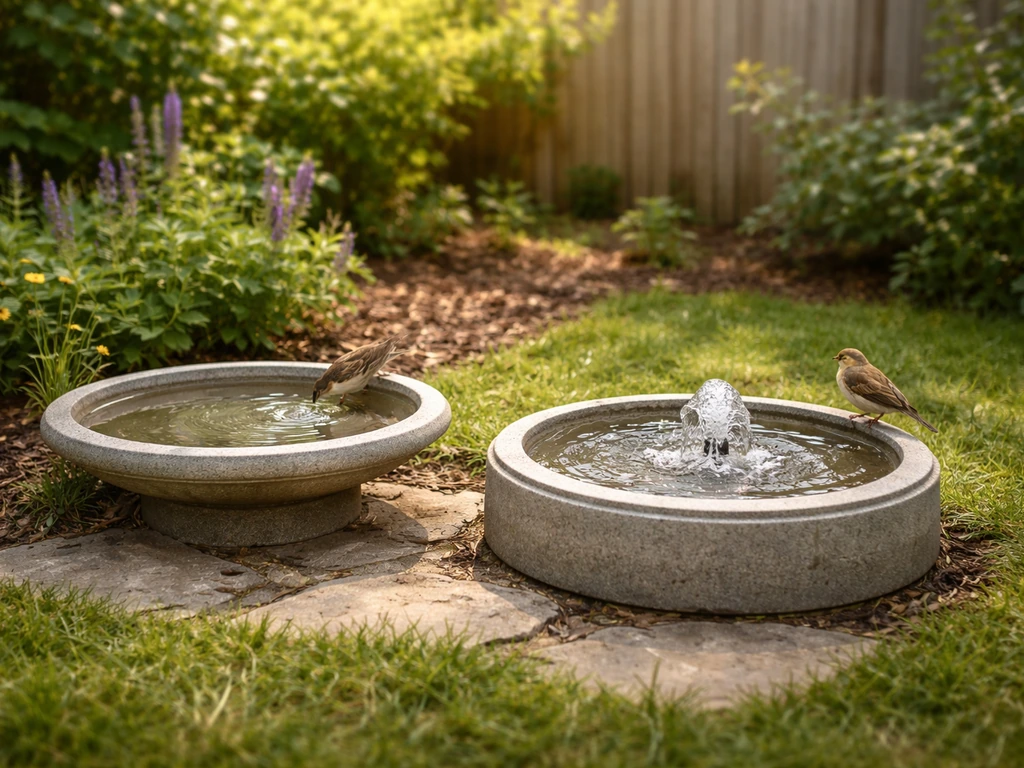
The best bird bath top ideas come down to three things: the right material for your climate, a bowl shape birds can actually use safely, and a feature (fountain, solar bubbler, or heated insert) that keeps water moving and unfrozen year-round. Whether you're replacing a cracked concrete basin, mounting a new bowl on an old tree stump, or building something from scratch, this guide walks you through every option with real specs, honest tradeoffs, and step-by-step DIY instructions so you can make a decision and get birds using it fast. For a quick roundup of top-rated choices and where they perform best, see bird bath best for up-to-date recommendations and comparisons.
Bird Bath Top Ideas: Materials, Mounts, DIY & Care Tips & Guide

Marcus Henley
19 Jul 2026
What exactly is the 'top' of a bird bath?
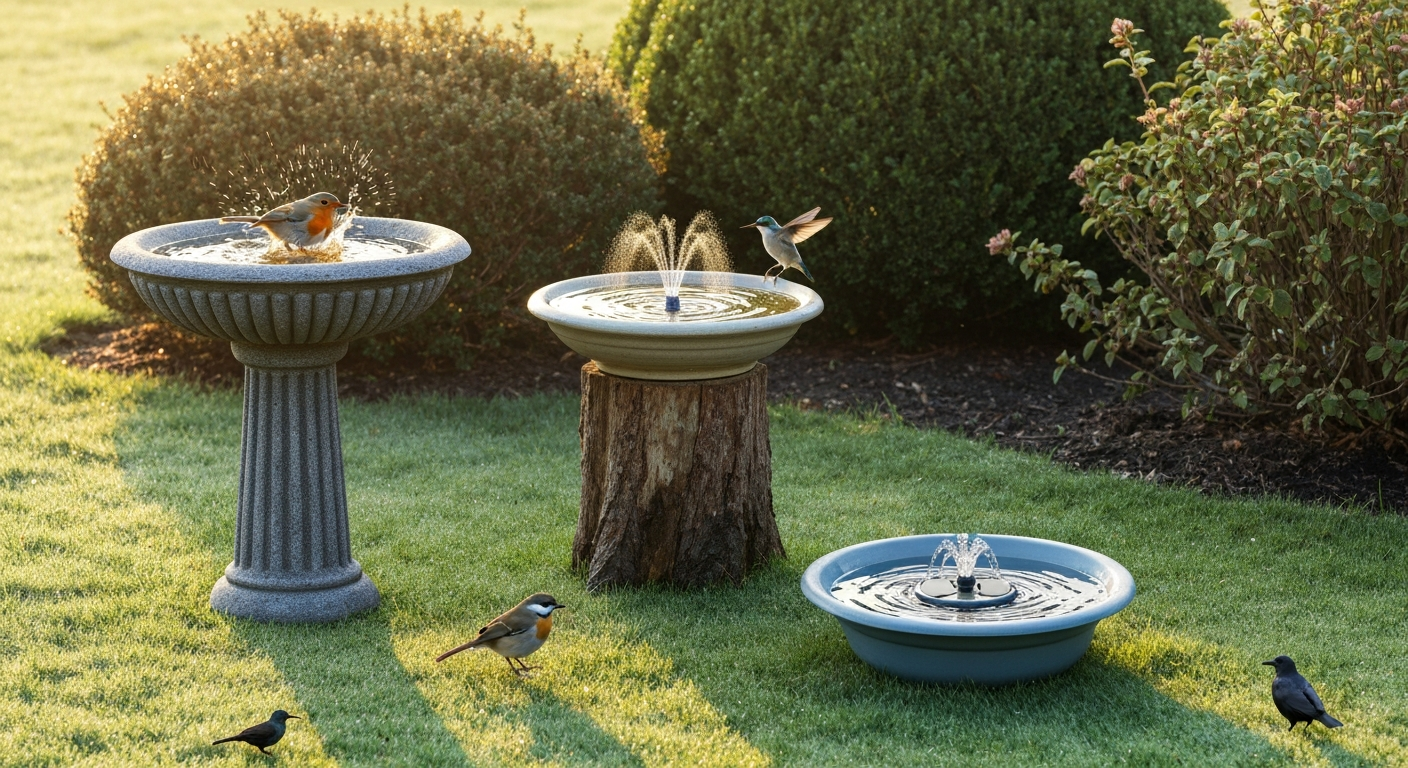
People use the word 'top' in a few different ways when they're shopping for or building a bird bath, so it's worth clarifying before we go further. Most of the time, the top refers to the bowl itself, the basin that holds the water, which sits on a pedestal, post, or base. But the term also covers decorative sculptural tops (a heron, a leaf, a tiered shell) that sit in the bowl or attach to the rim, fountain tops that add a spray or trickle of moving water, cover tops or screens that keep out debris and mosquitoes, and heated inserts or solar-powered units that sit on top of or inside the existing bowl. The ideas in this article touch on all of those, but the core focus is the bowl top, the replaceable, swappable basin piece, and the add-on features that make it work harder for birds.
Materials and styles: what each one actually means for your yard
Choosing a material is the single biggest decision you'll make about a bird bath top, because it affects weight, freeze-thaw survival, cleaning ease, temperature stability, and how long the basin lasts. Here's how the main options break down in practical terms.
Concrete and cast stone
Concrete and cast stone tops are the classic choice for good reason: they're heavy (a typical 18-24 inch cast stone basin runs 30 to 70 pounds), which means wind isn't going to knock them over, and the rough texture gives birds traction. The downside is porosity. Unsealed concrete absorbs water, and in freeze-thaw climates that absorbed moisture expands and cracks the surface over winter. If you're buying cast stone in a cold region, look for products made with air-entrained mixes or apply a concrete sealer each fall. Thermal conductivity sits around 1.3 to 2.0 W/m·K, meaning the water temperature changes more slowly than in metal, which is a good thing in both summer and winter.
Ceramic and glazed pottery
Glazed ceramic tops look beautiful and the smooth surface resists algae buildup and cleans up easily. The practical problem is freeze-thaw cracking, thin glazed ceramics don't tolerate water freezing inside them, so if you're in a cold climate you either bring the bowl in for winter or accept that it may crack. There's also a safety note worth taking seriously: antique or unknown-origin ceramic glazes can contain lead or cadmium, both of which can leach into water under acidic or abrasive conditions. A 2022 study, Study: Lead leaching from historic lead‑glazed ceramics, npj Heritage Science, documents lead leaching from historic glazes and supports avoiding unknown or antique leaded ceramics for water used by wildlife Study: Lead leaching from historic lead‑glazed ceramics — npj Heritage Science. Stick to certified lead-free, food-safe glazes when possible. Modern commercial ceramic bird baths from reputable makers are generally safe, but I'd skip the flea-market find for something birds drink from.
Metal (copper, aluminum, steel)
Metal tops are striking and durable, but their high thermal conductivity (copper at roughly 385 W/m·K, aluminum around 205 W/m·K) means water heats up fast in summer sun and cools quickly at night. That's a real bird-comfort issue in July. Copper is antimicrobial and develops a patina that actually slows algae growth; veterinary toxicology notes that copper toxicosis in birds from an intact copper basin is rare, but avoid cleaning copper baths with acid-based cleaners, which accelerate metal leaching. Steel or iron baths will rust without protective coating. For metal, shade placement and regular water refresh are non-negotiable.
Plastic and HDPE
Plastic tops, especially rotomolded high-density polyethylene (HDPE), are lightweight, inexpensive, and surprisingly practical for most yards. Thermal conductivity is very low (around 0.3 to 0.5 W/m·K), so water temperature stays more moderate than in metal. The catch is UV degradation: cheap plastic baths go brittle and crack after a few seasons of sun. Look specifically for UV-stabilized, thick-wall HDPE products. Plastic is also the most common material for heated bird bath inserts because it's easy to mold around a heating element and doesn't transfer heat dangerously.
Natural stone
Dense granite and quartzite tops are genuinely frost-resistant due to very low water absorption, and they age beautifully. The key is density: softer sandstones, some limestones, and poorly chosen slates absorb water and are frost-vulnerable. Before buying any natural stone top for a cold climate, check the manufacturer's water absorption specification. Granite sits in the 1.2 to 4.2 W/m·K thermal conductivity range, slower-changing than metal, similar to concrete, and holds up well for decades if sealed periodically.
Glass
Glass tops are eye-catching yard art but genuinely fragile outdoors. Thermal shock from freezing water or a sudden cold snap can shatter them. If you love the look, use glass tops as seasonal pieces that come inside before the first frost. They're smooth and easy to clean, but I wouldn't rely on glass as a year-round primary bath in any climate that sees freezing temperatures.
Material comparison: pros, cons, and key specs at a glance
| Material | Durability | Weight (18–24" top) | Freeze-thaw resistance | Thermal stability | Typical cost | Maintenance notes |
|---|---|---|---|---|---|---|
| Concrete / cast stone | High (sealed) | 30–70 lb | Good if sealed or air-entrained | Moderate (1.3–2.0 W/m·K) | $30–$120 | Seal annually; scrub algae monthly |
| Glazed ceramic | Moderate | 8–25 lb | Poor (crack risk outdoors) | Moderate (0.8–1.5 W/m·K) | $25–$90 | Bring in before frost; verify lead-free glaze |
| Copper | Very high | 10–20 lb | Excellent | Poor (≈385 W/m·K — heats fast) | $60–$200+ | No acid cleaners; rinse often in heat |
| Aluminum / steel | Moderate–high | 6–18 lb | Good (uncoated steel rusts) | Poor (≈205 W/m·K) | $25–$100 | Keep coated; shade in summer |
| Plastic / HDPE | Moderate (UV-stabilized) | 2–8 lb | Good if UV-stabilized | Good (0.3–0.5 W/m·K) | $15–$60 | Replace when brittle; UV additive key |
| Natural stone (granite) | Very high | 40–100+ lb | Excellent (dense stone) | Moderate (1.2–4.2 W/m·K) | $50–$250+ | Check absorption spec; seal porous types |
| Glass | Low outdoors | 4–12 lb | Very poor | Poor (thermal shock risk) | $20–$80 | Seasonal use only; store before frost |
Getting the size and shape right for the birds you want
Depth matters more than diameter. The rule I follow is: edges at about 1 inch deep, sloping gently to a maximum of 2 inches at the center. That range works for the majority of backyard songbirds, robins, sparrows, finches, chickadees. Anything deeper than 2 to 3 inches and smaller birds won't wade in; they can't judge the depth and they won't risk it. The National Audubon Society is clear on this: slope is essential, and adding a few pebbles or flat stones in the center gives birds perches to stand on while they assess the water.
For hummingbirds, standard bird bath bowls rarely work. Hummingbirds want water that's no deeper than a quarter to a half inch. They're far more attracted to moving water, misters, drippers, or a shallow bubbling surface, than to a standing bowl. If you specifically want to attract hummingbirds, think about a very shallow saucer (6 to 10 inches across) with a misting attachment, or a dedicated hummer mister you clip to a nearby branch over a wet rock. A standard 18-inch bath is simply too deep and too still for most hummingbirds to bother with.
For larger birds like crows, grackles, or doves, go bigger: 24 to 30 inches in diameter. These birds need room to move around and tend to be messier, so you'll also be refilling and cleaning more often. The bowl shape itself should have textured or non-slip surfaces and gently sloped sides, steep vertical walls actively discourage use because birds need to wade in progressively, not jump into unknown depth.
| Target species | Recommended diameter | Max depth | Surface texture | Notes |
|---|---|---|---|---|
| Hummingbirds | 6–10 in saucer | 0.25–0.5 in | Smooth or drip surface | Moving water (mister/dripper) essential |
| Small songbirds (finches, sparrows, chickadees) | 12–15 in | 1–2 in | Textured or pebbled | Add flat stones for perching |
| Mixed suburban species (robins, thrushes, starlings) | 18–24 in | 2 in max center | Textured with pebbles | Most versatile size |
| Larger species (crows, doves, grackles) | 24–30 in | 2–3 in | Rough or pebbled | Expect more splashing; refill often |
Placement and mounting: pedestal, stump, wall, and retrofit options
Height and position affect which birds use your bath and how safely they can use it. A pedestal bath sitting 24 to 36 inches off the ground is the sweet spot for most songbirds, it reduces exposure to ground predators like cats while staying accessible. Ground-level saucers set directly on a patio or lawn work well for robins, doves, and other ground-foragers, but you'll want to keep them a bit more vigilantly cleaned since they catch more debris and wildlife contact. Whatever the height, position the bath 3 to 10 feet from dense shrubs or low tree branches: close enough that birds can dash to cover if startled, far enough that a cat can't crouch in the bushes and ambush them.
Standard pedestal mount
Most commercial bird baths use a keyed flange or a center bolt to lock the bowl to the pedestal. If you're replacing just the top, check whether your pedestal has a center hole (common in concrete pedestals) or a flat plate with a lip. Replacement tops that fit standard pedestals are widely sold at garden centers and hardware stores including Lowe's, bring measurements of the pedestal top plate diameter and the bowl's bottom socket so you get a compatible fit.
Tree stump mounts
Mounting a bird bath bowl on top of a tree stump is a genuinely practical and attractive option, the stump is heavy, stable, and already at a good height. The most reliable method is to drill a vertical center hole into the stump and use a stainless steel threaded rod ('all-thread') run up through the hole. The bowl sits over the rod with a large weatherproof washer and nut on the underside to lock it. Use stainless fasteners throughout to resist rot and rust. If the stump is still green or freshly cut, seal the top surface first so moisture doesn't accelerate decay under the bowl. Mounting a bowl on a stump gives you a very wind-stable setup that looks natural in a garden.
Wall, rail, and hanging mounts
Wall-mounted and rail-mounted bird bath tops work well in small yards or on decks where floor space is limited. Bracket-style wall mounts use lag screws into a stud or masonry anchors into brick, and most accept a standard saucer-style top. Rail-mount clips sit over a deck railing and hold a shallow basin; these tend to be lightweight plastic by necessity. Hanging bird baths, suspended from a hook or bracket, can work but swing in wind, which some birds find off-putting. If you go the hanging route, add a chain stabilizer or anchor it with a short cord to reduce sway.
Top-only retrofits
If your base or pedestal is intact but the bowl has cracked, you don't need to replace the whole unit. Replacement tops (sold as 'bird bath tops only' or 'bird bath bowls') are available from most garden center chains, online retailers, and specialty bird stores. See bird bath bowl top for a selection of compatible replacement bowls and sizing tips. If you only need the bowl, search for 'bird bath top only' options to find replacement bowls that match common pedestal fittings. The key measurements are outer diameter, bowl depth, and whether the underside has a pedestal socket or a flat bottom. Aftermarket tops can be secured to an existing pedestal with a threaded stainless rod and backing plate if the fit isn't exact. This is a much more affordable fix than replacing the full bath, and it also gives you the chance to upgrade materials, swapping a cracked plastic bowl for cast stone, for instance.
Fountain tops, solar units, and heated inserts
Moving water is the single most effective upgrade you can make to a bird bath. Birds detect water by sight and sound, and a rippling surface or gentle trickle is far more attractive than a still pool. It also discourages mosquitoes, which need standing water to breed. There are three main categories of powered tops worth knowing about.
Solar fountain tops
Solar-powered fountain tops are the most popular add-on right now, and for good reason: no wiring, no running cost, and they work whenever the sun hits them. Most consist of a small floating pump panel with an attached spray head that sits in your existing bowl. They work best in full sun, output varies with cloud cover, and they stop at night, which means the birds get moving water during peak daytime activity hours. Look for units with a built-in small battery backup if you want continuity on partly cloudy days. The spray radius needs to fit within your bowl, so check the spray diameter against your basin size before buying. A fountain top is a natural complement to any bird bath bowl discussion.
Plug-in fountain tops
Hardwired or plug-in fountain tops deliver more consistent flow than solar units. They need a GFCI outdoor outlet within cord reach (typically 6 to 10 feet) and should be on a grounded circuit. The benefit is reliability: the fountain runs regardless of sun angle or cloud cover. Many of these units sit below the bowl surface with a riser tube and spray head, so the pump is hidden. Keep the intake screen clean, pump failure in these units is almost always a clogged intake.
Heated tops and de-icer inserts
In cold climates, a heated bird bath top or a submersible de-icer insert is what keeps birds coming to your yard through winter when every other water source is frozen. Heated tops are purpose-built basins with a built-in thermostat and heating element that activates below around 35°F (2°C) and keeps just enough warmth to prevent freezing, they're not trying to heat the water, just keep it liquid. De-icer inserts are submersible heating elements you drop into any existing bowl; they draw between 50 and 150 watts depending on model and come with a ground-fault circuit interrupter plug for safety. Both require a grounded GFCI outdoor outlet. A note on materials: heated inserts work best in plastic or concrete bowls, avoid using a submersible de-icer in a thin ceramic or glass bowl because thermal stress can crack the bowl.
One thing worth noting: a bird bath with a fountain top is a different product category than a full backyard fountain or pond, even though they look similar. A fountain bird bath is optimized for shallow water, easy cleaning, and small-bird access. A full garden fountain prioritizes visual impact and typically has water too deep and too fast for birds to use safely. If you're deciding between the two, the practical answer is that a bird bath with a fountain top gives you both the aesthetics and the bird-friendly function.
DIY bird bath top projects: step-by-step
Project 1: Make a simple concrete bowl top
Difficulty: Easy. Time: 2 hours active, 48 hours curing.
- Materials: 1 bag rapid-set concrete mix (air-entrained formula preferred for cold climates), two plastic mixing bowls (one ~18" for the outer mold, one ~14" for the inner), cooking spray or petroleum jelly, pebbles for texture, concrete sealer
- Spray both bowls with cooking spray or coat with petroleum jelly so the concrete releases cleanly.
- Mix concrete to a peanut butter consistency — thick enough to hold shape but workable.
- Press a 1.5 to 2 inch layer of concrete into the bottom and up the sides of the large bowl.
- Press pebbles into the surface while wet for bird traction and grip.
- Center the smaller bowl on top and press down gently to form the basin cavity. Weight it with a rock or water-filled container.
- Let cure covered with plastic sheeting for at least 48 hours. In cold weather, cure for 72 hours minimum.
- Remove both molds. If any edges are rough, smooth with a wire brush.
- Rinse the bowl three times over three days to leach out surface alkalinity before birds use it — fresh concrete is highly alkaline.
- Apply concrete sealer once fully cured to reduce porosity and freeze-thaw risk.
Project 2: Mount a bowl top on a tree stump
Difficulty: Easy to moderate. Time: 1 to 2 hours.
- Materials: bird bath bowl (any material with a flat bottom), 1/2" stainless steel all-thread rod (length = stump depth + 4"), 2 large stainless fender washers, 2 stainless nuts, drill with 1/2" wood bit, weatherproof wood sealant
- Level the stump top surface with a chisel or coarse sandpaper if needed.
- Seal the stump top with exterior wood sealant and let dry.
- Mark the center of the stump and drill a vertical 1/2" hole to a depth of about 4 to 6 inches.
- Thread a nut and fender washer onto the all-thread rod, then insert the rod into the hole. The washer sits on the stump surface and prevents the rod from pulling through.
- If the bowl has a center hole, slide it over the rod. If not, use a masonry or diamond bit to drill a 1/2" center hole in the bowl bottom.
- Place a fender washer over the rod inside the bowl and tighten the second nut down to secure the bowl firmly.
- Check that the bowl sits level. Pack small stones or a rubber shim under the bowl edge if needed.
- Fill with water and check stability before leaving it unattended in wind.
Project 3: Build a solar fountain top
Difficulty: Very easy. Time: 20 to 30 minutes.
- Materials: existing bird bath bowl (18" minimum diameter recommended), solar floating fountain pump kit (choose a spray diameter smaller than your bowl), flat stone or small tile for the pump to rest on if needed
- Fill the bird bath bowl to within about 1 inch of the rim.
- Place the solar panel floating pump in the center of the bowl — most units float on the water surface.
- Select the spray head attachment that gives a low, wide spray rather than a tall jet (birds prefer low gentle movement and a tall jet can splash the bowl empty quickly).
- Angle the solar panel so it faces the direction of peak sun in your yard.
- Watch the first few minutes of operation: if the pump sucks air before the bowl is deep enough, add more water. The intake must stay submerged.
- Clean the pump intake screen weekly by rinsing under running water — this is the only regular maintenance the pump needs.
Project 4: Add a heated insert or de-icer base
Difficulty: Easy. Time: 15 minutes.
- Materials: submersible de-icer insert (50–150W thermostatically controlled, GFCI plug required), existing bird bath bowl (concrete or plastic preferred — avoid thin glass or ceramic), outdoor GFCI extension cord if needed, zip ties or cord clips for cable management
- Confirm your outdoor outlet is a GFCI-protected circuit. If not, use a GFCI outlet adapter — non-negotiable for water safety.
- Fill the bowl with water first, then lower the de-icer into the bowl so the heating element is fully submerged.
- Route the power cord along the pedestal or mount, securing it with zip ties so it can't be pulled by animals or wind.
- Plug in and confirm the thermostat indicator light shows the unit is ready.
- The unit will cycle on only when temperatures approach freezing — it should not noticeably warm the water above ambient in mild weather.
- Check the bowl water level every 2 to 3 days in winter: evaporation continues even in cold weather, and running a de-icer with the element exposed can damage the unit.
Maintenance and troubleshooting: algae, mold, mosquitoes, and freezing
A bird bath top is only as good as how consistently it gets cleaned. I scrub mine every one to two weeks with a stiff brush and a diluted white vinegar solution (1 part vinegar to 9 parts water), rinse thoroughly, and refill. Avoid soap, bleach in high concentrations, or any chemical cleaner that leaves a residue, birds drink this water. Algae builds fastest in warm weather and full sun: if your bath is in direct afternoon sun and you're fighting green slime weekly, either add shade (a nearby shrub or umbrella) or switch to a fountain top with moving water, which disrupts the still-water conditions algae need.
Mosquitoes require standing water for 7 to 10 days to complete their breeding cycle. Changing the water every 2 to 3 days is the most reliable prevention, and adding a solar fountain or dripper makes stagnant conditions impossible. Mold (the dark or black staining that appears on porous concrete or stone) is harder to remove than algae, a baking soda paste scrub works well on it, and sealing porous surfaces each season reduces how deeply it penetrates.
In freezing climates, the single worst thing you can do is leave water in a ceramic or glass bowl through a hard freeze. It will crack. Empty and store fragile tops before the first frost. For concrete or stone tops you're leaving out, either empty them or install a de-icer insert. Never pour boiling water into a frozen concrete bowl to thaw it, thermal shock can crack even solid cast stone. Let it thaw naturally or use a de-icer that prevents freezing in the first place. Mold on the top underside is common with concrete pedestals, a seasonal application of concrete sealer on both bowl and pedestal cuts this down significantly.
Where to buy bird bath tops and what to look for
Replacement tops and new bowls are sold at most large home improvement retailers (Lowe's carries a solid range of concrete and resin tops, and you can often find replacement tops only rather than full units), garden centers, wild bird specialty stores, and online through garden and outdoor furniture retailers. When buying a replacement top only, bring or note these measurements: outer bowl diameter, center hole diameter (if any), and the diameter of your existing pedestal's top plate or socket. A top with a lip that overhangs the pedestal by 1 to 2 inches on each side looks intentional and gives birds perching room at the rim.
For solar and heated tops, check the wattage and thermostat range before buying. A de-icer rated for a bath volume larger than yours will cycle less frequently and last longer. For solar fountains, check user reviews specifically about pump longevity and spray consistency, cheaper units often have short pump lives. Spending a little more on a reputable brand with replaceable pump heads is worth it over the long run. Replacement pump heads for popular models are usually available separately, which saves you from replacing the whole unit when the pump eventually wears out.
FAQ
What material facts and specifications must the article include for bird‑bath tops?
List common materials (concrete/cast stone, ceramic/glazed, metal — copper/aluminum/steel, plastic/HDPE, natural stone — granite/limestone/slate, glass) with: typical thermal conductivity order, porosity/freeze‑thaw risk, typical weight ranges for common diameters (18–24 in examples), UV and impact durability, corrosion/patina behavior (copper), and lead/heavy‑metal risk for glazes. Cite ASTM/freeze‑thaw guidance for concrete and recommend checking manufacturer water‑absorption specs for natural stone. Recommend food/lead‑free glazed ceramics or avoiding unknown antique glazes.
What clear pros and cons should be given for each material?
Provide bullet pros/cons for each material: concrete — durable/heavy (stable) vs porous/freeze risk unless sealed; ceramic — low‑porosity/glaze eases cleaning vs possible toxic glazes/thermal shock; metal — durable, antimicrobial (copper) vs quick thermal swing/corrosion considerations; plastic (HDPE) — lightweight/UV‑resistant options vs potential brittleness in extreme cold; natural stone — attractive/frost‑resistant if dense (granite) vs soft stones may absorb and crack; glass — smooth/attractive vs brittle/thermal shock. Include actionable selection advice (e.g., choose sealed concrete or granite for freeze climates; choose UV‑stabilized thick HDPE for lightweight or portable tops).
What size, depth and bowl‑shape specifications are required?
Give numeric guidance: edges ≈1 in (2.5 cm) sloping to max ≈2 in (5 cm) center for most songbirds; hummingbird‑targeted surfaces ≈0.25–0.5 in (6–12 mm) or drippers/misters; recommended diameters by target: hummingbirds 6–10 in saucer, small songbirds 12–15 in, mixed yards 18–24 in, larger species 24–30 in. Specify gently sloped sides, textured/pebbled bottom, and exposed rim/perch zones (rocks or built‑in ledge). Warn against steep vertical sides and deep basins (>3 in) without shallow perches.
What placement and mounting details must the article cover?
Give height and distance rules: pedestal heights 24–36 in reduce predator risk; ground saucers for ground‑feeders; position 3–10 ft from dense cover for quick escape. Describe mounting options: pedestal keyed flanges, stainless steel all‑thread through center with backing plate and nut, carriage bolts for stump mounts, masonry anchors for concrete pedestals, structural lag bolts for wood posts. Advise stainless fasteners, use of weatherproof washers, and balancing weight vs stability (heavy tops need secure support). Include retrofit tips for top‑only replacements (measure center hole/thread size, bolt pattern, flange dimensions) and common retrofit adapter methods.
What fountain, solar and heated‑top options and specs should be included?
Describe pump and power choices: small submersible pumps (3–10 W) for recirculating fountains; solar pumps (paneled 1–5 W) for low‑flow features (note reduced winter/low‑sun performance); drippers/misters (low flow 0.5–2 GPH) for hummingbirds; heated inserts/thermostatic de‑icers rated to keep ~1–2 in liquid and resist freezing (specify wattage and intended basin size). Provide flow rates that attract birds (gentle bubbling vs strong jets), electrical safety tips (GFCI, outdoor‑rated cords), and winter use guidance (remove pumps or use rated heaters). Suggest brands/types and note to match pump capacity to basin volume and head height.
What step‑by‑step DIY projects and safe product‑replacement instructions are needed?
Include at least three DIY projects with steps and materials: (1) retrofit top replacement using stainless all‑thread, backing plate, nut, and silicone gasket — measure hole, drill center, secure to pedestal; (2) shallow hummingbird saucer with shallow ceramic saucer + silicone bead and firm base + drip kit installation; (3) heated insert installation using thermostat‑rated de‑icer pad or aquarium heater in protected housing. For each, list required tools, fastener sizes, surface preparation, waterproofing/sealant type (silicone for potable‑safe contact), and safety notes (avoid lead glazes, use GFCI, secure heavy tops). Provide where to buy common parts (all‑thread, stainless fasteners, silicone, pumps) from Lowe’s, Home Depot, Amazon, specialty garden/fountain suppliers, and local masonry/stone suppliers.
Next Article
Bird Bath vs Fountain: Which Attracts More Backyard Birds?
Compare bird bath vs fountain for backyard birds, including placement, maintenance, noise, mosquitoes, freezing, and set