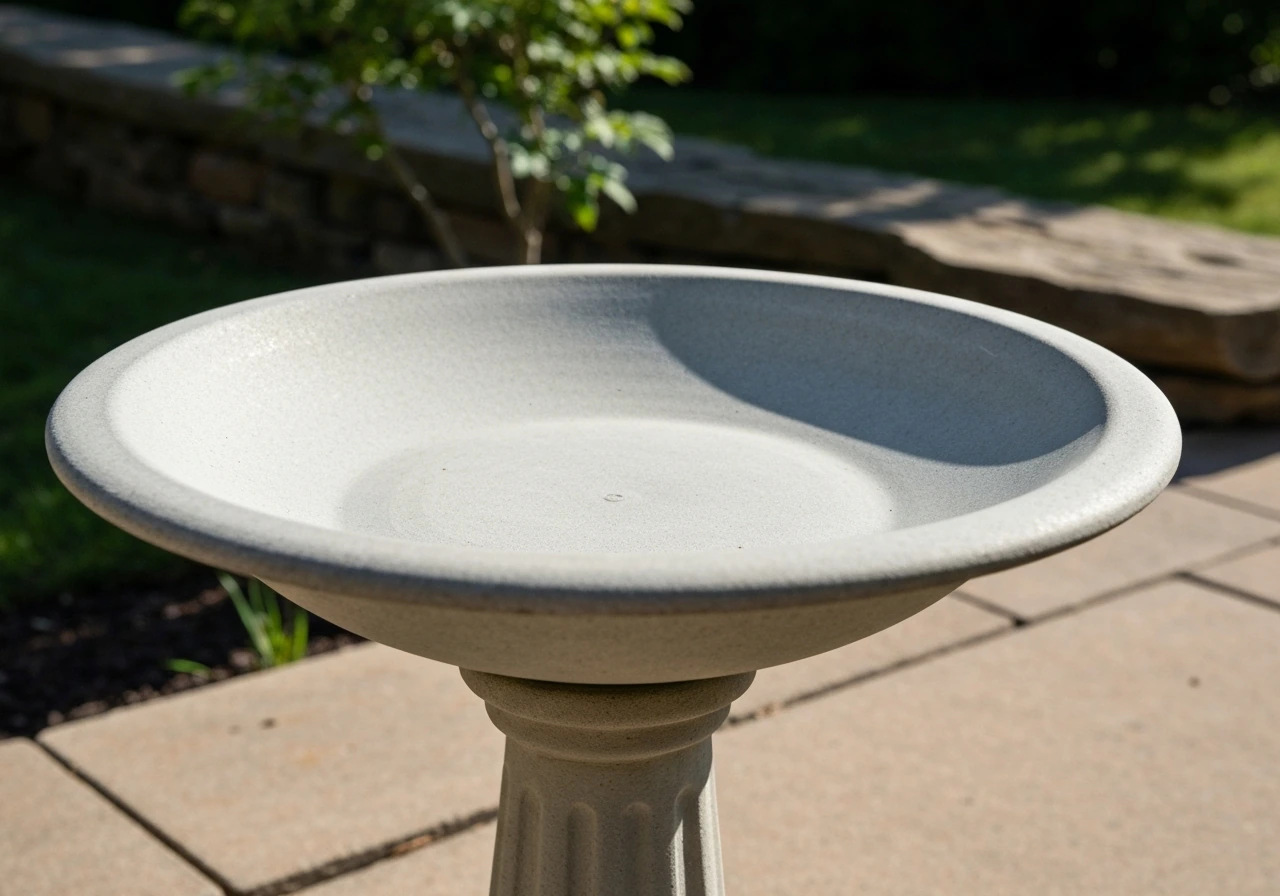
A bird bath fountain top is an add-on or replacement top that turns a plain, still bird bath into a moving-water feature. Most are recirculating kits with a small submersible pump, tubing, and a spray or bubbler head that sits in or on top of your existing bird bath bowl. Moving water is one of the single most effective upgrades you can make for attracting birds, and the good news is that fitting one to an existing bath takes less than an hour in most cases. A bird bath fountain is an easy way to add that effect, which is why many people compare bird bath vs fountain before buying moving water.
Bird Bath Fountain Top Guide: Choose, Install, and Maintain

Marcus Henley
27 May 2026
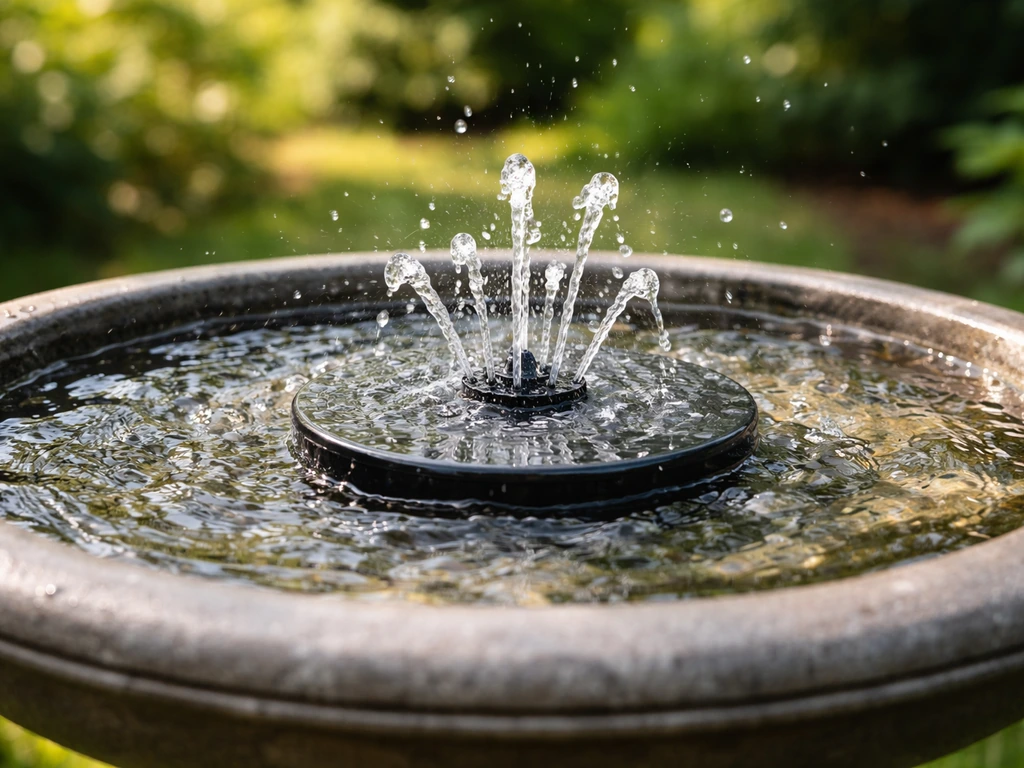
What a Bird Bath Fountain Top Actually Is
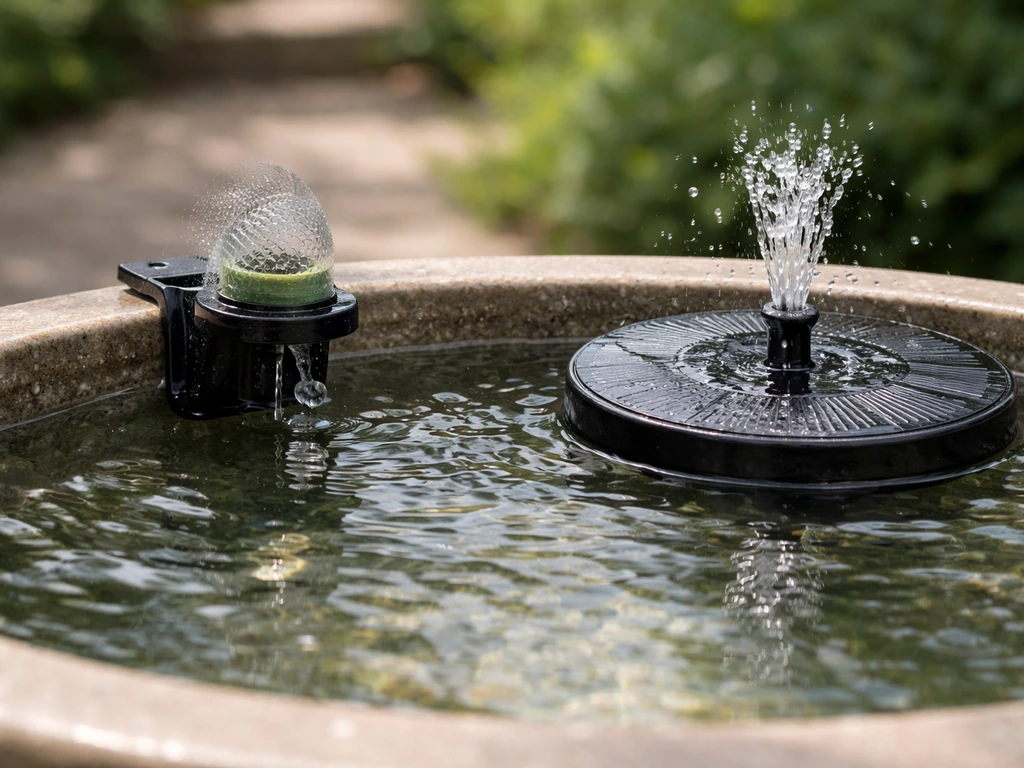
The term covers a few different things, so it helps to know what you're shopping for. At the simplest end, you have a drip or mister attachment that clips or balances on the rim and uses your garden hose to trickle water into the bowl. These don't recirculate, so they use more water and need a drain or overflow.
More practical for most backyards are self-contained recirculating kits: a small submersible pump sits in the bowl, pushes water up through a tube to a fountain head, and the water falls back in and gets pumped around again. The Campania FT-246 Cirrus and the M-Series FT-267 are both good examples of this style, each a complete recirculating system with pump, tubing, and decorative top included.
Within the recirculating category, you'll find a few styles of fountain heads. Spray heads send water upward in a pattern (mushroom, tulip, or multi-tier). Bubbler tops push water up in a gentle dome, which tends to attract the most bird species because it mimics a natural spring. Drip-style ornaments hang water over the bowl edge. Some people also buy a replacement top only (just the decorative bowl or basin piece) without the pump, which is a different product closer to what's covered in the bird bath top only or bird bath bowl top topics. If you want movement, you need the pump kit.
Choosing the Right Fountain Top for Your Bird Bath
Fit and sizing come first
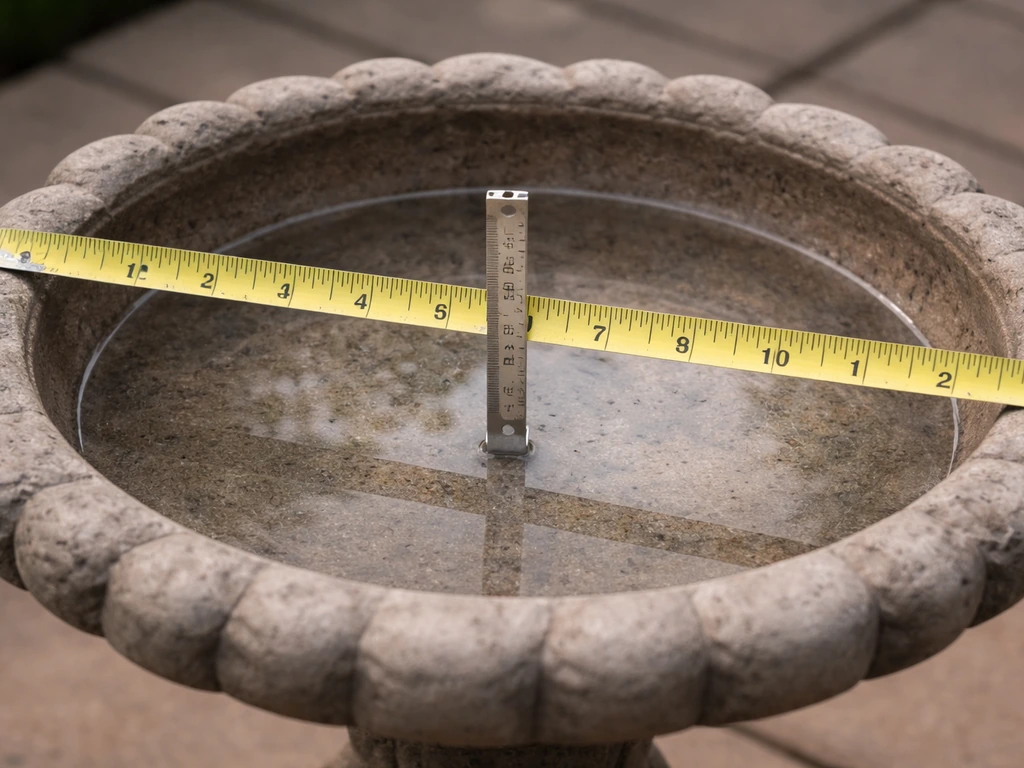
The single most common mistake is buying a fountain kit without measuring the bowl first. You need to know the inner diameter of the basin, the bowl depth (shallow baths need a low-profile bubbler, not a tall spray head), and the rim style (rolled rims vs. flat rims affect how some ornamental tops sit). A recirculating pump also needs enough water volume to stay submerged; the Campania FT-246 system, for example, is sized around a 4-gallon water volume. If your bowl is much smaller, the pump can run dry during evaporation, which burns it out fast.
Material compatibility
Concrete, ceramic, and metal baths all work fine with a recirculating fountain kit, but there are some practical differences. Concrete is heavy and porous, which means it absorbs minerals over time and can crack if it freezes while waterlogged. Ceramic glazed baths hold water cleanly and are easy to wipe down but can chip if the pump shifts and knocks around. Metal baths (cast iron, copper) work well with fountain kits but can accelerate mineral staining from pump agitation. None of these material types require a special pump, but they do affect how often you'll need to clean and how carefully you winterize.
Flow rate and splash height
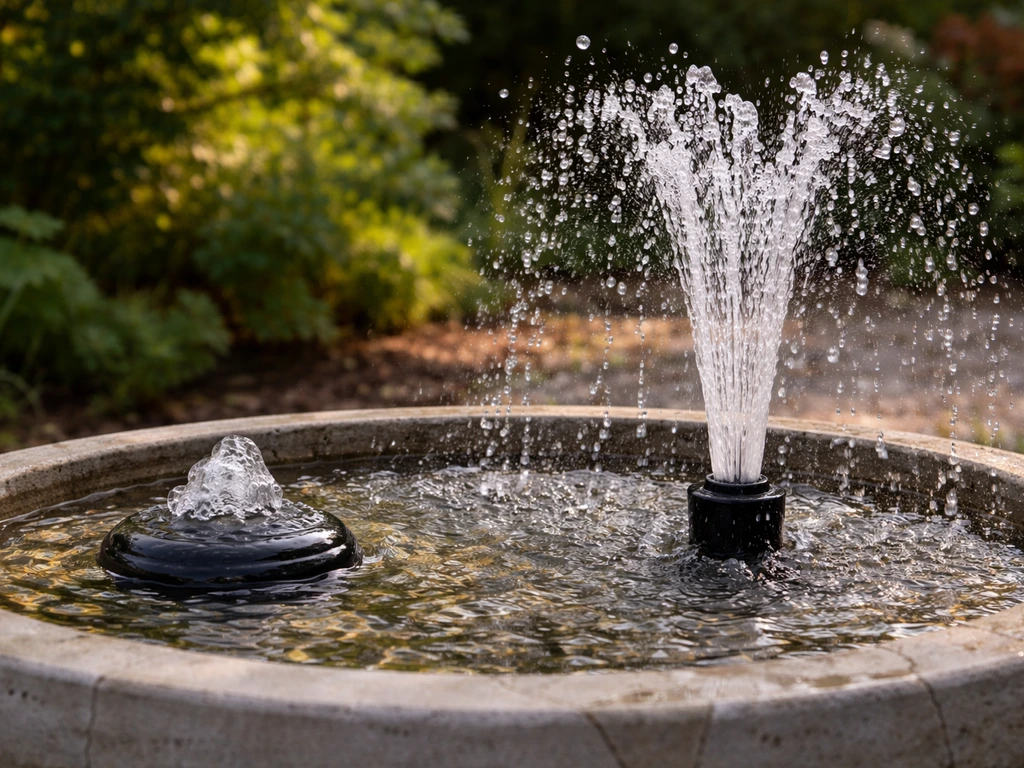
Bigger is not better here. A high-flow pump that sends water shooting 18 inches into the air will scare off smaller birds and soak everything around the bath. For most standard bird baths (12 to 20 inches in diameter), look for a pump in the 50 to 150 GPH range with an adjustable flow valve.
The Tetra Pond FK3 kit includes a 325 GPH pump, which is on the high end and better suited to larger garden fountains than a small bird bath bowl. For a typical backyard bird bath, a gentler bubbler or low-arc spray head with a pump you can throttle down is almost always a better choice. Choosing the right setup is often what makes a bird bath the best choice for bringing in more birds bird bath best.
You want birds to be able to stand at the edge and drink, not get blasted.
| Fountain Top Type | Best For | Flow Style | Bird Appeal | Notes |
|---|---|---|---|---|
| Recirculating bubbler kit | Most standard bird baths | Gentle dome or trickle | Very high (all species) | Best all-around choice; quiet and low splash |
| Spray head kit | Larger, deeper baths | Upward spray pattern | Moderate (bold species) | Can scare shy birds; adjustable flow helps |
| Drip/mister attachment | Any bath with hose access | Slow drip or fine mist | High (especially warblers) | Uses more water; no recirculation |
| Ornamental top with pump (e.g., FT-246 Cirrus) | Decorative setups | Gentle recirculating trickle | High | Self-contained; easiest to install |
| Solar fountain head | Sunny locations, no outlet nearby | Variable (sun-dependent) | Moderate | No running cost; inconsistent flow on cloudy days |
How to Install a Fountain Top Kit
Most recirculating fountain kits follow a similar installation sequence. Here's how to do it right the first time.
- Fill the bowl with water first and check the level. The pump must be completely submerged to work properly. All submersible pumps in these kits are designed to run underwater, and running one dry even briefly can damage the impeller.
- Place the pump flat on the bottom center of the bowl. Most kits include suction cups or rubber feet to keep it stable. If your kit includes wedges (like the FT-246 assembly), use them to keep the pump level on an uneven concrete bottom.
- Connect the tubing from the pump outlet to the fountain head following the kit's specific lengths and fittings. The FT-246, for example, uses a short length of 1/2-inch black non-kink tubing, a small section of 5/8-inch clear vinyl tubing, and a 1/2-inch CPVC pipe section, all secured with the included hose clamp.
- Thread the power cord over the bowl rim and down the pedestal or stand. Create a drip loop (a downward curve in the cord before it reaches the outlet) so water runs off the cord rather than into the socket.
- Plug into a GFCI-protected outdoor outlet only. The Pond Guy's Mag-Drive pump manuals and Fountains.com installation guides all specify a GFCI outlet in a dry, protected location. This is non-negotiable for anything with water near electricity.
- Turn on the pump and check flow rate. Adjust the flow valve to the lowest setting that still gives you visible water movement. Watch for water splashing over the rim; if it is, dial it back further.
- Check the water level after 10 minutes of running. Evaporation and splash loss are normal; just top up as needed and plan to check every day or two in hot weather.
One more thing worth doing before you call it done: check every tubing connection for slow drips. A drip you can't see easily will drain the bowl overnight and leave the pump running dry. Run the fountain for 30 minutes and check under each connection joint before you walk away.
Keeping It Clean: Algae, Scale, and Clogs
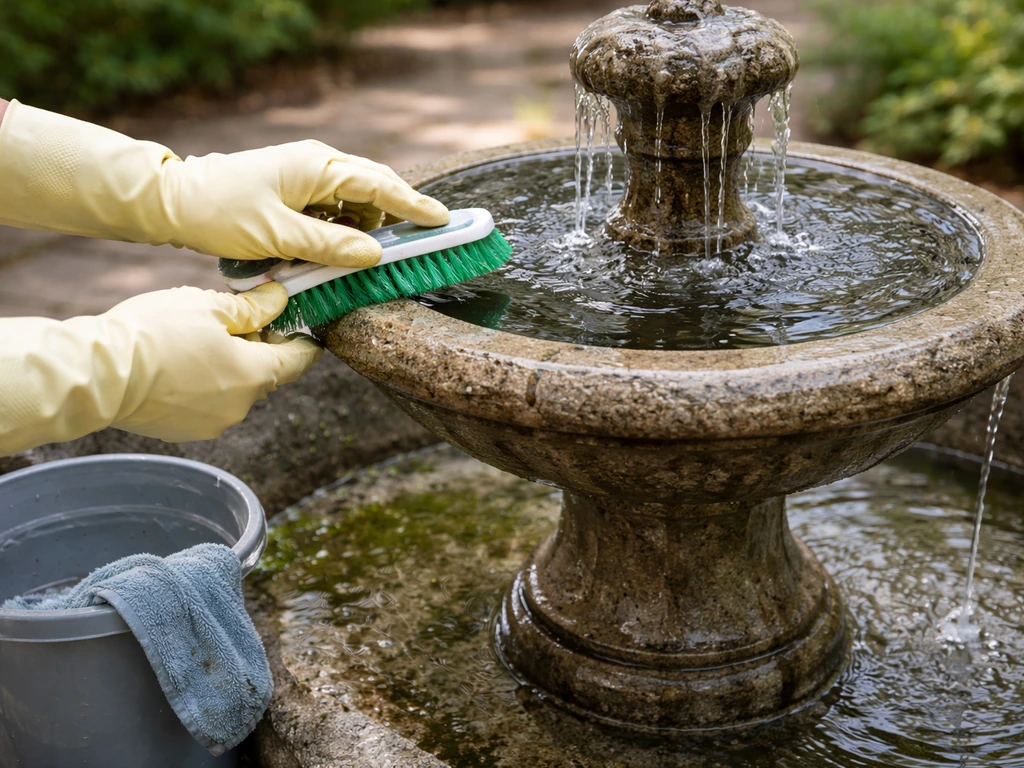
Moving water slows algae growth compared to a still bath, but it doesn't eliminate it. Also, if you notice stubborn buildup on the top, address bird bath top mold with regular scrubbing and proper drying. A basic cleaning schedule makes the difference between a fountain that runs smoothly for years and one that clogs every two weeks.
- Every 1 to 2 weeks: empty the bowl, scrub the basin and any decorative surfaces with a 1:9 vinegar-to-water solution, rinse thoroughly, and refill. Avoid bleach entirely; it's harmful to birds even in trace amounts after rinsing, and vinegar works just as well on algae and mineral staining.
- Monthly (or when flow seems reduced): disassemble the pump and clean it. A 50/50 solution of white vinegar and water works well here. Soak the pump body and impeller housing for 15 to 20 minutes to loosen mineral deposits, then rinse well.
- For stubborn scale buildup on the pump or tubing: soak the affected parts in straight white vinegar for an hour. Mineral deposits dissolve without any scrubbing needed.
- If you have a kit with a prefilter (like the Tetra FK3 style): rinse the prefilter pad every week or two. A clogged prefilter is the most common cause of reduced flow and noisy pump operation.
If your pump starts making a grinding or rattling noise, the impeller is usually the culprit: either something is jammed in it (a small piece of debris or algae clump), or mineral scale has built up enough to restrict rotation. Disassemble, soak in vinegar, and check for debris before assuming the pump is dead. Nine times out of ten, a good cleaning fixes it.
Mosquitoes, Safety, and Why Movement Matters
This is one of the best arguments for a fountain top: mosquito larvae need standing, still water to develop. The EPA's description of the mosquito life cycle makes it clear that eggs hatch in water and larvae live there, surfacing to breathe. Moving water disrupts that cycle. A recirculating fountain top running continuously is one of the most effective passive mosquito deterrents you can add to a bird bath.
That said, moving water alone isn't foolproof. The CDC recommends emptying and scrubbing water containers at least once a week to remove any eggs or larvae that may have been laid during brief still periods (overnight when the pump isn't running, for example). If you turn off your fountain at night, do a quick water refresh every few days. If you run it 24/7 on a timer with a GFCI outlet, weekly cleaning is usually enough.
On the electrical safety side: always use a GFCI-protected outdoor outlet, create a drip loop in the power cord, and never run extension cords to a non-outdoor-rated socket. Keep the pump cord away from the water surface and check the cord for damage at each cleaning. These aren't optional precautions.
Winterizing Your Fountain Top
If you're in a climate where temperatures drop below freezing, you need to winterize the fountain or accept that you'll be replacing parts every spring. Freeze-thaw cycles are the main killer: water expands when it freezes, and any component holding water (bowls, tubes, pump housing) can crack. The Campania product pages specifically call out this risk for any component that holds water or sits on the ground.
- Drain all water from the bowl completely. Remove any drain stoppers or plugs so no water is trapped inside the fountain body. This is the starting point for any winterization plan.
- Remove the pump, tubing, and fountain head. Store them indoors in a frost-free location. Leaving a submersible pump in a frozen bowl is risky: freezing and thawing can crack the pump housing and damage the impeller.
- If your bird bath top or bowl is ceramic, glazed, or cast concrete, bring it inside or cover it tightly with a weatherproof cover. Porous concrete absorbs water and is especially vulnerable to cracking.
- For mild climates with occasional light frosts, you can sometimes get away with running the pump continuously through cold nights (moving water freezes more slowly than still water), but this is not reliable protection below about 28°F.
If you want to keep offering water to birds year-round, a heated bird bath is a better tool for true winter use than trying to keep a fountain top running through hard freezes. You can run a fountain top through spring, summer, and fall, then switch to a simple heated basin for winter months. This also extends the life of your pump and tubing considerably.
Placement and Getting More Birds to Use It
The fountain top does a lot of the attracting work on its own. Birds hear moving water from a surprising distance, and the sound is one of the main reasons fountain baths outperform still baths. Texas Parks and Wildlife specifically recommends getting water moving, including misters and bubblers, to attract birds, and the Sacramento Audubon Society echoes this. If you have a bird bath on top of a tree stump, the same fountain-top approach works well as long as the basin stays stable and the pump stays submerged bird bath on top of tree stump. But placement still matters a lot.
- Place the bath 10 to 15 feet from shrubs or low cover. Birds want a quick escape route if a predator shows up while they're bathing. Wild Birds Unlimited recommends shrubs a few feet away as escape and preening cover, which is the right idea, but you don't want dense cover so close that a cat can ambush from it.
- Partial shade is usually best. Full sun heats the water quickly and accelerates algae growth. Full shade can make the area feel less safe and also prevents the water from being visible from above (birds often spot baths while in flight). A spot with morning sun and afternoon shade tends to work well in most regions.
- Keep the fountain running during peak bird activity hours (early morning and late afternoon) at minimum. If power access is a concern, a solar fountain top in a sunny location handles its own scheduling.
- Set the flow to a gentle trickle or low dome rather than a vigorous spray. Smaller birds like warblers, finches, and sparrows strongly prefer quieter, lower-movement water. Robins and larger thrushes are less bothered by splash.
- Keep the water level consistent. A bowl that runs low exposes the pump and reduces the visual cue of moving water. Check and top off every day or two, especially in summer.
One thing worth experimenting with: if you're getting visits but birds aren't staying to bathe, the spray pattern is probably too aggressive. Dial the pump down or switch to a bubbler-style head. The goal is water that looks approachable, not a miniature geyser. A gentle dome of water at the center of the bowl, with the rest of the basin calm and clear, is close to ideal for most backyard species.
What to Look for When Shopping
If you're comparing fountain top kits and want a quick checklist of what actually matters, here's what I look at before buying. If you are looking for bird bath top ideas, start with the fountain head style and flow level that match your bowl size and the birds you want to attract.
- Adjustable flow rate: non-negotiable. You need to be able to throttle down output to match your bowl size and the birds using it.
- Pump GPH rating: 50 to 150 GPH is the right range for most standard bird baths (15 to 20-inch diameter bowls). Anything over 200 GPH is usually overkill unless you have a large basin.
- Included tubing and fittings: good kits include everything you need for a complete installation. Kits that require you to source your own tubing or adapters are a hassle.
- Replacement parts availability: check that replacement impellers and tubing are sold separately. Pumps eventually wear out; being able to replace the impeller rather than the whole pump saves money.
- Material of the fountain head or top: resin and poly-resin tops hold up well outdoors. Avoid painted metal tops that aren't powder-coated, as they rust quickly.
- Power cord length: most kits come with 6-foot cords. If your GFCI outlet is farther away, look for a kit with a longer cord or use a rated outdoor extension cord with a drip loop.
If you're on a tight budget and just want to test whether moving water attracts more birds to your existing bath before investing in a complete kit, a simple solar-powered floating fountain head (under $20 at most hardware stores) gives you a proof of concept. If you are shopping in-store, you can often find bird bath top options at Lowe's, including bubbler and spray style fountain kits. It won't run on cloudy days and the flow is inconsistent, but it'll tell you quickly whether the birds in your yard respond to moving water. Most of the time, they do, and that's when you upgrade to a proper recirculating pump kit.
FAQ
What measurements do I need for a bird bath fountain top, beyond just bowl diameter?
Measure the bowl depth and the rim shape (flat, rolled, or recessed) because some fountain heads sit higher or lower than others. Also note the distance from the bowl surface to the nearest wall or plants, since tall spray patterns can splash onto nearby surfaces.
My bird bath has a crack or rough interior, will a recirculating fountain top still work?
It can, but rough interiors can cause uneven pump agitation and make mineral buildup worse. If the crack is actively leaking or the bowl rocks when loaded, fix or replace the bath first, since a slightly unstable bowl can shift the pump and create micro-leaks.
Do I need to buy a “bird bath pump” specifically, or can I use any small submersible pump?
For most setups you should use a recirculating kit designed for fountain heads, because the tube height and flow rate are matched to keep the pump submerged and the head running evenly. If you mix parts, confirm the pump’s minimum flow does not exceed what your bowl can safely supply and that the discharge height matches your head style.
How do I prevent the pump from running dry if the water level drops?
Use the “fully seated” fill level mark if your kit provides one, and keep the bath in a spot with less direct afternoon sun where evaporation is faster. After installation, observe for 1 to 2 days, then top off regularly until you find your household’s evaporation pattern.
Is it okay to run the fountain top all night, and does it affect cleaning?
Running overnight is usually fine and can reduce mosquito-friendly still water, but you still need weekly scrubbing because eggs or larvae can be introduced during brief still periods. If you do any nighttime shutoff, plan a quick refresh every few days as a buffer.
Can I use a bird bath fountain top in freezing weather if I drain it?
Partial draining helps, but freeze-thaw can still damage components if any part retains water in the pump housing, tubing, or the fountain head. The safer approach is to winterize or remove the pump and tubing, then store them dry, and keep the bowl protected from residual water.
Why does my fountain top sputter or change spray after running for a while?
Sputtering is often from air pockets or clogging at the intake, plus mineral scale reducing flow. Clean the intake screen and tubing, and if you see persistent scale, soak the affected parts in vinegar for a longer period than usual and rinse thoroughly before reassembly.
How often should I clean the fountain top if it runs 24/7?
A practical baseline is weekly, especially in warm weather or if algae returns quickly. If the top or tubing is clean but the pump starts to rattle, switch to “clean when symptoms start” and inspect tubing connections for hidden slow leaks too.
Do I need to worry about mold on the top and around the fountain head?
Yes, particularly in shaded areas where the bowl stays damp. Scrub visible growth, dry thoroughly between runs when feasible, and avoid leaving water stagnant in the fountain head after shutoff, since that’s where buildup accelerates.
What spray pattern is safest for attracting more birds?
Start gentle. If you see birds landing far away or avoiding the bath, dial down the flow or switch from a high spray to a bubbler or low-arc spray head, aiming for a stable center dome with calmer edges so birds can stand and drink without being blasted.
Will a fountain top attract mosquitoes instead of preventing them?
It generally helps because recirculating water discourages larvae development, but it is not perfect if there are times when water becomes still (like power interruptions or overnight gaps). If you notice any still pools under the splash zone, correct the placement or ensure the system runs reliably.
What electrical setup should I use to stay safe with a bird bath pump?
Use a GFCI-protected outdoor outlet, make a drip loop in the pump cord, and avoid any indoor extension cords or non-outdoor-rated sockets. After each cleaning, inspect the cord and plugs for nicks or swelling, since small damage can worsen quickly in wet conditions.
My fountain top fits poorly on the rim, what should I check?
Check rim clearance and seating height. Rolled or textured rims can prevent a proper seal or balance, causing vibration and leaks. If the kit includes a stabilizer or adapter, use it, and verify the head sits so the pump intake stays submerged under normal water loss from splashing.
Next Article
Bird Bath Top Lowe’s: Size, Fit, Install and Fix Guide
Find the right Lowe’s bird bath top: size fit, install steps, troubleshooting, and aftercare to prevent algae and freezi