
Add a few rocks or a handful of gravel to your bird bath right now so their tops sit above the waterline. That one change stops most bee drownings immediately. Bees need a stable, dry landing spot to drink from, and a smooth basin full of water gives them nothing to grip. They land on the water surface, struggle, and exhaust themselves before they can escape. The fix is simple: give them somewhere to stand. If you want to stop that mess too, focus on cleaning more often and using simple setup changes that discourage birds from treating the bath like a toilet how to keep birds from pooping in bird bath.
How to Keep Bees From Drowning in a Bird Bath

Marcus Henley
26 May 2026
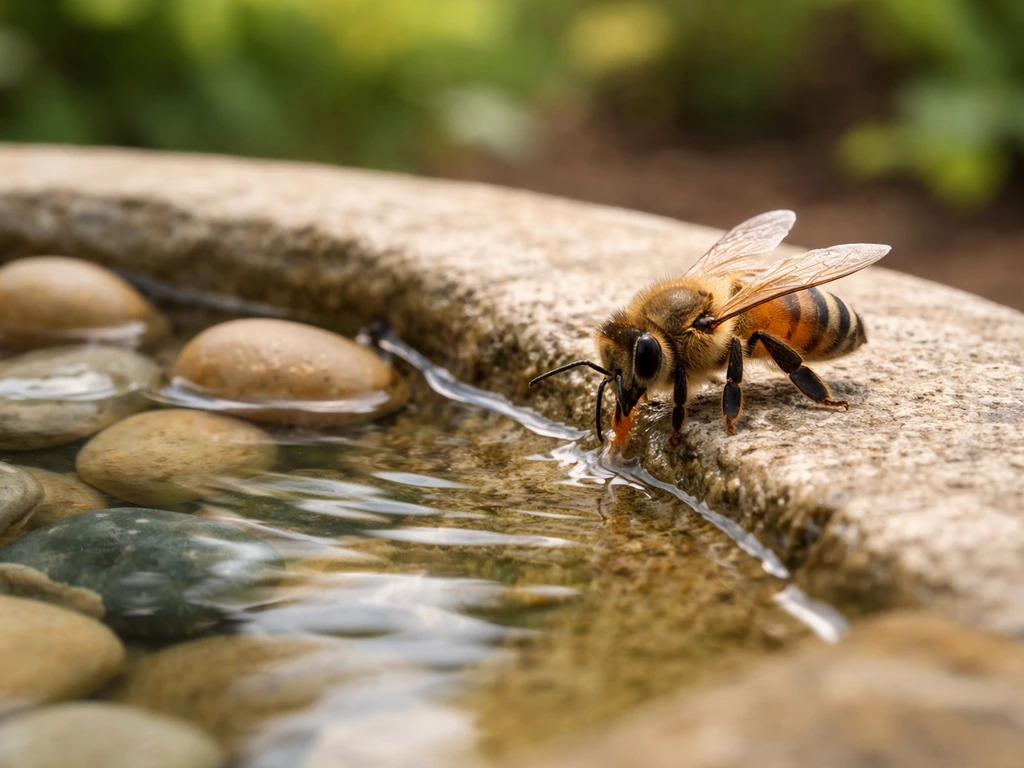
Why bees keep drowning in bird baths
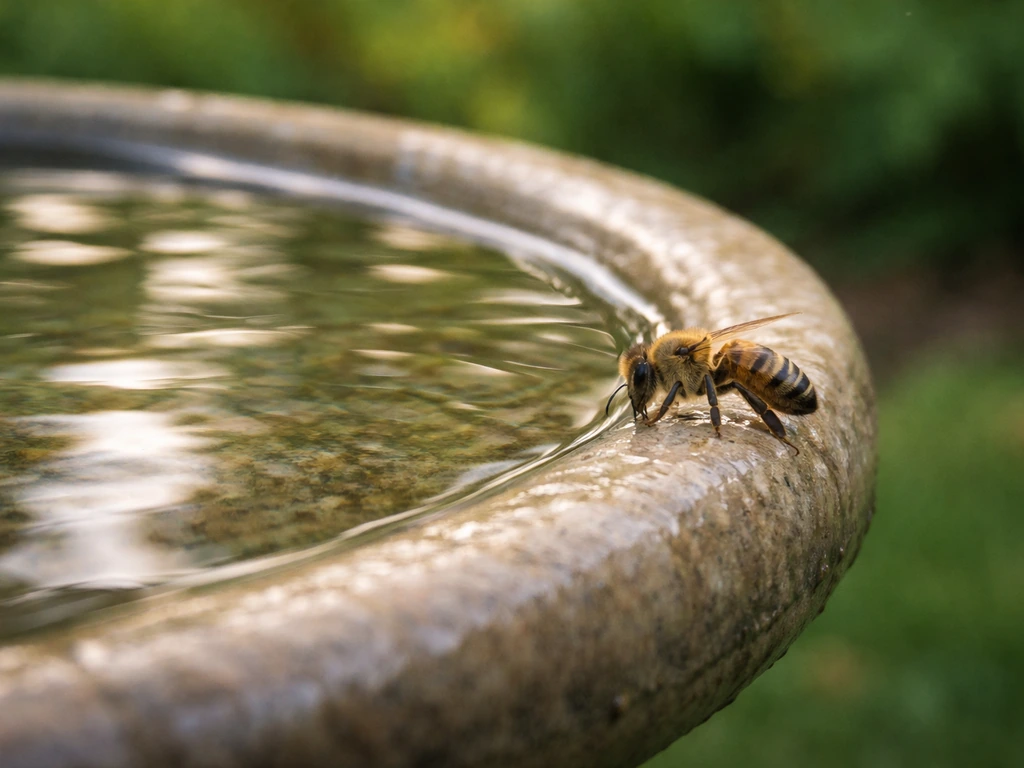
Bees don't approach water the way birds do. Birds wade in from the edge and splash around. Bees are looking for a perch right at the water's edge where they can sip without touching the water with their body. If you are also wondering what is swimming in your bird bath, the same conditions that let algae and debris build up can be part of the answer what is swimming in my bird bath. In the wild they find pebble banks, muddy edges, and wet moss. A standard bird bath is basically the opposite of that: wide, smooth, steep-sided, and filled to the brim. A bee lands, finds nothing to grip, and slides in.
The three specific problems that cause drownings are: water that's too deep with no shallow zone, smooth basin surfaces that offer zero grip, and no exit ramp once a bee does fall in. Even a half-inch of depth is dangerous if the floor is glazed ceramic or painted concrete. Once a bee's wings are wet, it can't fly out, and it will tire and sink within a few minutes. Water temperature plays a small role too. Cold water makes bees sluggish and slows their ability to recover if they do get wet.
What to change in your current bird bath today
You don't need to buy anything new to fix this today. Start with whatever rocks, bricks, or gravel you have on hand. The goal is to create a dry island or a gradual shallow zone inside the basin so bees can land, stand, and drink at the water's edge without falling in. To make your setup truly bee-safe, keep the water shallow and add grippy entry and exit spots like rough rocks make bird bath safe for bees.
- Drop one or two fist-sized river rocks or flat stones into the basin so their tops sit at least half an inch above the waterline. These act as landing platforms.
- If you only have gravel or small stones, pour a 2 to 3 inch mound near one side so it creates a sloped 'beach' that transitions from dry to wet.
- Lower your water level by about an inch from the rim if the basin is currently filled to the top. This alone gives bees a ledge to grip.
- Place a half-brick or piece of broken terracotta pot in the center or along one side as an emergency exit ramp that angles out of the water.
- If you have glass marbles, scatter a single layer across the basin floor. They create texture and raise the effective standing level in shallow areas.
- Scrub the basin if it has any algae or slime buildup. Slippery surfaces make every other fix less effective.
These changes take about five minutes and cost nothing if you have rocks in the yard. Birds will still use the bath normally. Robins and sparrows are perfectly happy splashing around rocks, and the rocks actually give smaller birds a perch to drink from too.
Creating real entry and exit spots that work
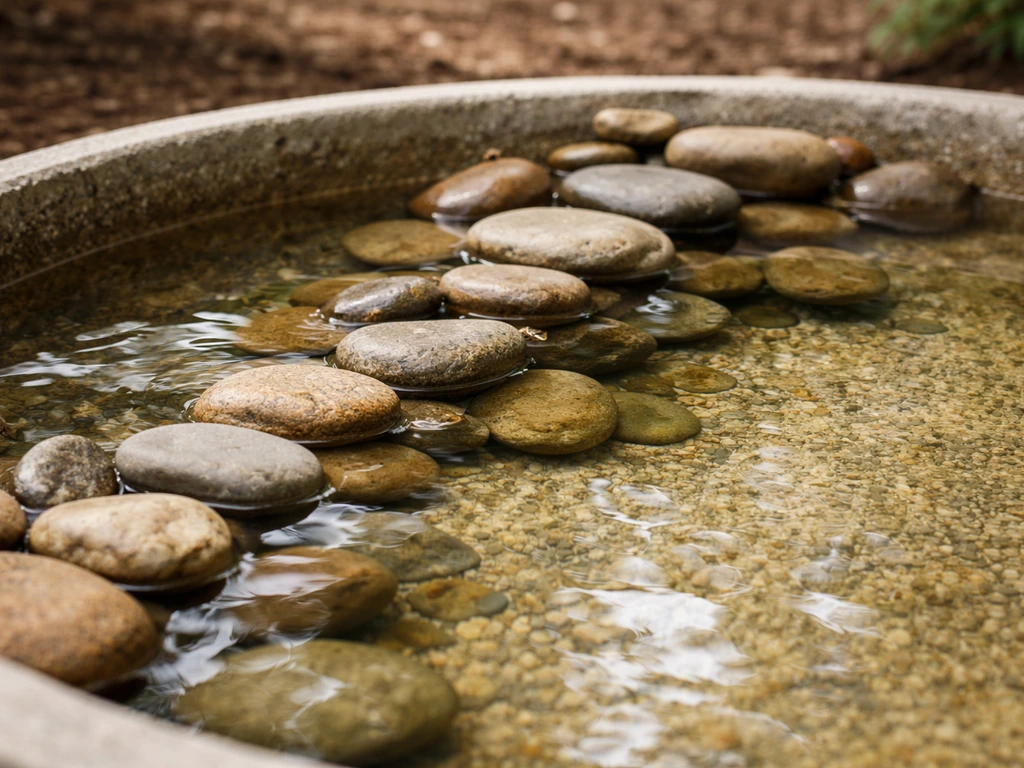
The best bee-safe setups I've used all have one thing in common: there's always a way out from any spot in the basin. A single big rock in the middle isn't enough if a bee falls in at the far edge. Think about coverage across the whole basin.
Rocks and flat stones
River rocks between 2 and 4 inches across work best. Stack two together if the basin is deep so the top one clears the waterline. The rough, natural texture gives bees something to grip as they pull themselves out. Avoid smooth river pebbles for this job since a wet bee won't get traction on them. Flagstone pieces or broken concrete pavers work great and look natural.
Gravel beaches
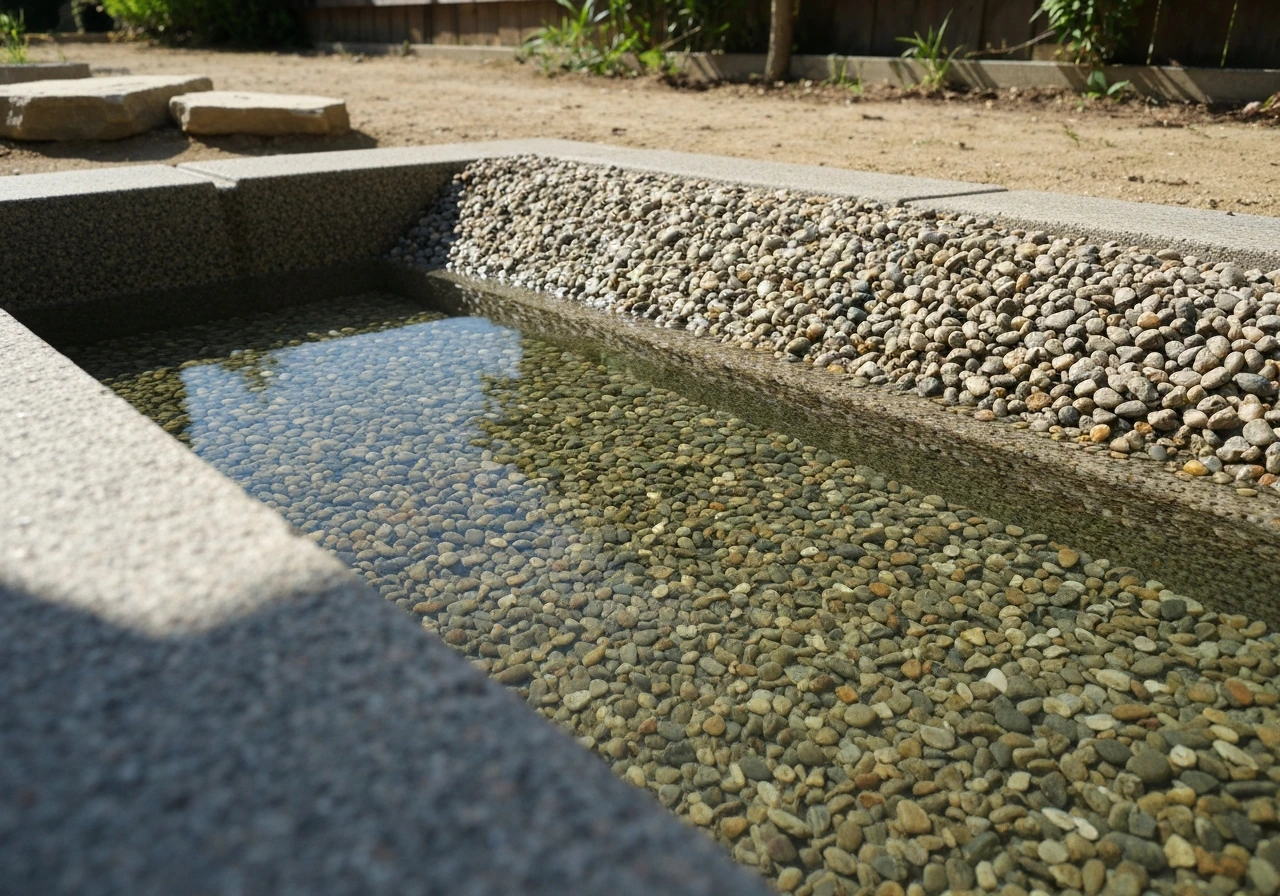
Coarse gravel (the kind sold for aquariums or garden paths, roughly pea-sized) poured into one section of the basin creates a natural shallow drinking zone. Slope it so one end is dry, the middle is just damp, and the deep end transitions to the main water. This mimics a creek bank and is the closest thing to a bee's natural water source. The Washington Department of Fish and Wildlife specifically recommends stones that rise above the waterline in a shallow bird bath for exactly this reason.
Mesh and floating ramps
A small piece of hardware cloth or plastic mesh draped over the edge and into the water gives a bee that's already struggling something to climb out on. Cut a 4x6 inch piece and drape it so half is in the water and half is over the rim. Secure it with a rock on the dry end. This is especially useful if your basin has steep, straight sides with no ledge. You can also find small purpose-made floating platforms at garden centers, though a wine cork or a piece of bark does the same job for free.
Getting depth, placement, and surface texture right
The ideal water depth for bee safety is 1 to 2 inches in the main drinking zone, with at least part of the basin shallower than that. Penn State's Center for Pollinator Research recommends exactly this setup: a shallow water source with rocks sitting above the waterline. For context, most standard bird baths hold 2 to 3 inches when full. Dropping the level by an inch makes a real difference.
Surface texture matters as much as depth. Glazed ceramic and painted metal are the worst offenders because they're slick even when dry. Rough-cast concrete, unglazed terracotta, and natural stone give bees (and birds) the grip they need to walk around the basin edge. If your bath has a smooth interior, adding a thin layer of coarse sand pressed into a silicone sealant coat is a DIY fix that makes the whole floor textured. It's more involved, but it's permanent.
Placement affects how bees approach the bath. Place the bird bath in partial shade if possible. Water in full sun heats up faster, evaporates quickly (causing dangerous water level drops), and develops algae faster. Position it low to the ground or at a height where the basin rim is reachable without a difficult approach flight. Near low flowering plants is ideal since bees are already foraging in the area. Avoid placing it directly under a dripping tree or next to a fence that blocks air circulation.
Bird bath types that are naturally safer for bees
Not all bird baths are equally dangerous. If you're shopping for a new one or replacing an old basin, these features make life easier for bees from the start.
| Bird Bath Type | Bee Safety Rating | Why | Best Modification If Needed |
|---|---|---|---|
| Rough concrete or stone | Best | Textured surface, holds rocks well, doesn't get slick | Add gravel beach along one side |
| Unglazed terracotta | Good | Slightly porous and textured, grips well when wet | Lower water level, add one flat stone |
| Glazed ceramic | Poor | Slick when wet, steep sides typical | Add gravel and mesh ramp |
| Painted metal | Poor | Very slick, heats up in sun, water evaporates fast | Add rocks, check level daily |
| Shallow dish/saucer | Good | Low sides, naturally shallow, easy escape | Fill partially, add a few pebbles |
| Heated bird bath (winter) | Good | Keeps water liquid when cold slows bees down | Keep level low, add textured rocks |
If your current bath is glazed ceramic or painted metal and you keep having problems, honestly the easiest long-term fix is switching to a rough concrete or stone basin and just adding gravel. You'll spend less time managing it.
When a separate bee water station makes more sense
Sometimes the better answer is to give bees their own dedicated water source away from the bird bath. If you still want fewer bees around the bath, you can also make your bird-bath setup less attractive while keeping birds safe how to keep bees away from bird bath. This is worth doing if you have a large garden with a real bee population, if the bees are regularly crowding out birds, or if you want to observe both separately. A separate bee station is just a shallow dish or tray (a plant saucer works perfectly) filled with a thin layer of water and packed with pebbles or marbles so the water barely covers them. Place it near your vegetable garden or flowering beds, not near the bird bath. Bees will often prefer the dedicated station because it's lower, quieter, and has no competition. If you're already dealing with a lot of bee activity at the bird bath, a dedicated station often reduces the crowding significantly.
Cleaning and maintenance that keeps bees safe
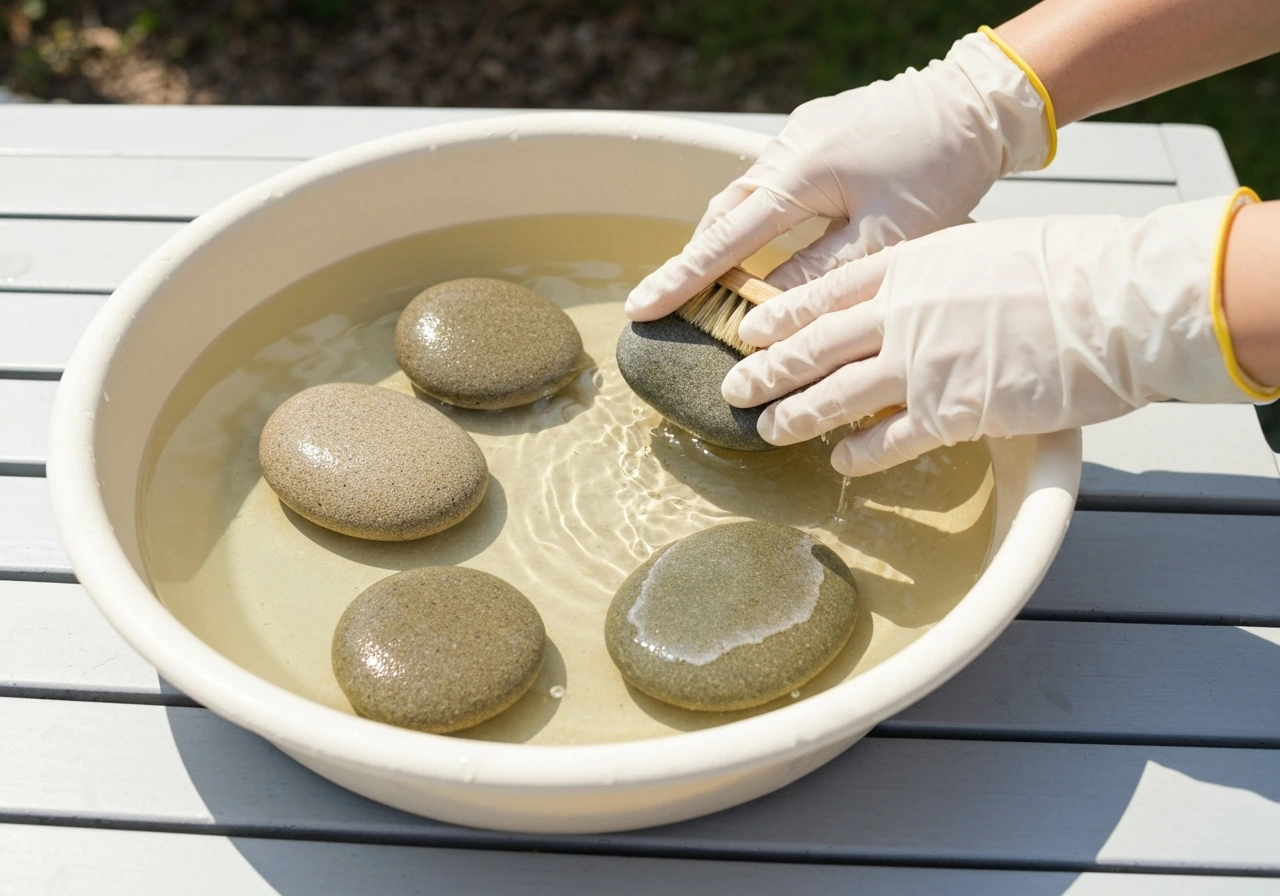
Algae and slime are the hidden bee killers. A rock that seemed grippy when you put it in becomes a skating rink after a week in warm water. Cleaning frequency is the most under-rated part of keeping a bee-safe bird bath.
- Scrub the basin and rocks every 3 to 4 days in summer. In cooler weather, once a week is usually fine.
- Use a stiff brush and plain water. No soap, bleach, or chemical cleaners near a working bird bath. Residues are toxic to insects and birds.
- A diluted white vinegar rinse (1 part vinegar to 9 parts water) is safe for removing mineral deposits and light algae. Rinse thoroughly before refilling.
- Pull rocks out and scrub them separately when you clean. Algae builds up fastest on the submerged surfaces.
- Top up water daily in hot weather. A bath that drops from 2 inches to half an inch in a day leaves bees stranded on rocks with no water to drink, which is its own problem.
- Remove any dead insects, leaves, or debris every day or two. Decomposing organic matter speeds up algae growth and can make the water toxic.
Mosquito control is worth thinking about here too. If you have tiny worms in your bird bath, they can show up when there is stagnant water or organic buildup, so cleaning and keeping the water moving helps tiny worms in my bird bath. Standing water breeds mosquitoes, and the typical fix (mosquito dunks with Bti) is actually safe for bees and birds, unlike chemical sprays. A small solar-powered wiggler or dripper that keeps the water moving is even better. Moving water doesn't breed mosquitoes, and bees are attracted to the sound of moving water. Win-win. Just make sure any bubbler or dripper doesn't create turbulence that knocks bees off their perches.
Troubleshooting when bees are still getting stuck
Bees still falling in despite rocks
If bees are still struggling after you've added rocks, check whether the rocks are actually dry on top. Rocks positioned too low will wick water up to the surface and still be slick. Lift them so more of the rock clears the waterline, or switch to taller stones. Also check whether you have enough coverage. One rock in a 14-inch basin leaves a lot of open water. Aim for rocks or gravel covering at least a third of the basin surface.
Algae making rocks slippery again fast
If algae is coming back within days, you're probably getting too much direct sun on the basin. Move the bath to a spot with morning sun and afternoon shade, or add a simple shade cloth above it. You can also swap polished river rocks for rougher volcanic rock or broken concrete, which holds up better against algae because the rough surface doesn't form a continuous slick layer the same way smooth stone does.
Water level dropping and leaving bees stranded
Evaporation is a real problem in summer, especially with shallow baths in full sun. A bath can drop an inch in a day in hot weather. If you can't check it every day, set up a simple drip system: a gallon jug with a pinhole in the bottom placed above the basin will slowly drip water in and maintain a more consistent level. Or just get in the habit of topping it up every morning before the heat of the day.
Freezing in winter
Bees aren't usually active foragers in freezing temperatures, so winter drowning is rarely an issue. But on warm winter days (above about 50°F) bees will emerge and look for water, and they're more sluggish than usual. If you use a heated bird bath in winter, keep the water level low and make sure your rocks are still in place. The Wildlife Gardening Foundation notes that bees and wasps can safely use bird baths when they have a proper edge to drink from, and that applies in winter too. The Wildlife Gardening Foundation notes that honey bees and wasps can safely use bird baths when they can drink from the edge. A heated bath with rocks is genuinely useful for bees on those unexpected warm days.
Flow designs and drippers that trap insects
Some dripper setups create a current or backflow that pulls light insects toward the drain or overflow. If you're using a recirculating pump, make sure the output is gentle enough that it doesn't push bees off their perches. A small spray head is usually more dangerous than a simple bubbler or drip outlet. If you notice bees clustering in a corner being pushed by the current, redirect the flow outlet or switch to a lower-flow setting.
Your next steps: do this today
- Lower the water level in your bird bath by about an inch from the rim right now.
- Add 2 to 3 rocks so their tops clear the water surface by at least half an inch. Use the roughest stones you can find.
- If the basin has smooth sides, drape a small piece of mesh or hardware cloth over one edge as an emergency exit ramp.
- Scrub any algae off the basin and rocks before refilling.
- If the basin is in full sun, consider moving it or adding shade to slow algae growth and evaporation.
- Check the water level daily this week and top it up as needed.
- If you have a large bee population, set up a separate shallow dish with pebbles near your garden beds as a dedicated bee station.
That's genuinely all it takes. Most people who follow these steps stop finding dead bees within a few days. Bees are resilient and will quickly learn to use the new perches. You'll likely start seeing them using the rocks deliberately, sitting at the edge and drinking, which is a satisfying thing to watch. The same setup that protects bees also benefits butterflies and other pollinators that need shallow, safe water access, so every change you make pays off across the whole garden. If you are also wondering why bees are hanging around your bird bath in the first place, see why are there bees in my bird bath for the quick reasons.
FAQ
Will adding rocks still work if my bird bath basin is very smooth (glazed or painted)?
Yes, but only if the “ledge” is real. A flat, smooth rock that sits flush with the basin floor can still be too slick once it gets wet. After you add rocks, test by spraying water on the surface (or waiting a day), then check whether the top stays dry enough to provide grip and a clear exit path from the farthest edge.
How many rocks or how much gravel do I need, and where should they go? (One big rock vs many)
A good rule is that no part of the basin should be “far” from a textured perch. If your rocks cover only the center, a bee that lands near the opposite rim can fall into deeper open water with nothing to climb onto. Aim for coverage across at least a third of the basin surface, and make sure every likely landing zone has an escape route.
What should I do if algae comes back within a couple of days even after adding rocks?
If you see algae returning quickly, it often means the bath gets strong afternoon sun or gets covered by debris. Try shifting to morning sun with afternoon shade, and remove leaf fall and pollen daily during peak shedding. Also consider replacing very smooth river stones with rougher volcanic rock or broken concrete, since slick surfaces can form a continuous “film” faster.
My bird bath is 3 inches deep when full, but shallow near the edge. Is that safe for bees?
Keep the main drinking zone shallow, about 1 to 2 inches where bees land to sip. But also ensure you do not trap deep water areas between rocks. If your bath has a steep drop, use gravel to create a sloped shallow section near one edge and keep at least part of the basin floor consistently within the shallow range.
Is hardware cloth or plastic mesh safe, and can it become a trap for bees?
Yes, if the mesh is secure and not vertical. A loose edge can become a trap if a bee can climb onto it but cannot reach a stable dry rim. Drape mesh so the top remains textured and reachable, and anchor the dry side with a stone so it does not shift when water level changes.
Can bubblers or drippers cause bees to drown if water is moving?
Avoid sudden turbulence. If you use a pump, set the flow low or use a gentle drip/bubbler that does not create strong currents across the rocks. Watch for bees repeatedly landing, then being pushed away from the perch or forced into the water column, which means you should reduce flow or reposition the outlet.
Are there bee-drowning risks in winter, and how should I adjust the setup for freezing weather?
It helps. Bees can still drown if they land on a slick top that becomes wet quickly, so the key is that rocks should stay high enough above the waterline that bees can stand and climb. In winter, keep the water level low and confirm rocks remain dry on top even during brief warm spells.
My rocks look fine, but bees still go under. How do I tell if rocks are wicking water and getting slick?
If the rocks wick water up, the top can get slick within hours to a day. Lift stones higher so more of the stone clears the waterline, or switch to taller, rough-textured pieces. Also periodically check “top grip,” not just overall water depth.
Should I create a separate bee water station, and how is it different from fixing the bird bath?
Yes, and it depends on where you place it. A dedicated bee station should be separate and slightly lower risk (shallow tray with pebbles so water barely covers them), but it must still include textured grip and an escape route. Place it away from the bird bath so bees are not crowding the bird bath out of habit or competition.
What cleaning routine works best, and are mosquito-control options safe for bees?
Use cleaner than “fresh water only” as your standard. Empty and scrub often, especially when you see slime buildup, because organic film can make even rough surfaces slick and it can also attract mosquitoes. If you use mosquito dunks (Bti), choose them as directed, and avoid chemical sprays that can leave residues on water-contact areas.