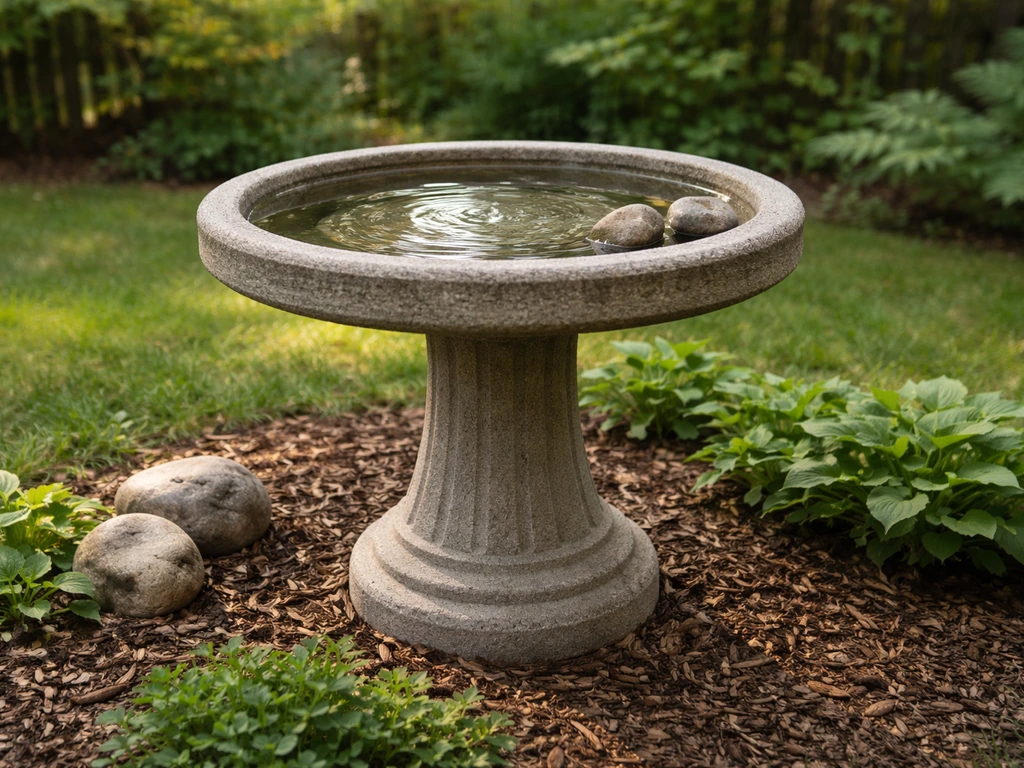
You can absolutely decorate a bird bath for Christmas and still have birds using it all winter long. The trick is keeping decorations around the bath, not in it, using only bird-safe, non-toxic materials, and making sure nothing blocks water access, creates unstable footing, or contaminates the basin. Done right, a festive bird bath becomes a genuine winter wildlife station that looks great and actually serves the birds visiting your yard.
How to Decorate a Bird Bath for Christmas Safely

Marcus Henley
30 May 2026
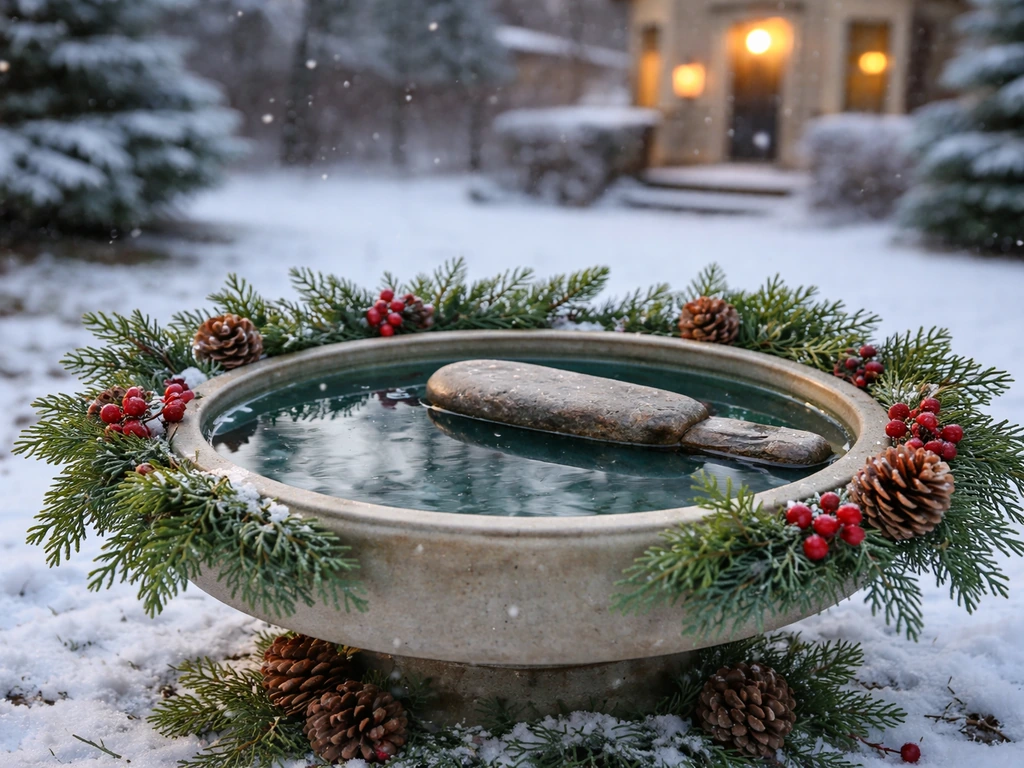
Choosing a Christmas theme that birds will actually use
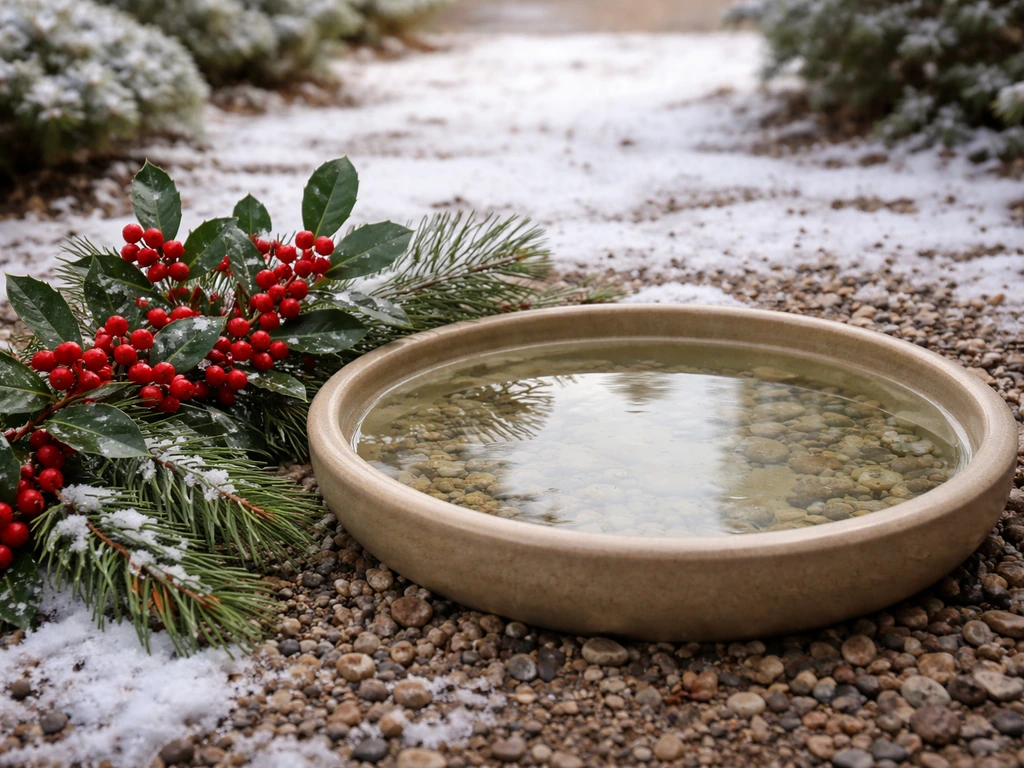
Before you grab a bag of ornaments, think about what birds need from a bird bath in winter: shallow, clean, accessible water with stable footing and a clear sightline for predators. Any theme you pick has to work around those requirements, not against them. The good news is that a naturalistic winter theme, think evergreen sprigs, pinecones, berry picks, and simple lanterns, does both jobs well. It looks festive and it blends with the kind of cover and perch structure birds are already comfortable with.
Real winterberry holly (Ilex verticillata) is a genuinely bird-friendly accent because its bright red berries persist into winter and birds like robins and cedar waxwings actually forage on them. Just be aware that while birds can handle holly berries, those same berries are toxic to some mammals and small pets, so if you have dogs or cats in the yard, use artificial berry picks instead. A natural, earthy palette of greens, reds, and wood tones tends to attract curious birds rather than scare them off. Avoid anything shiny, spinning, or reflective near the basin itself, because those are the same cues you would use to deter birds from a window or garden.
Safe decoration materials and what to avoid
Material choice is the most important decision you will make, because anything near an open water source can end up in it. Here is a clear breakdown of what is safe and what to skip entirely.
| Category | Safe Options | Avoid |
|---|---|---|
| Natural accents | Pinecones, untreated evergreen sprigs, dried orange slices, cinnamon sticks (perimeter only) | Scented or oiled pinecones, chemically treated greens, real mistletoe (toxic) |
| Fasteners and ties | Natural cotton twine, hemp or sisal rope, stainless steel wire, paper-wrapped ties | Glue (any type), zip ties with sharp edges, rubber bands, twist ties that can fray |
| Metal decorations | Stainless steel or powder-coated wrought iron accents | Bare galvanized or zinc-coated items, anything with peeling paint, lead-painted ornaments |
| Lights | Low-voltage LED string lights on the pedestal or surrounding plants | Lights draped over or into the basin, any string light with exposed wiring near water |
| Ribbon and fabric | Short, firmly secured fabric ribbon on the pedestal base | Tinsel, metallic ribbon near the basin, loose stringy or sticky decorations of any kind |
| Ornaments | Lightweight unbreakable ornaments hung from a nearby shepherd's hook or post | Heavy glass ornaments near the basin rim, anything that can shatter or fall into water |
The key hazards to hard-rule out are lead and zinc from metallic decorations (both are commonly toxic metals for birds), sticky or stringy spider-web style decorations that can physically ensnare small birds, and blank" rel="noopener noreferrer">anything scented or coated with oils or adhesives that can leach into the water. The RSPB is emphatic about keeping chemicals out of bird baths entirely, and that extends to craft glue, spray paint, and even some wood stains. SpectrumCare lists holiday hazards to rule out around birds, including blank" rel="noopener noreferrer">tinsel, ornament hooks, ribbon or gift wrap, batteries, cords, and glue traps that can injure birds if chewed or swallowed. If you would not let it sit in water your dog drinks from, it should not be anywhere near the basin.
How to decorate a bird bath step by step
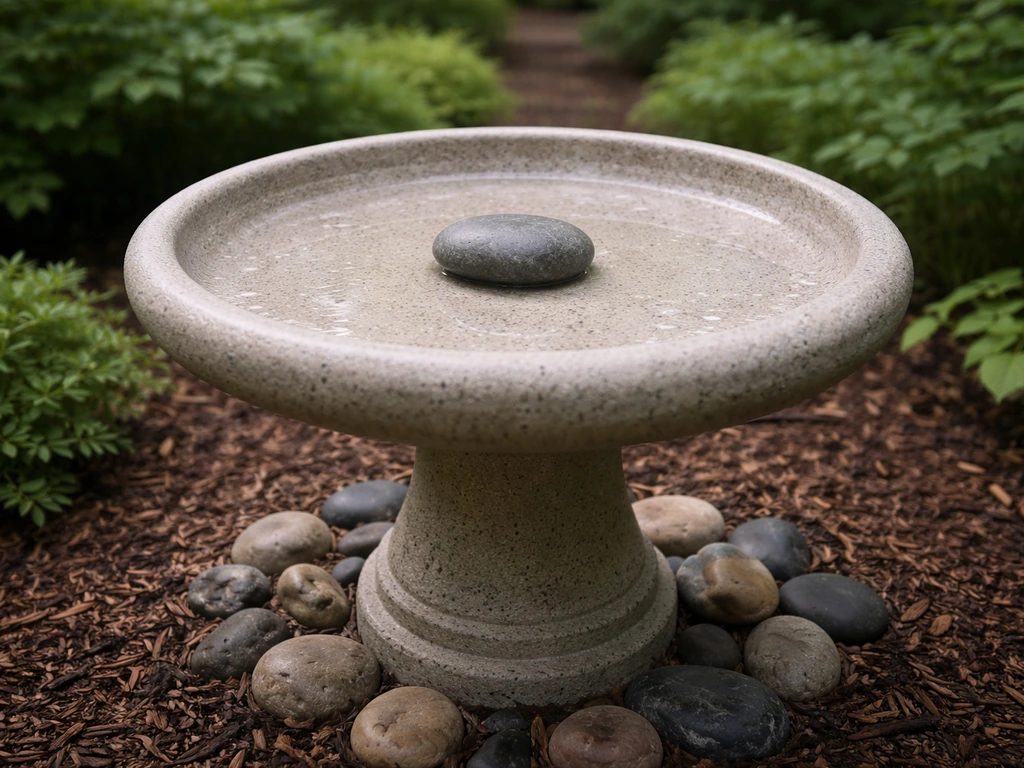
Work from the outside in. Start with the area around the bath, then the pedestal, and keep the basin itself completely decoration-free except for a clean perching stone.
- Clear the area. Remove any existing algae or debris from the basin and give it a quick scrub before you start decorating. You want a clean baseline so you can spot contamination easily throughout the season.
- Add a perch stone if you do not already have one. Place a flat rock or two inside the basin so it sits just above the waterline. Birds need a stable, grippy surface to land on, and it makes the bath more inviting than a bare, slippery bowl. Keep basin depth at 1 to 2 inches maximum.
- Dress the pedestal base. Wrap natural cotton twine or hemp rope around the pedestal in a simple spiral, then tuck in short sprigs of fresh or artificial evergreen and a few small pinecones. Secure everything with additional twine, not glue. This is your main decorative zone.
- Add a garland around the basin rim (not inside it). Use a lightweight artificial garland or a strand of natural greenery and secure it to the outside edge of the basin lip with small stainless steel clips or cotton twine. Make sure it does not overhang the water surface and does not block birds from landing at the rim.
- Mount lights on the pedestal or a nearby shepherd's hook, not on the basin. Use low-voltage LED string lights, run the cord along the pedestal down to an outdoor-rated extension cord, and plug into a GFI-protected outdoor outlet. Keep all connections away from the water level.
- Add berry picks, small ornaments, or a lantern to a nearby post or hook. Positioning visual accents 12 to 18 inches away from the basin keeps the bath visible and accessible while giving the whole setup a cohesive holiday look.
- Step back and check sightlines. Birds need open approach angles and a clear escape path. If your decorations form a visual wall around the bath, spread them out. A bird should be able to see the water from several feet away and leave quickly in any direction.
One thing I always do at this stage: fill the basin and walk away for a day. If a decoration has shifted or is dripping anything into the water, you will know before the birds do. It also tells you whether the garland is staying put or needs better anchoring.
Keeping water liquid through the Christmas cold
If you live somewhere that gets regular freezing temperatures in December and January, an unheated bird bath will be a useless block of ice most mornings. This is actually one of the most practical things you can do for birds in winter: give them access to liquid water when every other source is frozen. A heated bird bath or a dedicated basin heater is the right call.
Submersible or clip-on basin heaters (like the D14BH style units) are specifically designed to keep water from freezing, not to heat it like a hot tub. Most have a built-in thermostat that only activates when temperatures drop near freezing, cycling the water temperature to around 40 degrees Fahrenheit so the basin stays ice-free without running constantly. That automatic thermostat also means they are energy-efficient enough to leave on throughout the season. When you install one, always plug it into an outdoor-rated extension cord with a GFI-protected circuit, and run the cord along the underside of the pedestal down and away from the water. Never let the cord drape through the basin.
Skip ice-melt products in or around the basin entirely. Even pet-friendly formulas like magnesium chloride-based ice melts are designed for walkways, not water sources for wildlife. If ice forms despite a heater (usually because of a power outage), just pour warm (not boiling) water into the basin to melt it. Do not chip at concrete or ceramic basins with metal tools, especially in the cold, because they can crack.
If a heater is not in your budget, moving water freezes more slowly than still water. A simple solar-powered dripper or aerator adds movement that also happens to attract more bird species than a static basin. Even in winter, the sound of dripping water is a reliable bird magnet.
Weather-proofing your decorations and preventing algae and mosquitoes
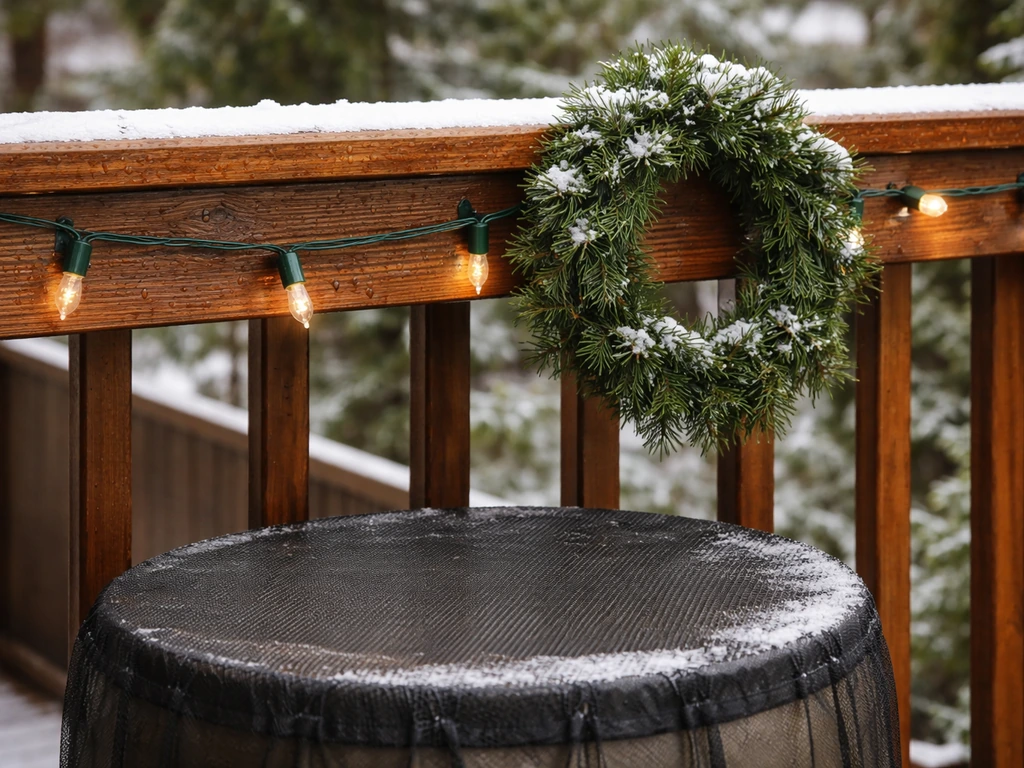
Holiday decorations and winter weather are a rough combination. Rain, snow, and freeze-thaw cycles will wreck anything that is not genuinely outdoor-rated within a week or two. Use artificial greenery rather than real cut greens for the long term (real sprigs look great but turn brown and moldy fast in wet conditions). If you do use natural elements like pinecones, let them dry out fully between wet spells or replace them as needed.
Algae is less aggressive in cold weather than in summer, but it does not disappear entirely. Any time you have standing water, organic material (like shed needles from a garland), and even weak winter sunlight, you have conditions for algae. The best prevention is keeping the basin as shaded as needed, changing the water every one to two days, and not letting debris accumulate. You can also follow a simple plan for how to shade a bird bath to reduce overheating, algae buildup, and mosquito-friendly standing conditions in warm weather. Choosing whether to place your bird bath in sun or shade is important because it affects how fast water heats up, freezes, and grows algae basin as shaded as needed. Moving water from an aerator or dripper also dramatically slows algae growth, and it helps keep mosquitoes from laying eggs because larvae need still water to hatch.
Mosquitoes are mostly a non-issue in genuinely cold climates during December, but in mild-winter zones (coastal California, the Gulf Coast, parts of the Pacific Northwest), they remain active. If you are in one of those areas, the same rules apply year-round: change water every one to two days and consider a small solar aerator or a Bti-based dunk (Bacillus thuringiensis israelensis, which is bird-safe and kills larvae) if you notice any wriggling in the basin.
Cleaning and maintenance during and after the holidays
The hardest part of decorating a bird bath for Christmas is keeping up the cleaning routine when you are also busy with holiday obligations. The key is making it simple to access the basin without removing all your decorations every time. That is another reason to keep decorations on the pedestal and perimeter rather than draped over the basin: you can top up or dump and refill the water in 60 seconds without disturbing anything. If you want a more hands-on look, you can also repurpose the same bird-bath-safe materials to build a fairy garden style display nearby how to make a fairy garden in a bird bath. Keeping the basin area clear is also a key part of how to decorate a bird bath, so birds can access water safely.
For a full cleaning, which you should do at least once a week regardless of how clean the water looks, remove the perch stones, dump the water, scrub the basin with a stiff brush, and rinse thoroughly. If there is any algae staining or film, a solution of one part white vinegar to nine parts water works well. Scrub it in, let it sit for a few minutes, then rinse multiple times until the vinegar smell is completely gone before refilling. Do not use bleach or any commercial cleaner with fragrances or surfactants near the basin.
After the holidays, do a full inspection before you put everything away. Check the pedestal for any mold or water damage under garland wrapping, inspect the basin for new cracks (freeze-thaw cycles crack ceramic and concrete), and clean and dry any reusable artificial decorations before storing them. If you used twine or rope, discard it rather than storing it damp, where it will grow mold by next season.
What to do if birds stop visiting or things go wrong
Even a well-decorated, well-maintained bird bath sometimes has a slow stretch. Here is how to diagnose the most common problems quickly.
| Problem | Likely cause | Fix |
|---|---|---|
| Birds not visiting at all | Decorations blocking sightlines or approach angles, or bath is too close to cover (ambush risk) | Spread out perimeter decorations, recheck that bath is visible from multiple angles, ensure 5 to 10 feet of open space around it |
| Basin surface is slippery | Algae or biofilm building up on smooth basin | Scrub with a stiff brush, add a flat rough-textured stone for grip, increase water change frequency to daily |
| Water turning green or slimy fast | Algae bloom, likely from organic debris falling in from garland or greens | Remove debris daily, trim any decorations overhanging the basin, consider adding a solar dripper for water movement |
| Decorations turning moldy or wet | Natural materials retaining moisture in freeze-thaw cycle | Replace real greens with quality artificial equivalents, ensure fasteners are not trapping water against the pedestal |
| Basin freezing overnight despite heater | Heater cord unplugged, tripped GFI outlet, or unit too small for overnight low temp | Check GFI outlet reset button, confirm cord is outdoor-rated, add a second heater or switch to a higher-wattage thermostat model |
| Strong smell or film on water surface | Contamination from scented pinecones, glue, or painted ornament leaching into basin | Remove all decorations, do a full vinegar scrub and multi-rinse, audit every decoration item near the water |
If birds visited before you decorated and stopped after, the decoration itself is almost certainly the variable. Take everything off, confirm birds return, then add decorations back one element at a time to find the culprit. Spinning or reflective items near the basin are usually the first thing to suspect.
Getting the basics of bird bath decoration right for Christmas is genuinely satisfying. If you want to go further with the general principles of bird bath decoration year-round, placement for maximum bird activity, or even creative repurposing projects, those are all topics worth exploring once you have the seasonal setup dialed in.
FAQ
Can I glue ornaments or hot-glue them to the bird bath pedestal for a Christmas look?
You should avoid adhesives near the basin, even if they seem secure. If you need to attach something, glue only to the pedestal or a removable stand component, and keep all glued parts well above the rim and completely dry from splashes. After setup, run a 24-hour “check” by filling the basin and looking for any dripping, smearing, or stringy residue that could reach the water.
Are Christmas lights safe to use around a bird bath in winter?
Use only outdoor-rated lights, keep the wiring and light fixtures off the pedestal top where birds stand, and prevent any cable or plug from getting wet. Do not let any light, heat source, or reflective surface sit directly over the basin opening, because it can scare birds and it increases the chance of water contamination from condensation or debris.
What should I do if my bird bath is freezing solid but I do not have a heater?
If there is no heater, prioritize minimizing time with ice. Try moving water slower freezing by using an aerator or dripper powered safely for outdoors, or temporarily swap to a smaller, easier-to-clear basin and keep a routine to melt ice quickly with warm water when needed (avoid chipping with metal tools, which can crack ceramic or concrete).
Is magnesium chloride ice melt safe for wildlife if I use it only on the ground near the bath?
It is still best to skip ice melts altogether around a bird bath area. Even “pet-friendly” products are formulated for walkways, not water sources, and splashes, runoff, or meltwater can reach the basin. Instead, clear snow manually and use warm water to melt any ice in the basin if birds need access.
How do I prevent algae during Christmas when I have lots of plant decorations nearby?
Keep the basin itself clear of organic decorations, and treat any shed material from pinecones or garlands as debris to remove. The fastest win is a tight cleaning cadence (refill and refresh water every one to two days) plus keeping the basin as shaded as your yard allows, because winter sun can still drive algae and film growth even when temperatures are cool.
Can I use real holly, berries, or mistletoe if I have dogs or cats?
Birds can forage on holly berries, but those same berries can be dangerous to some pets. If you have cats or dogs that may chew plants, use artificial berry picks or choose a theme made from non-berry accents. Also keep anything within the pet reach radius away from the bath area.
What is the best way to arrange decorations so birds can still land safely?
Anchor everything to the pedestal or the area around the bath, then keep the rim and water surface free. Provide a clear perching point (a single clean stone) and avoid items that narrow the landing zone or create slippery footing. If birds stop visiting, remove the most “obstructive” decoration first and restore a wide, easy approach.
How can I tell if a decoration is causing birds to avoid the bath?
Remove all decorations, confirm birds return, then add items back one at a time. Items that spin, highly reflect, or drip are usually the first culprits, but also watch for anything that sheds fibers, leaves, or grit. After each addition, fill the basin and leave it undisturbed for about a day to detect shifting or dripping early.
Can I place the bird bath in full sun for Christmas decoration photos and still keep it bird-friendly?
Sun is riskier when decorations add organic debris, because algae and water quality can worsen even in winter. If full sun is the only option, increase water-change frequency, remove any organic shedding quickly, and consider shade adjustments long-term. Birds may still visit, but the maintenance workload goes up.
What should I do after a holiday storm if my garland or items got wet and dirty?
Check the pedestal for mold or water damage under wrapping, inspect the basin for cracks caused by freeze-thaw, and remove and rinse any artificial items before storage. If you used rope or twine and it stayed damp, discard it rather than storing it, because it tends to keep mold and mildew and will contaminate next season’s setup.
Is a vinegar rinse safe for regular basin cleaning during the Christmas season?
Yes, vinegar (one part white vinegar to nine parts water) can help with algae staining and film, but rinse thoroughly multiple times. Make sure the vinegar odor is gone before refilling, because a strong smell can deter birds and may indicate leftover residues. Avoid bleach and any fragranced or surfactant cleaners near the basin.
Next Article
How to Decorate a Bird Bath: Step-by-Step Ideas
Step-by-step tips to decorate a bird bath safely, including concrete fixes, bird-friendly landscaping, and easy upkeep i