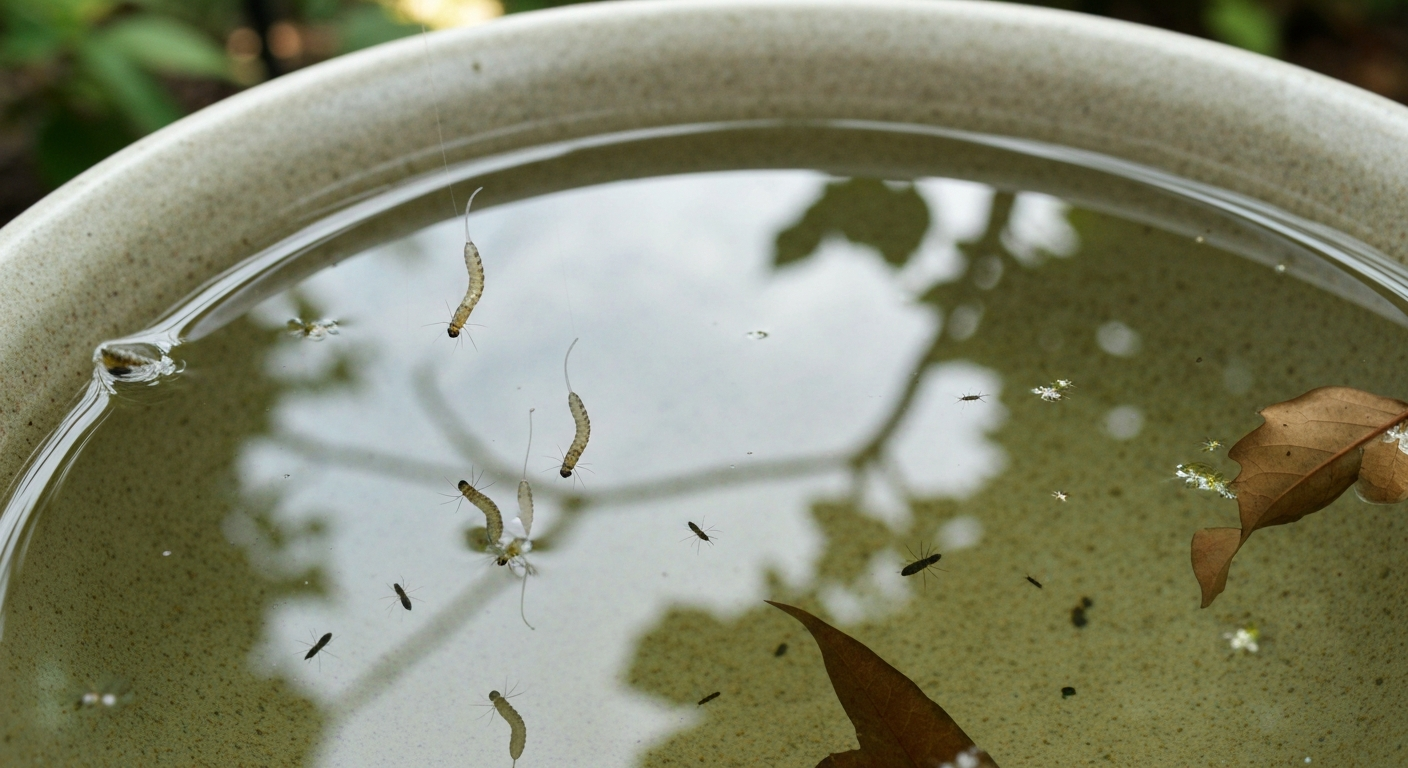
Those tiny worms squirming around in your bird bath are almost certainly mosquito larvae, midge (chironomid) larvae, drain-fly larvae, or aquatic worms (oligochaetes). For photo comparisons and quick IDs, see what is swimming in my bird bath. Mosquito wrigglers are the most common and the most urgent to deal with, since they can develop into biting adults within a week. The others are nuisances tied to dirty water or organic buildup. In every case, the fix is the same: empty the bath, scrub it out, and adjust your maintenance routine so the water never sits long enough for anything to hatch.
What Are the Tiny Worms in My Bird Bath: ID, Risks & Fixes

Marcus Henley
13 Jul 2026
Why tiny worms and larvae show up in your bird bath
Bird baths are basically perfect larval habitat: shallow, warm, usually shaded, and often left sitting for days without a water change. Insects like mosquitoes and midges are looking for exactly that combination when they lay eggs. Standing water that's more than a few days old will start accumulating algae, bird droppings, and decomposing debris, and that biofilm becomes food for larvae and a signal to egg-laying adults that conditions are right. Small containers (bowls, flowerpot saucers, gutters, tires) are flagged by the CDC as primary breeding sites for container mosquitoes like Culex and Aedes, and your bird bath fits squarely in that category. Even a clean-looking bath can harbor eggs if the water hasn't been changed recently, because mosquito eggs are laid at or just below the surface film and are nearly invisible to the naked eye.
The short version: worms and larvae appear because still water plus organic material equals opportunity. Fix the water, fix the problem.
Photo ID guide: telling the four common larvae apart
You don't need a microscope to tell these apart. Here's what to look for when you peer into the basin, and what to keep in mind when comparing with reference photos online.
Mosquito larvae (wrigglers)
Mosquito larvae are the most recognizable once you know the posture cue. Culex and Aedes larvae hang at an angle from the water surface, posterior end up, breathing through a visible tube called a siphon. Anopheles larvae lie flat and parallel to the surface. All of them wriggle with a characteristic S-shaped thrashing motion when disturbed. They're typically 4 to 10 mm long, tan to dark brown, with a distinct bulbous head and a tapered tail region. You'll see them congregating near the surface, not crawling on the bottom or sides. Egg rafts from Culex look like tiny gray or brown boat-shaped clusters floating at the surface. When looking at reference images, the siphon at the tail end and the surface-hanging posture are your most reliable ID cues, and the CDC and PAHO publish clear comparison drawings of Anopheles, Culex, and Aedes postures that are worth bookmarking.
Midge larvae (bloodworms / chironomids)
Midge larvae are often a vivid red or orange color, which is why they're commonly called bloodworms. They're elongated and cylindrical, usually 8 to 15 mm, and they live in the sediment and organic muck at the bottom of the basin or cling to the sides. Unlike mosquito larvae, they don't hang at the surface and they don't have a breathing siphon. They have a slower, more crawling movement rather than the dramatic wriggling of mosquito larvae. They indicate that your basin has accumulated a layer of decomposing organic matter, typically algae, bird droppings, or leaf debris. The red coloration comes from hemoglobin, which helps them survive in low-oxygen environments. For photo ID, look for blank" rel="noopener noreferrer">images tagged under Chironomidae on iNaturalist or BugGuide (note that BugGuide images are contributor-copyrighted, so use them for comparison only and credit per their instructions). The red color alone is a strong distinguishing feature.
Drain-fly larvae (moth-fly larvae / sludge larvae)
Drain-fly or moth-fly larvae (family Psychodidae) are grayish, legless, and anywhere from a few millimeters to about 10 mm long. They have a tapered, somewhat segmented body and they live directly in biofilm and slimy buildup rather than free-swimming in the water. If you run your hand along the inside of the basin and feel a slick or slimy coating, and you see small grayish worm-like things in that slime, drain-fly larvae are the likely culprit. They don't have a breathing siphon and they don't wriggle at the surface. Virginia Cooperative Extension has published reference photos of the larval stage alongside the adult moth fly, which looks like a tiny fuzzy moth. The presence of drain-fly larvae is a direct indicator that your basin hasn't been scrubbed in a while.
Aquatic worms (oligochaetes / annelids)
True worms in the oligochaete group (essentially aquatic earthworms or sludge worms) are smooth, cylindrical, and clearly segmented along their entire body length. They crawl slowly along surfaces and don't have a head capsule or pupal stage, which distinguishes them from insect larvae. They're typically a pinkish or reddish-brown color. You won't see them hanging at the surface or swimming. They show up in bird baths that have accumulated significant organic sediment, usually leaf litter or algae that has been sitting for weeks. They're harmless to birds and people but are a clear sign you need a full basin scrub.
| Type | Color | Size | Where found in basin | Key ID feature | Urgency |
|---|---|---|---|---|---|
| Mosquito larvae | Tan to dark brown | 4–10 mm | Hanging at surface | Breathing siphon at tail, surface posture, wriggling | High — vectors of disease |
| Midge larvae (chironomids) | Red or orange | 8–15 mm | Bottom sediment or sides | Vivid red color, no siphon, crawling in debris | Low — non-biting, nuisance |
| Drain-fly larvae | Gray | 3–10 mm | In slimy biofilm on walls/bottom | Found in slime/sludge, tapered segmented body | Medium — signals poor hygiene |
| Aquatic worms (oligochaetes) | Pink/reddish-brown | 5–20 mm | Crawling on bottom or sides | Smooth segmentation, slow crawl, no insect features | Low — harmless, signals sediment buildup |
Are they dangerous? Risks to birds, people, and your backyard
Mosquito larvae: the ones to take seriously
Mosquito larvae are the main health concern. Culex and Aedes mosquitoes are proven vectors of West Nile virus, dengue, Zika, and other diseases. A bird bath that goes unchanged for 5 to 7 days can produce a full new generation of biting adults, and they will absolutely breed in a basin you've been ignoring. Beyond human risk, West Nile virus is particularly lethal to corvids and other backyard birds. If you're trying to attract birds, including crows, you do not want your bath to be a mosquito factory. Public health agencies are explicit: bird baths are common breeding sites and should be part of weekly source-reduction efforts in any mosquito control strategy.
Midge and drain-fly larvae: mostly nuisance, but a hygiene flag
Non-biting midges (chironomids) don't bite people or birds, and their larvae are actually a food source for some species. However, a bird bath full of midge larvae is also a bath with significant organic buildup, and that environment supports Salmonella and other pathogens that can spread between birds sharing contaminated water. Drain-fly larvae signal the same problem: a biofilm-coated basin that's effectively a petri dish. USGS National Wildlife Health Center and Audubon both recommend frequent cleaning and even temporary removal of baths during unusual songbird mortality events, specifically because contaminated water features accelerate the spread of Salmonella, Trichomonas (causing trichomoniasis), and avian pox. So while the midge larvae themselves aren't dangerous, what they're living in can be.
Aquatic worms: harmless but telling
Oligochaetes don't carry diseases relevant to birds or people. Their presence means you've got accumulated sediment, but they're otherwise benign. That said, any basin with enough sediment to support worm colonies also has enough organic material to fuel algae growth, mosquito breeding, and bacterial contamination. Use them as a reminder, not an emergency.
Immediate removal: clear the larvae right now
Don't wait on this, especially if you've spotted mosquito larvae. Here's the step-by-step I follow whenever I find anything wriggling in my basin.
- Skim out visible larvae with a fine mesh strainer or a piece of window screen formed into a scoop. Dispose of the collected material in a bag that goes directly into the trash, not onto soil near the bath, since larvae can survive in moist dirt long enough to pupate.
- Empty the entire basin completely. Tilt or flip smaller baths; use a bucket or siphon for larger pedestal or ground-level baths. Don't just top it up with fresh water, the eggs and remaining larvae will survive.
- Scrub the basin with a stiff-bristle brush and dish soap or a purpose-made bird bath cleaner. Pay special attention to the bottom, sides, and any textured surfaces where biofilm collects. Drain-fly larvae specifically live in the slime layer, so this step is critical for them.
- Disinfect with a 10% bleach solution: 1 part household bleach to 9 parts water. Pour it over the scrubbed basin, let it sit for 2 to 3 minutes, then scrub once more. USGS and Audubon both recommend this concentration for bird bath and feeder disinfection.
- Rinse thoroughly at least two or three times with clean water until there's no bleach smell. Bleach residue is harmful to birds. If you're in doubt, let the bath air-dry in sunlight for 30 minutes before refilling.
- Refill with fresh water and monitor daily for the next week.
That whole process takes maybe 15 minutes and it genuinely works. The CDC's standard container-mosquito guidance is essentially this same sequence: empty, scrub, turn over or cover, refill. The scrubbing step is the one people skip, and it's the most important one because it removes the biofilm that larvae feed on and that eggs adhere to.
Safe larvicide options: Bti and mosquito dunks
If you have a larger basin, a pond-style bath, or a setup where you genuinely can't change the water every few days, Bti (Bacillus thuringiensis israelensis) products are your best friend. Bti is a naturally occurring soil bacterium that produces proteins toxic to mosquito and midge larvae but harmless to birds, mammals, fish, bees, and beneficial insects. It's the active ingredient in Mosquito Dunks (the doughnut-shaped rings) and Mosquito Bits (granules).
How Bti works and how to dose it
When a mosquito larva ingests Bti, the bacterial proteins destroy its gut lining and it dies within 24 to 48 hours. The product has no residual effect on adult mosquitoes, birds, or other wildlife. Mosquito Dunks are rated for 30 days in up to 100 square feet of surface area, but for a typical bird bath holding 1 to 3 gallons, you can break a dunk into quarters and use just one piece. Drop it in the water and let it dissolve slowly. Mosquito Bits work faster (within hours) and are better for spot treatments when you've just found larvae. A tablespoon of Bits per 25 square feet of surface area is a standard starting point, but always read your product label and follow it exactly.
A few important safety notes: Bti is not a substitute for cleaning. It won't eliminate midge larvae, drain-fly larvae, or aquatic worms. It also won't fix a biofilm problem. Use it as a preventive backup in a clean bath, not as a reason to skip your weekly scrub. Also, check that your specific product is labeled for use in ornamental water features or bird baths. Most Mosquito Dunk and Mosquito Bits labels do cover this, but read your label.
Non-chemical control: water movement, aeration, and physical barriers
Mosquitoes and midges need still water to lay eggs and for larvae to develop. Even a gentle surface ripple is enough to disrupt egg-laying behavior significantly. This is probably the single most impactful upgrade you can make to a bird bath beyond regular cleaning, and it has the bonus of making the bath more attractive to birds, since moving water catches light and sound in ways that draw birds from a distance.
Solar bubblers and fountain pumps
A solar-powered bubbler or small submersible fountain pump keeps water circulating continuously during daylight hours. You can find floating solar bubblers for under $20 that sit directly in the basin and require no wiring. They're not perfect (they stop at night, which is when Culex mosquitoes are most active and when some egg-laying happens), but they dramatically reduce successful breeding. Submersible electric pumps with a fountain head give you 24-hour movement and are worth the extra investment if mosquitoes are a persistent problem in your area. I've used both and the always-on electric pump is noticeably more effective, but the solar option works well as a low-effort starting point.
Drippers and misters
A dripper attachment that creates a slow, steady drip into the basin surface is another great option. It keeps the surface agitated enough to deter mosquitoes, uses very little water, and birds (especially warblers, hummingbirds, and thrushes) are attracted to the sound and movement of dripping water. These are inexpensive, widely available, and easy to retrofit onto most bird bath setups.
Mesh and physical covers
If you're leaving a bath unoccupied for more than a few days, covering the basin with a fine mesh screen (1 mm or finer) prevents adult mosquitoes from landing on the surface to lay eggs. This isn't a practical everyday solution if birds are actively using the bath, but it's a useful option during vacations or seasonal gaps. You can cut fiberglass window screen to size and weight the edges with stones.
Cleaning routine and maintenance schedule
Here's the schedule I stick to. The exact frequency you need will vary by climate (hot, humid climates breed mosquitoes faster), how many birds use the bath, and whether you have overhanging trees dropping debris. For tips on how to keep birds from pooping in bird baths, see our guide on how to keep birds from pooping in bird bath. Treat this as a baseline, not a ceiling.
| Frequency | Task |
|---|---|
| Daily | Top up water level if needed. Remove any visible debris (leaves, feathers, droppings) with a small net or your hand. Do a quick visual scan for larvae or egg rafts. |
| Every 2–3 days (warm months) | Do a full water change: empty, quick rinse, refill. In summer when temperatures are above 80°F, mosquito eggs can hatch and larvae mature in as little as 5–7 days, so a 2–3 day cycle is safer. |
| Weekly | Empty, scrub with a stiff brush and dish soap, rinse well, refill. This is the CDC-recommended minimum for container mosquito source reduction. |
| Monthly | Full disinfect cycle: scrub, apply 10% bleach solution, let sit 2–3 minutes, scrub again, rinse thoroughly at least twice, air-dry, refill. Inspect basin for cracks where biofilm hides. |
| Seasonally (spring and fall) | Deep clean plus inspection: check pump or bubbler components, clear any algae staining with a diluted white vinegar scrub (then rinse before using bleach), check for cracks or flaking in concrete or ceramic baths, consider relocating if mosquito pressure was high the previous season. |
One thing I'll flag: if you notice an unusual number of sick or dead birds in your area, pull the bath completely and disinfect it before putting it back out. USGS National Wildlife Health Center guidance specifically recommends this during multi-state songbird mortality events because shared water sources amplify disease spread. It feels counterintuitive to remove a resource when birds need water, but a contaminated bath does more harm than no bath at all.
Long-term prevention: design, placement, and habitat choices
Getting on top of larvae is satisfying, but the real goal is a setup where they rarely appear in the first place. These are the changes that actually reduce the problem over the long term rather than just treating it repeatedly.
Basin design choices that reduce larvae pressure
Shallow basins (1 to 2 inches deep at the center) heat up faster, which encourages mosquito breeding but also makes them dry out or need refilling more frequently, which interrupts larval development. Paradoxically, basins with smooth interiors are easier to scrub clean than highly textured ones, even though textured surfaces give birds better footing. A compromise is a smooth-bottomed basin with a rough center patch (a flat stone or non-slip mat) for bird grip. Avoid basins with decorative crevices or deep ridges where biofilm accumulates. If you're choosing between a concrete, ceramic, or metal bath, ceramic and glazed concrete are significantly easier to clean than rough unglazed concrete, which harbors algae and biofilm in its pores.
Placement: sun, shade, and air circulation
Full sun heats water quickly and encourages algae and mosquito breeding. Deep shade keeps water cool but also keeps it stagnant and can make birds feel unsafe about using the bath (no sightlines to watch for predators). Partial shade, specifically morning sun with afternoon shade, is the sweet spot: it keeps water cooler in the peak summer heat while giving birds visibility. Avoid placing baths directly under deciduous trees that drop significant leaf and seed debris, as that organic matter fuels every type of larval growth covered here. Good air circulation also helps water evaporate and surface movement from even light wind reduces mosquito egg-laying.
Vegetation and nearby features
Tall grass, dense shrubs immediately adjacent to a bird bath, and standing water features nearby all increase mosquito pressure. If you can keep a 3 to 5 foot clear zone around the bath, you reduce mosquito resting habitat close to the water source. That said, some nearby perching spots (shrubs, small trees) are genuinely useful for birds, especially for nervous species that want a staging area before approaching open water. The goal is perching cover, not dense ground-level vegetation that mosquitoes will use.
What about bees and pollinators?
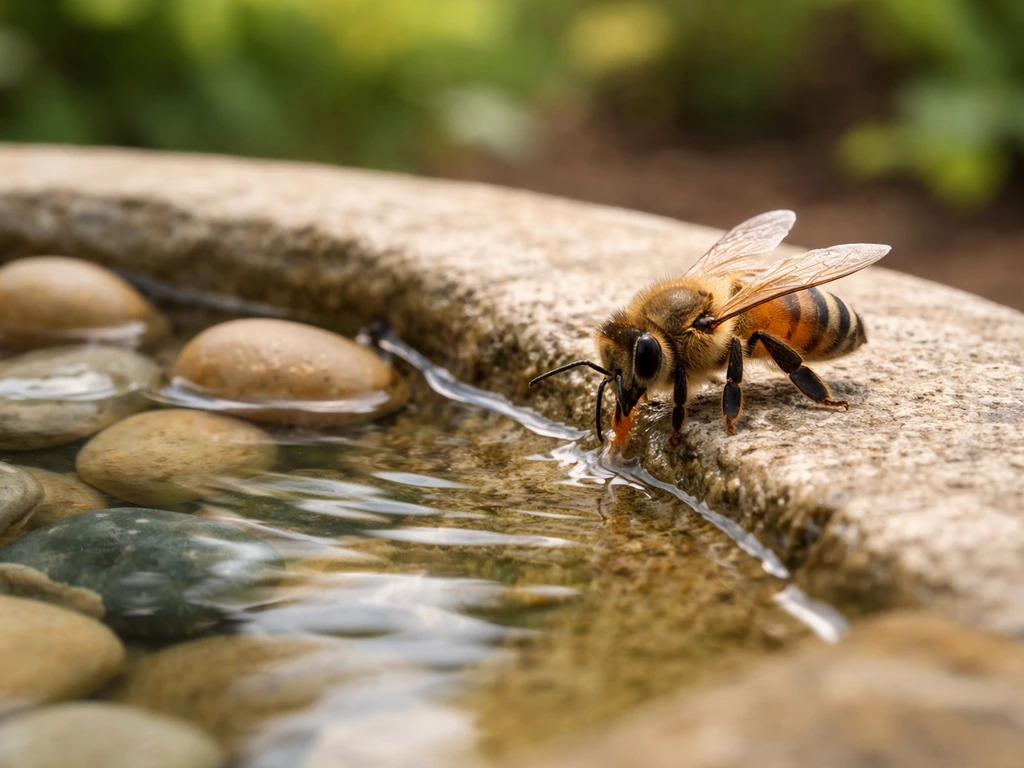
Bees also visit bird baths for water, and a well-maintained, moving-water bird bath is actually a good thing for bees as well as birds. The same Bti products that control mosquito larvae are safe for bees. If you're seeing heavy bee activity at your bath, adding shallow stones or landing spots at the edge gives bees a safe place to drink without drowning, which benefits both pollinators and keeps your bath functioning as a clean bird water source. If bees are a problem, see our guide on how to keep bees away from bird bath for humane, practical options like dedicated water stations, shallow landing stones, and placement strategies to reduce overlap with bird use. The relationship between bird baths and bee visitors is worth understanding on its own terms, and it's closely related to keeping the bath welcoming for all backyard wildlife. Read our guide Why are there bees in my bird bath for tips on attracting pollinators safely and reducing risky interactions. For practical tips on how to make bird baths safe for bees, see our guide on making bird baths bee‑friendly how to make bird bath safe for bees.
Substrate and bottom materials
Some people add gravel or pebbles to the bottom of their bird bath for aesthetics or to give birds grip. This makes the bath significantly harder to clean and creates a perfect environment for midge larvae and drain-fly larvae to hide. I'd avoid it entirely if larvae are a recurring problem. If you want birds to have grip in a deep basin, a single flat rock is much easier to remove and scrub than a layer of small stones. For the same reason, avoid aquatic substrate or sand in a bird bath: it holds organic debris and quickly becomes larval habitat.
Getting these design and placement choices right means you're spending a few minutes on maintenance each week rather than doing emergency larva removal every few days. That's the real win: a clean, moving-water bath in the right spot that birds actually use, that you barely have to think about after the first season of tuning it in. For troubleshooting about attracting birds and common reasons they avoid baths, see why don't birds use my bird bath.
FAQ
How can I tell whether the tiny worms in my bird bath are mosquito larvae or something else?
Look at size, color, posture and where they’re living: - Mosquito larvae (“wrigglers”) are small (a few mm to ~1 cm), slender, often pale to gray; they hang at or just below the water surface and wiggle. Aedes/Culex larvae rest at an angle and have a visible breathing siphon at the rear; Anopheles lie parallel to the surface and lack a long siphon. - Chironomid (non‑biting midge) larvae (bloodworms) are often red/orange, elongated, and commonly cling to sides or sediment rather than hanging at the surface; they lack a siphon. - Drain‑fly (moth‑fly) larvae are shorter, grayish, tapered, and live in sticky biofilm/sludge rather than free at the surface. - Aquatic oligochaetes (“sludge worms”/small annelids) are smooth, segmented, crawl on surfaces and move more slowly; they’re not restricted to the surface film. Use posture (surface vs. crawling), color, and visible segmentation or siphon to distinguish them.
Are the larvae/worms in my bird bath dangerous to birds or people?
Risk depends on the type: - Mosquito larvae: indirect risk—mosquitoes that emerge can transmit human and animal diseases (West Nile, etc.). The larvae themselves aren’t toxic to birds but breeding in the yard increases mosquito numbers and disease risk. - Chironomid larvae and sludge worms: generally harmless to birds and people; they’re part of aquatic detritus food webs. - Drain‑fly larvae: associated with biofilm and unsanitary conditions; adults are nuisance flies but not major disease vectors. Also: dirty bird baths can concentrate bird pathogens (Salmonella, Trichomonas, avian pox), so regular cleaning matters for bird health regardless of which larvae are present.
What should I do immediately if I find mosquito larvae (or other larvae) in my bird bath?
Immediate steps: 1) Remove and empty the bird bath. 2) Use a skimmer/net to remove visible larvae before dumping. 3) Scrub the basin with a stiff brush and dish soap to remove biofilm and eggs. 4) Disinfect with a 10% household bleach solution (1 part bleach to 9 parts water) or an approved disinfectant; soak for 10 minutes, then rinse thoroughly and air‑dry. 5) Refill with fresh water. The CDC recommends weekly emptying/scrubbing of small containers to remove mosquito eggs and larvae.
Can I just pour bleach into the bird bath to kill larvae without removing birds?
No. Dump the water first and scrub the basin. Pouring fresh bleach into a filled bath risks harming visiting birds and wildlife. Instead, remove water, scrub, apply a diluted 10% bleach solution to the empty basin, rinse thoroughly, let air‑dry, then refill. Only use products labeled for use in bird baths according to label instructions.
Are mosquito dunks or Bti safe to use in bird baths?
Bacillus thuringiensis israelensis (Bti) products—commonly sold as mosquito dunks—are labeled for killing mosquito larvae in standing water and are generally considered safe for birds, pets and people when used according to the product label. Check the product label for permitted uses and rates. Because labels and formulations vary, follow instructions closely and avoid using other larvicides not labeled for small decorative water features.
How often should I clean and maintain my bird bath to prevent larvae and pathogens?
Maintenance schedule (simple weekly routine): - At least once a week: empty, scrub with brush and dish soap, rinse, disinfect with 10% bleach if you see visible contamination or during bird disease events, rinse again and refill. - More often in hot weather or high bird use: refresh water every 2–3 days. - Keep water moving daily (see prevention) and remove leaves/debris as soon as possible. Weekly cleaning is CDC standard for container source reduction against mosquitoes.
Next Articles
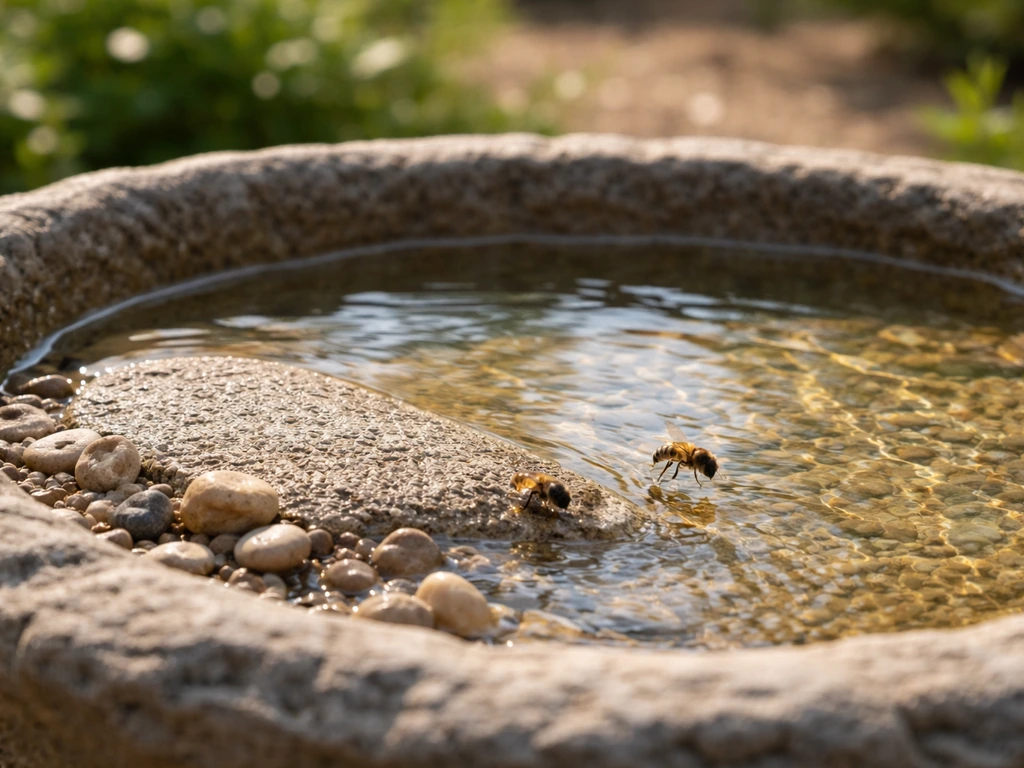
How to Make a Bird Bath Safe for Bees: Step-by-Step
Step-by-step tips to make your bird bath bee-safe: shallow access, safe materials, clean water, and placement for year-r
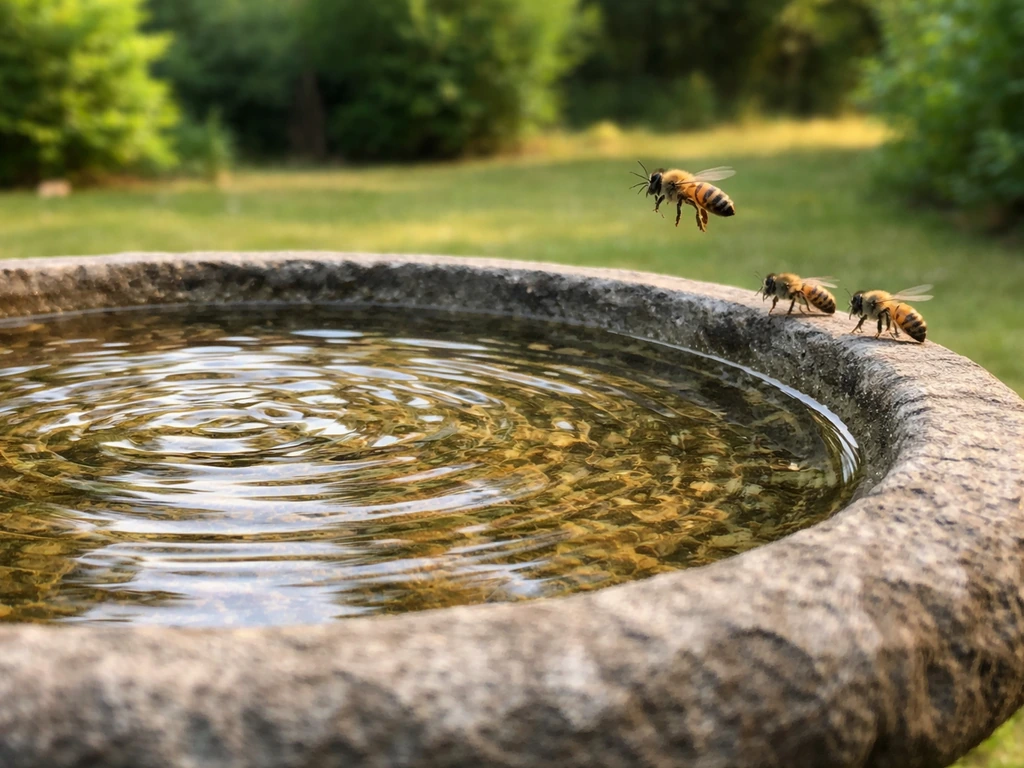
How to Keep Bees and Wasps Away From Your Bird Bath
Step-by-step tips to keep bees and wasps away from your bird bath, manage water safely, and remove insects.
How to Keep Bees From Drowning in a Bird Bath
Fix bee drownings fast: add shallow landing zones, ramps, textured surfaces, safe depth, and maintain clean water.