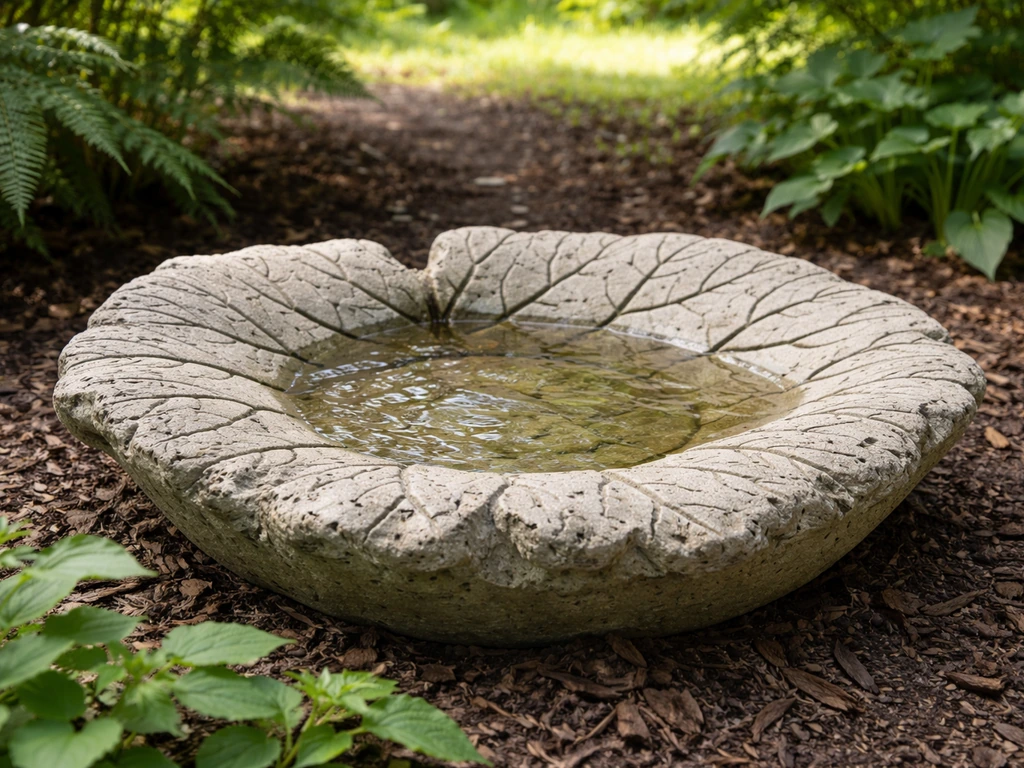
You press a large rhubarb leaf into a sand mold, pour a wildlife-safe concrete mix over it, let it cure, peel the leaf away, seal the surface, and you have a textured, naturalistic bird bath basin that costs almost nothing and looks genuinely beautiful in a garden. The whole project takes an afternoon of active work plus a day or two of curing time, and the result is a durable, bird-friendly water feature you made from scratch.
How to Make a Bird Bath From Rhubarb Leaves

Marcus Henley
23 Jun 2026
Why rhubarb leaves work so well (and the one caution you need to know)
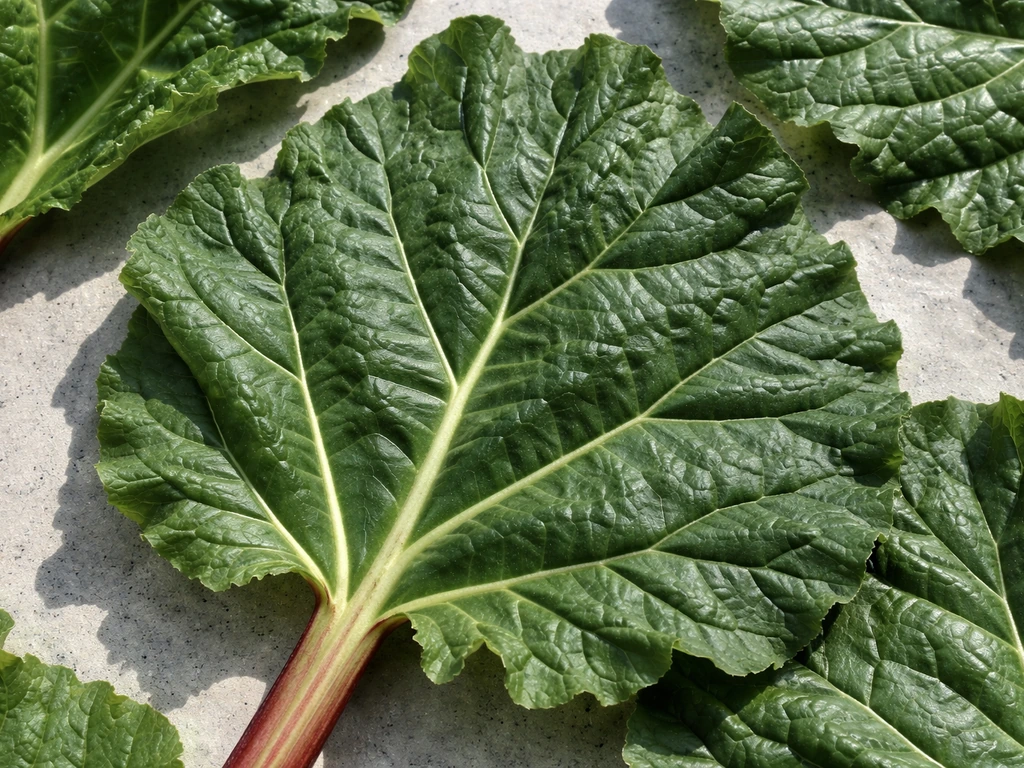
Rhubarb leaves are the best casting material for this project for a few simple reasons: they're enormous, they have deep, dramatic veining that transfers beautifully to concrete, and they're structurally stiff enough to hold their shape while wet concrete sets on top. A single mature leaf can be 18 to 24 inches across, which is the perfect size for a shallow bird bath basin. The leaf acts purely as a mold. Once the concrete cures, you remove the organic leaf material entirely, so nothing from the plant remains in contact with birds or their water.
That said, rhubarb leaves do contain oxalic acid and are genuinely toxic if ingested, flagged by sources including the ASPCA, the Merck Veterinary Manual, and multiple university extension programs. Rhubarb appears on Cornell's list of plants poisonous to livestock, and OSU Extension documents the symptoms caused by ingestion. For this project, that toxicity matters only at the handling and construction stage, not during use. The leaf is a temporary mold, and as long as you cure and seal the concrete properly (more on that below) before water goes in, birds are not exposed to plant residue. Still, wear gloves when handling fresh leaves, keep leaf scraps out of reach of pets, and never skip the sealing step.
Everything you'll need before you start
Gather everything before you start because once you're mixing concrete, you don't want to be hunting for supplies. Here's what you need:
- One large, healthy rhubarb leaf (at least 12 inches across; bigger is better for a usable bath depth)
- A bag of wildlife-safe concrete mix or hypertufa mix (avoid mixes with added chemical accelerants)
- Builder's sand or play sand for the mold bed (enough to fill a shallow tray or patch of ground)
- Mineral oil or petroleum jelly to use as a release agent
- Chicken wire or fiber mesh (cut to roughly the size of the leaf, for internal reinforcement)
- A plastic tray, bucket lid, or piece of plywood to work on
- Rubber gloves (oxalic acid is a skin irritant)
- A stiff brush or sponge for smoothing concrete
- A non-toxic, bird-safe concrete sealer (look for water-based, food-safe or aquatic-safe options)
- Optional: a pedestal, flat stone, or upturned pot to elevate the finished basin
- Optional: a small submersible pump or dripper attachment if you want moving water
On the concrete mix: a standard sand-and-cement mix works, but a hypertufa blend (cement, perlite, and peat moss) is lighter and easier to work with for beginners. Either way, mix it to roughly a peanut butter consistency. Too wet and it slumps; too dry and it won't hold the leaf texture detail.
Step-by-step: making your rhubarb leaf bird bath
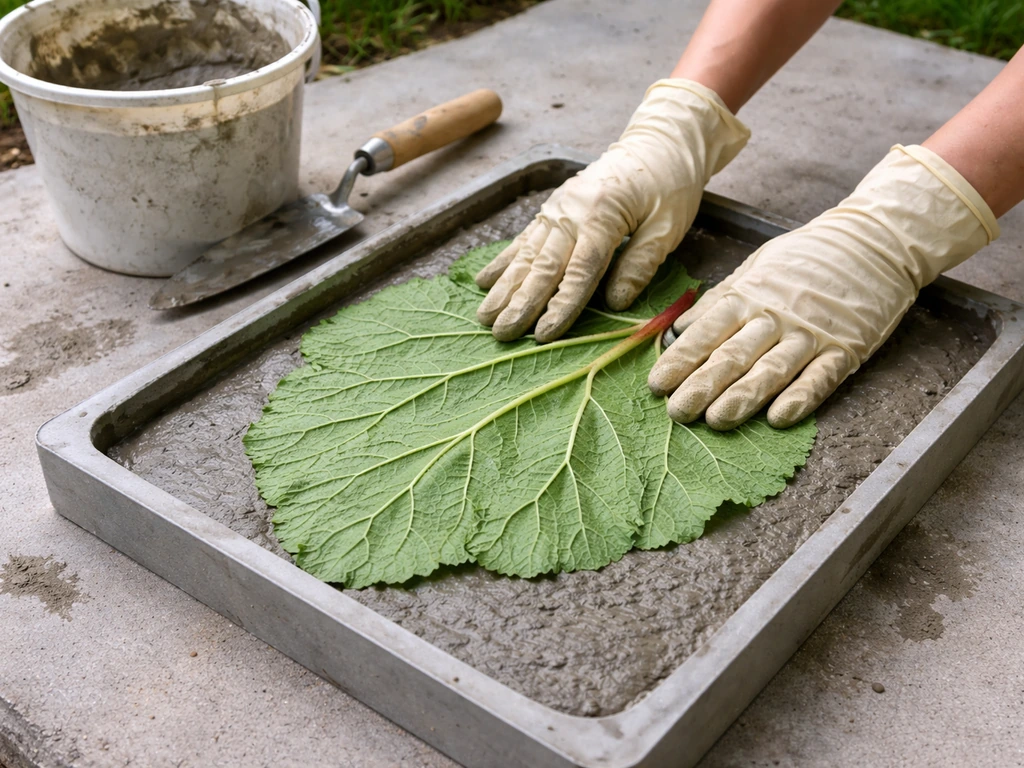
- Pick the leaf at peak size and use it the same day. A wilted leaf loses its rigidity and the vein detail will be less sharp in the final cast. Cut it with gloves on and keep the stem attached for now as a handle.
- Build your sand mold. Fill a plastic tray or dig a shallow hollow in a patch of ground and pack damp sand into a gentle mound shape. This mound supports the leaf from underneath and determines the curve of your finished basin. A shallower mound gives a flatter bath; a more pronounced mound gives a deeper bowl. Most birds prefer water no deeper than 1 to 2 inches at the center, so keep the curve gentle.
- Coat the top surface of the leaf with mineral oil. This is your release agent. Brush it evenly across the entire textured surface including the edges. Without it, the concrete bonds to the leaf fibers and you'll tear the cast getting it off.
- Place the leaf face-up (veined side up) on the sand mound, pressing it gently so it conforms to the shape. The vein pattern will transfer directly to the concrete, which becomes the decorative interior surface of your bath.
- Mix your concrete to a thick, workable consistency. Aim for something between peanut butter and thick yogurt. Too runny and it will slide off the leaf.
- Apply the first layer of concrete across the entire leaf surface. Work from the center outward and keep this layer about half an inch thick. Press gently with gloved hands or a stiff brush so it captures the vein detail.
- Lay your chicken wire or fiber mesh on top of this first layer. Cut the mesh so it sits about an inch inside the leaf edge. This reinforcement is what prevents the cured bath from cracking when it's moved or used.
- Apply a second layer of concrete over the mesh, bringing the total thickness to about 1.5 to 2 inches. Smooth the top and fold the edges down around the leaf rim. You can build up the edges slightly to create a natural lip that holds water in. WNIT leaf-casting guidance notes that building up thickness in multiple layers gives a much more durable final cast.
- Cover loosely with plastic sheeting and let it cure for at least 24 to 48 hours. Slow curing produces stronger concrete. Keep it out of direct sun during curing and mist it lightly if the weather is hot and dry.
- Once fully cured, flip the cast over carefully. Peel the leaf away from the concrete. Some leaf fragments will stick in the texture and that's fine. Pick off any large pieces and rinse the surface thoroughly with clean water.
- Let the concrete dry completely for another 24 to 48 hours, then apply a bird-safe, non-toxic sealer to the interior (the side that will hold water). A water-based, aquatic-safe sealer reduces porosity so the basin actually holds water rather than absorbing it slowly, and it creates a barrier so birds aren't drinking water that has leached through fresh concrete. Apply two coats, letting each dry fully.
- Optional: once the sealer is cured, you can brush on a diluted exterior paint or a natural stone-effect finish to the outside edges if you want color. Leave the interior plain or use only the bird-safe sealer.
For a finishing touch that extends the life of the leaf cast significantly, a light coat of exterior polyurethane on the underside and edges (not the water-contact interior) adds weather resistance. This is the same approach used in decorative leaf casting and it genuinely makes a difference over a few seasons. If you want a simple walkthrough, follow these rhubarb leaf bird bath instructions for setup, curing, and safe sealing decorative leaf casting.
Setting it up so birds actually use it
Height and placement
Most backyard songbirds prefer a bath that's elevated off the ground, somewhere between 18 inches and 3 feet high. This gives them a sight line to watch for predators while bathing. Ground-level baths do work and are actually preferred by some species including robins and mourning doves, but they're also more accessible to cats. An upturned terracotta pot, a stack of flat stones, or a dedicated pedestal all work as bases. The rhubarb leaf cast is heavy enough to sit stably on a flat surface but not so heavy that it can't be repositioned.
Place the bath where you can see it from inside (you'll want to watch the birds) but close enough to shrubs or trees that birds have cover to retreat to. About 10 feet from a bush is a good starting point. Avoid spots directly under heavy tree cover because falling debris fills the basin fast. Morning sun is ideal since it warms the water slightly and discourages algae compared to a bath that sits in shade all day.
Water depth and flow
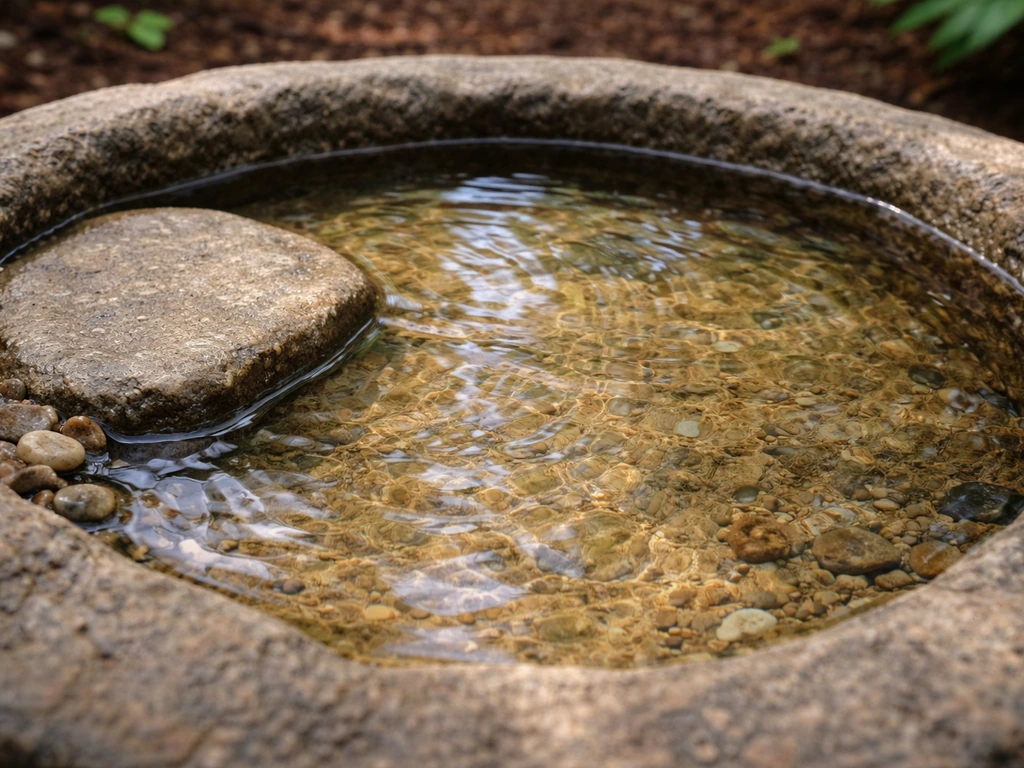
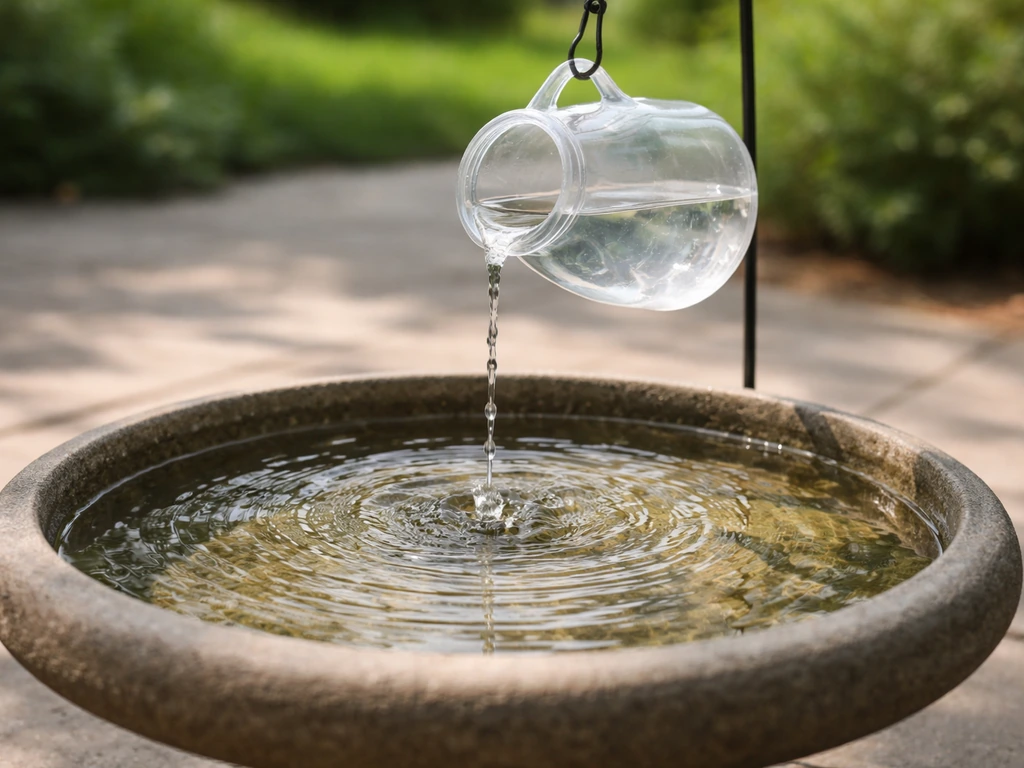
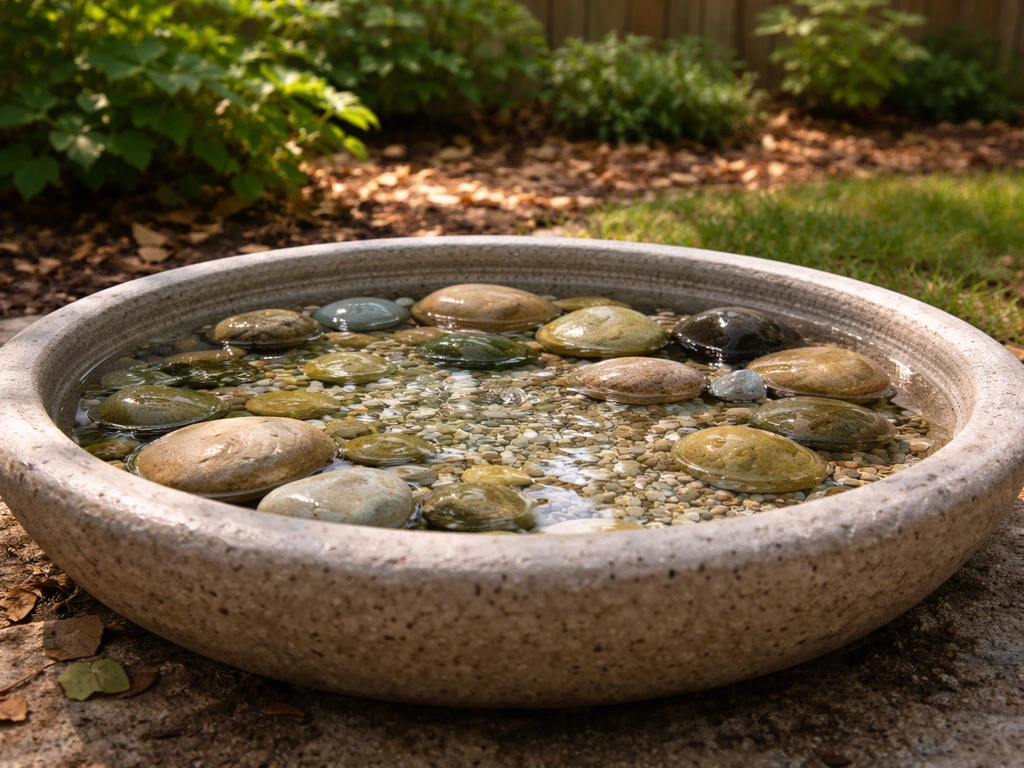
Keep the water depth between 1 and 2 inches at the deepest point. If your cast turned out deeper than that, add a flat stone to one side to give smaller birds a shallow entry point. Moving water attracts far more birds than still water. Texas Parks & Wildlife specifically recommends a slow, rhythmic drip as one of the most effective ways to draw birds in.
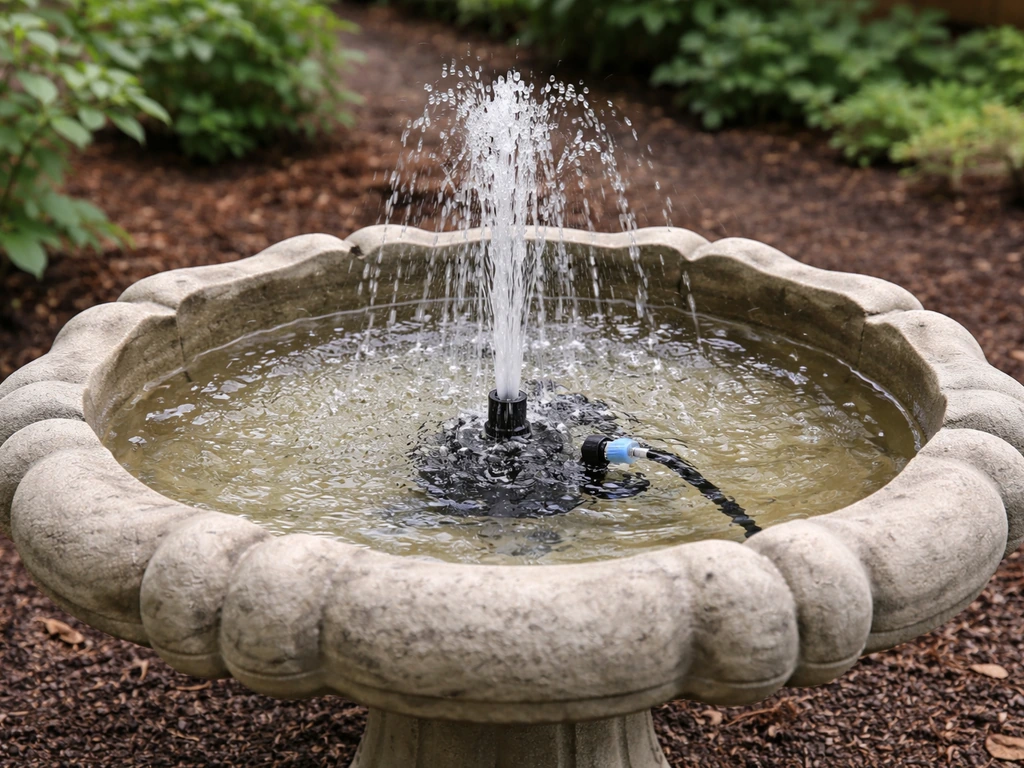
A simple dripper attachment run from a nearby hose or a small submersible pump does the job. If you want to go further, the same principle applies whether you're adding a dripper, a bubbler, or a full recirculating fountain setup to your bird bath. If you want to go beyond a dripper, you can build a simple fountain-style setup to turn your bird bath into a fountain with continuous circulation.
Even a cheap solar-powered pump sitting in the basin creates enough movement to make a real difference.
Tailoring for specific birds
Hummingbirds prefer extremely shallow, moving water and are more likely to hover at a mister or dripper than to bathe in a standing basin. If hummingbirds are on your target list, a dripper attachment over the rhubarb leaf bath is more effective than the basin alone. Larger birds like crows and jays want deeper water and are less fussy about movement. Most common backyard species land at the edge, check the depth, then wade in, so a gently sloping basin (which is exactly what the sand-mound casting method produces) is close to ideal.
Keeping it clean and the water fresh
The single most important maintenance habit is changing the water frequently. Daily water replacement is the ideal and it eliminates most mosquito and disease problems before they start. If you can't manage daily, top it up when it looks low and do a full empty-and-refill at least every two to three days in warm weather.
For deeper cleaning, scrub the basin with a stiff brush and plain soapy water once a week, rinsing thoroughly so no soap residue remains. Pay particular attention to the edges and the textured vein areas from the leaf cast, since debris and algae collect in those grooves.
For disinfection when you notice a biofilm or after a sick bird has visited, a diluted bleach solution works well: mix 1 part household bleach with 9 parts water, scrub the basin, let it sit for a few minutes, then rinse extremely thoroughly and let it air dry before refilling. The key is the rinse. Any bleach residue harms birds, so rinse until you genuinely can't smell bleach anymore.
If you prefer to avoid bleach, food-grade hydrogen peroxide is a bird-safe alternative disinfectant.
Troubleshooting the most common problems
Algae turning the water green or red
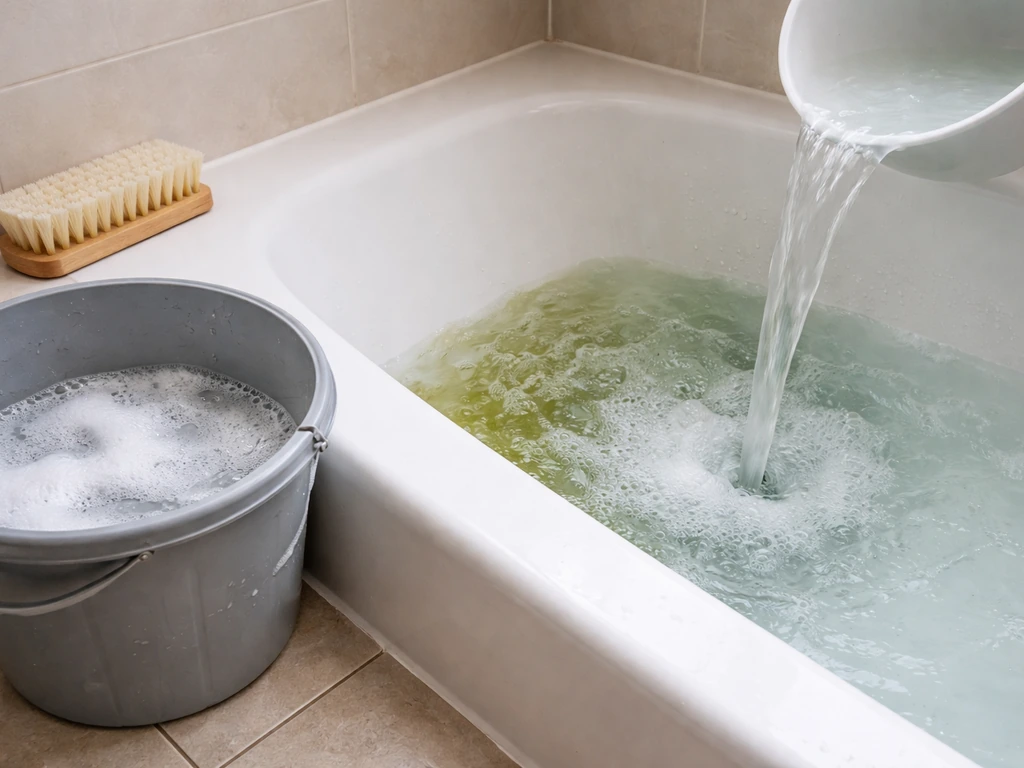
Green or reddish water in summer is algae, and it's a sign you need to clean the bath now, not next week. Algae growth is normal and expected in warm, sunny conditions, but letting it go too long makes the bath slimy and potentially harmful to birds. Scrub immediately when you see color change. Moving water, partial shade, and frequent water changes all slow algae growth. If your bath is in full sun all day, consider repositioning it to get morning sun and afternoon shade.
Mosquito larvae
Mosquitoes need still, standing water for at least a few days to complete their egg-to-larva cycle. Daily water replacement breaks that cycle entirely. If you're seeing larvae (tiny wriggling threads near the surface), dump the water immediately, scrub the basin, and refill. Adding a dripper or pump that keeps water moving is one of the most reliable long-term fixes since mosquitoes strongly prefer still water to lay eggs in. A recirculating setup with a small pump and dripper can also keep the water moving while reducing mosquito problems dripper or pump.
Leaf debris filling the basin
If you placed the bath under or near trees, debris is going to be a regular issue. The textured surface from the rhubarb leaf casting traps small particles in the grooves. A quick rinse with a hose and a brush every few days handles it. Repositioning slightly away from overhanging branches makes a bigger difference than any cleaning routine.
Freezing in winter
This is the biggest vulnerability of a concrete rhubarb leaf cast. Concrete, stone, and ceramic are all susceptible to cracking when water freezes inside them, as noted by North Carolina State University extension guidance. If you live somewhere with hard winters, bring the rhubarb leaf cast indoors or store it in an unheated garage during freeze season.
If you want to keep offering water through winter, a plastic or resin bird bath is a much more practical choice since those materials handle freeze-thaw cycles without cracking. You can also add a submersible bird bath heater or de-icer to any container bath once temperatures consistently drop below freezing. The Thermo-Birdbath instructions note that you should fill the bird bath with water, [place the heater in the water](https://khpet. com/cdn/shop/files/Thermo-Birdbath-Instructions.
pdf? v=4060534742896181365), and unplug or remove the heater after the winter season is over. One simple trick for extending the season: line the basin with a black plastic bag cut to fit, which absorbs heat from sunlight and slows ice formation.
Birds aren't visiting
If birds are ignoring the bath after a week or two, the most likely issues are: location is too exposed (no nearby cover), water is too deep (add a flat stone), or the water is stale. Add movement with even a simple dripper and you'll usually see results within a few days. If you want the water to bubble, use a small pond recirculating pump or fountain kit so the circulation keeps the surface moving. Birds find water partly by sound, and the sound of dripping is a powerful attractor. Patience helps too. Some birds take a few weeks to discover a new water source and start returning reliably.
What to do once your bath is up and running
Once you've got birds visiting regularly, it's worth thinking about what would make the setup even better. Moving water upgrades like a dripper, bubbler, or recirculating pump dramatically increase the range of species you'll attract and keep the water cleaner passively. If you want to DIY, learn how to make a bird bath dripper for a simple, reliable water-flow upgrade.
If you're in a hot climate and want to attract hummingbirds specifically, a misting attachment over the basin is more effective than anything else you can add. And if winter bird watching matters to you, a heated bird bath setup running alongside your leaf cast (used seasonally) gives you year-round activity. The rhubarb leaf cast itself, properly sealed and stored in winter, can last for many seasons with minimal care.
FAQ
Can I use the bird bath immediately after sealing, or do I need to wait?
Yes, but don’t pour birdsafe water into an unsealed cast. Wait until the polyurethane or other sealer fully cures per the product instructions, then do a simple test by filling the basin and letting it sit for 24 hours. If you notice any odor or cloudiness, empty, rinse thoroughly, and let it cure longer before putting it outside.
What should I do if the rhubarb-leaf texture doesn’t show up clearly in the concrete?
If the leaf imprint is shallow, it usually means the concrete was too thick or not pressed around the veins well. Remix to a peanut-butter consistency, then press the leaf firmly so it contacts the mold surface. If the texture is missing only on edges, use a slightly wetter mix around the perimeter so it captures the vein detail.
Is it safe to attach a dripper or pump to the concrete cast?
You should avoid adding any rusting metal components inside the water. For bases, use stainless steel, sealed stone, or a terracotta/pedestal setup as described, then keep screws, brackets, and tubing above the rim or coated with an exterior water-resistant sealant.
Should I use a release agent when making the leaf mold?
A plant-based release agent can interfere with sealing. If you use a mold-release product at all, pick one that is designed for concrete casting and that remains compatible with your polyurethane sealer, then test on a small scrap first. Many DIYers skip release agents because the leaf mold is temporary and gets peeled away after curing.
How do I disinfect the bath without harming birds or leaving residue?
Rinse the basin, scrub the grooves, then refill with fresh water. Start with the gentlest option first (soapy water rinse), then move to diluted bleach only when you see a persistent slippery biofilm or repeated illness concerns. After any bleach treatment, rinse until you cannot smell bleach, then let it air dry briefly before refilling.
My bird bath water turns green fast, what’s the best fix?
If you see green, brown, or reddish staining, don’t just top off. Empty completely, scrub the textured areas, then refill with clean water. Moving water (dripper, bubbler, or recirculation) reduces regrowth, but it does not replace cleaning when algae is already established.
What should I do if I see mosquito larvae in the rhubarb leaf bath?
For mosquito larvae, act immediately. Dump the water, scrub the basin edges and grooves, then refill with fresh water. If larvae keep returning within a day or two, increase water movement with a dripper or small pump, since mosquitoes strongly favor still water to lay eggs.
Why does algae come back faster when my bath is in full sun?
If the basin is in full sun all day, algae accelerates and water evaporates quickly, which can make the cast’s surface grime more obvious. The easiest improvement is shifting the bath so it gets morning sun and afternoon shade, and keeping the water depth between about 1 to 2 inches at the deepest point.
Why would birds ignore the bath even after I’ve placed it where I can watch them?
If a bird lands and then immediately avoids the water, it’s often due to unstable footing, an overly deep entry, or slick buildup on the surface. Check depth, add a shallow stone if needed, and scrub the textured veins where biofilm forms. Also confirm the pedestal is steady and not wobbly.
How should I winterize the rhubarb leaf bird bath in freezing weather?
Because the cast is concrete, it can crack if water freezes inside it. In freeze-prone areas, empty the bath completely before the first hard freeze and store it indoors or in an unheated garage, or switch to using a seasonal covered setup with a different container for winter.
What if I can’t easily move the bird bath when temperatures drop?
If it’s too heavy to move after curing, you can reduce the freeze risk by keeping it dry during the coldest period and covering it so rainwater does not pool. Do not leave stagnant water inside over winter, and avoid trapping moisture under the bath by placing it on a level surface with no standing puddles around it.
Can I add rhubarb leaf pieces as decoration or to “naturalize” the bath?
No. Don’t use leaf scraps or any part of the plant in the basin once it’s finished, even if you think it looks natural. The leaf is only appropriate as a temporary mold, and the sealing step is what ensures birds are not exposed to any remnants.