The easiest hummingbird bird bath you can build today is a shallow terracotta saucer (the kind sold as a plant pot drip tray) set on a stable surface at about 1 to 2 feet off the ground, filled with no more than a quarter-inch of water, and ideally fitted with a small mister or dripper to keep the water moving. That single setup will outperform most standard bird baths because it actually matches how hummingbirds prefer to bathe: hovering through a fine mist or barely dipping into a shallow film of water, not wading through an inch-deep basin.
How to Make a Hummingbird Bird Bath Step by Step

Marcus Henley
20 May 2026
Why a hummingbird bath is nothing like a regular bird bath
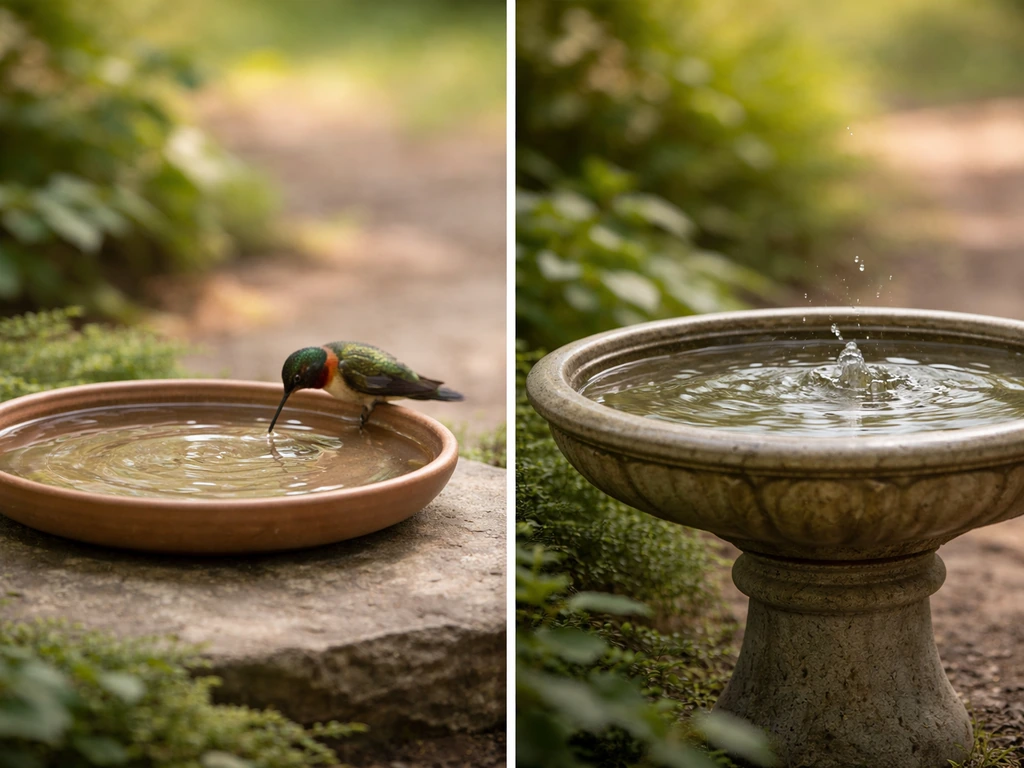
Most bird baths are designed for robins, sparrows, and starlings, birds that step in, splash around, and soak. Hummingbirds work completely differently. They have very tiny, weak feet that aren't built for gripping slippery wet edges or standing in deep water. Their preferred bathing method is flying through mist or briefly skimming across a thin film of water while hovering. If the water is more than about three-quarters of an inch deep, there's a real risk a hummingbird could get swamped and struggle to get out. Birdbath guidance notes that if the water is too deep, small birds may avoid wading or using it, so the bath should be accessible rather than a deep basin water is more than about three-quarters of an inch deep.
The depth targets from wildlife experts are surprisingly precise: Texas Parks and Wildlife recommends no more than one-quarter inch for a still-water setup, and ideally under one-eighth of an inch for a moving-water setup. Homes and Gardens quotes a wildlife expert calling for "a thin layer, less than 3/4 of an inch." So when you build a hummingbird bath, you're not just scaling down a regular bird bath. You're designing a completely different experience, one that prioritizes a mist or ultra-shallow splash over a basin.
Pick your DIY design before you build anything
There are three practical approaches, and choosing the right one depends on how much time and money you want to spend. Each works, but they attract hummingbirds in slightly different ways.
Option 1: The shallow dish setup (simplest, under $10)
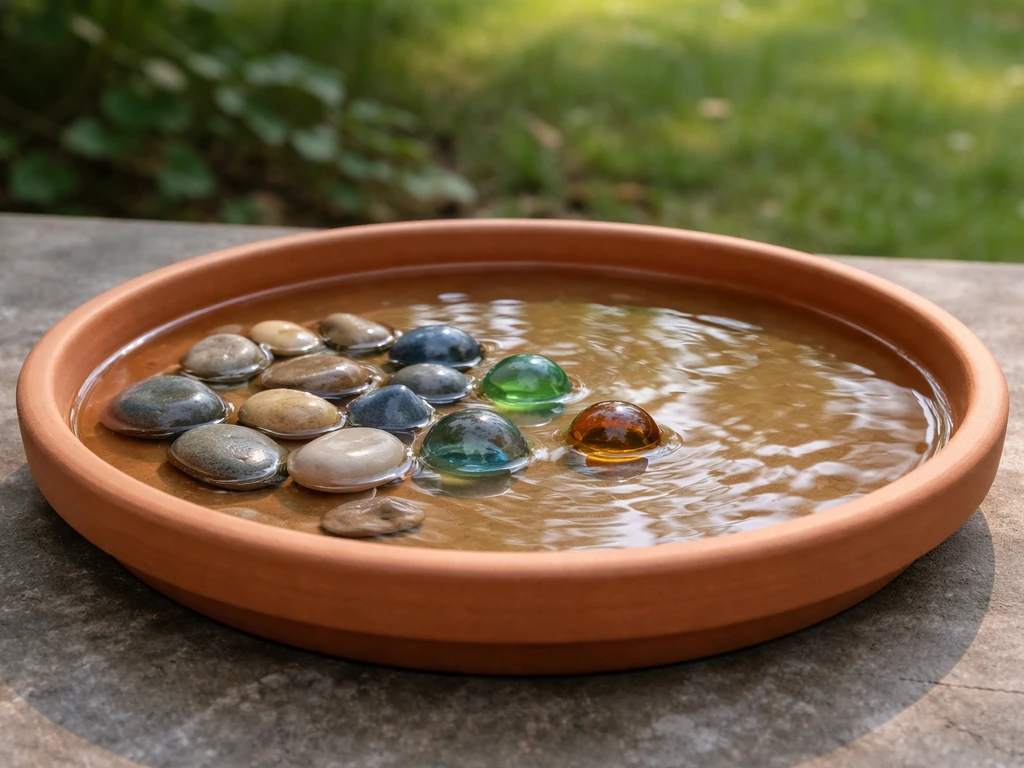
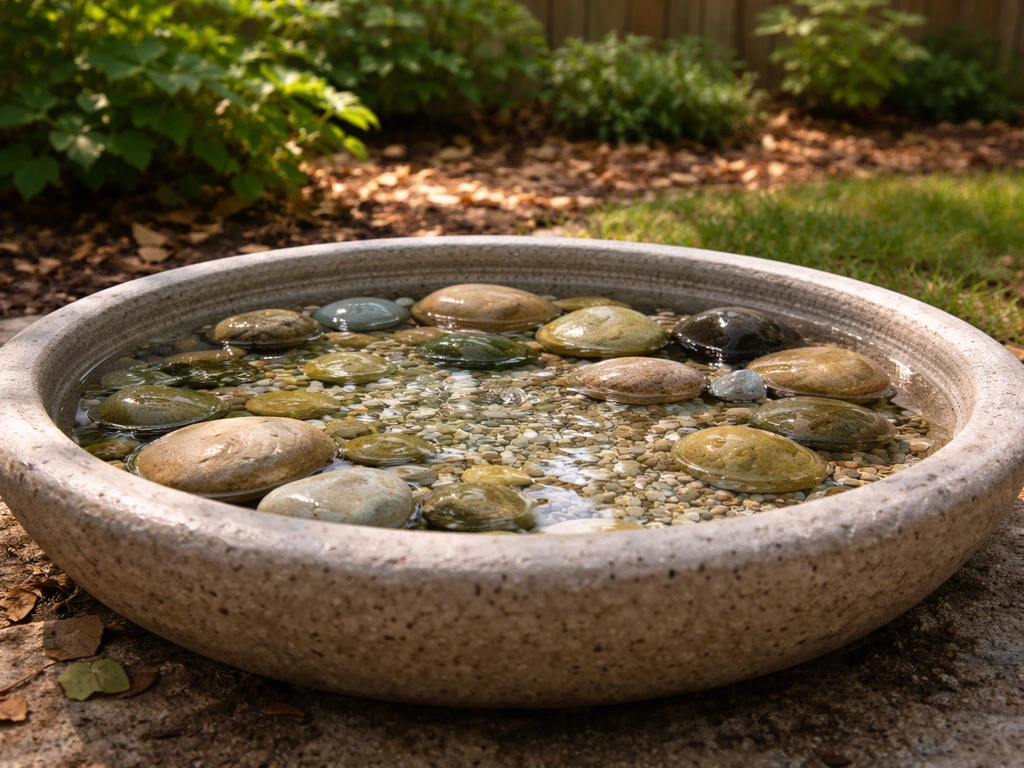
A plain terracotta saucer, 12 to 14 inches in diameter, works perfectly. You fill it with a very thin layer of water, add a few smooth pebbles or glass marbles to give hummingbirds footing and break up the depth, and place it at the right height. This is the no-tools option you can finish in 20 minutes. The downside is that still water attracts mosquitoes fast and needs daily refreshing.
Option 2: Shallow dish plus mister or dripper (best results)
This is the same shallow saucer, but you add a small garden mister or dripper attachment connected to your outdoor tap or a small recirculating pump. The mister throws a fine spray into the air above the dish, and hummingbirds will fly directly through it. If you want a themed DIY version, you can also use rhubarb leaves as part of your bird-bath plan to create a safer, more natural setup for visiting birds bird bath. Texas Parks and Wildlife specifically describes this as the most effective setup for hummingbirds: moving water no more than one-eighth of an inch deep in the dish, with a mister throwing water above the bath to catch their attention from a distance. If you're serious about attracting hummingbirds rather than just providing water they might use, this is the design to build. It's also closely related to a dripper or bubbling bath setup, which other birds in your yard will appreciate just as much.
Option 3: Modified standard bird bath (if you already have one)
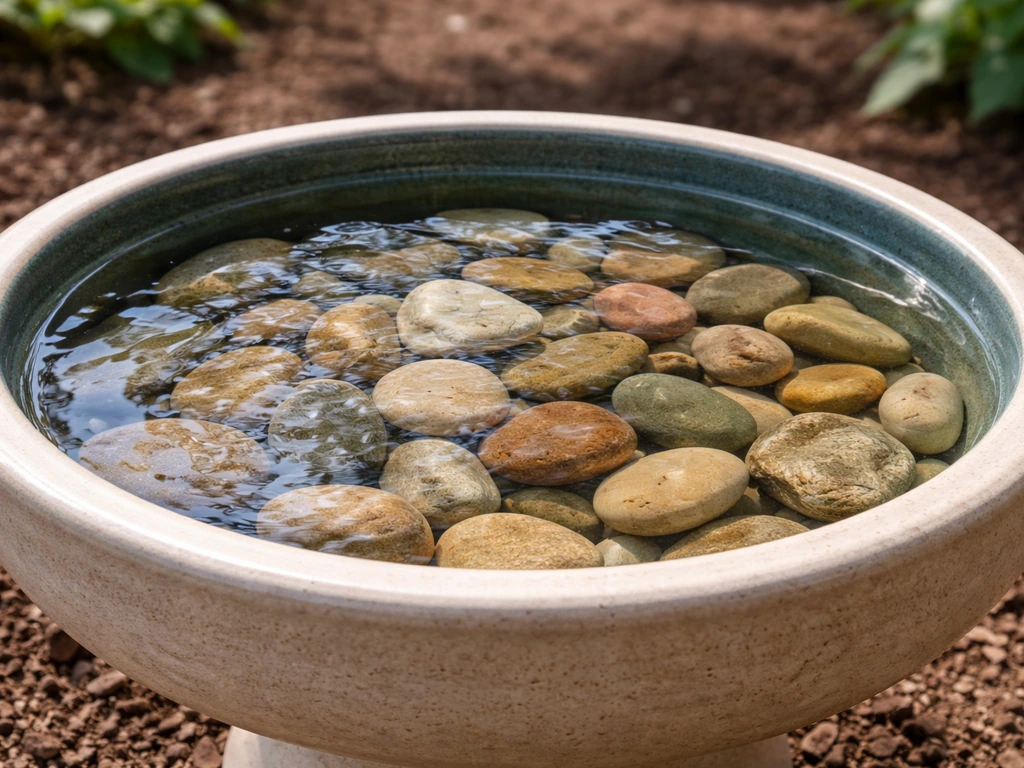
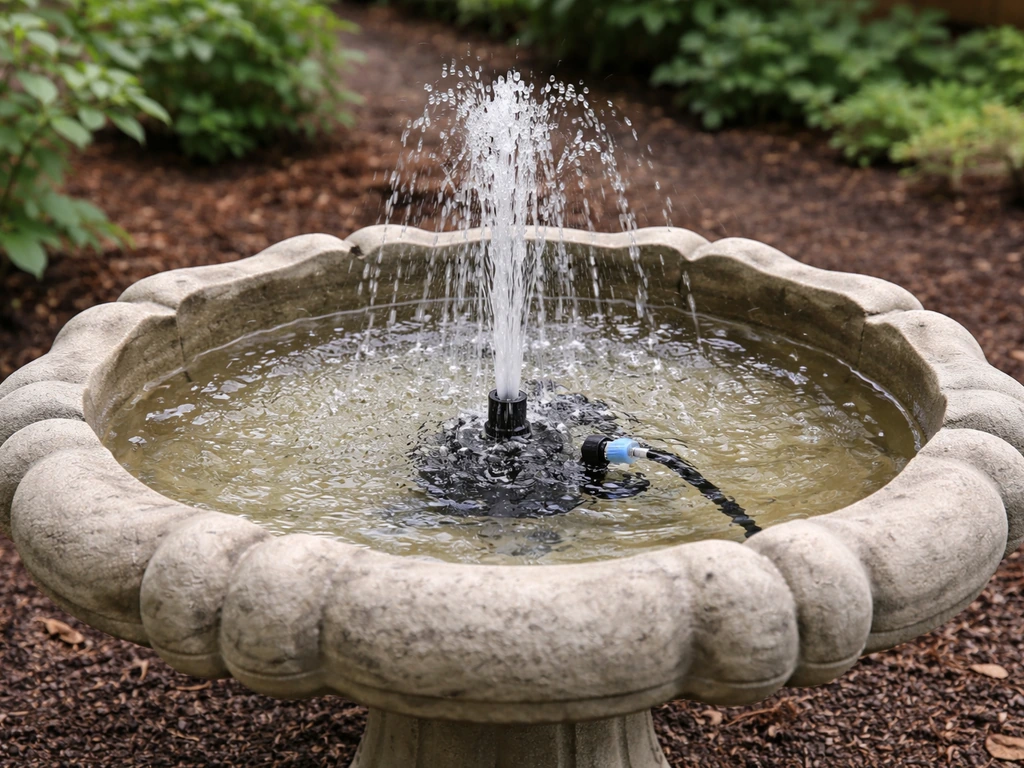
If you have a standard bird bath that's 2 to 3 inches deep, you can make it hummingbird-friendly without replacing it. Place a layer of smooth river stones or glass marbles in the basin to raise the effective water level so the water sitting above the stones is only a quarter-inch or less. Add a mister or dripper and you've essentially converted it. If you already have a standard bird bath, adding a mister or dripper is the quickest way to turn it into a fountain-like setup. The pebbles also eliminate the drowning risk by giving any small bird a way to stand safely.
What you need (and what to skip)
Materials
- Terracotta or ceramic plant saucer, 12 to 14 inches wide and no deeper than 1 to 1.5 inches (avoid saucers with steep sides)
- Smooth river stones, glass gems, or large glass marbles (enough to cover the bottom of the dish in a single layer)
- A small garden mister head or hummingbird dripper device (battery-powered or hose-connected, widely available at garden centers)
- A stable surface to set the dish on: a flat-topped garden post, upturned terracotta pot, stacked bricks, or a purchased bird bath pedestal
- Waterproof outdoor silicone sealant (if your terracotta saucer is porous and drains too fast)
- White vinegar and a small scrub brush for cleaning
Tools
- Measuring tape (to confirm depth and height)
- Level (optional but useful for stability)
- Garden hose or outdoor tap connection if adding a mister
What to avoid
- Deep basins: anything over 1.5 inches deep is wrong for hummingbirds without stone modification
- Glazed ceramics with unknown glaze composition: Health Canada and Princeton's environmental health office both flag the risk of lead or cadmium leaching from improperly fired or cheap imported ceramic glazes, especially when water sits in contact with the surface. Stick to unglazed terracotta, or use only food-safe glazed ceramics with a verified lead-free label
- Slippery smooth surfaces with no footing: a bare glass or polished ceramic bowl without pebbles is a drowning hazard
- Narrow, high-sided bowls: hummingbirds need to approach from any angle and exit quickly
- Plastic that degrades in UV: cheap plastic saucers can crack and leach chemicals; terracotta or stone is more durable and safer
How to build it, step by step
- Choose your saucer: Pick a terracotta plant saucer that's 12 to 14 inches in diameter and no more than 1.5 inches deep at the center. The gradual slope from edge to center matters, just like the Oklahoma Department of Wildlife Conservation recommends for standard bird baths: the edge should be dry or very shallow, with the deepest point (center) staying under an inch. For hummingbirds, you're keeping the whole thing shallower than that.
- Seal if needed: New terracotta saucers often let water seep through slowly. Coat the inside with waterproof outdoor silicone sealant and let it cure fully (usually 24 hours) before adding water. This keeps your water level stable and prevents constant evaporation into the clay.
- Set up your base: Place the saucer on a flat, stable support at 1 to 2 feet off the ground. A stack of bricks, an upturned terracotta pot, or a short wooden post all work. Use a level to make sure it won't tip. The height matters: too low puts hummingbirds at cat-strike range, too high and they feel exposed.
- Add footing material: Lay a single layer of smooth river stones or glass marbles across the bottom of the dish. These give hummingbirds a safe place to land if they do touch down, and they raise the "floor" of the bath so that even if you add a bit more water than planned, there's no deep pocket to get stuck in.
- Fill to the right depth: Add water until it just barely covers the tops of the stones, or fills the spaces between them to a depth of about one-quarter inch. If you're using a mister, even shallower is fine because the mist itself is the bathing surface. Change the water daily if no mister is running.
- Install the mister or dripper (recommended): Attach a garden mister head to your outdoor tap using a basic hose splitter, and position the nozzle so the mist sprays upward and falls over the dish. Alternatively, a battery-powered hummingbird dripper placed on the rim will drip steadily into the basin and create the sound and movement that attracts hummingbirds from further away. Texas Parks and Wildlife specifically notes this mister-above-the-bath configuration as the most effective setup.
- Position near perches: Hang or place a small branch, twig bundle, or shepherd's hook within 3 to 6 feet of the bath. Hummingbirds like a quick dry-off perch within easy reach after bathing.
Where to put it so hummingbirds actually find it
Location makes or breaks whether hummingbirds use your bath. The Environmental Literacy Council recommends a partially shaded spot, which keeps the water cooler and slower to evaporate, and placing the bath near shrubs or small trees so hummingbirds have an instant escape route if a predator appears. Full sun heats the water fast and encourages algae growth, so aim for morning sun and afternoon shade if you can manage it.
Height is equally important. Keep the bath 1 to 2 feet off the ground. Low placement near dense ground cover is a cat ambush waiting to happen. Very high placement (like a tall pedestal bath) makes hummingbirds feel exposed and they'll avoid it. The 1 to 2 foot range keeps them comfortable and gives you easy access for daily water changes.
Visibility from above matters too. Hummingbirds scout from a height before descending. A mister with its fine spray column is visible from 20 to 30 feet away, which is exactly why it's so effective at pulling them in. If you're relying on still water alone, positioning near hummingbird feeders or flowers they already visit will help them discover the bath faster. Just don't place the bath directly under a feeder where sugary drips will fall into the water.
Keeping the water clean and safe
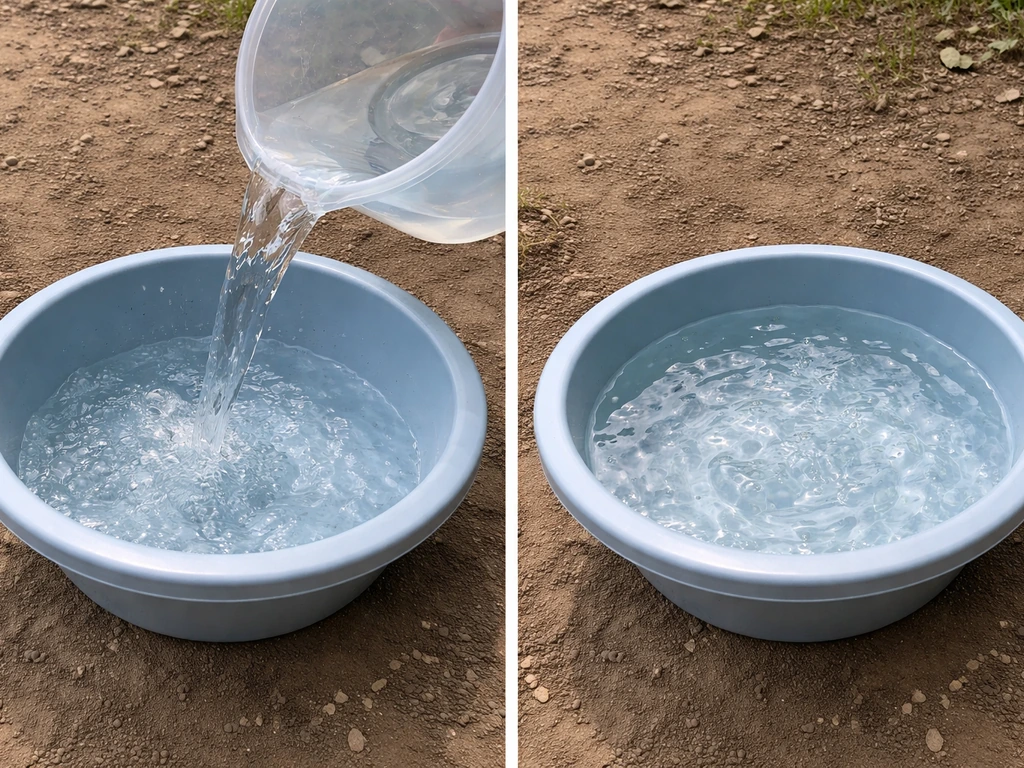
With a shallow bath this small, water quality degrades fast. Daily water changes are non-negotiable if you're not running a mister or recirculating pump. Top off with fresh water every morning and dump and rinse the dish every two to three days. This is the single most important maintenance habit.
For deeper cleaning, use a 10 percent bleach solution (roughly one part household bleach to nine parts water) about once a month, scrub the dish and stones thoroughly, then rinse multiple times until there's no bleach smell. Iowa DNR recommends this approach for bird water sources, and NC State Extension confirms that soap or chlorine bleach is fine as long as you rinse thoroughly. White vinegar diluted 50/50 with water works well for weekly scrubs and is easier on your hands, though it's less effective against established algae than bleach.
Algae is your main ongoing nuisance. It grows fast in warm, shallow, still water sitting in any sunlight. A mister or dripper slows algae growth significantly by keeping water moving. Partial shade helps. The monthly bleach scrub handles whatever builds up. Don't use any soap, detergent, or chemical algaecide beyond plain bleach or vinegar. Hummingbirds are small and sensitive to residue.
Debris like leaves, pollen, and insects will collect quickly in a small outdoor dish. If you are using rhubarb leaves as a natural deterrent or garnish, treat them the same way and remove them promptly before they build up in the dish leaves, pollen, and insects. Skim it out when you do your daily water refresh. A small bulb syringe or turkey baster is surprisingly useful for clearing debris from between the pebbles without having to disassemble everything.
Troubleshooting: freezing, mosquitoes, and hummingbirds ignoring the bath
Freezing in winter
If you're in a climate where temperatures drop below freezing, your terracotta saucer is at risk of cracking as the water inside freezes and expands. Bring it indoors when freezing is likely, or switch to a rubber or silicone flexible bowl that won't crack. A small submersible bird bath heater sized for a very shallow dish will keep water liquid for winter birds, but honestly, most hummingbird species have migrated south by the time hard freezes hit unless you're in a mild-winter region like coastal California or Texas. If you do have year-round hummingbirds, a floating rubber ball can inhibit surface freezing in mild cold (as Homes and Gardens suggests), but a dedicated low-wattage bath heater is more reliable once temperatures regularly dip below freezing. NC State Extension also has practical guidance on freeze prevention for bird water sources worth checking if you're in a cold-weather region.
Mosquitoes
Mosquitoes need standing water that sits undisturbed for several days to lay and hatch eggs. Your best defense is simple: change the water every day or two, and run a mister or dripper to keep the surface moving. Moving water does not allow mosquito eggs to develop. If you go away for a few days and can't change the water, dump the dish entirely rather than leaving stagnant water sitting. A Bt (Bacillus thuringiensis israelensis) mosquito dunk broken into a small piece can be placed in the dish as a last resort, but it's rarely needed if you're doing daily water changes.
Hummingbirds not using the bath
If hummingbirds are visiting your feeders or flowers but ignoring the bath, go through this checklist before giving up: A University of Master Gardeners document advises that providing water can support hummingbird visitation and also discusses practical habitat elements for hummingbirds.
- Add a mister or dripper: the movement and sound of water is the single biggest factor in discovery. Still water in a small dish is nearly invisible to a hummingbird in flight
- Check the depth: if you can visibly see more than a quarter-inch of water above the stones, it's too deep for hummingbirds to feel safe
- Move the bath closer to where hummingbirds already spend time (near feeders, flowering plants, or their regular perches)
- Add or reposition perches nearby so they have a landing spot to evaluate the situation before committing
- Check for predator activity: a cat that regularly patrols near the bath will teach hummingbirds to avoid the whole area. Move the bath to a more open spot where they can see approaching threats
- Be patient: it can take one to two weeks for hummingbirds to discover and trust a new water source, especially early in the season
A quick design comparison
| Design | Cost | Setup time | Mosquito risk | Hummingbird appeal | Best for |
|---|---|---|---|---|---|
| Shallow terracotta saucer only | Under $10 | 20 minutes | High without daily changes | Moderate | Quick start, minimal budget |
| Shallow saucer plus mister | $15 to $35 | 30 to 45 minutes | Low (moving water) | High | Best all-around hummingbird setup |
| Modified standard bird bath with stones and mister | $20 to $50 if bath already owned | 45 to 60 minutes | Low (moving water) | High | Repurposing an existing bath |
| Battery-powered dripper on shallow dish | $20 to $40 | 20 to 30 minutes | Low to moderate | High | Tap-free or balcony setups |
If I had to pick one setup to recommend without knowing anything else about your yard, it would be the shallow terracotta saucer with a mister. It's cheap, takes half an hour, and it directly replicates the mist-spray bathing behavior that hummingbirds prefer naturally. Once you've got that running and hummingbirds are visiting regularly, you can think about upgrading to a recirculating or bubbling bath setup if you want to attract more bird species alongside them. A recirculating bird bath keeps the water moving with a pump, which reduces algae and can make maintenance easier than a constantly stagnant dish.
FAQ
How low should the water be in a hummingbird bird bath?
Use the thinnest possible water layer that still stays wet. In practice, that means refilling so the dish holds roughly a film, not a pool, and adding pebbles or marbles so hummingbirds only skim the top surface while hovering. If the water line rises much beyond about a quarter inch, they are more likely to get swamped or avoid it.
Can I convert a standard bird bath into a hummingbird bath without rebuilding it?
Yes, but only if the “bathtub” remains shallow. If you use a regular basin, cover the bottom with smooth glass marbles or river stones so the visible water above them is around one quarter inch or less. Also add movement (mister or dripper) because deeper still water invites drowning risk and speeds algae growth.
How long does it usually take hummingbirds to start using the bath?
Expect hummingbirds to treat it like a scouting target. Place the bath where you already see hummingbirds feeding, then keep the mister running during the times you notice the most visits (often morning and late afternoon). It can still take several days for them to discover it, especially if the spray is not visible from the feeders or flowers they use.
Is it safe to put the bath under my hummingbird feeder?
Avoid hanging or positioning it where a feeder drip will pour directly into the dish. Sugary drips can foul the bath surface and attract unwanted insects, and hummingbirds may avoid sticky, contaminated water even if the bath is shallow.
How often do I need to clean or refill the hummingbird bath?
Daily water changes are the default for still water, because shallow puddles warm quickly and get dirty fast. If you run a mister or recirculating pump, you still need regular rinsing, but you can typically get away with dumping and refilling every couple of days, then topping up more frequently as evaporation happens.
Does terracotta need different maintenance than a plastic or metal bowl?
Terracotta is porous, so it can hold residue and encourage biofilm if it stays wet too long. If you use terracotta, rinse thoroughly every time you dump the dish, and do the monthly bleach scrub more consistently in hot or humid weather. Glass marbles can be rinsed with the same schedule to remove buildup between them.
What should I do if the water turns green or cloudy?
If you see foam, a slick film, or algae mats, do not add chemicals. Rinse and switch to a routine of partial shade, keep water shallower, and use your monthly bleach scrub or weekly vinegar scrub as appropriate. Avoid soap or detergent entirely, since residue can irritate or repel small birds.
My saucer moves when I refill it. Is that a problem for hummingbirds?
If the saucer feels unstable, birds can tip it with repeated light landings, which also spreads debris and disrupts the water film. Put it on a solid, level surface, and if needed, use a non-slip base mat underneath so it cannot shift when you refill or when the dish catches a breeze.
What’s the best way to set up a mister or dripper for hummingbirds?
Movement helps, but it must be the right kind. A strong stream or fountain that splashes deeply can swamp hummingbirds. Aim for a fine spray above the dish or a dripper that keeps the bowl water moving without creating a deep, churning pool.
How many pebbles or glass marbles should I add to the dish?
Yes, but only for the top layer. Add just enough to create a stable skimming surface, then keep the water film thin. If you add too many pebbles or make them high enough that birds can’t reach a wet surface when hovering, visits may drop.
What should I do with the bird bath during freezing weather?
In freeze-prone regions, cracking is common with water trapped in rigid terracotta. Bring the saucer indoors when hard freezes are likely, or switch to a flexible rubber or silicone bowl. For very mild winters, a low-wattage heater sized for a shallow dish can work, but still plan for power outages and monitor the water to keep it shallow.
Do mosquitoes still use a hummingbird bath even if it has a mister?
A mister or dripper reduces mosquito breeding, but it doesn’t replace maintenance. If you cannot change the water for several days, dump the dish completely rather than topping off, since larvae can develop in stagnant water. Running the mister continuously helps, but evaporation and debris can still make the dish unhygienic.
If hummingbirds visit my yard but not the bath, what should I troubleshoot first?
Check visibility first. Hummingbirds descend based on what they can see from above, so place the bath where the spray column is easy to spot and keep the dish near the plants they already visit. Also confirm water depth, since even a visible mist can be ignored if the basin is too deep or the surface is too slick without footing.
Where should I place the bath for safety and attraction?
Feeding areas with sugary, overflowing drips are not ideal, and dense, wet areas can also attract predators like cats. Place the bath near shrubs or small trees for quick escape routes, but avoid hidden corners close to dense ground cover. Keep it low to moderate height (about 1 to 2 feet) for access while staying out of ambush zones.
Next Article
How to Make a Bird Bath Into a Fountain: DIY Guide
Step-by-step DIY guide to convert a bird bath into a safe, bird-friendly fountain with pump setup, placement, and mainte