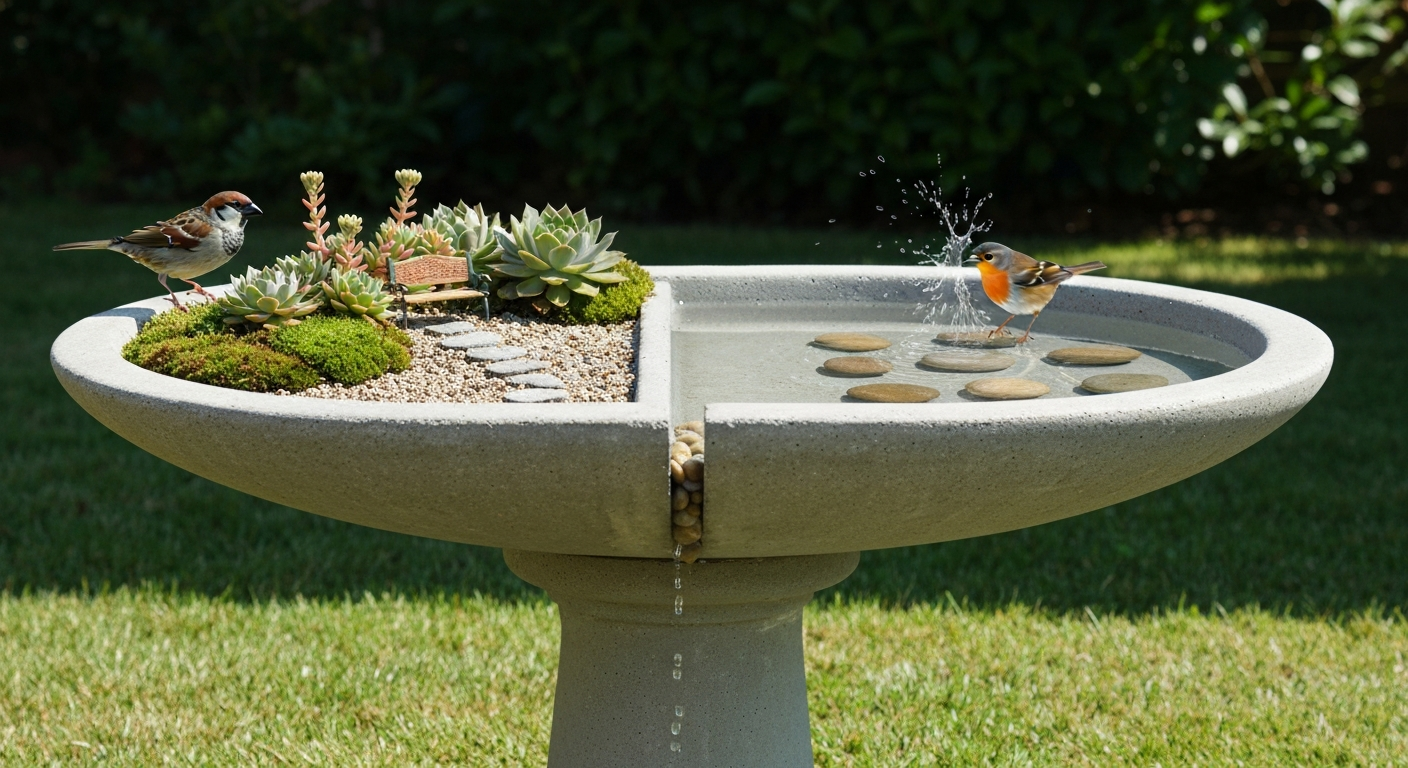
You can turn almost any bird bath into a recirculating fountain with a small submersible pump, a length of tubing, and the right nozzle head. The whole project can be done in an afternoon for under $40 if you go budget, or under $100 if you want a reliable kit with interchangeable spray patterns. The result is genuinely worth it: moving water attracts more birds than still water, keeps mosquitoes from breeding, and stays cleaner longer. Here is exactly how to do it. If you want to go beyond a basic fountain conversion, this guide on how to make a bubbling bird bath walks you through choosing the right components and setup how to do it.
How to Make a Bird Bath Into a Fountain: DIY Guide

Marcus Henley
22 Apr 2026
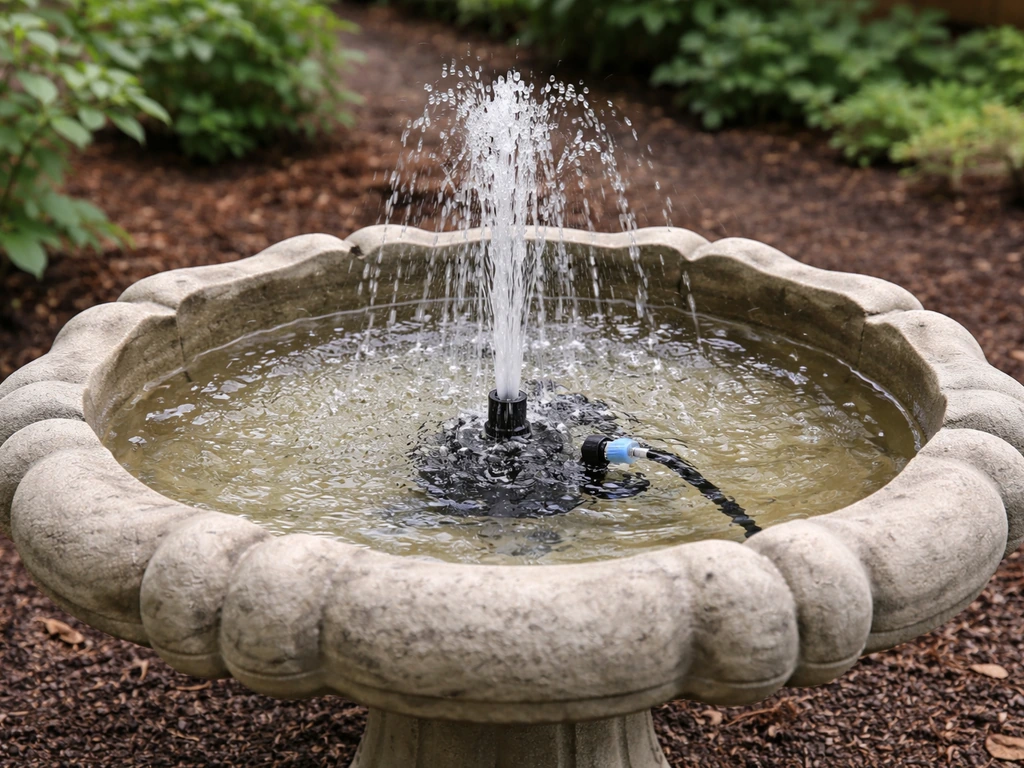
Pick the right fountain style and components
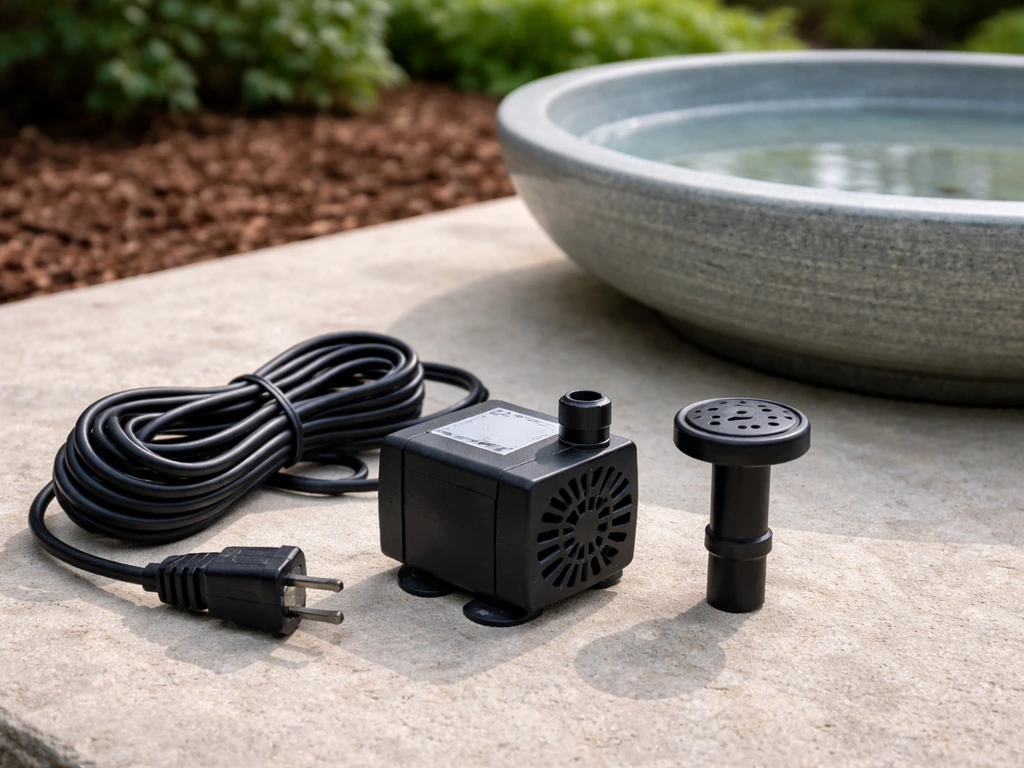
The core of any bird bath fountain conversion is a small submersible pump paired with a fountain nozzle or spray head. For a standard bird bath basin, you do not need a powerful pond pump. A pump in the 70 to 200 GPH (gallons per hour) range is usually plenty. TotalPond makes a dedicated 70 GPH fountain pump that is a solid entry-level starting point for smaller basins. Smartpond's fountain pump lineup starts at 45 GPH and goes up to 500 GPH depending on the model, which covers the full range of bird bath sizes. Start on the lower end. You want movement, not a geyser.
For the fountain head itself, you have a few styles to choose from. Aquascape's Ultra Water Pump Fountain Head Kit, for example, offers three interchangeable display types: a waterbell spray, a foaming jet, and a daisy spray. Each creates a different water behavior, and for birds the waterbell and daisy spray are usually the most appealing because they produce a gentle, wide pattern rather than a tall column. A foaming jet can work too, but tall vertical sprays sometimes intimidate smaller songbirds. If you are going fully DIY and skipping a kit, you can buy a simple adjustable fountain nozzle head separately and push it onto the pump outlet.
One thing to confirm before you buy: pump and nozzle compatibility. Kits like the Aquascape Ultra Fountain Head Kit are sized to match specific pump models via a threaded connection, so check that your pump outlet diameter matches the nozzle you are buying. The Ultra™ Pump Fountain Head Kit is designed to be submerged directly and includes spec guidance by pump size, showing pump/head kit matching and fountain head spray dimensions and heights for waterbell, foaming jet, and daisy blank" rel="noopener noreferrer">Aquascape Ultra Fountain Head Kit is sized to match specific pump models via a threaded connection. Mismatched fittings are the most common beginner frustration in this project and are easily avoided by buying a matched kit or double-checking thread specs.
| Pump Size | Typical GPH | Best For | Spray Height Potential |
|---|---|---|---|
| Very small (e.g., 70 GPH) | 45–70 GPH | Small or shallow basins, tabletop baths | Low, gentle trickle |
| Small-mid (e.g., 150–200 GPH) | 150–200 GPH | Standard 18–24 inch basins | Moderate, bird-friendly spray |
| Mid-range (e.g., 300–500 GPH) | 300–500 GPH | Large or deep basins, multiple heads | Taller spray, may need flow reducer |
Plan the setup: placement, power, and water recirculation
Before you touch any hardware, walk through three planning decisions: where the bird bath sits, where your power comes from, and how the water will circulate. Getting these right upfront saves you from having to move everything after install.
Placement
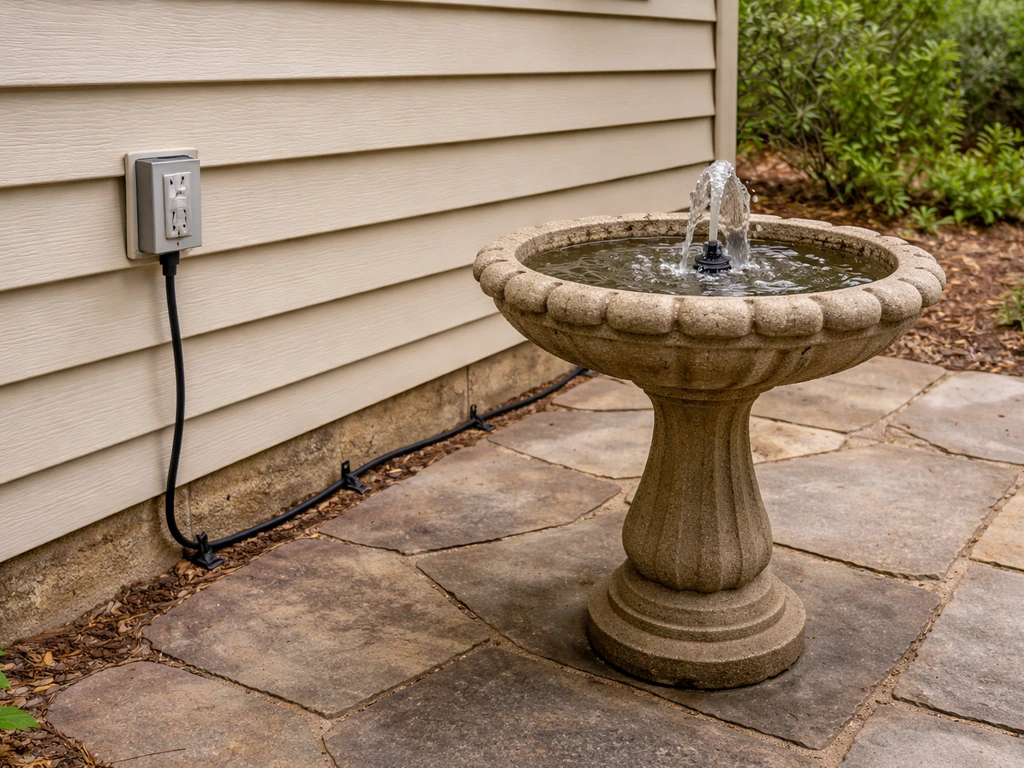
Position the bird bath within easy cord reach of a GFCI-protected outdoor outlet. This is not optional. The NEC requires GFCI protection for outdoor receptacles in wet or damp locations, and a fountain pump running near water is exactly the scenario those rules were written for. If your nearest outlet is not GFCI-protected, have it upgraded or use a GFCI outlet adapter before plugging in any pump. Keep the bird bath on a stable, level surface. A tilted basin means uneven water depth, which can expose the pump and run it dry on one side.
Power and cord management
Most small submersible pumps come with a 6 to 10 foot cord. Route the cord low along the ground or along a pedestal leg, and keep it out of the main foot-traffic path. If you need more length, use an outdoor-rated extension cord, not a standard indoor one. Tuck cord connections into a weatherproof outlet cover or box so they stay dry.
How recirculation works
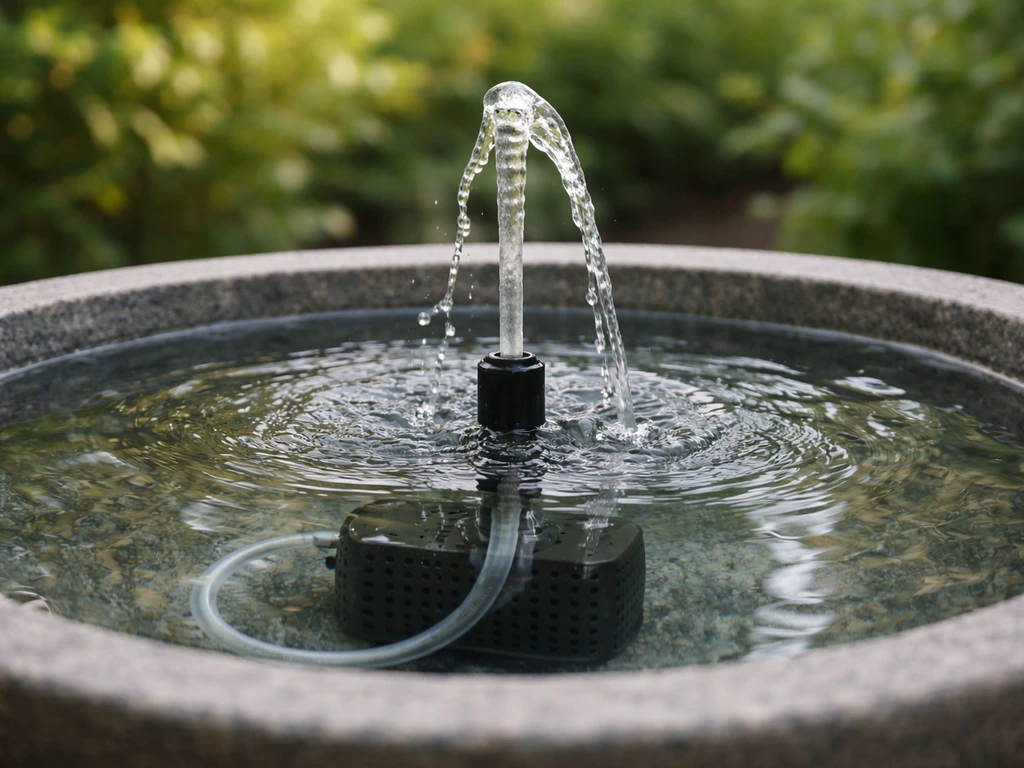
A bird bath fountain is a closed recirculating loop: the pump sits submerged in the basin, draws water in through its intake, pushes it up through the tubing or nozzle shaft, and the water falls back into the basin. There is no separate water supply line needed. The basin itself is the reservoir. Because water evaporates, especially in summer heat, you will need to top it off regularly.
This is important: if the water level drops too low, the pump runs dry and can be damaged or destroyed. Some pumps include a built-in low-water shut-off switch that cuts power before that happens. If yours does not, a piggyback float switch is an inexpensive add-on that does the same job automatically, cutting pump power when the water level drops unexpectedly.
Retrofit steps: install the pump and route the water
Here is the actual installation process from start to finish. The basin does not need to be drilled for this type of setup because the pump, tubing, and nozzle all stay inside the basin. This keeps the project beginner-friendly and avoids any risk of cracking your bird bath.
- Clean the basin thoroughly before installing anything. Any existing algae, mineral deposits, or debris will clog your pump faster. A scrub with diluted white vinegar and a rinse works well.
- Attach the fountain nozzle or spray head to the pump outlet. If you are using a kit like the Aquascape Ultra Fountain Head Kit, follow the kit's threading instructions to seat the nozzle head securely. Hand-tight is usually enough; do not force it.
- Set the pump in the center of the basin. Most bird bath pumps have suction cups on the base. Press them firmly to the basin floor. Centering the pump ensures the spray pattern hits the middle of the basin and falls back in evenly.
- If your setup uses separate tubing (some pumps route water up through a tube to a riser before the nozzle), cut the tubing to the right height. The nozzle tip should sit just above the waterline, not several inches above it. A low profile keeps the spray contained in the basin.
- Fill the basin with fresh water until the pump is fully submerged, at least 1 to 2 inches of water above the pump intake. Check your pump's minimum submersion depth in its manual.
- Plug in the pump (to a GFCI outlet) and observe the spray for a few minutes. Check that water is falling back into the basin, not onto the ground around it. Adjust the nozzle height or flow rate valve if needed.
- Route the cord down the pedestal or along the basin edge and tuck it securely. Avoid letting the cord rest in the water.
If your bird bath is made of concrete or a heavy material, this process is completely the same. For ceramic or glazed basins, just take extra care pressing the suction cups down, as glazed surfaces can sometimes release the cups more easily. You may need to add a small flat stone or plastic riser under the pump to lift the intake slightly off a very smooth glazed floor.
Adjust the spray and flow for bird-friendly movement
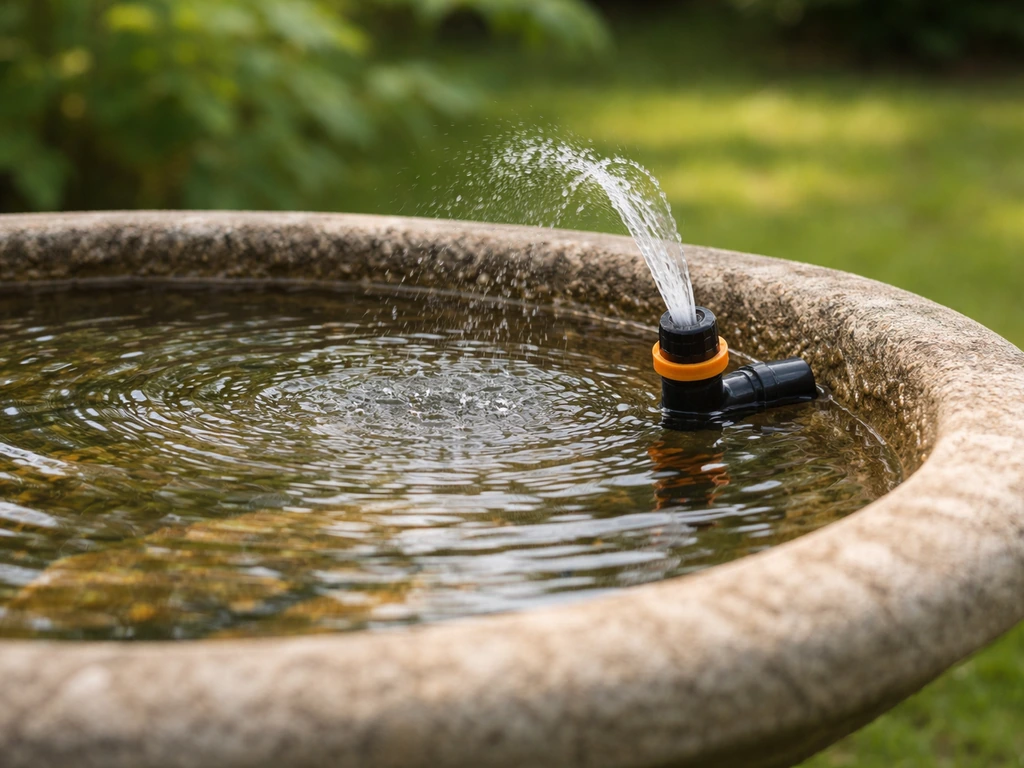
This is the step most guides skip, and it is one of the most important ones for actually attracting birds. Birds are drawn to the sound and sight of moving water, but they can also be put off by a spray that is too aggressive, too loud, or that empties the bath faster than it refills. Your goal is gentle, consistent movement.
Set the spray height to 2 to 4 inches above the basin rim, maximum. Anything taller splashes water over the edge, lowers the basin level faster, and can startle smaller birds. A waterbell or mushroom-style nozzle that produces a low, wide spray is ideal because it creates an appealing shimmer across the water surface without projecting a column upward. If your pump has an adjustable flow valve (most do), dial it back from full power until you get a steady, calm display rather than a forceful jet.
Hummingbirds, for instance, are particularly drawn to very fine misting or dripping water movement, while larger birds like robins prefer a shallow basin with visible gentle ripples. To make it hummingbird-friendly, aim for a very fine misting or dripping movement rather than a tall, forceful spray. If you are trying to attract a specific species, the spray pattern matters. A dripper or very low-flow daisy spray often outperforms a tall foaming jet for most backyard songbirds. Experiment with the interchangeable nozzle heads if your kit includes them. It costs nothing to swap them out and observe which one brings more bird activity.
One practical check: watch the basin water level after 15 to 20 minutes of operation. If it has dropped more than half an inch, your spray is probably overshooting the basin edges. Dial back the flow or lower the nozzle slightly.
Seal and protect the bird bath to prevent leaks and mess
Most bird bath basins do not need sealing just to run a fountain, since the pump is fully internal and no holes are drilled. But if your basin is older concrete or unglazed ceramic and you notice it is slowly losing water even when the pump is off, you may have hairline cracks or a porous surface that is weeping water. In that case, applying a blank" rel="noopener noreferrer">non-toxic, bird-safe waterproof sealant to the inside of the basin will solve it. Look for products specifically labeled as safe for fish ponds or bird baths once cured. Standard concrete sealers often contain chemicals that are harmful to birds until fully cured and sometimes after.
For managing splash mess around the base, a few practical steps help. First, keep the spray height low as described above. Second, place a flat layer of decorative gravel or river stones around the base of the pedestal to absorb drips without creating mud. Third, if your bird bath sits on a patio or deck, a rubber mat underneath the pedestal catches drips and prevents water staining.
For pumps with a diverter valve (a feature on some Aquascape Ultra models that lets you split flow between a fountain head and a secondary outlet), make sure any secondary outlet is capped or routed back into the basin if you are not using it. An open diverter port will bleed water out of the system and drop your basin level fast.
Maintenance routine: cleaning, algae control, and pump care
A running fountain needs regular maintenance to stay clean and keep the pump healthy. The good news is that moving water slows algae growth compared to a still bath, so you will clean less often than you would with a static bird bath. But you still need a routine.
Weekly tasks
- Top off the basin with fresh water every 2 to 3 days in hot weather, or whenever the water level drops more than an inch. This protects the pump from running dry.
- Visually check the spray pattern. If it looks weaker or more uneven than usual, the pump intake filter is probably clogged with debris.
- Remove any leaves, feathers, or debris that have collected around the pump base.
Every 1 to 2 weeks
- Unplug the pump, remove it from the basin, and pull off the intake filter or cover. Rinse it under running water and use a small soft brush to clear any algae or sediment from the filter screen.
- Empty the basin and scrub the interior with a diluted white vinegar solution (one part vinegar to nine parts water). Rinse thoroughly before refilling. Avoid bleach since residue can harm birds.
- Clean the pump body and nozzle head with the same vinegar-and-water solution and a soft brush. This removes biofilm before it builds into a stubborn layer.
- Check all tubing connections for looseness or kinks.
Algae control tips
Algae grows fastest in warm water with direct sun exposure. Placing the bird bath in partial shade (morning sun, afternoon shade) slows algae growth significantly without reducing bird traffic. If algae is a persistent problem despite regular cleaning, a small barley straw extract product labeled safe for wildlife and bird baths can help suppress it biologically without chemicals that harm birds. Avoid copper-based algaecides in bird baths since copper is toxic to birds at elevated concentrations.
Seasonal troubleshooting: freezing and mosquito prevention
Mosquito prevention
This is one of the best reasons to add a fountain to a bird bath in the first place. Mosquitoes require still, stagnant water to breed. Even gentle surface agitation from a low-flow fountain disrupts their ability to lay eggs and hatch larvae. If your fountain runs consistently, you have essentially eliminated the mosquito breeding problem without any chemical treatment. The key word is consistently: if you turn the pump off for days at a time, the water becomes stagnant again and mosquitoes will move in quickly. In summer, keep the pump running around the clock.
If you do need to turn the pump off temporarily and will not be around to monitor the water, a Bti-based mosquito dunk (Bacillus thuringiensis israelensis) is bird-safe, fish-safe, and breaks the mosquito larvae cycle without harming the birds. It is a good backup, but running your fountain continuously is a better primary strategy.
Winterizing the fountain
If you live in a climate where temperatures regularly drop below freezing, winterizing is critical, both for the pump and the basin. Water that freezes inside a basin can crack it, even if the basin is concrete or ceramic. Do not leave a full basin exposed to hard freezes.
- When nighttime temps start hitting 32°F (0°C) consistently, unplug and remove the pump from the basin. Store it indoors in a bucket of clean water or in a frost-free location. Storing a pump dry can damage the seals.
- Drain the basin completely. If your basin has a drain plug or grommet, remove it so no water is trapped. A trapped puddle that freezes expands and can crack even thick concrete.
- Cover the empty basin with a fitted cover or a heavy tarp secured with bungee cords to keep rain and snow from refilling it.
- Bring tubing and nozzle heads indoors as well. Plastic components can crack in hard freezes.
- Reinstall everything in spring once overnight temps are reliably above freezing.
In mild climates where freezes are rare, you may be able to run the fountain year-round. Just watch the water level closely in winter since evaporation still happens and a pump running in cold weather on low water is just as vulnerable to dry-run damage as in summer.
Other common problems and quick fixes
| Problem | Likely Cause | Fix |
|---|---|---|
| Pump runs but no spray | Clogged intake filter or nozzle | Remove pump, clean filter and nozzle with brush and vinegar solution |
| Spray height dropped suddenly | Partial clog or low water level | Top off basin, check and clean filter |
| Basin losing water fast | Spray overshooting the edge | Lower nozzle or reduce flow rate via pump valve |
| Algae returning every few days | Too much direct sun, warm water | Move to partial shade, increase cleaning frequency |
| Pump vibrating or noisy | Pump sitting on uneven surface or debris under it | Reposition pump, check suction cups, clear debris |
| Birds not using the fountain | Spray too aggressive or tall | Switch to lower-flow nozzle, reduce spray height to 2–3 inches |
If you enjoy this kind of water feature tinkering, there are natural next steps to explore. A dedicated recirculating bird bath system uses a reservoir hidden below the basin for more consistent water levels. A dedicated recirculating bird bath system uses a reservoir hidden below the basin for more consistent water levels.
If you want to go even more DIY, you can also use simple rhubarb leaf bird bath instructions to create a safe, natural soak-and-clean routine for the basin recirculating bird bath system. A dripper attachment offers an even simpler form of moving water for baths where a full pump setup is not practical.
And if you are specifically trying to attract hummingbirds, a misting nozzle or very fine spray head is worth its own exploration since hummingbirds interact with water differently than most songbirds. The fountain conversion covered here is the most versatile starting point, and once you have the pump and flow dialed in, you will wonder why you waited this long to add it.
FAQ
Do I need a filter or pre-filter to prevent the fountain nozzle from clogging?
If you are using a bird bath pump only, you usually do not need an in-basin filter, but adding one can help keep the nozzle from clogging with dust or pollen. Use a small intake sponge or pre-filter screen rated for submersible pumps (and check it weekly in pollen-heavy seasons). If you use a filter, avoid restricting flow too much, since the pump could run warmer and the spray may become uneven.
What should I do if the water level drops quickly during hot weather?
Do not rely on a thicker layer of water to “protect” the pump, because the real risk is the water level dropping below the intake and leaving it to dry-run. If your basin is shallow or evaporation is fast, consider lowering the nozzle slightly and using a lower-flow setting, then top off more often. If your pump does not have low-water shutoff, add a float switch before the first hot spell so you are not guessing.
Can I use an outdoor extension cord or power strip setup for the fountain?
Yes, but you need to think about how you will manage power outdoors. Most bird bath fountains are safer with a GFCI outlet and cord that is rated for outdoor wet locations, then protected by a weatherproof outlet cover. If you are using an extension cord, make sure it is also outdoor-rated and kept as short as practical to reduce voltage drop, which can make some pumps run weak or intermittently.
Is it okay to turn the fountain off in winter or during cooler months?
Not all bird bath fountains should be run continuously. The article recommends summer near-constant operation to prevent mosquito breeding, but in cooler seasons you can reduce runtime if you still keep water moving regularly (for example, a daily window) while monitoring for any mosquito activity. The key is consistency, if you leave it stagnant for multiple days, mosquito eggs can take hold.
My pump runs but nothing sprays, what are the first things to troubleshoot?
If the pump hums but there is no spray, the most common causes are a clogged nozzle, trapped air in the tubing/nozzle head, or the intake partially uncovered due to tilt or a low water level. First verify the pump intake is submerged, then remove and rinse the nozzle head, and finally clean the intake screen if your pump uses one. Also check that the tubing connections are fully seated and not cracked.
Why does the fountain look weak or uneven after I install it?
If you see uneven spray or a “weak” stream, start by checking for flow restriction: a dirty nozzle, a partially blocked intake, or a spray head that does not match your pump’s pressure. Next, confirm the nozzle height, keep it within the recommended low band above the rim, and then dial back or up the flow using the pump’s valve. If flow still seems low after cleaning, the pump may simply be undersized for your basin and nozzle choice.
What’s the best way to prevent the pump intake from sliding on smooth or glazed basins?
For concrete or glazed ceramic bowls, the main risk is an imperfect seal between suction cups or the pump intake lift pieces and the slick surface. If the pump shifts during operation, it can fall too low and lose prime, or it can rest on debris. Use a stable flat base (a small plastic riser or smooth stone) and keep the intake clear of grit so it stays aligned.
If my basin is leaking, how do I choose a sealant that is truly bird-safe?
Bird-safe in this context means once cured, the sealant should not leach harmful chemicals into the water. If your basin is older and porous, choose a product explicitly labeled safe for bird baths or ponds after curing, and wait the full cure time before running the fountain. Also do a simple test, fill the basin and run the pump for a short period, then check for persistent strong odor or residue before longer use.
How can I maximize bird activity after converting it, without increasing splashing?
If you want to attract more birds, avoid making the fountain too dramatic. Keep the spray low and calm, then place the bird bath where birds can approach without feeling exposed, near a shrub line or within a short flight path of cover. Also consider switching nozzle types, waterbell or daisy styles often work better for songbirds than tall jets because they produce gentle ripples and a smaller splash zone.
I have a diverter port, what happens if I leave the second outlet uncapped?
If your setup includes a diverter or a second outlet, leaving it open will pull water away from the display head and lower the basin level, which raises the dry-run risk. Cap the unused outlet or route it back into the basin so the recirculation loop stays closed. After changes, run the system for 20 minutes and re-check how much the water level drops to confirm the system is balanced.
Next Article
How to Make a Fairy Garden in a Bird Bath: Safe Build & Care
Create a bird-safe fairy garden in a bird bath: step-by-step build, plant choices, safety, care, troubleshooting