The best way to prevent mold in a bird bath is to change the water every 1 to 2 days during warm months, scrub the basin weekly with a stiff brush, and position the bath where it gets at least a few hours of morning sun to dry out surface moisture. Treating bird bath water involves changing it regularly and, when needed, disinfecting the basin so mold does not get a chance to regrow. If mold is already there, a 1:9 white vinegar-to-water solution or a diluted bleach mix (2 oz bleach per gallon of water) will kill it safely, just rinse thoroughly before refilling. That combination of frequent water changes, regular scrubbing, and smart placement handles the vast majority of mold problems in any bird bath.
How to Prevent Mold in a Bird Bath and Clean It Safely

Marcus Henley
3 Jul 2026
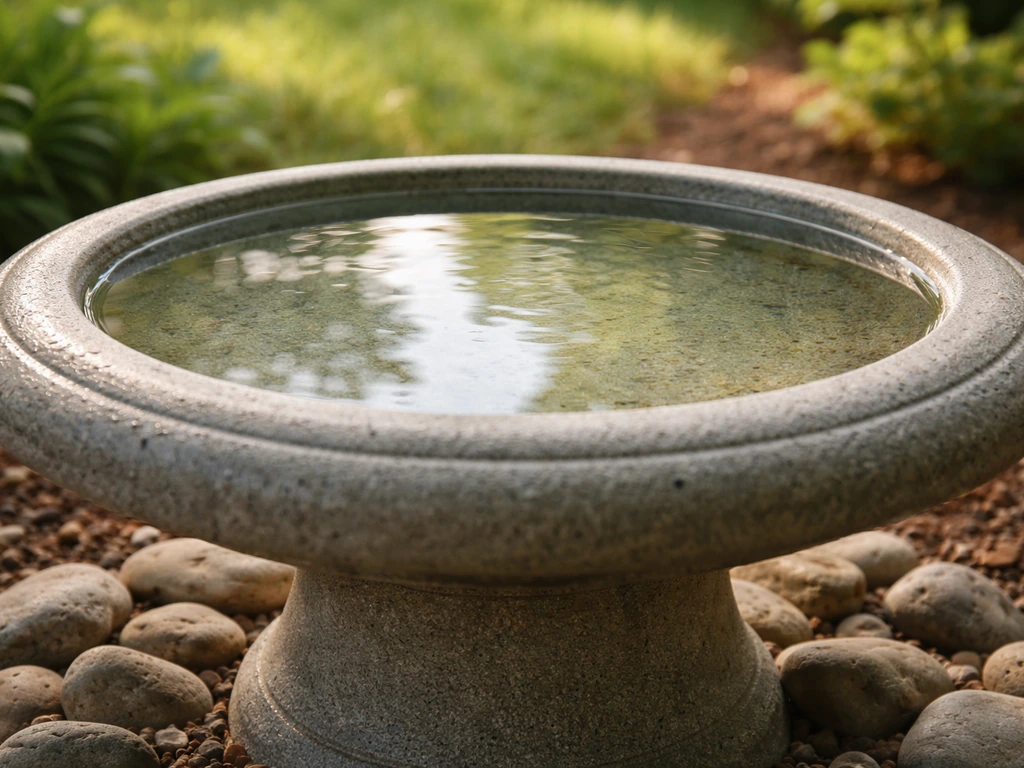
Mold vs algae vs slime: what are you actually looking at?
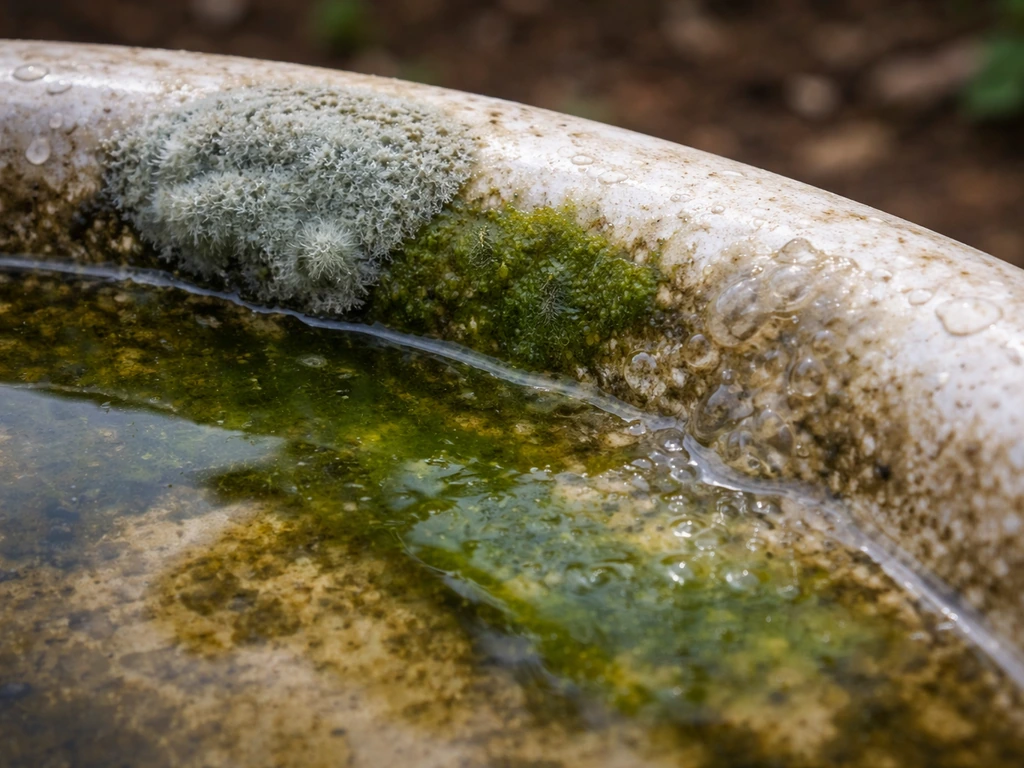
Before you treat anything, it helps to know what you're dealing with, because mold, algae, and biofilm slime look similar but behave differently and sometimes show up together.
| What it looks like | Color | Texture | What causes it | How to tell it apart |
|---|---|---|---|---|
| Mold | Black, dark gray, or greenish-black | Fuzzy, powdery, or patchy | Organic debris, shade, stagnant water, damp surfaces | Often appears above the waterline or on shaded sections; fuzzy or powdery texture |
| Algae | Green, yellow-green, or brown | Slippery, film-like or stringy | Sunlight + nutrients in water | Grows fastest in direct sun; feels slick underwater; turns the water green |
| Biofilm slime | Gray, tan, or off-white | Slimy, almost soap-like | Bacteria feeding on organic matter | Coats the entire basin surface evenly; water feels slippery when you swish it |
Mold most commonly appears as dark fuzzy or speckled patches, often around the rim, under the lip of the basin, or on any shaded or rarely-submerged surface. Algae turns the water itself green and creates that slick coating on the bowl, that's the issue covered in more depth when you're troubleshooting a bird bath turning green. Biofilm is the thin slippery layer that forms even in clean-looking water within a day or two. In practice, a neglected bird bath often has all three at once, so your cleaning approach needs to address all of them.
Why mold takes hold in a bird bath
Mold needs moisture, organic material, and limited airflow or sunlight to establish itself. A bird bath provides all three by default. Stagnant water sitting for days gives mold spores time to land and root. Bird droppings, feathers, leaves, and decomposing insects all feed mold growth. Shade accelerates the problem dramatically, a bath sitting under a dense tree canopy stays damp on its surfaces even when the water is changed, and those damp, dim conditions are exactly what mold wants.
The material of the bath matters too. Concrete and rough ceramic are more porous than glazed ceramic or metal, which means mold can get a physical grip in the tiny surface pits and scratches. A concrete bath that hasn't been sealed is especially vulnerable. Solar and heated baths introduce additional components, pumps, tubes, and reservoirs, where mold can grow out of sight if the recirculating water isn't refreshed and the components aren't cleaned regularly.
- Water sitting stagnant for more than 2 days, especially in warm weather
- Heavy shade with little direct sunlight to dry and warm the surface
- Organic debris: leaves, droppings, feathers, insects accumulating in the basin
- Porous or rough surfaces (unsealed concrete, cracked glazing) that hold moisture
- Poor drainage that keeps the basin damp even after emptying
- Recirculating pumps or tubing that aren't cleaned regularly in solar or heated setups
How to clean mold out of a bird bath right now
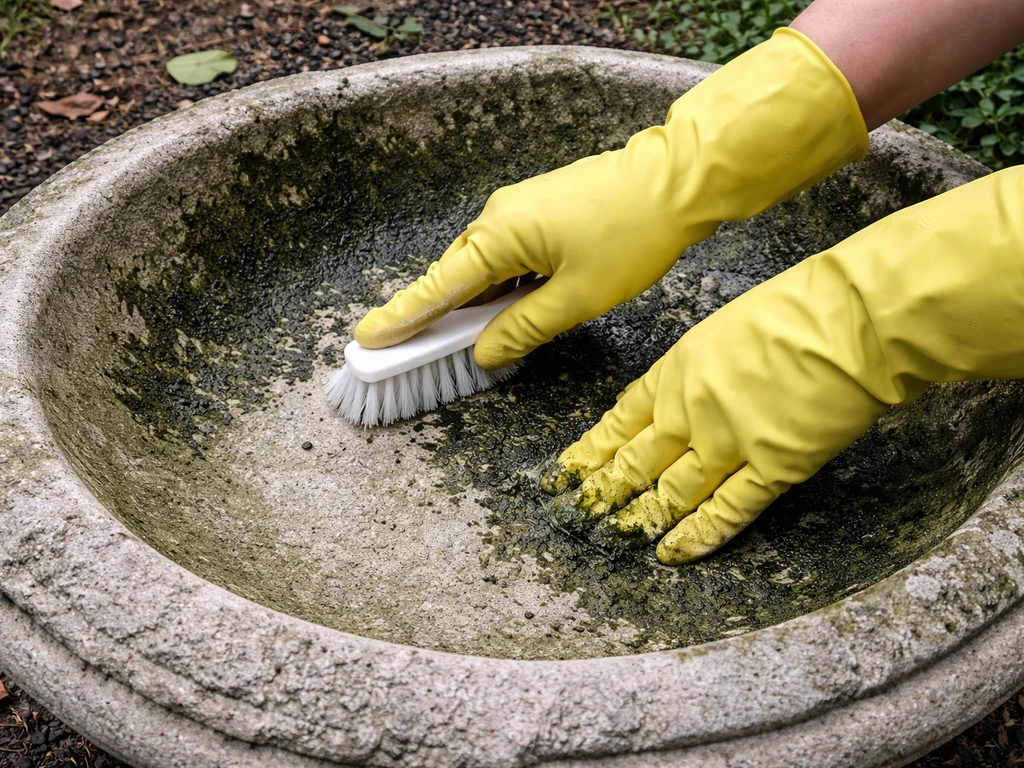
Don't just wipe it down and refill, mold needs physical removal followed by a disinfecting step. Here's the sequence I use, and it works whether you're dealing with a light film or a fully neglected bath.
- Empty the bath completely. Dump the old water away from areas where birds forage — you don't want contaminated runoff landing on seed or plants birds eat.
- Rinse with plain water first to knock off loose debris, droppings, and organic matter. This step matters: disinfectants work far better on pre-cleaned surfaces, and skipping it just traps grime under the solution.
- Scrub the entire basin with a stiff-bristled brush (dedicated to the bird bath — don't use it for anything else). Hit the rim, the underside of the lip, and any textured or recessed areas where mold hides. For concrete or rough ceramic, use more pressure and spend more time in the pits.
- Apply your cleaning solution (see next section for which one) and let it dwell for 10 to 15 minutes. Don't just wipe and rinse — that contact time is what kills the mold rather than just moving it around.
- Scrub again lightly, then rinse thoroughly with clean water. Multiple rinse passes matter here, especially if you used bleach. You want zero residue left.
- Let the basin air dry for a few minutes in the sun before refilling if possible. This is a small step but it helps eliminate any surviving spores.
Bird-safe cleaning products: what works and what to skip
Birds are sensitive to chemical residues, so what you clean with matters as much as how you clean. The good news is that the best options are inexpensive and genuinely effective.
White vinegar solution
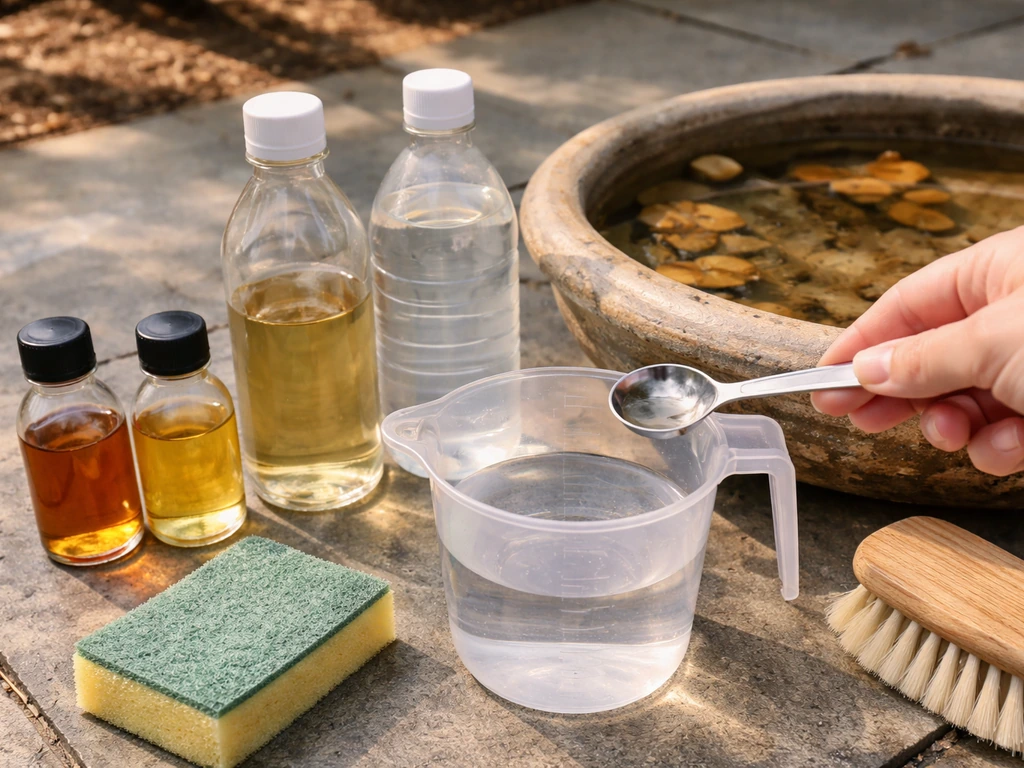
A mix of 1 part distilled white vinegar to 9 parts water is the go-to for regular cleaning. It's non-toxic, kills mold and bacteria at this dilution, and is safe for all bird bath materials including concrete, ceramic, and metal. It won't corrode or stain. The downside is it's less powerful against heavy mold than bleach, so use it for routine maintenance and moderate buildup.
Diluted bleach solution
For tougher mold or when the bath has really been neglected, diluted bleach is effective. The ratio used for bird baths is 2 ounces of household bleach (unscented) per 1 gallon of water, the same approach recommended by several state wildlife agencies for bird feeders and baths. The UNH Extension cleaning guidance for bird feeders recommends cleaning on a schedule, with most feeder types every other week and hummingbird feeders weekly, to reduce mold and disease risk blank" rel="noopener noreferrer">2 ounces of household bleach (unscented) per 1 gallon of water. Soak for 10 to 15 minutes, scrub, then rinse extremely well. Multiple thorough rinses are non-negotiable here. Let the bath air dry fully before refilling. The key is: bleach is safe for birds only when it's completely rinsed away.
Hydrogen peroxide (3%)
Standard 3% hydrogen peroxide (the kind from any pharmacy) is a solid middle-ground option. It kills mold and bacteria, breaks down into water and oxygen so there's minimal residue risk, and is safe for bird bath surfaces. Apply it, let it sit for 10 minutes, scrub, and rinse. It's a good choice if you're uncomfortable using bleach around the garden.
What to avoid
- Scented cleaners, dish soaps with fragrance, or any detergent with surfactants — these leave residues that can harm birds and are hard to fully rinse from porous surfaces
- Bleach concentrations higher than the 2 oz per gallon ratio — stronger isn't safer and increases residue risk
- Commercial mold sprays, bathroom cleaners, or tile cleaners — most contain chemicals not tested for bird safety
- Copper sulfate or algaecides marketed for water features — may be harmful to birds at the concentrations needed to be effective
- Pressure washing with chemical additives — plain pressure washing is fine for rinsing, but don't add cleaning agents
The maintenance routine that actually keeps mold away
One-time cleaning won't solve the problem long-term. The reason most bird baths develop recurring mold is an inconsistent or too-infrequent maintenance schedule. If you want the bird bath to stay fresh, it helps to plan your cleaning around the interval you use for water changes too-infrequent maintenance schedule. Here's what consistent prevention looks like in practice.
Every 1 to 2 days
Dump and refill with fresh water. This is the single highest-impact habit you can build. Stagnant water is mold's best friend. In hot weather (above 85°F), daily refills are worth it. If the bath is getting heavy use from birds, you may notice it dirties faster, droppings and debris accelerate mold and biofilm growth, so adjust accordingly. If the bath gets more than 4 to 5 hours of direct sun daily in summer, aim for daily water changes since warm, nutrient-rich water cycles through conditions faster.
Every week
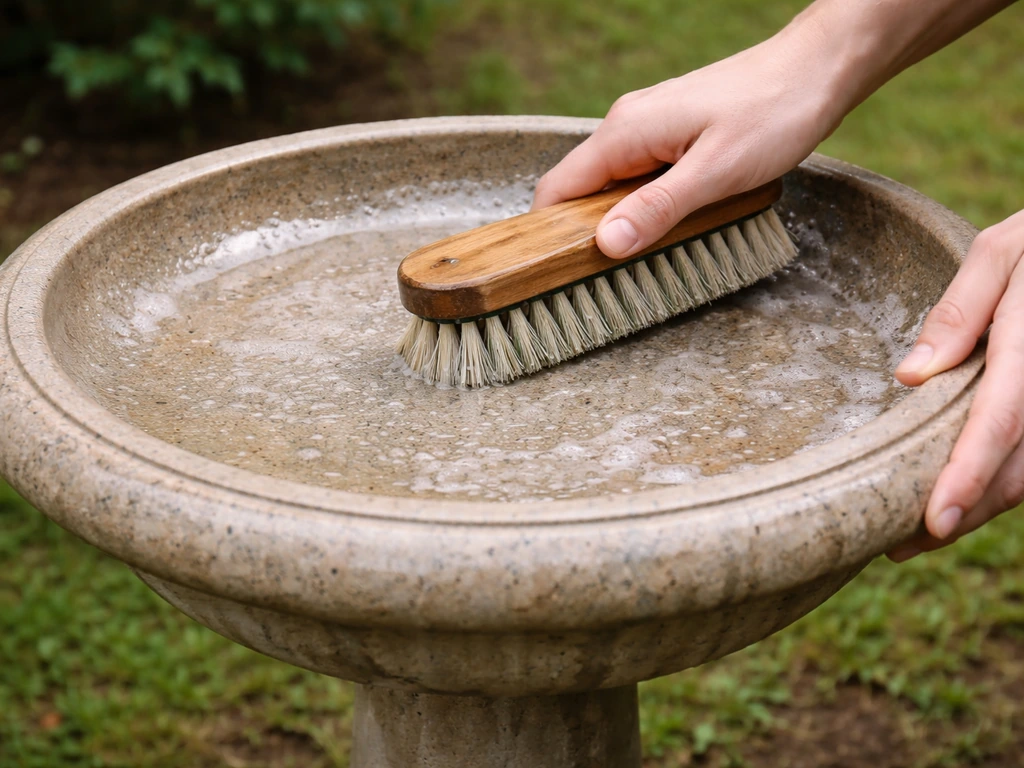
Full scrub with your vinegar solution. Empty the bath, give it a thorough brush scrub, apply the 1:9 vinegar-water solution and let it sit for 10 to 15 minutes, scrub again, rinse well, and refill. This is the minimum cleaning frequency recommended by wildlife and extension agencies for bird baths. Warm, humid months may call for more frequency, every 4 to 5 days if you're seeing buildup sooner. This weekly routine also aligns with how you'd approach keeping the bath from turning green, since algae and mold often build simultaneously.
Monthly or seasonally
Do a deeper disinfecting clean with diluted bleach or hydrogen peroxide. Let the solution soak for the full 10 to 15 minutes, scrub every surface including undersides and the pedestal if it holds water, rinse multiple times, and air dry fully. For concrete baths, this is also a good time to check if resealing is needed, a properly sealed concrete surface resists mold penetration significantly better than unsealed concrete.
| Frequency | Task | Solution to use |
|---|---|---|
| Every 1–2 days | Dump and refill with fresh water | Plain fresh water |
| Weekly | Scrub basin, rim, and edges | 1:9 vinegar-to-water solution |
| Every 4–5 days in summer heat | Full scrub if buildup appears sooner | 1:9 vinegar-to-water solution |
| Monthly | Deep disinfecting soak and full rinse | 2 oz bleach per gallon, or 3% hydrogen peroxide |
| Seasonally | Inspect, reseal concrete if needed, clean pump/tubing on heated or solar baths | Bleach solution or hydrogen peroxide |
Placement and setup changes that make a real difference
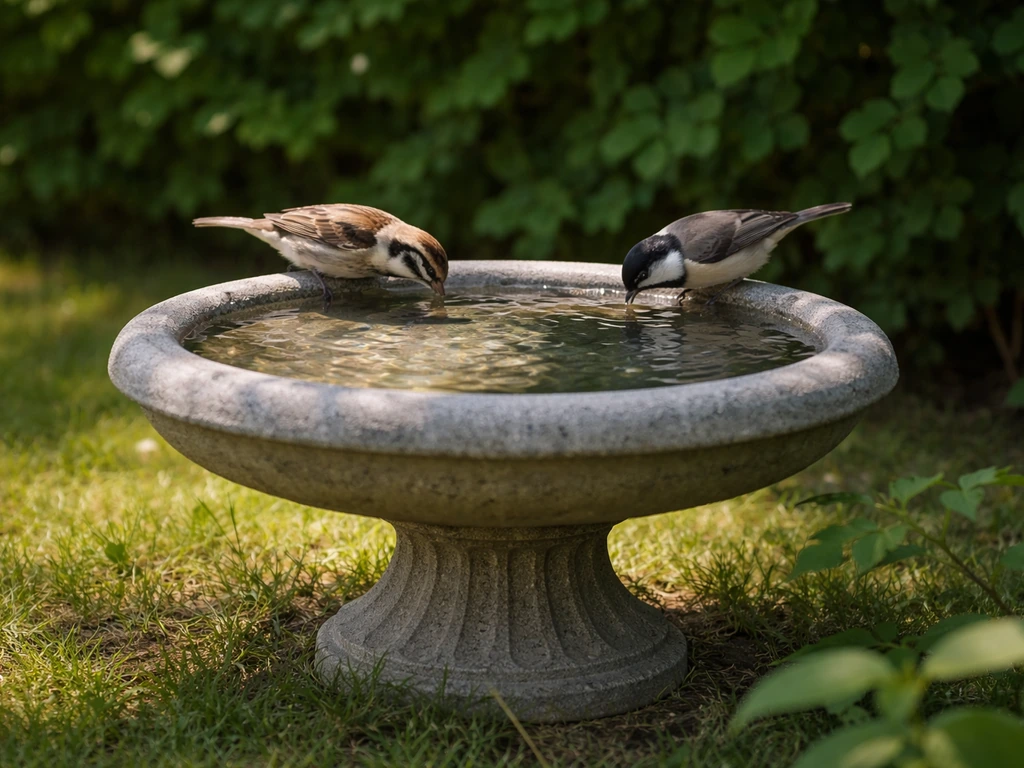
Where and how you set up the bath has a huge effect on how quickly mold develops. These aren't cosmetic tweaks, they directly change the conditions that allow mold to establish itself.
Sun and shade balance
Full shade is the fastest route to a mold-heavy bath. You don't need full sun all day, in fact, full afternoon sun in summer creates its own problems by warming the water too fast. The sweet spot is morning sun with afternoon shade. Morning sun dries surface moisture from overnight, warms the bath enough to slow mold, and the afternoon shade keeps water from evaporating too quickly or becoming too hot for birds to want to use. If your bath is currently under a dense tree canopy with no direct sunlight at all, moving it even a few feet to get morning exposure will noticeably reduce how fast mold appears.
Drainage and tipping
A bath that sits level on an uneven surface can pool water unevenly and leave wet spots that never fully dry when you empty it. Make sure the basin drains cleanly when tipped. If your pedestal or basin design doesn't allow easy emptying, that's worth factoring in when deciding on a new bath. Ground-level baths and deep basins can be harder to fully drain and tend to collect more debris, which feeds mold.
Water movement
Moving water resists mold and algae growth far better than still water. Even a simple drip attachment or solar-powered wiggler that keeps the surface moving can meaningfully extend the time before mold appears. Solar fountain attachments are inexpensive and do double duty, they deter mosquitoes from laying eggs too. If you have a solar or heated recirculating bath, the pump and tubing need to be included in your cleaning schedule; those components are prime mold spots that often get overlooked.
Heated bird baths in winter
Heated baths keep water liquid in freezing temps, which is great for birds but means the water is warm and sitting for extended periods, conditions that accelerate mold even in cold weather. Don't assume winter slows mold down inside a heated bath. Keep your water change and scrub schedule the same year-round if you run a heated bath, and make sure to clean the heating element housing periodically since biofilm builds up there too.
When mold keeps coming back: troubleshooting persistent problems
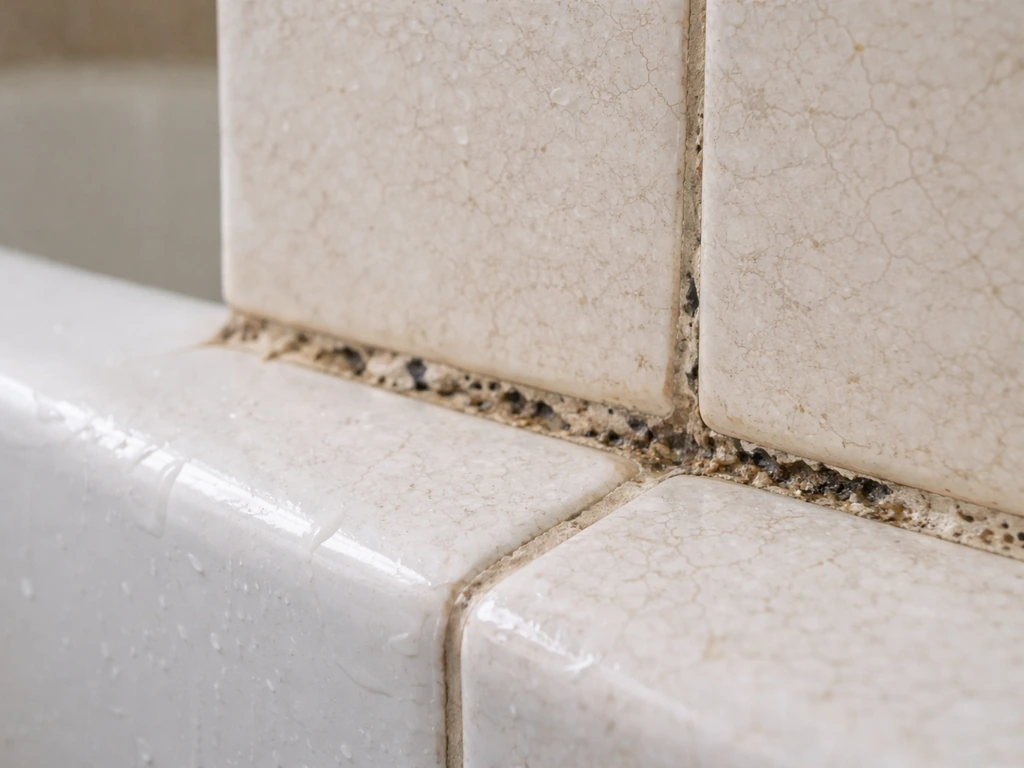
If you're cleaning consistently but mold returns within a day or two, something in your setup is working against you. Here's how to diagnose the recurring triggers.
Check the surface condition of the bath
Porous and damaged surfaces are the number one reason mold comes back fast after cleaning. Unsealed concrete harbors mold spores in its pores, you clean the surface, but the spores embedded deeper survive and re-colonize within days. If you have a concrete bath, apply a bird-safe concrete sealer (look for non-toxic, water-based versions) after your next deep clean. Let it cure fully before refilling. Similarly, cracked or crazed glazing on ceramic baths creates the same problem, moisture gets into the cracks and mold sets up there.
Organic debris loading
If your bath sits under or near trees or shrubs, leaf litter, seed hulls, and bird droppings are constantly falling in and feeding mold. A leaf net or moving the bath a bit further from the canopy drip line helps. If birds are dropping a lot of debris, you may just need to bump your cleaning frequency up rather than expecting a weekly schedule to keep up.
Material-specific considerations
- Concrete: most prone to mold penetration; seal the surface, scrub firmly with a stiff brush, and deep-clean monthly
- Rough or unglazed ceramic: similar to concrete; glazed ceramic is much easier to clean and resists mold better — if you're replacing a bath, glazed is worth considering
- Metal (copper, galvanized, stainless): naturally more resistant to mold; copper has mild antimicrobial properties; watch for rust or corrosion spots where mold can grip
- Solar/recirculating baths: clean the pump intake, tubing, and reservoir every 2 to 4 weeks; mold in the tubing can re-contaminate clean water immediately
- Heated baths: same as solar but year-round; don't let the heating element housing become a mold source
Recalibrate your cleaning interval
The right cleaning interval isn't a fixed number, it's based on your specific setup, climate, tree cover, and bird traffic. Start with the weekly scrub and every-other-day water change as a baseline, then watch how quickly the bath shows buildup. If you're seeing slime or discoloration within 3 days, shorten the interval. If the bath stays clean for 10 days, you can stretch it a bit. Treat it like an experiment rather than a fixed rule. In high humidity or during heavy summer use, some baths genuinely need a full scrub every 4 to 5 days.
Managing mold in a bird bath really comes down to two things: don't let water sit stagnant, and don't let organic matter accumulate. If you want to keep your bird bath clean between deeper cleans, stick to a consistent water change and quick scrub routine. Everything else, cleaning products, placement, materials, is in support of those two fundamentals. Get those right and you'll spend far less time scrubbing and a lot more time watching birds.
FAQ
Can I prevent mold without using bleach or peroxide at all?
Yes, but you have to be stricter with timing. Use the 1:9 vinegar-to-water routine for regular cleaning and shorten the water-change interval to every day when it is warm or humid, then scrub at least weekly (more often if you see buildup within 3 days). If mold returns too fast for that schedule, switching to a one-time bleach or peroxide disinfecting soak is usually the missing step.
How do I tell if what I’m seeing is mold or algae or biofilm?
A practical check is to observe where it forms and how it behaves when you remove water. Algae usually makes the water look green and can appear as slick coating, while biofilm often returns quickly as a thin, slippery layer. Mold tends to look like fuzzy or speckled patches, commonly around shaded or rarely-submerged surfaces, and it often looks “separate” from the water.
Is it safe to clean a bird bath with soap or dish detergent?
Light detergent use can leave residues that birds may contact again when you refill, and residues can also encourage new biofilm. If you use any soap at all, rinse extremely thoroughly until no suds or film remain, then follow with a vinegar-water rinse as a final step before refilling.
What happens if I do not rinse after using bleach?
Skipping thorough rinses is the main bird-safety risk with bleach, because chlorine residue can linger even after scrubbing. After your 10 to 15 minute soak, rinse multiple times with clean water, then air dry fully. If you can smell bleach strongly after rinsing, keep rinsing until the odor is gone.
How long should I wait after disinfecting before adding fresh water?
Let the basin air dry fully after any disinfecting step, especially after bleach. Refilling while the surface is still wet or smells strongly of cleaner increases the chance of residue contact, and drying also helps prevent the immediate regrowth that can happen right after treatment.
How should I handle a bird bath with a pump, filter, or recirculating system?
Treat the plumbing as part of the cleaning, not just the basin. If the pump and tubes are not included, biofilm can remain hidden in lines and recirculate back into the bath, causing “instant” mold return. Plan to disassemble or flush components during your deeper disinfecting clean, and scrub all water-contact surfaces you can access.
What if my bath is concrete and keeps getting mold again quickly?
That pattern usually means spores are embedded in pores and re-colonize after you clean the surface. After your next deep clean, seal the concrete with a bird-safe, water-based, non-toxic sealer and let it cure fully before refilling. Also make sure you are scrubbing undersides and rough edges, since those areas stay damp.
Why does mold come back within a day or two even though I clean it?
Most often the cause is either porous or damaged surfaces (unsealed concrete or cracked glazing) or constant organic “feedstock” (leaves, droppings, insects) or persistent shade and poor drying due to uneven pooling. Confirm all three: check for cracks and pits, move the bath to get morning sun, and remove debris daily in heavy bird-traffic areas.
Can I reduce mold by adding a cover or using a lid?
Covers can backfire by trapping humidity and limiting airflow, which helps biofilm and mold hold on. If you use any cover, choose one that keeps the basin dry and is designed to allow ventilation, otherwise stick to placement that gets morning drying and use frequent refills.
How often should I clean a bird bath in winter or during freezing temperatures?
If it is a heated bath, keep the same prevention rhythm year-round because warm water supports growth even in cold weather. If it is not heated, you may still get growth during thaw or when snowmelt creates standing water, so check surfaces and run a quick vinegar scrub when you see speckling or slime forming.
What’s the best way to set up a schedule if I’m not sure how fast mold grows in my yard?
Use it like a short test. Start with every-other-day water changes and a weekly scrub, then inspect daily. If you see any fuzzy patches or slime within 3 days, shorten water changes and increase scrub frequency to every 4 to 5 days until you find a sustainable interval for your sun exposure and bird load.
Next Article
How to Treat Bird Bath Water: Clean, Dechlorinate, Prevent Algae
Step-by-step how to treat bird bath water: clean, dechlorinate, prevent algae and mosquitoes, and handle heat or freezin