Green bird bath water is almost always algae, and algae needs three things to thrive: sunlight, warmth, and nutrients. Cut off any one of those three and you slow it down dramatically. Cut off two or more and you can keep the water clear for days at a time without much effort. The good news is that most fixes cost nothing and take less than ten minutes.
How to Keep Bird Baths From Turning Green: Fix Fast

Marcus Henley
5 May 2026
Why your bird bath water keeps turning green
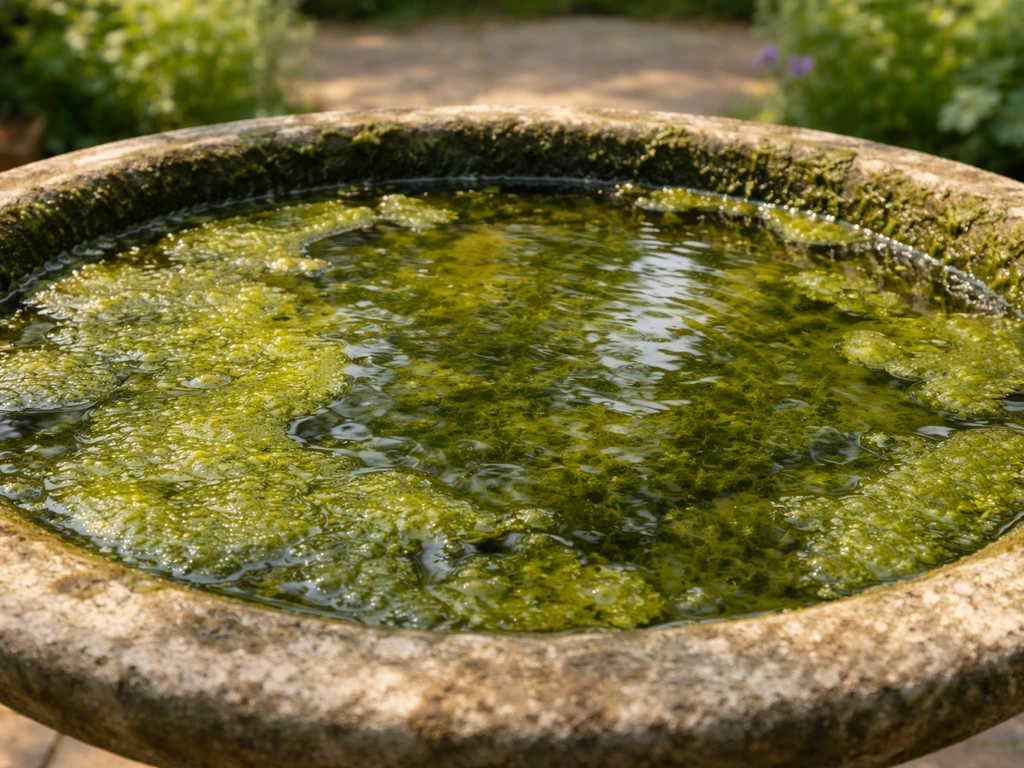
Algae is a naturally occurring organism and it's everywhere in the environment. It just needs the right conditions to explode into that thick green film you're dealing with. In a bird bath, those conditions almost always come together fast: the basin sits in full sun, the water warms up quickly, and birds drop in feathers, droppings, and bits of seed from nearby feeders. That organic debris acts as fertilizer, giving algae exactly the nutrient boost it needs. Stagnant water makes it worse because there's no dilution and no disruption to the biofilm forming on your basin walls. Warm, still, sunny, and nutrient-rich is basically a perfect algae recipe.
This is why you'll notice the problem gets dramatically worse in summer. Hot temperatures accelerate algae growth the same way they speed up any biological process. If your bird bath turns green within a day or two during a heat wave, that's completely normal. It just means your maintenance routine needs to keep pace with the season.
Stop the green water right now: quick fixes for today
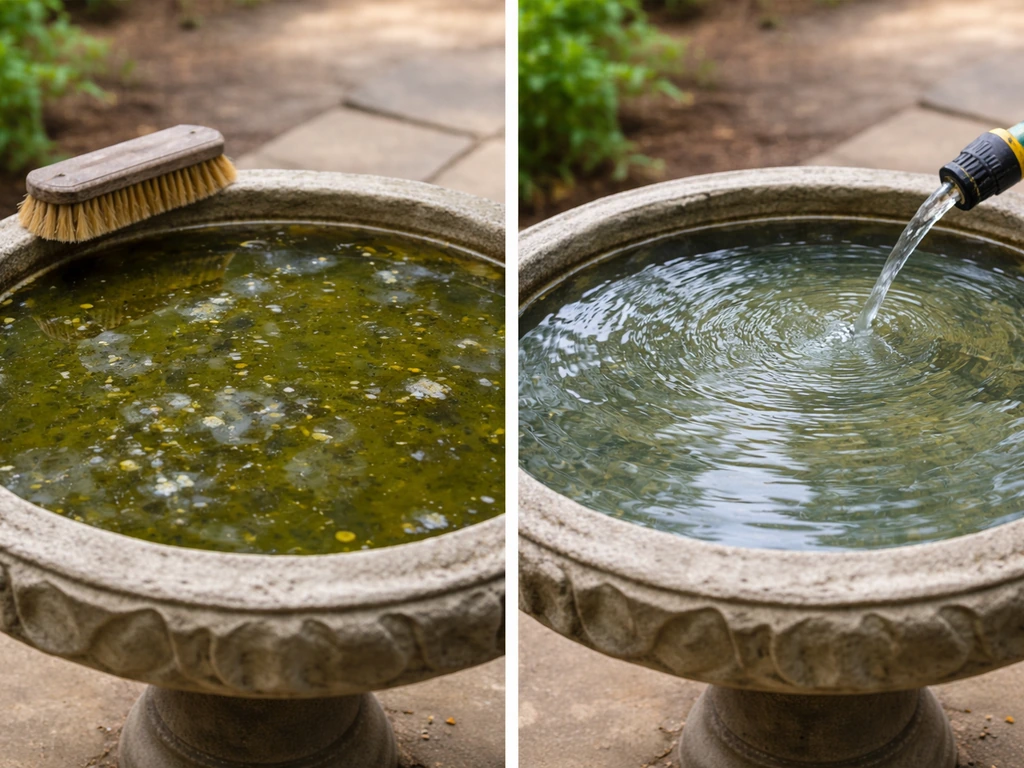
If your water is green today, here's what to do immediately. Don't just dump and refill. A fresh pour of water over a slick, algae-coated basin will turn green again within 24 to 48 hours because the algae film is still on the surface. You need to break that cycle.
- Dump all the water out completely.
- Use a stiff plastic scrubbing brush (not metal, which can scratch) to scrub the entire basin, including the lip, sides, and any perching ledges. You want to physically remove the green film, not just rinse it away.
- Mix a cleaning solution of 9 parts water to 1 part household bleach. Scrub again with this solution, or let it soak for 10 to 15 minutes if the algae buildup is heavy.
- Rinse extremely thoroughly. Keep rinsing until you can't detect any bleach smell and there's no persistent foaming. Residual bleach is harmful to birds, so this step matters.
- Let the basin air dry completely if you have time, then refill with fresh water.
- Move the bird bath to a shadier spot if possible, or plan to come back the same day to reassess positioning.
If you don't have bleach handy, plain scrubbing with a brush and a thorough rinse is still far better than nothing. The mechanical removal of the biofilm is the most important step. Chemistry helps with disinfection, but elbow grease does the heavy lifting.
How often to clean and what to use
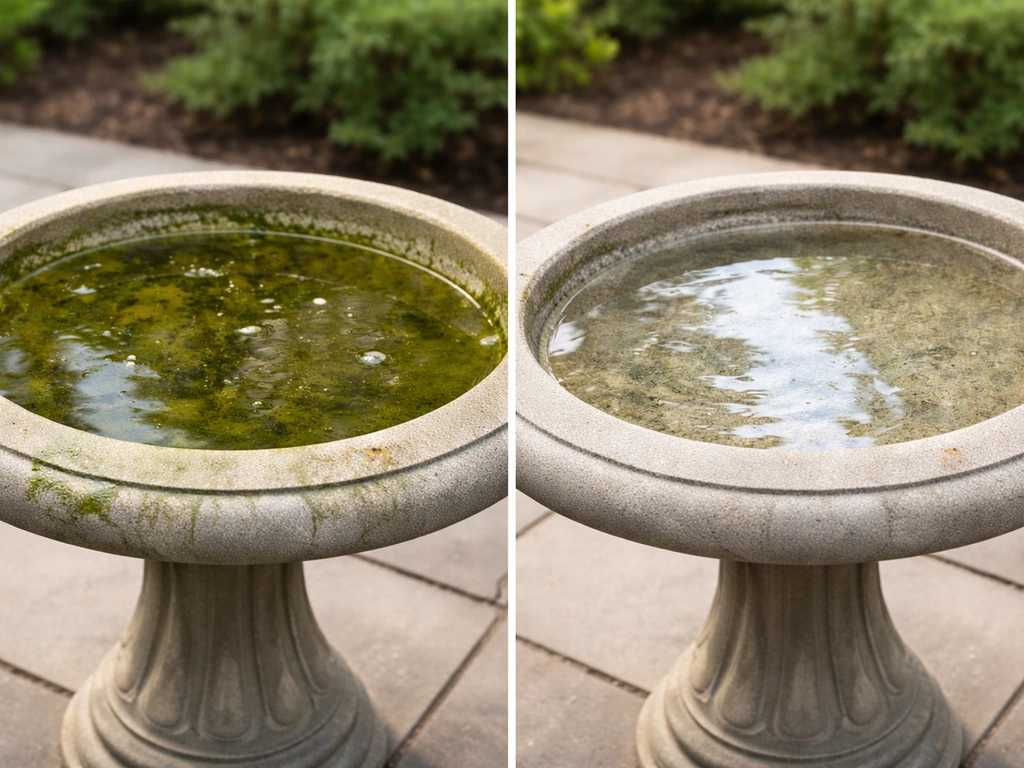
The Oklahoma Department of Wildlife Conservation recommends scrubbing bird baths daily using a plastic scouring pad, and honestly, in peak summer that's not overkill. Algae, droppings, and wind-blown debris can turn a bird bath into a health hazard faster than most people expect. That said, a practical schedule for most people looks like this: How often to clean a bird bath depends on your weather and how much sun it gets.
| Task | Frequency | What to Use |
|---|---|---|
| Dump and scrub with water | Every 2 to 3 days in summer, every 3 to 5 days in cooler months | Stiff plastic brush |
| Full bleach clean and rinse | Once a week (Iowa DNR recommendation) | 9:1 water-to-bleach solution |
| Deep disinfection soak | Once a month or after any disease outbreak | 9:1 bleach solution, 10 to 15 minute soak, thorough rinse |
Cleaning tips by material
Concrete bird baths are porous and absorb algae over time, so they benefit most from the full soak treatment and a stiff brush. Ceramic and glazed basins are easier to clean because the smooth surface gives algae less to grip. For these, a quick scrub every few days usually handles it. Metal baths (copper in particular) have some natural algae-inhibiting properties, but they still need regular cleaning. If you have a decorative stained finish, test the bleach solution on an inconspicuous spot first to make sure it doesn't lift the color. Heated bird baths and solar-powered fountains need the same cleaning routine but check the manufacturer's guidance before submerging any electrical components.
How to prevent algae from coming back
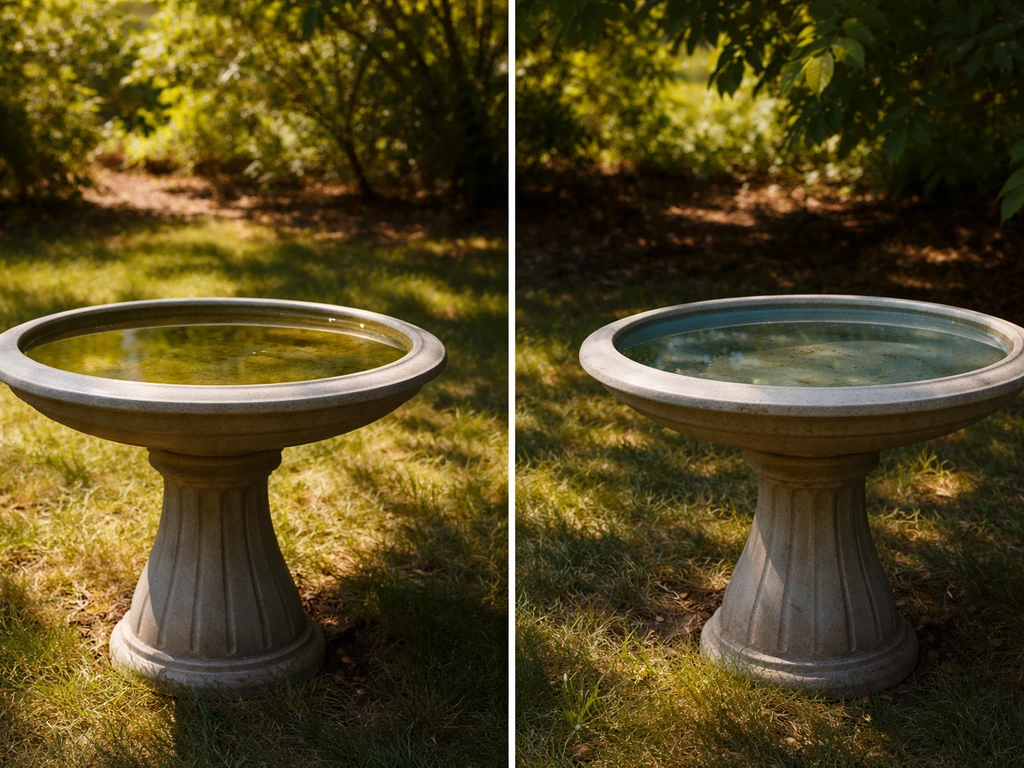
Placement: shade versus sun
This is probably the single biggest lever you have. A bird bath sitting in full afternoon sun will turn green in 24 hours during July. If you want to prevent mold as well, focus on keeping the water and surfaces from staying damp and stagnant for long how to prevent mold in bird bath.
Moving it to a spot with morning sun and afternoon shade dramatically slows algae growth because the water stays cooler and the intense midday light that algae loves is blocked. Just keep escape cover in mind: birds feel safer when there are nearby shrubs or low branches within a few feet. You can often find a placement that gives shade and safety at the same time.
Keep the water moving
Stagnant water is where algae wins. Even a small solar-powered dripper or wiggler that keeps the surface rippling makes a real difference because algae has a much harder time forming a biofilm on disturbed water. Moving water also attracts more bird species, so this is a win on multiple fronts. You don't need a full pump system. A small $15 to $30 solar bubbler does the job.
Change the water frequently
Even if the water looks clean, dump and refill every two to three days. Fresh water dilutes any nutrients that have accumulated and physically removes the early-stage algae cells before they get established. It sounds simple because it is. Consistent water changes combined with regular scrubbing is the baseline that everything else builds on.
Reduce the nutrient load
Algae doesn't grow in a vacuum. It feeds on organic material in the water. Bird droppings are the biggest contributor, but seed husks and plant debris from nearby feeders matter too. The Oklahoma Department of Wildlife Conservation specifically recommends keeping your bird bath away from bird feeders for this reason. Fallen leaves and pollen also break down quickly in standing water and feed algae. Keep the area around the bath tidy and skim out any floating debris whenever you walk by.
Bird-safe additives: what works and what to avoid
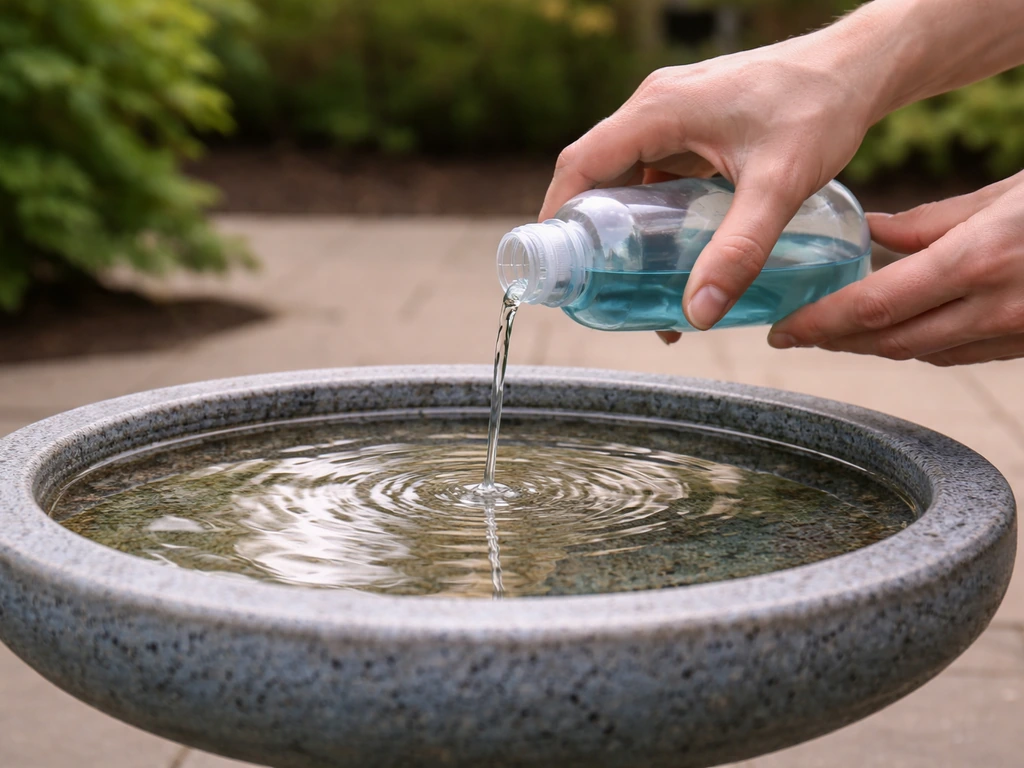
If you want an extra layer of protection between cleanings, there are a few products specifically formulated for bird baths. The most commonly recommended is Fountec, an algaecide and clarifier designed for decorative fountains and bird baths. To treat bird bath water effectively, follow the product instructions for the visible algae level and keep up with regular scrubbing. For initial treatment of visible algae or cloudy water, the dosage is 2 teaspoons (about 10 mL) per 100 gallons.
For weekly maintenance, that drops to half a teaspoon (3 mL) per 100 gallons. For a typical 1 to 3 gallon bird bath basin, you're talking about a tiny fraction of those amounts, so a single bottle lasts a very long time.
Physan 20 is another product used for algae control in bird baths and ornamental fountains. One important note from the manufacturer: always clean and remove visible algae growth before using it. These products work as a preventive treatment and to knock back light algae, not as a replacement for scrubbing. If there's already a thick green film on your basin, clean first, then treat.
What not to use
- Dish soap or household cleaners: these leave residues that are toxic to birds and disrupt their feather waterproofing.
- Undiluted bleach: always dilute to a 9:1 water-to-bleach ratio and rinse completely. Residual bleach in the water is harmful.
- Copper sulfate: sometimes recommended online for algae, but it's toxic to birds at even low concentrations and should be avoided entirely.
- Essential oils like tea tree oil: sometimes floated as a natural solution, but concentrated essential oils can be harmful to birds and aren't proven effective at the doses people typically use.
- Fish-pond algaecides not labeled for bird baths: these products are formulated for much larger volumes and different ecosystems. Don't repurpose them.
If you're treating bird bath water, stick to products specifically labeled for bird baths or ornamental fountains without fish. When in doubt, a bleach clean followed by thorough rinsing is safer and more effective than an unvetted additive. In the r/pools thread about cleaning with chlorine, commenters discuss bleach-to-water ratios like 1 part bleach to 9 parts water for chlorination and algae cleanup a bleach clean followed by thorough rinsing. There's a longer conversation to be had about water treatment options and what's actually safe, which connects closely to how you clean and how often you do it.
Setup and long-term habits that make maintenance easier
Getting ahead of algae is mostly about making smart setup choices once so you're not fighting an uphill battle every week. A few adjustments now pay off for the whole season.
- Choose a shallow basin: water that's 1 to 2 inches deep heats up faster in a large volume but also gets changed more frequently because it needs topping off. Deeper basins that sit for days are worse for algae control.
- Position at least partially in shade: afternoon shade is more valuable than morning shade because it blocks the hottest, brightest part of the day.
- Install a small dripper, wiggler, or solar fountain: moving water is your best passive algae deterrent and costs almost nothing to run.
- Keep feeders at least 10 feet away: this keeps seed hulls and the extra bird traffic that comes with feeders away from your water source.
- Use a light-colored basin: dark surfaces absorb more heat, which warms the water faster. Light-colored or glazed basins run a few degrees cooler.
- Scrub the basin every time you refill, even if it looks clean: this disrupts early algae colonization before it becomes visible.
- In late fall, do a thorough deep clean before storing or switching to a heated bath for winter: starting the next season with a truly clean basin makes a noticeable difference.
Your action plan: what to do today and every week
If you want a simple checklist to work from, here it is. Do the immediate tasks today, then build the weekly and ongoing habits into your routine.
Today
- Dump all existing water.
- Scrub the entire basin with a stiff plastic brush.
- Apply a 9: 1 water-to-bleach solution, scrub again or soak 10 to 15 minutes.
- Rinse until no bleach smell remains.
- Dry and refill with fresh water.
- Assess placement and move to partial shade if possible.
- Remove the bird bath at least 10 feet from any feeders.
Every 2 to 3 days
- Dump, quick-scrub, and refill with fresh water.
- Remove any debris (leaves, feathers, seed hulls) from the basin and the surrounding area.
Once a week
- Full bleach clean with 9: 1 solution.
- Thorough rinse and dry before refilling.
- Optionally apply a bird-bath-safe algaecide like Fountec at the maintenance dose if algae keeps returning despite regular cleaning.
Most people find that once they lock in the twice-weekly dump-and-scrub habit, the weekly bleach clean becomes almost unnecessary because there's never enough buildup to fight. Start with the basics, stay consistent, and adjust based on how your specific bath behaves in your climate and season. The Iowa DNR recommends giving bird baths fresh water and a good scrub at least once per week.
FAQ
How fast will a bird bath turn green again if I only refill it after it already looks algae-covered?
Usually within 24 to 48 hours. The algae film on the basin walls and any remaining early biofilm seed the water again quickly, so refilling without scrubbing often restarts the problem immediately.
Is it safe to use dish soap or stronger household cleaners instead of bleach to clean a bird bath?
Avoid routine detergent cleaners in the basin because residue can harm birds and can also leave a slick surface that traps debris. If you use any cleaner, rinse until there is zero smell or film, and prioritize mechanical scrubbing with the option of a bleach-based disinfect only when needed.
Do I need to clean the whole basin every time, or is skimming the water enough?
Skimming alone is rarely enough. Algae and biofilm typically build on the basin walls, especially the waterline and any shaded areas, so you need to scrub those surfaces even if the water looks only slightly cloudy.
What’s the best way to place the bird bath to slow algae without making it unsafe for birds?
Aim for morning sun with afternoon shade, or use partial shade during the hottest hours. Keep nearby cover within a few feet, like shrubs or low branches, so birds still feel protected while they drink.
How much water movement do I need to prevent algae, a full pump or a small device?
A small surface movement device often helps. A solar dripper, bubbler, or wiggler that keeps ripples on the surface can disrupt algae biofilm formation, and you typically do not need a high-power pump to see improvement.
Should I cover the bird bath at night to stop algae?
Covering can reduce debris, but it can also trap warmth and reduce airflow, which may help algae rather than hurt it. If you use a cover, choose one that prevents falling debris without sealing in heat, and still plan on regular scrubbing.
My bird bath turns green mainly at the waterline, what’s the best fix?
Focus scrubbing on the waterline and the inner surfaces, not just the bottom. Biofilm often forms where splashes, warm air, and sunlight combine, so targeted scrubbing there usually reduces recurrence faster than only dumping and refilling.
Can I run a heated bird bath or a solar fountain and still prevent algae?
Yes, but follow the manufacturer guidance before submerging or treating. Heated and solar systems tend to keep water warmer, so they can accelerate algae, making consistent cleaning and surface brushing even more important.
If I use an algaecide or clarifier, do I still need to scrub?
Yes. Product treatments are meant as a preventive or a knockback for light algae. If there is visible thick green growth or a slick film, clean first, then treat, and keep scrubbing because chemistry does not remove the existing biofilm completely.
How do I avoid damaging decorative stained finishes with bleach?
Test first. Mix your bleach solution as you intend to use it, then try it on an inconspicuous spot to confirm it does not lift color or alter the finish, before treating the full basin.
Why does algae seem worse when there are nearby feeders?
Fallen seed husks and extra droppings add nutrients to standing water, which fuels algae growth. Keeping the bird bath away from feeders and skimming floating debris helps reduce that nutrient boost.
Is it okay to let birds use the bath while I’m treating with algaecide or bleach?
Do not let birds drink treated water unless the product label specifically allows it for that purpose and timing. In general, the safer approach is to treat, follow the contact and rinse instructions carefully, and only refill for use after the water has been properly prepared.