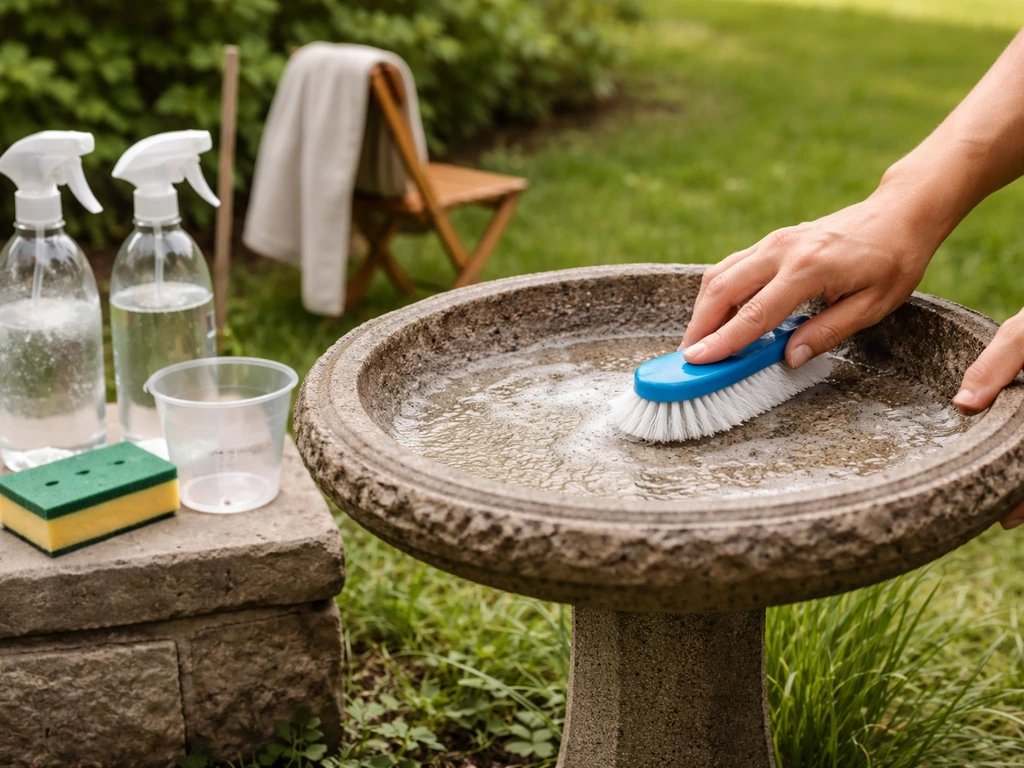
If your bird bath water looks cloudy, smells off, has a green or brown film, or is attracting mosquitoes, the fix is straightforward: dump the old water, scrub the basin with a diluted vinegar solution (nine parts water to one part white vinegar), rinse thoroughly, and refill with fresh water. That handles the immediate problem. What keeps it from coming back is a consistent cleaning schedule, the right setup, and a few targeted tools for stubborn issues like algae regrowth or mosquito breeding.
How to Treat Bird Bath Water: Clean, Dechlorinate, Prevent Algae

Marcus Henley
30 Jun 2026
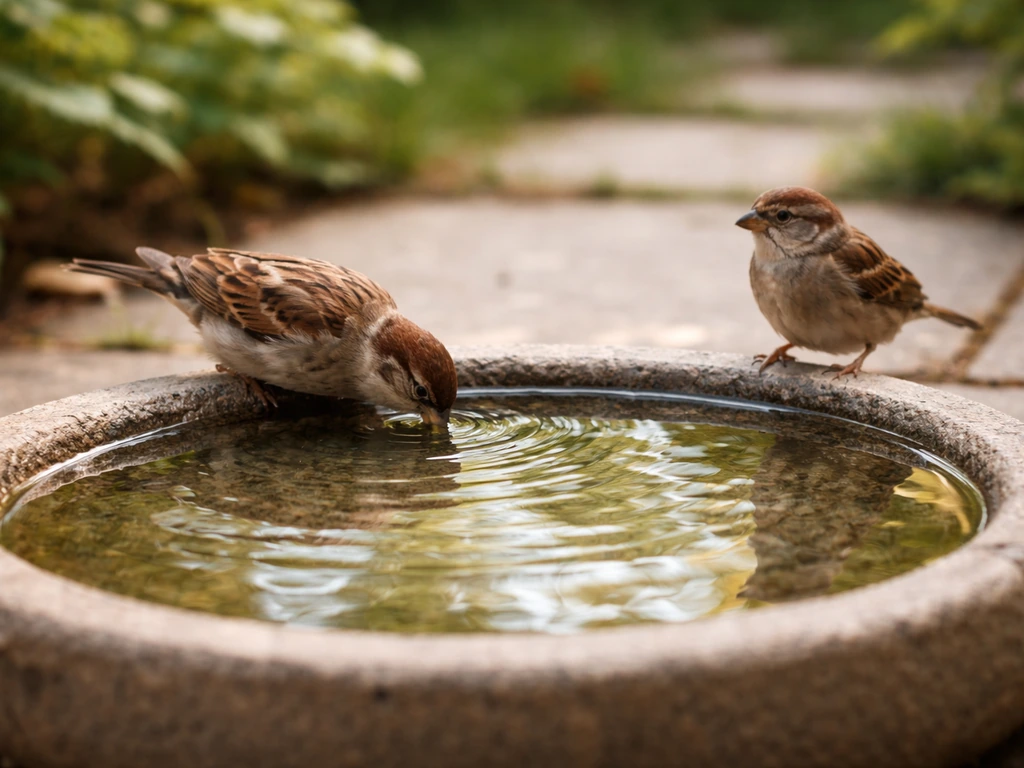
Why bird bath water goes bad in the first place
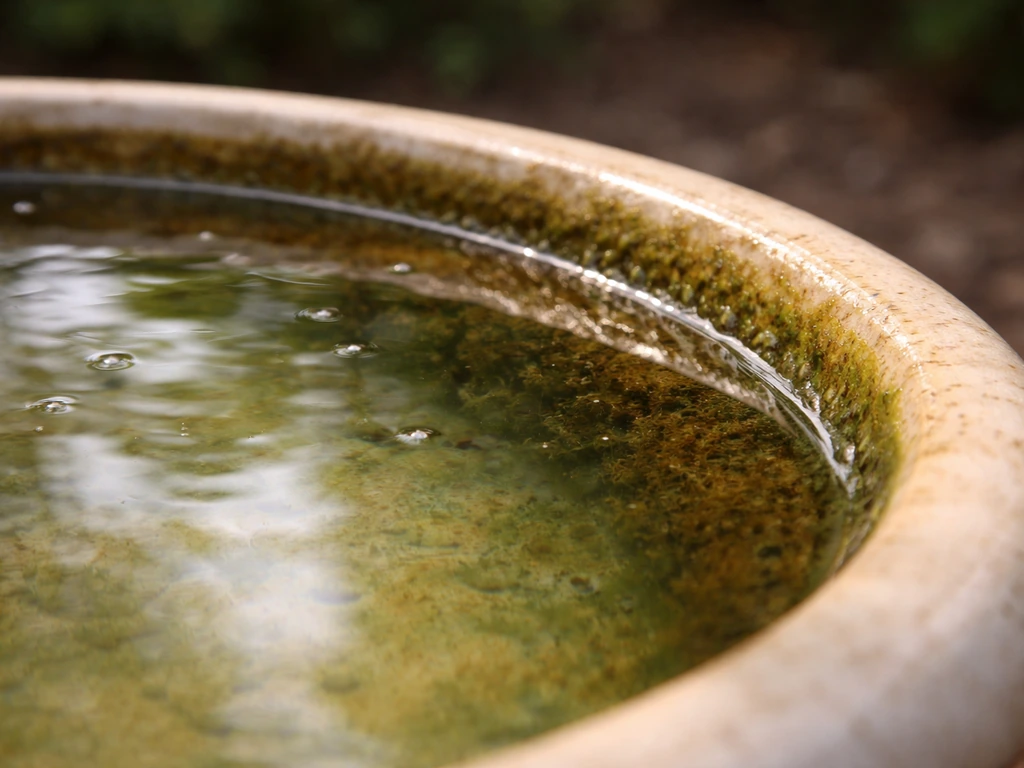
Understanding the cause makes the treatment obvious. Bird bath water doesn't just get dirty from birds splashing in it. Several things work against you at once.
- Algae: Sunlight plus standing water plus any nutrient runoff equals green or brown algae growth. Warm summer weather accelerates this dramatically, sometimes within 24 to 48 hours.
- Biological slime (biofilm): Bacteria naturally colonize still, warm water and form a slimy layer on the basin surface. This is what makes the basin feel slippery and often produces a foul odor.
- Debris: Leaves, feathers, bird droppings, and insects decompose in the water, feeding bacterial and algal growth.
- Minerals: Tap water in many regions contains dissolved calcium and magnesium. As water evaporates, these minerals leave a white or grayish crusty residue on the basin.
- Sun and heat: High temperatures accelerate evaporation, concentrate minerals and organic matter, and create ideal conditions for algae and bacteria.
- Standing water: Still water with no circulation is the perfect breeding site for mosquitoes. Larvae can develop in as little as seven to ten days in undisturbed water.
Most of these problems compound each other. Debris feeds algae, algae feeds bacteria, bacteria produces odor and slime, and the whole cycle runs faster in heat and sunlight. Once you see any of these signs, the water needs attention, not just a top-off.
Cleaning and disinfecting: daily, weekly, and deep clean
A tiered routine is the most realistic way to stay on top of this without it becoming a chore. Here's how I break it down.
Daily refresh (2 minutes)
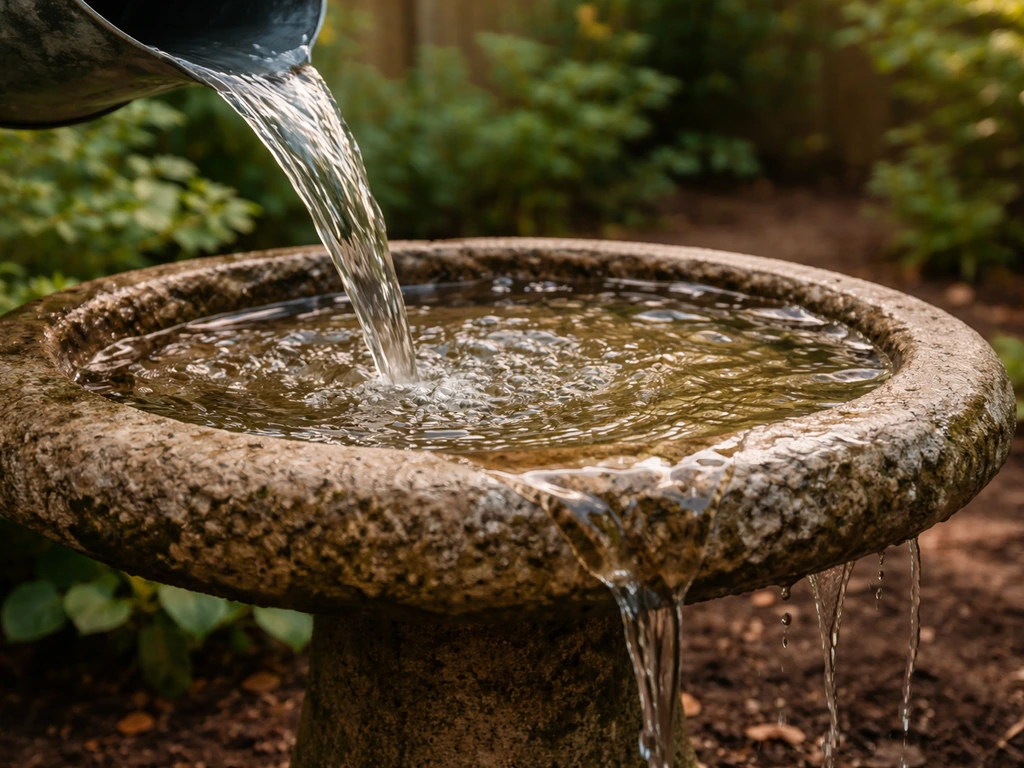
Every day or every other day during warm months, dump the water and refill with fresh. This alone prevents mosquito larvae from maturing (they need roughly a week of standing water), and it slows algae buildup significantly. You don't need soap or any cleaner for a daily refresh. Just empty, give it a quick rinse, and refill.
Weekly scrub (10 minutes)
Once a week, do a proper scrub. Mix nine parts water to one part white vinegar in a spray bottle or bucket. Empty the bath, apply the vinegar solution to the basin, and scrub with a stiff brush (keep a dedicated brush just for this). The mild acidity breaks down slime and early algae growth, loosens mineral deposits, and doesn't leave any residue that would harm birds. Rinse thoroughly with clean water until the vinegar smell is gone, then refill. Audubon specifically recommends this 9:1 vinegar-to-water ratio, and it's my go-to for routine maintenance.
Deep clean (monthly or when buildup is stubborn)
When you're dealing with heavy algae, persistent slime, or staining that the vinegar scrub doesn't fully remove, it's time for a diluted bleach disinfection. Use no more than one part bleach to nine parts water. Apply it to the empty basin, let it sit for a few minutes, scrub, and then rinse extremely thoroughly. I mean really rinse it.
Multiple rinses with plenty of water. Allow the bath to air dry completely before refilling if you can. Any bleach residue can harm birds, so rinsing is the critical step. Some people prefer to use an animal-safe disinfectant (available at pet stores) as an alternative, which is a reasonable choice especially if you're nervous about bleach.
The RSPB notes that a weak bleach solution can be used similarly to animal-safe disinfectants, but the thorough rinsing step is non-negotiable either way.
How to prevent algae and slime from coming back
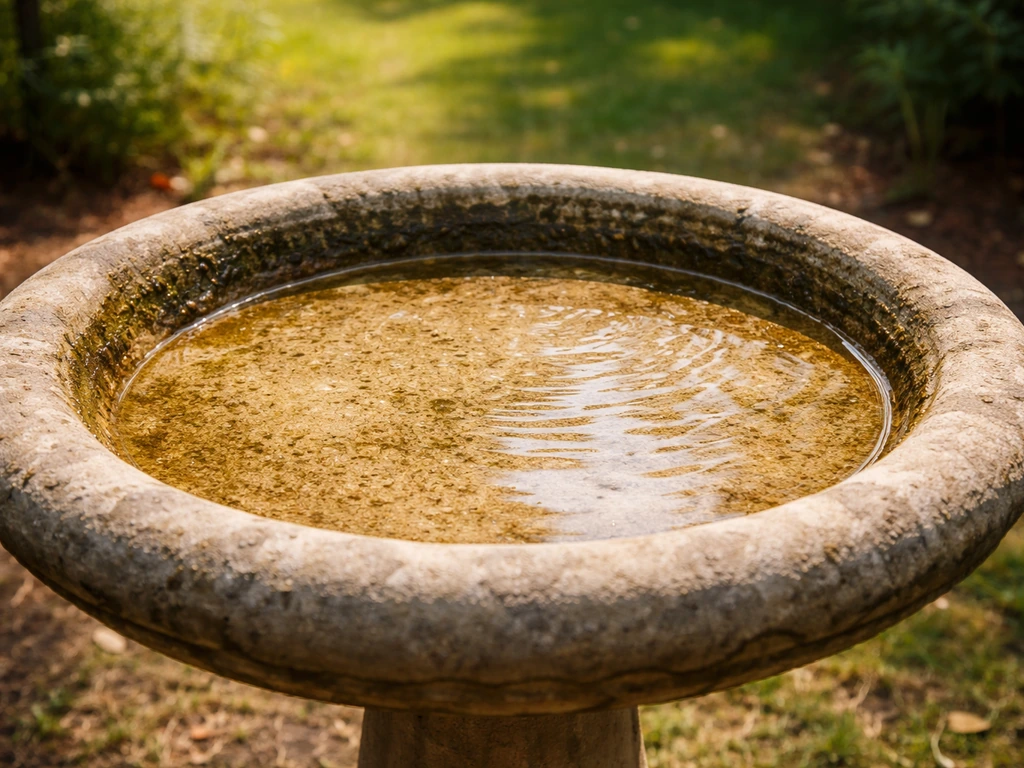
Cleaning removes existing algae, but prevention is what makes your life easier long-term. What keeps it from coming back is a consistent cleaning schedule, the right setup, and a few targeted tools for stubborn issues like algae regrowth or mosquito breeding how to keep a bird bath clean. The biggest lever you have is light and water movement.
- Move the bath out of direct sun if possible. Even partial afternoon shade can cut algae growth speed in half during summer.
- Add water movement. An inexpensive solar-powered fountain head, a dripper, or a small recirculating pump all work. Moving water disrupts algae colonization and mosquito breeding at the same time. All About Birds specifically recommends this as one of the most effective preventive steps.
- Keep the basin shallow. Deeper water stays warmer and supports more growth. Two to three inches is ideal for most birds and easier to clean.
- Remove debris promptly. If leaves or feathers land in the bath, fish them out. Decomposing organic matter is fuel for algae.
- Reduce surrounding vegetation touching the water. Overhanging branches drop debris directly into the basin.
If algae is a recurring battle despite all of this, check the basin material. Rough or porous surfaces (some concrete baths) give algae more to cling to. A smoother surface, like glazed ceramic, is easier to scrub clean and gives algae less purchase. This topic connects closely to the broader challenge of keeping a bird bath from turning green, which involves both habitat management and the right cleaning frequency. If you notice a green tint returning quickly, focus on habitat management like sun exposure and keep up the cleaning frequency that matches your conditions keeping a bird bath from turning green.
Managing mosquitoes, overheating, and freezing
Mosquitoes
The CDC confirms that mosquitoes need standing water with little to no flow to breed. The most effective mosquito prevention is simply changing the water every one to two days, which interrupts the larval development cycle. blank" rel="noopener noreferrer">Adding a fountain or dripper doubles as mosquito prevention because flowing water is inhospitable to larvae.
If you can't change the water that frequently, Bacillus thuringiensis israelensis (Bti) is the gold-standard biological larvicide for bird baths. It's a naturally occurring soil bacterium that kills mosquito larvae specifically, with very low toxicity to other species. The EPA registers Bti products, and Washington State DOH describes it as effective with a favorable safety profile for non-target organisms. Mosquito Dunks are the most widely available Bti product; you break off a small piece of the donut-shaped disk and drop it in the bath. One disk lasts about 30 days. This is a well-supported, bird-safe option when water movement alone isn't enough.
Overheating and summer evaporation
In hot climates during summer, bird bath water can heat up to uncomfortable levels and evaporate quickly, concentrating minerals and organic matter. Move the bath to a shadier spot, do smaller more frequent refills with cool water, and consider a light-colored or ceramic basin that reflects heat better than dark concrete or metal. If your bath is in full sun and you can't move it, a solar-powered fountain will at least keep the water circulating and slow evaporation slightly.
Freezing in winter
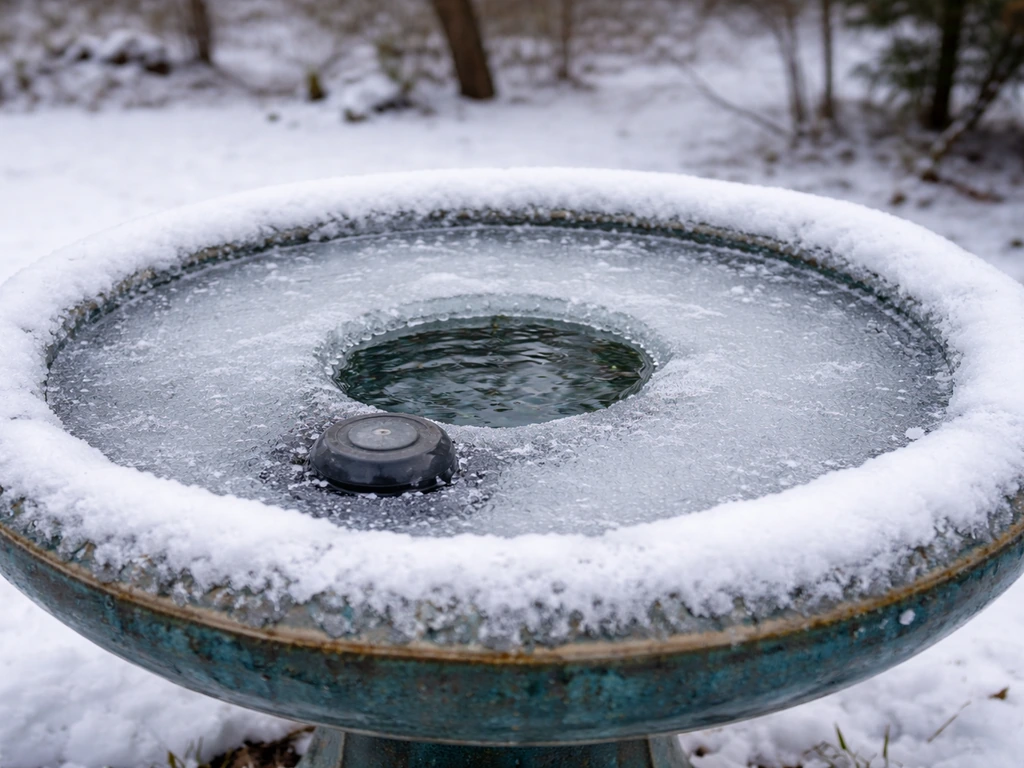
Frozen bird baths are a real issue in colder climates because birds still need liquid water in winter. A heated bird bath or an immersible bird bath de-icer (a thermostatically controlled heater you drop in the basin) keeps water accessible without any chemistry involved. Never add antifreeze, salt, or any chemical to a bird bath to prevent freezing. All About Birds explicitly warns against antifreeze, and any de-icing chemical is dangerous to birds. Heated accessories are the only safe solution here.
Water quality: tap water, chlorine, and what to watch for
Most people fill bird baths with plain tap water, and that's fine. However, municipal tap water is typically treated with chlorine or chloramine to make it safe for humans. Low concentrations aren't acutely harmful to birds, but if you want to be thorough, you have options.
Chlorine dissipates on its own if you let tap water sit in an open bucket for 24 hours before adding it to the bath. Chloramine, which many municipalities now use instead of chlorine, does not evaporate and requires a dechlorinator to neutralize. Aquarium dechlorinators (sodium thiosulfate-based products) work well and are widely available. Use a product labeled as neutralizing both chlorine and chloramine if you're unsure what your water utility uses. Check your local water quality report to find out, since most utilities publish this annually.
Beyond chlorine, watch for these signs of water quality problems specific to your setup:
- White crust or scale on the basin: mineral deposits from hard water. Remove with the vinegar scrub.
- Oily or iridescent sheen: often from bird preening oils or nearby plant matter. Change the water and scrub.
- Persistent bad odor after cleaning: usually indicates biofilm deep in porous basin material. Do a full bleach deep clean and consider sealing the basin if it's very porous concrete.
- Brown discoloration from rust: iron-containing water or a rusting metal bath. Address the bath material itself.
One firm rule: never use dish soap, hand soap, or any detergent in a bird bath. Surfactants leave residue that can strip oils from bird feathers, affecting their waterproofing and insulation. Stick to vinegar, dilute bleach (rinsed completely), or purpose-made animal-safe cleaners.
Safe water additives, and when to skip them entirely
The short list of additives that are genuinely safe and useful for bird bath water is short by design.
| Additive | Purpose | Safe for birds? | Recommendation |
|---|---|---|---|
| Bti (Mosquito Dunks) | Kill mosquito larvae | Yes, when used as directed | Use if standing water can't be changed every 1-2 days |
| Aquarium dechlorinator | Neutralize chlorine/chloramine | Yes | Use if concerned about tap water chemistry |
| White vinegar (cleaning only) | Remove algae, biofilm, minerals | Yes, when fully rinsed | Weekly scrub, not a standing additive |
| Copper-based algae treatments | Inhibit algae | Potentially toxic to birds | Avoid unless the product is explicitly labeled bird-safe |
| Bleach | Disinfect (deep clean only) | Safe only when completely rinsed | Monthly deep clean, not a water additive |
| Antifreeze / de-icing chemicals | Prevent freezing | No, toxic to birds | Never use |
| Essential oils (e.g., tea tree) | Claimed antimicrobial | Unknown, potentially harmful | Avoid |
| Commercial bird bath enzyme products | Inhibit algae and odor | Generally yes, verify label | Acceptable if labeled specifically for bird baths |
A word on copper: some sources suggest adding copper pennies or copper coils to bird baths to inhibit algae. Pre-1982 pennies contain copper, but modern pennies are zinc-coated, and zinc is toxic to birds. Even with genuine copper, the safety margin for birds isn't well established, and I'd rather not experiment with it when vinegar and water changes work fine. Skip the copper trick.
Some bird bath enzyme or probiotic products marketed specifically for bird baths are designed to outcompete algae and break down organic matter. These can be useful as a complement to regular cleaning, not a replacement. Always verify the product is explicitly labeled as bird-safe and follow the dosing directions.
Troubleshooting stubborn problems
Even with a good routine, some situations keep coming back. Here's how to diagnose and fix the most common ones.
Cloudy water within a day or two of refilling
Fast cloudiness is almost always heavy bird activity (droppings, feather oils, bathing debris) or your basin has a biofilm that wasn't fully cleared. Do a full deep clean with diluted bleach, rinse completely, and let the basin air dry. If you have a very porous concrete bath, consider sealing it with a bird-safe pond sealant to reduce the surface area biofilm can colonize.
Persistent green or brown scum despite regular cleaning
If algae keeps coming back within days of cleaning, the bath is getting too much sun. This is the single most common cause of relentless algae. Move it to a shadier spot, even a few feet can make a difference. If you can't move it, a fountain attachment will help. Also double-check that your weekly scrub is fully removing the algae rather than just disturbing it. Algae left in cracks or rough surfaces will seed the next growth cycle.
Bad smell even after cleaning
Persistent odor after cleaning points to a deep biofilm in a porous basin. The vinegar scrub alone won't fully penetrate it. Do the full bleach deep clean, scrub aggressively in any textured or rough areas, rinse multiple times, and allow to dry completely in sunlight before refilling. UV exposure during drying helps break down remaining organic material. If the smell keeps returning, the basin material itself may be too degraded or porous to maintain hygienically, and it may be time to replace it.
White scaly crust that won't scrub off
This is mineral scale from hard water. Vinegar is your best tool here: apply undiluted white vinegar directly to the scale, let it soak for 15 to 20 minutes, then scrub. For really stubborn deposits, repeat the soak. A plastic scraper can help without scratching most basin surfaces. If hard water is an ongoing issue in your area, filling partially with filtered or softened water can reduce the buildup rate.
Mosquito larvae appearing despite water changes
If you're seeing larvae (they look like tiny wriggling commas near the surface) and you're changing the water regularly, check the frequency. Every two days or more frequently is needed to reliably interrupt the cycle during peak mosquito season. If daily changes aren't practical, add a piece of Mosquito Dunk. Mosquito Dunks are designed to release Bti in standing water so you can help prevent mosquitoes from breeding in bird baths. Also check for other standing water nearby such as saucers under pots, clogged gutters, or low spots in the yard, because the mosquitoes may be breeding elsewhere and simply using the bath for water.
Making your bird bath easier to maintain long-term
The lowest-maintenance bird bath setups share a few common traits: good placement, water movement, and the right basin material. Getting these right upfront means less scrubbing and fewer water problems to manage.
- Place in partial shade, ideally with morning sun and afternoon shade. This balances bird activity with slowed algae growth.
- Choose a smooth basin surface. Glazed ceramic or smooth resin is far easier to clean than rough-textured concrete. If you have a concrete bath, sealing it makes a noticeable difference.
- Install a fountain head, solar dripper, or small recirculating pump. Moving water is the single most effective preventive tool for algae, mosquitoes, and general water quality. Birds are also more attracted to the sound of moving water.
- Keep the basin at 2 to 3 inches deep. Deeper baths hold more water but take longer to empty for cleaning and create more habitat for mosquitoes.
- Place the bath away from dense, overhanging vegetation that drops debris directly into the water. Near a garden or lawn edge is fine; directly under a heavily leafy tree is not ideal.
- Set a weekly reminder to scrub. Consistency matters more than any product. A ten-minute weekly scrub prevents the kind of buildup that requires a 45-minute deep clean.
If you're consistently dealing with algae turning the water green, persistent mold growth, or trying to figure out exactly how often to clean versus do a deep disinfection, those are topics worth exploring further because each one has its own nuances depending on your climate, bath material, and how many birds are using it. If you're wondering how often to clean bird bath water, the daily refresh, weekly scrub, and monthly deep clean schedule in this guide will help you set a routine. The core principle remains the same though: fresh water, clean surfaces, and some form of movement will solve most bird bath water problems before they start.
FAQ
Do I need to dechlorinate bird bath water every time I fill it from the tap?
Usually no. If you are doing frequent water changes (every day or every other day in warm months), low residual chlorine is unlikely to accumulate. If you want to be thorough, use a dechlorinator that neutralizes both chlorine and chloramine, especially if your city uses chloramine (it does not dissipate like chlorine does).
Can I use pool chemicals or water treatment tablets in a bird bath to keep it clear?
No. Products meant for pools are not formulated for birds and can leave toxic residues even after rinsing. Stick to vinegar cleaning, diluted bleach only for deep disinfection with extreme rinsing, or bird-safe biological options like Bti for mosquitoes when needed.
Is it safe to scrub with steel wool or abrasive pads?
Avoid steel wool and aggressive abrasives. They can scratch or roughen the surface, which makes it easier for algae and biofilm to cling and restart quickly. Use a stiff brush that you dedicate to the bird bath, and reserve scraping for mineral scale rather than general abrasion.
What if I see a slippery slime layer only at the waterline or in the corners?
That usually means biofilm living on the basin wall, not just algae floating in the water. Do a full empty, vinegar scrub first, then follow up with the diluted bleach deep clean if the slime returns, paying extra attention to corners, rough seams, and the waterline band.
How long should I wait after using diluted bleach before refilling the bird bath?
After the final rinse, let the basin air dry as long as you can. Before refilling, make sure the bleach odor is gone and the surface feels clean, not slick or soapy. If you need to refill quickly, repeat rinsing until you cannot smell bleach.
Can I top off the bird bath instead of dumping and refilling?
Topping off is only a short-term fix. For mosquitoes and recurring algae, partial water changes do not interrupt the standing-water cycle. During peak mosquito season, plan for full dump-and-refill every one to two days to break larval development.
Will a bird-safe pond sealant keep the bath from getting slimy?
It can help for porous concrete by reducing the surface area where biofilm can attach, but it does not replace regular cleaning. Apply only sealants labeled as safe for wildlife, and re-check periodically because damaged or peeling coatings can trap debris.
Do I need to remove the birds before disinfection?
Yes, it is best to avoid exposing birds to any wet basin treated with disinfectant. Empty the bath, clean it, rinse extremely well, and refill only when you are confident the basin has no disinfectant residue and, ideally, has air dried.
What’s the best way to deal with hard water mineral deposits without making the basin more algae-prone?
Use vinegar soaks directly on the scale, 15 to 20 minutes, then scrub gently. Do not aggressively scrape the surface, because scratches create new footholds. If scale forms quickly, consider partial filling with filtered or softened water to slow buildup.
Is it ever okay to add enzyme or probiotic products instead of cleaning?
Only as a supplement. If you still see green tint, slime, odor, or cloudiness, you still need the daily refresh and periodic scrub. Enzyme or probiotic products work best when you first remove the bulk algae and debris, then apply per label directions.
How do I tell mosquito larvae apart from harmless debris?
Larvae look like tiny, comma-shaped wrigglers near the surface, sometimes with visible movement when disturbed. Debris tends to float or settle without active wriggling. If you confirm larvae, adjust water change frequency to every two days or more often during peak season and consider Bti if you cannot change water that frequently.
If my bath is in full sun, will moving it always solve algae?
It helps most of the time, because light drives algae growth. Even a shift of a few feet can reduce recurrence, but you may still need to improve scrub thoroughness in cracks and rough patches. If you cannot change placement, a solar-powered fountain can provide movement that slows buildup.
Can I prevent freezing with salt, antifreeze, or de-icing chemicals?
No. Those substances can be toxic to birds even at small amounts. Use a heated bird bath or a thermostatically controlled immersible heater designed for outdoor use, and keep the rest of the basin treatment routine chemical-free for winter.
Next Article
Can You Clean a Bird Bath With Bleach Safely? Step-by-Step
Get safe bleach cleaning steps for a bird bath, exact amounts and rinse tips, plus non-bleach algae removal methods.