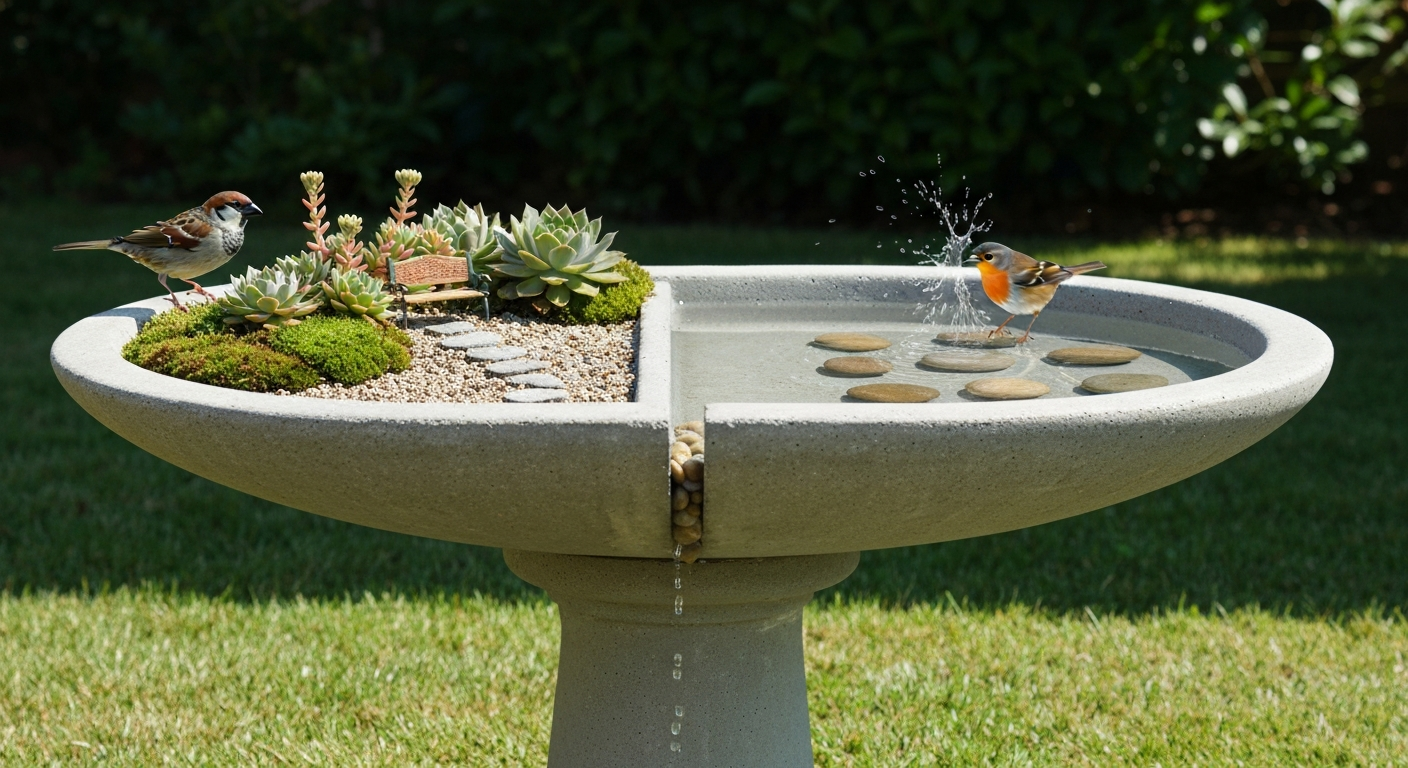
The simplest way to keep a bird bath clean is to combine one daily water refresh, a quick weekly scrub, and a monthly deep clean with a diluted bleach solution. That three-layer routine handles almost every issue: green water, slippery algae, odors, and mosquito breeding. The rest of this guide fills in the details, including exact steps for stone and solar fountain setups, safe additives, and fixes for the stubborn problems that routine alone won't solve.
How to Keep a Bird Bath Clean: Water Clarity Guide

Marcus Henley
11 Apr 2026
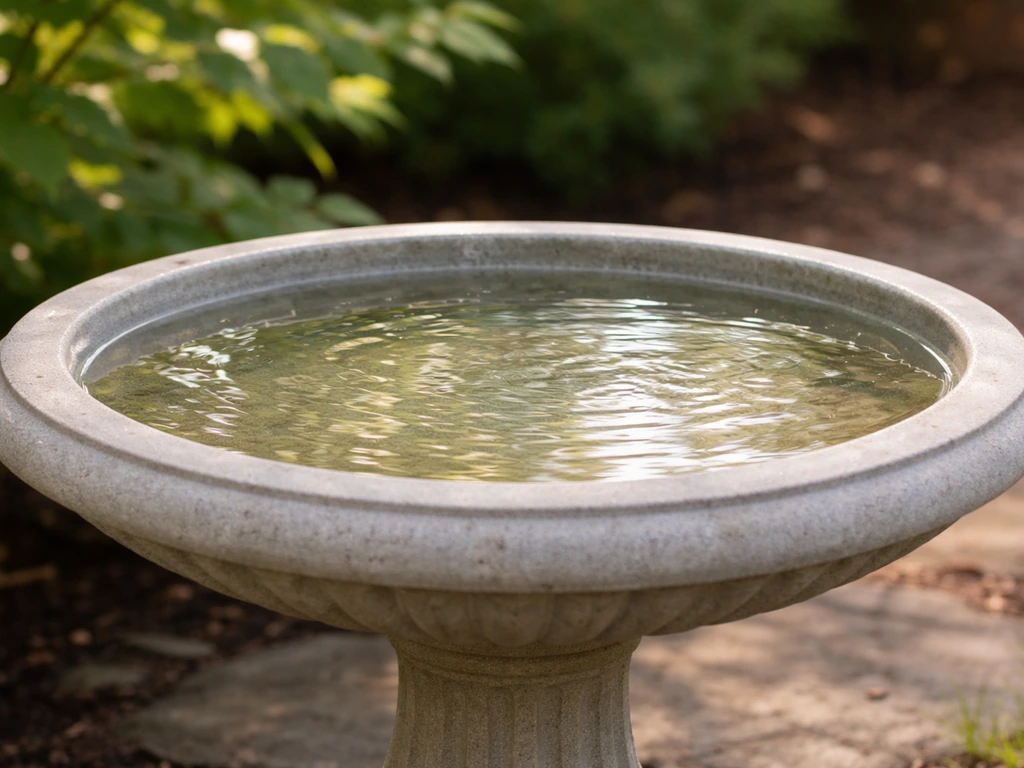
Clean-up basics and keeping birds safe
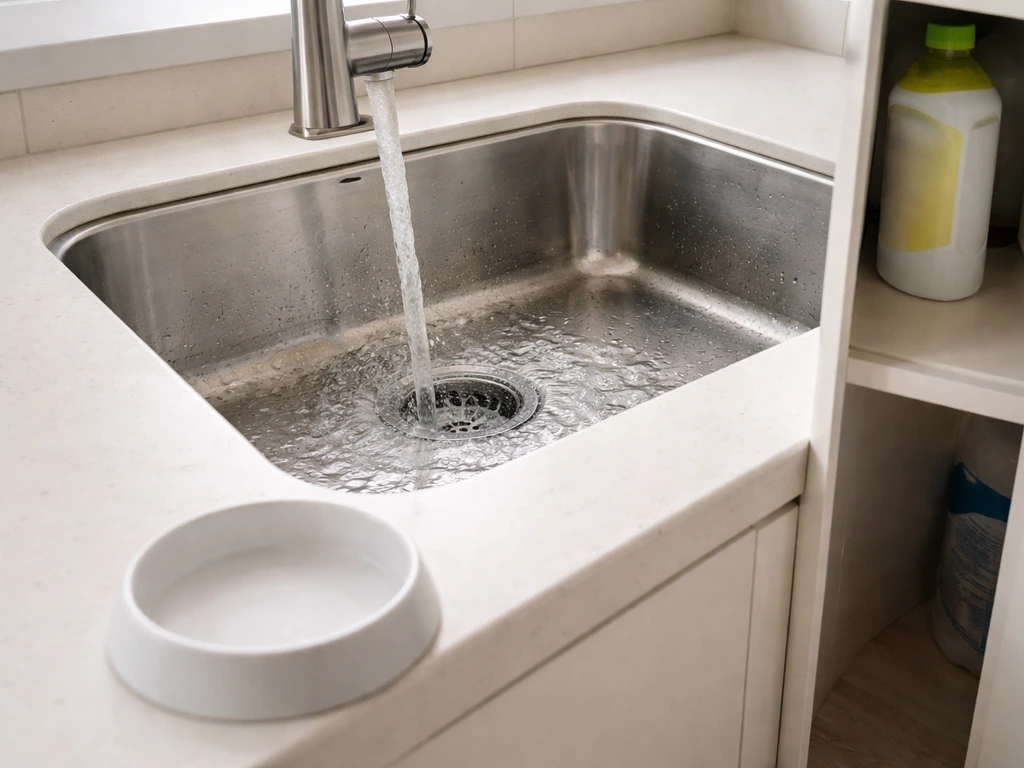
Before anything else, two rules apply every single time you clean: rinse thoroughly, and keep birds away from the basin while any cleaning agent is present. It sounds obvious, but I've seen people wipe a bath with bleach water, dump it, refill it, and let the birds back in within two minutes. That's not enough. Any residue left on the basin surface can irritate birds' eyes, skin, and digestive systems. Rinse, rinse again, and let the bath air dry for at least 15 minutes before refilling.
When it comes to cleaning agents, less is genuinely more. A weak bleach solution (1 part bleach to 9 parts water) is effective for disinfection, but that ratio matters. Don't go stronger thinking it'll do a better job faster. The goal is killing bacteria and algae spores without leaving a toxic residue. After scrubbing with the solution, rinse with fresh water at least twice, then allow the basin to dry completely before you refill it and let birds back in.
Wear rubber gloves during any bleach cleaning step. It protects your hands and stops you from absentmindedly touching your face. A stiff-bristled scrub brush dedicated to bird bath cleaning is worth buying. I keep mine hanging on the fence post next to the bath so there's zero excuse not to use it.
Your daily and weekly maintenance routine
Consistency beats intensity every time. A quick daily habit prevents the buildup that turns into a 30-minute scrubbing session later. Here's the routine I actually use and recommend.
Every day
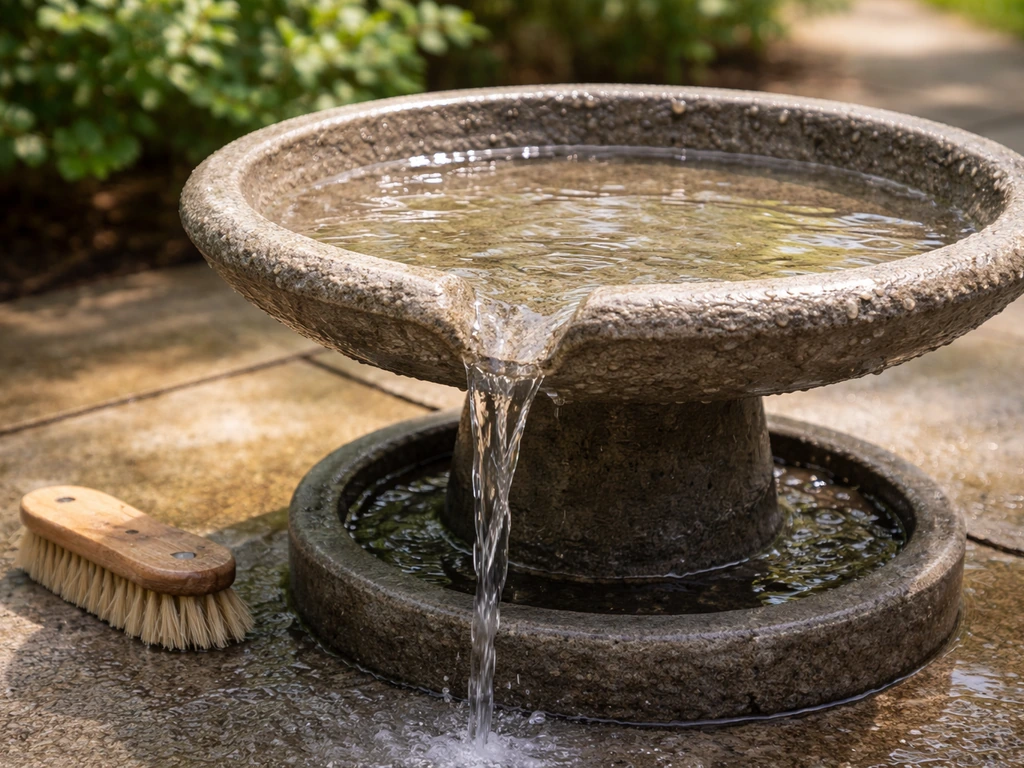
- Dump out any remaining water (even if it looks clear — standing water older than 24 to 48 hours starts breeding bacteria and mosquito larvae).
- Give the basin a quick rinse with fresh water from the hose.
- Refill with clean water to a depth of 1 to 2 inches. Most backyard birds prefer shallow water, and a shallower fill also means less water to go stagnant.
- Remove any leaves, feathers, or droppings you can see. A quick wipe with a wet cloth is enough on most days.
Every week
- Empty the basin completely.
- Scrub all surfaces with a stiff brush and plain water. No cleaner needed if you've been keeping up daily.
- Pay attention to the rim, any textured surfaces, and the center of the basin where droppings concentrate.
- Rinse well, let it air for a few minutes, and refill.
If you're not sure how often your specific setup needs attention beyond this, I'd point you toward more detailed guidance on how often to clean a bird bath, since the answer changes based on sun exposure, local bird traffic, and season.
Step-by-step deep cleaning (including stone bird baths)
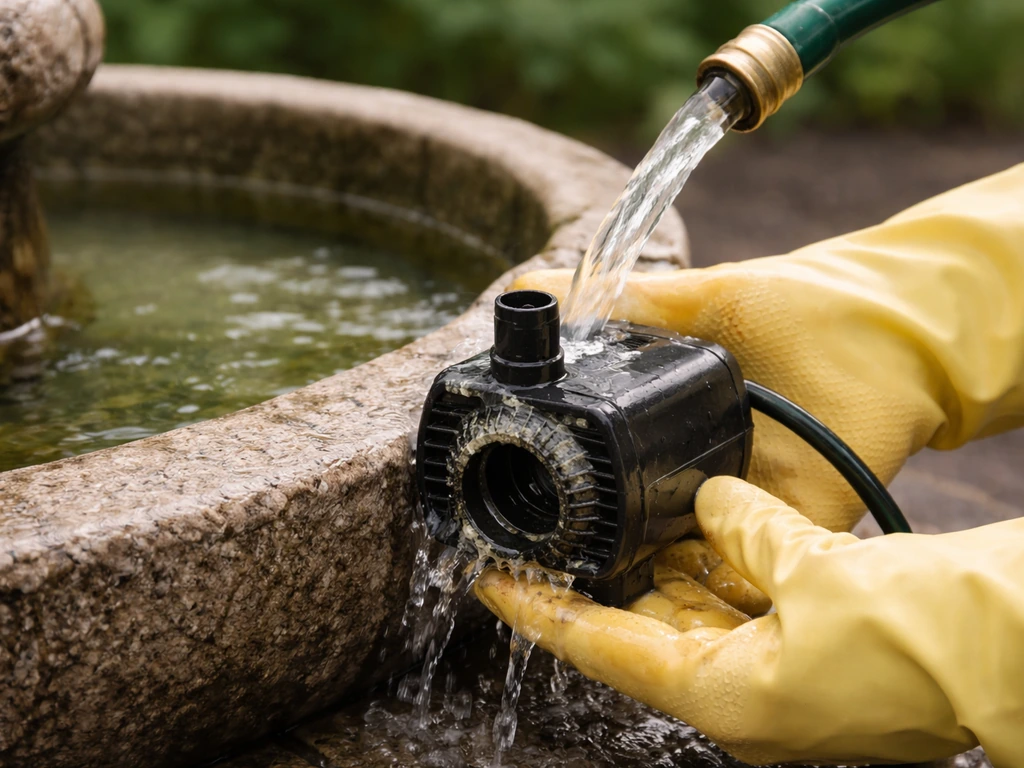
A monthly deep clean disinfects surfaces that weekly scrubbing only partially addresses. This is the step where algae spores, bacteria colonies, and mineral deposits get properly dealt with.
- Empty the basin and remove any debris by hand.
- Mix your cleaning solution: 1 part household bleach to 9 parts water in a bucket.
- Pour or brush the solution over all interior surfaces, including the rim and any crevices.
- Let it soak for 10 minutes. Keep birds away from the area during this time.
- Scrub all surfaces firmly with your dedicated stiff brush. For textured stone, use a smaller brush or an old toothbrush to get into the grain.
- Dump the bleach solution out and rinse the basin thoroughly with fresh water. Do this at least twice.
- Allow the bath to air dry completely, ideally for 15 to 30 minutes, before refilling.
- Refill with fresh water and let birds return.
Extra notes for stone bird baths
Concrete and natural stone are porous, which means algae and bacteria work their way into the surface rather than just sitting on top. The bleach soak is especially important here, and you want to give the solution a full 10 minutes to penetrate. A wire brush works well on rough concrete, but test it first on a small area to make sure it doesn't scratch a decorative finish. After deep cleaning, you can seal untreated concrete with a bird-safe concrete sealer, which fills the pores and makes future cleaning much easier. Ceramic and glazed baths don't have this problem since the glaze creates a non-porous surface, but they can chip, and those chips become rough spots where gunk accumulates.
Keeping water clear naturally: algae control and flow
Cleaning handles the problem after it appears. These approaches reduce how quickly it comes back. Keeping bird baths from turning green is largely about cutting off what algae needs to thrive: sunlight, warmth, and still water.
- Shade placement: Moving your bird bath out of direct afternoon sun is the single most effective natural algae control. Morning sun is fine. Afternoon sun bakes the water, accelerates algae growth, and makes water evaporate faster. Even partial shade from a nearby shrub makes a noticeable difference.
- Moving water: Algae grows fastest in still, warm water. A small solar-powered pump or dripper that keeps water circulating significantly slows algae development. It also makes the bath more attractive to birds, who are drawn to the sound and movement of running water.
- Copper: Placing a few copper pennies (pre-1982, which are solid copper) or a small piece of copper pipe in the basin creates a mild natural algaecide effect. Copper ions inhibit algae growth without harming birds at those concentrations. It's not a complete solution, but it's a useful supplement.
- Barley straw: Small amounts of barley straw or barley straw extract can suppress algae in larger water features. It's less practical for a standard small bird bath but worth knowing if you have a larger decorative basin.
- Water depth and capacity: Smaller volumes of water heat up and stagnate faster. If your current basin is very shallow and small, upgrading to a slightly larger model helps maintain water quality longer between changes.
What to put in a bird bath to keep it clean
This is one of the most-asked questions I get, and the short answer is: a few safe options exist, but nothing replaces regular water changes. Treating bird bath water with additives can help extend the time between cleanings, but additives are a supplement to your routine, not a substitute.
Safe options
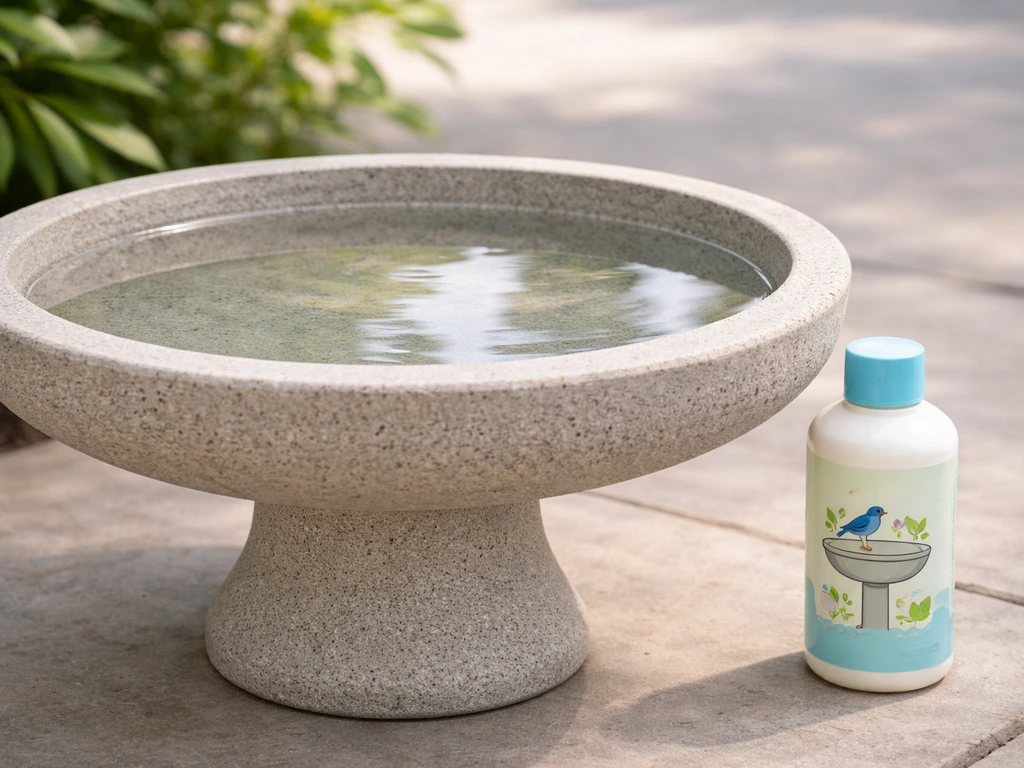
- Bird bath enzyme cleaners: Products like Bi-O-Kleen or similar enzyme-based bird bath treatments break down organic matter without chemicals toxic to birds. Follow the product's dosage instructions carefully.
- Apple cider vinegar (ACV): A small splash (roughly 1 tablespoon per gallon) of plain, undiluted ACV can help reduce algae and bacteria. It's acidic enough to inhibit growth but diluted enough to be safe. Some birds don't like the smell, so introduce it gradually.
- Copper pennies or copper coils: As mentioned above, a mild natural inhibitor for algae.
- Commercial bird bath protectors: Look for enzyme-based, non-toxic formulas specifically marketed for bird baths. Avoid anything not explicitly labeled bird-safe.
What to avoid
- Bleach in the water: Bleach is for cleaning the empty basin, not for adding to the water birds drink and bathe in. Never add bleach to water that birds will use.
- Dish soap or detergent: Even a small amount of soap residue strips the natural oils from a bird's feathers, which destroys their waterproofing and insulation.
- Algaecides or pool chemicals: These are designed for much larger volumes of water and are not safe for bird baths.
- Vinegar in high concentrations: Straight vinegar is too acidic. Dilute it if you use it at all.
- Essential oils: Despite what you may see recommended online, oils like tea tree or eucalyptus can be toxic to birds.
How to clean a solar bird bath fountain
Solar fountain bird baths add moving water, which is great for bird attraction and algae reduction, but they introduce components that need their own cleaning protocol. Neglecting the pump and solar panel means reduced flow, blocked nozzles, and eventually a dead pump.
Weekly solar fountain maintenance
- Remove the pump from the basin and rinse it under running water to clear any debris from the intake.
- Check the nozzle for blockages. A toothpick or thin brush clears most clogs.
- Wipe the solar panel with a damp cloth. Dust, bird droppings, or leaf debris on the panel reduces charging efficiency. A clean panel can make a noticeable difference in pump performance.
- Refill the basin with fresh water and reinstall the pump.
Monthly deep clean for solar fountain components
- Remove the pump and detach any tubes or nozzle heads according to the manufacturer's instructions.
- Soak the pump body and tubing in a solution of equal parts white vinegar and water for 30 minutes. This dissolves mineral deposits and calcium buildup without damaging seals or plastic components.
- Use a small bottle brush or pipe cleaner to scrub inside the tubes.
- Rinse all pump components thoroughly with fresh water.
- Clean the basin itself using the standard deep clean method (diluted bleach, scrub, double rinse, air dry).
- Wipe the solar panel with a microfiber cloth. If there's stubborn grime, use a little plain water. Avoid abrasive cloths or chemicals that can scratch the panel surface.
- Reassemble and test the pump in a bucket of water before reinstalling, so you confirm it's working before refilling the basin.
- Reinstall and refill.
One practical tip: most solar fountain pumps have a small filter sponge inside the pump housing. Check it monthly. When it's clogged, the pump works harder and burns out faster. Replacing a two-dollar filter sponge is much cheaper than replacing the whole pump.
Troubleshooting: algae blooms, mosquitoes, odors, and freezing
Algae blooms that keep coming back
If your bath is going green within two or three days of cleaning, the usual culprit is direct sun combined with standing water. Start by moving the bath to a shadier location or adding a fountain pump for circulation. If you can't move it, increase your water change frequency to every 24 to 48 hours during warm months. Controlling that green buildup is really about cutting off the conditions algae loves rather than just reacting after it appears.
Mold
Mold in a bird bath is less common than algae but tends to appear in shaded, damp setups where the basin doesn't dry out between uses. The solution is the same diluted bleach deep clean, but you also need to address the underlying moisture issue. Preventing mold in a bird bath comes down to not letting the basin sit wet and empty for extended periods, and making sure the basin dries fully after cleaning before you refill it.
Mosquitoes
Mosquitoes need 7 to 10 days of still water to complete their breeding cycle. If you're changing the water every 24 to 48 hours, you break that cycle entirely. A fountain pump that keeps water moving also makes your bird bath unattractive for egg-laying. Mosquito dunks (Bti-based biological larvicide) are sometimes recommended, but I'd rather just change the water frequently and add moving water, since that solves the problem without introducing anything into the water at all.
CDC describes bacterial larvicides such as Bti (Bacillus thuringiensis subspecies israelensis) that are used to kill mosquito larvae in standing water before they become biting adults.
The U. S. EPA explains that Bti (Bacillus thuringiensis subspecies israelensis) is applied to standing water to kill developing mosquito larvae and is considered safe when used according to label directions [Mosquito dunks (Bti-based biological larvicide)](https://www. epa.
gov/mosquitocontrol/bti-mosquito-control).
Odors
A smelly bird bath is almost always a sign of decomposing organic matter, usually droppings, decaying leaves, or algae. The fix is a full deep clean, not just a water change. After cleaning, the apple cider vinegar dilution I mentioned earlier can help maintain a neutral smell between cleanings. If odors persist after a proper bleach clean and thorough rinse, check the basin for fine cracks where organic material is lodged out of reach of your scrub brush.
Freezing in winter
Frozen water isn't a cleanliness problem, but it prevents birds from using the bath and can crack ceramic or concrete basins if water expands inside. Your options are: bring the bath inside when temperatures drop below freezing, add a small heated bird bath de-icer (these are low-wattage and inexpensive), or simply empty the basin before hard freezes and refill on warmer days. Never pour boiling water into a cold stone or ceramic bath. The thermal shock can crack it immediately. Warm water is fine, but go slow.
Quick comparison: cleaning approaches by bird bath type
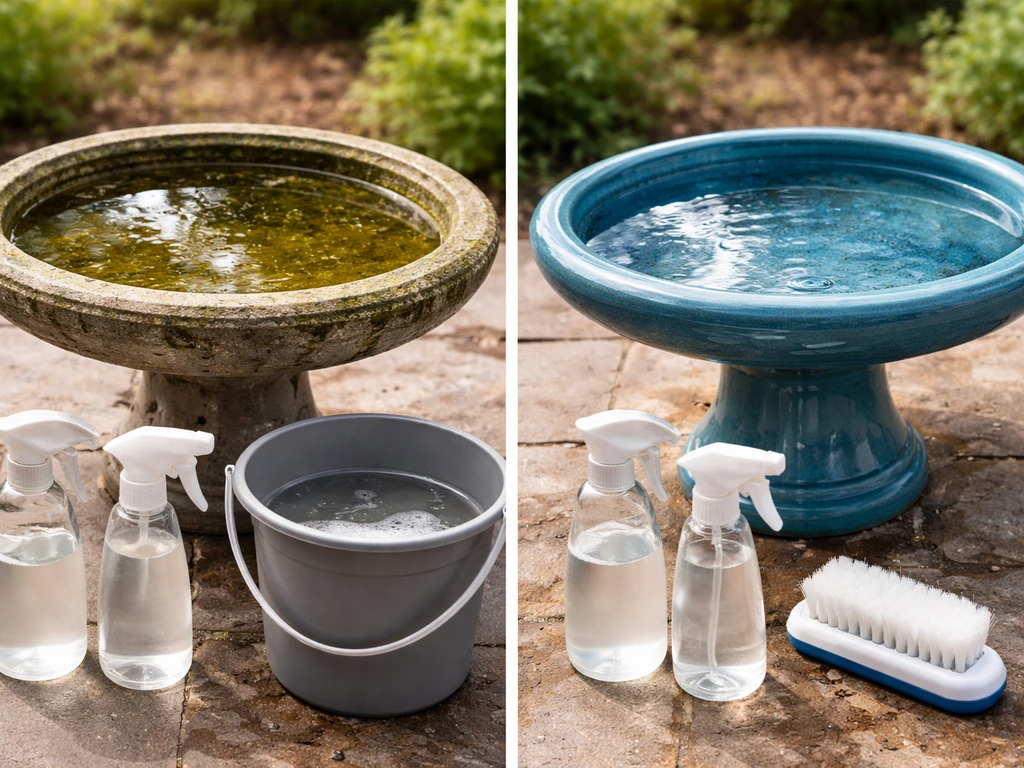
| Bird Bath Type | Key Cleaning Challenge | Best Deep Clean Approach | Special Considerations |
|---|---|---|---|
| Concrete / Stone | Porous surface traps algae and bacteria | Diluted bleach soak (10 min), stiff brush, double rinse, air dry | Consider a bird-safe concrete sealer to reduce porosity |
| Ceramic / Glazed | Chips create rough spots; glaze is otherwise easy to clean | Diluted bleach solution, soft brush, thorough rinse | Inspect for chips regularly; avoid abrasive scrubbers on glaze |
| Metal (copper, stainless) | Mineral deposits, potential rust on non-stainless | Vinegar soak for mineral buildup, then bleach solution for disinfection | Copper naturally inhibits algae; check for rust on cheaper alloys |
| Solar Fountain | Pump clogging, nozzle blockage, mineral buildup in tubes | Vinegar soak for pump/tubes monthly, standard bleach clean for basin, wipe solar panel | Test pump in bucket after reassembly before reinstalling |
| Heated Bird Bath | Mineral scale from constant heating; electrical component care | Vinegar soak for scale, bleach clean for basin, keep heater element free of buildup | Unplug before any water removal or cleaning; check manufacturer guidance |
Putting it all together: your year-round cleaning schedule
Here's the maintenance schedule that works for most backyard birders. Adjust the frequency upward in hot summer months when algae grows faster, and downward in cool weather when biological activity slows.
| Frequency | Task |
|---|---|
| Daily | Dump old water, rinse basin, refill with fresh water, remove visible debris |
| Weekly | Full scrub with stiff brush and plain water, thorough rinse, refill |
| Monthly | Deep clean with 1:9 bleach solution, scrub, double rinse, air dry, refill; clean solar pump components with vinegar soak |
| Seasonally | Inspect for cracks, chips, or damage; reseal concrete if needed; winterize or add de-icer before first hard freeze |
The bleach question comes up constantly, and it's worth being direct: yes, you can use it safely, but the ratio and the rinse are everything. If you want a deeper look at exactly how and when bleach is appropriate, the guide on cleaning a bird bath with bleach covers the specifics. The short version is: dilute it to 1:9, scrub with it, rinse twice with fresh water, and let the bath air dry before any bird gets near it. Do that correctly once a month and you'll rarely deal with serious algae, bacteria, or odor problems.
Keeping a bird bath clean isn't complicated, but it does require consistency. The daily two-minute water change is the biggest single thing you can do. Add a fountain pump for moving water, keep the bath in partial shade, and do that monthly bleach clean, and you'll have clear, fresh water that birds actually want to use year-round.
FAQ
Can birds be allowed back in right after I refill the bath after cleaning?
No. If you add anything chemical (bleach, vinegar dilution, or additives), birds should not drink or bathe in the bath until you have finished scrubbing, rinsed thoroughly, and let the surface air-dry for at least about 15 minutes. Residue can irritate eyes and skin even if the water looks clear afterward.
My bird bath turns green in 2 to 3 days, what should I do first?
If the water stays green within a day or two, first check sun exposure and water depth. Green water forms faster with direct sun plus still, warm water. The fastest fixes are moving the bath into partial shade and switching on circulation (a fountain pump) or increasing water changes to every 24 hours during warm months.
Is it better to use stronger bleach to clean a bird bath faster?
Use only diluted bleach at the stated ratio (1 part bleach to 9 parts water), then rinse at least twice with fresh water and air-dry before birds return. Stronger mixtures increase the chance of residue left in pores or tiny surface chips, which can harm birds even when you think you rinsed enough.
Do I really need a monthly deep clean if I refresh the water daily?
Water-only rinsing works for minor surface scum, but it will not reliably remove algae spores, bacteria buildup, or mineral deposits. If you see persistent film, odors, or return algae quickly after cleaning, you still need a monthly deep clean with a disinfecting soak plus proper rinsing.
Can I use a wire brush on concrete bird baths?
Yes, but avoid using scrubbers that create new rough spots. Roughening can trap organic material and speed up odor and algae return. For rough concrete, test a wire brush on a small hidden area first, then stay gentle on decorative finishes.
What causes a bad smell even after I did a deep clean and rinsed twice?
If odors persist after a proper diluted-bleach deep clean and twice-rinsing, look for cracks, crevices, or chips that your brush does not reach. Also remove and clean any nearby debris that can fall into the basin (leaves, droppings, or pollen) since decomposing material can keep the smell coming back.
What is the best way to prevent mosquitoes in a bird bath?
Between cleanings, the approach that actually prevents mosquitoes is breaking their breeding cycle by removing standing water frequently (every 24 to 48 hours) or using moving water with a fountain pump. Mosquito dunks (Bti) can help, but they are not a substitute for changing water if you want the simplest, lowest-effort control.
Can I use hot water to thaw a frozen bird bath safely?
Yes. But move slowly and keep the temperature change gradual, since thermal shock can crack stone or ceramic if water is too cold or you use very hot water suddenly. For winter, empty before hard freezes or use a low-watt heated de-icer designed for bird baths rather than pouring boiling water.
How do I prevent mold during rainy or shaded weather?
Emptying is fine for extended freezing periods, but the key is to fully dry and avoid leaving stagnant water in the basin for long stretches when temperatures rise. Mold risk increases in shaded damp setups, so after cleaning, let the bath dry completely before refilling and reinviting birds.
How often should I check the pump on a solar fountain bird bath?
If you have a solar fountain, treat the pump and flow path as part of the cleaning system. Check the small internal filter sponge monthly, because clogged flow reduces circulation, leading to stagnant water and faster algae regrowth.
Next Article
How to Make a Fairy Garden in a Bird Bath: Safe Build & Care
Create a bird-safe fairy garden in a bird bath: step-by-step build, plant choices, safety, care, troubleshooting