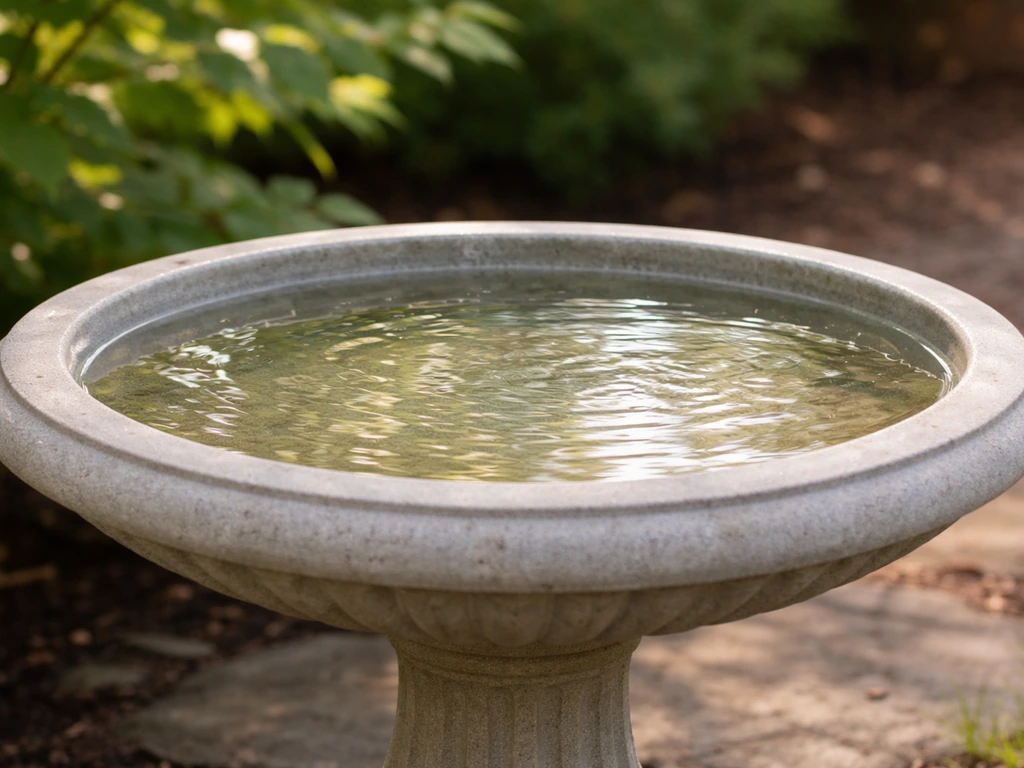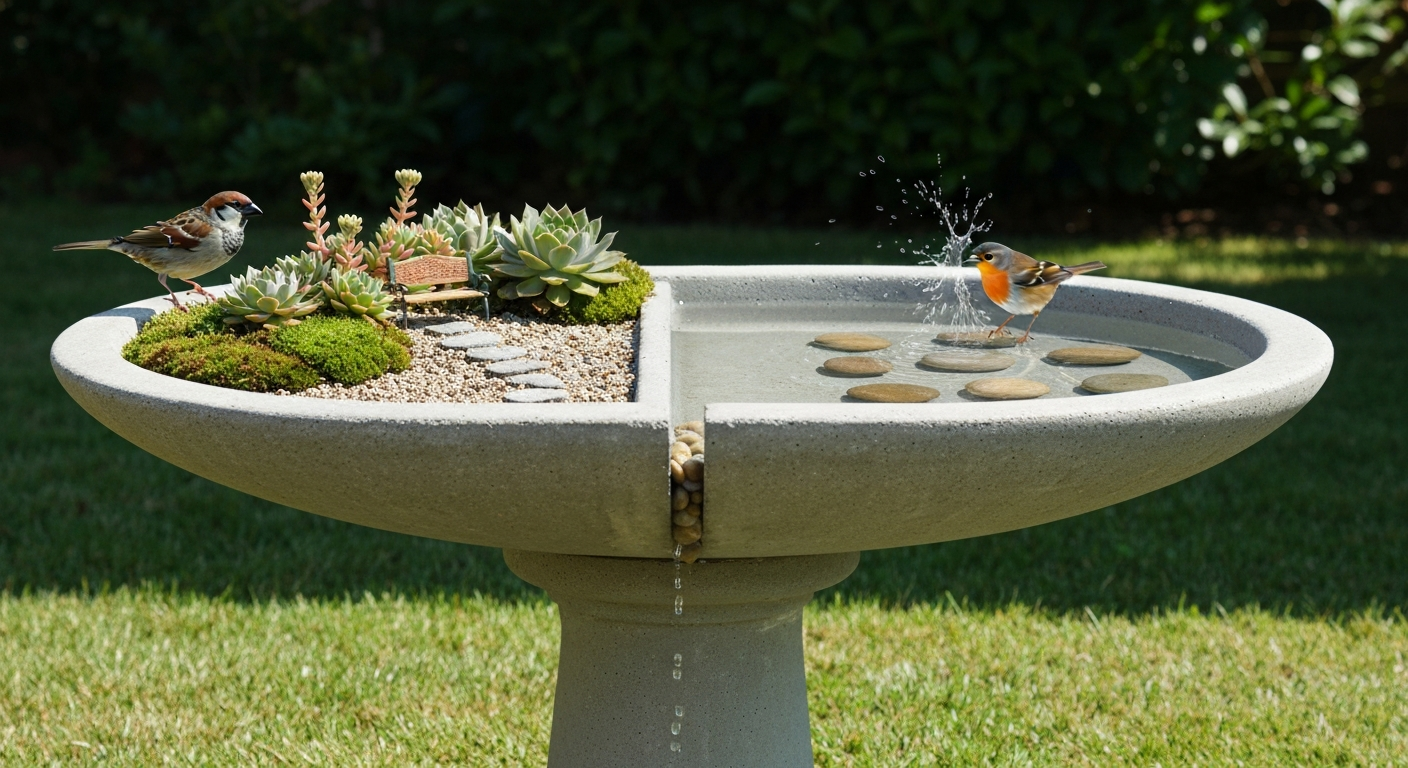
Change the water every one to two days, and give the bath a proper scrub every few days to once a week. Those are the numbers that most birding organizations and wildlife experts agree on, and they hold up in practice. The two tasks are different: swapping out water takes about 30 seconds, while actual cleaning (scrubbing the basin, rinsing, refilling) takes a few minutes but protects the birds from bacteria, algae, and mosquito larvae.
How Often to Clean a Bird Bath and Change Water

Marcus Henley
30 Apr 2026
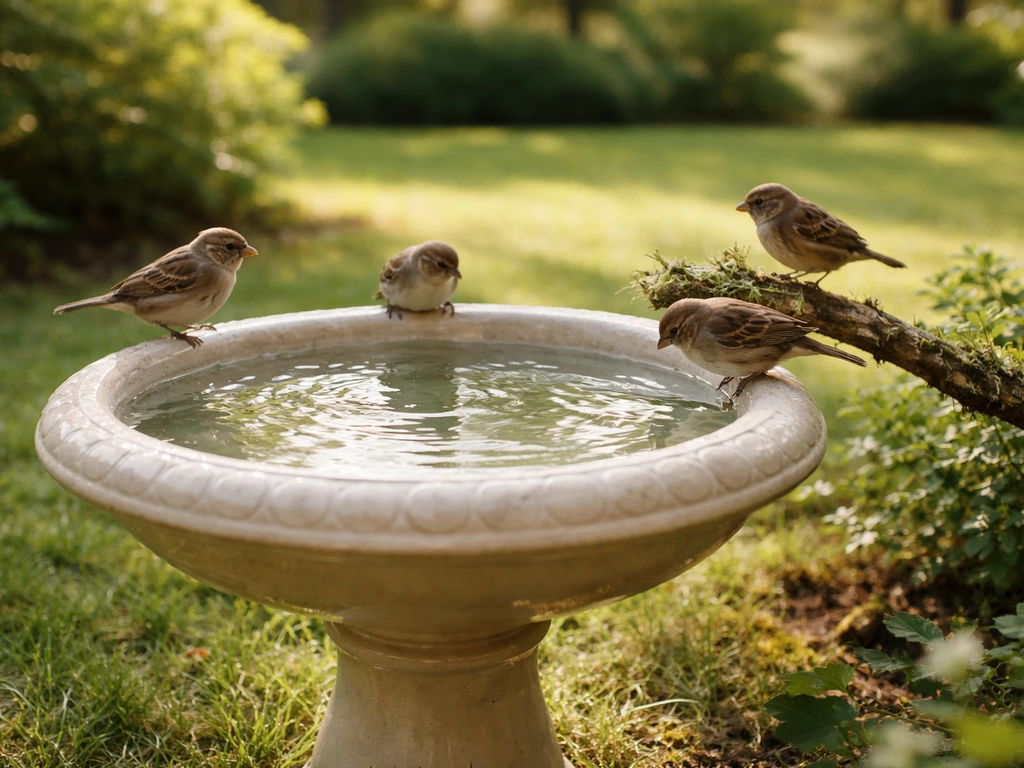
Cleaning vs. changing water: they're not the same thing
This distinction matters because a lot of people think topping off the water counts as maintenance. It doesn't. Topping off just adds fresh water to a basin that already has grime, algae spores, or bird droppings in it. You need to do both jobs on their own schedules.
| Task | What it involves | Recommended frequency |
|---|---|---|
| Water change | Dump old water, refill with fresh water | Daily to every other day |
| Full cleaning | Empty, scrub basin, rinse thoroughly, refill | Every 2 to 7 days depending on conditions |
Think of the water change as the daily habit and the scrub as the weekly chore. When conditions get rough (heat, heavy bird traffic, lots of sun), those intervals compress and you do both more often.
A simple schedule that actually works
The right schedule depends mainly on temperature, sunlight, and how many birds are using the bath. Here's how I break it down:
Cool weather (roughly below 60°F)
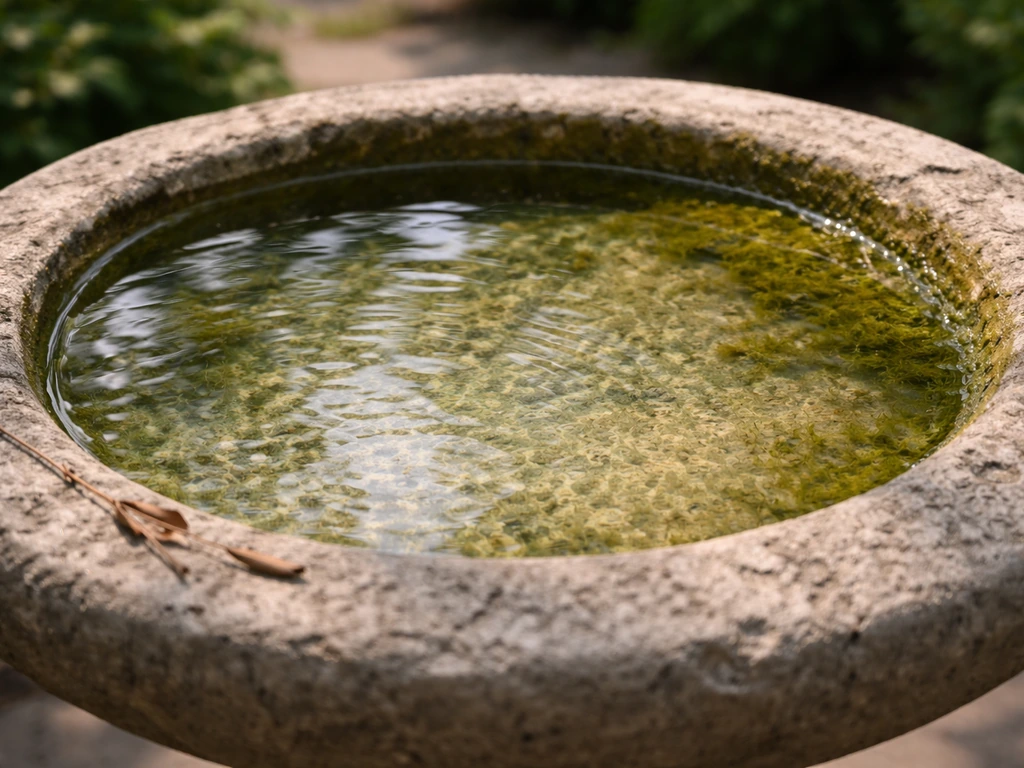
- Change the water every one to two days. The RSPB recommends daily water changes as the ideal, and that's a great target even in fall or mild winter conditions.
- Full scrub every five to seven days. Cooler temperatures slow algae and bacterial growth, so you get a bit more leeway.
- Check for debris (leaves, seeds, droppings) every time you walk past and remove it by hand or with a quick rinse.
Warm weather (above 70°F, especially in summer)
- Change the water daily, or every other day at the absolute maximum. Audubon specifically links daily or every-other-day replacement to preventing mosquitoes, algae, and bacterial growth in warm conditions.
- Full scrub every two to three days. Heat speeds up everything, and a bath that looked fine on Monday can have a green film by Wednesday.
- In a heat wave or during peak summer months, check water levels daily and clean whenever you see discoloration or slime.
Sun exposure matters a lot
A bird bath in full sun is going to grow algae faster than one in partial shade. If your bath gets more than four to five hours of direct sun per day in warm months, lean toward the shorter cleaning interval (every two to three days) regardless of temperature. The combination of UV light, warmth, and bird waste creates perfect algae conditions. Placement in dappled shade is one of the best things you can do to stretch your cleaning schedule.
Adjusting frequency based on what you actually see
Schedules are a starting point, not a law. Your bird bath is telling you what it needs if you pay attention. Here are the signals that mean it's time to clean or change water sooner, regardless of when you last did it:
- Water looks cloudy or has a film on the surface: change it now and scrub the basin before refilling.
- You can see green or brown discoloration on the basin walls: that's algae starting, and a wipe-down with a vinegar solution will clear it before it takes hold.
- There's visible debris (feathers, droppings, seed husks): dump and rinse immediately, even if you just cleaned it yesterday.
- More than a handful of birds are regularly using the bath: heavy traffic means more waste and faster contamination, so tighten your schedule.
- You notice wriggling larvae in the water: those are mosquito larvae, and the water needs to go right now (more on this below).
- The water smells off: that's bacterial growth, and it's a serious bird health risk. Full clean, right away.
On the flip side, if your bath is in shade, sees minimal bird use, and the water still looks crystal clear after two days, you have some flexibility. Trust your eyes over the calendar.
How to actually clean a bird bath (step by step)
This is the full routine I follow every few days during summer, once a week in cooler months. For example, Audubon’s “blank" rel="noopener noreferrer">Water for Birds” handout recommends changing the water every few days. It takes about five minutes once you have a system.
- Empty the basin completely. Tip the whole thing out rather than scooping. Dumping the water far from the bath (or onto lawn, not garden beds) prevents creating another mosquito habitat nearby.
- Rinse with a hose or bucket of water to knock loose debris off the surface.
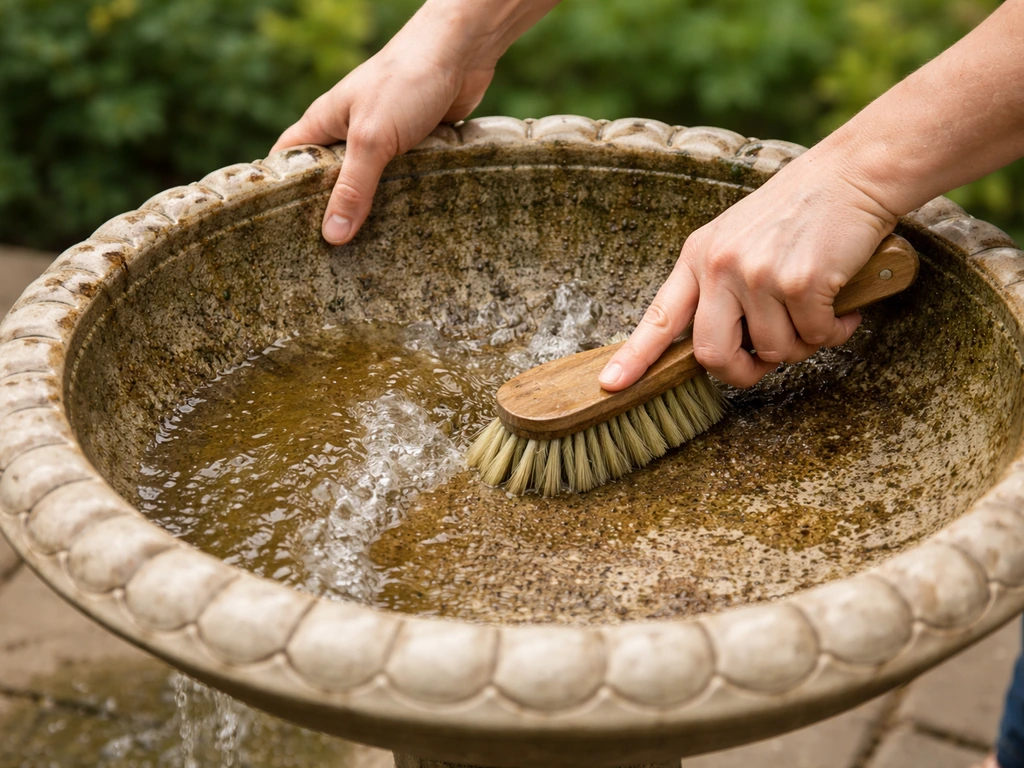
- Scrub the basin with a stiff-bristled brush. Use a nine-to-one water-to-white-vinegar solution as your cleaning agent. Audubon recommends this specifically, and it's effective against algae and light bacterial buildup without leaving residue that could harm birds.
- Pay extra attention to the center and any textured areas where biofilm hides. A dedicated scrub brush you keep just for the bird bath works better than repurposing a household one.
- Rinse thoroughly. This step matters more than most people realize. Any vinegar or cleaning product left in the basin will be ingested by birds. Rinse at least two to three times until there's no smell of cleaner remaining.
- If you need a deeper disinfection (seasonal reset, after illness in local bird populations, or stubborn algae), a dilute bleach solution works. Use no more than one part bleach to nine parts water, scrub, then rinse extremely thoroughly and let the basin air dry before refilling. Bob Vila specifically warns that bleach residue can harm birds and that soaps can strip feather waterproofing, so complete rinsing is non-negotiable.
- Refill with fresh water to the right depth (covered in the next section).
That's it. The whole job is faster than it sounds once it becomes habit. If you're debating whether bleach is right for your situation, that's a bigger conversation covered separately.
Refilling and water change best practices
When you change the water, don't just top it off. Dump the old water and start fresh. Topping off dilutes contamination but doesn't remove it, and bacteria and algae spores stay in the basin. A complete dump-and-refill takes ten seconds longer and makes a real difference.
How much water to add
Most birds prefer shallow water. Fill the basin to about one to two inches deep at the center. Smaller songbirds like finches and sparrows are comfortable at around one inch. Larger birds like robins or crows want closer to two inches. If your basin is deeper than two inches in the center, add some flat stones or a submerged rock to create a shallower area birds can actually stand in.
Water temperature and type
Plain tap water is fine. You don't need filtered water or any additives for a standard bird bath. In summer, avoid filling from a hose that's been sitting in the sun, since water left in a hot hose can get scalding. Let the hose run for a few seconds first. In winter, use warm (not hot) water to give birds a brief thaw window and help the water stay liquid a bit longer before you bring out a heated option.
Some products marketed as bird bath treatments claim to keep water cleaner longer. If you're exploring that route, keeping water from turning green is a separate topic with its own set of options, from enzyme-based treatments to fountain misters.
Troubleshooting the common problems
Green algae
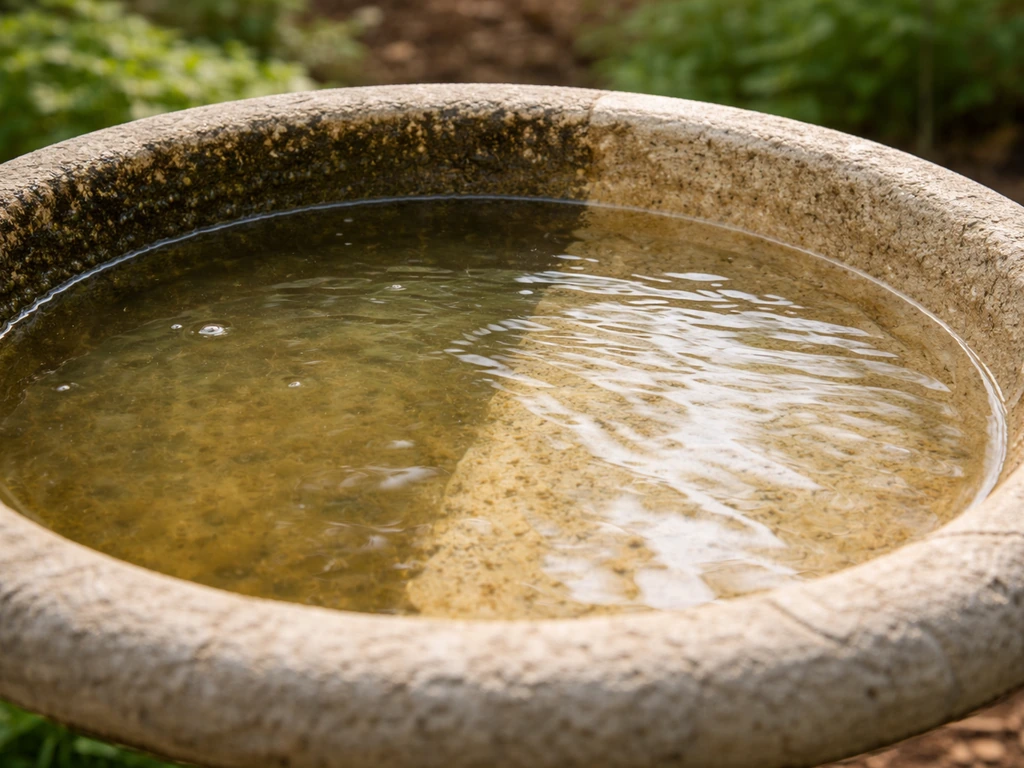
If you're seeing green on the basin walls or a greenish tint to the water, algae has moved in. This is the most common bird bath problem and it happens fast in warm, sunny conditions. The fix is a full scrub with your vinegar solution, making sure you physically scrub the film off (it doesn't just rinse away). Then reassess your schedule: if algae is recurring every few days, you need to either clean more frequently, move the bath to a shadier spot, or both. A solar-powered fountain that keeps water moving can also help significantly, since algae prefers still water. Keeping bird bath water from turning green is worth its own deep dive if this is a persistent issue for you.
Cloudy or murky water
Cloudy water usually means bacterial growth or heavy bird use has stirred up waste. Don't just add fresh water on top. Dump it, scrub the basin, rinse well, and refill. If you're getting cloudy water in under two days, increase your change frequency to daily and check whether you can move the bath to a spot with morning sun (which helps) but afternoon shade (which slows algae). Preventing mold is a related issue, especially in humid climates where biofilm builds up fast.
Mosquitoes
Mosquitoes lay eggs in standing water and larvae can hatch in as little as four to five days. Your best defense is keeping the water change schedule tight: if you're changing water every one to two days, you're breaking the mosquito breeding cycle before it completes. The CDC recommends emptying and scrubbing bird baths at least weekly as part of mosquito control, with some guidance suggesting water changes every four to five days at minimum. Daily or every-other-day changes beat that threshold comfortably.
If you see larvae already (tiny wriggling specks near the surface), dump the water immediately, scrub the basin, and refill. For persistent mosquito pressure, a Mosquito Dunk is a safe option: it contains Bti (Bacillus thuringiensis israelensis), a naturally occurring bacteria that kills mosquito larvae but is safe for birds, fish, and other wildlife. Follow the product label for dosing in bird bath-sized volumes.
Freezing in winter
A frozen bird bath is useless to birds during winter when open water is hardest to find. A few things to know: never use salt or antifreeze to prevent freezing, both are toxic to birds. BirdWatchingDaily and other sources explicitly warn against these improvised approaches. The practical options are a submersible bird bath heater (the most reliable solution), or simply checking twice daily and pouring warm water over ice to break it up. North Carolina State Extension recommends a dark-colored basin in a sunny spot to absorb heat, and positioning out of the wind to slow freezing. If your bath is ceramic, concrete, or stone, bring it in or drain it completely during hard freezes since water expanding in cracks will destroy the basin. At the start of spring, give the bath a thorough sterilization with a dilute bleach solution (rinse completely afterward) before putting it back into regular use.
Your maintenance checklist
Here's the short version you can put into practice today:
| Frequency | Task |
|---|---|
| Daily (warm weather) | Dump old water, rinse basin, refill fresh to 1–2 inches |
| Every other day (cool weather) | Dump old water, quick rinse, refill fresh |
| Every 2–3 days (summer/sunny) | Full scrub with vinegar solution, thorough rinse, refill |
| Every 5–7 days (cool/shady) | Full scrub with vinegar solution, thorough rinse, refill |
| Immediately, any time | Full dump and scrub if water is cloudy, smells off, has algae film, debris, or larvae |
| Weekly minimum | Check for cracks, discoloration, or wear on the basin surface |
| Start of spring | Full sterilization with dilute bleach solution before first seasonal use |
What to do between full cleanings
Between scrubs, a quick rinse and refill makes a real difference. Keep a dedicated stiff brush near the bath so it's easy to grab and give the basin a 30-second wipe during each water change. If you have a fountain attachment or solar bubbler that keeps water moving, use it consistently since moving water resists algae and mosquito breeding far better than a still basin. These small habits in between formal cleanings are what actually keep bird baths consistently safe and appealing to birds.
The goal isn't a perfect cleaning schedule. It's a bird bath that's consistently clean enough that birds want to use it and safe enough that it doesn't make them sick. Start with the every-other-day water change and the weekly scrub, watch what your specific bath needs, and adjust from there.
FAQ
If the water looks clean, do I still need to dump and refill every one to two days?
Yes. Clear water can still contain bacteria and algae spores inside the basin walls and in the surface film. A full dump-and-refill removes what has built up, topping off does not.
What should I do if I miss a scheduled cleaning or water change?
Do a full dump, scrub, rinse, and refill as soon as you notice. Then tighten the interval for the next few days (for example, return to daily or every other day) until algae and cloudiness stop appearing.
Can I use vinegar to clean instead of scrubbing with something else?
You can, especially for algae film on the basin walls. The key is mechanical removal, scrub until the green film is physically gone, then rinse thoroughly before refilling.
How do I know whether cloudy water is bacteria or something else?
Cloudy water usually tracks either heavy bird waste disturbance or biofilm. If the cloudiness returns quickly, dump and scrub the basin, rinse well, and switch to more frequent water changes while you also check sun exposure and bird traffic.
Is it safe to use dish soap or other cleaners on the bird bath?
Avoid residue-prone cleaners. If you use anything beyond the vinegar approach mentioned in the article, rinse extremely well and let the basin sit filled with fresh water for a short period before birds use it, so you do not leave scent or soap film.
How should I clean around rocks, stones, or a fountain attachment?
Remove and scrub any submerged rocks or add-on parts so algae and droppings do not stay stuck underneath. Rinse all surfaces where water contacts, then refill to the shallow depth you use for your target birds.
Do I need to change the water more often if I have multiple bird baths or a large community of birds?
Usually yes. More birds means more droppings and faster contamination, so shorten the water change interval and be more attentive to visual cues like green walls or cloudy water returning within two days.
Can I leave a small amount of water in the basin to avoid making a mess?
For routine maintenance, no. Keep the habit of dumping fully before refilling, because the remaining film is where spores and bacteria persist. The extra ten seconds matters.
What depth should I maintain if I use stones to reduce depth?
Aim for one to two inches at the center, with smaller birds comfortable closer to about one inch. If you add a submerged rock, position it so birds can stand on a shallow, stable area without having to climb onto slick surfaces.
Are there any winter-specific steps besides heaters and thawing?
Yes. During hard freezes, never use salt or antifreeze, and if the basin is ceramic, concrete, or stone, drain or bring it in so water expansion does not crack it. At the start of spring, sterilize with a dilute bleach solution and rinse completely before regular use.
If I use a fountain or solar bubbler, do I still need weekly scrubbing?
Yes. Moving water helps slow algae and mosquito issues, but it does not prevent buildup on basin surfaces and in corners. Keep the scrub schedule, then adjust water change frequency based on whether green film or cloudiness still appears.
What if mosquitoes are still around even though I’m changing the water regularly?
First, check for larvae and hidden standing water nearby (planters, saucers, clogged gutters). If larvae are present or pressure is persistent, use a Mosquito Dunk dosed per the label for your bath volume, and continue the regular dump-and-scrub routine.