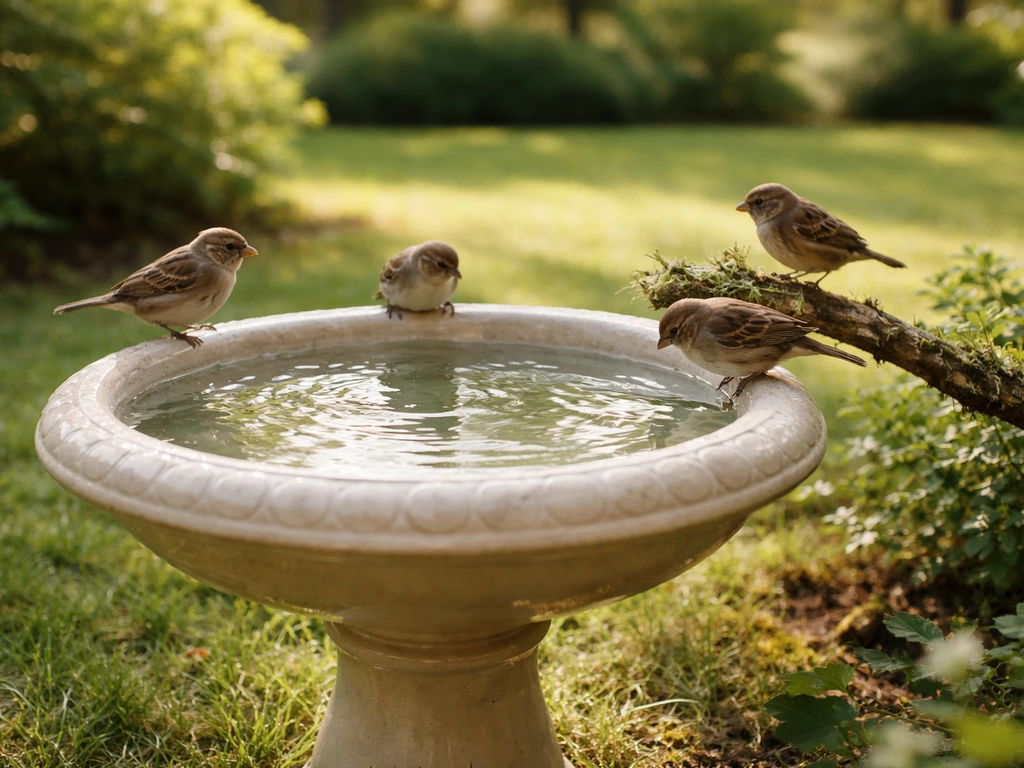
Yes, you can clean a bird bath with bleach, and it's one of the most effective ways to kill bacteria, algae, and mold. The key is using the right dilution (about 1 tablespoon of bleach per gallon of water), letting it sit for a few minutes, and then rinsing thoroughly until no bleach smell remains. Done correctly, it's safe for birds. Done sloppily, it can harm them. This guide walks you through both the bleach method and solid alternatives so you can choose what works best for your setup.
Can You Clean a Bird Bath With Bleach Safely? Step-by-Step

Marcus Henley
21 Jun 2026
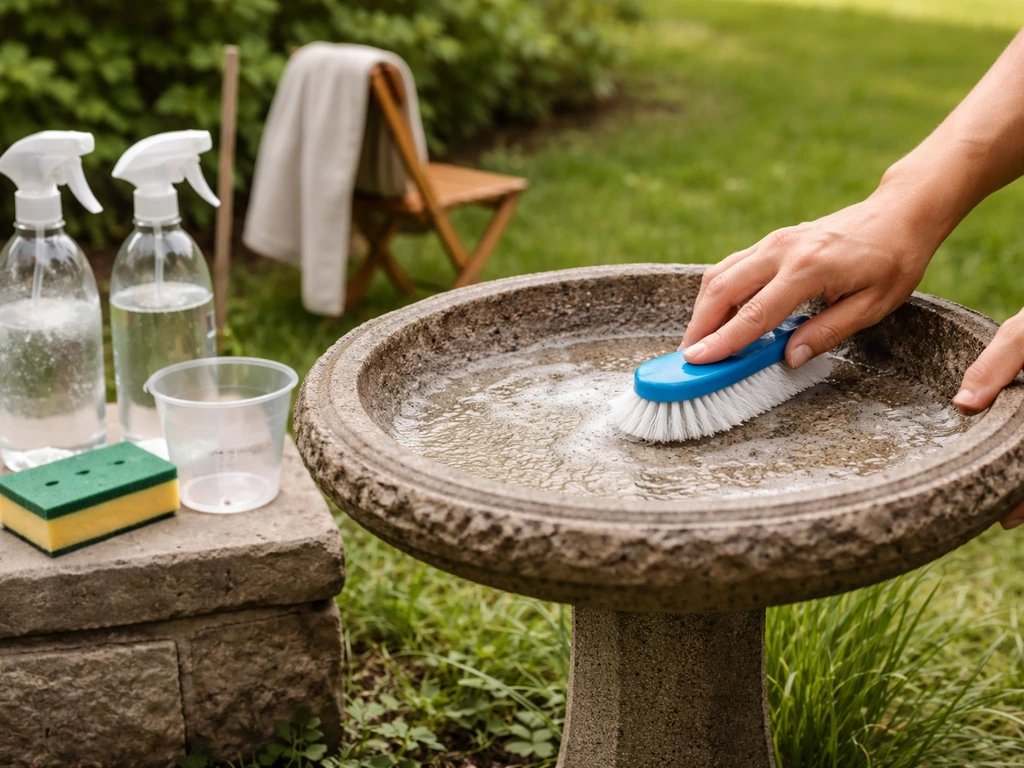
Is bleach actually safe to use in a bird bath?
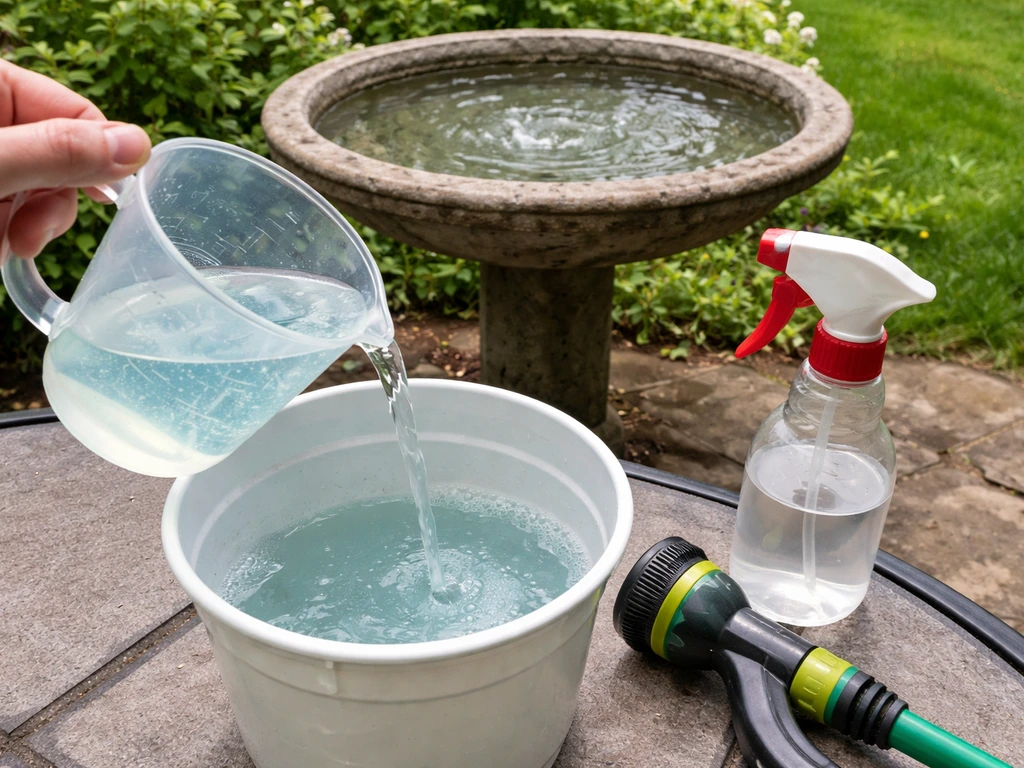
Bleach is safe when it's diluted and fully rinsed away. The concern people have, rightfully so, is that bleach residue left in standing water can harm or kill birds. But at the dilution levels used for cleaning (not disinfecting a hospital), the chlorine dissipates quickly once rinsed and allowed to air dry. Birds won't be drinking bleach water if you follow the rinsing steps.
The CDC recommends diluted household bleach for disinfecting surfaces that come into contact with animals and their water supplies, using roughly 2 oz (about 1/4 cup) of bleach per gallon of water for pet supply disinfection, or as little as 1 tablespoon per gallon for general surface disinfection. Either concentration works for bird baths. The lower end (1 tablespoon per gallon) is what I use most often because it's easier to rinse completely and still does the job.
One thing worth knowing: bleach solutions degrade over time. Fresh dilution prepared that day is significantly more effective than a mixture that's been sitting in a spray bottle for a week. Make a fresh batch every time you clean.
When to use bleach (and when to skip it)
Bleach works great on certain surfaces and poorly on others. Before you grab the jug, check what your bird bath is made of.
| Material | Bleach Safe? | Notes |
|---|---|---|
| Concrete | Yes | Durable and non-porous enough after curing; rinse very well since concrete is slightly absorbent |
| Ceramic / glazed pottery | Yes | Glaze resists bleach well; rinse thoroughly and check for cracks where bleach can linger |
| Resin / plastic | Yes | Handles diluted bleach fine; avoid prolonged soaking which can degrade some plastics over time |
| Glass | Yes | Non-porous and easy to rinse clean |
| Metal (copper, galvanized steel) | Use caution | Bleach can corrode and pit metal surfaces; vinegar or enzymatic cleaners are better choices here |
| Natural stone (untreated) | Use caution | Porous stone can absorb bleach; very thorough rinsing needed, or opt for a bleach-free method |
| Terracotta (unglazed) | Avoid | Highly porous; bleach can soak in and be difficult to fully rinse out |
If your bird bath has a metal finish, is copper-lined, or is made of unglazed terracotta, skip the bleach and use one of the alternatives below. For everything else, diluted bleach is a reliable go-to.
How to clean a bird bath with bleach (step by step)
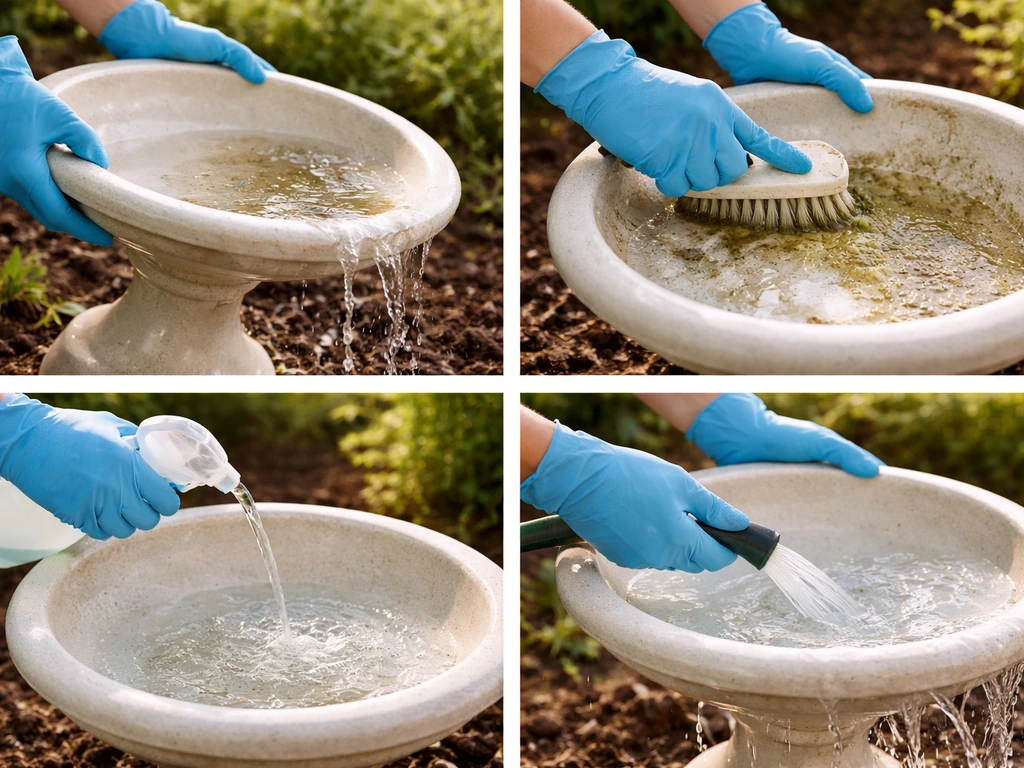
This whole process takes about 15 to 20 minutes. You don't need gloves, but I wear them anyway to keep my hands from smelling like a swimming pool for the rest of the day.
- Empty the bird bath completely. Dump out all the old water.
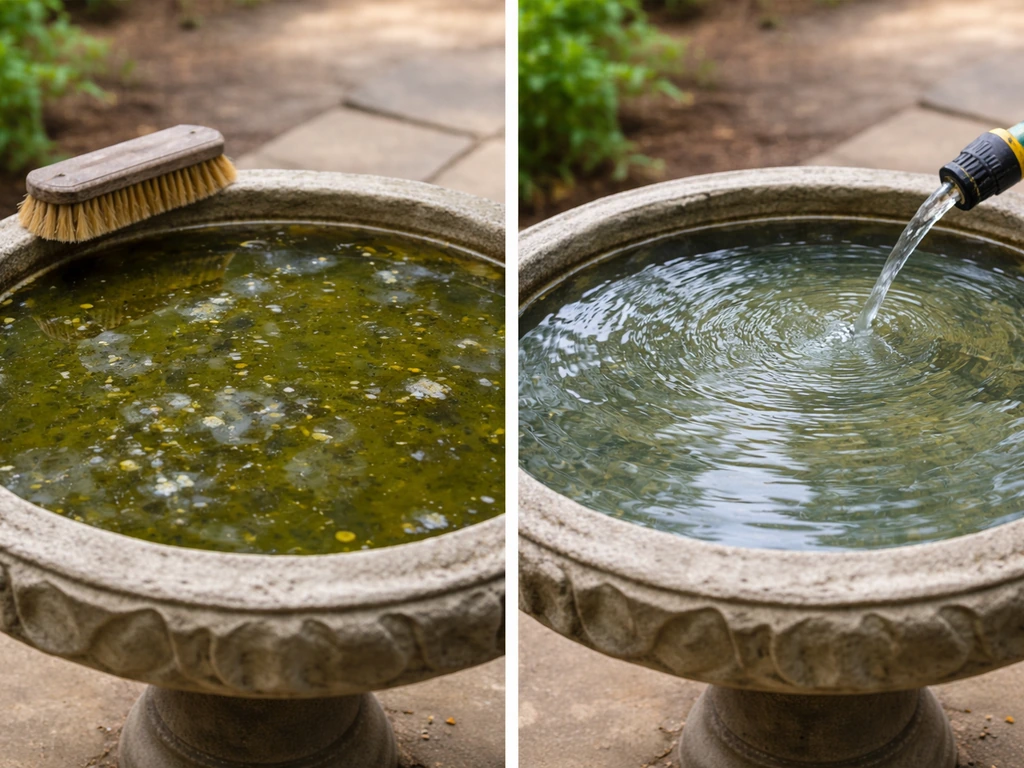
- Scrub off visible debris first. Use a stiff brush (a dedicated scrub brush you keep just for this) to remove leaves, droppings, and loose algae. The CDC specifically recommends cleaning visible dirt before disinfecting, because bleach works less effectively through heavy organic matter.
- Mix your bleach solution. Add 1 tablespoon of plain household bleach (around 6% to 8.25% sodium hypochlorite) to 1 gallon of clean water. If the bath is heavily fouled, you can go up to 1/4 cup per gallon, but for routine cleaning the lower amount is plenty.
- Apply the solution. Pour it into the basin and use your brush to scrub the entire surface, including the sides and any textured areas. Make sure the surface stays visibly wet.
- Let it sit for at least 2 minutes, up to 10 minutes for stubborn algae or grime. This contact time matters, so don't rush it.
- Scrub once more if needed, especially around edges or rough spots where algae clings.
- Rinse thoroughly. This is the most important step. Rinse the basin multiple times with fresh water until you can no longer detect any chlorine odor. I typically do three full rinse-and-dump cycles.
- Let it air dry completely before refilling, or refill immediately if you've done a thorough rinse and smell no bleach. Sunlight and air help neutralize any trace residue.
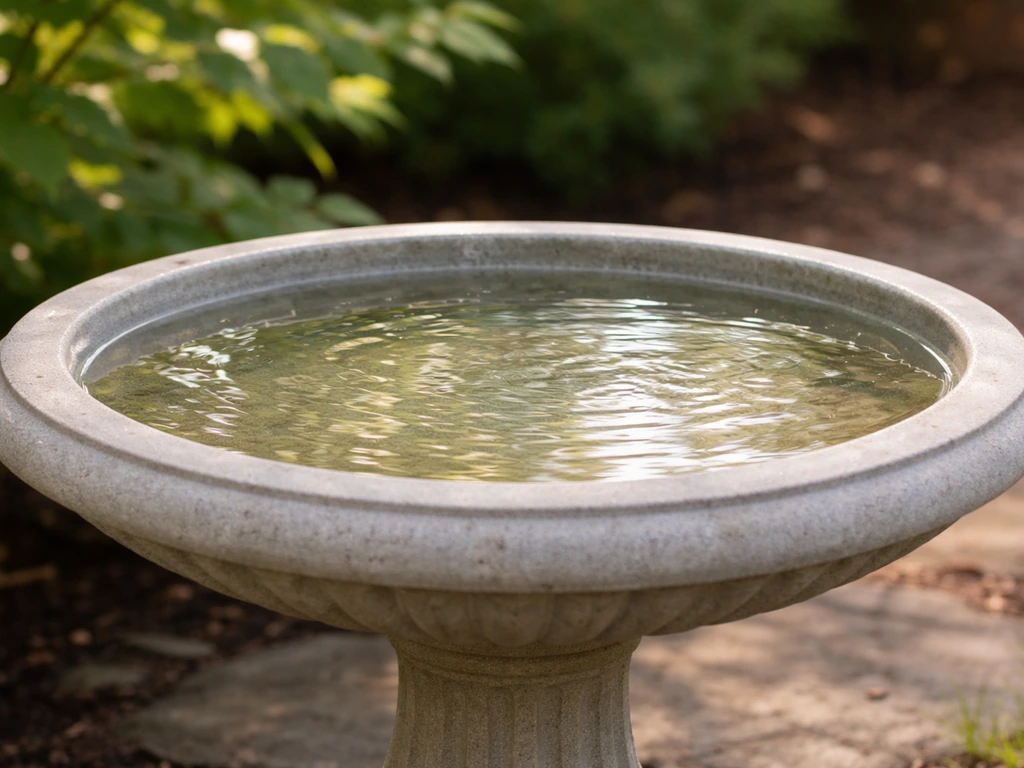
- Refill with fresh water and you're done.
If you still detect a bleach smell after three rinses, do two more. Trust your nose. Sodium hypochlorite has a distinct chlorine odor that's pretty hard to miss, and if you can't smell it anymore, it's not present in amounts that would harm a bird.
How to clean a bird bath without bleach
If you'd rather avoid bleach entirely, or you're dealing with a metal or unglazed bath, these alternatives work really well. They're also a good choice if you clean very frequently and don't want to deal with diluting bleach every few days.
White vinegar
This is my go-to for routine maintenance. If you are wondering how to treat bird bath water between deeper cleanings, this simple vinegar routine helps keep it fresh and safe for birds. Mix one part white vinegar with nine parts water, scrub the basin, let it sit for 5 minutes, then rinse well. Vinegar is acidic enough to break down mineral deposits and light algae, it's completely non-toxic to birds once rinsed, and it won't corrode metal surfaces. It doesn't disinfect as aggressively as bleach, but for weekly cleaning it's more than sufficient.
Baking soda paste
For rough or stubborn staining without heavy algae, baking soda works as a mild abrasive. Mix it with a little water to form a paste, scrub it onto the surface, let it sit for a few minutes, then rinse. Great for getting into textured concrete surfaces where a brush alone won't cut it.
Enzymatic bird bath cleaners
There are enzyme-based bird bath cleaning products on the market that break down organic matter, algae, and bacteria without any harsh chemicals. These are worth the investment if you have a fancy or decorative bath you don't want to risk damaging. Follow the product directions, but they're generally safe for all surfaces and leave no harmful residue.
Step-by-step bleach-free cleaning
- Empty and dump all standing water.
- Remove loose debris by hand or with a brush.
- Apply your chosen cleaner: diluted vinegar, baking soda paste, or enzymatic cleaner.
- Scrub thoroughly with a stiff brush, paying attention to the bottom and waterline where algae accumulates.
- Let the cleaner sit for 5 to 10 minutes.
- Rinse completely with fresh water until no cleaner scent or residue remains.
- Refill with fresh water.
Dealing with algae, green buildup, and stubborn grime
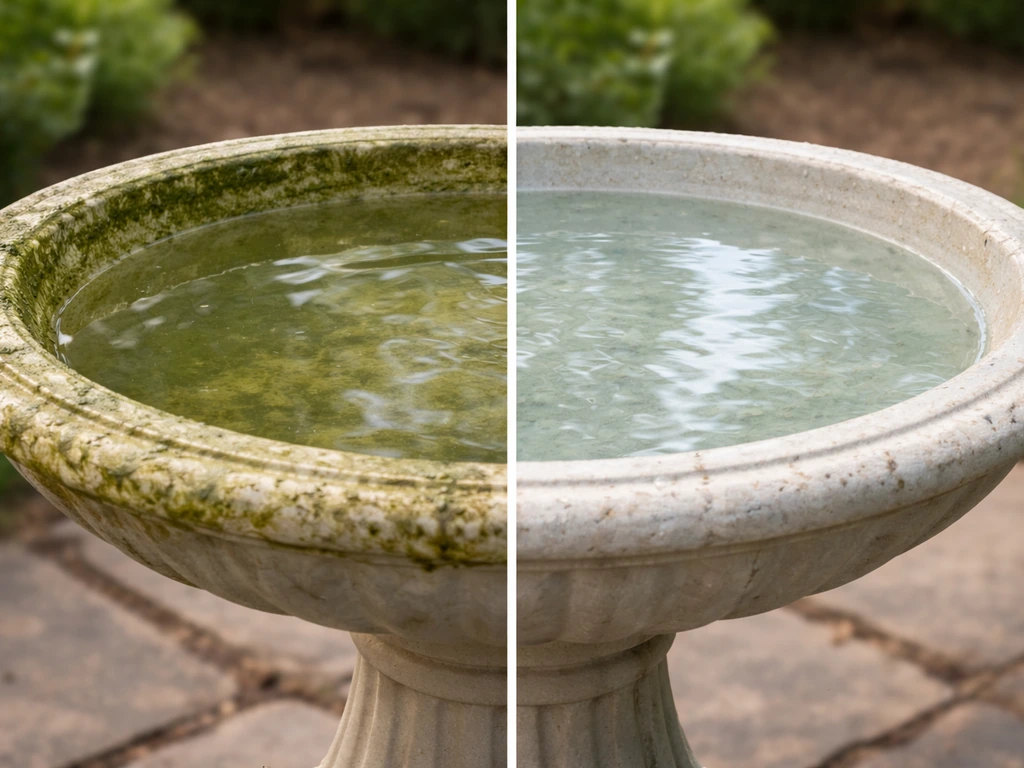
Green buildup is algae, and it's the most common complaint with bird baths. Algae grows fast in warm, sunny weather, and once it's established it can feel almost impossible to scrub off. Here's what actually works.
For light green film, vinegar or diluted bleach both handle it fine with a good scrub. For heavy, slippery algae that's coating the whole basin, you need some mechanical force. A stiff-bristled scrub brush (not a soft sponge) is essential. Let your cleaning solution sit the full contact time before scrubbing, because trying to scrub dry algae immediately is a losing battle.
Black or brown slimy buildup is often a mix of algae and bacteria. Bleach handles this better than vinegar because it kills both. Use the 1/4 cup per gallon concentration, let it sit for 10 minutes, scrub hard, then rinse several times.
Mineral deposits, which look like white or gray crusty rings, don't respond to bleach at all. Acid is what breaks those down. White vinegar or a citric acid solution left to soak for 15 to 30 minutes, then scrubbed, will remove those deposits far better than bleach ever will.
One practical tip: move your bird bath out of direct afternoon sun if you can. Algae thrives on sunlight plus warm, still water. Even shifting the bath a few feet into dappled shade can noticeably slow algae growth between cleanings. This is something I cover in more detail when talking about how to keep bird baths from turning green, but placement really does make a significant difference. This section is part of a bigger plan for how to keep bird baths from turning green.
How often to clean and how to keep it cleaner longer
The honest answer on cleaning frequency depends on your climate and how much bird traffic you get. In hot summer weather, you should be changing the water every one to two days and doing a full scrub at least once a week. In general, you can follow the same schedule for cleaning a bird bath so algae and bacteria do not get a chance to build up how often to clean a bird bath. In cooler seasons with less sun, you might stretch a full cleaning to every two weeks.
Here's a simple maintenance rhythm that works well for most backyard setups:
- Every 1 to 2 days: dump and refill with fresh water. This alone prevents a lot of problems because algae and mosquitoes both need standing still water to get established.
- Once a week: scrub with diluted vinegar or diluted bleach, rinse well, and refill.
- Once a month (or when you see heavy buildup): do a deep clean with the full bleach treatment or an enzymatic cleaner, especially hitting the basin floor and sides.
A few other things that reduce how often you need to deep clean: adding a small solar-powered fountain or dripper keeps water moving, and moving water is far less hospitable to algae and mosquito larvae. Keeping the bath in partial shade, as mentioned earlier, also slows algae significantly. Some people add a small amount of apple cider vinegar to the water itself (about a capful per gallon), which slightly lowers the pH and discourages algae without harming birds. These prevention strategies are worth building into your routine if you find yourself cleaning constantly.
If you're dealing with mold specifically rather than algae, the approach is similar but bleach is the more effective tool. Vinegar works on mold in some situations, but for established mold growth in a bird bath, the bleach-and-rinse method is what I'd reach for first. Keeping the bath dry between uses (if birds aren't actively visiting) and ensuring good drainage also helps prevent mold from taking hold. If you want more prevention tips, see our guide on how to prevent mold in a bird bath prevent mold from taking hold.
The bottom line: bleach is a perfectly good tool for bird bath cleaning when you blank" rel="noopener noreferrer">use it diluted and rinse it thoroughly. It's not the only option, and for some materials it's the wrong option, but for most concrete, ceramic, or resin baths it's fast, effective, and safe. Pick the method that fits your bath material, build a consistent weekly habit, and your birds will have clean water year-round. If you want the simplest routine, focus on regular scrubbing, changing the water often, and using the right cleaner for your bath material keep a bird bath clean.
FAQ
Can I clean the whole bird bath, including the rim and any decorative grooves, with bleach?
Use bleach only on the basin and any non-porous parts you can fully rinse. For areas where birds may peck small crevices or where water gets trapped (threaded fittings, ornate grooves), rinse longer and consider a non-chlorine cleaner like vinegar or an enzyme product to avoid missed residue.
What’s the most common mistake when people use bleach on a bird bath?
Don’t use a concentrated bleach solution, and don’t “top up” with more bleach if the first mix seems weak. Instead, make a fresh dilution each time and follow the full contact time, then rinse until the chlorine smell is gone.
Can I clean a bird bath with bleach while birds are using it?
Yes, but only if you keep the birds away from the bath during the scrub and rinsing, then let the basin air dry. Avoid spraying bleach near active birds, and don’t refill with water until you can no longer smell chlorine after the recommended rinse attempts.
How do I tell if my problem is algae (bleach) or mineral deposits (something else)?
Bleach does not remove mineral crust well, it mainly targets algae, bacteria, and organic grime. If you see white-gray rings or scaling, switch to citric acid or a vinegar soak and then scrub, using bleach only afterward if there is still biological buildup.
Can I use bleach on a metal or copper-lined bird bath?
If the bath is metal or has a copper-lined finish, bleach is more likely to cause damage or pitting over time. Stick with vinegar/citric acid for scale and algae, then rinse very thoroughly, or use an enzyme cleaner for routine maintenance on those finishes.
Is it safe to pre-mix bleach and keep it in a bottle for later, or combine it with vinegar?
Prepare bleach solution fresh each time, and don’t store it in a spray bottle for later use. Also, don’t mix bleach with vinegar or other cleaners, because it can create harmful fumes.
What if I still smell bleach after rinsing, is it still safe for birds?
Wear gloves if you have sensitive skin, but the bigger safety issue is residue. If you still detect bleach odor after three rinses, keep rinsing and let it dry, because smell can indicate remaining chlorine even if the water looks clear.
What should I do if my bird bath turns green or moldy again within a few days?
If the bath sits empty between visits, emptying and letting it dry reduces mold and algae pressure. For prevention, keep water fresh frequently, aim for partial shade, and consider gentle circulation like a dripper or small fountain to reduce stagnant conditions.