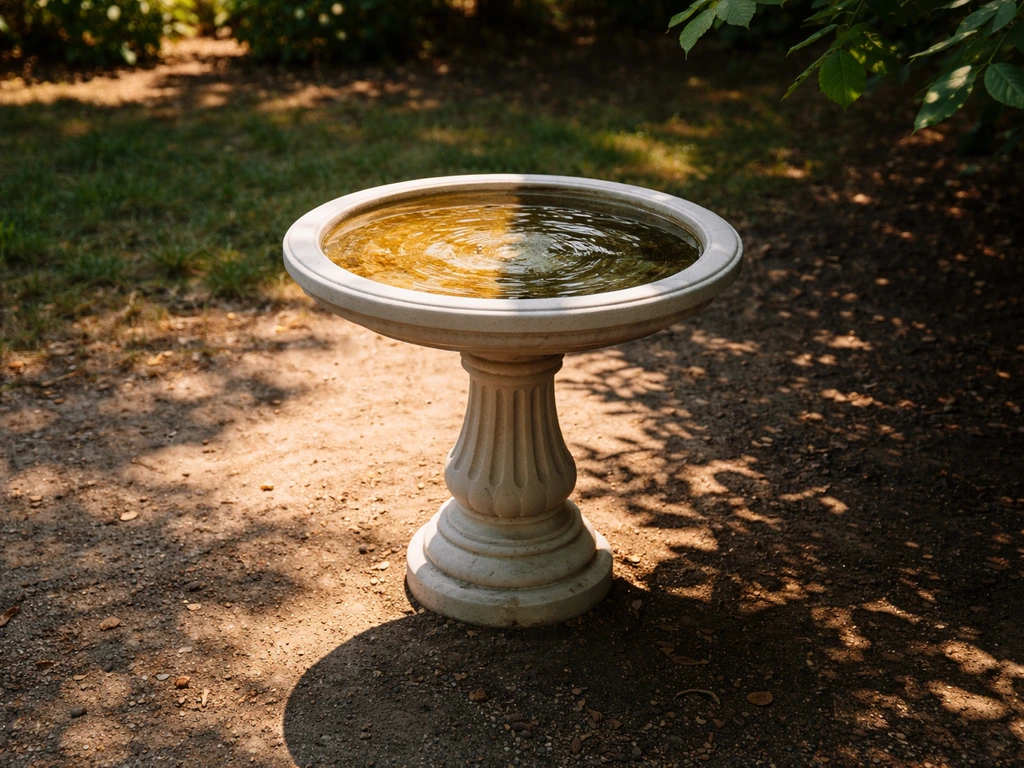
You can decorate a bird bath beautifully without putting birds at risk, as long as you keep a few things non-negotiable: safe, shallow water depth (1 to 2 inches max), non-toxic materials on any surface that touches water, and an open enough layout that birds can see predators coming. Everything else, the plants, rocks, borders, finishes, and accents, is fair game as long as you work within those rules.
How to Decorate a Bird Bath: Step-by-Step Ideas

Marcus Henley
7 May 2026
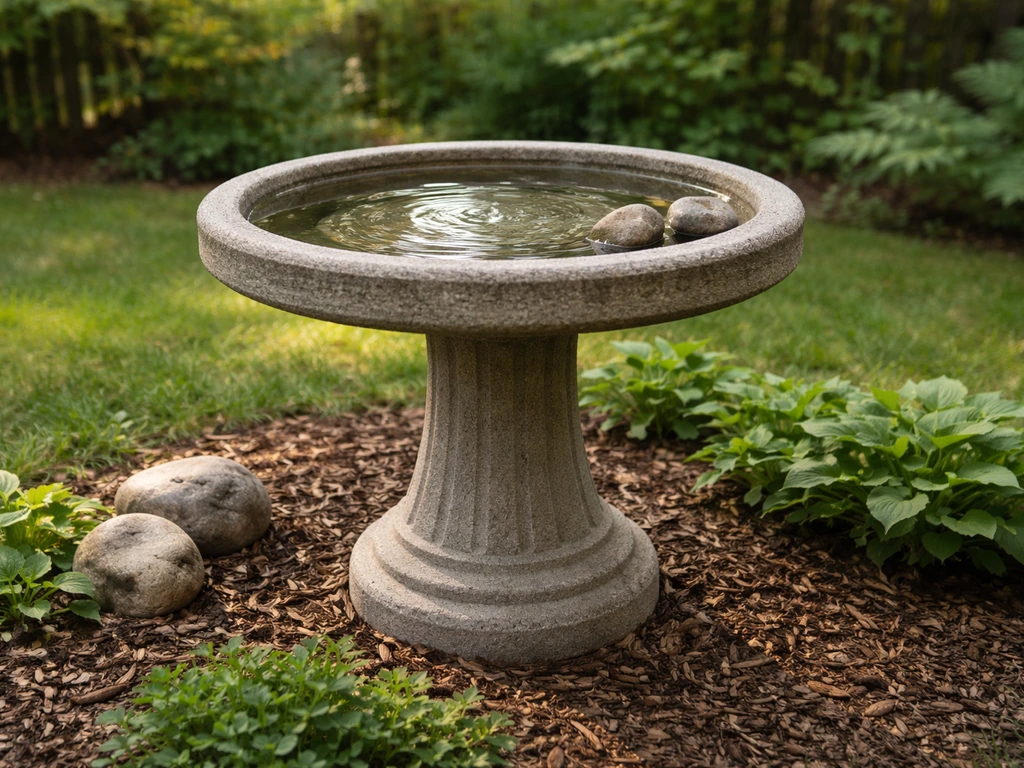
Decorating goals and what birds actually need
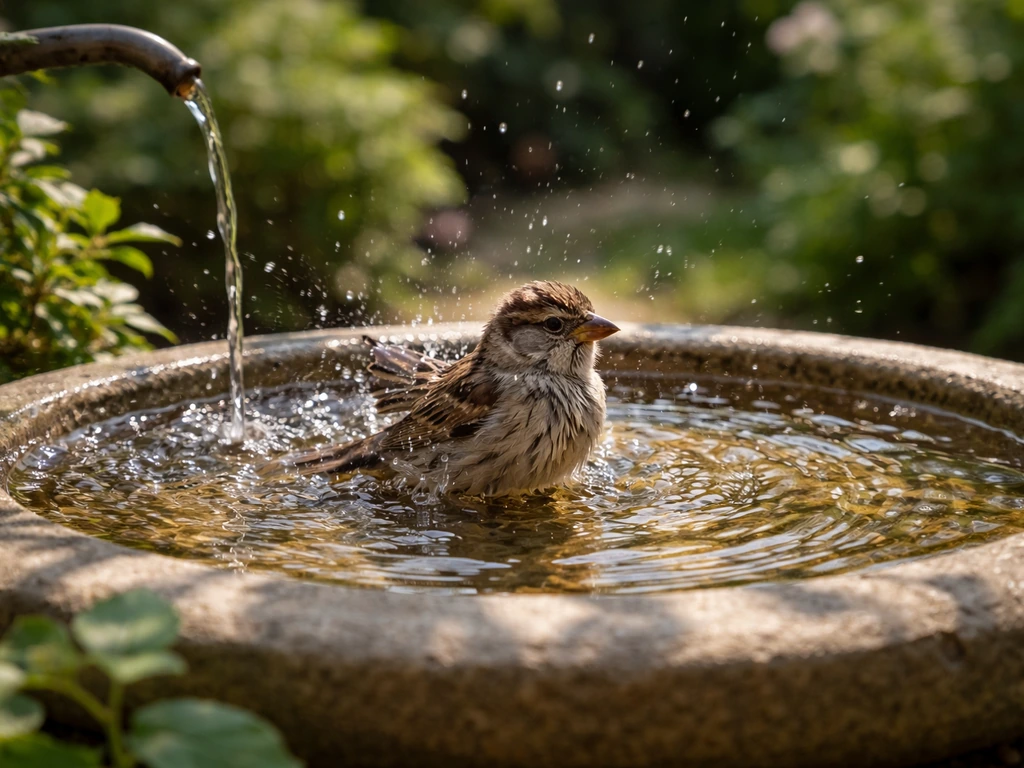
Before you start moving rocks around or shopping for mosaic tiles, it helps to understand what birds are actually responding to. Birds are looking for shallow, clean, moving water they can see from a safe distance. Audubon recommends keeping the water between 1 and 1.5 inches deep, while the Chicago Bird Alliance specifies up to 1 inch at the edge and 2 inches at the center with a gentle slope. That slope matters: birds want to wade in gradually, not step into an unknown depth and panic.
Sound and movement are also signals birds trust. The gentle ripple from a dripper or the shimmer of water in sunlight tells a bird the water is fresh, not stagnant. So when you're thinking about decoration, lean into anything that adds gentle movement or makes the water more visible from above, and avoid anything that clutters the basin, narrows the approach, or makes the surface slippery. Decoration that works with bird behavior will bring more birds than decoration that just looks good from your kitchen window.
Planning the layout around a bird bath
Get the placement right before you add a single pot or plant. This is the step most people skip, and it causes problems later. Place your bird bath at least 10 to 15 feet away from dense shrubs, low hedges, or overhanging branches. This isn't about aesthetics: those spots give cats and other predators a place to hide.
Birds need open sightlines so they can spot a threat while they're distracted by bathing. At the same time, you don't want the bath in full blazing sun all day if you can avoid it. A partially shaded spot keeps the water cooler in summer and reduces algae growth. For a deep dive on technique and materials, see our guide on how to shade a bird bath.
A good rule of thumb is to aim for partial shade so the water stays cool and cleaner longer.
Also keep the bath 10 to 15 feet from bird feeders. Seed hulls, droppings, and debris from feeders contaminate the water fast, and you'll end up cleaning far more often than you need to. Once you've nailed the placement, then you plan your decorative border, plants, and hardscape outward from the bath.
Think of the layout in three zones: the bath itself, a clear landing and approach zone of about 3 to 6 feet around it (kept relatively open), and then your decorative plantings and border features beyond that. This gives birds room to approach, land nearby, look around, and then move to the water. Cramming plants right up to the basin edge might look lush, but it spooks birds and creates hiding spots for predators.
Concrete bird bath decorating basics and safe materials
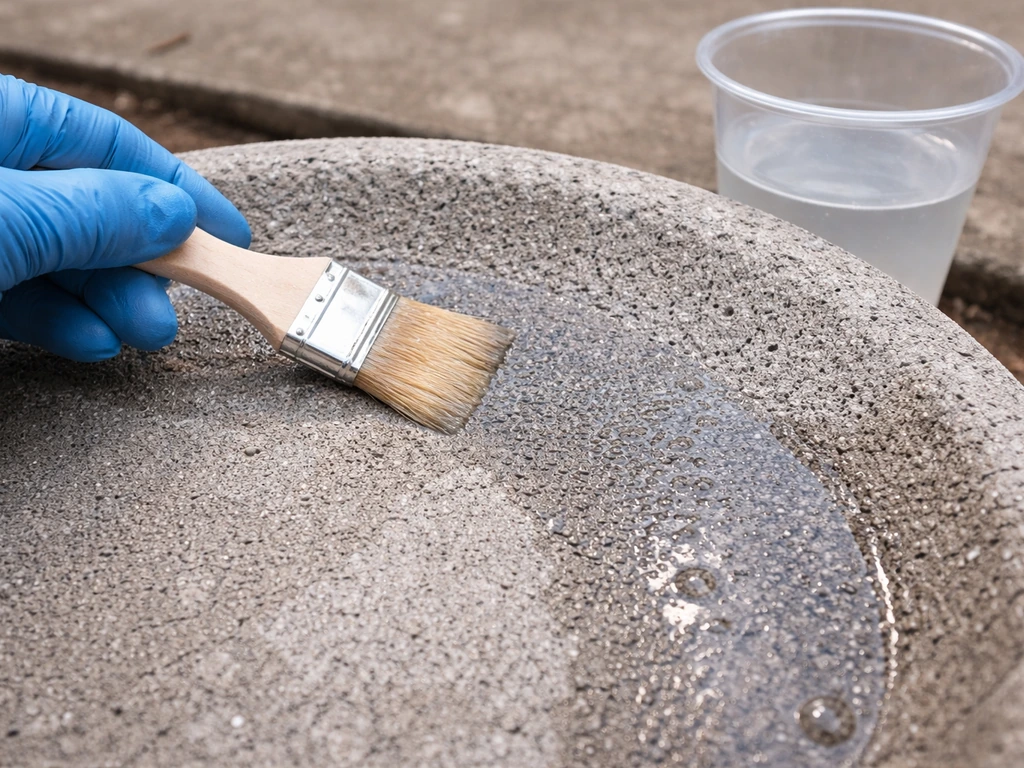
Concrete bird baths are one of the most common styles, and they do need a bit of extra attention before you decorate. Raw concrete is porous, which means it holds moisture, grows algae faster, and can get rough over time in a way that's hard to clean. The right sealer solves all of that, but you have to choose one that won't harm birds after it cures.
Look for water-based, penetrating sealers with zero or near-zero VOCs. Products in the silane/siloxane family (like SEK Surebond SB-4000 style formulas) soak into the concrete and repel water without forming a film that can peel and be ingested. Topical sealers like those in the ConBlock Topical or AFM Safecoat WaterShield category can also work if they're rated non-toxic and low-VOC. The key rule: always let the sealer cure fully before filling the bath with water, and that typically means 48 to 72 hours minimum. A simple smell test is your safety check. If you can still detect an odor, wait longer. Birds are sensitive to chemical residues in ways that aren't always obvious.
For mosaic or tile work on a concrete bath, use aquarium-safe silicone to bond pieces to the basin, and finish with a grout that can handle wet, outdoor conditions. Epoxy grout is more durable and less porous than sanded grout for water-contact areas. The grout and silicone should fully cure before water contact, and any mosaic work inside the basin should keep the surface textured enough that birds can grip it, not smoother. If in doubt, stick to the exterior of the basin and pedestal for tile work, and leave the inside basin mostly plain with just pebbles for texture.
| Material / Approach | Safe for Birds? | Best Used Where | Notes |
|---|---|---|---|
| Silane/siloxane penetrating sealer (zero VOC) | Yes, after full cure | Inside basin, full concrete surface | Invisible finish, resists algae, allow 48–72 hr cure |
| Low-VOC topical concrete sealer | Yes, after full cure | Basin and pedestal | Check for non-toxic certification; smell-test before use |
| Aquarium-safe silicone (e.g., Loctite Clear Silicone, Soudal Silirub AQ) | Yes, after cure | Bonding tile/mosaic to basin exterior or rim | Must be fully cured before water contact |
| Epoxy grout | Generally yes | Mosaic grout lines on exterior or rim | More water-resistant than sanded grout; let cure fully |
| Latex/acrylic paint (standard) | No | Avoid inside basin | Can flake, leach chemicals; use only exterior-rated, non-toxic alternatives |
| Smooth tile inside basin | Use with caution | Basin interior only if textured | Smooth tile = slipping hazard; add pebbles or use textured tile |
Safe plants, rocks, and borders around the water feature
The plants you put around your bird bath do double duty: they make the whole setup look intentional and finished, and if you choose wisely, they bring in insects and seeds that give birds even more reason to stick around. The rule I always follow is to verify any plant against an avian-safe list before it goes anywhere near the bath. VCA Animal Hospitals publishes both a toxic and safe plant list for birds, and it's worth a quick cross-check.
Oleander and many lilies, for example, are toxic to birds and should stay well away. Native plants are your safest and most beneficial bet since they've co-evolved with local bird species. Audubon's native plant resources let you search by region so you can find plants that support the food web birds in your yard already depend on.
Rocks and stones are the easiest win in bird bath decorating. Flat, rough-surfaced stepping stones around the base look great and give birds a safe landing pad. Larger flat stones or smooth river rocks placed just outside the basin give smaller birds a perching spot to survey the water before committing to a bath. Inside the basin, add a few large pebbles or a flat stone to break up the surface, give birds something to stand on while they drink, and help them gauge the water depth. Rough-textured stones are better than smooth ones inside the basin, as smooth ones can be slippery when wet.
- Native grasses, coneflowers (Echinacea), black-eyed Susans, and native sedges are great low-maintenance border plants that support birds
- Avoid planting dense groundcover or low shrubs right at the bath edge, they give predators cover
- River rocks and flagstone around the base tie the bath into the landscape and give birds landing perches
- Large pebbles inside the basin help birds gauge depth and provide safe footing
- Keep any border planting at least 3 to 6 feet back from the basin to preserve open sightlines
- Raised planters or container gardens work well for adding color near the bath without crowding it
How to decorate the bird bath itself
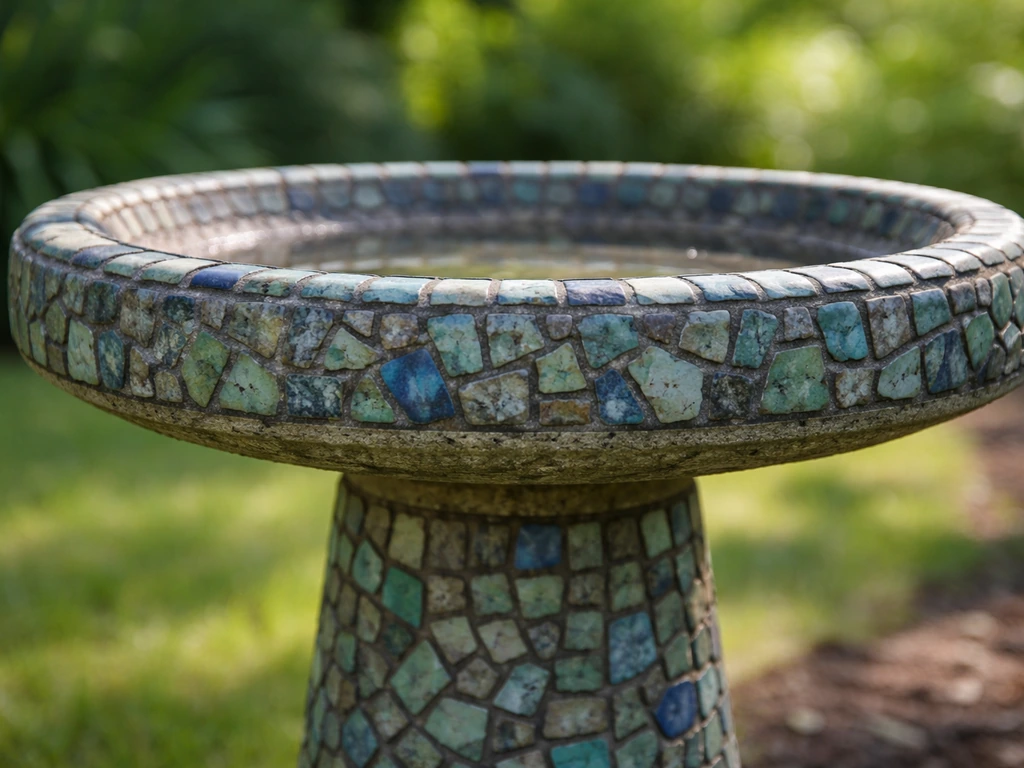
The pedestal and outer rim are where you have the most design freedom. Mosaic tile work on the outside of the basin and down the pedestal looks striking and holds up well outdoors if you use the right adhesive and grout. Use aquarium-safe silicone as your adhesive and an epoxy or exterior-rated grout to seal the joints. Keep mosaic work off the interior basin floor unless your tiles are rough-textured, and always make sure the finished surface inside is still grippable for small bird feet.
For color on a concrete surface, exterior-rated, non-toxic masonry paint can be used on the outside and pedestal. I'd avoid painting inside the basin unless the product is specifically rated safe for water contact after curing, and even then, it's not worth the cleaning headache as paint inside the basin chips and flakes faster than any sealer. If you want a colored look inside, choose a naturally colored stone or add colored glass pebbles (flat-bottomed, smooth ones from craft stores work well) arranged in the bottom. They look great, don't chip, and lift right out for cleaning.
Accents like a small solar-powered dripper or a wiggler are the decoration that actually makes a functional difference. The sound of dripping water draws birds from surprising distances, and the movement keeps mosquitoes from laying eggs. This is arguably the single best upgrade you can add to a decorated bird bath. You can also tuck a solar light stake into the surrounding planting to illuminate the bath at night, which looks beautiful from inside the house without disturbing birds. Keep any lighting aimed at the surrounding garden, not directly into the basin.
If you're interested in more elaborate themes, like a fairy garden in the basin or holiday decorating, those approaches work best in a dedicated decorative bath that isn't intended for daily bird use, since figurines and props make cleaning much harder and can trap debris. A Christmas-themed bird bath, for example, is better achieved through surrounding decor and weather-appropriate accents rather than putting objects inside the basin. The bird bath itself should stay clean and functional.
Avoiding common mistakes
The most common decorating mistake is making the inside of the basin slippery. A smooth, glazed ceramic or painted concrete bowl with no texture is genuinely dangerous for small birds. They can slip, struggle to get out, and in cold weather, a wet bird that can't get out is in serious danger. Always make sure the basin has texture, either from the material itself, an applied sealer that adds grip, or pebbles added to the bottom. The Oklahoma Department of Wildlife Conservation recommends a gradual slope to the center and a dry edge around the perimeter, which is a good design principle even in a decorated bath.
- Don't use standard household paint inside the basin, it chips into the water and can contain harmful additives
- Avoid placing the bath under trees or overhanging branches that drop debris and give predators launch points
- Don't crowd the basin with figurines or decorative objects that restrict access or make cleaning difficult
- Skip any sealer or adhesive with high VOC content, even if it claims to be waterproof after curing
- Don't use chemical herbicides or pesticides anywhere near the bath, they concentrate in the water birds drink
- Avoid filling the basin deeper than 2 inches, even if the bowl is deeper, birds won't use it and it becomes a drowning risk for small species
- Don't place the bath where overhanging vegetation blocks birds' view of the sky or ground-level approaches
Quick maintenance-friendly finishing steps and next actions
Everything about your decoration choices should make cleaning easier, not harder. Change the water every 1 to 2 days and plan to scrub the basin every 2 to 4 days according to Chicago Bird Alliance guidelines. When you need to disinfect, a 9-to-1 solution of water and bleach works well.
Rinse thoroughly after any bleach cleaning and let it air out completely before refilling. Lowe’s also recommends cleaning bird feeders and birdbath areas with a 9-to-1 water and bleach solution, rinsing thoroughly, and letting parts dry completely before reuse [Rinse thoroughly after any bleach cleaning and let it air out completely before refilling. ](https://www. lowes.
com/n/how-to/bird-feeder-cleaning). This routine is much easier if the basin interior is simple: sealed concrete or smooth stone with a handful of pebbles, not a complex mosaic or a collection of figurines.
Here's what I'd suggest as your practical next steps if you're starting fresh or refreshing an existing bath:
- Check and adjust your bath's placement: at least 10 to 15 feet from feeders, dense shrubs, and overhanging branches, in a partially shaded open spot
- If you have a concrete bath, clean it thoroughly and apply a zero-VOC penetrating sealer. Allow 48 to 72 hours to cure and smell-test before refilling
- Add large, rough pebbles or a flat stone to the basin interior to improve bird footing and depth perception
- Plan your surrounding border: choose native, avian-safe plants and place them at least 3 to 6 feet back from the basin
- Add flat stepping stones or river rocks around the base for a finished look and landing perches
- If you want to decorate the basin exterior or pedestal, use aquarium-safe silicone and exterior-rated grout for any tile or mosaic work
- Consider adding a solar dripper or wiggler for the single biggest boost to bird activity, and double as a mosquito deterrent
- Set a regular cleaning schedule: water change every 1 to 2 days, scrub every 2 to 4 days, bleach disinfection as needed
Decoration that supports bird health and makes maintenance easy isn't a compromise, it's just good design. The baths that attract the most consistent bird activity are always the ones that are clean, shallow, and set in an open, visible spot. The decoration around them is what makes the whole setup something you enjoy looking at every day.
FAQ
How can I tell if my bird bath decoration makes the inside too slippery?
Do a quick “wet traction” test: splash water into the basin and gently press your palm or a dry-gloved finger. If your hand slides easily on the surface, birds will too. For extra confidence, choose rough-textured stones or add a textured, bird-grip surface (texture from the concrete sealer or pebble arrangement), and avoid any smooth coatings inside the basin.
Can I use dyed water, plant food, or additives to keep birds coming?
Avoid coloring or adding anything to the water unless the product is explicitly safe for wildlife and water-contact use. Even “natural” additives (like oils or fertilized water) can reduce water quality, leave residues, and make cleaning harder. Instead, use safe movement (dripper/wiggler) and keep water fresh on a tight schedule (change every 1 to 2 days).
What’s the best way to handle decoration if I’m already using a ceramic or painted bath?
If the interior is smooth or glossy, the safest move is to add an internal texture solution, like a handful of appropriately sized pebbles or a flat, rough stone platform, rather than trying to repaint or refinish the inside. Recoating inside can chip and create slick or sharp edges. Focus your decorative work on the exterior rim and pedestal where slip risk is lower.
How far should the bird bath be from walls, fences, or patios?
In addition to keeping distance from dense hiding places, give birds open escape and visibility around the bath. If a fence or wall creates a blind corner, reposition so birds can see predators approaching from multiple angles, usually aiming for open sightlines in the approach zone (roughly 3 to 6 feet around the bath).
Can I put a fountain pump or filter in my bird bath?
A pump can work if it creates gentle ripples without forcing deep, fast-moving water. Make sure the water still stays shallow at the edge (about 1 inch to 1.5 inches, with a gentle slope) and that tubing and hardware are sealed and non-toxic. Also confirm the setup doesn’t narrow the birds’ approach, since clutter and tight inlets can reduce visits.
How do I choose rocks and pebbles without accidentally making cleaning harder or unsafe?
Use rough-textured stones inside the basin for grip, and keep the number of items low enough that you can remove them or scrub around them during every 2 to 4 day maintenance window. Flat stepping stones should be stable and not rock underfoot. Avoid sharp-edged pieces that can injure birds when they hop or climb out.
What should I do if I already tiled or mosaicked the inside of the basin?
Check the grout and surface texture after water exposure. If grout lines collect algae or the surface feels too smooth, limit the work inside going forward and consider removing fragile pieces. For ongoing safety, keep the interior simple if possible (sealed concrete or stone plus pebbles) because complex mosaic floors make scrubbing and inspection more difficult.
How long should I wait after sealing, silicone, or grout before using the bath?
Don’t rely on “dry to the touch.” Let products cure fully and follow the manufacturer cure guidance. As a practical rule used for curing safety, wait at least 48 to 72 hours after sealer, and ensure silicone and grout are fully cured before water contact. Use a smell check, if you can still detect odor, wait longer.
Are native plants always safe, even if they are labeled for birds?
Native plants are often the safest and most beneficial, but “native” alone doesn’t guarantee non-toxicity for birds. Cross-check each specific plant (species and cultivar) against an avian-safe list, because similar-looking varieties can differ. Also avoid plants that shed toxic parts into the basin area where debris can contaminate the water.
Why are fewer birds visiting after I decorated, even though everything looks fine?
Common causes are placement and visibility changes. If you added plants too close to the basin edge, birds may feel exposed or have fewer safe landings. Re-check the open landing zone, and make sure the basin isn’t too shaded or too hot in full sun. Also verify the inside surface is still grippy when wet, since slips can quickly reduce visits.
Next Article
Should a Bird Bath Be in the Sun or Shade? Placement Guide
Sun or shade placement for a bird bath: temperature, algae, freezing risks, and simple rules for cleaner, safer water.