
For most backyards, the best spot for a bird bath is partial shade, ideally getting morning sun and afternoon shade. That setup keeps the water cool enough that birds want to drink it, slows evaporation, and cuts down on algae without creating the damp, stagnant conditions that mosquitoes love. Full sun all day is usually the worst choice, and deep shade all day is a close second. The sweet spot is somewhere in between, and this guide will help you nail it for your specific yard.
Should a Bird Bath Be in the Sun or Shade? Placement Guide

Marcus Henley
23 Apr 2026
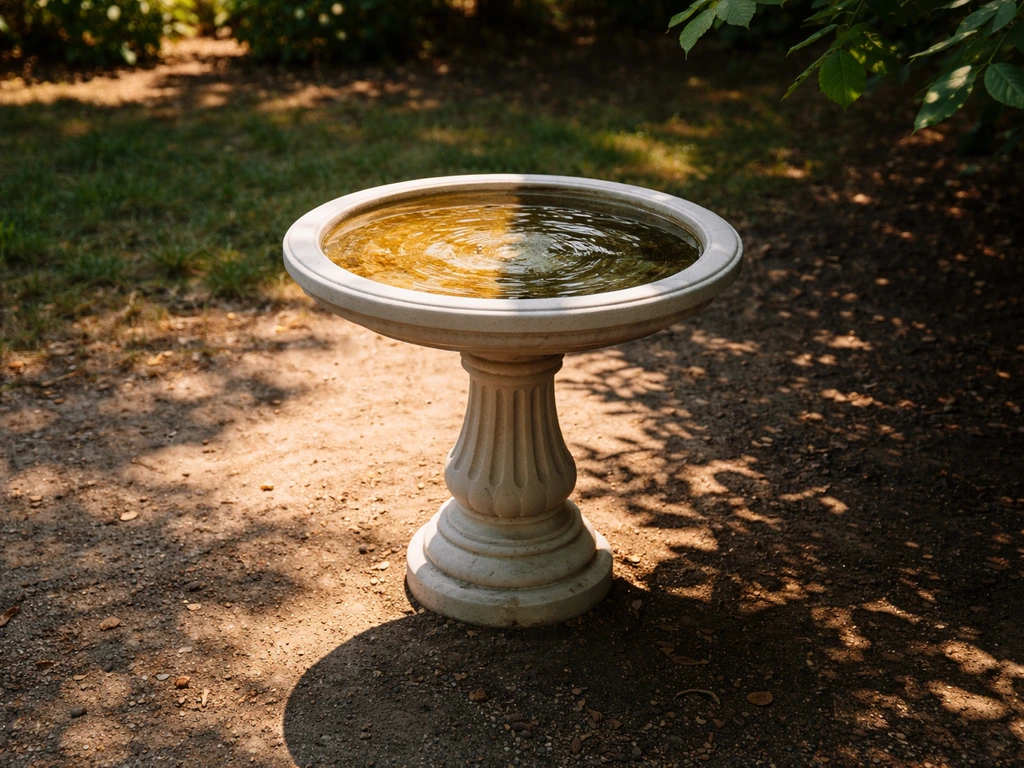
Sun vs. shade: what actually matters for your bird bath
The sun-or-shade debate comes down to four things: water temperature, evaporation rate, algae growth, and bird safety. Sun warms water fast, which feels nice in January but becomes a real problem in July when you're trying to offer birds a cool drink. Water sitting in direct sun on a hot day can get uncomfortably warm within hours, and birds will skip a bath that feels like a hot tub. Shade, on the other hand, keeps water cooler and reduces how quickly it evaporates, so you're refilling less often. The Washington Department of Fish and Wildlife specifically recommends moving bird baths into shade during warm months to reduce water temperature and help water last longer.
But full shade brings its own headaches. Without any sunlight, a bird bath stays damp and cool in a way that encourages bacterial growth and can make the basin slippery with biofilm faster. You also lose the visibility factor: birds are more confident approaching a bath they can clearly see, and a bath tucked under dense cover can feel like a trap to a nervous bird scanning for predators. So neither extreme wins. The practical answer is partial sun, and the specifics depend on your goals and season.
How much sun is right, depending on what you're trying to do
The right amount of sun shifts based on your climate, the time of year, and what problem you're trying to solve. Here's how to think about it:
If keeping water cool is the priority (hot summers)
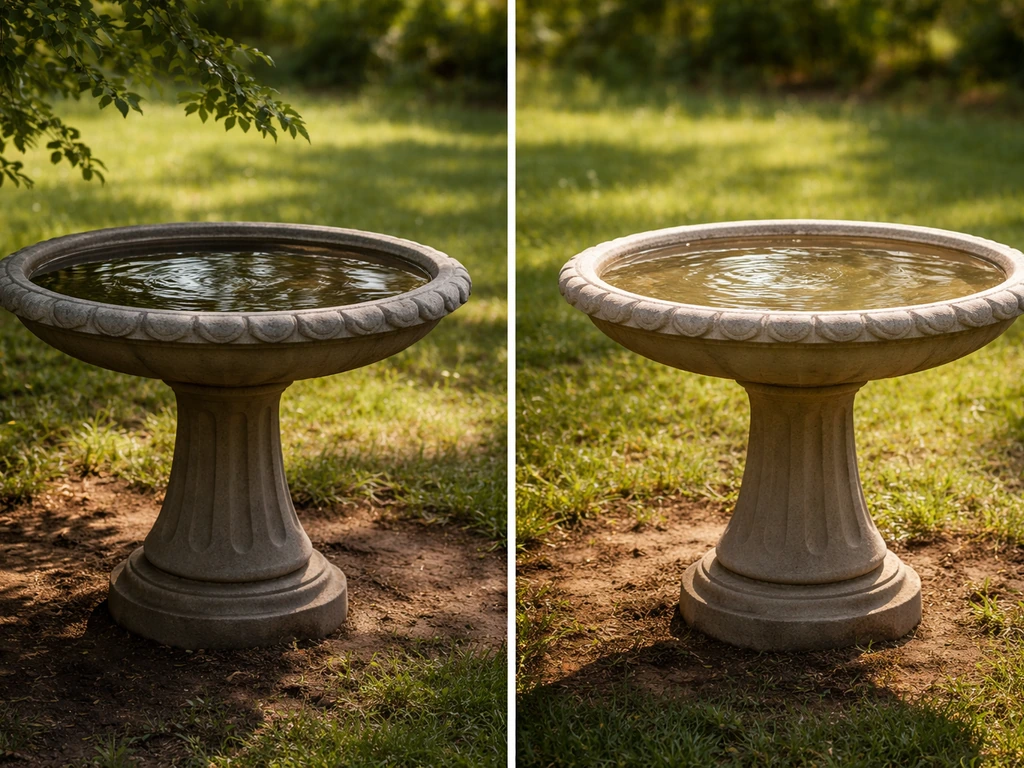
In climates with hot summers, afternoon shade is non-negotiable. Water in a sun-exposed bath heats up significantly faster than water in shade, making it less appealing and potentially unsafe for birds to drink. Aim for a spot that gets morning sun (which warms the bath gently and discourages overnight mosquito larvae) but is shaded by roughly noon or 1 PM. This is the setup I personally run from May through September in most years.
If algae control is your main concern
Algae needs light to grow, so a bath in deep shade all day will actually have less algae than one in full sun. But don't chase full shade just to reduce scrubbing. The better approach is to limit direct sun to a few hours per day, refresh the water every two to three days, and do a quick scrub on the same schedule. That combination beats any placement trick on its own.
If you need water to stay liquid in winter (freezing climates)

In winter, the math flips completely. You want more sun exposure to help keep the water from freezing, and a south-facing, open spot will get the most winter light. Even so, if you live somewhere that regularly drops below freezing, sun alone won't cut it. That's when a heated bird bath or a submersible drinker heater becomes the right tool. Sun helps, but it's not a replacement for a heating element in genuinely cold climates.
Placement strategies for real-world yards
Theory is one thing. Most of us are working with a specific yard, a specific tree line, and a limited number of obvious spots. Here's how to approach the most common situations:
Near trees or natural cover
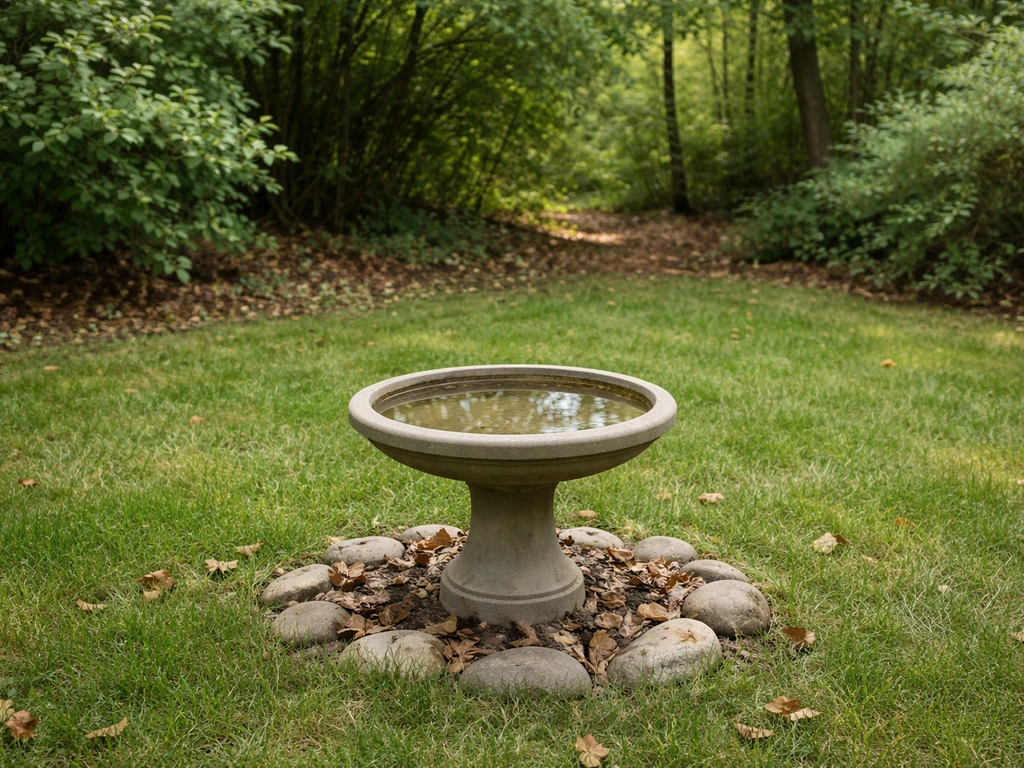
Placing a bird bath within 10 to 15 feet of trees or shrubs gives birds a clear escape route if a hawk or cat shows up, which makes them much more willing to linger and bathe. The key is not placing the bath directly under a tree. Overhanging branches drop debris (leaves, seeds, bird droppings from perching birds) into the water constantly, which speeds up how dirty it gets and forces more frequent cleanings. A spot that's near cover but not under a dense canopy is ideal. A few feet of open sky above the bath keeps it cleaner and still gives birds a perch to survey from before committing to a bath.
Near bird feeders
Positioning a bird bath close to your feeders makes intuitive sense because birds that come to eat will naturally want to drink. But keep at least three to five feet between the bath and feeders. Spilled seed and chaff from feeders falls into nearby water fast and creates a murky, unpleasant mess. The bath should be visible from the feeder area but not directly underneath one.
Open, exposed areas
A bird bath set in an open lawn with no nearby cover will get maximum sun exposure. In summer, this means water that heats up fast and evaporates quickly. Birds are also warier approaching an exposed spot since there's nowhere to flee. If open lawn is your only option, add a small nearby shrub or shepherd's hook with a hanging plant nearby to give birds a perch, and plan to refresh water more often during hot months.
Shaded patios and covered spots
A covered patio or spot under an awning can work well in summer, but watch out for deep, all-day shade. If the bath never gets any direct light, water temperature stays low and still, which encourages stagnant conditions. A dripper or solar-powered fountain attachment adds movement to the water, which discourages mosquitoes and makes the bath far more attractive to birds even in low-light spots.
Water depth, temperature, and evaporation: what to watch
Placement directly controls all three of these, so it's worth knowing what the targets look like. Most birds prefer water that's one to two inches deep at the center, with shallower edges so smaller birds can wade in. If your bath is in full sun during summer, that inch or two of water heats up to uncomfortable temperatures surprisingly fast, and some of it evaporates before the afternoon. In partial shade, evaporation slows noticeably, which means less topping off and more consistent depth.
On very hot days (above 90°F), even a shaded bath benefits from a water refresh midday. If you notice birds approaching but then flying off without bathing, lukewarm or warm water is often the reason. A quick dump-and-refill with cool water can turn that around immediately. This is one situation where having the bath close enough to a hose bib really pays off: the easier it is to get to, the more often you'll actually refresh it.
Cleaning schedules based on how much sun your bath gets
Sun exposure should directly shape how often you clean and refresh your bird bath. More sun means more heat, faster bacterial growth, and more evaporation, so the schedule tightens. Here's a practical way to think about it:
| Sun exposure | Water refresh schedule | Full scrub schedule |
|---|---|---|
| Full sun (6+ hours/day) | Every 1 to 2 days in warm months | Every 3 to 4 days |
| Partial sun/partial shade (3 to 5 hours/day) | Every 2 to 3 days | Once a week |
| Mostly shade (under 3 hours/day) | Every 2 to 3 days (watch for film) | Once a week, watch for biofilm |
The Washington Department of Fish and Wildlife and other wildlife agencies consistently recommend draining and replacing water every two to three days as a baseline, and that holds regardless of placement. In full sun during summer, I'd push that to daily refreshes at a minimum. When you do your scrub, use a stiff-bristled brush and plain water or a diluted white vinegar solution (one part vinegar to nine parts water), rinse thoroughly, and refill. Skip bleach unless you have a significant algae problem and always rinse multiple times before refilling if you use any cleaning agent.
Problems that come from getting placement wrong
Most bird bath problems trace directly back to where the bath is sitting. Here are the big ones and how placement either causes or fixes them:
Algae buildup
Algae is a light-plus-nutrients problem. A bath in full sun with stagnant water is an algae factory. If you're scrubbing green film every few days, your bath is probably getting too much direct light and not being refreshed frequently enough. Moving it to partial shade and committing to a two-to-three-day water change schedule will dramatically reduce algae without any special products. Adding a solar fountain to keep the water moving helps a lot too.
Dirty, filmy water
A thin, oily-looking film on the water surface is usually a mix of dust, pollen, skin oils from birds, and organic debris. This happens in both sunny and shaded baths but is especially noticeable in low-light spots where there's no evaporation to cycle the water. The fix is the same: regular refreshes and a quick scrub. If the bath is under trees, expect to clean it more often because debris falls in constantly.
Mosquitoes and stagnation
Mosquitoes need still water that sits undisturbed for at least four to seven days to complete their breeding cycle. If you're refreshing water every two to three days, you break that cycle before it starts. Shade alone doesn't prevent mosquitoes; stagnant water in any light condition can breed them. The most effective combination is regular water changes plus a fountain or dripper to keep water moving. Austin's city wildlife guidelines specifically call out moving water as a key mosquito deterrent alongside frequent water replacement.
Freezing in winter
If you've placed your bird bath in a shaded spot for summer and left it there through fall, you'll hit freezing problems as temperatures drop. Shade plus cold equals ice faster than you'd expect. In late fall, consider moving the bath to a sunnier spot, switching to a heated bird bath, or adding a submersible drinker heater. The care and winterizing guide notes that using a bird-bath heater helps prevent water from freezing, which can reduce how often you need to store or cover most bird baths a heated bird bath. Trying to keep a shaded, unheated bath liquid through winter in a cold climate is a losing battle.
Overheating in summer
A dark-colored bath in full sun in July can reach water temperatures that are genuinely uncomfortable or even harmful for small birds. If your bath is in full sun and you're in a hot climate, this is a real concern. The quickest fix is shade cloth, a patio umbrella positioned nearby, or simply relocating the bath. Light-colored basins (white, light gray, light blue) also absorb less heat than dark ones, so material choice matters too if you're shopping for a new bath.
Keeping birds safe: predators, access, and water hygiene
Placement isn't just about sun and water quality. It's also about whether birds actually feel safe enough to use the bath. A few things to get right:
- Keep the bath 10 to 15 feet from dense shrubs where cats can hide, but close enough to some cover (trees, hedges) that birds have an escape route if a predator shows up while they're bathing.
- Pedestal baths at 24 to 36 inches off the ground are generally safer from ground predators like cats than ground-level baths. If you have an active cat problem in your yard, height matters a lot.
- Position the bath so you can see it from a window. You'll monitor it more consistently, catch problems earlier, and get to enjoy watching the birds using it.
- Make sure the approach isn't blocked. Birds like to perch nearby and watch the bath for a moment before landing. A clear sightline to the bath from a nearby branch or fence makes them more confident.
- Change water every two to three days without fail. Stale water carries bacteria that can make birds sick, and the health of the birds using your bath depends on that simple habit more than any other factor.
One more thing worth mentioning: if you're thinking about ways to make your bird bath more attractive or functional beyond just placement, the way you set it up visually and structurally can also play a role in how welcoming it is to different species. Shading the bath during peak heat hours is one of the most effective quick fixes you can make right now if you're dealing with a too-hot, too-sunny setup. Shading a bird bath is especially important during the warmest parts of the day, so birds can drink comfortably. And if you're looking to do more with the space around your bird bath, there are plenty of creative ways to style it for the seasons or integrate it into a garden feature while keeping it functional for birds.
The bottom line: move your bird bath to a spot that gets morning sun and afternoon shade, refresh the water every two to three days, scrub it weekly, and add a fountain or dripper if you can. Do those four things and you'll have a clean, bird-friendly water source that works through most of the year with minimal frustration. You can even take the same shade-friendly, regularly refreshed setup and build it into a fairy garden display right in or around the bath fairy garden in a bird bath. If you want to dress it up for the holiday season without making it unsafe, you can also decorate a bird bath for christmas while keeping the water fresh and shade-friendly.
FAQ
How can I tell if my bird bath is getting too much sun, even before the first algae problem shows up?
Aim for morning sun with shade by noon or 1 PM in hot weather. If you can only test at one time, do it around late morning, because that’s when water temperature starts to diverge between sun and partial shade setups. Birds may still visit briefly in full sun, but they’ll often skip bathing when the water warms later in the day.
What should I do if I can only place the bird bath in deep shade?
If the bath is fully shaded all day, prioritize water movement and cleaning over chasing extra sun. A dripper or fountain attachment helps prevent mosquitoes and reduces the “still water” biofilm feel, and you may need more frequent scrubbing because low light can allow slime buildup to develop before you see algae.
Is a little direct sun okay, or does any direct sun automatically cause problems?
Yes, but use “light and brief” rather than “constant and harsh.” A bath that gets 2 to 3 hours of direct sun can be workable, as long as you refresh on schedule and scrub often enough that warm, nutrient-rich conditions do not build up. If you see warm water early afternoon, shift the setup rather than extending sun exposure.
Does the recommended water depth change how I should position the bath in sun or shade?
Use the basin depth the article mentions, but also keep water level consistent. If you run shallow water in full shade, it may cool quickly, but it can still get dirty fast due to trapped debris and biofilm. In hot climates, shallow water can also heat up faster in the sun, so consistent depth plus regular refill matters.
What’s the best troubleshooting step if birds come to drink but never bathe?
For water temperature, check when birds stop using the bath, not when you first place it. If birds approach but leave without bathing on hot days, a midday refresh with cool water can solve it even if the bath is already in partial shade.
Can I leave the bird bath in the shade year-round if I use a heater in winter?
Heaters are mainly for winter liquidity, but they do not fix the sun versus shade issue. A heated bath in winter can stay usable even in shade, but if your goal is to reduce cleaning and prevent buildup, you still benefit from a spot that gets some winter sun. In freezing climates, combine shade-friendly summer placement with a winter location change or a heater plan.
Is it better to place the bird bath under a tree for shade, or is that too risky for cleanliness?
If the bath is under overhanging branches, you may get mixed results: the shade can cool water, but the constant drip of debris increases dirty water and increases scrubbing frequency. The best compromise is near cover but not directly under the densest canopy, and with open sky above so debris has less time to fall into the basin.
Should I change the bird bath position in fall, or wait until it freezes?
If you can, move the bath seasonally. In fall and early winter, shaded placements can freeze faster than you expect, so plan a switch to a sunnier spot or add a heater before you hit sustained subfreezing nights. For renters or fixed installations, a heater plus a less shaded summer-to-fall arrangement can prevent sudden ice-up.
Do light-colored bird baths remove the need for afternoon shade?
Light-colored basins and reflective materials help reduce heat gain, but they do not eliminate the need for partial shade in hot weather. If you must keep a bath in stronger sun exposure, prioritize cooler-refill capability (hose access), shorter direct-sun duration, and ideally a dripper to reduce stagnation.
Can I clean my bird bath right after birds use it, and how do I avoid harming birds with cleaner residue?
Yes, but do it safely. When cleaning with vinegar or water-based solutions, rinse multiple times and make sure there is no residue before refilling, especially at the first bird arrival in the morning. After any chemical cleaning, avoid leaving the basin to air-dry with residue, because residue can add smell or film that birds reject.