Water is genuinely life-or-death for birds, and a clean, well-placed bird bath is one of the single best things you can put in your backyard. To get birds using it immediately: pick a shallow basin (1 to 2 inches deep), set it near cover but in an open spot, refill it every 2 to 3 days, and scrub it once a week.
Water Is Life Bird Bath Guide: Choose, Place, Clean, Maintain

Marcus Henley
5 Jul 2026
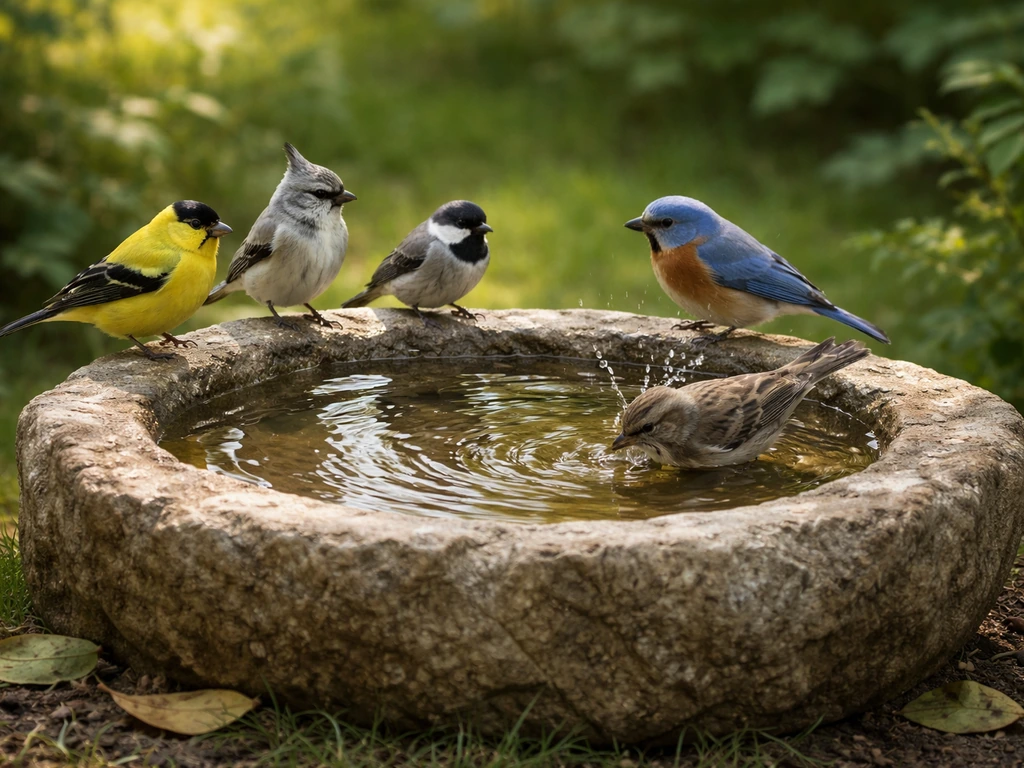
If you need a simple alternative, a milk can bird bath can work well as long as you keep it stable, clean, and in a safe spot for birds. That covers 90% of what you need. Everything else below is about doing it better, solving problems when they show up, and keeping the bath working through every season.
Why birds need water (and what 'water is life' really looks like in your yard)
Birds need water for two things: drinking and bathing. The drinking part is obvious, but the bathing part matters just as much. Wet feathers are easier to preen, and preening keeps insulation working properly, which directly affects a bird's ability to regulate body temperature and survive cold nights. A bird with dirty, matted feathers is a less efficient, more vulnerable bird.
In practical terms, a bird bath often fills a gap that natural water sources don't. Streams and ponds are great, but they're not in most backyards, and they're not always safe. A tidy bath with fresh, shallow water gives birds a reliable, predictable stop. Once a few birds discover yours, word spreads fast. You'll notice the same species returning daily, and new ones showing up as the word gets out.
Water also attracts birds that your feeders won't. Warblers, thrushes, and other insect-eaters rarely visit seed feeders, but they'll absolutely use a bird bath. If you want more diversity in your yard, clean water is your best tool. Some birds specialize in rain or very fresh surface water, which can matter when you choose how to offer water in your yard rain water.
Picking the right bird bath for your yard
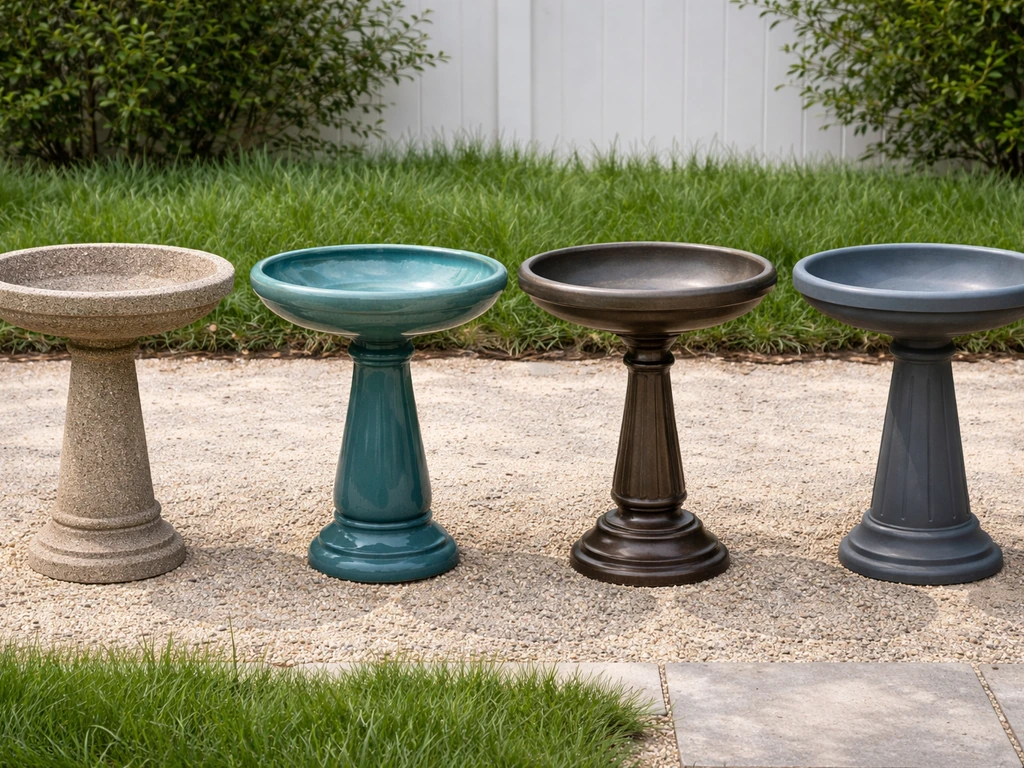
The material and style you choose affects how easy the bath is to maintain, how long it lasts, and which birds will actually use it. A bird watering can is a handy alternative when you want to keep a fresh, shallow water source available without relying on a standing basin bird bath. Here's an honest breakdown of the main options.
| Type | Pros | Cons | Best For |
|---|---|---|---|
| Concrete/Stone | Durable, textured surface birds grip easily, looks natural | Heavy, can crack in hard freezes, harder to clean | Permanent garden feature, cold climates with careful placement |
| Ceramic/Glazed | Beautiful, easy to clean, lots of styles | Slippery if fully glazed inside, chips and cracks in freezing temps | Mild climates, decorative setups |
| Metal (copper, zinc, stainless) | Long-lasting, some have natural antimicrobial properties | Can heat up fast in summer, copper may discolor water | Durable year-round use with monitoring |
| Heated | Keeps water liquid in freezing weather, birds drink year-round | Requires outdoor power, some units run too warm, higher cost | Cold climates where water freezes regularly |
| Solar-powered | No wiring needed, can power a small pump or wiggler | Pump only works in direct sun, limited power output | Adding water movement without running electricity |
My honest recommendation: if you're in a climate with real winters, a heated bath or a standard concrete bath with a separate submersible heater is worth the investment. If you're in a mild climate, a good concrete or resin bath with a textured interior is the most practical all-around choice. Ceramic looks great but skip fully glazed interiors because birds slide around and avoid them.
Placement and setup that actually gets birds to show up
Where you put the bath matters as much as what you put out. Birds are cautious, and a bath placed in the middle of an open lawn with no nearby cover will often sit unused. Here's what works:
- Place the bath within 10 feet of shrubs or trees so birds can perch, watch for predators, and dart to safety if startled. Don't push it right under dense bushes, though, since cats use those as hiding spots.
- Height matters by species. Ground-level baths attract thrushes, robins, and towhees. Pedestal baths at 2 to 3 feet off the ground suit most songbirds and are safer from cats. Both can work if you have the space.
- Keep it visible from your window. You'll spot problems faster and enjoy watching it more. A bath you can see is a bath you'll maintain.
- Avoid placing it directly under a heavily used bird feeder. Hulls and droppings foul the water quickly.
- Put it near a water source (garden hose or spigot) so refilling isn't a chore.
Depth is the detail most people get wrong
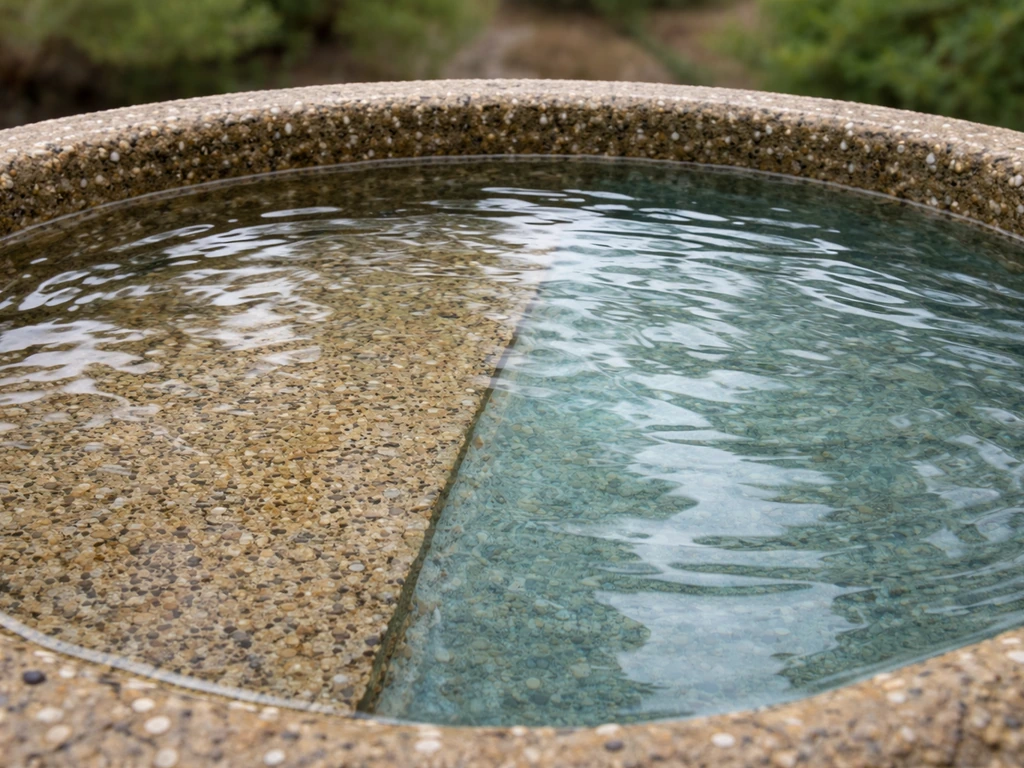
Cornell Lab and Audubon both flag this: the water should be about 1 inch deep at the edges, sloping to a maximum of 2 inches in the center. That's it. Go deeper and smaller birds won't wade in, they'll just perch on the rim and stretch to drink. Some birds will avoid the bath entirely if it looks too deep. If your basin is too deep, add a flat stone or two to create a shallower wading area. The stone also gives birds something to stand on when drinking without getting fully wet, which is especially useful in cold weather.
Texture on the basin floor also matters. Smooth glazed ceramic is hard for birds to grip, especially when wet. Concrete and rough stone baths have natural texture. If your bath is slippery, adding a few small pebbles or a piece of non-toxic natural slate at the bottom gives birds better footing and makes the bath much more inviting.
Tweaks for specific birds
Hummingbirds prefer very shallow, moving water, so a mister or a dripper attachment works far better for them than a standard basin. Crows and larger birds need a bigger, deeper basin (closer to that 2-inch max). If you want to attract both, consider two baths at different heights and depths. Adding water movement, whether from a small solar pump, a water wiggler, or a dripper, dramatically increases how many species notice and use the bath. The sound of moving water carries, and birds find it from a distance.
Daily and weekly maintenance that keeps the bath working
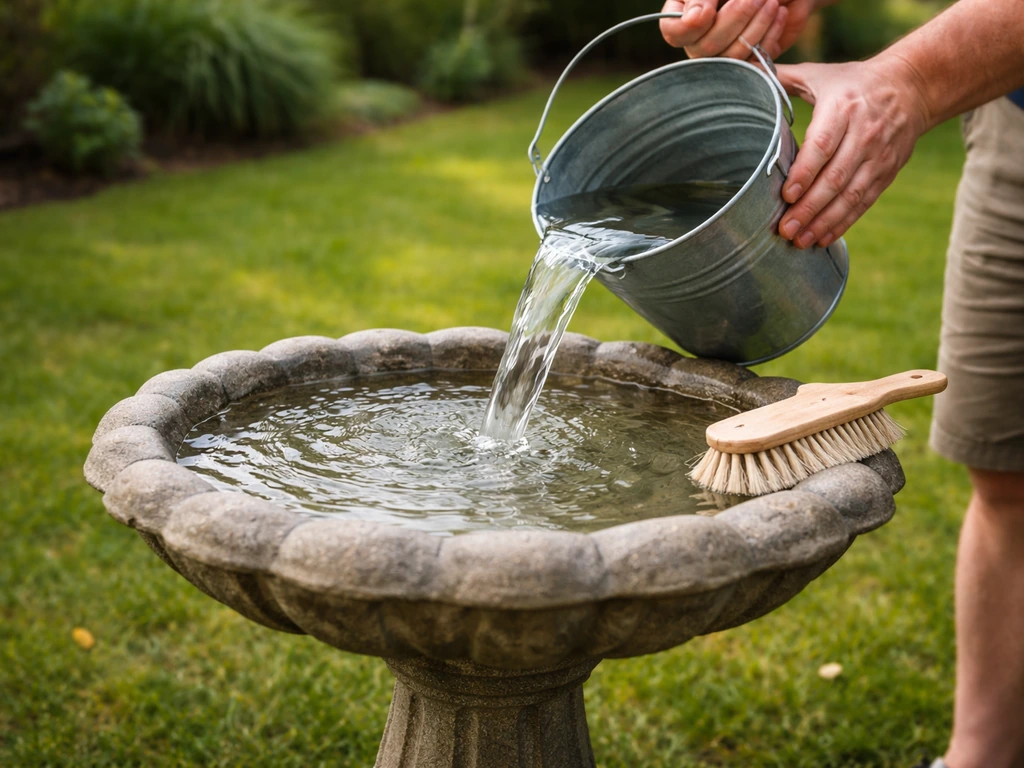
The single biggest mistake people make is treating a bird bath like a garden decoration and walking past it for a week. Stale water turns green, smelly, and dangerous fast, especially in warm weather. Here's the routine that actually works:
- Refill every 2 to 3 days at minimum, and daily in summer heat. Dump out the old water rather than just topping it off, so you're not concentrating contaminants.
- Once a week, empty the bath completely and scrub the basin with a stiff brush and hot water. You don't need soap, but if you use it, rinse thoroughly because residue harms birds.
- Check the basin for algae, debris, and bird droppings every time you refill. If you see slime starting to form, don't wait for your weekly scrub.
This routine sounds simple because it is. The people who see it fail are usually trying to maintain a bath that's too inconvenient to refill regularly, which comes back to placement. If the bath is near a hose, the whole process takes two minutes.
Dealing with algae, scum, and odors
Green algae is the most common bird bath problem, and it's caused by sunlight plus standing water plus warmth. A bath in full sun will develop algae faster than one in partial shade. The fix when you see it: scrub immediately with hot water and a good scouring brush. Cornell Lab specifically recommends this approach rather than waiting. Don't let it sit because algae forms a biofilm that becomes harder to remove and can harbor bacteria.
For ongoing prevention, the most effective non-chemical approach is simply changing the water more frequently and keeping the basin clean. A weekly scrub and every-other-day water change will stop most algae before it starts. Partial shade also slows algae growth without making the bath too dark or covered-feeling for birds.
If you're dealing with persistent algae despite regular cleaning, some products designed specifically for bird baths (enzyme-based additives) can help between cleanings. Avoid bleach-based products unless you rinse the basin extremely thoroughly, and never use products that aren't labeled safe for wildlife. The EPA also registers Bti-based products for use in standing water, including bird baths, but those are primarily targeted at mosquito larvae rather than algae.
Keeping mosquitoes away
Mosquitoes need standing water to breed, and a neglected bird bath is a perfect breeding site. The CDC recommends emptying and scrubbing items that hold water, including bird baths, at least once a week to eliminate mosquito eggs and larvae before they develop. That weekly scrub isn't just about aesthetics; it's the most effective mosquito control you can do.
Beyond cleaning, moving water stops mosquitoes from laying eggs in the first place. A solar-powered water wiggler or a small dripper keeps the surface agitated constantly. Mosquitoes won't lay eggs in moving water. This is one of the simplest, most effective upgrades you can make to any bird bath, and birds love the movement anyway.
If you have a larger or deeper decorative basin where mosquitoes are a real problem, Bti dunks (Bacillus thuringiensis subspecies israelensis) are EPA-registered larvicides that are safe for birds, pets, and other wildlife. Bti (Bacillus thuringiensis subspecies israelensis) is registered by the U.S. EPA for controlling mosquito larvae, including when used around homes in areas where water collects such as bird baths Bti dunks are EPA-registered larvicides that target mosquito larvae. They target only mosquito larvae, not other organisms. Drop one in the water according to the label directions. This is a good backup option for situations where you can't change the water as frequently as you'd like, but it's not a substitute for regular cleaning.
Seasonal troubleshooting
Winter: keeping water liquid when it freezes
Frozen water is one of the biggest challenges for birds in cold climates, and a bird bath that stays liquid in winter is genuinely valuable. Here are your options, in order of effort:
- Pour warm (not boiling) water into the bath once or twice a day to melt ice. Simple, costs nothing, works fine if you're home and consistent.
- Add a submersible birdbath heater or buy a dedicated heated bath. These are thermostatically controlled, so they only run when needed. When shopping, look for a unit that plugs into a grounded outdoor extension cord. Oklahoma Department of Wildlife Conservation guidance suggests heaters designed to operate at the 1 to 3 inch water depth typical of bird baths.
- Add stones or a flat branch to the bath so birds can perch and drink without having to stand in freezing water.
A few important warnings: never add salt to a bird bath to prevent freezing. The U.S. Fish and Wildlife Service specifically flags this as harmful to birds and wildlife. Never add antifreeze or glycerin, either. Cornell Lab is emphatic that antifreeze is poisonous to animals including birds, and advises against glycerin as well. These feel like shortcuts but they can kill birds.
On heated baths specifically: they work well, but check the water temperature occasionally. Some lower-quality units run hotter than necessary. One manufacturer's instructions note that on warmer days, water can reach around 75°F, which is fine. But a poorly regulated unit running significantly hotter than that is worth monitoring. The Canadian Wildlife Federation has actually expressed caution about heated baths in general, though the consensus among most birding organizations is that a properly functioning, thermostatically controlled heated bath is a safe and useful tool in genuinely cold climates. If you're using a heated bath, Pennington suggests covering it with a nonmetallic grille so birds can access the water safely without risk from the heater element.
Summer: hot weather, evaporation, and fast algae
In summer, water evaporates faster, algae grows faster, and birds need water more urgently. Move to daily refilling if you haven't already. Consider placing the bath in morning sun with afternoon shade to slow algae and keep the water cooler. A darker basin sitting in full sun can heat the water to uncomfortable temperatures for small birds. Check the water by touching the basin surface on hot days. If it feels uncomfortably warm to your hand, it's probably too warm for birds.
What to do today to get birds using your bath
If you're setting up a new bath or troubleshooting one that isn't getting visits, work through this quick checklist:
- Check the depth. If it's more than 2 inches anywhere, add flat stones to shallow it out.
- Check the surface texture. If it's slippery, add pebbles or a piece of rough stone.
- Reposition if needed. The bath should be within 10 feet of some shrub or tree cover, but not right underneath it.
- Make sure the water is fresh. If it's been sitting more than 3 days, dump it and refill.
- Add movement if you can. Even a simple drip from a leaky hose nozzle nearby will attract more birds than still water.
Give a new setup about a week before you expect regular visitors. Birds are cautious and it takes a few scouts to discover and spread the word. If you've had the bath for weeks with zero activity, run through the checklist above and also look for nearby threats: a roaming cat, a reflective window, or a very open exposed spot will keep birds away regardless of how clean the water is.
The bath is one piece of the puzzle. If you're curious about maximizing water movement to attract more species, adding a water wiggler or a mister is a natural next step. For winter specifically, making sure water stays available and ice-free is the most impactful thing you can do for birds when natural water sources are locked up. For winter, OutdoorOK/OOJ advises that if you are not refilling the bath daily, consider a blank" rel="noopener noreferrer">heater designed to operate at typical birdbath water depths of about 1 to 3 inches. Start with the basics here, get them dialed in, and then build from there.
FAQ
Is it safe for baby birds or small songbirds to use a water is life bird bath?
Yes, but you need to reduce the risk of drowning. Provide a sloped edge with a shallow entry area (about 1 inch deep at the sides, up to around 2 inches at the center), and add a few flat rocks so small birds can step out easily after a quick dip.
What’s the safest way to clean a bird bath if algae keeps coming back?
Avoid deep cleaning agents that leave residues. After scrubbing with hot water, rinse until there is no slippery film left behind, then refill. If you must use a wildlife-labeled additive, follow the dosage exactly and do not combine multiple products in the same week.
What should I do when my water is life bird bath turns green overnight?
If you see slime or green scum, treat it as an immediate clean-up, not a wait-and-see situation. Scrub first (hot water plus a scouring brush), then switch to an every-other-day water change and, if possible, move the bath toward partial shade to slow regrowth.
How often should I refill my water is life bird bath during heat waves?
On a hot day, test the water by touch. If it feels uncomfortably warm to your hand, birds will likely avoid it, so refill sooner and adjust placement to morning sun with afternoon shade, which also reduces algae speed.
Do mosquito control steps also prevent algae in a bird bath?
Use separate routines for each: for mosquitoes, keep up with at least weekly emptying and scrubbing, and add movement if you can. For algae, the priority is more frequent water changes plus partial shade, because sunlight and warmth drive algae even if mosquitoes are controlled.
Can I add anything to my bird bath water, like sugar water or milk, to attract more birds?
You can, but it will still require regular maintenance. Use plain, fresh water only, and clean the basin weekly. Avoid adding fish food, milk, or other organics, since they raise bacterial load and can foul the water quickly.
My bird bath is in full sun, can I still keep it usable without moving it?
If the bath is in full sun and you cannot move it, create shade without enclosing it. Use a partial-shade strategy like a light overhead cover that still allows birds to approach and see, because stagnant shade that blocks bird access can reduce visits.
How close should a bird bath be to bushes or trees?
Yes, placing it near cover is good, but keep it far enough from hiding spots that predators can ambush. A practical target is roughly close enough to feel safe, but not right beside dense cover where cats can launch. Also keep it visible from open approach paths so birds can land confidently.
Can I use salt or other household additives to stop a bird bath from freezing?
Never. Skip salt, antifreeze, and glycerin, even “small amounts.” These can injure or kill birds, and some residues remain in the basin. If you need winter help, use a properly thermostatically controlled heated bath or a safe heater with a protective grille.
How do I attract both hummingbirds and larger birds with the same setup?
Yes, two baths can reduce conflict and increase variety. Place one for smaller waders with shallower edges and another for larger birds closer to the upper end of the depth guidance, and separate them enough that one doesn’t crowd out the other.
Why are birds not using my bird bath even though I’m keeping it clean?
Sometimes it’s a perception issue, not a cleanliness issue. Give the birds time to scout (about a week), reduce sudden reflections from windows nearby, and ensure there is a safe landing path. Even a very clean bath can go unused if the approach route is exposed.
Birds only perch on the rim, they don’t bathe. How can I fix that?
If it’s only a rim-perching problem, adjust the depth and texture. Create a shallower wading zone with stones if needed, and address footing by adding small pebbles or using a rough-textured basin surface so wet feet can grip.
Next Articles
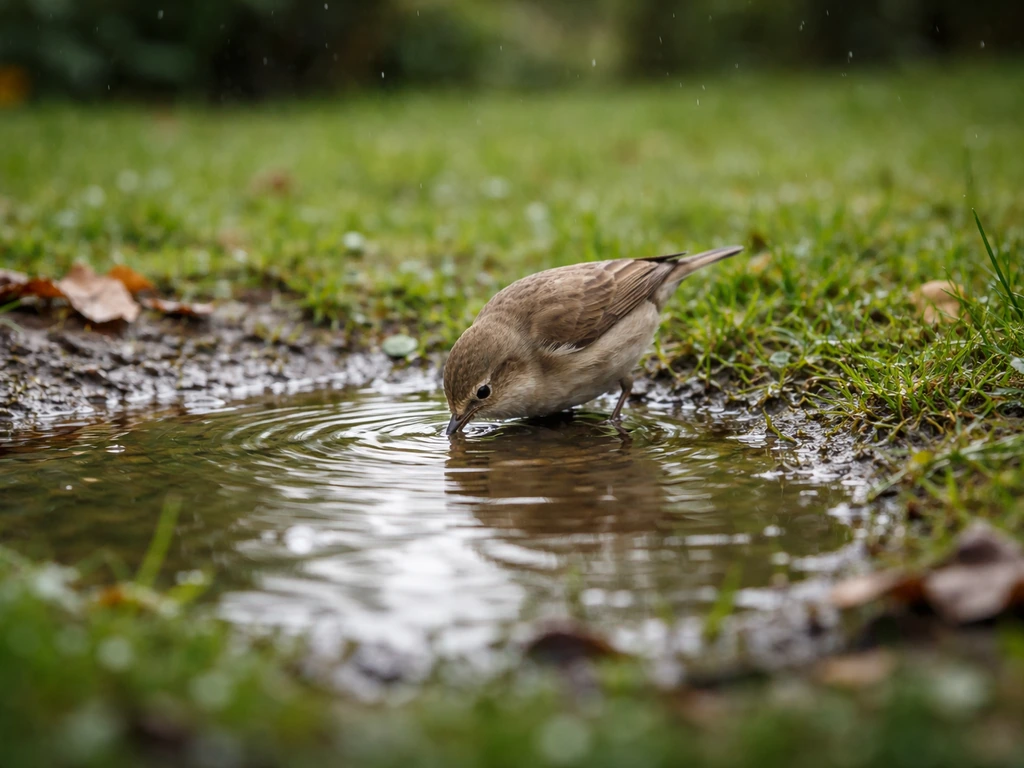
Which Bird Drinks Only Rainwater? Backyard Facts
No bird drinks only rainwater. Learn which species prefer rain puddles, how to test, and build a rain-fed bath safely.
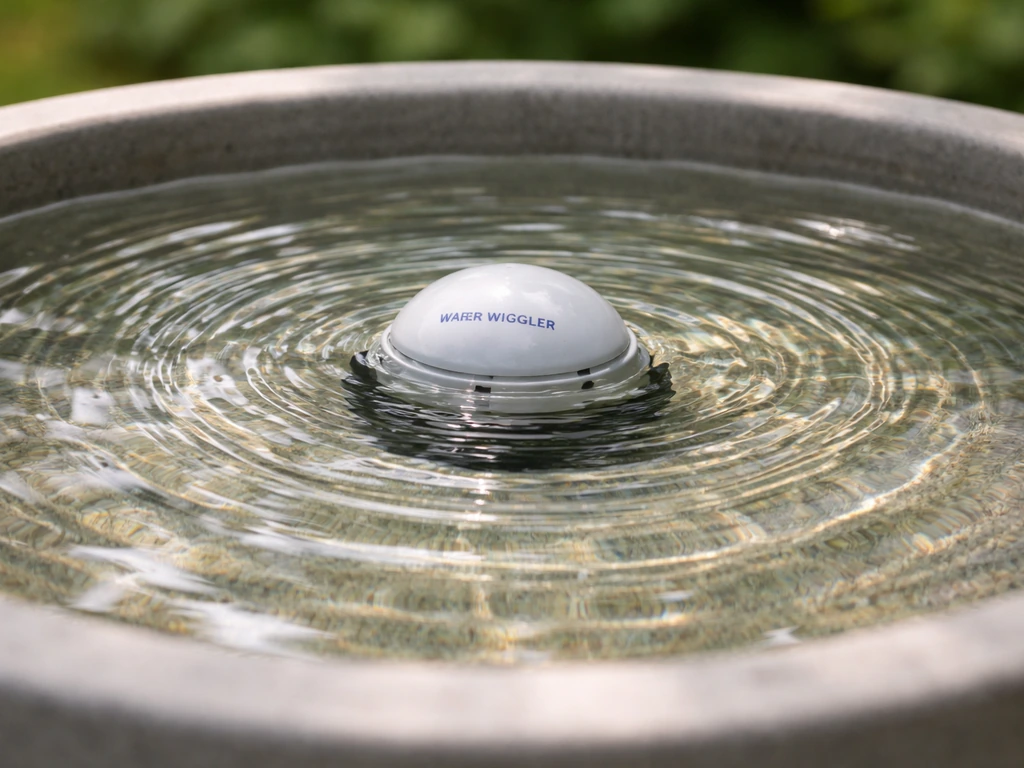
Best Water Wiggler for Bird Bath: Buyer Guide and Setup
Choose the best water wiggler for your bird bath with sizing, power, setup, maintenance, and troubleshooting tips.
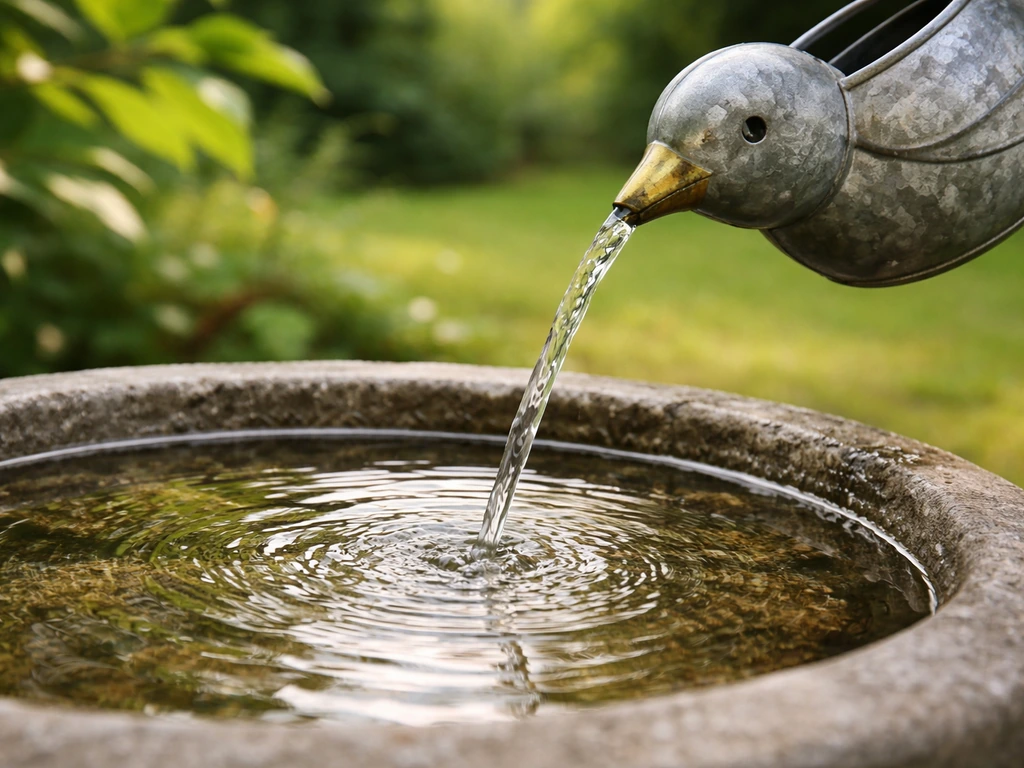
Bird Watering Can Guide: Setup, Use, and Maintenance
How to choose and use a bird watering can for clean, shallow bird water daily, prevent algae and mosquitoes, and maintai