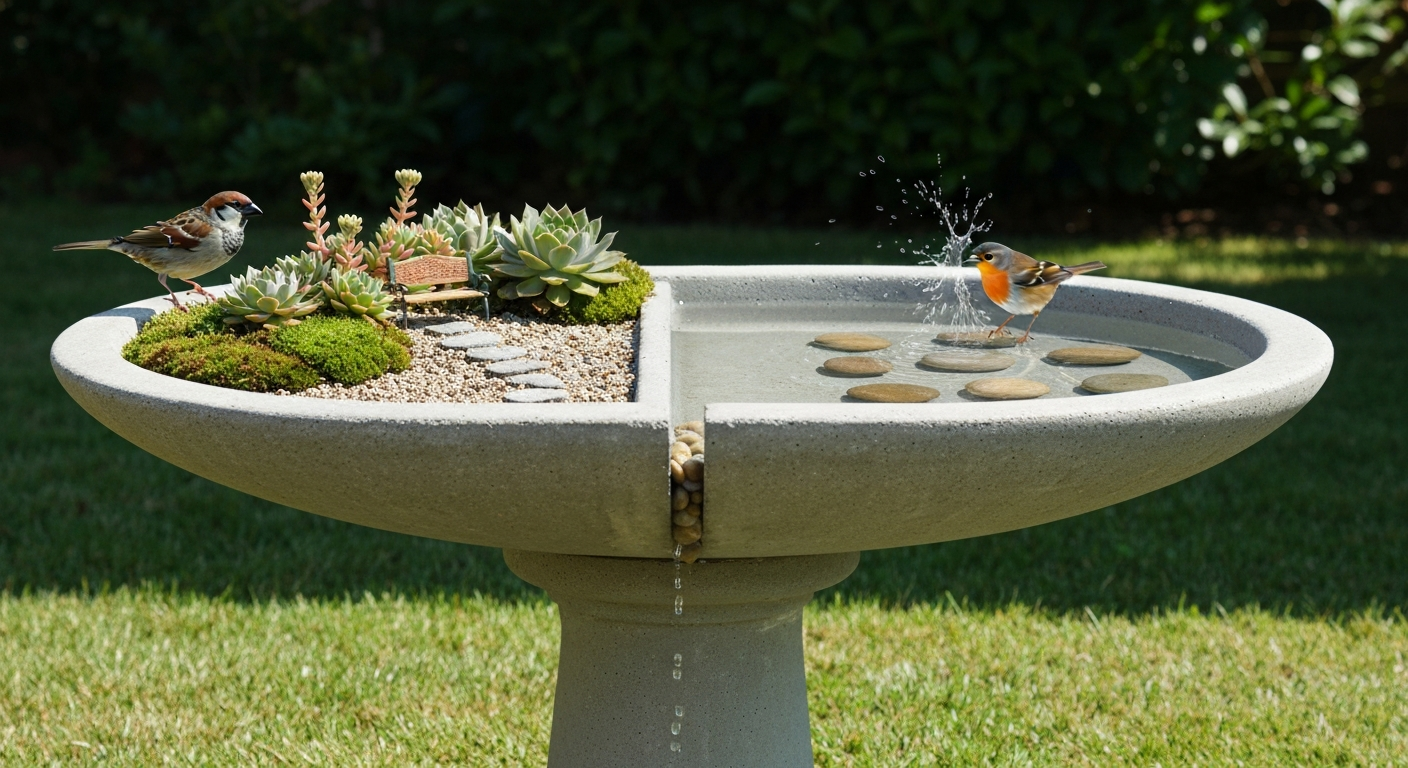
Do not put milk in a bird bath. Not regular milk, not skim milk, not a splash of oat milk, not any dairy product. Birds are lactose intolerant, full stop. No bird species has the enzymes to digest lactose properly, and exposure to dairy can cause serious gastrointestinal distress. Beyond the harm to the birds themselves, milk spoils fast outdoors, turns the water into a bacterial soup, and creates a foul-smelling mess that will drive birds away rather than attract them. Fresh, clean water is the only thing that belongs in a bird bath. <a data-article-id="1D9FD22A-197F-4233-BA2C-9FDCBD5F6774">Water is life, and that clean, fresh supply is what bird baths should provide every day. Water is life bird bath, and that clean, fresh supply is what bird baths should provide every day. </a>
Milk Can Bird Bath: Is Milk Safe and What to Use Instead

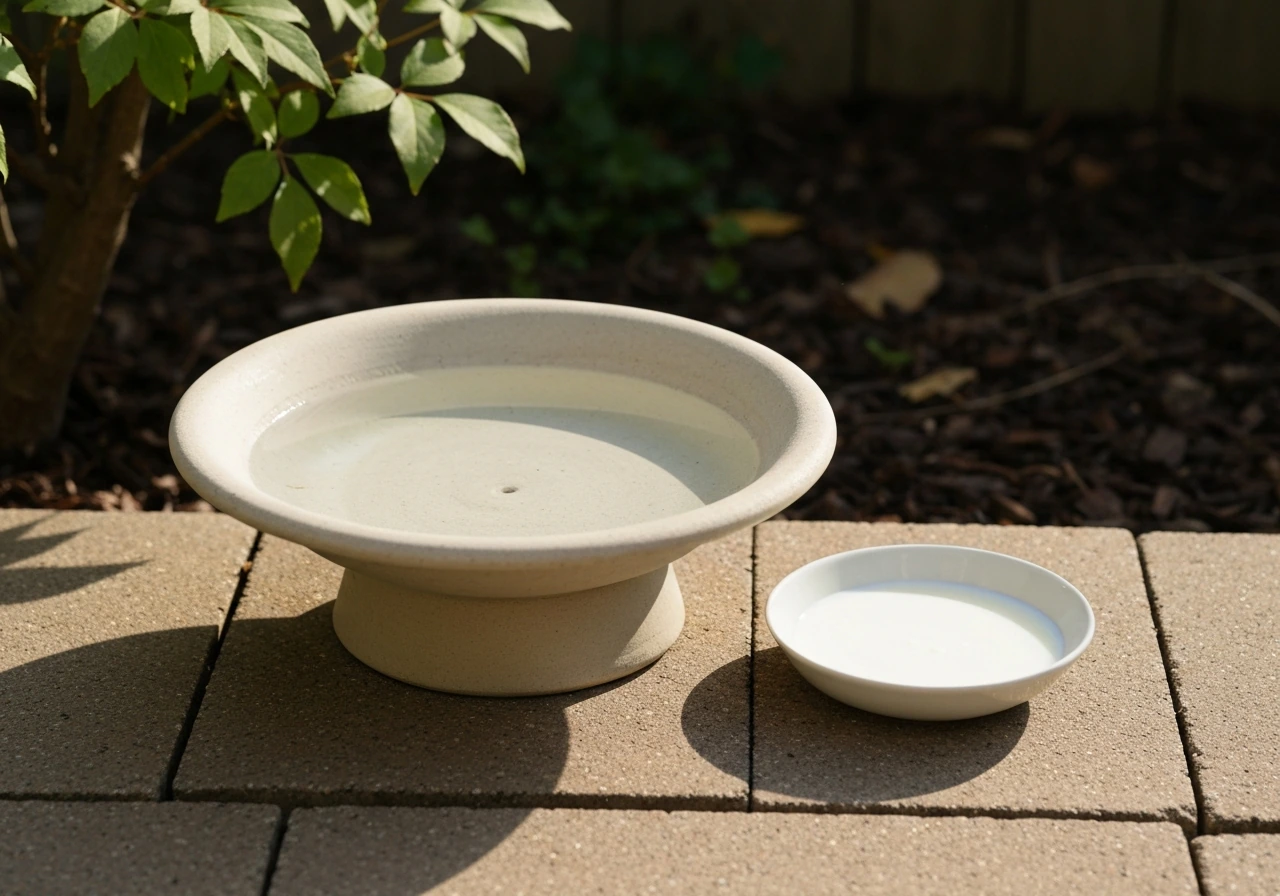
Does milk attract birds in a bird bath?
The short reasoning behind this search makes sense: milk is a food, birds need food, so maybe milk in water creates some kind of attractive slurry? It doesn't work that way. Birds visit bird baths for clean drinking and bathing water, not for nutrients dissolved in the water. What draws birds in is the look and sound of clean, moving water, not anything added to it. If you're curious about bird drinking water toys, these typically work by keeping water accessible while encouraging natural drinking and movement. Milk doesn't improve visibility, doesn't produce the ripple movement birds are drawn to, and doesn't have any scent profile that songbirds, robins, finches, or other common backyard species would associate with a drinking spot. In practice, milk in a bird bath repels birds because the water quickly turns murky and smells off. Birds have good instincts about water quality and will avoid a bath that doesn't look or smell right.
Is milk safe for birds and wildlife?
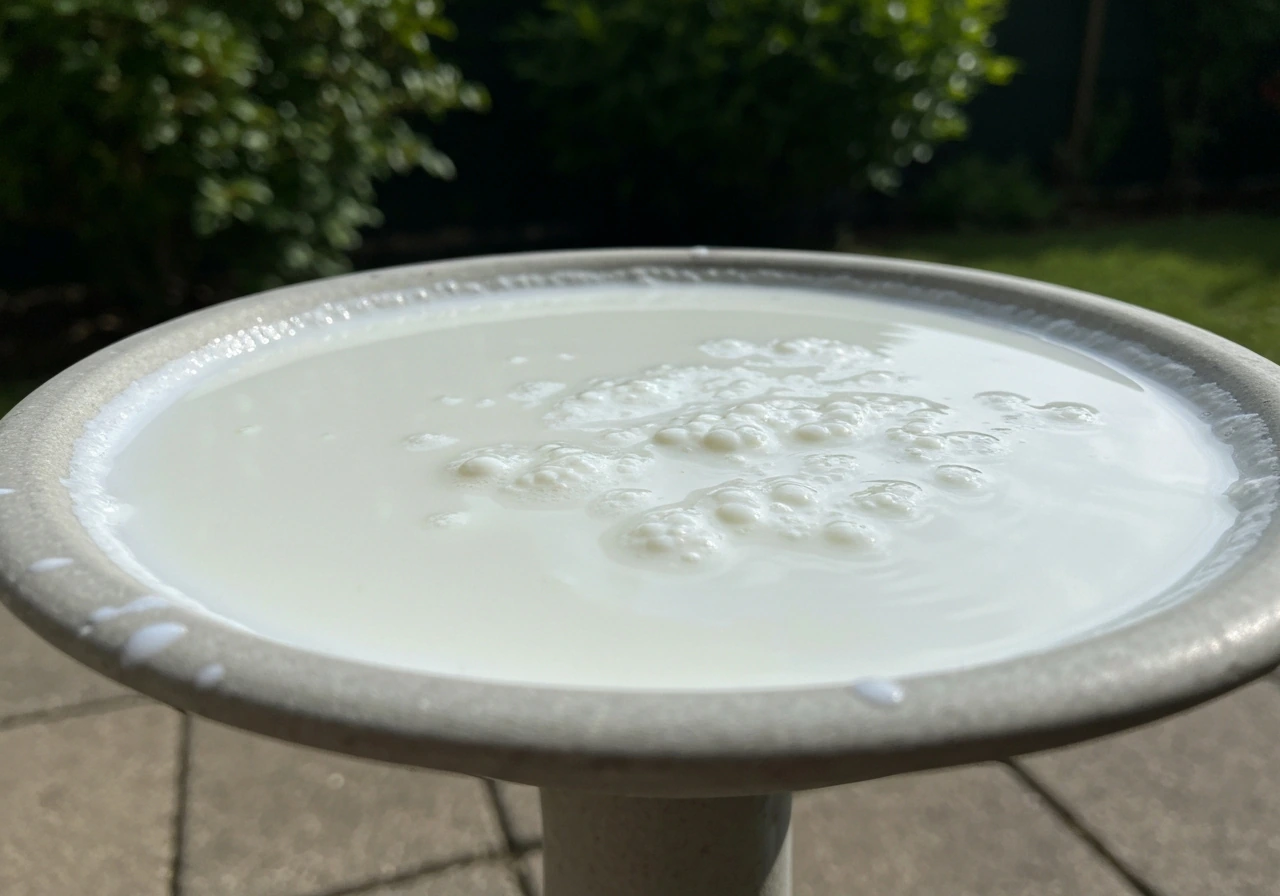
No, and this is one of the clearer-cut answers in backyard birding. The RSPB explicitly lists milk among foods to avoid giving to wildlife, alongside mouldy and salted foods. Veterinary guidance from bird clinics cautions that dairy exposure causes digestive upset and can make birds seriously ill. The reason is straightforward: birds lack the digestive enzymes to process lactose. Adult birds are affected, and so are chicks, who are even more vulnerable. Other wildlife that visits your garden, including hedgehogs, foxes, and squirrels, is similarly harmed by dairy products. The "milk is fine for animals" idea is an old one that has been thoroughly debunked. When it comes to a bird bath specifically, even residue left from a previous milk-and-water mix can be a health risk once bacteria begin breaking it down. The RSPB recommends being able to replace water daily and disinfect weekly, which is already a high bar to clear with plain water. Milk makes that hygiene challenge significantly harder.
It's also worth noting that other additives create their own problems. Cornell Lab's All About Birds specifically warns against glycerin (it mats feathers and removes their waterproofing) and antifreeze (it's poisonous to birds and other animals). The pattern is consistent: anything other than clean water introduces risk with no meaningful benefit.
What goes wrong when milk spoils in a bird bath
Even if you weren't worried about the direct harm to birds, what happens to milk in a bird bath outdoors is enough reason never to try it. Here's what you're actually dealing with once milk hits warm or even room-temperature water in an outdoor basin.
Water quality collapses fast
Milk is packed with proteins, fats, and sugars that bacteria love. In warm weather, bacterial populations in milk-water mixtures can explode within hours. The water turns cloudy, then yellowish, then a grey-green as other microbes join the party. Algae growth accelerates dramatically when nutrients are present, and the fats in milk coat the basin surface in a biofilm that's genuinely difficult to scrub off. You're looking at a bath that goes from usable to biologically hazardous in a single afternoon.
The odor problem
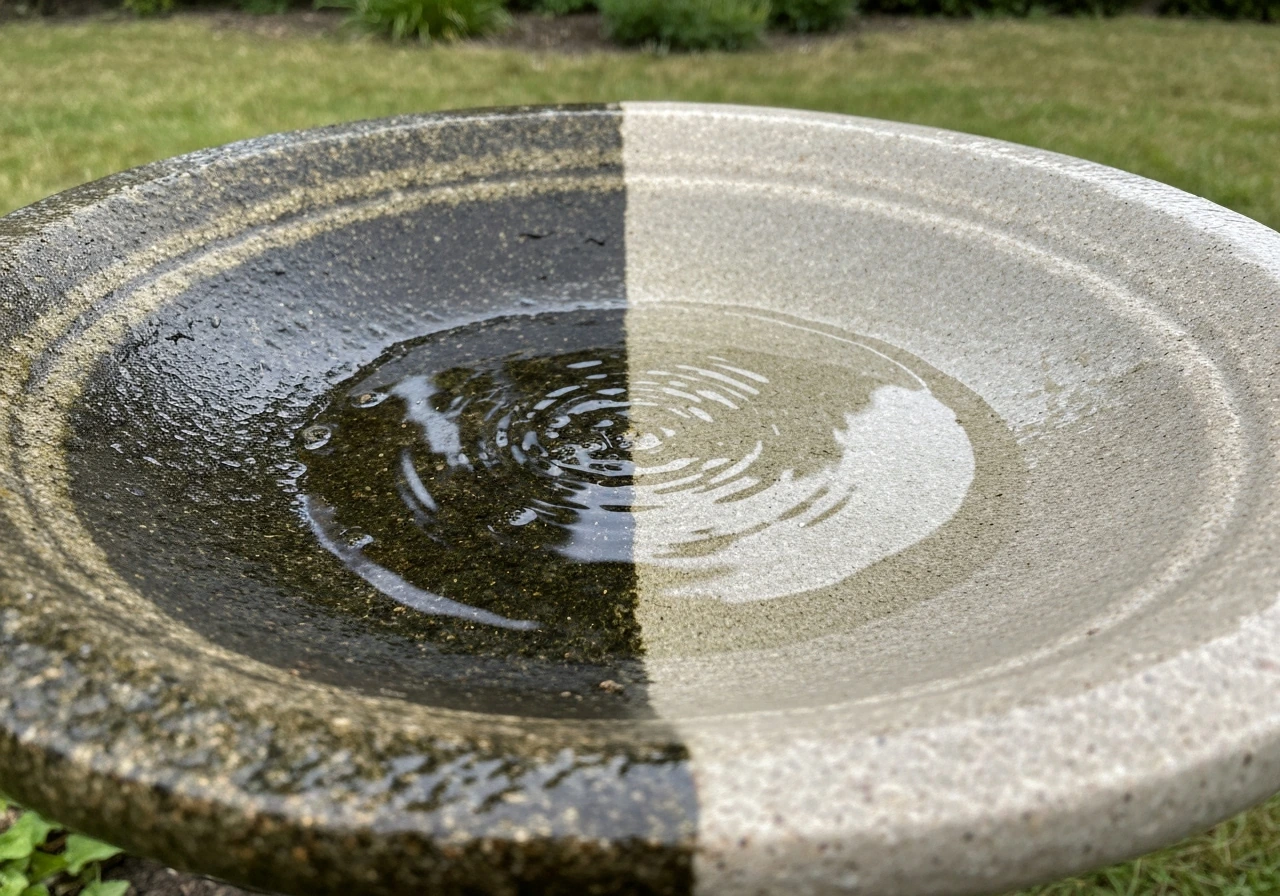
Sour milk outdoors in direct sun smells exactly as bad as you'd expect, and that odor lingers in porous materials like concrete or ceramic long after you've dumped the water. Birds are not attracted to the smell of rotting dairy. Mammals might investigate out of curiosity, but you'll also be inviting pests you don't want, including rats and raccoons.
Pathogens and disease risk
Bird baths can accumulate pathogens even under normal conditions, which is why the RSPB recommends weekly disinfection with plain water. Add milk to that equation and you've created a growth medium for bacteria including Campylobacter, which can spread between birds and to other wildlife. A contaminated bird bath is a shared resource for every bird in your neighborhood, so one bath going bad can affect a lot of individuals. This is not a theoretical risk: research has shown that birds can carry and spread Campylobacter through contaminated water contacts.
Insects and mosquitoes move in
Standing water alone can become a mosquito breeding site in about three days according to CDC guidance. Water enriched with nutrients from milk is even more attractive to insects. Mosquito larvae thrive in nutrient-rich, still water. You'd end up with a bird bath that's producing mosquitoes and harboring bacteria, while the birds you wanted to attract have moved on to cleaner water sources.
What to use instead of milk
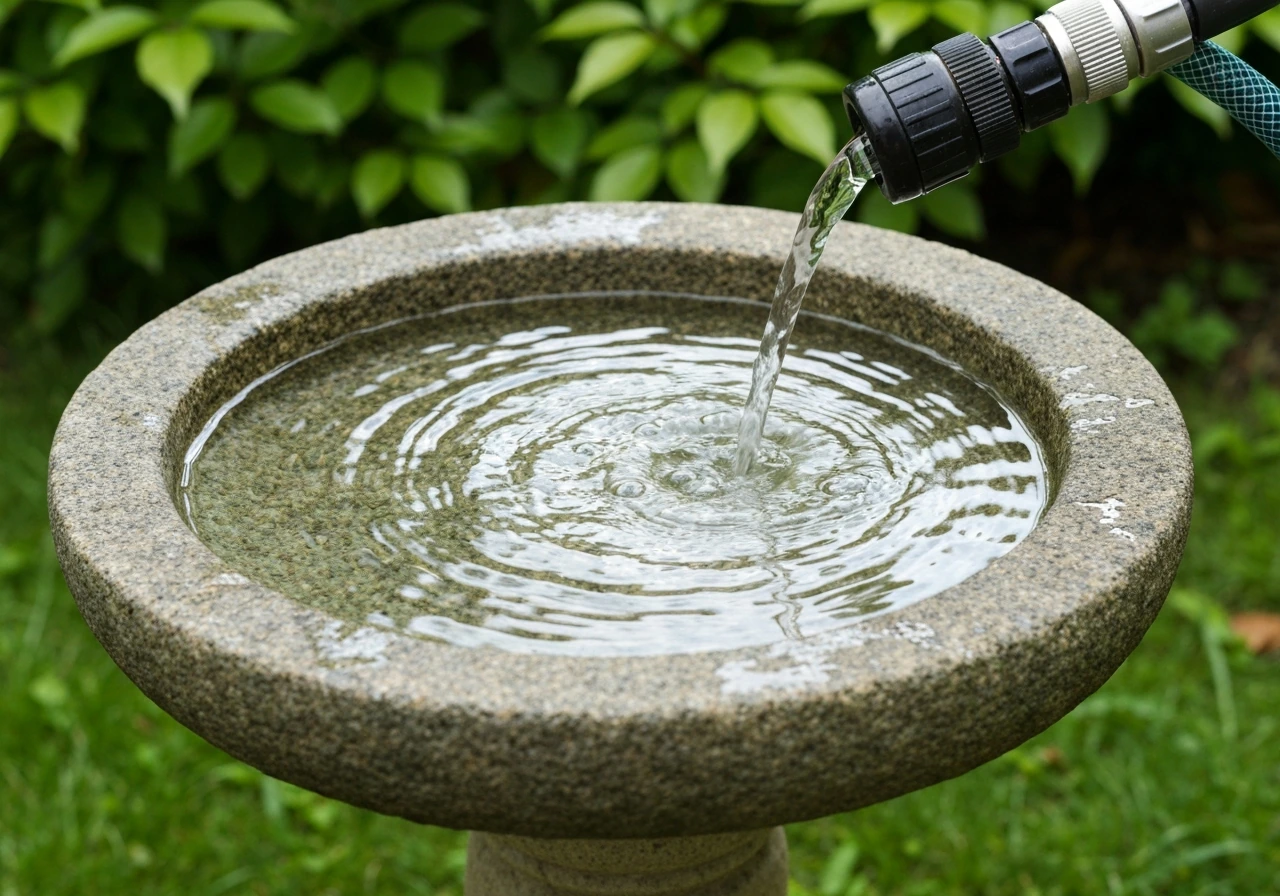
Fresh, clean tap water is the right answer, and it genuinely works. The thing that makes a bird bath irresistible to birds isn't what's in the water, it's how the water looks and moves. Here's what actually draws birds in reliably.
- Fresh water changed daily: The RSPB and Audubon both recommend daily refills with clean tap water. Stale, murky water puts birds off immediately.
- Moving water: A dripper, mister, or water wiggler creates ripple and sound that birds can detect from a distance. Cornell Lab's All About Birds is emphatic that this is the single best way to attract more species to a bath. Ohio DNR even recommends a simple DIY dripper made from a recycled milk jug (the container, not the dairy inside) to drip water into your bath continuously.
- A shallow basin: Most birds prefer water between 1 and 2 inches deep. If your bath is too deep, adding a flat rock or two gives smaller birds a safe landing spot.
- No additives at all: Clean water, no glycerin, no vinegar in the bath itself (vinegar is for cleaning after, not adding to the water while birds use it), no antifreeze in winter, and definitely no milk or dairy.
In winter, when freezing is your concern, a birdbath heater or heated bath keeps water open without any additives. Audubon recommends this approach specifically as the safe alternative to anything you might think about adding to prevent freezing.
How to set up and place your bird bath so birds actually visit
Placement matters as much as what's in the bath. I've moved the same bath three times in one season before finding the spot where birds consistently used it, so don't be discouraged if your first location doesn't work immediately.
- Put it near cover but not under it: Birds want an escape route if a predator shows up. Place the bath within 10 feet of shrubs or low branches they can dash to, but not directly under a tree where leaves, sap, and bird droppings from perching birds above will foul the water constantly.
- Keep it out of full shade: Algae grows faster in shaded, still water. A spot that gets morning sun and afternoon shade tends to work well in most climates.
- Keep it away from feeders: Seed debris, hulls, and droppings from feeder activity will contaminate the bath water quickly. A few feet of separation saves a lot of cleaning effort.
- Put it where you can see it: You want to monitor whether birds are using it and whether the water needs changing. A bath you can see from a window gets maintained better.
- Add sound: A simple drip tube or a battery-powered water wiggler does more to attract birds than any additive ever could. The movement also discourages mosquito larvae from settling.
Cleaning up after milk use (and keeping the bath safe going forward)
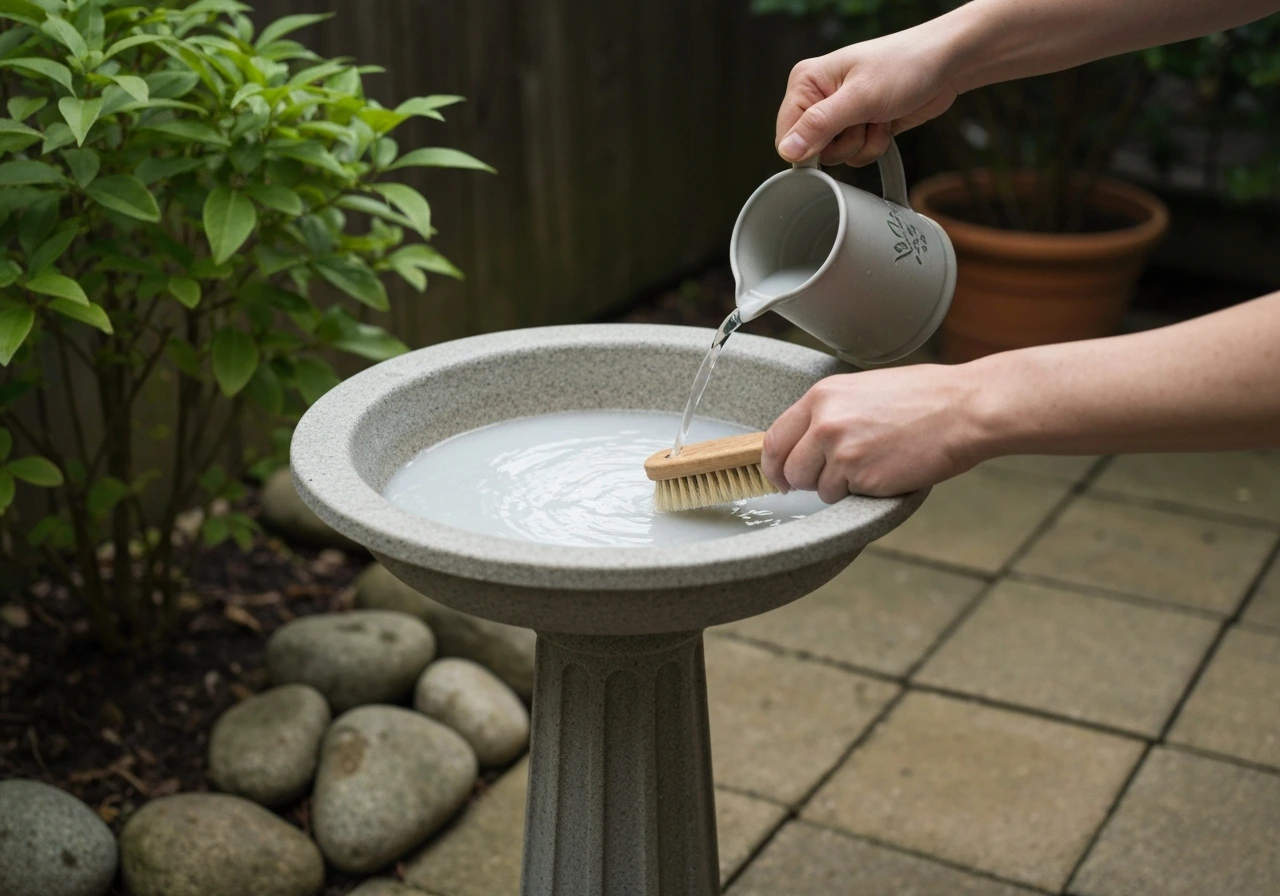
If milk has already been added to your bird bath, take care of it today before birds use it again. The cleanup process is straightforward but you need to be thorough because dairy residue doesn't rinse off easily.
- Empty the bath completely: Pour out every drop of the contaminated water. Don't pour it near plants you care about since concentrated bacterial runoff isn't great for soil.
- Scrub with a stiff brush and the vinegar solution: Audubon recommends a mix of 9 parts water to 1 part white vinegar. Scrub every surface of the basin, including the underside rim and any textured areas where biofilm hides. Vinegar breaks down the fatty residue milk leaves behind and kills most of the bacterial load.
- Rinse thoroughly: Rinse multiple times with clean water until there's no vinegar smell left. Residual vinegar won't harm birds in small amounts, but you want the basin neutral before refilling.
- Let it air dry in sunlight if possible: UV light helps kill remaining pathogens. Even 30 minutes in direct sun makes a difference.
- Refill with fresh tap water: Then maintain it from here with daily water changes and a weekly scrub-and-rinse routine.
If your bath is made of concrete or unglazed ceramic and has absorbed the milk smell, you may need to repeat the vinegar scrub a couple of times. Porous materials hold onto odors and organic matter more than glazed ceramic or resin baths do. Going forward, a bath made from a non-porous material is genuinely easier to keep clean.
Preventing algae and mosquitoes long-term
Once the bath is clean, keep it that way with a consistent routine. Change the water every one to two days, not weekly. The CDC notes that standing water left for more than three days creates a mosquito breeding risk, so every-other-day changes are the practical minimum. If you can't commit to that, a water wiggler or dripper keeps water moving enough to discourage mosquito eggs from hatching. For persistent algae, BTI mosquito dunks (Bacillus thuringiensis israelensis) are EPA-registered, safe for birds and wildlife, and effective at knocking out mosquito larvae without harming the birds drinking from the bath. Scrub the basin blank" rel="noopener noreferrer">with the 9:1 vinegar solution weekly even when the water looks clean, because biofilm builds up invisibly before you can see algae or smell a problem.
| Problem | Cause | Fix |
|---|---|---|
| Algae growth | Nutrient-rich water, sun exposure, infrequent changes | Change water every 1-2 days, scrub weekly with vinegar solution, add water movement |
| Mosquito larvae | Standing water left more than 3 days | Daily or every-other-day water changes, water wiggler, BTI dunks |
| Foul odor | Biofilm, decaying debris, or dairy residue | Full empty, vinegar scrub, rinse, air dry in sun |
| Birds not visiting | Water too still, too deep, poor placement, or contaminated | Add drip or wiggler, adjust depth with rocks, reposition bath, freshen water |
| Bacterial buildup | Infrequent cleaning, additives like milk, bird droppings | Weekly disinfection with vinegar, daily water changes, remove debris promptly |
The good news is that a clean, well-placed bird bath with fresh water and a little movement is genuinely one of the best things you can put in a backyard to attract birds. A bird watering can can make it easier to provide fresh, clean water without adding anything risky to the bath. You don't need to add anything to the water. The water itself is the draw. If you want to see the kind of movement birds love, use a dripper or gentle water flow to keep the water moving in your bird bath.
FAQ
If I only used a splash of milk in my milk can bird bath, is it still unsafe?
Yes, even a small amount of milk left in a bird bath can still be harmful because lactose and milk proteins feed bacteria. Birds and other wildlife may avoid the water once it turns cloudy or smells sour, and residue can remain in porous surfaces like concrete.
Can I dilute the milk in the bird bath and keep using it until the smell goes away?
Don’t “dilute and leave it.” The safest approach is to dump the mixture immediately, scrub the basin, and refill with fresh water. If you want to test cleaning, pour in clean water and observe odor and cloudiness after 30 to 60 minutes.
What should I use instead if my milk can bird bath freezes in winter?
Use plain fresh water only. If you need to prevent freezing, use a purpose-made bird bath heater or heated base, not household antifreeze or additives. Keep any electrical equipment rated for outdoor wet conditions.
How do I fully clean a milk can bird bath if I already added milk (especially if it smells even after rinsing)?
For the first cleanup, remove all liquid, then scrub with a 9:1 vinegar solution, rinse thoroughly, and air-dry. If the bath is unglazed ceramic or concrete and you still smell sour dairy, repeat the vinegar scrub rather than adding chemicals or new water on top.
Will adding milk make my bird bath more likely to attract mosquitoes?
Yes, because mosquitoes respond to standing water and nutrient-rich water. After you dump dairy, change water every one to two days, and consider a water wiggler or dripper to keep the surface moving.
What other “harmless” additives should I avoid besides milk in a bird bath?
Avoid glycerin and similar slippery additives. They can make feathers lose waterproofing if birds get coated, and they don’t provide real benefits to drinking water quality. Stick to clean water plus gentle movement if you want better use.
My birds drank from the bath before I realized milk was a bad idea, what should I watch for?
If birds used the bath while it smelled off, monitor them from a distance for lethargy, droppings that look unusually watery, or obvious weakness. For sick birds, contact a local wildlife rehabilitator, especially for small species or chicks.
Does a milk can bird bath (metal with seams or rust) require extra cleaning precautions?
If you’re using a basin-style container like a milk can, you may not have easy access to scrub around seams and rusted spots. Use a stiff brush, rinse repeatedly, and ensure the inside walls are non-porous where possible, because buildup is harder to remove from corroded metal.
Is weekly water replacement enough for a bird bath after any accidental dairy exposure?
Don’t count on weekly disinfection if you’re leaving water longer between changes. With dairy contamination removed, the practical minimum is replacing water every one to two days in most warm weather, and faster if you notice cloudiness.
If dairy is bad for birds, is it also a problem for other animals that drink from my bird bath?
Yes, and “safe for birds” does not mean safe for other wildlife. Hedgehogs, squirrels, foxes, and other backyard visitors can also be affected by dairy exposure, so treat the bath as a shared contamination risk.
How to Make a Fairy Garden in a Bird Bath: Safe Build & Care
Create a bird-safe fairy garden in a bird bath: step-by-step build, plant choices, safety, care, troubleshooting