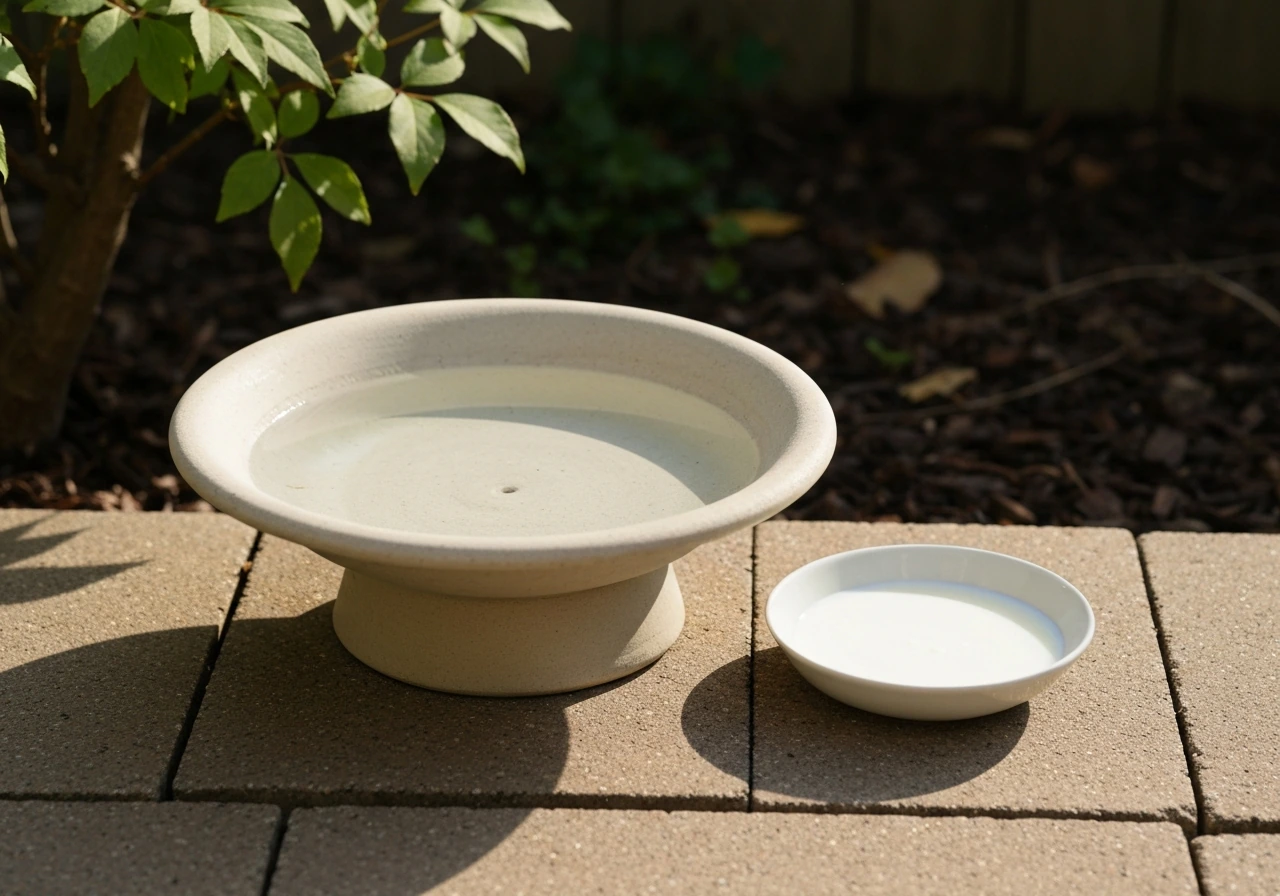
A bird watering can is simply a small, manageable watering can you keep near your bird bath or shallow water dish for daily top-offs, controlled refills, and water-level adjustments. It is not a decorative piece or a novelty item.
Bird Watering Can Guide: Setup, Use, and Maintenance

Marcus Henley
4 May 2026
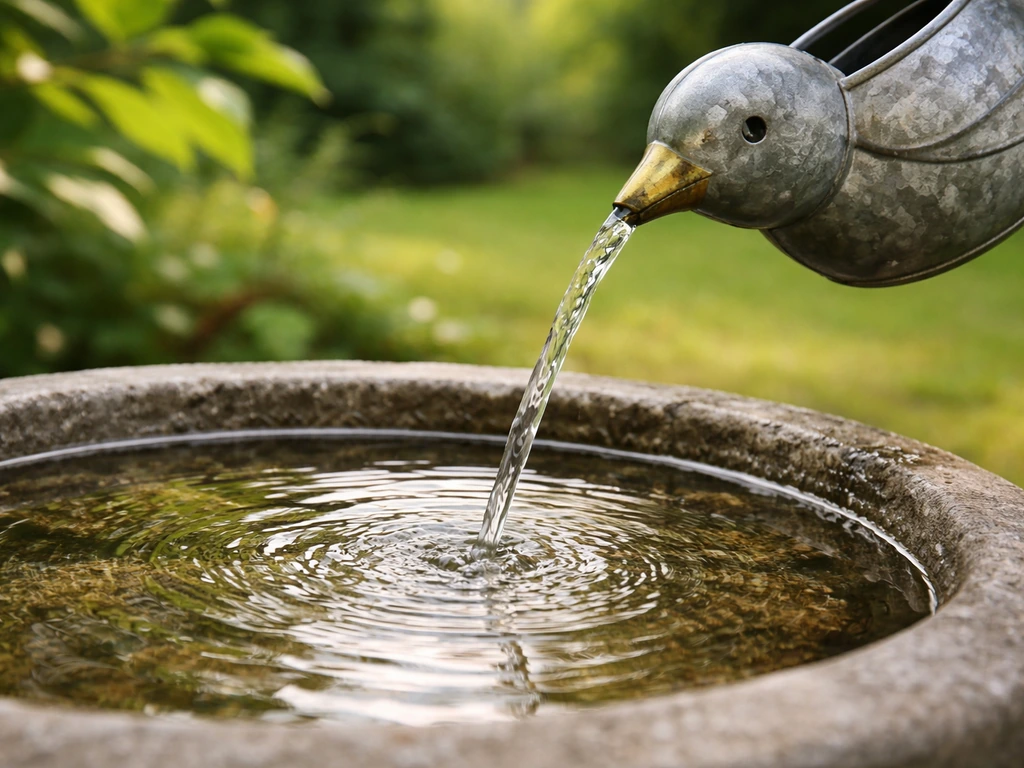
It is a practical tool that lets you add fresh water quickly, keep depths at the safe 1-to-2-inch range birds actually need, and avoid the splashing mess that comes from hauling a full hose or heavy bucket to your setup every morning. A dedicated watering can also works well if you are using a water is life bird bath setup, since keeping the water fresh and at safe depth helps birds drink and bathe comfortably water cleaner.
If you are running a bird bath of any kind in your backyard, a dedicated watering can for the job makes the daily routine faster and your water cleaner.
What a bird watering can actually is and when it makes sense
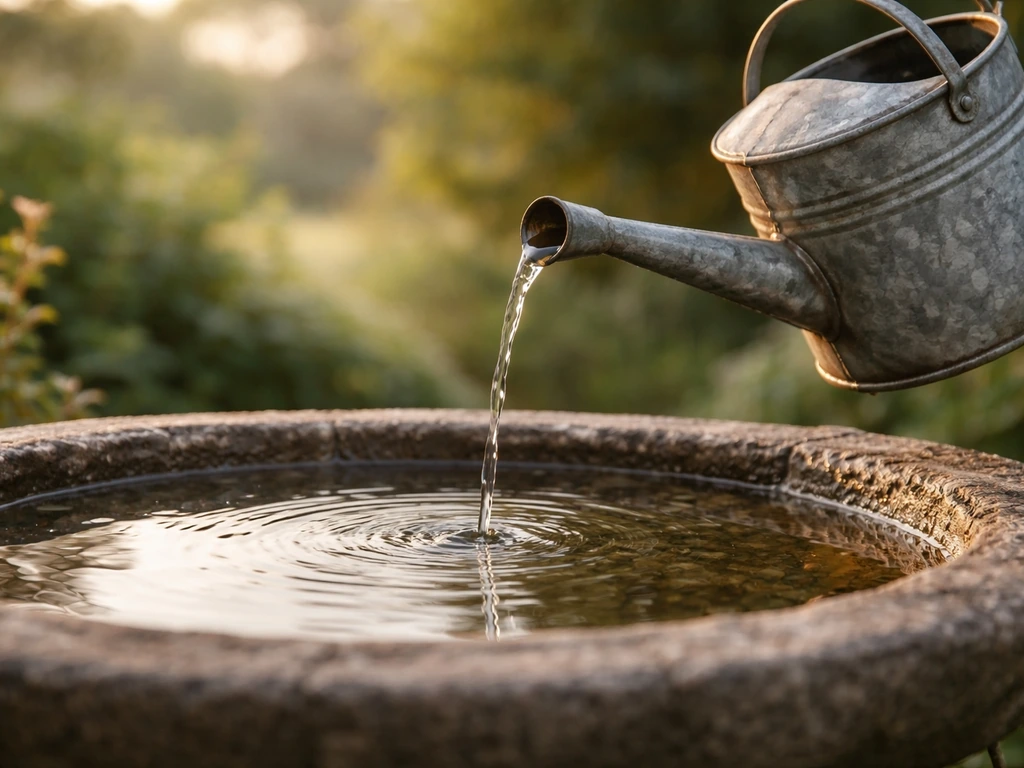
Most people searching for a bird watering can are not looking for a bath shaped like a watering can, though those exist too. They want a small-capacity can with a narrow, controlled spout that they can use to refill bird baths, shallow garden bowls, or ground-level water dishes without flooding the basin, disturbing any water movement accessories, or splashing so hard that skittish birds stay away for an hour. Think of it as a precision refill tool.
The best use cases are: topping off a bath during a morning check when water has evaporated or splashed out overnight, doing a controlled refill after scrubbing so you can set the depth exactly right, adjusting water level for smaller songbirds versus larger birds who need a bit more, and doing a spot-clean rinse without pulling out the hose. If you have a solar fountain or a water wiggler accessory running in your bath, a watering can lets you refill around it without knocking it over or disconnecting anything.
You do not need one if your bird bath is right next to a tap with a hose that has a gentle setting. But for most backyard setups, the hose is across the yard, uses too much pressure, and overfills the basin before you can stop it. A 1-to-2-gallon watering can sitting on your porch or near the bath solves this entirely.
Picking the right size, material, and spout
Size is the first decision. A 1-gallon can is ideal for most backyard bird bath setups. It is light enough to carry full, holds enough to refill a standard 14-to-18-inch bath from empty, and does not tempt you to overfill. A 2-gallon can works if you have multiple water stations or a larger basin, but it gets heavy fast, especially for daily use. Avoid anything smaller than half a gallon because you will be making too many trips.
Plastic vs. metal
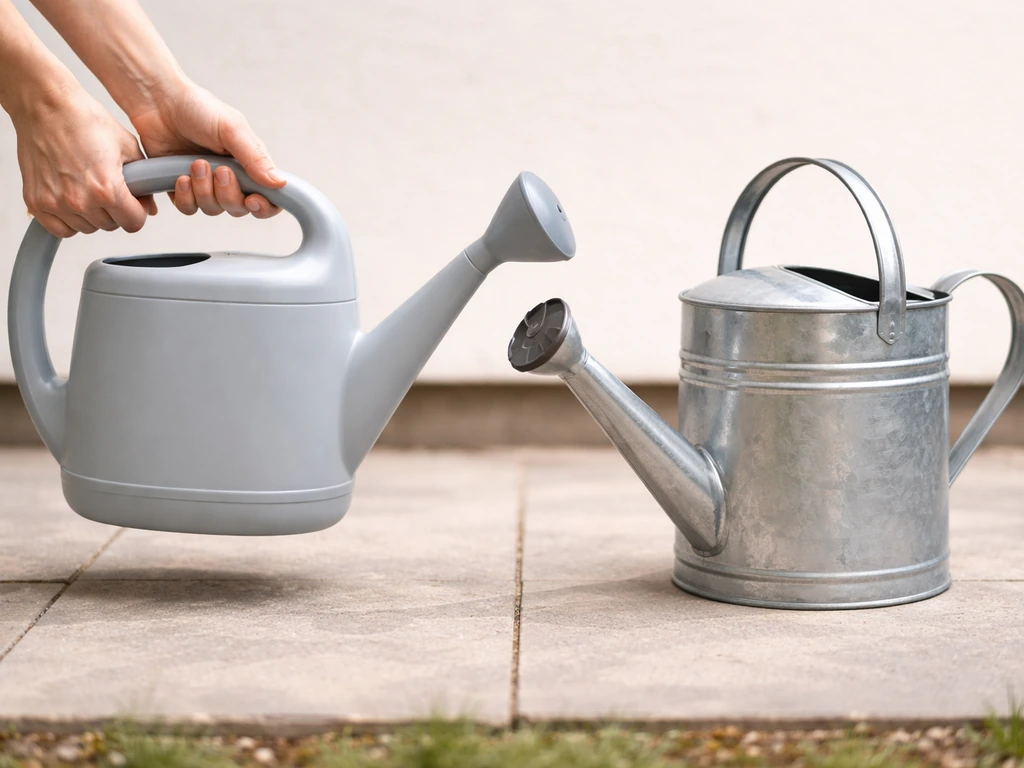
| Feature | Plastic | Metal (Galvanized/Copper) |
|---|---|---|
| Weight | Light, easy to carry daily | Heavier, especially when full |
| Durability | Can crack in UV/frost over time | Lasts years if rust-resistant |
| Water safety | BPA-free options are fine for birds | Avoid plain galvanized (zinc leaching risk) |
| Price | Budget-friendly ($8–$20) | More expensive ($20–$60+) |
| Ease of cleaning | Easy, dishwasher-safe options exist | Rinse well; harder to scrub inside |
| Best for | Daily use, frequent refills | Durability, aesthetics, occasional use |
My recommendation is a BPA-free plastic watering can for everyday bird bath use. It is light, easy to rinse, and you will not think twice about using it every single morning. If you want something that looks good on a porch and you are refilling less frequently, a copper or powder-coated metal can is fine. Just avoid plain galvanized metal cans for bird water because zinc can leach into water over time, and bird health is the whole point of this exercise.
Spout and nozzle shape
This matters more than most people expect. You want a long, narrow spout with a removable rose head (the sprinkler tip). Use the rose head when you are doing a gentle rinse of the basin surface. Remove it for a direct, controlled pour when you are refilling to a specific depth. A spout that is too short makes it hard to aim into shallow dishes without spilling on the rim. Avoid wide-mouth "pitcher" style cans for this use because they dump water too fast and too broadly. A standard garden watering can spout about 8 to 12 inches long gives you the precision you need.
How to place and use it for reliable bird drinking
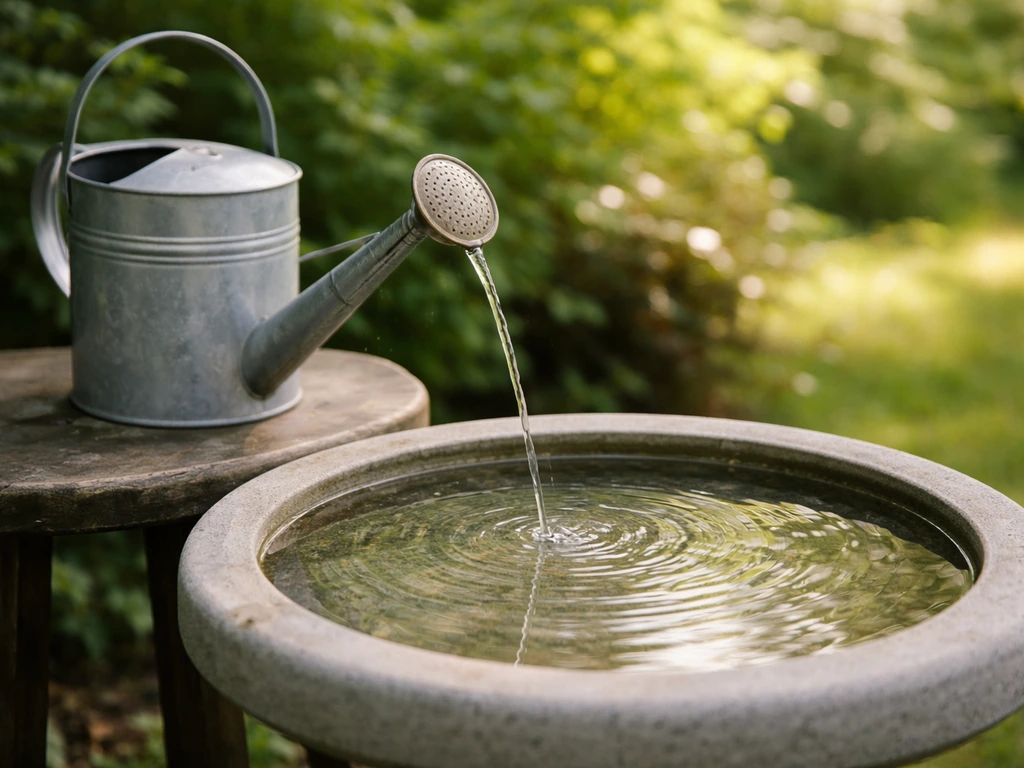
The watering can itself does not go in the garden permanently. It lives near your water station so that the daily refill takes under a minute. Keep it in a shaded spot so water sitting in it between uses stays cooler and cleaner. A hook on a fence post or a spot on a covered porch works well.
For the bath placement side of things: Cornell Lab recommends positioning bird baths in partial shade, near trees or shrubs for bird cover, but not so close that leaves and debris fall in constantly. Shade slows evaporation and keeps water fresher longer, which directly reduces how often you need your watering can in the first place. If you are in a hot climate, this matters even more during summer.
Water depth is where most people go wrong. The Cornell Lab's guideline is clear: no deeper than 1 inch at the edges, sloping to a maximum of 2 inches at the center. Ornithology Education’s “birds in the backyard” guidance similarly recommends keeping birdbath water shallow, ideally no more than 1, 2 inches deep, with gently sloping sides so birds can wade safely [no deeper than 1 inch at the edges, sloping to a maximum of 2 inches at the center.
](https://www. ornithology. org/birds-in-the-backyard/bird-baths). Small songbirds like chickadees and finches will not touch water that is more than an inch deep at the entry point.
Use your watering can to control this precisely. Pour slowly, stop when the edges look right, and check the depth with your finger if you are unsure. Larger birds like robins or jays will use the deeper center section, so the graduated depth actually serves multiple species at once.
Keep the bath itself stable. A wobbling pedestal or shifting bowl is one of the top reasons birds stop visiting. If your bath rocks, pack gravel or sand under its base. Distance from feeders matters too: 10 to 15 feet away from seed feeders reduces contamination from hulls and reduces squirrel traffic around the water.
Filling, cleaning, and preventing algae and biofilm
The Cornell Lab is direct about this: change the water every one to two days. That is the single most effective thing you can do to prevent algae, biofilm, and bacterial buildup. Birds bathe, which means feathers, oils, and droppings go into the water constantly. Using your watering can for a daily top-off is not a substitute for a full empty-and-refill. Here is how to structure the routine.
- Every morning: Use the watering can to top off the bath to the right depth. This takes 30 seconds.
- Every 1 to 2 days: Dump the bath completely, rinse with fresh water, and refill using your watering can for controlled depth.
- Weekly: Scrub the basin with a stiff brush and a 1-part white vinegar to 9-parts water solution, or a 10% bleach solution (1 part bleach to 9 parts water). Rinse thoroughly until you cannot smell bleach or vinegar, then refill.
- Monthly: Check for cracks, algae staining in rough spots, and any buildup in the can itself. Rinse the inside of your watering can with diluted vinegar and flush clean.
Algae grows faster in sun and in standing water with nutrients from bird droppings. The shade placement mentioned earlier helps, but the real fix is the water change frequency. Enzymatic bird bath cleaners (sold at wild bird stores) are safe, non-toxic options if you prefer to avoid bleach. Avoid dish soap because it can strip the oil from bird feathers and cause problems similar to an oil spill for waterfowl.
Keeping mosquitoes out and water fresh
Mosquitoes need standing water for about 7 to 10 days to complete their egg-to-larva cycle. If you are changing the water every one to two days as recommended, you are already breaking that cycle consistently. Some birds drink only rainwater, so using clean water and keeping it fresh matters even more which bird only drink rain water. That daily refill with your watering can is not just for bird comfort, it is your primary mosquito defense.
If you want extra insurance, a water wiggler or small solar-powered fountain keeps water moving, which makes it far less attractive for mosquito egg-laying. Moving water is also a powerful bird attractant because birds can hear it from a distance. Adding a water wiggler to your bath setup pairs well with your daily watering can routine because you refill around the device rather than removing it each time. A common shopping goal is finding the best water wiggler for a bird bath, especially if you want movement without taking the device out every time.
Bacillus thuringiensis israelensis (Bti) mosquito dunks are another option. They are non-toxic to birds and other animals and kill mosquito larvae before they develop. Break off a small piece and drop it in if you notice any larvae before your scheduled water change. That said, if your water change routine is consistent, you rarely need them.
Seasonal tips: handling freezing temps and summer heat
Winter and freezing
A watering can is one of the simplest tools for winter bird watering. If your bird bath freezes overnight, pouring warm (not boiling) water from the can breaks the ice and refreshes the water immediately without cracking the basin the way boiling water can. Do this each morning in freezing weather before birds start looking for water. It takes about 10 seconds.
If you are in a climate where the bath freezes solid every night, a heated bird bath or a submersible immersion heater is a better long-term solution than the daily pour. Cornell Lab notes these heaters are safe when plugged into a ground-fault interrupted (GFI) outlet, which you should treat as non-negotiable for anything electrical near water outdoors. Your watering can still plays a role in winter: use it to top off after thawing and to do quick refills on days when the heater keeps water liquid.
Two things Cornell Lab is clear about: never add antifreeze to a bird bath, it is poisonous to all animals. And do not add glycerin either. It mats feathers and can cause hypothermia in birds. Warm water poured fresh from your watering can is the safe, effective alternative.
Summer heat
In high heat, water evaporates fast and warms quickly, which accelerates algae and bacteria growth. During summer, plan a morning and late-afternoon refill using your watering can. The second refill gives birds cooler, fresher water during peak activity hours. You can pre-fill your watering can and store it in the shade so the water you pour is not scalding hot from sitting in the sun. In extreme heat, some birders add a few ice cubes directly to the bath as a quick cool-down. Your watering can makes it easy to follow that with a small top-off to maintain depth.
Troubleshooting when things go wrong
Birds are ignoring the bath entirely
First, check depth. If your bath is over 2 inches deep anywhere near the edges, small birds will skip it. Use your watering can to adjust down to 1 inch at the perimeter and see if that changes things within a day or two. Also check for movement: still water is less visible and less attractive to birds. If you want more visible movement, add a dripper or water wiggler so water stays lively and easier for birds to spot check for movement. Adding a dripper or wiggler makes the bath far more discoverable. Placement matters too. If the bath is in the open with no nearby shrubs for cover, nervous birds will not feel safe landing there.
Water turns green or cloudy quickly
You are either waiting too long between changes or the bath gets too much direct sun. Move it to more shade and increase your water change frequency to daily. If green algae is building up in textured spots in the basin, scrub those areas weekly with a stiff brush. Dark-colored baths heat up faster and grow algae quicker, so a light-colored or glazed basin in a shaded spot is a good long-term fix.
Birds splash out too much water
This is a good problem to have, but it means you need your watering can nearby for mid-day refills. A bird drinking water toy works in a similar way by offering an easy-access water source that birds can use without the hassle of refilling larger containers. If splashing is extreme, your bath may be too deep, encouraging larger, more vigorous bathers. Keep depth at the recommended levels and consider a wider basin rather than a deeper one if large birds are your main visitors. Some birders place a flat rock or two in the center of the bath so birds have a landing/standing spot and splash less aggressively.
The watering can itself is leaking
Plastic cans can crack at the seam between the spout and body, especially if they freeze while full. Never store a full watering can where it can freeze overnight. Metal cans can develop pinhole rust leaks if scratched and left wet. Dry and store your can inverted so water drains out completely. If a plastic can develops a small crack, waterproof outdoor sealant can extend its life, but a replacement 1-gallon plastic can costs under $15 and is worth swapping out before a slow leak makes every refill a mess.
Water smells bad even after a recent change
Bad odor usually means biofilm has built up in the pores of the basin material, not just on the surface. Concrete and unglazed ceramic are especially prone to this. Do a thorough scrub with a 10% bleach solution, let it sit for 10 minutes, then rinse extremely thoroughly. You may need to repeat this two or three times to get into all the pores. After that, a glazed or sealed basin surface is worth considering because biofilm cannot establish as easily in a smooth surface. Your daily water changes with the watering can will keep it from coming back once you have cleared the initial buildup.
FAQ
Should I use the bird watering can for daily top-offs only, or do a full empty-and-refill too?
If you notice the water clouding quickly after you refill, extend your routine in two steps: keep the bath in partial shade and do full water changes more often than the 1 to 2 day baseline (for example, every day during hot stretches). A watering can only tops off, so cloudiness is usually a sign biofilm is already starting in the basin and needs a reset, not just more fresh water added.
What if I still see mosquito larvae even though I’m refilling with my bird watering can?
If you see mosquitoes or larvae despite frequent refills, check whether you are refilling around accessories and not just the surface. Water can collect in the lowest points of a solar fountain base, wiggler housing, or dripper reservoir. Lift and inspect those parts during your refill so you are removing standing water that larvae could be using.
How do I avoid spooking birds when I refill the bath?
Yes. Use a removable rose head for a gentle rinse, and remove it for precise depth pouring. If your can’s spout is aimed at a point where the bird can land, you can also reduce disturbance by pouring slowly against the inside wall of the basin rather than directly into the center.
What should I do if birds are not using the bath after I refill?
For most backyard setups, aim to have water at 1 inch at the edges, sloping to about 2 inches at the center. If you are unsure, use your finger to measure after the surface settles (wait a few seconds after pouring). If small birds are not using it after adjustment, lower the edge level first, because that entry depth is what prevents hesitant landings.
Can I refill while a water wiggler or solar fountain is running?
Don’t pour until the bath has stopped “settling” from splashes or movement. Also, avoid refilling during heavy bird traffic if possible, because repeated splashing makes the area look unsafe. If you have a water wiggler or fountain running, pour more slowly and refill around the device so you do not knock it or redirect water into a deeper pocket.
Is tap water okay, and should I warm or cool it before using the bird watering can?
If you are refilling from a tap, let the water sit in the watering can for a few minutes in the shade if it’s very cold or very hot. Sudden temperature shifts can deter birds, and extreme cold can make ice formation start at the rim. You still want clean water, just not scalding hot or freezing cold when you pour.
How should I store my bird watering can between refills?
Store the watering can near the bath in shade, but keep it off the rim of the dish. Leaving it upside down or inverted and draining it between refills reduces residue build-up and helps prevent odors. If you pre-fill, keep the lid on and avoid leaving it in full sun so the stored water does not heat up and accelerate algae once poured.
Can I use bleach or cleaners regularly, or should I only scrub occasionally?
Yes, but do it after you’ve cleared initial buildup. If you use bleach, follow it with extremely thorough rinsing, because residue can be harsh to birds. For ongoing prevention, rely on consistent 1 to 2 day water changes and scrub textured areas weekly, rather than trying to “sanitize” every day with chemicals.
How do I know when to replace my bird watering can instead of sealing it?
Cracks at the spout-body seam are common, especially after freeze nights. The fastest decision rule is to check the seam when the can is full in a sink or over a towel, then replace if you see any seepage. For longevity, never store it full during freezing temperatures, drain it completely, and dry and store it inverted.
I’ve adjusted depth, but the bath is still not attracting birds. What else should I change?
Start with movement and safe landing depth. If the bath is too still, add a dripper or water wiggler so birds can see and hear it. If the problem is splashing, keep the depth within the guideline and consider a wider basin or add a flat landing rock, because deeper basins encourage more vigorous splashing.
Next Article
Milk Can Bird Bath: Is Milk Safe and What to Use Instead
Get clear guidance on using milk in a bird bath, risks, and safe alternatives plus cleaning and maintenance tips.