
The best water wiggler for most bird baths is Miller Manufacturing's Standard Water Wiggler (4WW) for battery-powered simplicity, or their Solar Water Wiggler if your bath sits in full sun and you want zero battery swaps. Both create continuous, random surface ripples that grab birds' attention from a distance, keep mosquitoes from breeding, and work in nearly any basin without plumbing or an electrical outlet. If you want something a little extra, the Aurora (7WW) adds a soft dome light at dusk. Pick your power source, match the wiggler to your basin depth (minimum 1/2 inch, maximum about 2.5 inches of water), drop it in the center, and birds will find it faster than you'd expect.
Best Water Wiggler for Bird Bath: Buyer Guide and Setup

Marcus Henley
6 May 2026
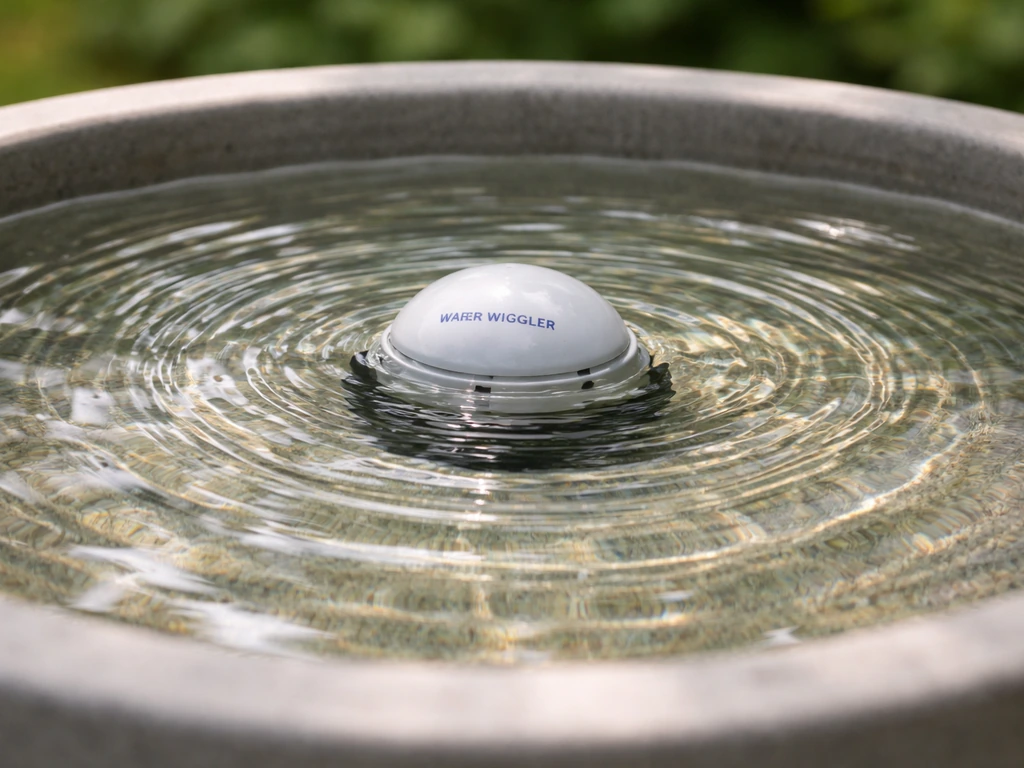
What a water wiggler actually does (and whether you need one)
A water wiggler is a small, self-contained device that sits directly in your bird bath basin and uses a motorized stirrer to create continuous, random ripples across the water's surface. If you're wondering how the bird drinking water toy works in practice, it uses a motorized stirrer to keep the surface moving for easier sipping and safer conditions how a water wiggler works. It's mechanical agitation, not spraying or pumping, so there's no hose, no fountain head, and no splash radius to worry about. The motion does three things at once: it catches the eye of birds flying overhead (moving water is a major visual trigger for birds searching for a drink or bath), it disrupts the stagnant surface conditions that mosquitoes need to lay eggs, and it keeps the water slightly more oxygenated and fresh between cleanings.
It's especially useful if you already have a bird bath that birds are ignoring. Still water in a shaded or less-visible spot can sit for days with zero visitors. A wiggler changes that without requiring you to replace the whole bath or run electricity to it. It's also the right tool if mosquitoes are your main complaint. Mosquitoes need a few days of truly still, stagnant water to complete their breeding cycle, and even gentle surface movement breaks that cycle reliably. For anyone who drains and refills their bath every 48 hours anyway, a wiggler gives you a meaningful safety net between those changes.
Who specifically benefits most: anyone with a shallow concrete, ceramic, or resin pedestal bath in a yard where birds pass through but don't stop, anyone dealing with recurring mosquito complaints from neighbors, and anyone who travels or can't maintain daily water changes. If you're already running a pump-driven fountain bath, you may not need a wiggler at all since your fountain handles the motion already. But for a simple static basin, a wiggler is one of the highest-impact, lowest-cost upgrades you can make.
How to choose the right wiggler for your specific bath
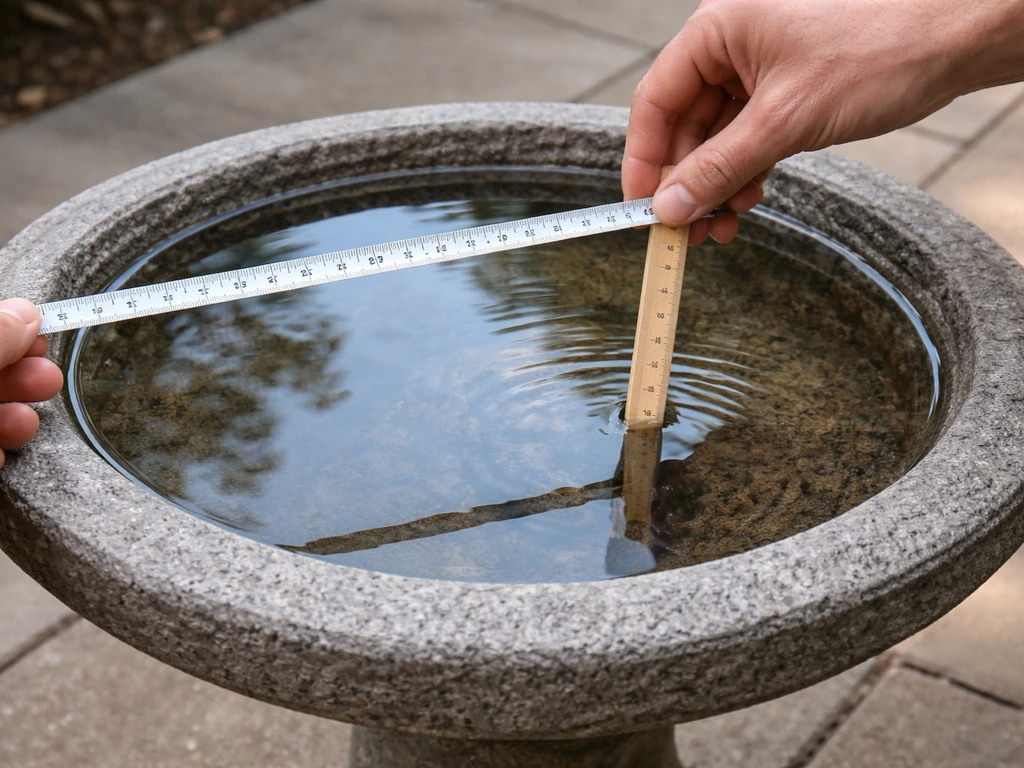
Before buying, run through four quick checks: your bath's water depth range, the basin diameter, your power situation, and whether you want adjustable motion or a fixed ripple. Getting these right means the wiggler works as advertised on day one instead of sitting on a shelf after one frustrating test.
Water depth and basin compatibility
The standard battery-operated Water Wiggler requires a minimum water depth of about 1/2 inch and works up to about 2. 5 inches deep. That range covers the vast majority of pedestal bird baths. The critical installation rule: keep the water level at least 1/4 inch below the plastic base of the unit.
The motor and battery compartment must never be submerged. If your basin is unusually deep (over 3 inches when filled to the brim), just don't fill it as high. Most birds prefer shallower water anyway, so this is rarely a problem. The legs on the standard unit are approximately 2 3/4 inches tall, which sets the usable depth window.
Wide, shallow concrete baths, standard ceramic baths, and most resin or poly-resin pedestal baths all fit comfortably within this range.
Power source: battery vs solar
Battery models run on two D-cell batteries (not included) for up to about two months of continuous use under normal conditions. That's genuinely good runtime for something running all day. Solar models use built-in panels that absorb sunlight and charge an internal battery, so you never buy replacement batteries, but they do require direct sunlight to maintain their charge. If your bath sits under a tree canopy or in partial shade for most of the day, go battery-powered.
If it's in full sun from morning to early afternoon, the solar model is a cleaner, lower-maintenance choice. There's no plug-in corded version for the wiggler style specifically, which is actually a feature: it means you can place the bath wherever birds want it, not wherever your outlet is.
Basin size and motion coverage
Wigglers are described as particularly well-suited to smaller basins, and that's accurate in practice. A standard 18- to 24-inch diameter pedestal bath is the sweet spot. In a very large basin (say, 30 inches or wider), a single wiggler placed in the center will still create visible ripples, but the edges of the bath may stay relatively calm. That's fine for most birds, but if you want full-surface motion in a wide bath, consider placing two units or pairing the wiggler with a dripper near the far edge. In a small 12- to 15-inch basin, one wiggler is more than enough.
Compatibility with heated, concrete, and ceramic baths
Wigglers work in concrete, ceramic, glazed stoneware, metal, and plastic basins without any compatibility issues since they just sit in the water and don't make contact with the sides. For heated bird baths used in winter, the standard battery-powered wiggler is not designed to operate in freezing temperatures. Miller Manufacturing is explicit: remove the batteries and store the unit during winter to prevent freeze damage. If you want moving water in a heated bath during cold months, a dedicated heated dripper or a recirculating pump built for cold weather is the better path. The wiggler is a three-season tool in most climates.
The main water wiggler styles worth knowing
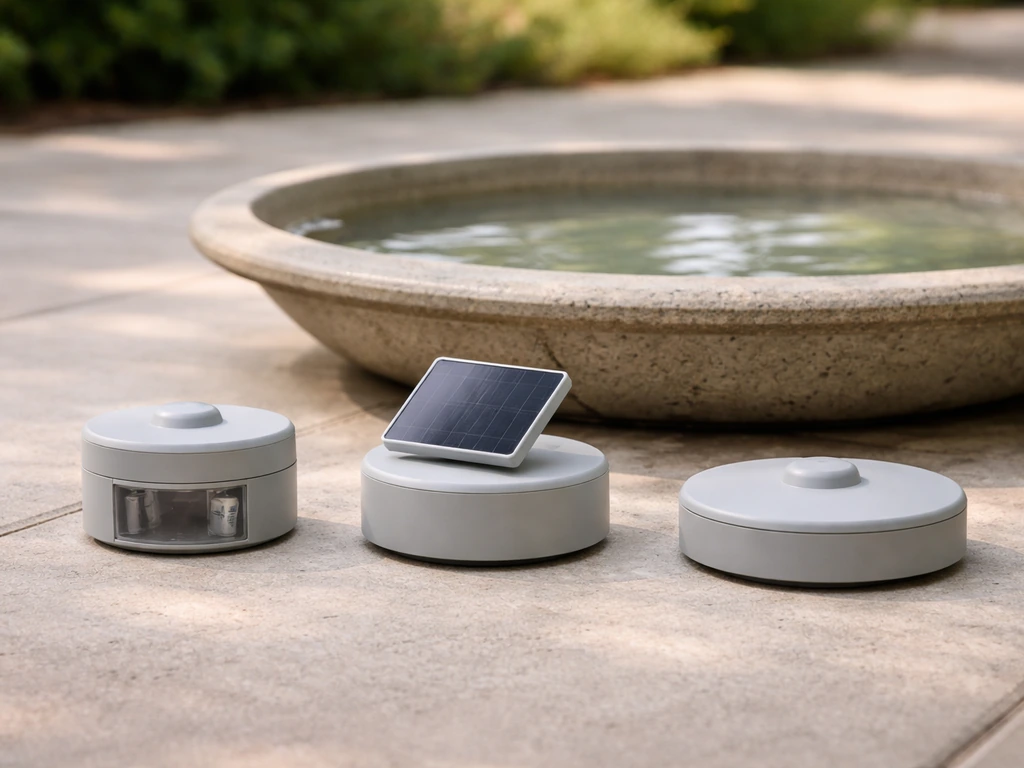
| Style | Power Source | Key Feature | Best For |
|---|---|---|---|
| Standard Water Wiggler (4WW) | 2 D-cell batteries | Silent ripple agitation, up to 2 months runtime | Most pedestal baths, shaded locations, easy budget pick |
| Aurora Water Wiggler (7WW) | 2 D-cell batteries | Silent ripples + dome lights up at dusk for ~3 hours | Decorative baths, evening wildlife watching, same depth range |
| Solar Water Wiggler | Built-in solar panel | No battery purchases, continuous sun-powered operation | Full-sun bath locations, low-maintenance setups |
| Pump-driven agitators / drippers | Outlet or solar pump | Higher flow rate, can run fountain or dripper head | Large basins, in-ground baths, or where strong motion is wanted |
The Standard (4WW) is the workhorse and the one I'd tell most people to start with. It's simple to assemble, completely silent during operation, and two D-cells lasting up to two months means you're changing batteries maybe three or four times a year. The Aurora (7WW) is the same device with a soft decorative light that [turns on at dusk and runs for about three hours](https://miller-mfg. com/cdn/shop/files/7WW.
pdf? v=16551218208679207319) before shutting itself off. If you enjoy watching the bath in the evening and want a little visual flair, it's worth the slight price difference. The solar version is genuinely hands-off once placed in full sun, but it needs consistent direct sunlight to stay charged.
Pump-driven agitators and drippers are a different category entirely and are better covered when you're ready to explore how to make water move in a bird bath more broadly. If you are not using a wiggler, you can still make water move by adding a dripper or using a small pump-driven fountain setup make water move in a bird bath more broadly.
How to set it up so birds actually use it
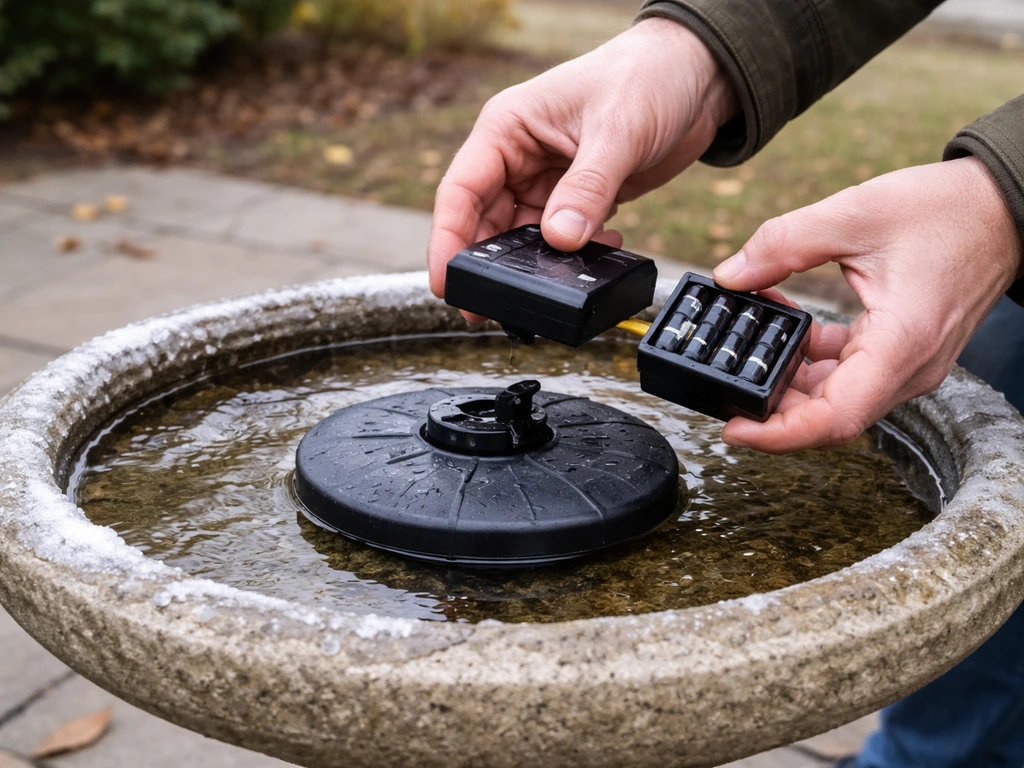
Assembly for the battery-operated Water Wiggler takes about five minutes. Separate the dome from the base, insert the wire supports, attach the stirring device to the motor shaft, drop in two D-cell batteries, make sure the water seal ring is seated between the dome and base (this is what keeps water out of the battery compartment), and reattach the dome. The stirrer starts turning as soon as the unit touches water. That's it. No tools, no plumbing.
Placement in the bath and around the yard
Center the wiggler in the basin. That placement maximizes visible ripple coverage across the surface and keeps the unit stable. Avoid pushing it against the edge where it can tip, which is both a safety issue for the motor compartment and an invitation for water to enter where it shouldn't. Once it's in the water and running, check that the water level is sitting at least 1/4 inch below the plastic base. If you overfilled the basin, scoop a little out.
For the bath itself, the single most important placement factor is visibility from above. Birds find water by sight and sound while flying, so an open location with some sky exposure works better than one tucked under dense canopy. If you are trying to keep a milk can bird bath from going stagnant, a water wiggler is an easy, low-cost way to keep water moving and discourage mosquitoes.
Roughly 10 to 15 feet from a shrub or small tree gives birds a perch to assess the bath before landing, which is a behavioral preference for most songbirds. Set the bath at about 24 to 36 inches off the ground to reduce ground predator access while still staying accessible to small birds. Orient it away from prevailing wind to minimize water loss from the wiggler's rippling on gusty days.
Getting birds to visit quickly
Birds often find a new water source within a day or two if it's placed well. The ripple and any gentle sound it creates act as auditory and visual signals. If you're not seeing visitors within 48 hours, check whether the bath is too exposed (no nearby perch), whether the water is too deep for small birds, or whether a neighborhood cat has been lurking. Adding a flat stone in the center of the basin, alongside the wiggler, gives small birds a secure footing in shallower areas around the stone's edge.
Maintenance, cleaning, and common problems
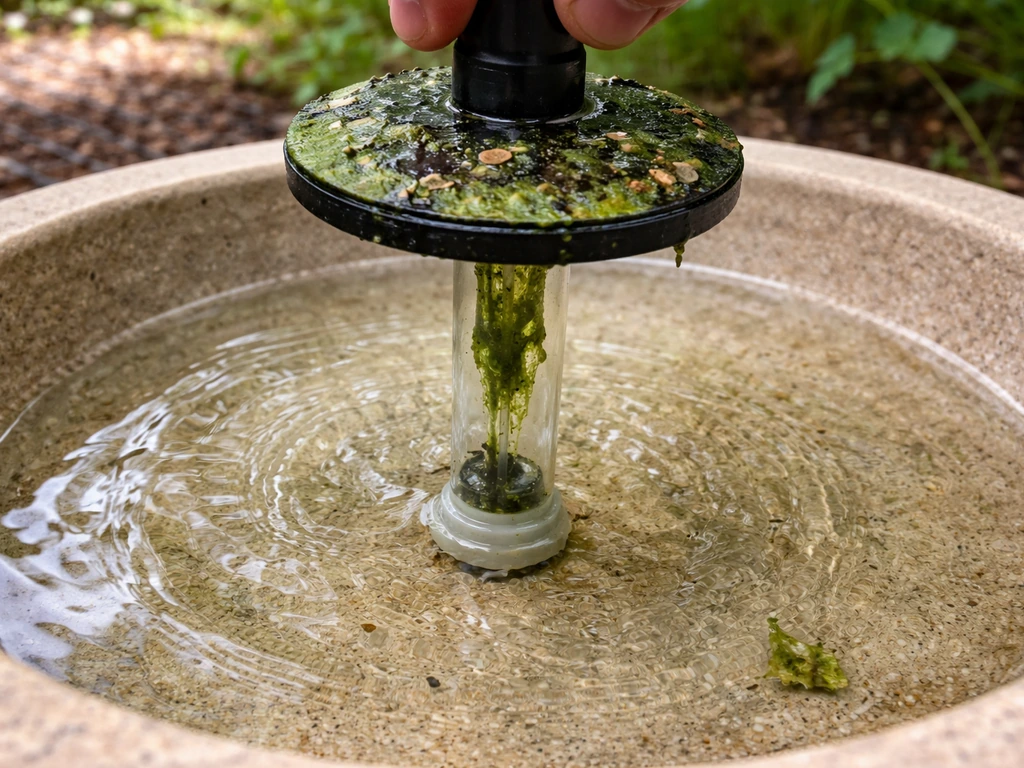
The wiggler itself is low maintenance, but it only stays effective if the bath around it is reasonably clean. Algae, debris, and debris-clogged stirrers are the three things that will shorten battery life and reduce ripple quality. Here's how to stay on top of each.
Algae
The wiggler does reduce algae growth by disrupting the still-water conditions algae prefer, but it doesn't eliminate it completely, especially in warm, sunny weather. Weekly cleaning is the right interval: remove the wiggler, scrub the basin with a stiff brush, rinse thoroughly, and refill with fresh water before returning the unit. Never use soap, bleach, or chemical cleaners near the wiggler or in the basin without rinsing extremely well, because residue is harmful to birds. Plain water and a stiff brush handle most algae. For stubborn buildup, a diluted white vinegar rinse (followed by a thorough fresh-water rinse) is bird-safe.
Debris and clogging
Leaves, twigs, and seed husks from nearby feeders are the most common cause of a wiggler slowing down or stopping. A bird watering can is another helpful tool for topping up a bird bath safely when you are clearing debris and refilling regularly. Miller Manufacturing explicitly calls this out: keep algae, twigs, and leaves away from the stirrer to maintain battery life. If the stirrer gets wrapped in debris, it draws more current and drains batteries faster. Make it a habit to clear debris from around the stirrer every time you top off the water. If the wiggler stops creating visible ripples, check the stirrer for debris first before reaching for new batteries. Often that's all it takes.
Mosquitoes
The wiggler is genuinely effective at preventing mosquito breeding because it eliminates the stagnant surface conditions mosquitoes need to lay viable eggs. The standard guidance is to drain and refill your bird bath every 48 hours as a baseline, and the wiggler gives you meaningful protection between those changes. A clean, consistent water source is the foundation of a healthy bird bath, which is why water is life for backyard birds water is life bird bath.
Mosquitoes need several days of still water to complete their breeding cycle, so continuous surface agitation breaks that window reliably. If you notice what looks like mosquito larvae in the bath, drain it immediately, scrub the basin, and refill. CDC recommends emptying and scrubbing or disposing of items that hold standing water, including birdbaths, on a weekly basis to remove mosquito eggs and larvae [weekly emptying and scrubbing/disposing of items that hold standing water](https://www. cdc.
gov/mosquitoes/mosquito-control/mosquito-control-at-home. html). The wiggler alone won't clear an active infestation, but it will prevent a recurrence when paired with regular water changes.
Freezing and winter storage
If you're in a climate where temperatures drop below freezing, pull the wiggler out before the first hard frost. Remove the batteries (leaving them inside a frozen unit can cause leakage and corrosion), and store the unit indoors. The wiggler is not rated for winter operation and can be damaged by ice expansion around the casing. For cold-weather bird bath use, a plug-in or solar-powered heated bath with an integrated circulator is the right tool. Think of the water wiggler as your spring-through-fall solution.
Battery troubleshooting
Miller's own guidance is simple: change the batteries when the unit stops creating waves. There's no need to guess. Two D-cell batteries under normal conditions last up to about two months, so mark your calendar or set a reminder at the six-week mark to check. Brand-name alkaline D-cells outperform cheap generics here because the motor runs continuously. Keep the battery compartment dry at all times, and if you ever notice moisture inside the dome, dry it out completely before reinstalling batteries.
Bird safety and a few things worth keeping in mind
The Water Wiggler is described as completely silent during operation, which matters more than people realize. Birds are easily spooked by mechanical noise, and a loud buzzing or humming device will keep them away rather than attract them. The silent operation is one of the design features that makes wigglers genuinely bird-friendly rather than just mosquito-prevention tools.
Water depth is a bird safety issue, not just a technical spec. Most small songbirds (sparrows, finches, warblers) are comfortable in 1 to 1. 5 inches of water. Deeper than 2 inches can be uncomfortable or even dangerous for very small birds.
The wiggler's operating range of 1/2 inch to about 2. 5 inches aligns well with safe bird bath depth, but aim for 1 to 1. 5 inches as your working target. If you are trying to understand bird drinking behavior like which bird only drink rain water, start by ensuring the water is shallow and safe for small birds as covered by this safe bird bath depth guidance.
A flat stone in the basin gives smaller birds a safe landing pad and bathing shelf in shallower water around it.
The ripple pattern the wiggler creates is gentle, not turbulent. It won't fling water out of the bath in normal use, but in a very small or very full basin, some splash can occur. Check the water level after the first hour of operation and adjust accordingly. This is especially worth monitoring if the bath is near a deck or path where wet surfaces could be a slip hazard.
The battery compartment safety rule is worth repeating clearly: the motor and battery housing must never be submerged. Tipping the unit sideways or overfilling the bath to the point where water enters the dome is the most common user mistake. The water seal ring between the dome and base is your protection against accidental water intrusion, but it only works when properly seated. Always confirm the seal is in place when reassembling after cleaning.
For households with pets or small children, the wiggler is low-risk. It runs on two 1.5V D-cell batteries at low voltage, and the motion it creates is too subtle to attract pet attention the way a splashing fountain might. That said, keep the battery compartment away from children during assembly and battery changes, and store spare batteries out of reach.
One last thing: never add any mosquito dunks, chemicals, or oils to a bird bath with a wiggler running. Some copper-based algae treatments and oil-based mosquito deterrents can harm birds and can also coat the stirrer mechanism. Stick to clean water, regular draining, and the mechanical motion the wiggler provides. That combination handles mosquitoes, keeps birds healthy, and keeps the unit working all season without any shortcuts.
FAQ
Can I use the water wiggler in a bird bath that has a built-in heater or thermal base?
You generally should not run a standard battery water wiggler on a heated bath in freezing conditions, but the bigger issue is temperature and residual water. If your heater warms the basin, ensure the wiggler is rated for that temperature range and keep the battery compartment fully dry, then verify the lid seal sits evenly after temperature cycling (thermal expansion can slightly shift seals). For winter movement, use a cold-rated heated dripper or a recirculating pump system designed for freezing climates.
What water depth should I aim for if my bird bath holds different amounts on different days (due to splashing or evaporation)?
Set the wiggler up so the water stays roughly 1 to 1.5 inches deep during the day, not just at installation. After the first hour, recheck the level because wind-driven evaporation or early splash can change depth, and if the water rises too high, it increases the chance of water climbing into the dome/battery area. If you often top off, check depth after topping up as well, not only the first time you install it.
My wiggler runs but the ripples look weak, what are the usual causes before replacing batteries?
Most weak-ripple issues come from the stirrer being slowed by debris or from low, failing batteries. First, remove the unit and inspect the stirrer for leaves, seed husks, algae clumps, or film that can increase resistance. Next, confirm you are within the unit’s depth window (minimum depth and, importantly, not overfilled into the dome). Only then test battery condition, and use the specified D-cell size (many performance issues trace back to using the wrong battery type or mixing brands).
How do I position the wiggler if my pedestal base is curved or my basin is not perfectly level?
The wiggler needs stable seating at the center so the ripple pattern covers most of the surface without tipping. If the basin is angled, place the wiggler in the visually lowest central point, then verify it does not lean and that the battery housing stays fully above the water line. In sloped basins, you may need to adjust your fill height so the battery compartment remains dry across the full ripple cycle.
Is it safe to run a wiggler continuously if I cannot drain and refill every 48 hours?
Yes, it will reduce mosquito breeding risk by keeping the surface from staying stagnant, but it is not a substitute for regular cleaning. If you cannot do 48-hour swaps, increase monitoring: check for larvae, skim visible debris, and extend cleaning only if water quality stays clear. When you do clean, scrub the basin and rinse thoroughly before refilling, and avoid any residue from soaps or chemicals.
Will a water wiggler prevent all mosquitoes, or only larvae?
It mainly interrupts the larvae cycle by preventing the eggs from successfully developing in still surface water. Adult mosquitoes may still arrive and bite, but you should see fewer breeding occurrences when the wiggler is operating consistently. If you detect active larvae, drain immediately, scrub, refill, then continue with the wiggler plus routine maintenance so it does not return.
Can I place two water wigglers in one large bird bath, and will they interfere with each other?
Yes, two wigglers can be used in wide basins to improve edge coverage, and they do not need to be synchronized. The key is spacing and stability, keep each unit centered within its effective zone and ensure neither one tips or approaches the basin edge where water might contact the dome/battery housing. After installing two, run a one-hour check for splash, ripples at the edges, and proper water level.
Should I add a stone or perch when I use a wiggler, and does it affect performance?
A flat stone can be beneficial because it gives small birds a safer landing and bathing surface in shallow water. Place it so birds can access it without crowding the wiggler, ideally leaving clear water circulation around the stirrer area. If the stone causes birds to peck debris toward the center, you may need more frequent debris checks, since clogged stirrers reduce ripple quality and battery life.
What’s the best placement distance from shrubs or fences for birds, and does the wiggler change that?
The wiggler increases visibility from the air, but birds still prefer a quick lookout perch nearby. A common target is around 10 to 15 feet from cover, because birds can assess the bath before committing. Keep the area around the bath open enough that birds can approach and land safely, while still preventing predators from using the shrub line as cover.
Can I use the solar water wiggler in partial shade, or will it stop working?
Partial shade is often where solar performance becomes inconsistent because the internal battery may not recharge enough for continuous daytime operation. If your bath receives only brief direct sun, you may see intermittent running or a weaker ripple after cloudy days. In that situation, the battery model is usually more reliable. If you try solar anyway, test for several days and confirm it stays active through the period you care about most.
What should I do when the unit stops creating waves, should I always suspect batteries?
Not always. Follow a quick order of operations: check depth and water line first, then remove and inspect the stirrer for debris, and confirm the dome seal is seated correctly. Only after those checks should you replace batteries, since a clogged or partially blocked stirrer can drain power faster and look like a battery failure.
Is it okay to add anything to the bath water for algae control when using a wiggler?
Avoid oils, copper-based treatments, and chemical mosquito deterrents unless you are certain they are bird-safe and compatible with mechanical agitation. The safest approach is clean water plus regular draining, weekly scrubbing, and a vinegar rinse for stubborn algae when needed. Also, do not treat the bath while the wiggler is running, because residue can coat the stirrer and reduce performance over time.
Next Articles
Bird Watering Can Guide: Setup, Use, and Maintenance
How to choose and use a bird watering can for clean, shallow bird water daily, prevent algae and mosquitoes, and maintai
Milk Can Bird Bath: Is Milk Safe and What to Use Instead
Get clear guidance on using milk in a bird bath, risks, and safe alternatives plus cleaning and maintenance tips.
How to Make a Fairy Garden in a Bird Bath: Safe Build & Care
Create a bird-safe fairy garden in a bird bath: step-by-step build, plant choices, safety, care, troubleshooting