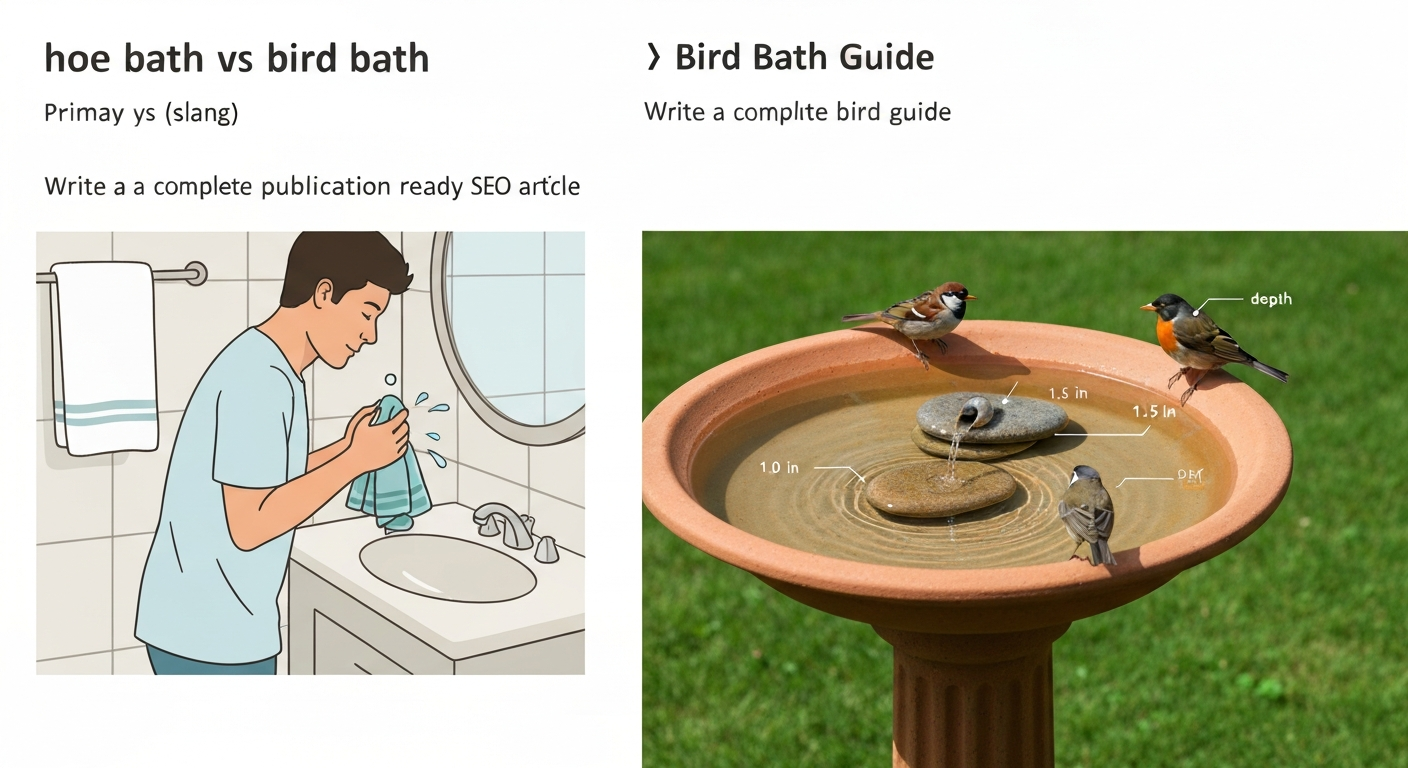
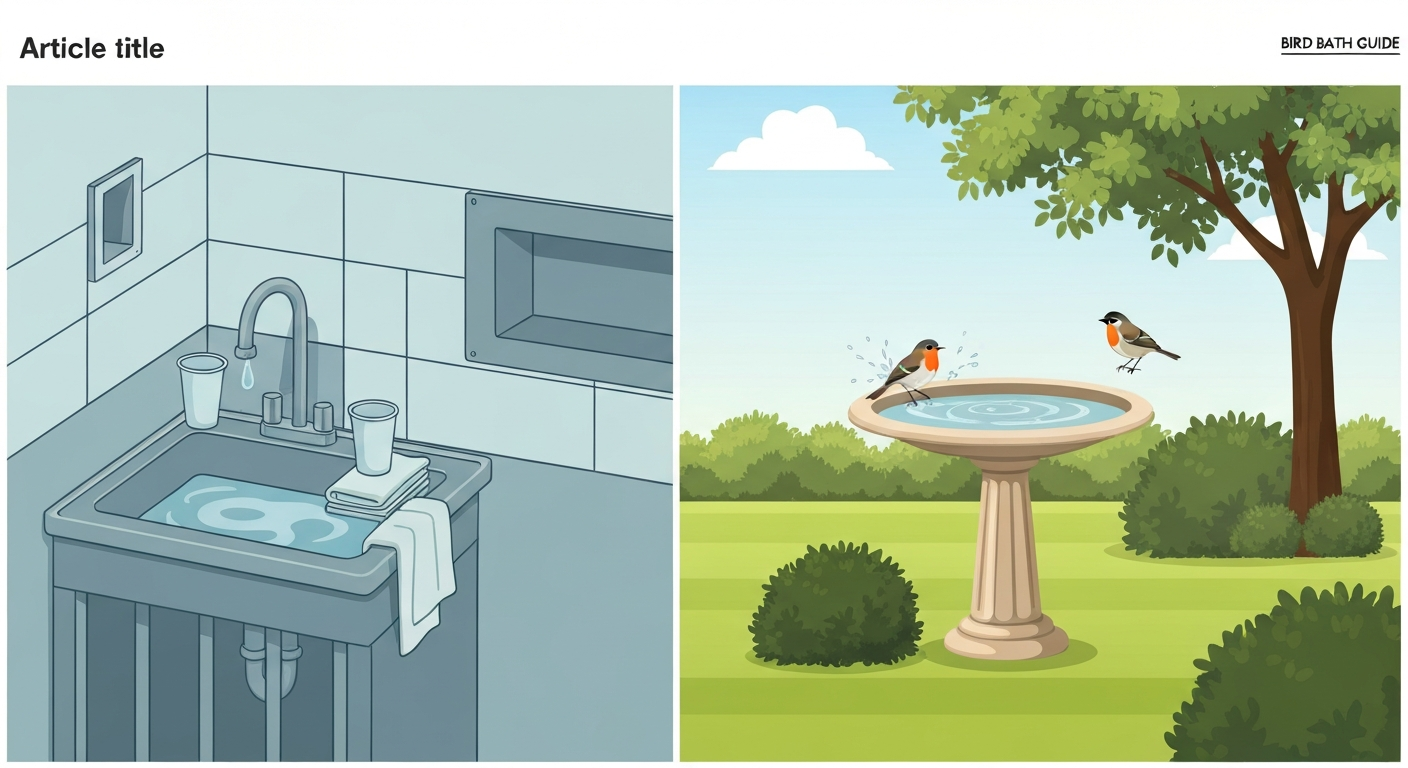
In prison slang, a 'bird bath' means a quick sink wash or sponge bath done inside a cell when a scheduled shower isn't available. Inmates pour water from a sink, use a washcloth, and clean themselves as efficiently as possible, a practice documented in U.S. court filings, prison memoirs, and even a district-court opinion (Wakefield v. Tilton) that uses the exact phrase. It has nothing to do with garden wildlife. That said, if you landed here after seeing the phrase and are also curious about actual bird baths for your backyard, you're in exactly the right place, the rest of this guide covers everything from bath types and materials to DIY builds and maintenance.
What Is a Bird Bath in Prison? Meaning and Backyard Guide

Marcus Henley
9 Aug 2026
Why this question is worth answering clearly
The phrase 'bird bath in prison' turns up in two very different contexts, and conflating them leads to confusion. Backyard birders who've heard the term might wonder whether it has something to do with wildlife. People who encountered it in a legal document, memoir, or conversation want a plain-language explanation. And curious readers just want the full story. This guide gives you all of it, then pivots to practical, hands-on guidance for setting up real bird baths in your yard, because understanding the slang and understanding garden bird baths aren't mutually exclusive.
Literal vs. slang: what 'bird bath in prison' actually means
The phrase carries two distinct meanings depending on context. In everyday English, a birdbath (one word or two) is an artificial shallow basin placed in a garden or yard to give wild birds a place to drink, bathe, and cool down. Wiktionary and standard dictionaries list both senses: the garden basin, and a slang sense meaning a light or superficial wash, basically a sponge bath taken without a full shower.
In correctional settings, the slang sense is the one in play. Prisons and jails operate on scheduled shower rotations, and there are many situations, lockdowns, disciplinary segregation, late-night needs, where a full shower simply isn't an option. Inmates describe taking a 'bird bath' in their cell sink: filling a cup or using running water, wetting a washcloth, and washing down as best they can. The term appears repeatedly in prison memoirs, inmate writings collected by resources like 'A Way with Words,' and formal court documents. It is used matter-of-factly, without shame, as a practical coping term. There is nothing derogatory about it, it just names a real hygiene workaround under constrained conditions.
The broader slang sense (a quick, incomplete wash) also shows up outside prison, you might hear someone say 'I just had time for a bird bath before the meeting', but the correctional context is where the phrase gets the most specific, consistent use. If you saw it in a legal filing or heard it from someone with incarceration experience, that sink-wash meaning is almost certainly what was intended.
Related phrases decoded
'What does it mean to take a bird bath' is a natural follow-up question, and the answer depends entirely on context. For a person, it means a brief, partial wash, the slang sense above. For an actual bird, taking a bird bath means splashing around in shallow water to clean feathers, remove parasites, and regulate body temperature. Birds dip their heads, flutter their wings, and ruffle their feathers to work water through the plumage. It's a genuine behavioral need, not just a nice-to-have.
The phrase 'hoe bath vs bird bath' sometimes appears as a comparison query. Both terms refer to informal, non-shower washing, often used in slang and vernacular speech. The distinction between them is mainly regional and subcultural rather than technical, both describe the same basic practice of washing oneself with limited water at a sink or with a container. Neither term has a standardized definition in formal dictionaries, so their meanings overlap considerably depending on who's using them and where.
Water baths, dust baths, and bird showers: how they differ
Not all birds bathe the same way, and knowing the difference matters when you're setting up a backyard water feature. There are three main types of bathing behavior, and birds pick the one that suits their biology and habitat.
Water baths
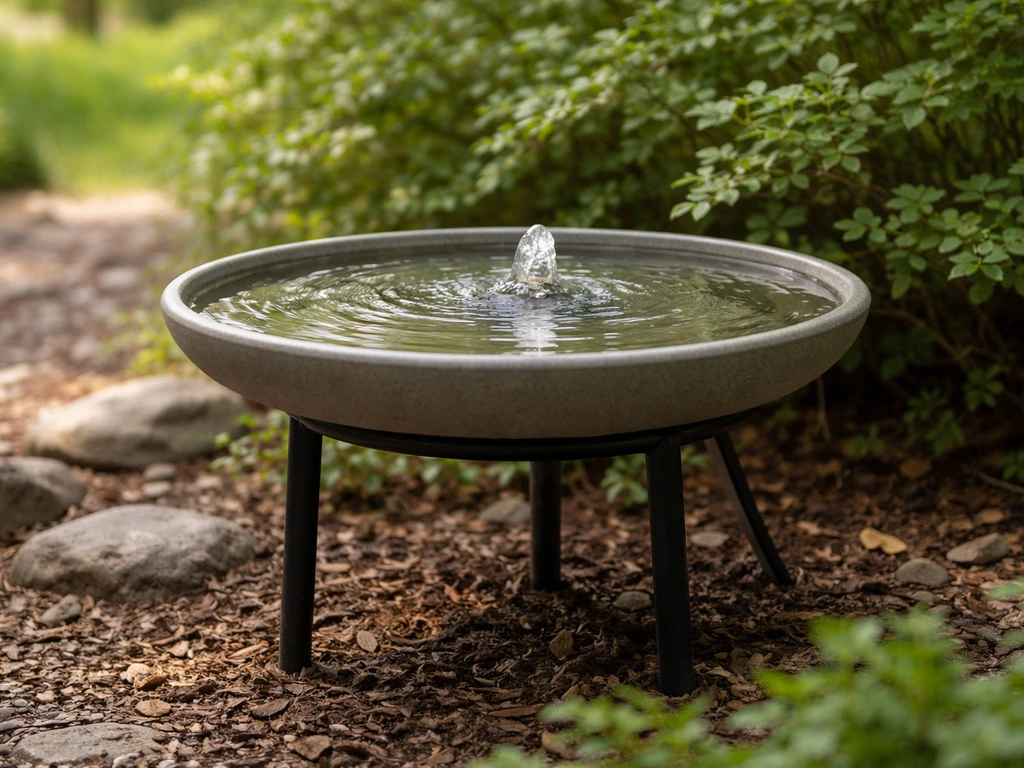
A water bath is what most people picture: a shallow basin of still or moving water where birds wade in, splash, and preen. Thrushes, robins, cardinals, and most songbirds use water baths regularly. Cornell Lab of Ornithology notes that moving or dripping water attracts significantly more species than still water, the sound and visual ripple act as a beacon. Depth matters: 1 to 2 inches (roughly 2.5 to 5 cm) is the sweet spot recommended by Audubon for most songbirds. Deeper water can deter smaller birds who can't safely stand in it.
Dust baths
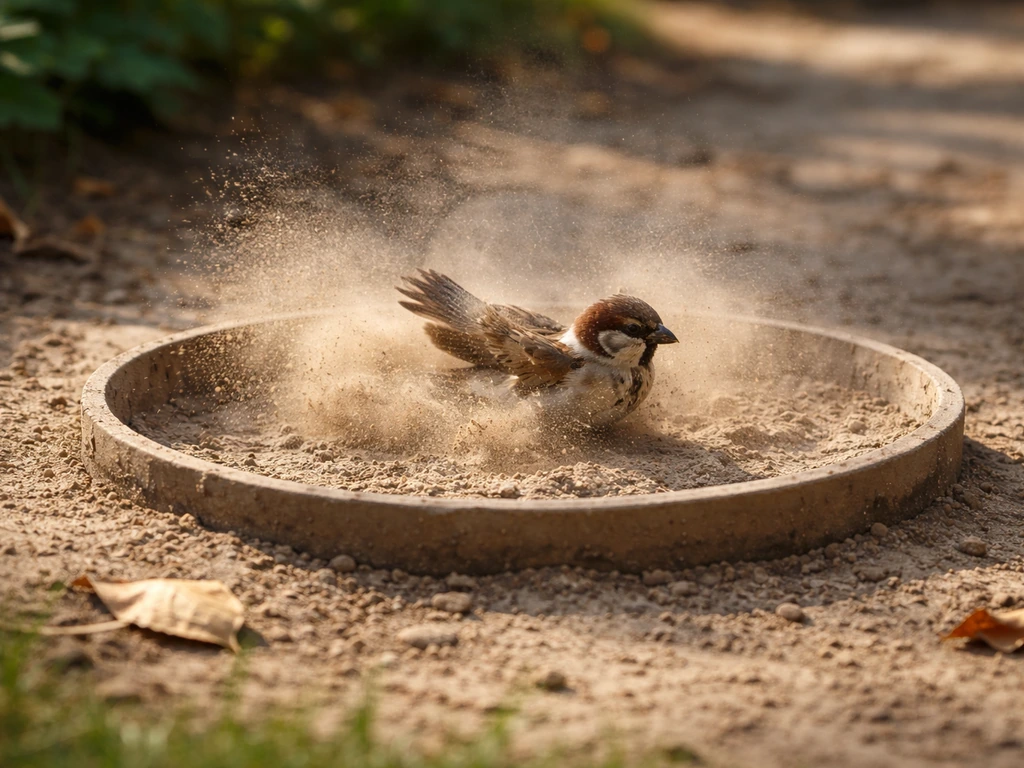
Dust bathing is a completely different behavior. Birds like house sparrows, wrens, and quail roll and fluff in dry, fine soil or sand to manage ectoparasites (mites, lice) and to absorb excess feather oils. A dust bath is essentially a shallow tray or bare patch of ground filled with dry, loose material, fine sand, dry soil, or wood ash works well. If you've ever seen a sparrow flopping around in a dirt patch looking like it's having a seizure, that's exactly what's happening.
Bird showers
A bird shower uses a gentle mist or drip rather than standing water. Hummingbirds almost never use traditional basins, they prefer flying through fine mist. A misting nozzle attached to a garden hose or dripper system creates the spray-bathing environment hummingbirds and warblers love. If you want step-by-step instructions for setting up a simple mister or dripper system, see a guide on how to make a bird shower. Some backyard birders set up a simple dripper or mister over a basin so it serves both shower-style and traditional bathers at once.
Bird bath product types: pros, cons, and durability
Walk into any garden center and you'll find half a dozen materials. Each has real trade-offs. Here's an honest breakdown based on how they actually perform over a season or two.
| Material | Pros | Cons | Durability |
|---|---|---|---|
| Concrete | Heavy, stable, natural look, good texture for bird grip | Porous (harbors algae/bacteria), cracks in hard freezes, heavy to move | 10+ years if sealed; cracks without sealing in freeze-thaw climates |
| Ceramic/Glazed | Attractive, easy to clean, non-porous glaze | Can crack or chip in freezing temps; slippery surface for birds | 3–8 years depending on climate and glaze quality |
| Resin/Plastic | Lightweight, affordable, frost-resistant, easy to move | Can fade/discolor in UV; lighter weight means wind instability | 3–7 years before UV degradation becomes significant |
| Metal (cast iron, copper, stainless) | Durable, some repel algae (copper), attractive patina | Can get very hot in direct sun; copper oxidation can be toxic to fish but acceptable for birds in low concentrations | 10–20+ years with minimal care |
| Heated (electric) | Keeps water liquid in sub-freezing temps; thermostatically controlled (activates near mid-30s–40s °F) | Requires outdoor outlet; ongoing electricity cost; 80–250W depending on model | Depends on basin material; heater element typically 5–10 years |
| Solar | No wiring required; powers pumps/misters; eco-friendly | Pump output depends on sunlight — unreliable on cloudy days; typically lower flow rate than electric | 5–10 years for solar panel; basin longevity varies by material |
My personal recommendation for most backyard birders is a resin or poly-resin basin for cold climates (it won't crack in a hard freeze) and a concrete or ceramic one for mild climates where the look matters more than freeze-resistance. If you're in USDA Zone 6 or colder, seriously consider a heated model or at minimum a submersible deicer rated for your basin size. API/Miller Manufacturing and K&H Pet Products make thermostatic deicers with MET or UL safety listings, always look for that certification on anything plugged in outdoors.
How to choose the right bird bath
Selection comes down to six factors. Think through each one before buying, and you'll avoid the frustration of a bath that birds ignore or that cracks in the first frost.
- Depth: 1 to 2 inches maximum for most songbirds. Add flat stones or a half-submerged rock if your basin runs deeper than that, so smaller birds have a safe foothold.
- Size: Bigger is generally better — a 16- to 24-inch diameter basin holds enough water to stay useful between refills and accommodates multiple birds at once. Crows and larger birds need at least 18 inches and a few inches of depth.
- Material: Match the material to your climate. Resin and plastic for freeze-thaw zones; concrete or ceramic where winters are mild and aesthetics matter.
- Heating: If your winters regularly drop below freezing, budget for either a heated bath or a separate submersible deicer. Look for thermostatically controlled units that activate near 35–40°F and carry a MET, UL, or CSA safety listing.
- Solar vs. electric: Solar-powered pumps and misters are great in sunny climates for adding water movement without wiring. In overcast regions or for reliability, a small plug-in pump or drip system is more dependable.
- Budget: A basic plastic saucer bath can cost under $20 and last several seasons. A quality concrete pedestal bath runs $40–$150. Heated baths with built-in elements start around $60–$120. DIY builds can come in under $15 (see the step-by-step section below).
Where to put it: siting, mounting, and safety
Location makes or breaks how well a bird bath performs. I've moved the same bath three times in my own yard before finding the spot birds actually used consistently, so don't be afraid to experiment.
Siting principles
- Place the bath within 10 feet of shrubs or trees so birds can escape to cover quickly if a predator appears — but not so close that a cat can crouch in the vegetation and pounce. A 5- to 10-foot clear buffer between the bath and dense low shrubs is a good rule of thumb.
- Partial shade is ideal. Full sun heats water fast (encouraging algae) and deters birds on hot days. Partial afternoon shade in warm climates extends water freshness and keeps the basin cooler.
- Flat, stable ground for pedestal baths. Soil that heaves over winter can tip a heavy concrete pedestal dangerously. Use a paver or flagstone base to keep it level.
- For hummingbirds: place a mister near flowering plants they already visit — they won't go far from their food sources just to bathe.
- For crows: ground-level or low pedestal baths in open areas with sightlines in multiple directions. Crows are alert and won't use baths where they feel cornered.
Mounting and anchoring options
Pedestal baths typically sit freestanding, but in windy areas you can drive a rebar stake through the pedestal's center hole (if it has one) into the ground. Wall-mounted baths use a bracket bolted into masonry or fence posts, good for small spaces. Hanging baths (usually shallow saucers on chains) work well for smaller songbirds but sway in wind, which some birds dislike. For ground-level baths, simply level the soil and place the basin directly on it or on a flat stone. In institutional or public settings, anchor any freestanding bath with a ground stake or set it in a concrete collar for stability and vandalism resistance.
DIY build: make a simple water bird bath in an afternoon
You don't need to spend $100 on a commercial pedestal bath to give birds excellent water access. This is the simplest build I know of, it takes about an hour, costs under $15, and birds use it just as readily as anything fancy.
What you need
- One 14- to 18-inch plastic or terracotta plant saucer (deep enough for about 1.5 inches of water)
- One or two flat, smooth stones or bricks to act as bird perches inside the basin
- A sturdy upturned plant pot (8- to 10-inch diameter) or a short wooden post as a pedestal — or nothing if you prefer ground level
- Waterproof adhesive (optional, for fixing saucer to pot top for stability)
- Gravel (optional, scattered in the basin bottom for grip)
Step-by-step
- Choose your height. Ground level works well for robins and thrushes. Elevated (18–24 inches) suits cardinals and sparrows and reduces cat access. Decide before you start.
- Set up the pedestal. If using a plant pot, flip it upside down and place it on stable, level ground. Press it into soil slightly if it wobbles.
- Place the saucer on top. Center it on the upturned pot. If it slides, a small bead of waterproof adhesive at three contact points holds it in place. Let it cure before adding water.
- Add perch stones. Place one or two flat stones (1 to 2 inches thick) in the center of the saucer. These give birds a dry place to stand and keep the effective water depth around 1 to 1.5 inches at the edges.
- Optionally scatter a thin layer of pea gravel across the basin floor. This improves grip and keeps smaller birds from slipping.
- Fill with fresh water to about 1 to 2 inches deep. Do not overfill — birds feel more secure in shallow water where they can see the bottom.
- Position near cover as described in the siting section above. Watch for bird activity over the next few days. If birds aren't using it within a week, try moving it 10 feet closer to a tree or shrub.
- For a mister/shower upgrade: attach a small misting nozzle to a garden hose and drape it over a nearby branch so it drips or mists into the basin. Hummingbirds and warblers will find it within days in warm months.
Adding a dust bath for sparrows and wrens
A dust bath is even simpler to build. Use a shallow wooden box or plastic storage tote (roughly 12 x 18 inches and 3 to 4 inches deep), fill it with fine dry sand or a 50/50 mix of fine sand and dry soil, and place it in a sunny open spot where sparrows already forage. For step-by-step plans and material lists, see how to make a bird dust bath. Keep it dry, cover it with a piece of plywood or a piece of hardware cloth when rain is forecast, or move it under an overhang. House sparrows and wrens usually discover a dust bath within a week once they're comfortable in your yard.
Cleaning, maintenance, and troubleshooting
This is the part most people underestimate. A dirty bird bath is worse than no bird bath, fouled water spreads salmonella and other pathogens among birds, and standing water breeds mosquitoes fast in warm weather. I clean mine every four to five days in summer and weekly in cooler months.
Basic cleaning routine
- Dump out the old water completely.
- Scrub the basin with a stiff brush to remove algae, debris, and biofilm. Plain water and a brush handle light grime.
- For disinfection (especially after a disease event or heavy contamination), use a solution of roughly 1 part household bleach to 9 parts water. Let it sit for a few minutes, then scrub.
- Rinse thoroughly — at least two or three full rinses until no bleach smell remains. Bleach residue harms birds, so don't rush this step.
- Refill with fresh water and return the bath to service.
Algae
Green algae is the most common complaint. It forms fastest in warm, sunny conditions. The best prevention is shade (even partial afternoon shade makes a meaningful difference), regular water changes, and scrubbing. Avoid adding chemical algaecides, Cornell Lab specifically warns against adding anything toxic to bird baths. Moving water (a small pump or dripper) also discourages algae growth by reducing stagnation.
Mosquitoes
Mosquitoes can complete their larval development in standing water in as little as a week in hot weather. The most effective prevention is simply dumping and refilling the bath every three to four days, mosquitoes can't complete their cycle if water is regularly replaced. If you have a larger basin or a situation where daily or near-daily refilling isn't practical, EPA-registered Bti (Bacillus thuringiensis israelensis) products, sold as Mosquito Dunks or Mosquito Bits, are labeled for use in bird baths and are safe for birds when used according to label directions. The CDC and EPA both list Bti as an appropriate larvicide for small water features. Always follow the label exactly.
Freezing
A frozen bath is useless to birds in winter, and winter water is actually harder for birds to find than summer water. Your options: bring the bath in and use a heated substitute, add a submersible deicer (thermostatically controlled models from API or K&H turn on near 35–40°F and turn off above the mid-40s to mid-60s°F depending on the model, check your specific product's manual), or pour warm water over the ice once or twice a day. Manufacturer instructions show many thermostatic de‑icers activate as water nears the mid‑30s–40s °F and deactivate above the mid‑40s–60s °F Manufacturer instructions show many thermostatic de‑icers activate as water nears the mid‑30s–40s °F and deactivate above the mid‑40s–60s °F.. The deicer approach is easiest for consistent results. Just make sure any electrical component is rated for outdoor use and carries a recognized safety listing (MET, UL, or CSA).
Disease outbreaks
When your state wildlife agency or health department issues an advisory about unexplained wild-bird deaths in your area, follow their guidance, some agencies have recommended temporarily removing feeders and baths entirely until the event passes. This happened with a regional songbird mortality event, with Rhode Island DEM among the agencies issuing such advisories. Taking the bath down temporarily during a confirmed outbreak is the right call; it prevents birds from congregating at a shared water source and potentially spreading illness.
Safety, ethics, and institutional settings
Whether you're setting up a bird bath in a backyard, a community garden, or an institutional setting like a prison facility's outdoor recreation area, a few ethical and safety principles stay consistent. Water features attract wildlife, including potentially problematic ones (wasps, raccoons, deer), position and manage baths with that in mind. Don't add chemical supplements, essential oils, or dyes to bird bath water in an attempt to deter algae or 'purify' the water; most additives are either ineffective or outright harmful to birds.
Wildlife rehabilitators working under IWRC and NWRA Minimum Standards (4th edition) are required to provide species-appropriate bathing and drinking containers as part of basic animal care, so the importance of clean, appropriately sized water access isn't just a backyard enthusiast preference, it's a professional welfare standard. Apply that same mindset to your setup: clean water in an appropriate container, refreshed regularly, is the baseline.
For public or institutional outdoor spaces, anchor all freestanding baths securely (ground stakes, concrete base, or wall brackets) to prevent tipping injuries, and choose materials that can be cleaned with institutional disinfectants without degrading, glazed ceramic, stainless steel, and high-density polyethylene (HDPE) plastic all hold up well to repeated sanitizing. Avoid copper basins in any setting where aquatic organisms share the water, though copper is generally fine for a standard bird bath in a yard.
Species-specific tips: what different birds actually want
Different birds have genuinely different preferences, and targeting your setup toward the species you want to attract makes a real difference in how much traffic you get.
| Bird | Preferred Bath Type | Ideal Depth | Placement Notes |
|---|---|---|---|
| Robins & Thrushes | Water bath (pedestal or ground) | 1.5–2 inches | Near trees; they're confident water bathers |
| Cardinals | Pedestal water bath | 1–1.5 inches | Elevated, near shrubs; prefer still water with perch stones |
| House Sparrows | Dust bath or shallow water | 1 inch or dust box | Ground level or low pedestal; love a good dust bath site |
| Hummingbirds | Misting spray / bird shower | N/A (prefer mist) | Near flowering plants; fine-mist nozzle over foliage or basin |
| Crows | Ground-level or low pedestal water bath | 2–3 inches acceptable | Open area with wide sightlines; they need room to maneuver |
| Wrens | Dust bath or shallow water | 0.5–1 inch | Sheltered low location; they prefer dense nearby cover |
| Warblers | Drip or mist over foliage | N/A (prefer drip/mist) | Tree branches with drip nozzle; they rarely use open basins |
The single most effective upgrade you can make to attract a wider range of species is adding water movement. A $10 to $20 submersible fountain pump or a simple drip nozzle running from your garden hose turns a static basin into something birds detect from much farther away. I added a small dripper to my existing concrete bath one spring and had three new warbler species show up within two weeks, it was the single biggest improvement I made.
FAQ
What does the phrase “bird bath in prison” mean — literal vs. slang/idiomatic usage?
Literally, a bird bath is a shallow basin of water for wild birds. Idiomatically in U.S. correctional contexts, “bird bath” commonly refers to a quick sponge or sink wash done in a cell when a full shower isn’t available. Court opinions, prison memoirs, and language references use that slang to mean limited personal hygiene rather than an avian water feature. Both meanings are correct; context determines which applies.
How do water baths, dust baths, and bird showers differ (what does “take a bird bath” mean)?
Water bath: birds splash or partially immerse in shallow water to clean feathers and remove dirt. Dust bath: birds toss dry soil or sand to remove parasites and excess oils. Bird shower: moving or gently falling water (from a dripper, mister, or shallow fountain) that encourages bathing behavior similar to rain. “Take a bird bath” in everyday speech often means a quick sponge wash (human slang) or literally a bird using water depending on context.
Which bird species prefer water baths, dust baths, or showers?
Many passerines (robins, thrushes, cardinals, many sparrows) use water baths. House sparrows, doves, and many ground‑feeding songbirds use dust baths. Hummingbirds typically prefer shallow water drips, misters, or shallow water for drinking and occasional bathing. Corvids (crows, jays) and larger birds use deeper but still shallow basins with perches. Species varies by local community; provide both water and dust options to support diversity.
What types of bird‑bath products are available?
Common types: concrete and stone basins (heavy, durable), ceramic/glazed bowls (decorative), metal baths (lighter, may heat/cool quickly), plastic/resin models (affordable, lightweight), heated/de‑icer units (thermostatic for winter), solar/moving‑water devices (pumps, drippers, misters). Accessories include pedestals, mounting brackets, shallow rocks for perches, and covers for heated units.
How do I choose the right bird bath for my yard?
Consider depth (1–2 inches at edge recommended for many songbirds; deeper center OK for larger species), material (durability, heat retention, and safety), stability (heavy base or secured mount to resist tipping), ease of cleaning (smooth, nonporous surfaces are easier), moving water (pumps or drippers attract more birds), and winter needs (thermostatic de‑icers if you want year‑round water). Match size and features to target species and local climate.
Where should I place a bird bath and how can I target particular species?
Placement: near low cover (shrubs/trees) so birds can escape predators, but not so close that predators can ambush (3–10 feet away is common guidance). Provide 360° approach room and some perches (low branches or flat stones). For species targeting: hummingbirds—use shallow drips or misters and nearby nectar feeders; sparrows/doves—ground‑level shallow pans or saucers; corvids/crows—deeper, sturdier basins or large saucers. Observe local bird behavior and adjust placement.