If you searched 'hoe bath vs bird bath,' you were probably not looking for a gardening accessory. 'Bird bath' is a high-volume, seasonal search term in the U.S., averaging about 70–75K monthly searches and peaking in May; useful SEO targets include 'bird bath', 'garden birdbath', 'bird bath fountain', and 'solar bird bath' 'bird bath' is a high-volume, seasonal search term (≈70–75K monthly US searches; peaks in May). 'Hoe bath' is a widely used slang term (popularized on forums like LipstickAlley and Urban Dictionary) meaning a quick, partial wash when you don't have time for a full shower. A bird bath, on the other hand, is a shallow basin you put in your yard for wild birds to drink and bathe in. Two very different things. But since you've landed here, this guide covers everything about real bird baths, including how they compare to dust baths and bird showers, how to choose and build one, and how to keep birds coming back year-round.
Hoe Bath vs Bird Bath: Guide to Bird Baths, Dust Baths & Showers

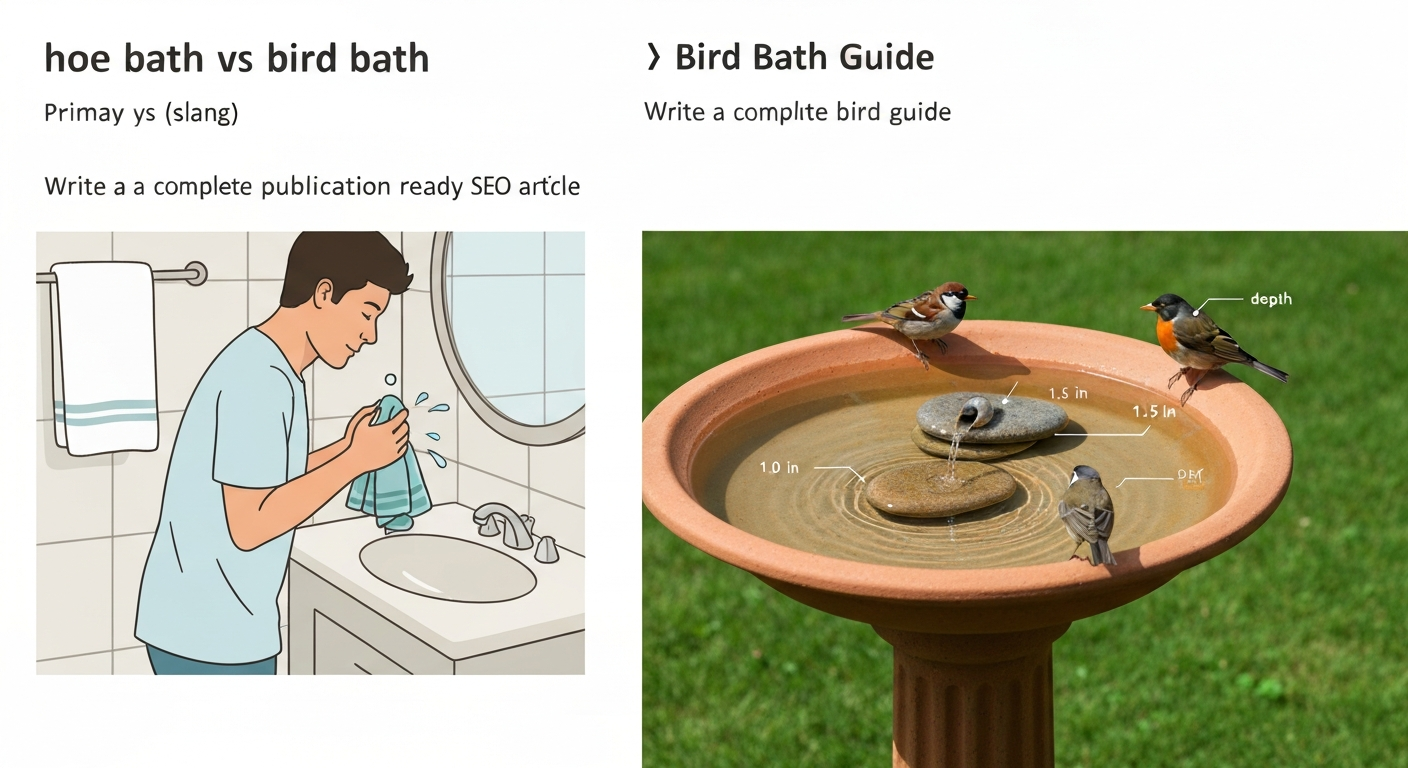
What people actually mean when they search 'hoe bath vs bird bath'
The phrase 'hoe bath' has been floating around online slang communities for years. On LipstickAlley and similar forums, the term describes a minimal personal hygiene routine: a quick wash of the essentials without a full shower. A 'bird bath,' in the same slang context, means a slightly more thorough sink or basin wash. Neither term has anything to do with your backyard. The comparison shows up in meme culture and casual conversation as a humorous sliding scale of personal grooming effort.
If, however, you are here because you want to set up a water feature for wild birds, you are in exactly the right place. The rest of this article focuses on the real, feathered meaning of the term. And if you have ever wondered what 'taking a bird bath' means as a phrase, or even heard the term used in prison slang, those are genuinely interesting side topics worth exploring in their own right. If you're curious about what 'bird bath' means in prison slang, see the separate explainer on what is a bird bath in prison (destination: 83542fcc-b340-440c-ba47-d0b59fe88b5a). If you want a quick explanation of the phrase 'what does it mean to take a bird bath', see our brief guide to its idiomatic and slang uses.
Bird bath, dust bath, bird shower: what each one actually is
Bird bath
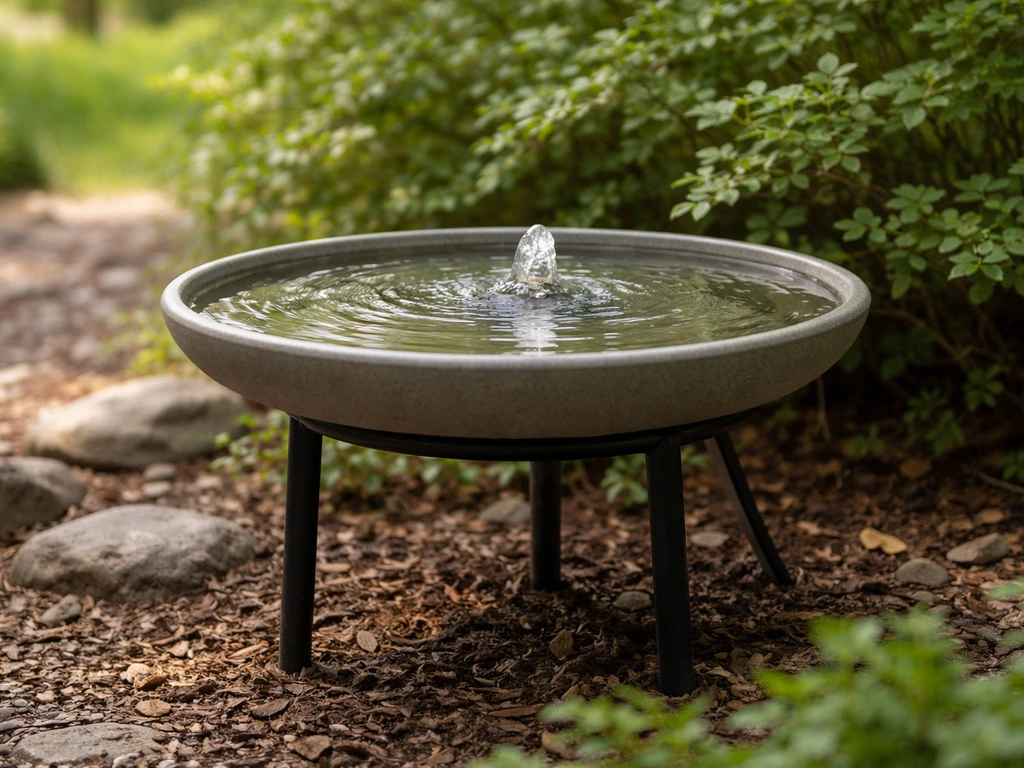
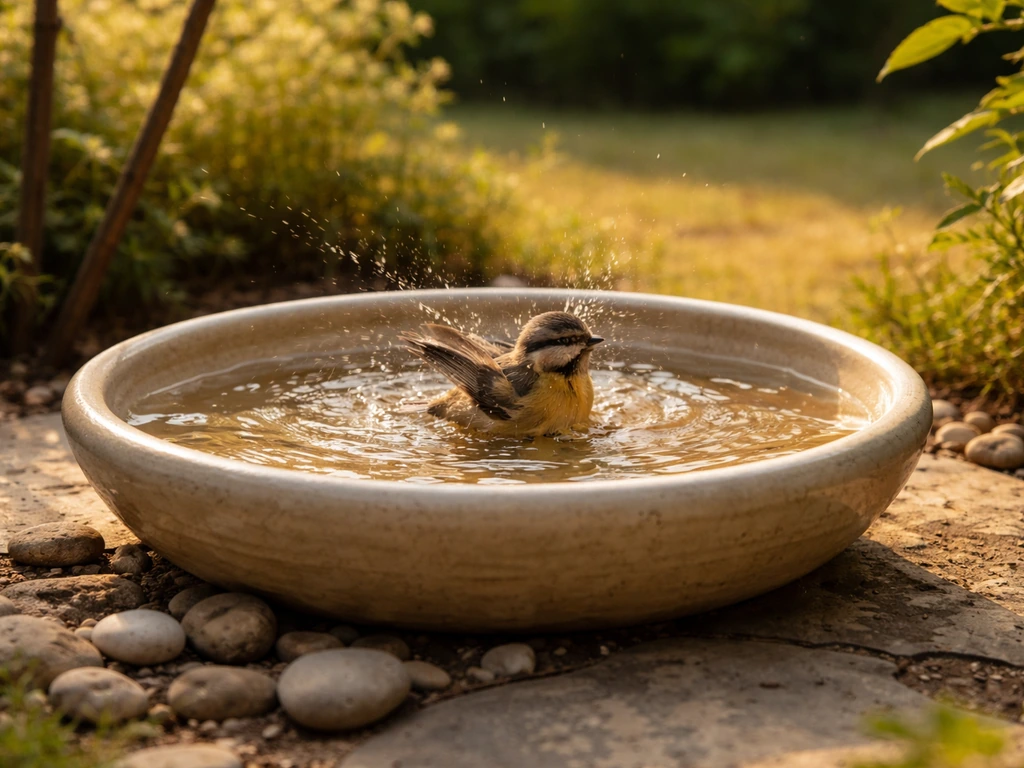
A bird bath is a shallow artificial basin filled with fresh water. Birds use it to drink, bathe, and cool down. The Cornell Lab of Ornithology describes the ideal depth as 1 to 1.5 inches for most songbirds, with a gradual slope or stones added so birds of different sizes can find their comfort zone. Moving water, from a dripper, fountain pump, or mister, makes a bath dramatically more attractive to a wider range of species and also reduces the standing-water problems that encourage algae and mosquitoes.
Dust bath
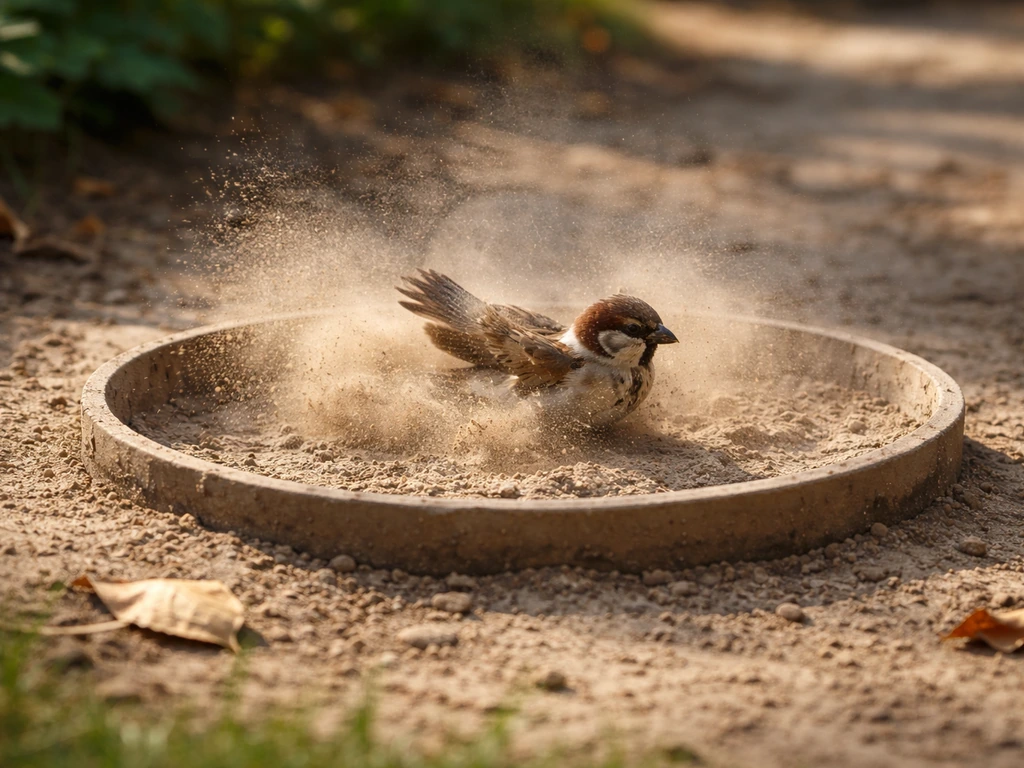
A dust bath is a shallow depression filled with dry, fine material: sand, dirt, wood ash, or diatomaceous earth. Birds roll and flap in it to work fine particles through their feathers. The behavior is well-documented in scientific literature and is primarily linked to ectoparasite control (think mites and lice) and feather maintenance. Sparrows, house finches, quail, and many ground-feeding birds dust-bathe regularly, sometimes daily. It has nothing to do with water. If you want to attract these species more effectively, offering a dust bath alongside a water bath is genuinely useful.
Bird shower
A bird shower is a setup that delivers moving or misting water, usually aimed upward or sideways, rather than a static basin. Hummingbirds in particular tend to prefer misters and drippers over conventional basins because their bodies are small enough that even a shallow pool can feel awkward. A simple misting nozzle attached to a garden hose or a recirculating pump with a fine spray head qualifies as a bird shower. The appeal is the movement and fine droplets rather than immersion.
Head-to-head: how bird baths, dust baths, and bird showers compare
| Feature | Bird Bath | Dust Bath | Bird Shower |
|---|---|---|---|
| Primary purpose | Drinking, bathing, thermoregulation | Parasite control, feather maintenance | Bathing via mist or moving water |
| Substrate / medium | Fresh water (1–1.5 in depth ideal) | Dry sand, dirt, wood ash, or DE | Water mist or fine spray |
| Depth / form | Shallow basin, gradual slope | Shallow hollow or tray, 2–4 in deep | No standing water needed |
| Best species | Most songbirds, robins, sparrows, jays | Sparrows, quail, finches, thrashers | Hummingbirds, warblers, small songbirds |
| Seasonal use | Year-round (heated in winter) | Year-round, especially spring/summer | Spring through fall; freeze risk in winter |
| Maintenance effort | Change water every 2–7 days; scrub weekly | Refresh substrate monthly; keep dry | Check pump/nozzle weekly; clean mister heads |
| Mosquito risk | Yes, if water sits too long | None | Low (no standing water) |
| DIY difficulty | Easy to moderate | Very easy | Easy with a hose mister; moderate with pump |
Which feature is right for you
The honest answer is that most yards benefit from at least two of these three features. But if you are starting from scratch, your climate, yard size, target species, and how much maintenance you are willing to do should drive the decision.
- Hot, dry climates (southwest US, summer heat waves): a water bath is the highest priority. Birds in heat stress need drinking and cooling water more urgently than anything else. Add a dripper or mister to boost appeal.
- Cold climates with freezing winters: invest in a heated bath or a de-icer insert before anything else. Open water in winter is rare and birds will find it fast.
- Small urban yards or balconies: a wall-mounted ceramic basin or a compact solar-powered fountain is enough. Dust baths need bare ground or a container at least 12 inches wide.
- Rural or suburban yards with ground-feeding birds: add a dust bath. A wide, low tray or a corner of bare earth works perfectly. Sparrows and finches will thank you.
- Hummingbird gardens: skip the deep basin and go straight to a mister on a low shrub or a dedicated hummingbird dripper. Misters on a timer cost very little to run.
- Minimal maintenance preference: a solar-powered recirculating fountain handles much of the water-stagnation problem automatically, and plastic basins clean faster than concrete or ceramic.
- Maximum species diversity: offer all three features if space allows. Different birds have different preferences, and providing variety is the single best way to attract a wider range.
Materials and construction types: what to buy and why it matters
I've used almost every material over the years, and each one has a real-world personality that doesn't always show up in product descriptions. Here's how they actually perform.
| Material | Durability | Freeze/thaw risk | Heat retention | Cleaning ease | Notes |
|---|---|---|---|---|---|
| Concrete | Very high (decades) | Can crack if water freezes in basin | Low (stays cool) | Moderate (porous, harbors algae) | Heavy; textured surface birds love; seal pores annually |
| Glazed ceramic | High if unfrozen | High crack risk in hard freezes | Low to moderate | Easy (non-porous glaze) | Check glaze is lead-free; avoid unlabeled imports |
| Metal (cast iron/copper) | Very high | Low crack risk, but ice can deform thin metals | High (heats fast in sun) | Easy | Can get very hot in direct sun; copper has natural algae resistance |
| Plastic / resin | Moderate (UV degrades) | Low | Moderate | Very easy | Lightest option; cheapest; fades over time; great for beginners |
| Natural stone/granite | Excellent | Moderate (dense stone resists better) | Low | Moderate | Heavy; natural texture is ideal for bird grip |
| Heated (electric) | High if UL/CSA certified | None (thermostat prevents freezing) | N/A | Easy | Requires GFCI outlet; check wattage (150–250W typical) |
| Solar-powered | Moderate to high | Low (pump runs only in daylight) | N/A | Easy | No wiring; pump may underperform in low light; no heating function |
A quick note on ceramic glazes: lead and other heavy metals can leach from low-fired or uncertified glazes into water. This is a real concern documented in toxicology literature. If you are buying a ceramic basin, make sure it is labeled food-safe or wildlife-safe by the manufacturer. Unknown or very cheap imports with brightly colored glazes are the ones I'd skip.
Placement and mounting: the details that actually matter
You can have the best basin in the world and birds will ignore it if it's in the wrong spot. The Cornell Lab guidance is clear: place baths near cover (shrubs or trees within 10 feet work well for escape routes) but not so close that cats can use the cover to ambush. A distance of 5 to 10 feet from a shrub is a reasonable middle ground. Visibility from above matters too since birds scout from perches before dropping down.
- Height: pedestal baths at 24 to 36 inches off the ground are easiest for most songbirds. Ground-level baths attract robins and thrushes but carry higher predator risk. Mounting on a deck railing or fence post is a good compromise for small yards.
- Sun vs. shade: partial shade is ideal. Full sun heats the water fast (speeding algae growth and evaporation) and can make metal baths dangerously hot. Full shade keeps water cooler but can attract less attention from passing birds.
- Distance from feeders: placing a bath within 10 to 15 feet of a feeder station increases traffic, but too close means seed hulls and debris fall into the water constantly. I find about 10 feet is the sweet spot.
- Predator safety: keep the area around the bath open (at least 3 feet of clear ground in all directions) so birds can see approaching cats or hawks. Avoid dense ground cover right at the base.
- Visibility from your window: sounds obvious, but placing the bath where you can actually watch it makes maintenance more enjoyable and lets you spot problems early.
DIY and repurposed builds: step-by-step
Simple DIY bird bath from a terra cotta saucer
This is my go-to recommendation for beginners because it costs under $15 and works beautifully. You need a large terra cotta or unglazed ceramic plant saucer (14 to 18 inches diameter), a sturdy upturned pot or stacked bricks as a base, and a handful of flat stones or pebbles.
- Choose a saucer no deeper than 2 inches at its center. If the saucer is deeper, fill the bottom with a layer of smooth stones to bring the effective water depth to 1 to 1.5 inches.
- Set your base (upturned pot, stacked bricks, or a purpose-made pedestal) on a flat, stable surface. Height of 24 to 30 inches works for most songbirds.
- Place the saucer on top and check that it does not rock. Use sand or a rubber mat beneath to level it.
- Add 3 to 5 flat pebbles or smooth stones at one end so smaller birds have a shallower entry point.
- Fill with fresh water, keeping the depth at 1 to 1.5 inches.
- Optional: hang a simple dripper bottle (a plastic bottle with a pinhole in the cap) above the center. The drip sound attracts birds from a surprising distance.
How to make a bird dust bath
A dust bath is even simpler than a water bath to build. The key is getting the right substrate and keeping it dry. Use a shallow container at least 12 inches wide and 3 to 4 inches deep, or simply designate a bare patch of earth (about 2 feet square) in a sunny, sheltered corner of the yard. For step-by-step instructions and substrate recommendations, see how to make a bird dust bath.
- Choose a wide, low container: a plastic storage bin lid, a large plant tray, or a wooden frame filled with material. Circular or square both work fine.
- Mix the substrate: 2 parts fine dry sand, 1 part dry topsoil, and optionally 1 part wood ash (cooled completely). Wood ash adds natural insecticidal properties. Some people add a small amount of food-grade diatomaceous earth for extra parasite control.
- Fill the container to about 3 inches deep. Loose, fine, and very dry material is the goal.
- Place it in a sunny, open spot away from moisture. Wet substrate defeats the purpose entirely.
- Add a low perch nearby (a small branch laid across the edge works) so birds feel secure.
- Cover it with a simple shelter (a piece of clear polycarbonate roofing held up with corner posts) if your climate is rainy. Keeping it dry is the main maintenance challenge.
- Refresh the substrate every 4 to 6 weeks or whenever it clumps or gets damp.
How to build a bird shower (mister setup)
A DIY bird shower can be as simple as a fine-mist nozzle screwed onto a garden hose stake, or as involved as a recirculating pump with a spray head mounted over a shallow basin. The simplest version that I've found most effective uses a standard garden hose misting attachment.
- Purchase a fine-mist or fan-mist nozzle with a 1/2-inch or 3/4-inch hose thread (available at any garden center for under $10).
- Attach it to a short length of hose connected to an outdoor spigot, or use a hose stake to position it at 18 to 24 inches above the ground near a low shrub.
- Aim the mist upward or sideways so it creates a light spray cloud rather than a stream. Hummingbirds and warblers will fly through the mist directly.
- Optional: place a shallow saucer (1 inch depth) underneath to catch drips. This doubles as a conventional bath for birds that prefer to stand in water.
- Add a simple timer (a mechanical hose timer costs about $15) to run the mister for 30 to 60 minutes in the morning. Morning sessions match peak bird activity.
- Check the mister head weekly for mineral clogs. Soak in white vinegar for 30 minutes to clear deposits.
Installing a purchased bird bath: step-by-step
Bought a pedestal bath, a deck-mount model, or a solar-powered fountain unit? The installation details matter more than most people expect, especially for stability and winter safety.
- Leveling: place the pedestal on a paver, flagstone, or compacted gravel pad. Use a small level on the basin rim. An unlevel basin loses water on one side and can topple in wind.
- Anchoring: for areas with wind or curious pets, use a ground anchor stake through the pedestal base or add a concrete collar around the base of a heavy pedestal. Deck-mount brackets should use stainless screws and be rated for the bath's wet weight.
- Adding a dripper or pump: most pumps for bird baths are submersible units rated for the basin volume. Choose a pump with a flow rate under 30 gallons per hour for a standard 2-gallon basin. Conceal the power cord in a cord cover or route it under a deck board.
- Solar units: position the solar panel in direct sun for at least 6 hours per day. Most solar bath pumps include a separate panel on a cable; position the panel in full sun even if the bath itself is in partial shade.
- GFCI outlets for electric models: any outdoor water feature with a power connection must plug into a GFCI-protected outlet. If your nearest outdoor outlet is not GFCI-protected, have an electrician upgrade it before plugging in a heated bath or pump.
- Winter prep for electric/heated models: drain and store non-heated baths before the first hard freeze. For heated baths, confirm the thermostat activates at or above 35 degrees Fahrenheit. Do not use an extension cord unless it is rated for outdoor use and the appropriate amperage; manufacturer manuals for de-icers like the API 250W explicitly warn against unapproved cords.
- Winter prep for solar models: solar pumps stop working in low winter light and do not provide any heating. Either store the solar pump and replace it with a de-icer, or add a separate thermostatically controlled de-icer insert (typically 100 to 250 watts) to keep water liquid.
Heating and winterizing: keeping water open when temperatures drop
Open liquid water in winter is genuinely rare in cold climates, and birds know it. A heated bath in January can attract more species in a single morning than a pristine summer bath all week. But there are real safety and product selection points worth knowing before you plug anything in.
Choosing a de-icer or heated bath
Commercial de-icers from brands like API, Farm Innovators, K&H, and Prime Retreat are the most common solutions. They come in two forms: dedicated heated bath basins (the entire unit is thermostatically controlled) and de-icer inserts you drop into an existing basin. For most backyard birders, a 150-watt thermostatic de-icer insert is enough for most winters, while a 250-watt unit is better for sustained temperatures below 0 degrees Fahrenheit. Always look for UL or CSA certification on the unit.
- Dedicated heated bath: most convenient; thermostat built in; plastic units are common because they insulate better and won't crack; typically 50 to 150 watts; brands like K&H and Farm Innovators are well-regarded.
- De-icer insert: drops into any existing concrete, ceramic, or plastic basin; more flexible; API's 250W de-icer is a popular choice; must not be used in a cracked or very thin ceramic basin that could break from thermal stress.
- Thermostat threshold: look for units that activate at 35 to 40 degrees Fahrenheit so they only run when needed, keeping electricity use low.
- Mounting style: deck-clamp models, ground-pedestal models, and inline cord models each suit different setups; match to your existing bath configuration.
Safe winter maintenance practices
Never pour boiling water into a ceramic or concrete bath to melt ice. The thermal shock can crack the basin, especially if it has any existing micro-fractures. Warm (not hot) water is fine. For non-heated baths, a quick pour of warm water to melt a skim of ice is a perfectly good low-tech solution if temperatures are only borderline freezing. Keep the water level consistent: evaporation rates drop in cold weather but the basin can still run dry, which can burn out a heating element.
Clean a heated bath just as regularly as a summer bath, roughly every 5 to 7 days in cold weather. Algae growth slows in winter but bird droppings and debris accumulate just the same. Use a 1:9 bleach-to-water solution or white vinegar for scrubbing, rinse thoroughly, and refill. In areas experiencing a local High Pathogenicity Avian Influenza (HPAI) outbreak, check your state fish and wildlife agency's current guidance: some jurisdictions recommend temporarily removing baths and feeders to reduce bird congregation during active outbreaks. See Avian Influenza Outbreak: Should You Take Down Your Bird Feeders? (Cornell Lab, All About Birds) for national and state guidance on cleaning feeders and baths and, in some jurisdictions during local HPAI outbreaks, temporarily removing them to reduce bird congregation Avian Influenza Outbreak: Should You Take Down Your Bird Feeders? (Cornell Lab — All About Birds).
Cleaning, algae, and mosquito control: the practical schedule
I will be honest: most bird bath problems I've seen come down to people not changing the water often enough. In warm weather, water in a static (non-circulating) bath should be changed every 2 to 3 days. In cooler weather, every 5 to 7 days is acceptable. Cornell Lab guidance sets the general rule at every 2 to 7 days depending on temperature, and I'd lean toward the shorter end in summer.
- Algae control: scrub the basin with a stiff brush every 7 to 10 days. A 1:9 bleach solution (1 part bleach, 9 parts water) kills algae effectively; rinse extremely well and let dry before refilling. White vinegar (undiluted) is a gentler alternative that works for light buildup and is safe if a small residue remains.
- Mosquito prevention: mosquitoes need standing water for 7 to 10 days to complete their breeding cycle. Changing water every 2 to 3 days breaks the cycle entirely. A recirculating pump or dripper eliminates standing water as a concern almost completely.
- Debris management: place the bath away from directly overhanging branches if leaf litter is a problem. A simple fine-mesh screen cut to fit loosely over the basin overnight keeps it cleaner.
- Winter cleaning: clean every 5 to 7 days even in cold weather; algae growth slows but doesn't stop, and bird droppings accumulate regardless of temperature.
Attracting specific species: what works for hummingbirds, crows, and common songbirds
Different birds have genuinely different preferences, and matching the setup to the species you want is worth the extra thought. Hummingbirds almost never use a conventional basin bath. They prefer to fly through a fine mist or stand under a dripper, so a misting nozzle aimed at a low shrub is your best tool for them. Robins and American thrushes love shallow ground-level baths with a moving-water element. House sparrows and finches appreciate slightly deeper water and use both dust baths and water baths actively.
Crows are observant and cautious. They prefer larger, deeper baths (2 to 3 inches) placed in open areas where they can see threats. They also famously dip food in water before eating, so a bath near a feeding station with some space around it tends to draw them. Blue jays behave similarly. For a broad mix of species, a setup with a shallow end (under 1 inch) graduated to a deeper end (1.5 to 2 inches) using stones handles the smallest warblers through larger jays without any extra work.
FAQ
What is the primary search intent behind queries like "hoe bath vs bird bath" (including likely typos)?
Users may have three overlapping intents: 1) literal—compare types of bird water features (bird bath, dust bath, bird shower) for backyard birding; 2) DIY—how to make/convert simple containers into baths or dust baths; 3) slang/meme—people using or encountering "hoe bath" as slang (social/forum contexts). An accurate article must resolve all intents: clear definitions and how‑tos for gardeners and a brief explanation of the slang meaning to satisfy ambiguous queries.
Which authoritative sources should I cite to define bird baths, dust baths, and bird showers and explain bird behavior (bathing, dusting, preening)?
Cite ornithological and extension authorities: Cornell Lab of Ornithology (All About Birds) for bird baths and placement; British Trust for Ornithology (BTO) for bathing behavior; university extension publications and poultry extension for dust‑bathing behavior; peer‑reviewed literature or authoritative summaries (reviews cited on Wikipedia's dust‑bathing page) for experimental evidence linking dust‑bathing to parasite control. These are high‑authority, trustable sources for behavior and function.
What material‑and‑product guidance is required for a practical comparison (concrete, ceramic, metal, heated, solar)?
Provide material pros/cons and safety notes: concrete (durable, heavy, porous—freeze/thaw risk), glazed ceramic (attractive, less porous—avoid unknown/lead glazes), metal (durable, heats quickly), plastic/resin (light, affordable), natural stone/granite (durable, textured). For heated options, reference commercial de‑icers and manufacturers (API, K&H, Farm Innovators) and include electrical safety/UL/CSA certification notes. For solar fountains, discuss pump sizing, run time, and freeze limitations. Cite product guides and manufacturer manuals for specs and safety.
What placement, depth and design specifics should be included to maximize bird use and safety?
Include step‑by‑step placement rules from trusted sources: shallow depth (most songbirds 1–1.5 in; provide gradual slope/stones for varied depths), position near cover/perches (5–15 ft) but within sight lines for predators, avoid dense vegetation where predators can ambush, provide moving water (drippers/fountains) to increase attraction and reduce mosquito/ algae problems, and ensure visibility for humans but safety for birds. Cite Cornell Lab and extension guidance.
What exact cleaning, algae, freezing and mosquito‑control protocols must the article cover?
Provide actionable maintenance: change water every 2–7 days depending on temperature; scrub basin weekly (or immediately if sick birds observed) with a 1:9 bleach:water solution or an alternative vinegar scrub, rinse thoroughly and refill; for algae control use scrubbing and fountain circulation (avoid chemicals toxic to wildlife); mosquito control—keep moving water with pumps/drippers, empty/clean stagnant containers, use larvicide products only if labeled safe for wildlife (consult local regs). For freezing, present heated de‑icers, thermostatted bowls, or shallow basins moved indoors when extreme freezing; reference Cornell Lab, extension articles, and manufacturer manuals for de‑icer safety.
What DIY, repurposed and installation instructions should be included (step‑by‑step)?
Include stepwise how‑tos: 1) Simple basin bird bath: select non‑toxic bowl (glazed ceramic certified lead‑free, heavy planter saucer, or stone), place on pedestal or stable stump, add 1–1.5 in depth and flat stones for perching. 2) Dust bath: build shallow container 12–24 in wide, fill with clean builder's sand, diatomaceous earth (food‑grade, optional), and wood ash in small proportion—mix and top with dry mulch—place in sunny, sheltered area. 3) Bird shower/dripper: repurpose small solar fountain pump or attach inexpensive drip kit to gutter/soaker hose; test flow and secure on rim or branch. 4) Heated option: install UL‑rated de‑icer per manual, use GFCI outlet; for pole mounting follow manufacturer instructions. Include safety checks and photos/diagrams suggestions.