Pick a shallow basin (1 to 2 inches deep at the center, with gently sloping sides), set it in a spot that gives birds a clear sightline in every direction with shrubs or a tree within 10 feet for quick escape, fill it with clean water, and change that water at least twice a week. That covers the absolute basics. Everything else in this guide is about doing those fundamentals better, avoiding the mistakes that keep birds away, and keeping the setup going through summer heat, winter freezes, and mosquito season.
Bird Bath Setup: Step by Step Guide for Backyard Birds

Marcus Henley
13 Jun 2026
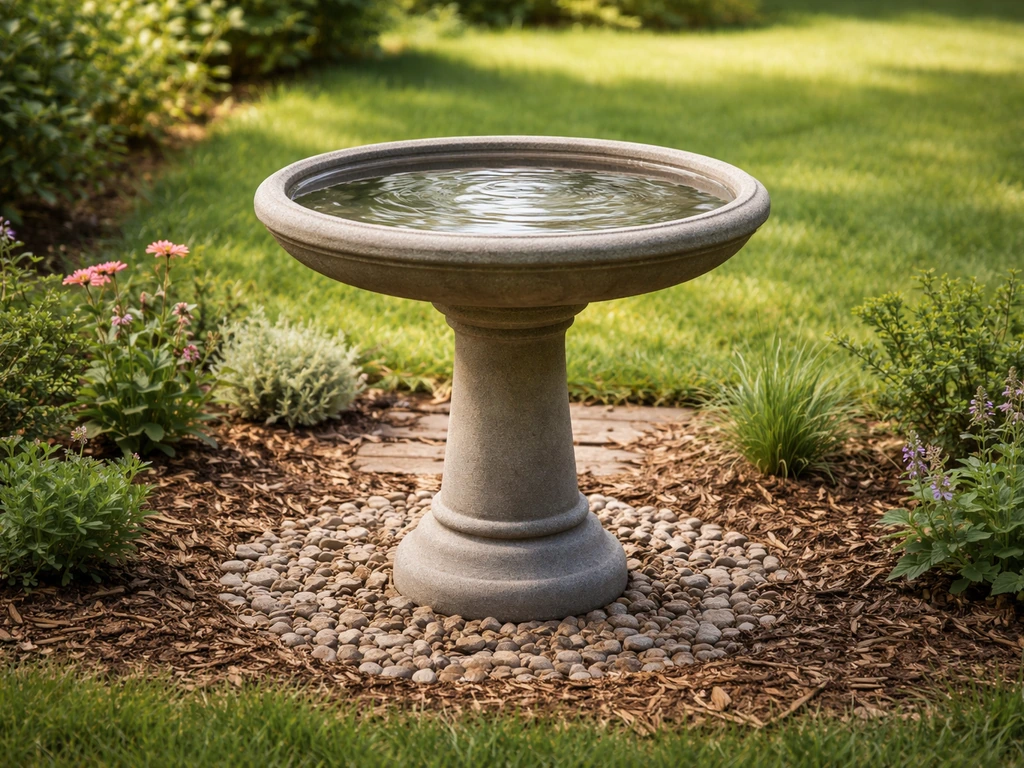
Choosing the right bird bath type for your yard
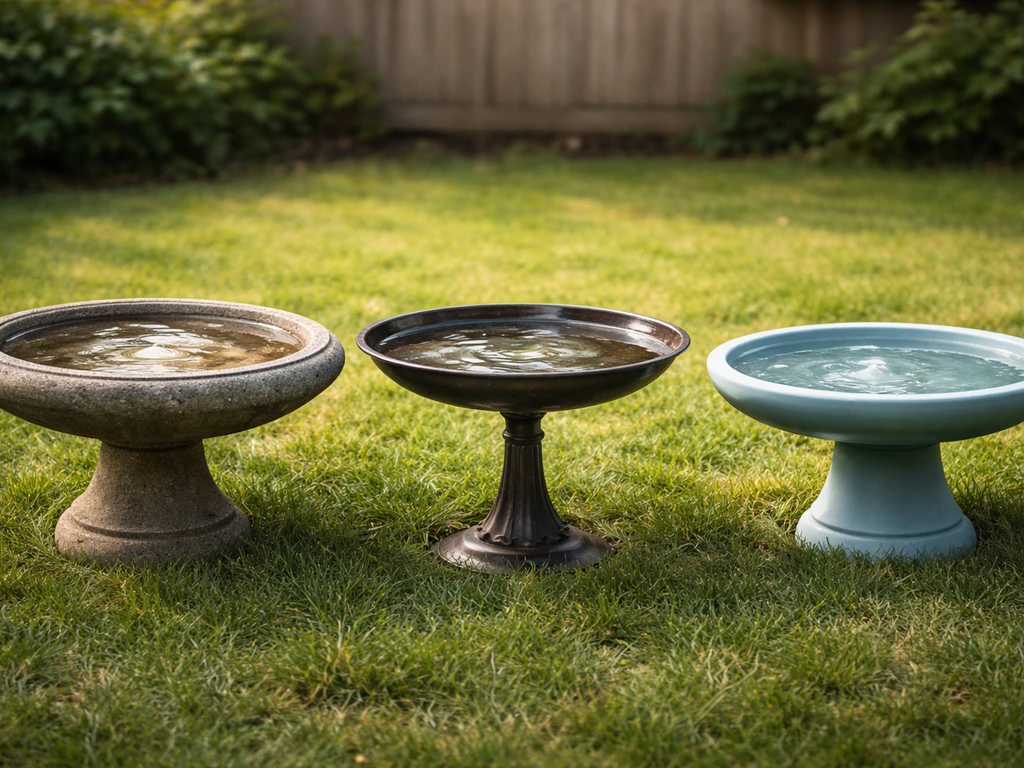
The material and style you choose affects how much maintenance you do, how long the bath lasts, and which birds show up. There is no single best option, but some choices suit certain situations a lot better than others.
| Type | Pros | Cons | Best For |
|---|---|---|---|
| Concrete / stone | Durable, heavy (hard to knock over), rough texture gives birds good footing | Heavy to move, can crack in hard freezes, needs sealing | Year-round use in moderate climates, large yards |
| Ceramic / glazed | Attractive, easy to clean smooth surfaces, lots of styles | Slippery finish needs a grip insert, chips and cracks if frozen | Mild climates, small patios, aesthetics-focused setups |
| Metal (copper, stainless) | Long-lasting, naturally antimicrobial (copper slows algae), lightweight | Can heat up fast in full sun, may corrode if uncoated | Hot climates with shade cover, modern garden styles |
| Plastic / resin | Cheap, lightweight, easy to clean, won't crack in frost | Fades over time, lighter weight means more tip-over risk | Budget setups, areas with hard winters, beginners |
| Heated / de-icer built-in | Keeps water thawed in winter without a separate device | Higher upfront cost, needs a power source nearby | Cold-winter climates where freezing is a real problem |
| Solar-powered fountain | Adds moving water without wiring, attracts birds with sound and motion | Output depends on sun exposure, pump can clog with debris | Sunny yards, anyone wanting water movement without an outlet |
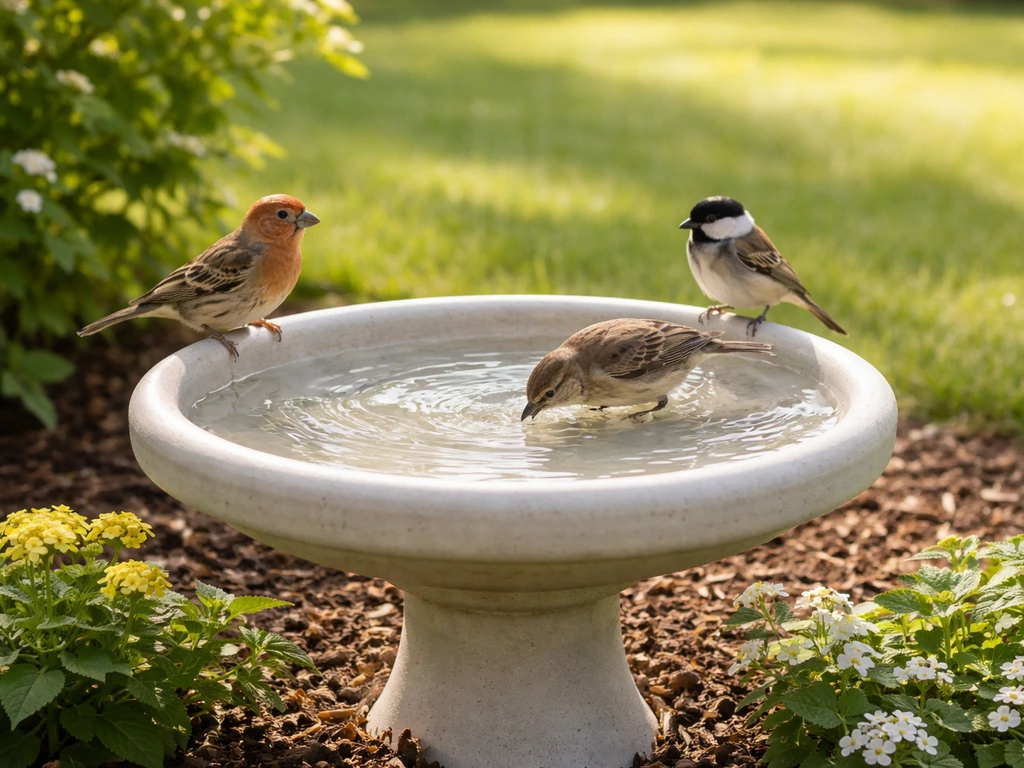
My honest recommendation for most backyards: start with a sturdy resin or concrete pedestal bath in the 14 to 18 inch diameter range. It gives you good durability, easy cleaning, and enough surface area for multiple birds at once. If you live somewhere with hard winters, add a submersible de-icer to any bath you already own rather than buying a whole new heated unit. If attracting hummingbirds is a priority, a small, shallow dish-style bath or a mister attachment matters more than the material.
Placement and site setup for maximum bird visits
Placement is probably the single biggest factor that determines whether birds use your bath. Get this wrong and you can have a beautiful, perfectly clean bird bath that sits empty for months.
Open area with nearby cover
Birds need two things at once: a clear view of their surroundings while they are bathing, and a quick escape route if a predator appears. Place the bath in an open area away from long grass or dense low shrubs where a cat could crouch unseen, but keep a tree, large shrub, or dense hedge within about 10 feet. That way birds have somewhere to fly immediately if they feel threatened, without being ambushed at the water itself.
Sun, shade, and temperature
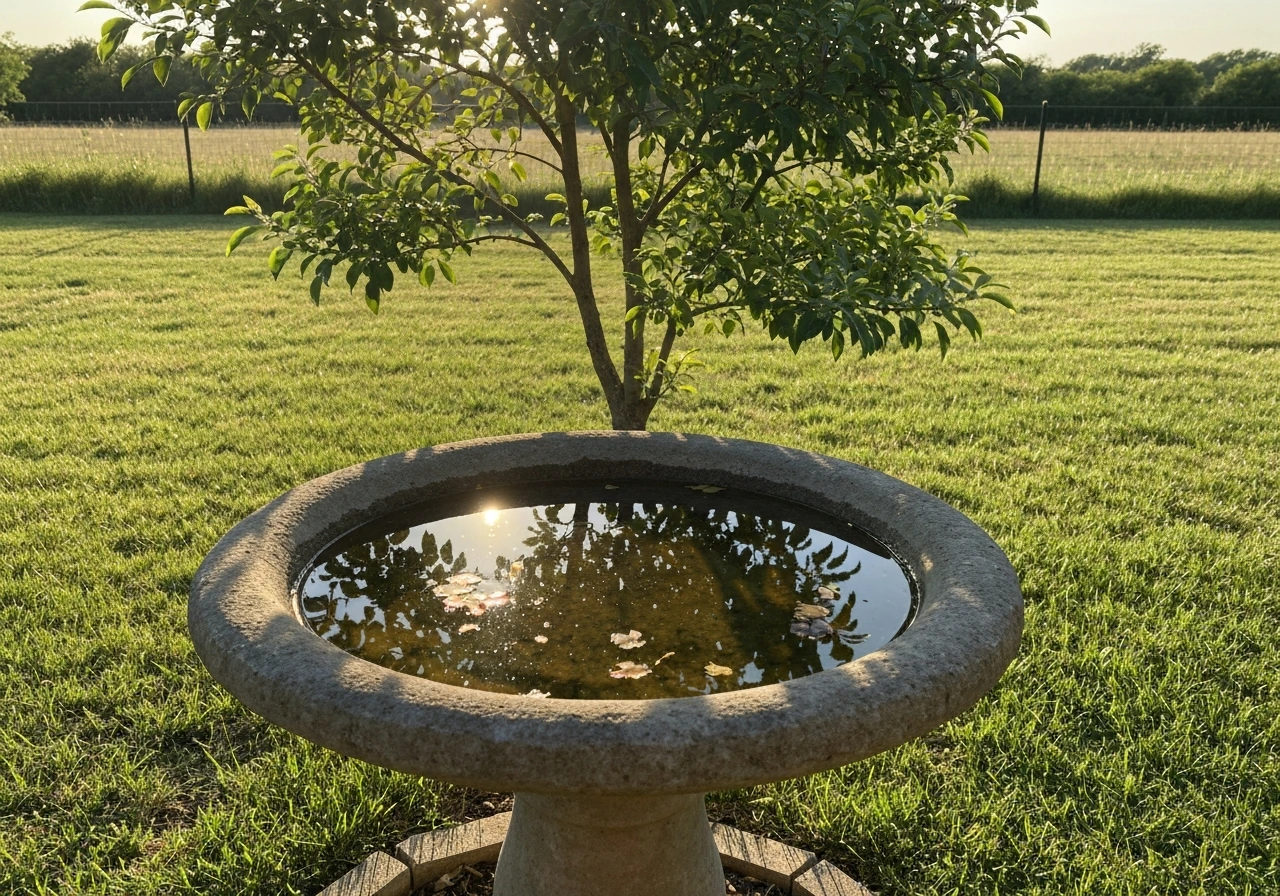
Full sun all day heats the water fast, promotes algae growth, and can make the basin too hot to attract birds in summer. Full shade keeps water cooler but can slow bird discovery. A spot with morning sun and afternoon shade is ideal in most climates. In very hot regions (think Texas or Arizona summers), lean toward more shade. In colder climates, a bit more sun helps slow the freeze in late fall.
Distance from feeders
Keeping the bird bath 5 to 10 feet away from your feeders is a good rule of thumb. Too close and seed hulls and droppings from the feeder contaminate the water constantly. Too far and birds that are already in the yard visiting feeders may not notice the bath as easily. You want the two features to complement each other without one fouling the other.
Visibility from inside your house
This one is purely for your enjoyment, but place the bath somewhere you can actually see it from a window. You will also notice problems (a knocked-over bath, a cat lurking nearby, the water going dry) much faster if you can see it from inside.
Installation steps and water flow basics
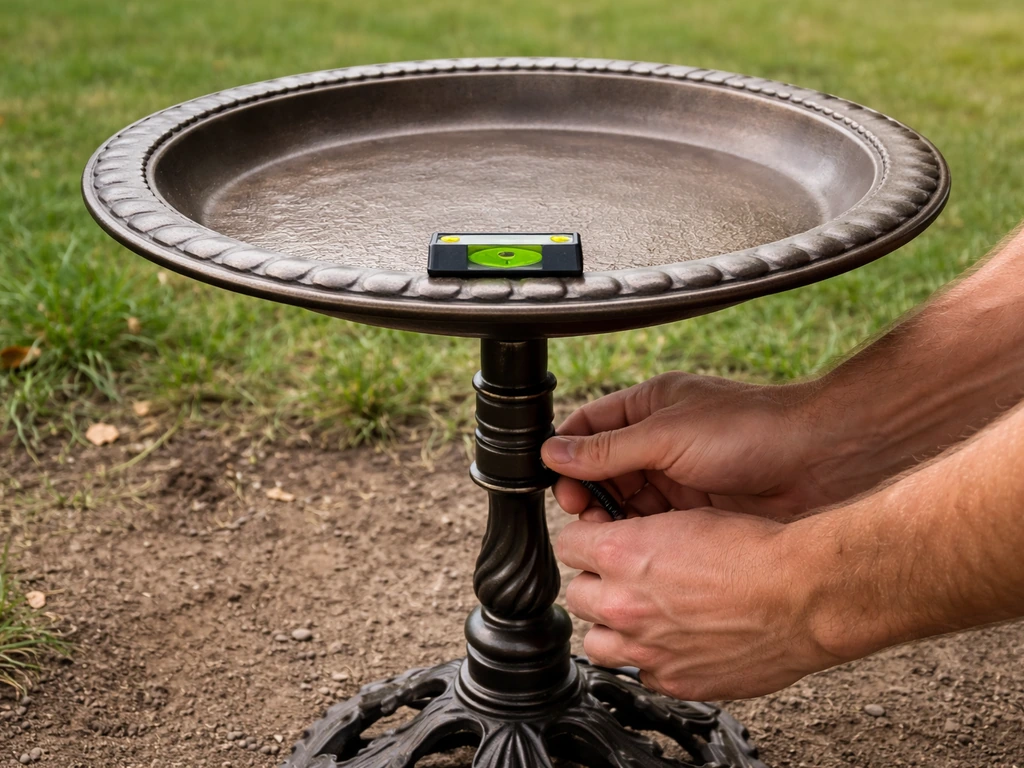
Setting up a bird bath is not complicated, but a few details make a real difference in whether it works well and lasts.
- Level the base before filling. An unlevel bath tips and spills constantly, wastes water, and can fall over. Use a small bubble level on the basin rim and shim the base with flat stones or a rubber pad until it is perfectly flat.
- Check the depth before birds arrive. The center should be no deeper than 1 to 2 inches. If your basin is deeper than that, add flat stones or a layer of gravel to raise the bottom. Sloping sides are important: birds need to wade in gradually, not jump into an unknown depth.
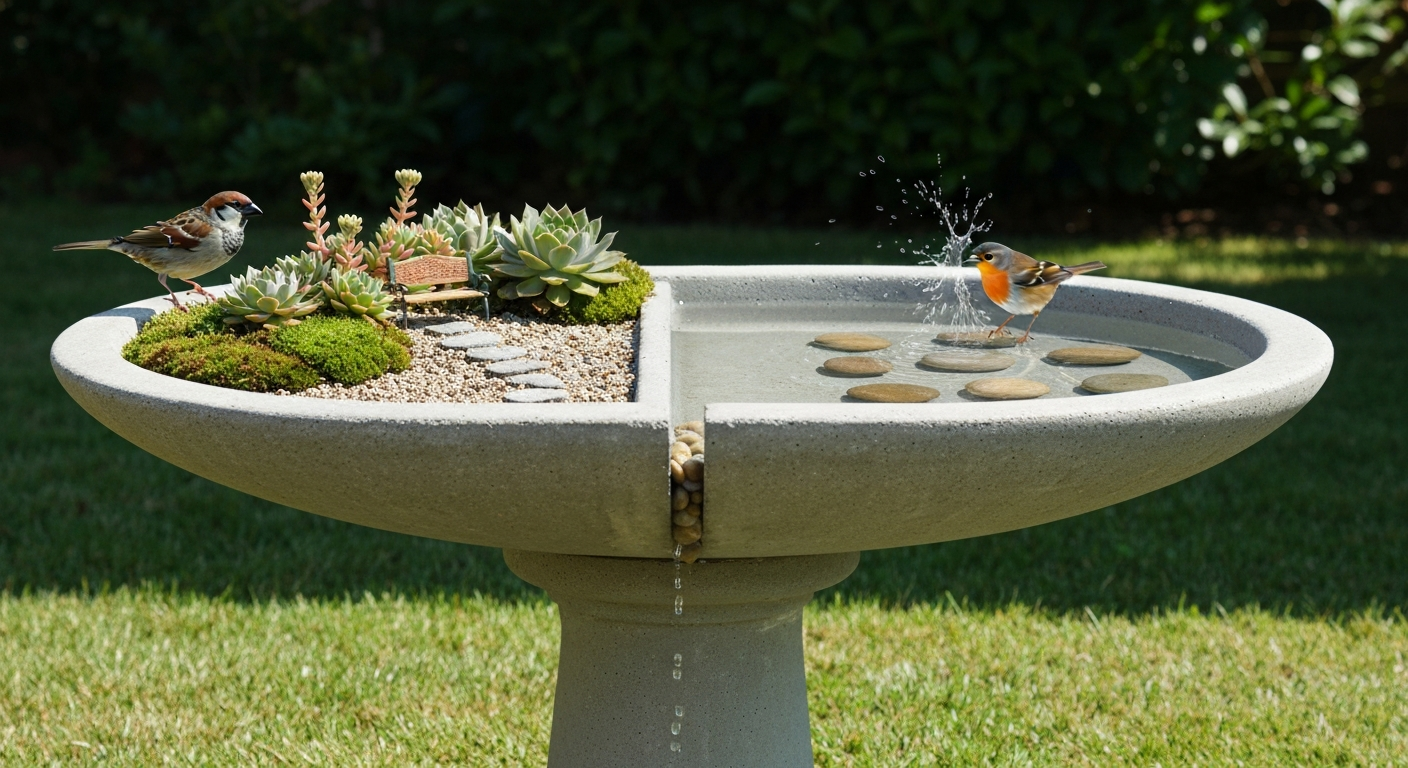
- Add a textured surface if the basin is slippery. Smooth glazed ceramic and some metal baths are slippery when wet. A handful of small pebbles or a rubber bath mat cut to size gives birds better footing and makes them feel safer.
- Fill with fresh water and check for wobble. Once filled, gently push the basin to confirm it is stable. A pedestal bath that rocks is a hazard and will deter birds.
- If adding a pump or dripper, route the cord safely. Conceal cords along fencing or use a ground stake to keep them out of foot traffic paths. Confirm the pump is rated for outdoor, continuous use before leaving it running.
- Position any solar panel for maximum sun exposure. If you are using a solar fountain, the panel needs direct sun to run the pump. Test it before final placement and adjust the angle if output is weak.
Moving water is a major upgrade if you want more bird visits. The sound of dripping or splashing carries much farther than a still basin and acts like a dinner bell for birds flying overhead. A simple dripper hose attached to your outdoor spigot costs very little, and a battery-powered or solar water wiggler is another easy option. If your bird bath pump is not working, start by checking the power and then look for clogs or a loose connection in the tubing bird bath pump not working. Even a gentle drip from a nearby hose propped on a branch works in a pinch.
Water sanitation and cleaning routine
This is the part most people underdo. Clean water is not just nice to have: it is the main thing that keeps birds healthy and coming back. If you want dependable results, follow these bird bath tips for placement, depth, and a consistent cleaning routine. Dirty, stagnant water spreads disease among birds and quickly becomes a mosquito breeding ground. Keep your water clean and change it regularly to follow bird bath care instructions that prevent disease and mosquito problems.
How often to change the water
Change the water at least twice a week. In hot weather or if you have heavy bird traffic, every day or every other day is better. Do not just top it off: dump the old water out, rinse the basin, and refill with fresh water. Topping off a dirty basin just dilutes the problem.
Scrubbing and disinfecting
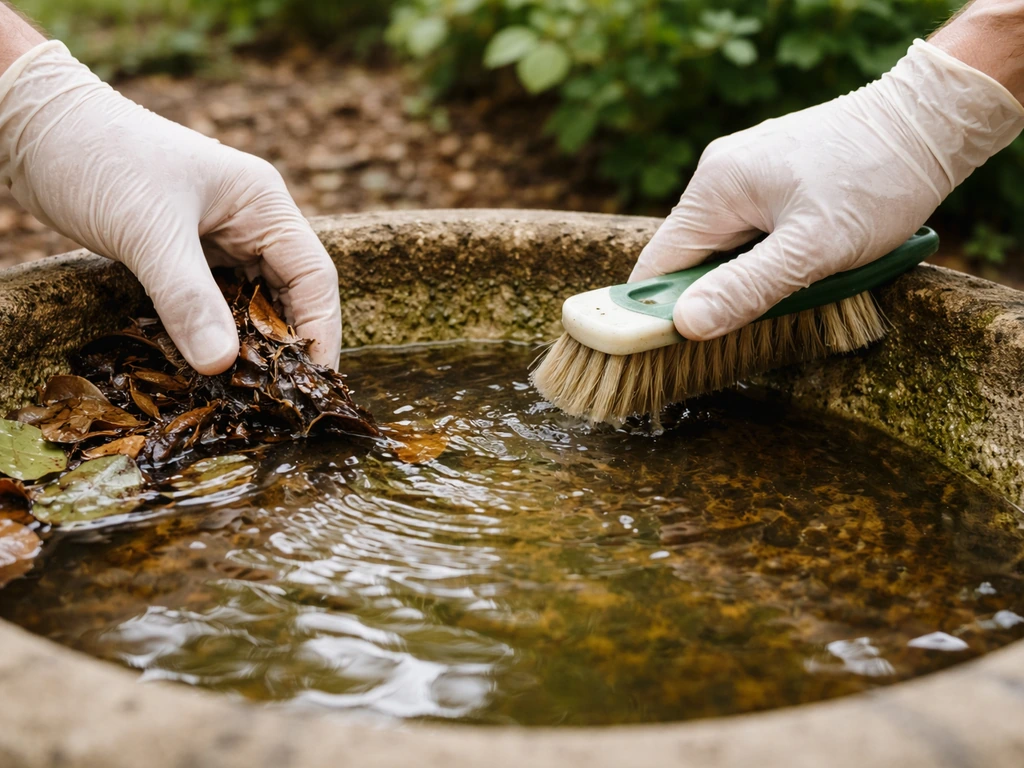
The moment you see algae starting to form (that green or brown sliminess on the basin walls), scrub it immediately. Do not wait until the whole basin is coated. A stiff-bristled brush handles most buildup without chemicals. For a deeper clean, use a diluted bleach solution (about 1 part bleach to 9 parts water), scrub all surfaces, let it sit for a couple of minutes, then rinse very thoroughly until you cannot detect any bleach smell. Always wear disposable gloves when cleaning, and let the basin air dry for a few minutes before refilling. Aim for a full scrub-and-disinfect at least once every one to two weeks.
Leaf litter, bird droppings, and seed debris from nearby feeders accelerate fouling. Scoop out visible debris whenever you check the bath, and if a feeder is constantly raining hulls into the water, consider moving one or the other a few feet.
Preventing common problems: mosquitoes, freezing, and overheating
Mosquitoes
Mosquitoes need standing water to lay eggs and for larvae to develop. Changing your water at least twice a week, as recommended by public health authorities, disrupts that cycle before larvae can mature. If you want extra protection (especially in peak mosquito months), use Bti (Bacillus thuringiensis israelensis) dunks or bits in the water. Bti is a naturally occurring microbial larvicide that kills mosquito larvae but is safe for birds, pets, and people.
There is no documented resistance to it, making it one of the most reliable tools available. Drop a portion of a Bti dunk into the basin and replace it according to package directions. It does not replace regular water changes, but it adds a solid backup layer of control.
Freezing in winter
Birds still need water in winter, and open water is often scarce when everything freezes. The simplest approach is to pour warm or hot water into the basin once or twice a day to melt any ice that has formed. If that is too labor-intensive, a submersible birdbath de-icer or a heated bath is the best investment for cold-climate birders. These thermostatically controlled devices only run when temperatures drop close to freezing, so they use minimal electricity. One thing you must never do: add antifreeze to a bird bath. Even a small amount is toxic and can kill birds and other wildlife. Stick to heat, not chemicals.
Overheating and summer stagnation
In midsummer, water in a full-sun metal or dark-colored basin can get hot enough to deter birds and accelerate bacterial growth. Moving the bath to afternoon shade or adding a shade cloth above it solves the problem without relocating the whole setup. Changing water more frequently during heat waves (every day if possible) keeps it fresh and at a tolerable temperature. Moving water from a dripper or fountain also helps: it stays cooler and oxygenated compared to a stagnant bowl baking in the sun.
Optimizing for different species
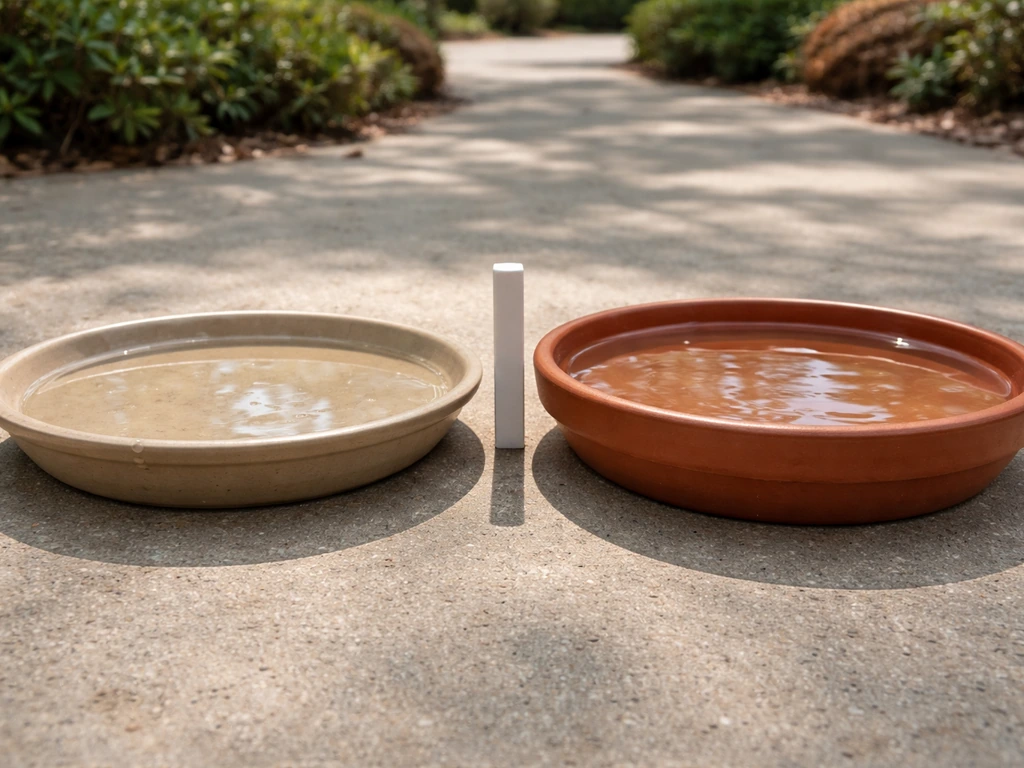
Not every bird wants the same setup. If you want to attract a wider range of species, it helps to understand what different birds are looking for in a water source.
Hummingbirds
Hummingbirds are tiny and cautious at the water. A standard 2-inch-deep bath is too deep for them: they want water no more than about a quarter-inch deep. For a traditional bird bath, Environmental Literacy Council recommends keeping the water no more than about a quarter-inch deep and using stones or gravel to raise the bottom and create that shallow area.
You can adapt any bath by adding a layer of flat stones or marbles to raise the bottom up to near the surface, leaving just a thin film of water over the top. A mister attachment (the kind that creates a fine spray cloud near a branch or plant) is the gold standard for hummingbirds: they love to fly through the mist rather than wade.
Place a perch, like a thin horizontal branch or a purchased perching stake, within a foot or two of the water source so they have somewhere to sit and preen after bathing.
Small songbirds (sparrows, finches, warblers)
These birds are well served by the standard 1 to 2 inch depth with gently sloping sides. They appreciate a rough or textured surface for gripping and tend to prefer baths with some nearby cover overhead, like a low tree branch, that gives them a sense of security while bathing. Moving water is a strong draw: a dripper aimed at the surface will bring in warblers and other small migrants that might otherwise fly past.
Larger birds (robins, jays, crows, doves)
Bigger birds need more space and slightly more water volume. A wide, shallow basin (18 inches or more in diameter) works better than a small decorative dish. Crows and robins in particular like to dunk food in water and tend to splash aggressively, which means you will be refilling more often. Ground-level baths appeal to crows, doves, and robins since they naturally feed and forage on the ground. If you place a bath on the ground, make sure the surrounding area is open with clear sightlines: ground-level birds are especially vulnerable to cats.
Maintenance schedule and troubleshooting when birds don't show up
Simple maintenance checklist
| Frequency | Task |
|---|---|
| Every 2 to 3 days (at minimum) | Dump old water, rinse basin, refill with fresh water |
| Daily in summer / heat waves | Check water level and temperature, change if warm or dirty |
| Weekly | Scrub basin with a stiff brush to remove slime, algae, and debris |
| Every 1 to 2 weeks | Full disinfect with diluted bleach solution, thorough rinse |
| Monthly | Check basin for cracks, check pump or de-icer function, reposition if needed |
| Each winter | Install de-icer before first freeze, check power cord, pour warm water daily if no heater |
| Each spring | Deep clean after winter, check for frost damage, refresh Bti dunks for mosquito season |
Why birds are not showing up (and what to fix)
If birds are ignoring your bird bath, work through this list before assuming there is nothing you can do about it. Most problems have a straightforward fix.
- The water is too deep. Birds will not step into water they cannot gauge. Add flat stones to raise the bottom to 1 to 2 inches maximum.
- The basin surface is too slippery. Add a few pebbles or a rubber grip mat so birds have secure footing.
- The location feels unsafe. If the bath is near dense low shrubs, a fence line cats patrol, or a spot with no escape options, birds will avoid it. Move it to a more open area with nearby overhead cover.
- There is no movement or sound. A still, silent bath is easy to miss. Add a dripper, a water wiggler, or a solar fountain. The sound of moving water is one of the most effective ways to draw birds in.
- The water is dirty or smells. Birds have a strong instinct to avoid contaminated water. If you let water go more than a few days without changing it in summer, this is likely the issue.
- There are no birds in the area yet. If you have just set up the bath, give it 1 to 2 weeks. Birds need time to discover new food and water sources. Having a feeder nearby speeds up discovery.
- Predator activity nearby. A neighborhood cat that regularly patrols the yard can keep birds away for days even after the threat is gone. Motion-activated deterrents near the bath can help.
- Seasonal patterns. Some slowdowns are normal: during spring and fall migration, local bird populations shift. In mid-summer, birds often bathe early in the morning. Try checking at different times of day before concluding the bath is not working.
Bird bath problems like algae, stagnation, and seasonal issues are worth troubleshooting systematically rather than assuming the setup is just not working. Most of the time, one small adjustment (adding movement, fixing depth, shifting location by just a few feet) makes the difference between an ignored bath and a busy one. If you want the right bird bath requirements, focus on depth, placement, and a consistent cleaning routine.
The maintenance routine and placement decisions covered here address the same underlying issues that cause most bird bath problems, so if you have followed the setup steps above and birds still are not visiting, revisit your placement first and then your water freshness: those two factors explain the majority of failures. If you want to double-check every detail, use this bird bath guide as your checklist so you do not miss anything that affects bird visits.
Once you have the basics dialed in, the enjoyment really does compound. A well-maintained bird bath becomes a reliable gathering spot that you can watch evolve through the seasons, and tweaking it for specific species or regional conditions is one of the more satisfying parts of backyard birding.
FAQ
How shallow should a bird bath be if I want to attract the most species?
Aim for 1 to 2 inches deep at the center with gently sloped sides (not a flat bottom). If you want a safe all-rounder, test with a finger or ruler, then make sure the basin is not deeper in one spot that creates a “pool” effect where smaller birds struggle to get out.
Can I place a bird bath on a deck or balcony instead of the ground?
Yes, but prioritize safety and mess control. Use a non-slip base or liner to prevent tipping, keep it within easy viewing distance, and place it so birds still have escape cover within about 10 feet. Also expect more water splatter, so position it away from stairs, doors, and your primary traffic path.
What should I do if ants or other insects are swarming the water?
First remove visible debris and rinse the basin, because insect activity often increases when there is seed hulls or algae film. Then avoid letting the bath sit unused for long stretches, and increase your water changes during peak insect weeks. If you use Bti, remember it is for mosquito larvae control, not a general insect repellent.
Do I need to use chlorine or additives to keep algae away?
Prefer scrubbing and water replacement over chemicals. Use a diluted bleach rinse only for deeper cleaning when you see established algae, and rinse thoroughly until no bleach odor remains. For day-to-day algae prevention, the biggest wins are partial shade (morning sun, afternoon shade) and frequent water changes.
Is it safe to add stones, marbles, or a ramp to make the bath easier to use?
It can be helpful, especially for hummingbirds, but choose smooth, easy-to-clean pieces and keep them low so water still circulates across surfaces. Avoid cluttering the basin with sharp or porous materials that trap grime, and re-rinse the additions each time you dump and refill.
How often should I scrub the entire basin if I’m already changing water twice a week?
Spot-scrub algae as soon as it starts, but plan a deeper full scrub at least every one to two weeks. If you have heavy bird traffic or see quick slime buildup, shorten that interval. Water changes alone do not remove the biofilm that algae and bacteria attach to.
Why does my bird bath look clean but birds still ignore it?
Common causes are temperature (full sun making it too hot), location (no nearby escape cover within about 10 feet), or contaminated edges from feeder fallout. Try shifting the bath a few feet and adjust sun exposure, then verify the basin is truly shallow enough at the center for easy entry and exit.
Can I run a dripper or small fountain continuously?
A gentle flow is usually beneficial, but ensure it does not make the basin too deep due to water displacement and that tubing connections stay secure. Clean the dripper nozzle occasionally to prevent clogs, because restricted flow can quickly turn into a dribble that birds still find unattractive.
Do I need to worry about birds getting stuck in the bath?
Yes, especially for deeper, flat-bottomed basins. Keep the center shallow, maintain sloped sides, and remove slippery objects that can cause feet to slide. If you add a perch, make sure it is stable and not positioned where a bird could slip directly into the water and struggle.
What’s the safest way to heat a bird bath in winter?
Use a thermostatically controlled de-icer or heated bath, or melt ice by pouring warm water once or twice daily if you can manage it. Avoid adding antifreeze of any type, even in small amounts, because it is toxic to birds and other wildlife.
How do I clean the basin between heavy visits during summer?
During hot weather, dump and rinse, then refill with fresh water instead of topping off. If algae appears quickly, scrub the basin walls and the basin floor sooner, and do not forget to check the underside and any crevices in pedestal models where grime collects.
Will Bti dunks or bits affect other wildlife in my yard?
Bti is designed to target mosquito larvae and is generally considered safe for birds, pets, and people when used as directed. Use package directions for dosing and do not skip water changes, since Bti does not remove the health problems caused by dirty, stagnant water.
Should I place the bath near my feeders or farther away?
The usual guideline is 5 to 10 feet away to reduce feeder debris contamination. If you want closer placement for convenience, use a feeder design that minimizes hull scatter and check the bath more often for seed buildup, because that debris accelerates fouling and algae.