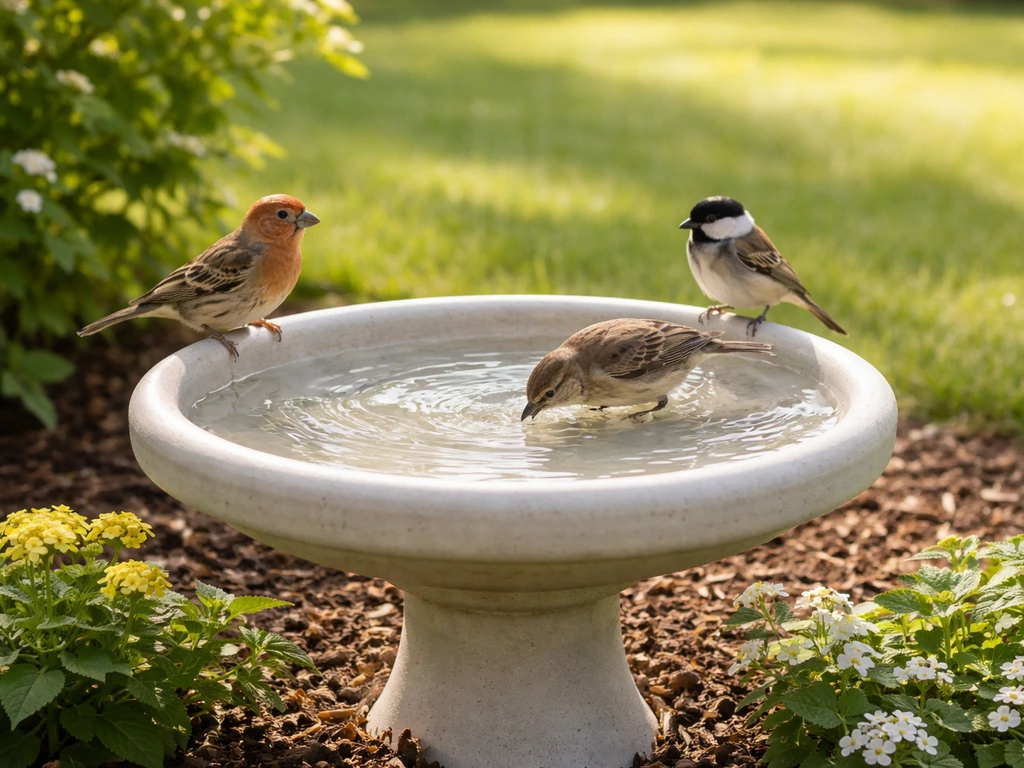
A safe bird bath keeps the water shallow (no more than 1.5 inches deep for bathing), gets scrubbed and refilled every two to three days, sits roughly 6 to 10 feet away from dense shrubs where cats can hide, and never gets treated with salt, harsh detergents, or undiluted bleach. Those five things cover the vast majority of bird bath hazards most backyard birders run into. Everything else below is about the details that trip people up depending on their bath type, climate, and setup.
Bird Bath Safety: Checklist, Setup, Cleaning, and Fixes

Marcus Henley
29 May 2026
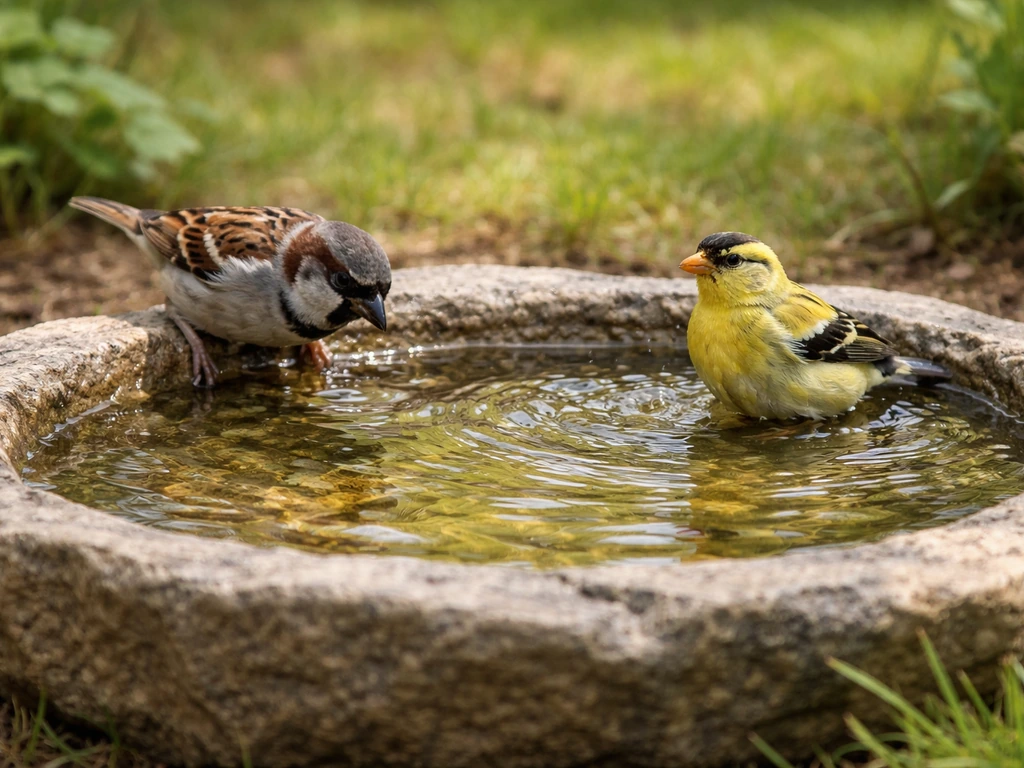
What 'Bird Bath Safety' Actually Covers
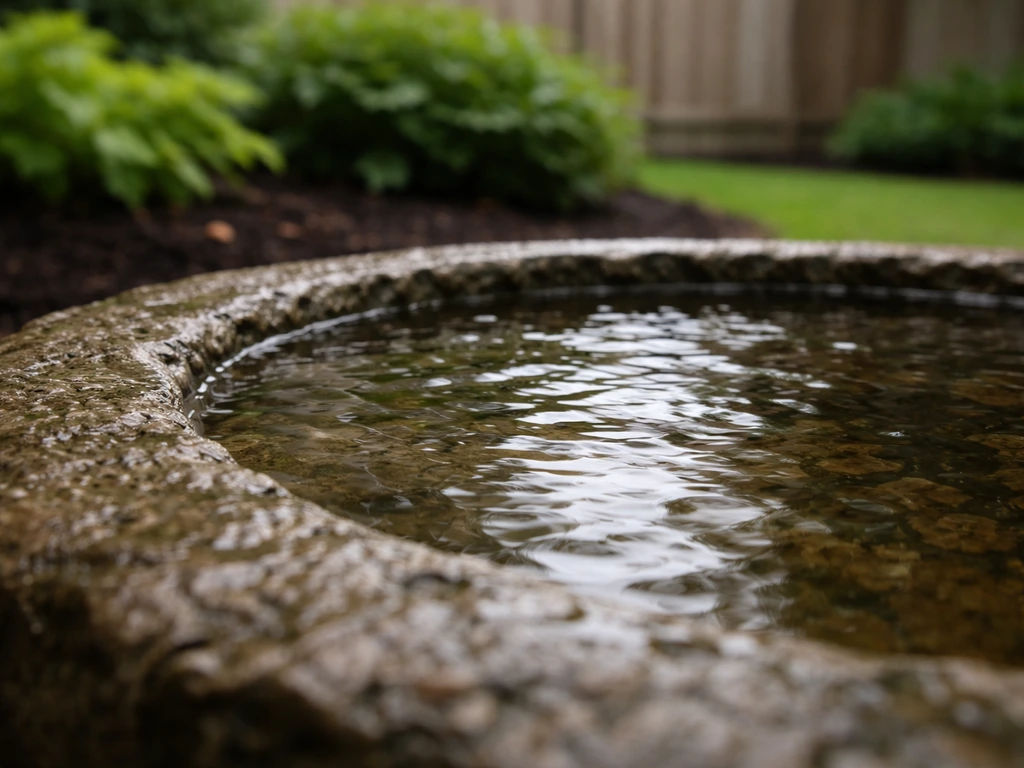
People search for bird bath safety for very different reasons, so it helps to name the real hazards upfront. There are basically two categories: risks to the birds using the bath, and risks to you as the person maintaining it.
Hazards to birds
- Drowning and entrapment: basins deeper than 2 inches are genuinely dangerous for small songbirds, and slippery glazed surfaces prevent birds from finding footing to escape
- Disease from stagnant water: bacteria and algae multiply fast in warm, still water and can spread avian diseases like salmonellosis and trichomoniasis between visiting birds
- Chemical contamination: bleach residue left after cleaning, pesticide runoff from nearby lawn treatments, or dish soap in the water can poison birds directly or damage their feathers' waterproofing
- Mosquito breeding: Culex mosquitoes can complete an egg-to-larvae cycle in a bird bath within days, and West Nile virus is a real concern for birds as well as people
- Freezing hazards: birds can get their feet or feathers stuck in ice if a bath freezes overnight while birds are using it, and trying to drink from an iced-over bath risks injury
- Predator exposure: a bath placed too close to dense shrubs or fences gives cats and hawks an ambush point while birds are distracted and wet
Hazards to you
- Slippery pedestal bases and wet ground around the bath, especially in shady spots where moss grows
- Electrical risks from improperly grounded heated baths or extension cords run without GFCI protection
- Skin exposure to algae, bird droppings, and bacteria during cleaning without gloves
- Heavy concrete basins cracking or falling if installed on uneven ground or in an unstable pedestal
Safe Placement and Installation
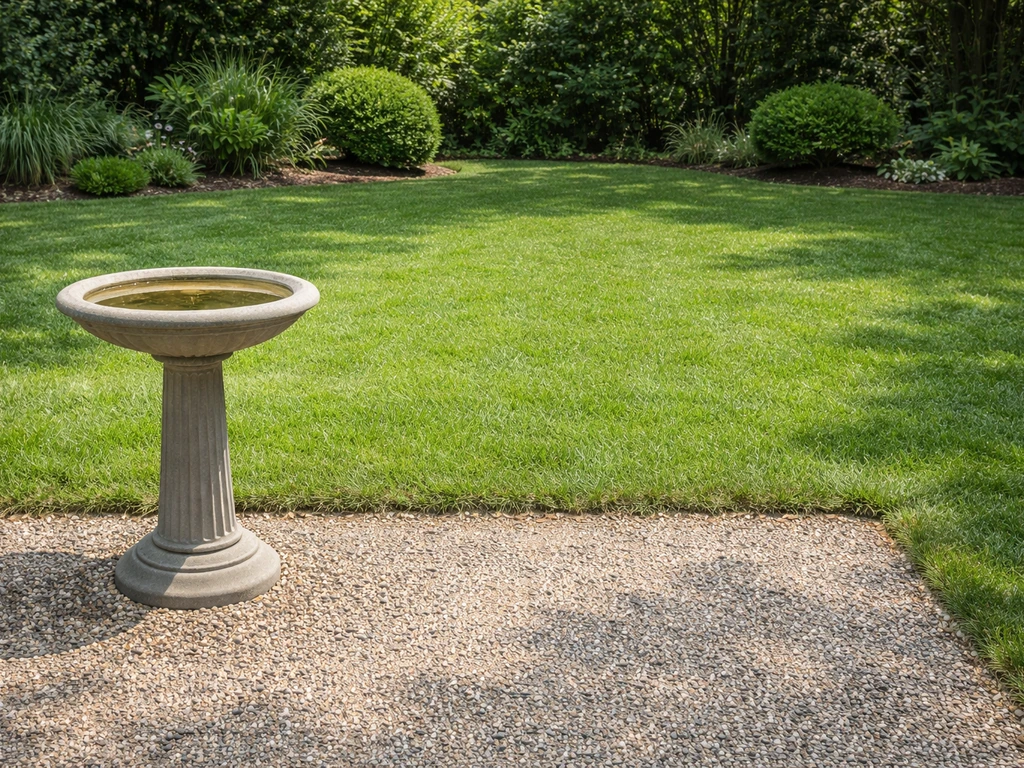
Placement is one of the most overlooked parts of bird bath safety, and it's also one of the easiest to get wrong. I've seen beautifully built baths that never got used because they were tucked right next to a fence where neighborhood cats could crouch and wait. The goal is to give birds a clear sightline and an easy escape route while they're wet and temporarily slower.
Keep a roughly 6 to 10 foot open zone on the side birds approach from so they can spot a threat and fly off before a predator closes the gap. Some nearby trees or shrubs at a distance (10 to 15 feet away) are actually helpful because they give birds a perching spot to survey the bath before landing and to retreat to after bathing. The key is that dense hiding cover shouldn't be directly at the bath's edge.
Don't install a bath directly under your bird feeder. Hulled seeds, droppings, and wet food debris fall into the water and create a bacteria-rich mess that you'll be cleaning far more often than necessary. Keep feeders and baths at least 10 feet apart.
For the bath itself, make sure the pedestal or ground mounting is solid. A concrete pedestal bath on soft soil will lean and eventually tip. Use a paver base, compact the ground, or use a dedicated leveled stone pad. Ground-level baths should be on a flat, stable surface with drainage underneath so pooling water doesn't create a slipping hazard for you. For any electric bath, more on this below, the cord and plug need to be sheltered and on a GFCI-protected outdoor outlet.
Depth, Basin Design, and Drowning Prevention
The single most underrated safety detail for birds is depth. Audubon recommends filling to only 1 to 1.5 inches for typical use, and the basin itself shouldn't exceed 2 inches at its deepest point. RSPB sets the max at about 4 inches (10 cm) for the basin rim, but that deeper edge should slope so birds naturally wade in from the shallow end. A steep-sided, smooth-bottomed bath is essentially a trap for small birds.
Gently sloping sides that let birds walk in gradually are the design feature to look for. If you already own a bath with steep or slippery sides, add a few flat stones or a non-slip mat to the center of the basin to give birds a foothold and reduce the effective water depth. This is a cheap fix that makes a real difference. Rough-textured concrete and unglazed ceramic are naturally safer than smooth glazed finishes because birds can grip the surface.
Cleaning and Hygiene That Actually Prevents Disease
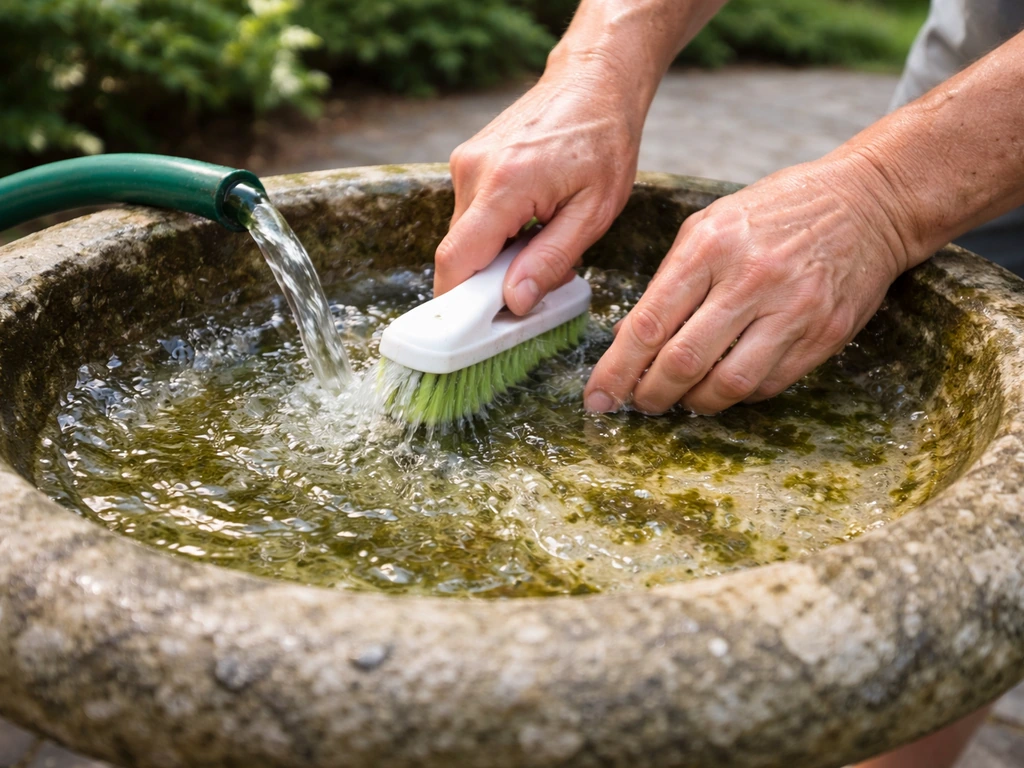
Stagnant water is the main disease vector in a bird bath. Change the water at least every three days, and more frequently in summer when heat accelerates bacterial and algae growth. Following these bird bath care instructions will also help prevent disease, algae, and mosquito problems Change the water at least every three days. On hot days, I aim for every other day. This alone prevents most hygiene problems before they start.
For a proper scrub-down, the standard and recommended disinfecting approach is a solution of 9 parts water to 1 part bleach. Apply it, scrub with a stiff brush, let it sit for a few minutes, and then rinse thoroughly, multiple times, until you can't detect any bleach smell. Bleach residue is genuinely dangerous to birds, so don't shortcut the rinsing. Let the basin air dry if possible before refilling.
Avoid dish soap or household cleaners entirely. Soap strips the natural oils from bird feathers, reducing their insulating and waterproofing ability. Even a small residue matters. Stick to the diluted bleach solution for disinfecting and plain water rinses for routine top-offs. Wear gloves when scrubbing. Bird droppings can carry Salmonella and other pathogens that are transmissible to humans, so treating the cleaning process like basic food-prep hygiene is worth it.
Mosquito and Algae Control Without Harming Birds
Mosquitoes can lay eggs in standing water and complete the larval stage within a week, which means a neglected bird bath is a genuine public health issue in mosquito season, not just a nuisance. The CDC recommends emptying and scrubbing water containers, including bird baths, at least once a week to remove eggs and larvae. Combined with your every-two-to-three-day water change schedule, this is mostly handled automatically.
If you have a bath that you can't change as frequently (for example, during a busy week or when you're traveling), a product called Bti (Bacillus thuringiensis israelensis) is your best option. Bti is a naturally occurring bacterial larvicide that targets mosquito larvae specifically. The EPA and Washington State WSDA regulatory guidance both characterize it as having minimal to nonexistent risk to birds, pets, humans, aquatic organisms, and beneficial insects. You can find Bti in the form of dunk tablets at most hardware stores. Drop one in, and it kills larvae without affecting anything else using the bath.
For algae, the fix is mechanical: scrub as soon as you see green growth starting. Letting algae establish a foothold makes it harder to remove and speeds up the cycle of stagnation. Moving water also helps significantly. Adding a small recirculating pump, a dripper, or a solar-powered fountain mister keeps water oxygenated and less hospitable to both algae and mosquito larvae. Birds are also much more attracted to moving water, so this is a win on multiple fronts.
Do not use copper sulfate, bleach tablets, or any general algaecide in an active bird bath. While copper pennies are often suggested online as a DIY algae deterrent, the evidence for their effectiveness is weak and copper accumulation in water can be harmful to birds over time. Stick to mechanical cleaning and water movement.
Material- and Design-Specific Safety
Each bath material has its own safety considerations. Here's what to know before you buy or as you maintain what you already have.
| Material | Main Safety Strengths | Main Safety Risks | Key Mitigation |
|---|---|---|---|
| Concrete | Rough texture gives good bird footing; very stable if set properly | Heavy (can injure if tipped); cracks over time and harbors bacteria in crevices; alkalinity can affect water pH | Check for cracks annually; seal with non-toxic sealant; keep basin smooth |
| Ceramic/glazed | Attractive and easy to wipe clean | Glazed surfaces are slippery for birds; can shatter if dropped or frozen | Add stones or grip mat; bring indoors in freezing temps if unheated |
| Metal (copper/zinc/galvanized) | Durable and fast to clean | Zinc and galvanized coatings can leach into water and are toxic to birds; copper can accumulate over time | Use stainless steel or coated metal rated safe for bird use; avoid galvanized baths |
| Heated electric | Keeps water liquid in winter, which birds critically need | Electrical hazard if improperly grounded; cord and plug exposure to moisture | Use GFCI-protected outlet; outdoor-rated cord; thermostat that cuts off at ~40°F |
| Solar-powered | No electrical cord hazard; low-maintenance | Pump can stall on cloudy days, leading to stagnation if not monitored; plastic components degrade in UV over years | Check flow daily in winter/overcast periods; replace UV-degraded plastic parts |
Concrete is the most forgiving overall for bird safety because of its texture, but it needs the most structural attention. Inspect the pedestal base and basin for cracks every spring. Cracked concrete traps organic debris and bacteria in ways that even repeated scrubbing can't fully address. If cracks are significant, replace the basin rather than patch indefinitely.
For heated baths specifically: the heater's thermostat should automatically switch off when the water reaches around 40°F, so it's not running in mild weather. You want the water liquid and accessible, not warm. Hot water is not better for birds and wastes energy. If your heated bath doesn't have a thermostat, that's a safety gap worth addressing.
The electrical connection must use a GFCI outlet and a weatherproof outlet cover, with no exposed connections sitting in or near pooled water. BirdBuffer’s Q4 operating instructions also specify using a GFCI connecting box with a cover for outdoor applications to mitigate electrical safety hazards [The electrical connection must use a GFCI outlet and a weatherproof outlet cover, with no exposed connections sitting in or near pooled water. ](https://www. birdbuffer.
com/wp-content/uploads/2020/09/Q4OperatingInstructions_2017. pdf).
Winter and Freezing Safety
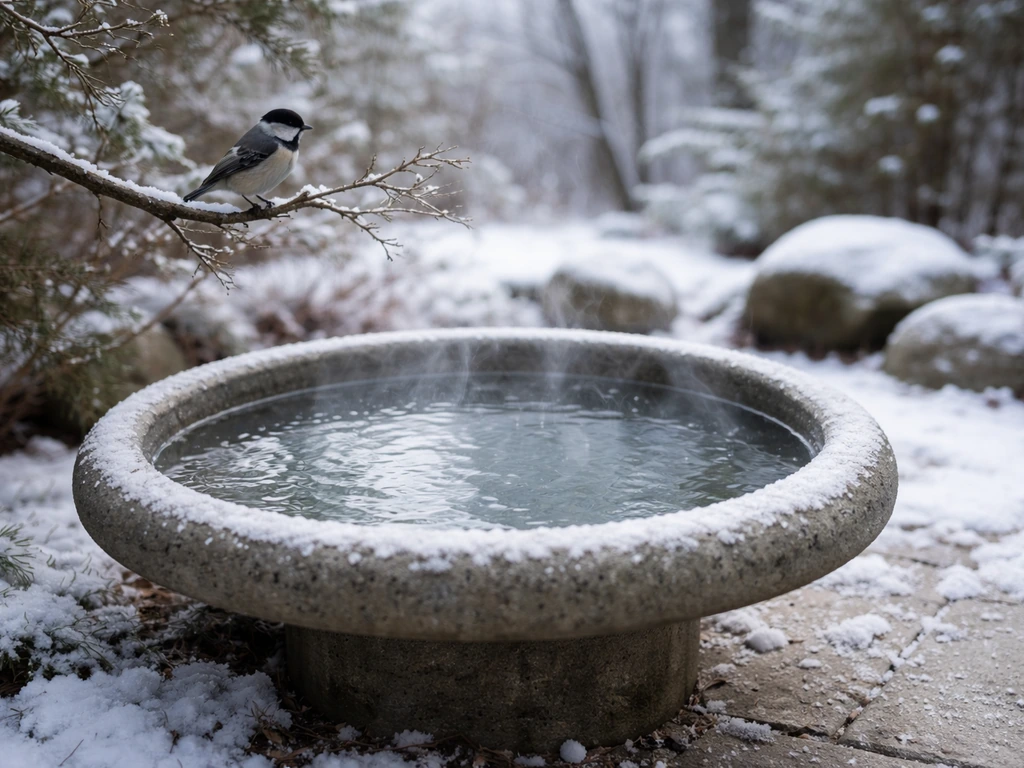
Winter creates a specific set of hazards that don't apply the rest of the year. Birds genuinely need liquid water in freezing weather, sometimes more urgently than food, so the instinct to keep your bath running in winter is correct. The execution matters a lot though.
Never add salt to a bird bath to prevent freezing. This is probably the most important don't in this whole article. The U.S. Fish and Wildlife Service explicitly flags this: salt can be dangerous to birds, especially in cold weather when they may be somewhat dehydrated and more likely to drink large amounts. The same goes for antifreeze or any de-icing chemical. There is no safe chemical de-icing solution for bird baths.
The right approach for cold climates is a heated bath or a thermostatically controlled immersion heater placed in your existing basin. These keep the water just above freezing without making it dangerously warm. If you get a light overnight freeze, pouring warm (not boiling) water over the ice is the safest way to thaw it. Boiling water can crack ceramic and some concrete. Don't chip or hammer at ice in the basin since that risks cracking the material.
For unheated baths in climates that get consistent hard freezes, the safest option is to bring the bath indoors or turn it upside down for winter. Ceramic and glazed baths that are left outside through freeze-thaw cycles will eventually crack, which creates rough edges and structural instability. Concrete is more tolerant of freezing but still benefits from being emptied and turned over if you're not actively maintaining it through winter.
Solar-powered baths can lose flow on cloudy winter days, so check them more frequently in the cold months. Stagnant water in below-freezing temps creates an ice-trap risk where a bird landing on a thin ice layer over water breaks through and can get temporarily stuck. If the pump isn't running reliably, either switch to a heated bath for the season or bring the solar bath in.
Your Practical Safety Checklist and Troubleshooting Guide
Use this as a regular reference, especially when you're setting up for the first time or transitioning between seasons. Many of the bird bath problems people encounter, algae blooms, mosquitoes, sick birds, wobbly pedestals, are all downstream of skipping one of these steps. If you want a step-by-step bird bath guide for setup, depth, and cleaning, use the checklist approach covered earlier in this article bird bath problems.
Weekly and routine checks
- Change the water every 2 to 3 days (daily in temperatures above 85°F)
- Scrub the basin with a stiff brush at each water change to prevent algae and biofilm buildup
- Inspect the basin for cracks, chips, or sharp edges
- Check that the pedestal or mounting is stable and level
- Verify any pump or dripper is flowing (still water = mosquito and algae risk)
- For heated baths: confirm the thermostat is functioning and the GFCI hasn't tripped
Monthly deep clean
- Empty the basin completely
- Scrub all surfaces with a stiff brush
- Apply a 9: 1 water-to-bleach solution, let sit for 2 to 3 minutes
- Rinse thoroughly (at least 3 rinses) until no bleach odor remains
- Air dry before refilling if possible
- Inspect plumbing, electrical connections, or solar panel for any damage
Troubleshooting common problems right now
| Problem | Likely Cause | Fix Today |
|---|---|---|
| Green algae coating the basin | Infrequent cleaning, direct sunlight, warm temps | Scrub immediately with 9:1 bleach solution, rinse well, add a dripper or pump to keep water moving, move bath to partial shade if possible |
| Mosquito larvae visible in water | Water sitting still for more than 4 to 5 days | Empty and scrub the basin now, refill fresh, add a Bti dunk tablet, set a reminder to change water every 2 to 3 days |
| Birds seem reluctant to use the bath | Too deep, too slippery, or placed too close to cover | Add flat stones to reduce depth and improve grip, check placement for nearby dense shrubs or fences within 6 feet |
| Bath frozen overnight | No heater, temps dropped below freezing | Pour warm (not boiling) water to thaw, add a thermostatically controlled immersion heater, do not add salt or chemicals |
| Cloudy or milky water after cleaning | Bleach not fully rinsed out | Rinse 2 to 3 more times, sniff for bleach odor, do not refill until smell is gone |
| Heated bath tripping the circuit breaker | Faulty cord, no GFCI, or damaged heater element | Unplug immediately, inspect cord for cracks or fraying, plug into a GFCI-protected outlet, replace heater if cord or element is damaged |
| Pedestal leaning or wobbling | Soft or uneven ground, frost heave | Empty basin to reduce weight, reset on a paver or flagstone base, tamp ground firm before re-leveling |
Getting bird bath safety right isn't complicated once you have a routine. The water change schedule and the placement decisions do most of the heavy lifting. If you're just starting out, nail those two things first before worrying about pumps and heaters. If your bird bath pump is not working, check the power, remove any debris from the intake, and make sure the system is primed so water can recirculate pumps and heaters.
If you've been running a bath for a while and something seems off, the troubleshooting table above covers the most common issues you're likely to see. For deeper dives into specific problem areas like algae, freezing, or bath setup, those topics are worth exploring separately since each one has its own set of nuances depending on your climate and bath type.
For deeper dives into specific problem areas like algae, freezing, or bath setup, bird bath tips and related guidance can help you dial in the details for your exact setup.
FAQ
Can I use a bird bath that’s deeper than 1.5 inches if I put a rock in it?
It depends on how it changes effective depth and footing. A rock can help create a shallow wading area, but the basin still should not have a deep, smooth section that small birds must step into. Test with your hand, include a foothold that stays stable, and avoid smoothing surfaces that get slick when wet.
What’s the safest way to clean a bird bath if I don’t have a disinfecting-grade bleach or I’m uncomfortable using bleach?
Routine top-offs are plain water, but disinfection is still about preventing residue and disease spread. If you avoid bleach, don’t substitute dish soap or household cleaners, instead do frequent water changes and scrub mechanically with a stiff brush, then rinse thoroughly. If you can’t reach the “no detectable bleach smell” standard when you do disinfect, wait and rinse again until the odor is gone.
Is tap water safe for bird baths, especially if my water has a strong smell or tastes odd?
In most cases, dechlorinated tap water is fine, but if your water has strong odors or unusual quality issues, birds may drink less. Let water sit briefly for aeration before offering it, and if your local supply is temporarily off, switch to an alternative source you trust and increase scrubbing intervals to prevent buildup.
How do I handle bird bath safety when I have multiple birds and the bath fills with droppings quickly?
Increase your cadence. Instead of waiting for the every-2-to-3-day refill, do smaller, more frequent changes and more frequent scrubs during peak activity. Also ensure the bath isn’t under a feeder and is placed away from dense hiding cover, because crowded conditions increase contact with contaminated water.
What’s the right way to keep the bath from tipping or rocking if the pedestal is on uneven ground?
Level the base, then add stability beneath it. Use a paver base on compacted soil or a leveled stone pad, and periodically check again after rain or freeze-thaw. A wobbly bath is a bird safety hazard (awkward landings) and a human hazard (spills and slipping during cleaning).
Are bird bath pumps and fountains safe for birds, and do I need to worry about birds getting stuck in water flow?
Movement is generally good, but choose features that keep a clear, shallow entry zone. Avoid high jets that create deep splash zones or slick surfaces. Keep the intake screened and remove debris, and check flow after storms so birds always land on stable, non-flooding footing.
Can I use copper-based products like copper pennies, copper mesh, or copper sulfate for algae prevention?
Avoid copper sulfate and any general algaecide in an active bird bath. DIY copper pennies are an evidence-light approach and can lead to copper accumulation over time. The safer strategy is prompt mechanical scrubbing, water changes, and adding movement like a dripper or small recirculating pump.
How often should I check for mosquitoes if I keep changing the water on schedule?
If you truly change water at least every three days, most mosquito issues are reduced. Still, inspect more frequently in hot, stagnant, or partially shaded spots because heat accelerates algae and bacterial growth. If you notice larvae, switch to Bti dunk tablets immediately rather than waiting for the next scheduled change.
What should I do if I accidentally spilled bleach into the bath while cleaning?
Don’t leave it to “dilute.” Rinse immediately with plain water multiple times, scrubbing the basin surface during rinsing, and continue rinsing until there’s no detectable bleach odor. Then let it air dry before refilling, since lingering residue can harm birds even if the visible bleach is gone.
Is it safe to thaw a frozen bird bath by pouring boiling water on the ice?
No, use warm but not boiling water. Boiling water can crack ceramic and some concrete, and cracks can later create sharp edges or instability. If the ice layer is thick, thaw gradually, and never chip or hammer at the basin since that increases cracking risk.
Can I use antifreeze or any de-icer to keep the bath liquid in winter?
Don’t. Antifreeze and de-icing chemicals are not safe for bird drinking. The safer options are a thermostatically controlled heater or bringing the bath indoors or turning it over in climates with consistent hard freezes.
What’s the biggest safety mistake people make with heated bird baths?
Running heat when it should be off, and using unsafe electrical setup. A heater should have thermostat control that shuts off around the target safe temperature (near 40°F), and the plug must be on a GFCI-protected outdoor outlet with weatherproof protection so no exposed connections sit near pooled water. If your unit lacks a thermostat or your electrical setup isn’t GFCI-safe, treat that as a priority fix.
Next Article
Bird Bath Tips: Choose, Place, Maintain, and Troubleshoot
Bird bath tips to choose the right basin, place it for birds, maintain clean water, prevent algae and mosquitoes, and tr