
A bird bath pump stops working for a handful of reasons: no power reaching the unit (tripped GFCI, dead outlet, faulty cord), a jammed or clogged impeller, an air lock from low water or poor placement, or mineral and algae buildup blocking intake or flow. In most cases you can diagnose and fix the problem yourself in under an hour with no special tools. Work through the checks below in order and you will either restore flow today or know with confidence that the pump needs replacing.
Bird Bath Pump Not Working: Fix Flow Fast With Steps

Marcus Henley
16 Jun 2026
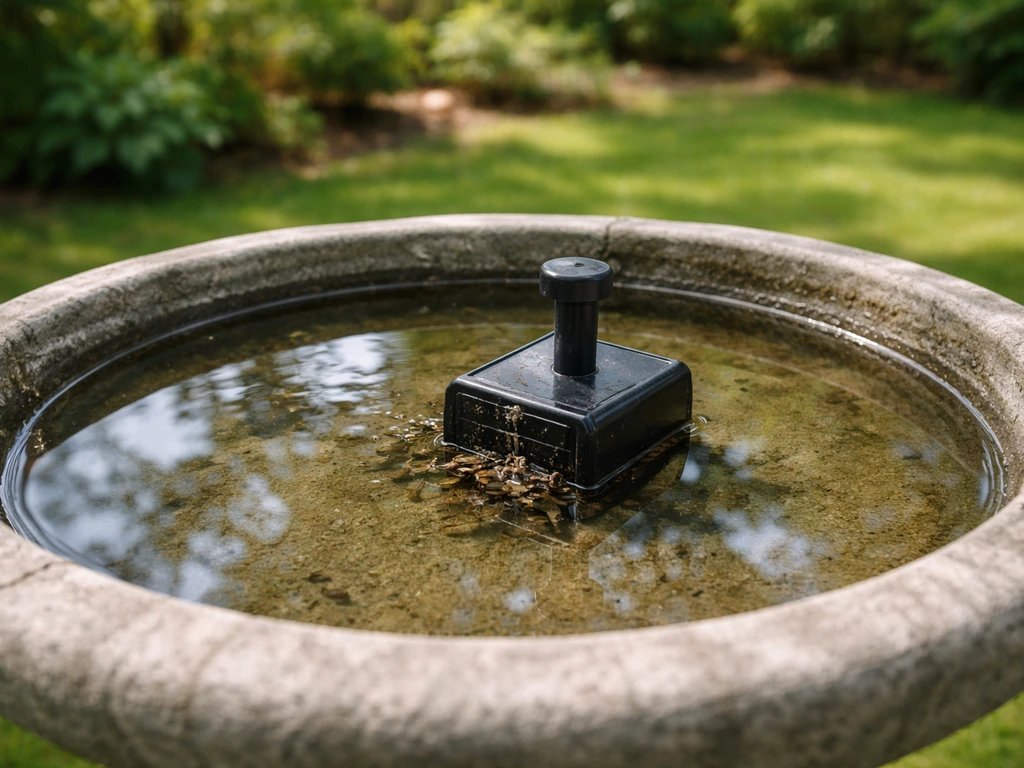
Quick triage: what 'not working' actually looks like
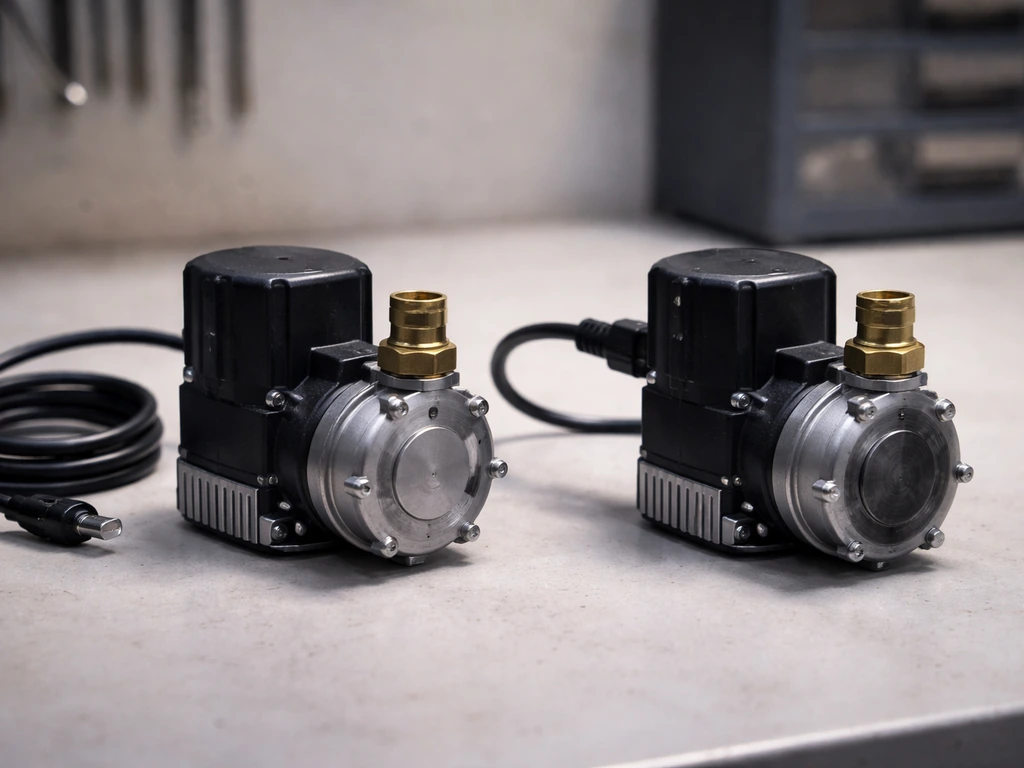
Before you start pulling the pump apart, get clear on what the failure mode actually is. The fix for a pump that is completely silent is different from one that hums but moves no water. Here are the most common presentations and what they typically point to:
| What you see/hear | Most likely cause |
|---|---|
| Completely dead, no sound at all | No power: tripped GFCI, dead outlet, damaged cord or switch |
| Hums but no water flow | Jammed impeller, air lock, or pump sitting above water level |
| Weak or sputtering flow | Partially clogged intake/nozzle, low water level, or mineral buildup |
| Pump runs but water leaks | Cracked housing, loose tubing connection, or worn seal |
| Runs for a while then cuts off | Overheating from dry-running or blocked flow |
| Grinding or rattling noise | Debris in impeller chamber or seized bearing |
| Previously worked, stopped after cold snap | Freeze damage to housing or impeller |
Once you have matched your symptom, jump to the relevant section below. But if you are not sure, just follow the guide top to bottom since the checks build on each other.
Safety first: power and outlet checks before you touch anything
Water and electricity are a serious combination. Always unplug the pump before you pull it out of the water, inspect it, or disassemble anything. To keep birds safe, make sure the pump and electrical components are used only with proper GFCI protection and correct water level so they never run dry Always unplug the pump. Do not assume the outlet is dead just because nothing is running.
Check the GFCI outlet
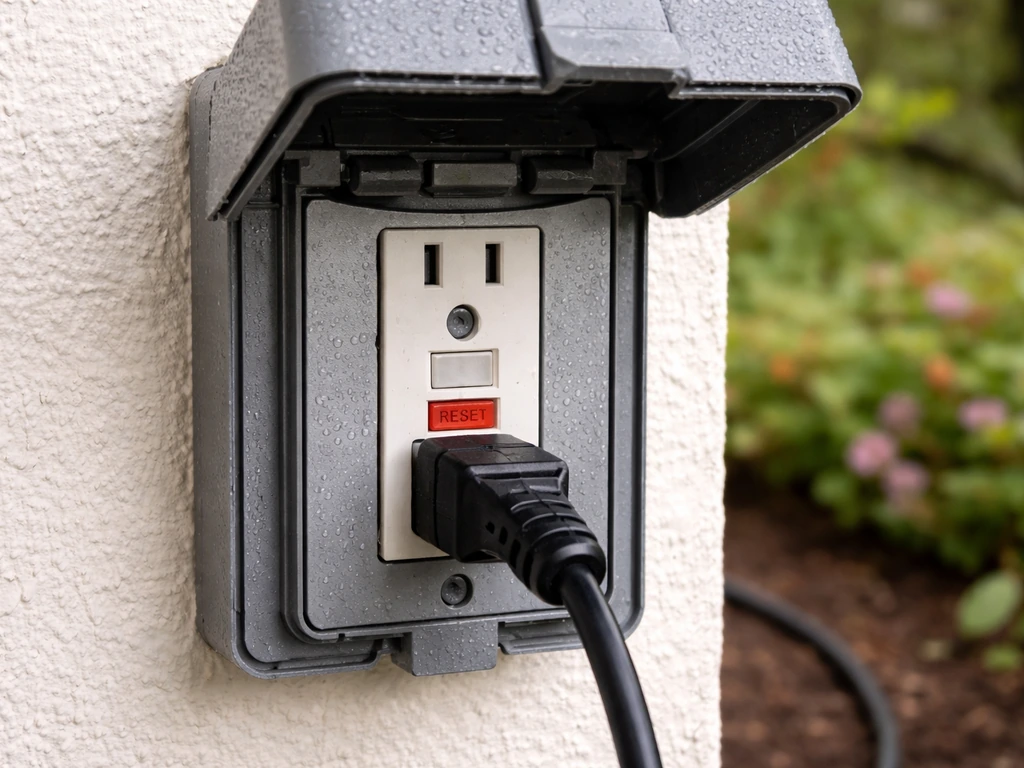
Most outdoor outlets for bird baths and water features are GFCI-protected, which is exactly what you want. But GFCIs trip frequently outdoors, and the tricky part is that a tripped GFCI does not always look tripped. The indicator light can glow green even when the outlet has cut power to the downstream circuit. Do not trust the light alone. Press the TEST button first, then press RESET firmly until it clicks. If it holds, plug something you know works (like a phone charger) into the outlet to confirm power is actually restored. BobVila also recommends using a circuit tester to confirm whether power is actually reaching the GFCI outlet when troubleshooting a no-power or reset issue confirm power is actually restored. If you want to be thorough, use a GFCI receptacle tester or a multimeter: a reading near zero volts means the outlet has shut down and the GFCI needs to be reset or replaced.
If the RESET button will not stay in, keep popping out, or immediately trips again when you plug the pump back in, there are two possibilities. Either the pump itself is causing the trip by drawing a fault current (a sign of internal damage or a wet connection), or there is a wiring issue upstream. Check if other GFCI outlets on the same circuit are tripped as well. One tripped GFCI can cut power to multiple downstream outlets, so the outlet you are plugging into may look fine but actually be dead because of a tripped device somewhere else on the circuit.
Check the cord, plug, and any inline switch
Inspect the entire cord from plug to pump. Look for cuts, kinks, chew marks (squirrels love low-voltage wiring), or corrosion on the prongs. If you have a timer or inline switch between the outlet and the pump, bypass it temporarily and plug the pump directly into the outlet. Timers and switches fail more often than people expect, and this single step rules them out instantly. If the pump runs when plugged directly but not through the timer, replace the timer.
Flow problems: clogs, air locks, water level, and placement
This is the most common category of bird bath pump failure, and most of these problems are quick to fix once you know what to look for.
Water level is the first thing to check
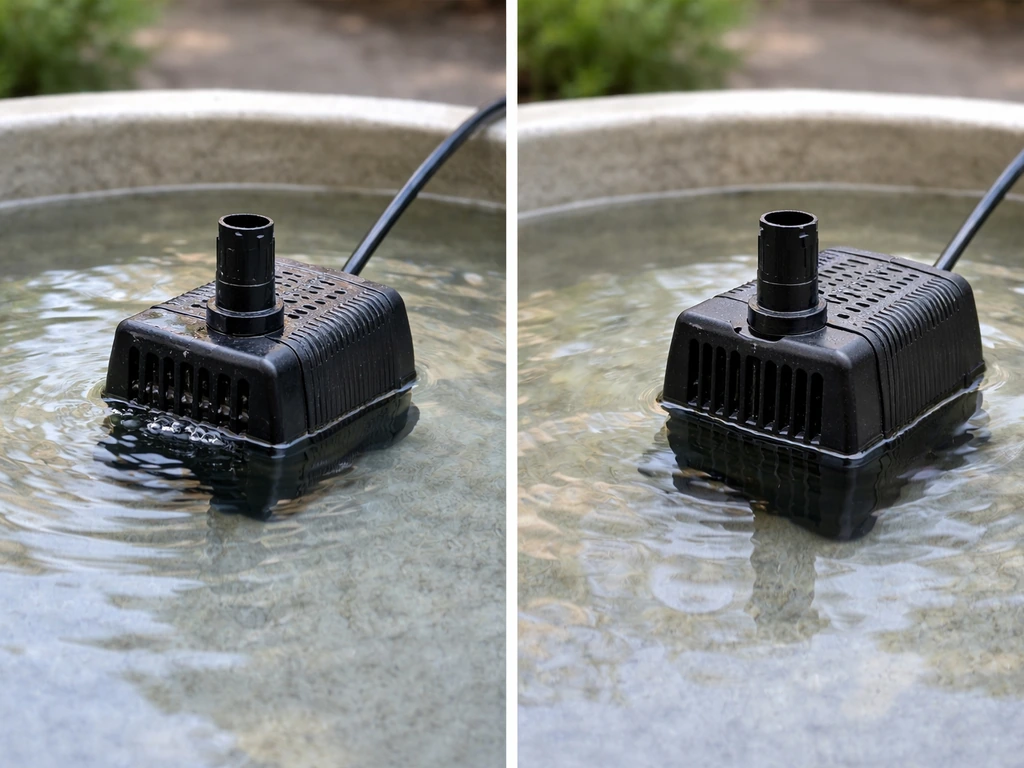
Submersible bird bath pumps need to be fully submerged to work correctly. Make sure you meet bird bath requirements for water level and pump placement so the pump stays submerged and avoids air locks. If the water level drops below the pump's intake, the pump sucks in air instead of water. This causes noise, sputtering, intermittent flow, and eventually overheating damage from dry-running. Most small bird bath pumps need at least 2 to 3 inches of water over the intake. Check your pump's manual for the minimum submersion depth and top the basin up before doing anything else.
Air lock: the invisible culprit
An air lock happens when a bubble of air gets trapped in the impeller chamber and stops the pump from moving water even though the motor is running. You will often hear a hum with no output flow. The fix is simple: unplug the pump, lift it out of the water, then slowly tilt and submerge it at different angles so trapped air can escape from the intake. You may hear or see air bubbles release. Once the chamber is fully flooded, plug it back in. This almost always resolves the hum-but-no-flow symptom.
Placement and depth inside the basin
The pump should sit flat on the bottom of the basin (or on a stable, level surface if elevated), not propped on rocks at an angle. An angled pump is more prone to air locks and uneven wear. Make sure the intake is not pressed against the basin wall or bottom, which restricts inflow. If you are still troubleshooting, review bird bath placement mistakes too, since the way the pump sits relative to the basin can contribute to intake restrictions and recurring flow issues. For most standard bird baths with a shallow bowl, a compact submersible fountain pump with a low minimum depth works best. If you are also choosing or setting up a fountain pump, a bird bath guide can help you match the right pump type and placement to your basin size. Deep garden-style or pedestal baths with more water volume give you more flexibility.
Deep clean and descaling: impeller, intake, filter, and nozzle
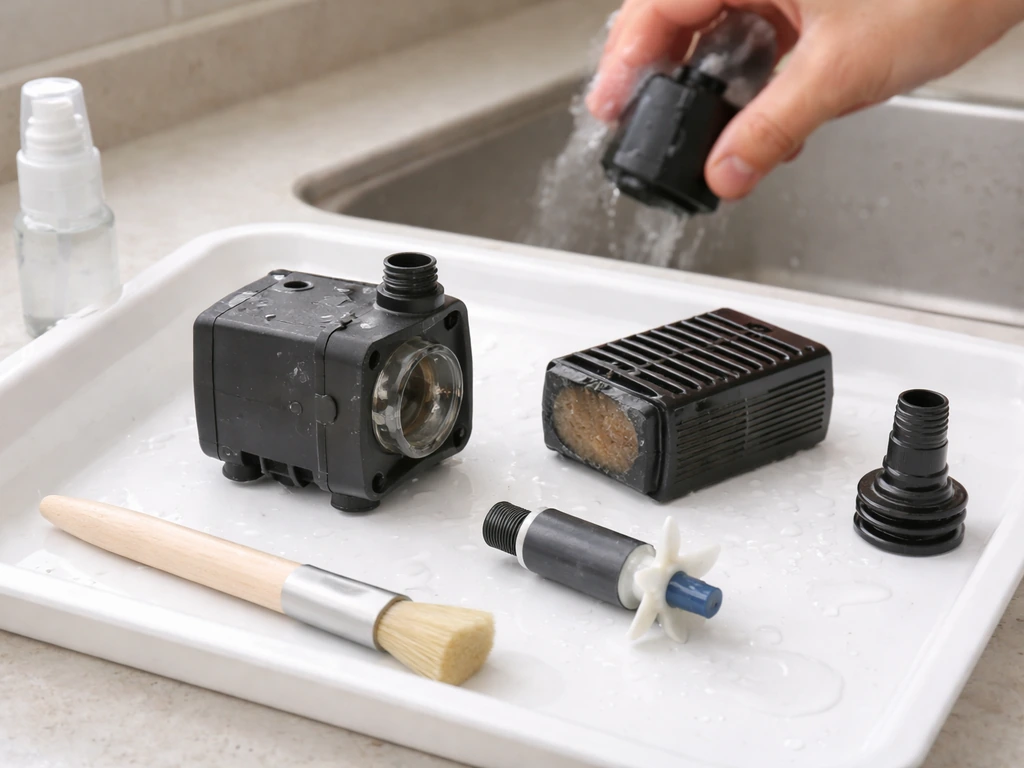
If power is confirmed and there is no air lock, the next most likely issue is biological or mineral buildup blocking the pump. Even pumps that feel like they are running fine can lose 50 percent or more of their flow to gunk in the impeller or intake. This is especially common if you have hard water or if you have let algae get established in the basin. For ongoing bird bath care instructions, include regular cleaning and descaling to prevent mineral and algae buildup that can clog the pump.
How to clean the pump step by step
- Unplug the pump from power before touching it.
- Remove the pump from the basin and take it to a work area with a bucket or sink.
- Remove the intake cover or filter sponge (usually clips or twists off). Rinse the sponge under running water and squeeze out debris. If it is heavily caked, soak it in a diluted white vinegar solution (1 part vinegar to 2 parts water) for 15 to 20 minutes.
- Access the impeller cover, which typically twists counter-clockwise to remove. Pull out the impeller (the small magnetic rotor inside) and check it for debris, hair, string algae, or anything wound around the shaft.
- Clean the impeller chamber by filling it with undiluted white vinegar and letting it soak for 20 to 30 minutes if you see white mineral scale. This dissolves calcium deposits that prevent the impeller from spinning freely. After soaking, rinse thoroughly.
- Spin the impeller by hand after cleaning. It should rotate freely with almost no resistance. If it feels stiff or scratchy, there is still debris or the bearing is worn.
- Clear the nozzle or spray head by running a toothpick or thin wire through the opening. Mineral buildup narrows the nozzle and kills flow even when the pump itself is working.
- Rinse every component with clean water to remove all vinegar residue, reassemble, and reinstall in the basin.
Do not use bleach to clean the pump internals. Bleach degrades rubber seals and certain plastics over time, and residue getting into the bird bath water is a real problem for the birds you are trying to attract. White vinegar is the right tool here.
Troubleshooting by symptom
Pump won't start at all
Work the power checks first: GFCI, outlet, cord, timer. If power is confirmed but the pump still will not start, plug it into a different outlet you know is working. If it starts on the new outlet but not the original, the problem is with the outlet or its circuit, not the pump. If it will not start on any outlet, the motor winding or capacitor has likely failed and the pump needs replacing. Small bird bath pumps are inexpensive enough that internal motor repair is almost never worth the effort.
Pump hums but moves no water
A hum with no flow almost always means the impeller is either air-locked or mechanically jammed. Try the air-lock fix first (tilt and re-submerge). If that does not help, disassemble and clean the impeller as described above. If the impeller spins freely but the pump still hums without producing flow, the motor is running but the impeller is not coupled to it properly, which means internal wear and a replacement pump is the right call.
Weak or sputtering flow
Weak flow after cleaning usually comes down to one of three things: the water level is still too low, the nozzle is still partially blocked, or the filter sponge is restricting intake more than you realize. Replace the filter sponge if it is older than one season or if cleaning it does not restore normal flow. Also check that the output tubing has no kinks and that the nozzle height is not adjusted too high for the pump's rated head pressure. Most small fountain pumps for bird baths have a maximum lift of 2 to 4 feet. Asking a small pump to push water higher than its rated head will throttle flow dramatically.
Pump leaks
If water is leaking from the pump housing itself, check the junction where the output tubing connects. Push-fit connections loosen over time and are an easy fix. If the housing is cracked (common after freezing), the pump is done. A crack in the pump body cannot be reliably repaired long-term and the pump should be replaced before the next season.
Pump overheats or keeps cutting off
Submersible pumps are designed to be cooled by the water surrounding them. If the water level drops or the pump is partially out of the water, it generates heat faster than it can shed it and the thermal protection cuts power. The pump restarts when it cools down, which gives the impression of intermittent operation. Keep the water level above the minimum submersion depth at all times. In summer, evaporation can drop a shallow bird bath basin by half an inch or more per day in hot and dry climates, so daily top-ups may be necessary.
Grinding, rattling, or unusually loud noise
A grinding noise almost always means something hard (a small pebble, seed, or shell fragment) has gotten into the impeller chamber. Disassemble, remove the debris, and check the impeller for chips or damage. A cracked or chipped impeller will cause noise and vibration and should be replaced. Some pumps sell replacement impeller kits; for most small bird bath fountain pumps, a full pump replacement is comparable in cost to a repair kit and is the more practical choice.
Winter and freezing damage: what to check after a cold season
If your pump sat outside through a hard freeze, there is a real chance it was damaged even if it was submerged the whole time. Water expands when it freezes, and that expansion can crack the pump housing, fracture the impeller, or split the tubing connections. The safest practice in freezing climates is to remove your submersible pump from the basin before temperatures drop consistently below freezing, dry it off, and store it indoors in a bucket of water or a damp cloth to keep the seals from drying out. InspectAPedia notes that submersible pumps sufficiently below the frost line may not need additional freeze-protection steps beyond the normal winterization approach Water expands when it freezes.
When you bring the pump back out in spring, inspect the housing for visible cracks before plugging it in. Fill a bucket with water and run the pump in it before reinstalling in the bird bath. This way, if it leaks or fails, you find out on the workbench rather than with the pump already installed. If the pump survived storage intact, clean and descale it before the new season since mineral deposits harden significantly over a dry winter.
For heated bird baths that are meant to run year-round, the pump still needs protection. Ice can trap the pump against the basin floor and the expansion force can damage the intake. Keep the heating element working so water stays liquid around the pump, and check the water level more frequently in winter since evaporation still happens even in cold weather.
When to clean, when to reset, and when to replace
| Situation | What to do |
|---|---|
| Pump less than 2 years old, hums but no flow | Clean impeller and fix air lock before assuming failure |
| Pump less than 2 years old, no power | Check GFCI, outlet, cord, and timer first |
| Pump more than 3 years old, recurring problems | Replace: small fountain pumps are typically $15 to $40 |
| Cracked housing after freezing | Replace |
| GFCI keeps tripping when pump is plugged in | Test pump in a different circuit; if still trips, replace pump |
| Impeller spins freely, power confirmed, still no flow | Replace pump (internal motor or coupling failure) |
| Weak flow after full clean | Check nozzle, tubing, head height, and water level before replacing |
Maintenance habits that prevent the problem from coming back
Most bird bath pump failures are preventable with a simple routine. If you are seeing bird bath problems repeatedly, the fix is usually about preventing clogs, air locks, and low-water running in the first place. The leading causes of premature pump failure are running dry (low water level), mineral scale buildup on the impeller, and debris accumulation in the intake. None of these are hard to prevent once you have a schedule.
- Top up the water every 1 to 2 days in summer, especially in hot climates where evaporation is fast. Never let the water drop below the pump's intake.
- Rinse the filter sponge every 1 to 2 weeks during peak season. A clogged sponge starves the pump of flow without any obvious outward sign.
- Do a full pump disassembly and vinegar soak once a month if you have hard water. In soft-water areas, every 6 to 8 weeks is usually enough.
- Clean the bird bath basin itself at the same time. Algae and debris in the water go straight into the intake. Scrub the basin with a stiff brush and rinse thoroughly before refilling.
- Avoid using algaecides or chemical treatments in a bird bath with a pump unless they are explicitly rated as safe for birds and for pump materials. Many treatments degrade rubber seals.
- In freezing climates, remove, dry, and store the pump indoors before the first hard freeze. Bring it back out and do a full clean before reinstalling in spring.
- Replace the filter sponge at the start of each season rather than trying to clean and reuse a sponge that is more than a year old.
Keeping the pump running also directly benefits the birds. Moving, oxygenated water is what attracts birds to a bath in the first place, and stagnant water quickly becomes a mosquito breeding ground and an algae farm. A pump that is circulating clean water solves both problems simultaneously. If algae or mosquitoes have been an issue alongside your pump trouble, those are worth addressing as part of the same maintenance session since a freshly cleaned pump in a fouled basin will just get clogged again within days.
Getting the pump back in service is ultimately about getting birds back to the bath. Birds are strongly drawn to the sight and sound of moving water, and even a modest flow from a small fountain pump makes your bird bath dramatically more attractive than a still basin. Once everything is running again, take a few minutes to review your overall bird bath setup, including water depth, placement, and surrounding cover, since those factors work together with the pump to determine how many birds actually use it. After you restore proper pump flow, these bird bath tips can help you keep the basin clean, safe, and inviting for visiting birds.
FAQ
My bird bath pump hums but no water comes out. What should I try first?
If the pump is humming but not moving water, treat it as an air-lock or impeller jam first. Tilt the pump out of the water and re-submerge slowly so trapped air can escape, then check for grit in the intake before you suspect the motor. If it will still not prime after cleaning the impeller area, the coupling or internal drive may be worn and replacement is usually the practical fix.
Can a timer or switch be the reason a bird bath pump is not working?
Yes, but only after you confirm power safety. If your outlet is GFCI protected, test and reset it, then bypass the timer or any in-line switch by plugging the pump directly into the outlet. If it runs directly but not through the timer, the control device is the failure point, not the pump. Avoid repeatedly resetting the GFCI if it immediately trips, that can indicate a fault in the pump or wiring.
Why does my bird bath pump work sometimes but shuts off again shortly after?
Some pumps will not restart if the water is too low because thermal protection can cut power. Top up the basin to the manufacturer’s minimum submersion depth, then wait a few minutes and try again. In summer, evaporation can drop shallow basins quickly, so checking level more than once a day is often the difference between stable operation and repeat cutoffs.
What causes weak flow even after I cleaned the pump?
A “mostly fine” flow can still be caused by restriction. Check for partial clogs at the nozzle, confirm the intake is not pressed against the basin wall, and inspect the filter sponge for stiffness or reduced rebound. Also verify the output tubing is not kinked and that the nozzle height is within the pump’s rated lift, since running beyond head pressure throttles flow even when the pump is clean.
How do I know if my bird bath pump is damaged after a freeze?
Cold weather can damage pumps even when they looked okay while frozen. Ice expansion can crack the housing, split tubing connections, or chip the impeller, and the pump may fail later in spring. If you suspect freeze exposure, inspect for cracks and run the pump in a bucket of water before reinstalling in the bird bath.
My GFCI outlet shows it has power but the pump is not working. What else should I check?
Do not rely on the indicator light alone. Outdoor GFCIs can show power visually even when the downstream circuit is cut, so press TEST then press RESET firmly and confirm with a known-working device. If RESET will not stay in or trips immediately when the pump is plugged back in, check for other tripped GFCIs upstream on the same circuit, since one tripped device can take multiple outlets offline.
Is it really harmful if my bird bath pump runs dry for a short time?
Yes, running dry can permanently reduce performance or shorten life because the pump cannot shed heat properly when it is partially out of water. Make sure the pump stays submerged at all times, not just at startup, and account for evaporation between top-ups. If the pump was run low recently, inspect the intake and impeller for early scale or damage, and consider replacing the pump if it now hums without reliable flow.
Can I use bleach to clean a bird bath pump that is not working due to algae or mineral buildup?
Use vinegar instead. Bleach can degrade rubber seals and certain plastics over time, and residue in the bird bath water can harm birds. For mineral buildup, vinegar-based descaling is generally safer for the pump materials and the bird environment, especially when followed by thorough rinsing.
When should I stop troubleshooting and replace my bird bath pump?
If the pump does not start on any outlet and you have already confirmed the outlet power is working, the motor internals are the most likely cause, such as a failed winding or capacitor. Since small bird bath pumps are often inexpensive compared with the time and parts cost, replacement is usually more cost-effective than attempting internal repair. Before replacing, still check the cord for damage and confirm the pump’s intake is clear so you are not masking a mechanical jam.
What is the best way to store a submersible bird bath pump so it works next season?
If the pump is removed for winter or cleaning, store it in a way that keeps seals from drying out. Dry indoor storage can shorten seal life, so storing the pump in a bucket of water or with a damp cloth over seals helps preserve them. When you bring it back out, inspect for visible cracks and test it in a bucket before putting it back into the basin.
Next Articles
Bird Bath Setup: Step by Step Guide for Backyard Birds
Step-by-step bird bath setup guide: placement, leveling, water depth, cleaning, mosquito and freeze prevention, and trou
Bird Bath Safety: Checklist, Setup, Cleaning, and Fixes
Bird bath safety checklist for setup, cleaning, and fixes to prevent drowning, disease, chemicals, mosquitoes, and winte
Bird Bath Tips: Choose, Place, Maintain, and Troubleshoot
Bird bath tips to choose the right basin, place it for birds, maintain clean water, prevent algae and mosquitoes, and tr