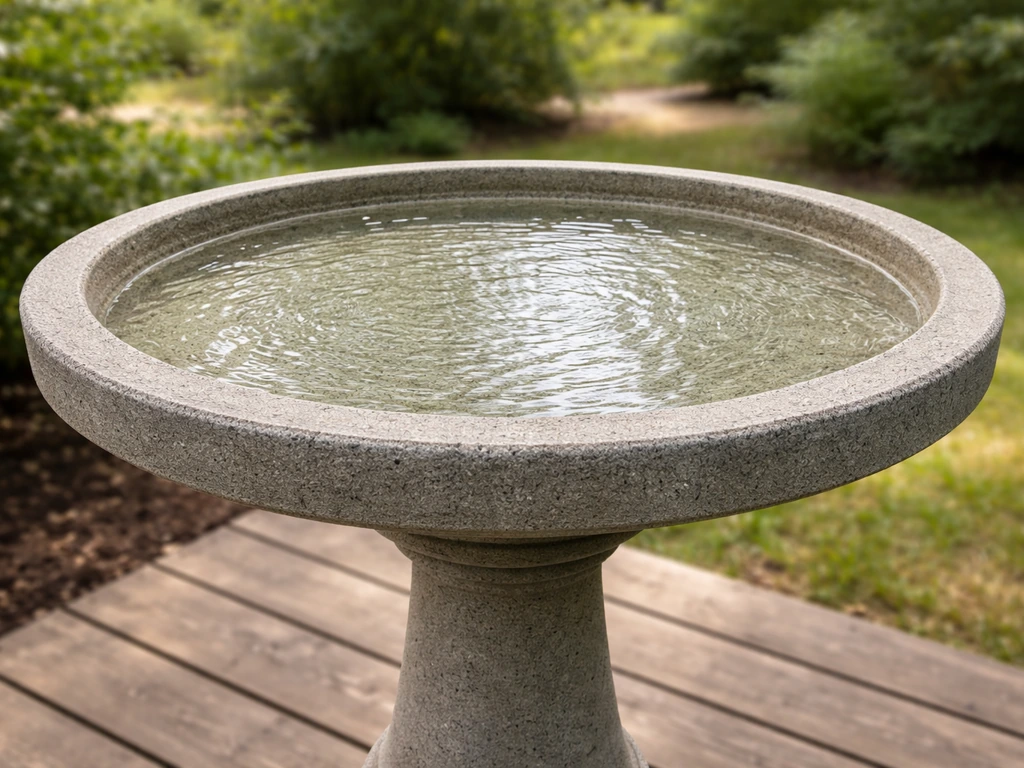
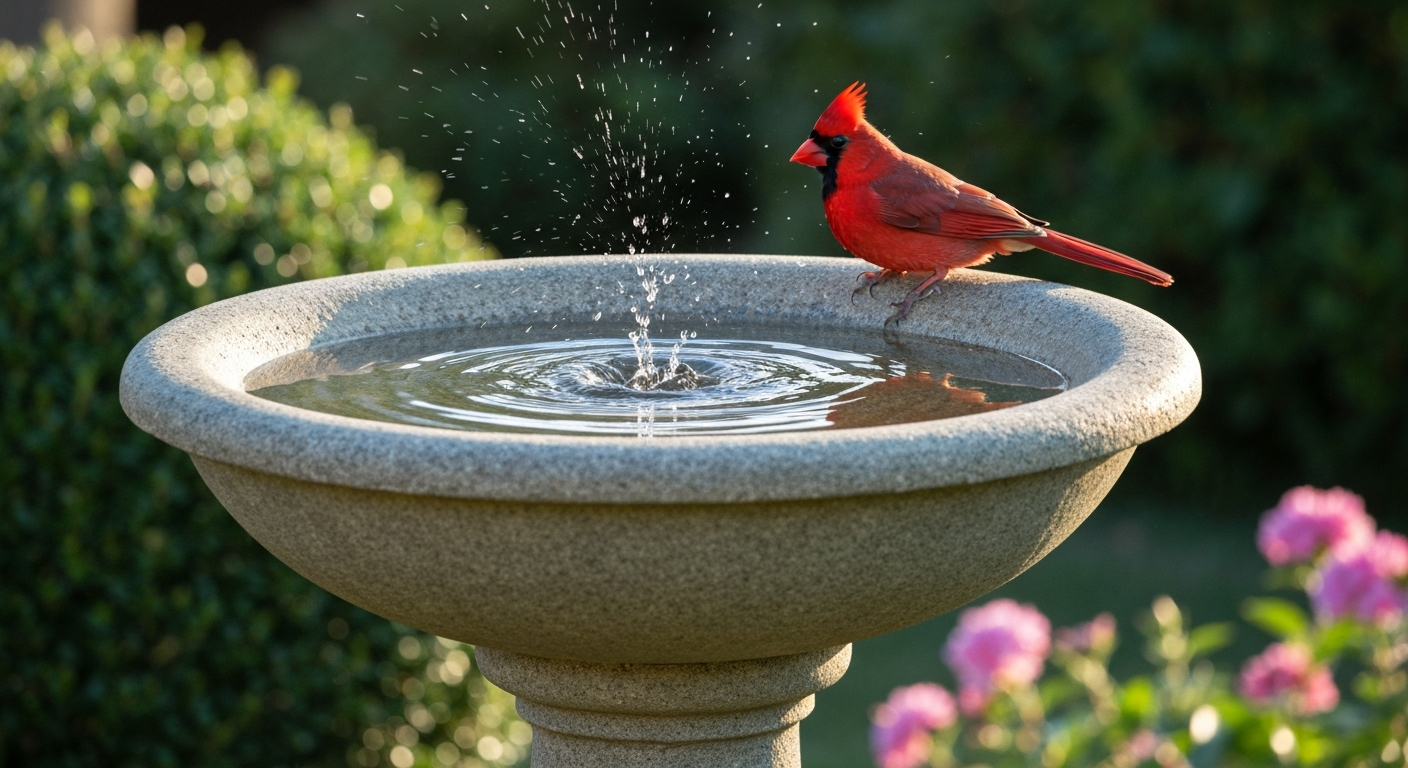
A cardinal bird bath top is simply the bowl or basin that sits on top of a pedestal bird bath, and 'cardinal' in most product names refers to a decorative style (color, motif, or finish) rather than a unique size standard or mounting spec. You can buy just the top as a replacement without replacing the whole unit, as long as you match the right dimensions and mounting pattern. Cardinals specifically do well with a bowl that is 16 to 20 inches in diameter, no deeper than 2 inches at the center, and has a textured surface they can grip. Get those basics right and you will have cardinals bathing regularly.
Cardinal Bird Bath Top: Choose, Replace, Install, Maintain

Marcus Henley
25 Jul 2026
What a Cardinal Bird Bath Top Actually Is
On a standard pedestal bird bath, the unit has two main parts: the pedestal (the stand or column) and the top (the bowl, basin, or tray). Retailers and manufacturers sell these parts separately, so when you see a listing for a 'replacement bird bath top' or 'replacement bird bath bowl top,' they mean just the basin portion. Concrete/stone bird‑bath tops are often sold separately; Medium Bird Baths (Concrete Garden Supply) offers bowl-only tops with dimensions and mounting details so you can match an existing pedestal. The pedestal stays put and you swap out only the bowl.
The word 'cardinal' gets used two ways in the bird bath world. First, it describes the bird itself and what the bowl needs to suit that species. Second, manufacturers like Burley Pottery use 'Cardinal' as a product style name indicating a color scheme or decorative motif, not a proprietary size or mounting standard. So if you see 'Winter Cardinal Top' listed online, that is a style name, not a guarantee it will fit your specific pedestal. Always verify the dimensions independently.
For attracting cardinals and other medium-sized backyard birds, the geometry of the top matters more than the name on the box. The Cornell Lab of Ornithology recommends a bowl that is about 1 inch deep at the rim sloping to roughly 2 inches at the deepest point. Cardinals are comfortable in that range. Go much deeper and smaller birds skip it; too shallow and the water evaporates fast and larger birds dominate it. A textured interior surface (not a glossy-smooth glaze) gives birds something to grip and helps them feel stable while bathing.
Quick Fit Checklist Before You Buy
Before you spend money on a replacement top, run through this checklist. It takes five minutes and saves a frustrating return trip to the store or a three-week wait for a refund on a heavy concrete bowl you shipped back.
- Outer diameter: Measure the widest point of your current bowl and note whether the new top needs to match exactly or can be slightly larger/smaller while still resting stably.
- Pedestal top-plate size: Measure the flat seating surface at the top of your pedestal; the bowl must span that area without tipping.
- Bolt hole or center hole pattern: Some pedestals use a center bolt or a 2- to 4-bolt pattern. Measure the spacing between holes (center-to-center) or confirm the bolt diameter if your current top is bolted down.
- Bowl depth: Confirm the maximum depth at center does not exceed 2 to 2.5 inches for safe bird use.
- Rim or lip width: A wider rim (1.5 inches or more) gives birds a stable perch point before entering the water.
- Weight and support capacity: Concrete tops can weigh 15 to 40 pounds; confirm your pedestal and ground surface can handle the load safely without tilting.
- Material compatibility with your climate: If you experience freezing winters, avoid porous unglazed concrete or unglazed terracotta unless you plan to store it indoors seasonally.
- Finish and coating safety: Any sealed, painted, or coated bowl should use a product certified for potable-water contact (NSF/ANSI 61) so the coating does not leach harmful chemicals into drinking water.
How to Measure Your Existing Bird Bath
Grab a tape measure, a ruler or depth gauge, and a notepad. These measurements take less than ten minutes but they are the difference between a bowl that fits perfectly and one that wobbles, falls, or leaves a gap where mosquitoes can breed under the rim.
- Outer (overall) diameter: Measure straight across the widest point of the existing bowl from rim edge to rim edge. Record this in inches.
- Inner (usable) diameter: Measure the inside of the bowl from the base of one interior rim wall to the other. This tells you the actual bathing surface area.
- Rim width: Measure how wide the flat lip is from the outer edge to where the bowl begins to slope downward. A rim of 1 to 2 inches is common.
- Center depth: Place a ruler vertically at the lowest point of the bowl interior and record the measurement from the bottom to the rim level. Ideal is 1.5 to 2 inches for cardinals.
- Pedestal top-plate diameter: Set the bowl aside and measure the flat circular or square top surface of your pedestal where the bowl rests.
- Center hole diameter (if present): If your top has a drainage hole or bolt hole at the center, measure its diameter. Note whether it is a simple drain, a bolt sleeve, or a threaded insert.
- Bolt pattern spacing: If the bowl is secured with bolts, measure the center-to-center distance between bolt holes. This is critical for Heritage-style and other bolted replacement tops.
- Bowl thickness: Measure the wall thickness at the rim. Thicker walls (0.75 inch or more) indicate heavier, more durable material but also more weight on the pedestal.
- Total weight: Weigh the bowl on a bathroom scale or lift it to estimate. This tells you whether your pedestal and anchor setup can safely support a heavier replacement.
Write all nine measurements down before you shop. Product pages from retailers like Sunnydaze, Heritage Gardens, and concrete garden supply stores list bowl dimensions (diameter x depth) in their product details. Match your numbers to those specs rather than guessing from photos.
Brand and Replacement Compatibility
Heritage (sold through Sunnydaze and other retailers) is one of the most commonly searched brands for replacement tops, and they do publish exact product dimensions on their pages. See Heritage bird bath replacement top listings for exact dimensions and mounting specs. The critical thing to understand is that Heritage does not use a universal bolt standard across all their models. A bowl listed as 18 inches in diameter from one Heritage line may have a different bolt pattern or pedestal seat than a different 18-inch model in another line. Always pull up the specific model number and compare its mounting specs to your existing pedestal.
The safest way to confirm compatibility is to find the model number stamped on the underside of your current bowl or on the pedestal itself. Then search that number on the manufacturer's website or call their customer support line. If no model number is visible, take your nine measurements to a local garden center and ask them to cross-reference against their stock. Many concrete garden supply stores sell bare bowls without pedestals specifically so you can mix and match, but they still need your diameter and bolt pattern to recommend a fit.
When buying a generic replacement top from a big-box retailer (Walmart, Lowe's, Home Depot), look for the product detail section that lists 'overall diameter,' 'depth,' and 'mounting type.' Sellers like Walmart explicitly list replacement tops sized to match standard pedestals. If the listing only shows aesthetic photos and no measurements, skip it. The replacement bird bath bowl top category includes dozens of styles across materials, but the ones worth buying always lead with dimensions.
One common compatibility trap: a bowl that looks identical to your existing one but is 0.5 to 1 inch narrower in pedestal-seat diameter. It will sit off-center, rock in wind, or crack when a heavy bird lands on the rim. If you are unsure, size up by half an inch in pedestal-seat diameter rather than down.
Choosing the Right Material
Clay and Ceramic
Glazed ceramic and terracotta clay tops are popular because they look beautiful and the glaze creates a smooth interior that is easy to rinse clean. For more on selecting and sizing a clay bird bath top, see clay bird bath top. Cardinals seem comfortable with glazed bowls as long as the interior has some texture or the glaze is matte rather than ultra-glossy. The main problem with clay and ceramic is freeze-thaw damage. Water seeps into micro-pores in the clay body, freezes, expands, and cracks or spalls the material. FHWA freeze-thaw resistance research confirms that porous, non-air-entrained materials fail fastest in repeated freeze-thaw cycles. In USDA hardiness zones 7 and colder, I always recommend storing ceramic and terracotta tops indoors from November through March, or switching to a freeze-resistant material for winter use.
Glazed ceramic tops are heavier than plastic but lighter than concrete, typically ranging from 8 to 18 pounds depending on diameter and thickness. They hold water temperature well (staying cooler than metal in direct sun) and the glazed surface resists algae better than rough unglazed concrete. If you see hairline cracks starting, address them with an NSF/ANSI 61-certified potable-water epoxy coating before they spread. Products like Belzona 5812DW are explicitly rated for drinking-water immersion contact, which is exactly what you want for a bird bath repair.
Metal (Steel, Aluminum, Copper)
Metal tops are durable, crack-resistant, and freeze-resistant since metal flexes rather than fractures when water freezes in the bowl. Copper is the standout here because it has natural antimicrobial and antialgal properties, meaning you spend less time scrubbing green slime. Over time copper forms a patina that does not harm birds and actually continues to inhibit algae. Stainless steel is corrosion-resistant and more affordable than copper. Aluminum is the lightest option but softer and more prone to denting.
The big drawback with metal is heat. A stainless steel or aluminum bowl sitting in direct afternoon sun can become uncomfortably hot for birds within 30 to 45 minutes, and the water temperature rises quickly too. Place metal tops in partial shade (morning sun, afternoon shade) whenever possible. Copper tops in shade stay cooler and the patina develops more slowly, which is a fine tradeoff. Check metal bowl seams and edges seasonally for sharp points or rust spots; sand and treat any rust on steel with a potable-water-safe coating before the birds return.
Concrete, Stone, and Resin/Plastic
Concrete and reconstituted stone tops are the classic choice for a reason: they are heavy enough to stay put in wind, they look natural in a garden setting, and birds readily accept the rough texture. The weight is also the downside. A 16-inch concrete top can weigh 20 to 35 pounds and a 24-inch model can exceed 50 pounds. That means you need a solid pedestal, a stable ground surface, and help lifting it into place. Porous concrete is also vulnerable to freeze-thaw cracking just like clay, so store it indoors in cold climates or seal it with a breathable, potable-water-safe masonry sealer.
Resin and plastic tops are the most practical option for renters, people who move frequently, or anyone in a cold climate who wants to bring the bath inside for winter without straining their back. Modern polyresin bowls are UV-resistant, frost-resistant, and designed to mimic the look of stone or concrete. They weigh 3 to 8 pounds on average. The tradeoff is stability: a lightweight bowl can tip or blow off in strong wind, especially on a tall pedestal. Use a non-slip pad or a small amount of outdoor silicone under the rim to add grip without permanently attaching it.
| Material | Weight | Freeze-Thaw Safe | Heat in Sun | Algae Resistance | Best Climate/Use |
|---|---|---|---|---|---|
| Glazed Ceramic / Clay | 8–18 lbs | No — store indoors | Moderate | Good (glazed) | Mild climates; seasonal use |
| Copper | 5–12 lbs | Yes | High — use shade | Excellent (natural) | All climates; partial shade |
| Stainless Steel | 6–14 lbs | Yes | High — use shade | Moderate | All climates; partial shade |
| Aluminum | 4–10 lbs | Yes | High — use shade | Moderate | All climates; shade preferred |
| Concrete / Stone | 20–50+ lbs | No — seal or store | Low (stays cool) | Poor (rough surface) | Mild climates; permanent installs |
| Resin / Plastic | 3–8 lbs | Yes | Low–moderate | Moderate | Cold climates; portable setups |
Heated and Solar Bird Bath Tops
If you live somewhere that dips below freezing regularly from November through February, a heated or solar bird bath top is one of the best investments you can make for your backyard birds. Cardinals, chickadees, and other year-round residents struggle to find liquid water in winter, and offering an ice-free bowl can make your yard a genuine lifeline for them.
How Heated Systems Work
Heated bird bath tops fall into two categories: bowls with a built-in heating element, and standard bowls used with a separate immersion de-icer or heating disc placed in the water. Built-in heated tops (like those from K&H Pet Products) have a thermostatically controlled element embedded in the bowl that activates when temperatures approach freezing, typically around 35 degrees Fahrenheit, and shuts off when it is warmer. The element does not boil the water or make it uncomfortably warm; it simply keeps a small area ice-free. K&H and similar brands note that the heating element will not feel hot to the touch when properly submerged, which means it is safe for birds landing in or near the water. Manufacturer pages for products like Perfect Climate™ Deluxe Pond De‑Icer state these pond de‑icers use thermostatic controls so the element runs only as needed, will not get hot to the touch when properly submerged, and still require GFCI-protected outdoor outlets per the installation instructions Perfect Climate™ Deluxe Pond De‑Icer (product description and safety advice).
Separate de-icers (disc or pond-style immersion heaters) can be dropped into almost any bowl that is large enough to hold them, giving you flexibility to use your existing favorite bowl through winter. These also use thermostatic controls so they cycle on only when needed, keeping operating costs low. A typical 50- to 150-watt de-icer costs roughly $1 to $3 per month to run in most regions, depending on local electricity rates and winter temperatures.
Solar Tops
Solar bird bath tops use a small photovoltaic panel to power a fountain pump or, in some designs, a very low-wattage heating element. The fountain pump option is excellent for warmer months because moving water attracts birds more effectively than still water and discourages mosquito breeding. However, solar heating for winter use is limited: on cloudy winter days with short daylight hours, the solar panel rarely generates enough power to keep water from freezing overnight. Think of solar tops as a three-season tool for water movement and bird attraction, not a winter heating solution in cold climates.
Electrical Safety Is Non-Negotiable
Any electrically heated bird bath top or de-icer must be plugged into a GFCI-protected outdoor outlet. This is not optional. The National Electrical Code (NEC Article 210.8) requires GFCI protection on outdoor receptacles for exactly this kind of application. Water and electricity near the ground are a dangerous combination and GFCI protection is the safeguard that cuts power instantly if a fault occurs. If your outdoor outlet does not have a GFCI, have an electrician install one or use a GFCI-protected outdoor extension cord as a temporary measure. Never use an indoor extension cord outdoors for a heated bath.
Material compatibility also matters for heated setups. Thin plastic or resin bowls can warp if a de-icer is placed directly against the bottom. Most manufacturer instructions specify keeping the de-icer off the bowl floor using the included float or stand. Ceramic and concrete bowls handle de-icers fine but remember that if the water in a ceramic bowl freezes solid overnight (de-icer not running or power outage), freeze-thaw cracking is still a risk. For cold-climate winters, I prefer a polypropylene or metal bowl paired with a heated de-icer rather than risking a ceramic bowl through a hard freeze.
Installing and Anchoring Your New Top
Most replacement tops simply rest on the pedestal under their own weight and gravity. That works fine in sheltered spots, but if your yard gets wind gusts above 20 mph or you have a top-heavy pedestal, you need a little more security. A thin bead of outdoor silicone sealant around the pedestal seat creates a non-permanent bond that holds against wind but lets you break it free for cleaning or storage. For bolted tops, use stainless steel bolts and washers to prevent rust staining the bowl, and do not overtighten on ceramic or concrete bowls as that creates stress cracks.
For freestanding concrete tops without bolt holes, placing the pedestal on a paver stone or a level concrete pad significantly reduces the risk of the whole unit tipping. A small amount of construction adhesive between pedestal and pad works for permanent installs. If you want to keep it moveable for seasonal storage, skip the adhesive and rely on a level, flat surface and the weight of the concrete top itself.
Cleaning and Seasonal Care
Clean your bird bath top at least once a week during warm months and every two weeks in cooler weather. Algae, bird droppings, and debris build up quickly and can harbor bacteria that are harmful to birds. The best routine I have found is: dump the old water, scrub the bowl with a stiff brush and a diluted white vinegar solution (1 part vinegar to 9 parts water), rinse thoroughly, and refill. Skip soap and bleach for routine cleanings; soap residue is slippery and dangerous for birds, and bleach, even well-rinsed, can be irritating. For heavy algae buildups, a 1:9 bleach-to-water solution applied for a few minutes and then rinsed at least three times works well as an occasional deep clean.
For winter care, the action you take depends on your climate. In zones 7 and warmer (mild winters), most bowls can stay out year-round with no special preparation. In zones 6 and colder, bring ceramic, clay, and concrete tops indoors or into an unheated garage before the first hard freeze. Drain them completely first; water left in a porous bowl will freeze, expand, and crack the material. Metal and resin tops can stay out but empty them or pair them with a de-icer if you want to keep birds watered through winter.
Troubleshooting Common Problems
Algae
Green algae is the most common issue and it grows fastest in warm, sunny conditions. The first fix is placement: moving the bath to a spot with morning sun and afternoon shade slows algae growth noticeably. Copper tops or copper pennies (pre-1982 solid copper) placed in the bowl release trace copper ions that inhibit algae naturally, though post-1982 pennies are zinc-core and do not have the same effect. Change the water every 2 to 3 days in summer regardless of how clean it looks; fresh water is the simplest algae prevention tool you have.
Mosquitoes
Mosquitoes need standing, still water to lay eggs and those eggs hatch in 4 to 7 days in warm weather. Changing the water every 2 to 3 days breaks this cycle before eggs hatch. A solar fountain pump that keeps water moving is even more effective since mosquitoes strongly prefer still water to lay eggs in. If standing water is unavoidable (cloudy days with a solar pump), a Bti (Bacillus thuringiensis israelensis) mosquito dunk cut into small pieces is bird-safe and kills mosquito larvae without harming other wildlife.
Freezing and Cracks
If you find cracks in a concrete or ceramic top after a freeze, assess the depth. Hairline surface cracks can be stabilized with a potable-water epoxy or masonry sealer. Deep structural cracks that go all the way through the bowl wall mean the bowl needs to be replaced; a cracked bowl leaks water quickly, tips unevenly, and can shatter when handled. For repairing minor cracks or resurfacing a rough bowl interior, look for coatings that carry NSF/ANSI 61 certification to ensure they are safe for bird drinking water contact.
Placement for Attracting Cardinals
Cardinals are somewhat cautious birds and they prefer a bath that is close to cover but not hidden. Place the bath 5 to 10 feet from a shrub or small tree: close enough that cardinals can retreat quickly if spooked, but far enough out that cats cannot hide underneath the shrubbery and ambush birds while they bathe. Ground-level baths work well for cardinals since they naturally forage on the ground, but a pedestal bath at 24 to 30 inches also works and has the advantage of keeping the water cleaner (less leaf debris, less dirt splash).
Keep the bath in partial shade rather than full sun. Full sun heats the water quickly (especially in metal bowls) and encourages faster algae growth. Partial shade keeps the water cooler and fresher longer, which cardinals, and most other backyard species, clearly prefer based on which of my baths they visit more often. Adding a simple dripper or fountain head to create water movement is one of the single most effective upgrades you can make; the sound of dripping water draws birds from a wider area and significantly increases visit frequency.
Where to Buy and What to Expect to Pay
Replacement bird bath tops are sold at garden centers, home improvement stores (Lowe's, Home Depot), general retailers (Walmart, Amazon), and specialty bird supply stores. Search listings for a replacement bird bath bowl top to find just the basin portion without a pedestal. Budget resin or plastic tops start around $15 to $30 for a basic 14- to 18-inch bowl. Mid-range glazed ceramic tops run $30 to $70 depending on size and finish. Concrete and reconstituted stone tops typically cost $40 to $120 for standard pedestal sizes. Copper tops are the premium option at $60 to $200-plus depending on gauge and craftsmanship. Heated bird bath tops with built-in elements generally run $50 to $120, while separate de-icer units cost $20 to $50.
If you want a specific decorative style like a hand-painted cardinal motif, expect to pay a premium at pottery studios or specialty garden shops. Brands like Burley Pottery sell decorative cardinal-style tops in the $45 to $80 range for standard sizes. For Heritage-compatible replacement bowls, check the Sunnydaze direct website first since they list exact compatibility notes and dimensional specs that make matching much easier than guessing from a third-party listing.
If none of the off-the-shelf options fit your pedestal or budget, a DIY bird bath top is a genuinely viable project using a preformed concrete mix poured into a mold, a repurposed shallow dish, or a hand-built clay form. The DIY bird bath top route gives you complete control over depth, texture, and diameter, and it is often the best solution for non-standard pedestal sizes.
FAQ
What is a “cardinal bird bath top” (replacement bird bath bowl/top)?
A “cardinal bird bath top” is the removable bowl or basin (aka top, tray, or replacement top) for a pedestal bird bath. The word “Cardinal” in product names is usually decorative (color/motif) not a special mounting standard. Replacement tops let you update or repair a pedestal without buying a whole unit; retailers sell them by dimensions and mounting notes so you can match an existing pedestal.
How do I check fit and compatibility before buying a replacement bird bath top?
Measure and record: outside diameter, inside (usable) diameter, rim width, bowl depth (vertical), maximum water depth, bowl capacity (approx), pedestal seat/neck inside diameter where the top sits, any bolt‑hole pattern or center‑bolt diameter, and pedestal top plate dimensions. Compare those numbers to the replacement’s spec sheet or manufacturer listing rather than relying on images. For branded pedestals (e.g., Heritage/Sunnydaze), use the brand’s product page/spec PDF to confirm exact compatibility.
What shape and depth do birds prefer in a bath?
Most backyard species prefer shallow water with a gentle slope: about 1 inch (≈2.5 cm) at the edge and up to roughly 1.5–2 inches (≈4–5 cm) in the center for small songbirds. Provide some deeper pockets for larger species but keep shallow areas for safety and bathing.
Material pros and cons — clay/ceramic?
Pros: Attractive glazed finishes, natural look, good heat retention (less surface temperature swings). Cons: Porous if unglazed and can crack/spall in freeze–thaw cycles; heavy and fragile (risk of breakage if dropped); glazed ceramics may chip; store indoors in freezing climates.
Material pros and cons — concrete/stone?
Pros: Classic look, heavy and stable in wind. Cons: Porous and prone to freeze–thaw cracking unless specially air‑entrained/freeze‑resistant; very heavy to move; may develop surface algae and need sealing (use potable‑water approved sealants if you plan to line it). Remove or store in winter in cold climates.
Material pros and cons — metal (copper, stainless, aluminum)?
Pros: Very durable, resist cracking; copper has some antimicrobial/antialgal properties and develops a patina; stainless steel resists corrosion. Cons: Can heat quickly in sun (avoid full‑sun tops), may be noisy, and copper can be expensive. Ensure edges are smooth for bird safety.
Next Article
DIY Bird Bath Top: Step by Step Build and Install
Step-by-step DIY bird bath top guide to build, size, seal, attach, and maintain a safe non-slip bathing surface.