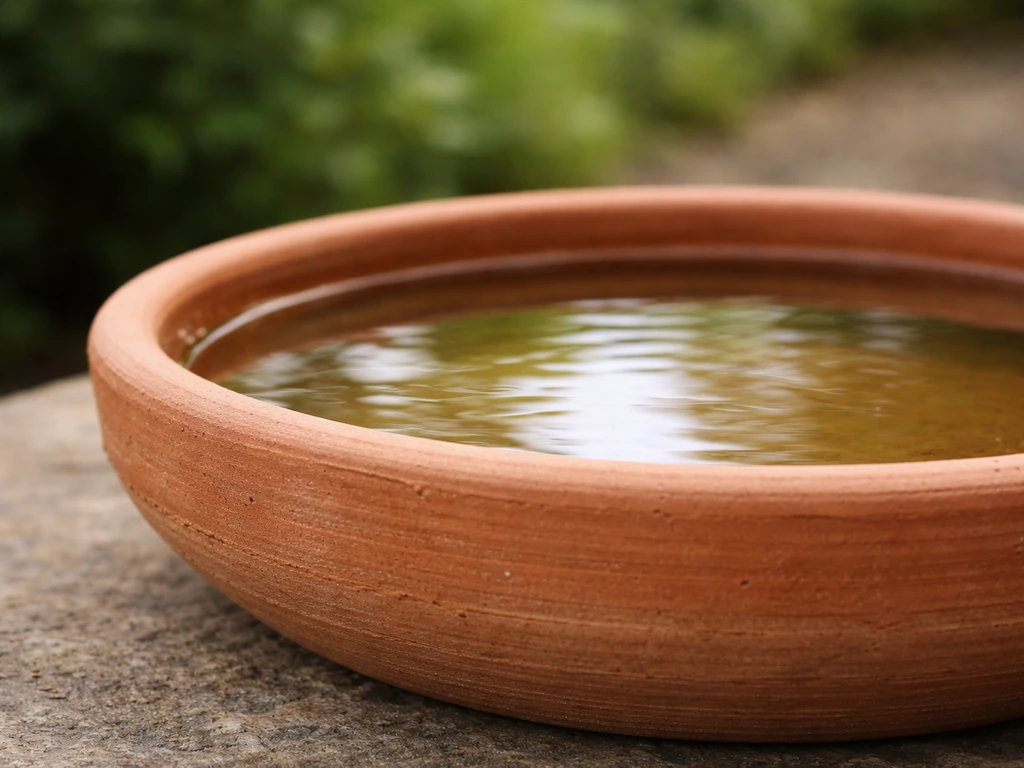
A metal bird bath top is the basin itself, the shallow bowl or dish that sits on top of your pedestal or stand and actually holds the water. If yours is cracked, rusting through, or just lost its coating, you can replace it without buying a whole new bird bath. The key is matching the right material and diameter to your existing base, getting the depth right for birds, and then keeping it rust-free and clean so birds actually use it year-round.
Metal Bird Bath Top Guide: Pick, Fit, Install, Maintain

Marcus Henley
15 Jun 2026
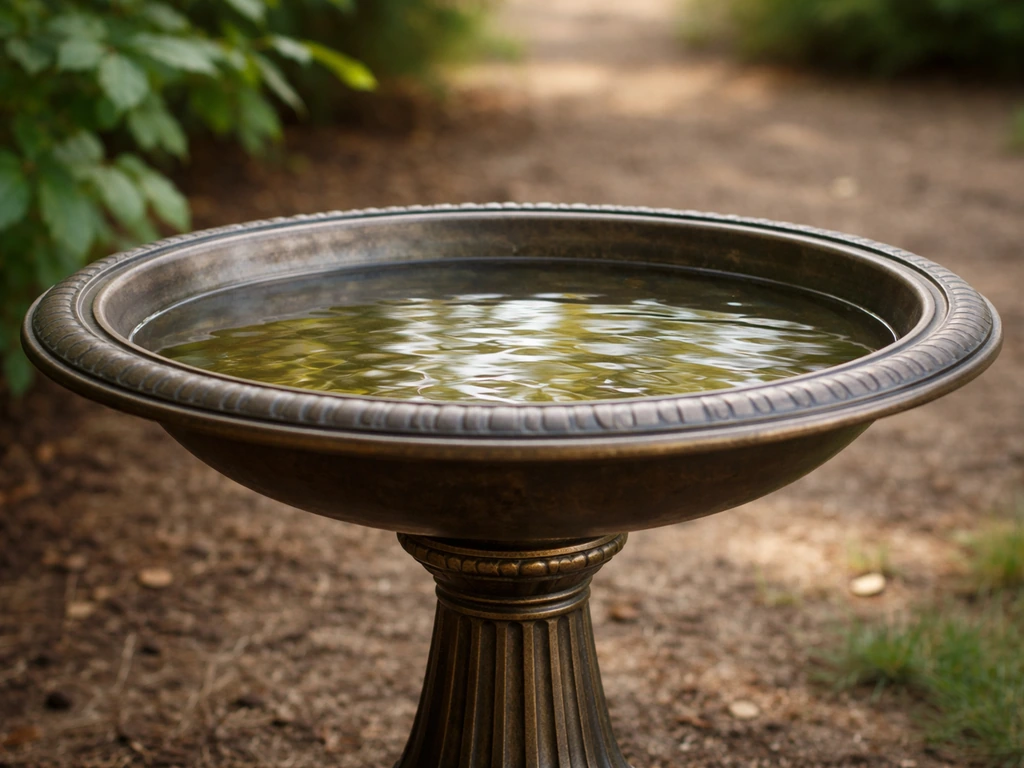
What a metal bird bath top is and why you'd replace one
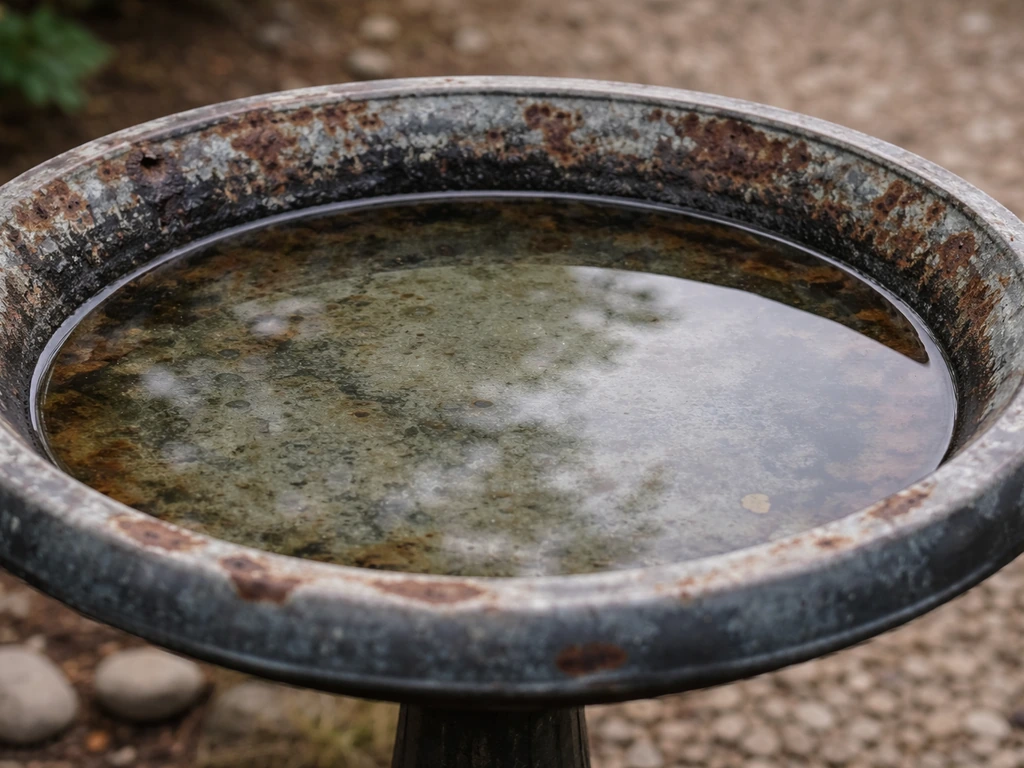
The "top" is simply the water-holding basin that rests on your pedestal, hanging bracket, or ground stake. On metal bird baths, this component takes all the weathering, so it tends to fail before the base does. Common reasons people replace theirs: rust spots eating through the metal, the factory coating flaking off and contaminating the water, mineral scale that's impossible to scrub out, or a crack from a hard winter freeze. Sometimes the original top just gets too shallow or narrow as you learn more about what your local birds actually prefer.
The good news is that replacement tops are widely available as standalone parts. You don't need a matching brand in many cases, though you do need to pay attention to fit. If you've been looking at clay or concrete options as well, a metal top tends to be lighter, more freeze-resistant if properly coated, and easier to scrub clean, though it can heat up faster in direct summer sun. If you are set on a clay bird bath top, just know it can be more finicky during freezing weather and may need extra protection.
Choosing the right metal top material and size
Not all metal tops are equal. The material affects durability, weight, heat absorption, and how much maintenance you'll be doing each season. Here's a practical breakdown of the main options you'll encounter.
| Material | Rust Risk | Weight | Heat Absorption | Best For |
|---|---|---|---|---|
| Stainless Steel | Very low | Medium | Moderate | Low-maintenance, long-term use |
| Aluminum | Very low | Light | Low-moderate | Easy handling, budget replacement |
| Cast Iron | High without coating | Heavy | High | Decorative, stable setups |
| Powder-coated Steel | Low if coating intact | Medium | Moderate | Affordable, wide style selection |
| Copper | Low (patinas naturally) | Medium | Low-moderate | Aesthetic appeal, natural antimicrobial |
For most backyard birders, a powder-coated steel or aluminum top hits the sweet spot of affordability, light weight, and reasonable durability. Stainless steel is worth the extra cost if you're buying something you want to last a decade without fussing. Cast iron looks great but needs seasonal re-sealing or it will rust, especially in humid climates. Copper is genuinely interesting because it has mild natural antimicrobial properties, though it will develop a green patina over time.
For size, the diameter most birds are comfortable with runs from about 12 to 24 inches across. Wider is generally better because more birds can access the water at once and birds feel safer with an open sightline. More importantly, get the depth right. Birds want a bath that gradually slopes from a shallow dry edge down to a maximum of about 1 to 2 inches deep in the center. Thayer Birding puts it at 1 inch (2.5 cm) to 2 inches (5 cm), and Oklahoma Wildlife Conservation guidance lines up with that range, specifically mentioning a gradual slope from the perimeter. A basin that's 3 or 4 inches deep in the center will be avoided by most songbirds.
Compatibility: matching the top to your base or bird bath model
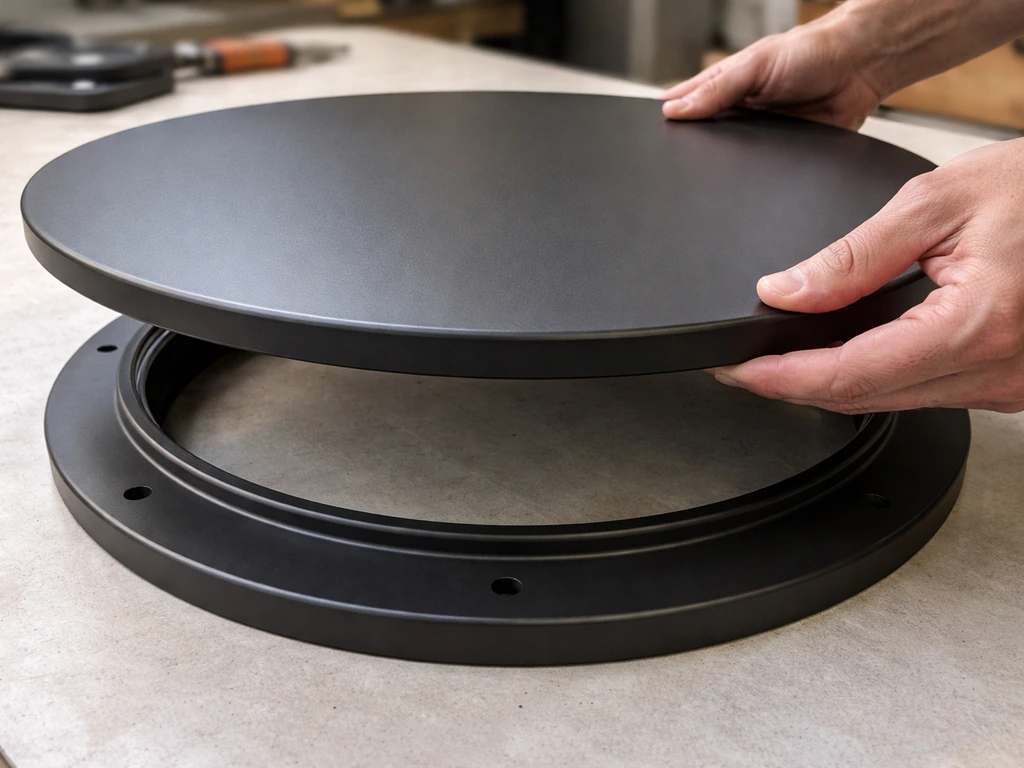
This is where people run into trouble. A replacement top that's the wrong diameter, the wrong mounting style, or the wrong bottom profile simply won't sit safely on your existing base. Before you order anything, take three measurements: the outer diameter of the current basin, the diameter of the pedestal's top surface or cradle, and whether your pedestal has any protrusion, nub, or lip that the basin needs to sit around or over.
Miller Manufacturing's own assembly documentation explicitly flags this issue, noting that pedestals with a protrusion on top may be incompatible with certain tops. If your pedestal has a center post or raised ring, your replacement top needs a matching recess or flat underside that accommodates it. If there's no match, the basin will rock or tilt, leading to uneven water depth and potential spills.
Mounting styles vary too. Some tops simply rest in a cradle and rely on gravity and weight. Others have a lip that hooks over the pedestal's rim. A smaller number use a bolt or central pin through the bottom of the basin.
Check what style you currently have before assuming any replacement will drop right in. If you're replacing a top from a specific brand like Heritage, Cardinal, or a similar decorative line, look for OEM replacement basins first since off-brand options may not share the same geometry. If you need a heritage bird bath replacement top, measure the existing basin and match the mounting style so it fits securely.
Replacement tops from those lines are often sold separately, and matching the original diameter within about half an inch usually works for gravity-rest styles.
Installation and leveling tips for stable water depth
Even a well-matched top will cause problems if it's installed on an unlevel surface. Assembly instructions from major manufacturers are consistent on this: the bath must sit on a flat, level surface. A basin that tilts even slightly will drain water to one side, creating one shallow end that dries out fast and one deeper end that puddles. Neither is ideal for birds.
- Set your pedestal on firm, level ground. Use a small bubble level on top of the pedestal before placing the basin. If the ground is soft, compact it or put a paver tile underneath the base.
- Lower the metal top onto the pedestal slowly, aligning any recess, nub, or mounting point before releasing it.
- Check that the basin doesn't rock by pressing gently on opposite edges. Any wobble means the mating surfaces aren't flush, which will get worse with weight and wind.
- If the basin rocks slightly, a thin ring of outdoor-rated silicone or a rubber gasket between the basin and pedestal top can take up the gap and stabilize it without permanent adhesive.
- Fill with about 1 to 2 inches of water and re-check level. Water is your best diagnostic: if it pools to one side, shim or reposition before calling it done.
- For hanging or bracket-mounted metal tops, make sure the hanging hardware distributes weight evenly. An off-center hook causes the same tilting problem.
One practical tip: if you're placing the bath on grass or mulch, push the pedestal down firmly and let it settle for a day before finalizing your level check. Soft ground shifts, and what's perfectly level today may lean after the first rain.
Cleaning, deodorizing, and preventing rust and scale
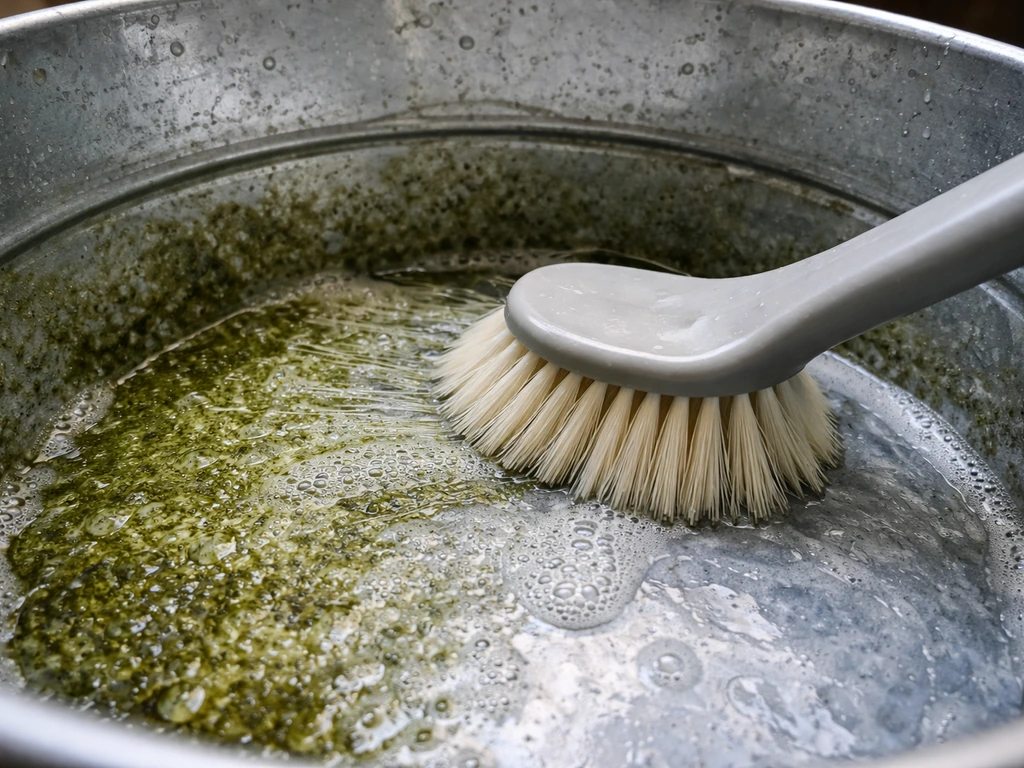
Metal tops need a cleaning routine that handles three separate problems: biological growth like algae and bacteria, mineral scale from hard water, and rust or coating degradation. Treating all three the same way doesn't work.
Algae and biological grime
A diluted white vinegar solution is your best everyday cleaner. The standard ratio is one part white vinegar to nine parts water. Scrub with a stiff brush, rinse thoroughly, and refill. This handles algae and light bacterial buildup without leaving harmful residue. Some people reach for bleach, but Bob Vila's guidance is worth taking seriously here: bleach can poison birds if any residue remains in the basin, so if you do use it for a heavy cleanout, you need multiple thorough rinses before refilling. Vinegar is genuinely sufficient for routine cleaning and is much safer to use.
Mineral scale and hard water deposits
If you have hard water, you'll get white or gray crusty deposits inside the basin. Undiluted white vinegar or a paste of vinegar and baking soda applied directly to the scale and left to soak for 15 to 20 minutes usually loosens it enough to scrub off. A plastic scraper helps without scratching the coating. Avoid metal-bristle brushes on coated surfaces since they'll scratch through to bare metal and accelerate rusting.
Rust prevention and repair
On powder-coated or painted steel tops, rust almost always starts at a scratch, chip, or edge where the coating was thin. Inspect yours every spring. If you catch surface rust early, use a wire brush to remove all loose rust and flaking material first, then apply a rust-converting primer before touching up with a bird-safe outdoor paint or coating.
Fisheries Supply's guidance for metal treatment products makes the prep step non-negotiable: you have to get all the loose scale and rust off before any coating will bond properly, otherwise you're just painting over rust and it'll be back within weeks. For stainless or aluminum tops, rust isn't a concern, but check for pitting or corrosion around any hardware or mounting holes annually.
Water quality optimization to attract more birds
Clean water and the right depth will attract more birds than almost any other variable. Metal basins sitting in full sun can warm the water significantly on hot days, which speeds up algae growth and evaporation. If your metal top is in a sunny spot, plan to refill every day or two in summer and do a quick scrub with your vinegar solution at least once a week.
- Change the water every 2 to 3 days minimum, or daily in hot weather. Standing water that's been sitting longer than 3 days starts developing conditions that attract mosquitoes.
- Keep water depth at 1 to 2 inches. If your basin is deeper, add a flat rock or submerged stone to give smaller birds a shallow foothold near the center.
- Add a solar-powered dripper or wiggler. Moving water both attracts birds from a distance and discourages mosquito larvae, which need still water to develop.
- Position the bath in partial shade if possible. Morning sun is fine; all-day direct afternoon sun in summer warms the water and speeds algae growth in metal basins.
- Avoid using any soaps, detergents, or dish soap for cleaning. Surfactant residue affects birds' feather waterproofing, which is a real health risk.
- If you use a copper basin, the natural copper ions provide mild algae resistance, but this doesn't eliminate the need for regular scrubbing and water changes.
One thing I've noticed personally: birds are much more likely to use a bath that they can see is clean and has some water movement. If yours sits stagnant and green for even a couple of days, birds that discovered it will stop visiting. Consistency matters more than perfection.
Winterizing and weather-proofing your metal top
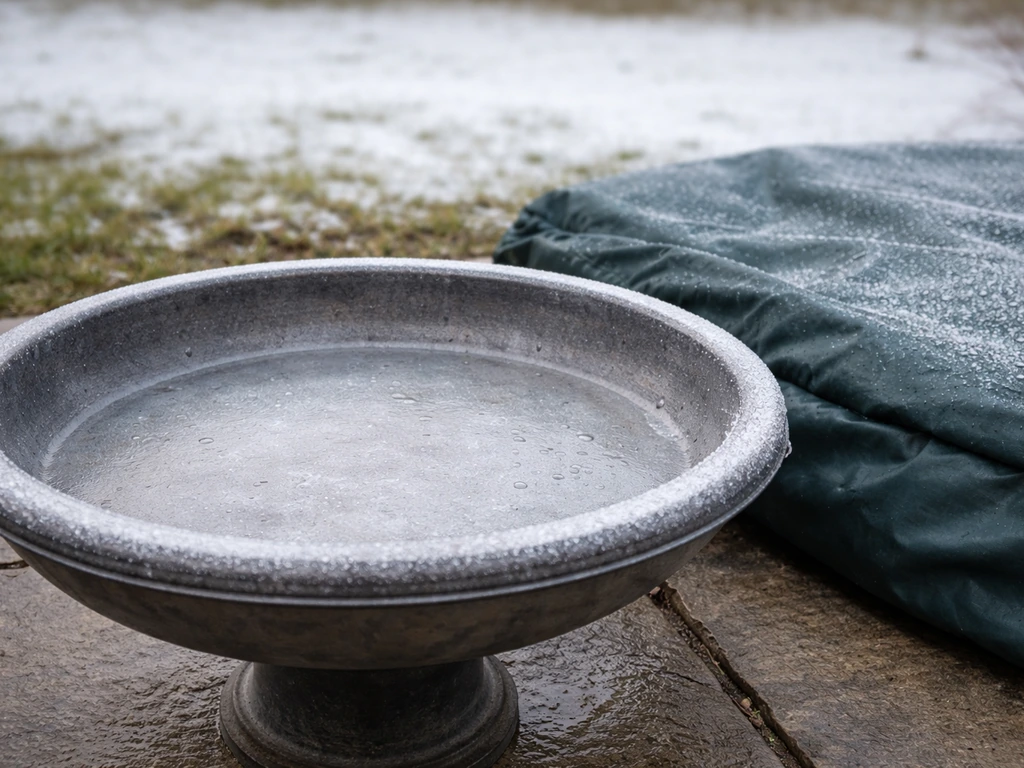
Metal handles freezing better than concrete or ceramic, but it's not immune to damage. Water expands when it freezes, and if your basin fills with ice, that expansion can warp lightweight aluminum tops or stress the coating on steel ones. Moana Nursery's winterizing guidance makes the point clearly: leaving a bird bath outdoors filled during winter allows ice to form inside and can cause damage to the basin itself. So you have two options: bring the top indoors for storage, or keep the water from freezing.
If you live somewhere with mild winters (occasional frost but not sustained below-freezing temps), a heated bird bath de-icer dropped into the metal basin will keep water liquid and available to birds all winter. Penn State Extension recommends submersible heaters for exactly this purpose, and they're sized for standard basins. Most run on a thermostat and only activate when temps approach freezing, so electricity costs are low. NC State Cooperative Extension also addresses this as a specific winterizing strategy, noting that keeping water accessible in winter is genuinely important for bird health since natural water sources freeze over.
If you're in a region with hard freezes where a de-icer can't keep up, pull the metal top and store it upside-down in a garage or shed. Don't leave it sitting right-side-up empty outdoors: snow and rain will fill it, freeze, and the ice expansion still stresses the metal. Storing it inverted prevents water accumulation entirely.
Before putting any metal top into winter storage, give it a thorough cleaning and inspect every inch for rust spots or coating damage. Touch up any bare metal with rust-converting primer before storing. A little prep in fall means the top comes out in spring ready to go rather than needing emergency rust treatment. When you bring it back out, re-check the level on the pedestal since ground settling over winter often means you need to re-shim or reposition.
If you're also considering other basin materials for a replacement, clay tops handle freezing differently and need more careful protection, while concrete and heritage-style replacement tops each have their own seasonal protocols. For pure weather resilience and year-round use with a heater, a metal top is genuinely one of the easier materials to manage across all four seasons.
FAQ
My metal bird bath top doesn’t sit flat, even though the pedestal is level. What should I check first?
If your current basin rocks even after you level the pedestal, the likely issue is fit, not ground. Re-check pedestal geometry, especially any center post, raised ring, or rim lip, and confirm the replacement top has the matching recess or flat underside so the underside contacts the pedestal evenly.
Can I use a deeper metal bird bath top in winter or for larger birds?
Yes, but you need to size for depth and access. Many songbirds prefer a gradual slope and center depth around 1 to 2 inches, so avoid very deep center basins and choose a top wide enough for multiple entry points. If the bath is close to foliage, a wider diameter helps birds land and approach safely.
Do stainless steel or aluminum metal bird bath tops still need maintenance?
Don’t assume “stainless” means “no maintenance.” Stainless and aluminum typically resist rust, but you should still inspect for pitting or corrosion around mounting holes, and check the mounting hardware for looseness after the first few temperature swings of the season.
Is bleach ever safe to use on a metal bird bath top?
If you use bleach for a heavy cleanout, rinse more than once and fully refill only after you smell no chlorine-like odor in the basin. Also consider doing the bleach treatment when you can clean and refill promptly, since residual chemicals can deter birds for a day or more.
What’s the best way to remove stubborn mineral scale on a coated metal bird bath top?
Use vinegar for routine cleaning, but for thick mineral crust, soak with undiluted vinegar (or a vinegar and baking soda paste) for about 15 to 20 minutes before scrubbing. After scraping, rinse thoroughly to remove loosened scale that can re-cement if left behind.
Can I combine vinegar cleaning with rust-converting primer or paint touch-ups in the same day?
Avoid mixing cleaning methods unless you rinse completely between them. For example, after vinegar treatment, rinse well before any rust treatment or touch-up, and never apply rust-converter over loose scale or coating damage that wasn’t removed.
I see a scratch on my powder-coated metal bird bath top. Should I leave it or repair it now?
If the scratch exposes bare metal on powder-coated steel, treat it as an early failure point. Remove loose rust and flaking coating, then apply rust-converting primer and a bird-safe outdoor coating, focusing on feathering the edges so moisture does not wick under the new layer.
How often should I refill and scrub a metal bird bath top if it sits in direct sun?
In full sun, plan for higher turnover. A simple routine is to refill every day or two in peak summer and do a vinegar scrub at least weekly, but also increase frequency if the water turns cloudy quickly or algae appears within 24 to 48 hours.
Why does my bird bath seem unbalanced after winter storage, and what’s the fix?
After winter, re-check level and seating every time you reinstall. Ground settling and thaw cycles can change pedestal position, so shim or reposition before filling, since even a small tilt makes one side shallow and the other side puddle.
What’s the safest winter storage approach for a metal bird bath top, especially if I have a de-icer?
For removable tops, store it upside-down to prevent water pooling, and clean and inspect before storage so rust does not start under trapped moisture. If you have a heater setup, keep it functional only through winter, and unplug promptly when you move into spring cleaning to prevent damage from algae buildup.
What measurements matter most when buying a replacement metal bird bath top, diameter or mounting details?
Measure mounting fit in two ways, diameter and underside profile. For gravity-rest and cradle styles, matching the top surface diameter within about half an inch is usually workable, but if your pedestal has a center post or lip, the underside recess and cutouts matter more than diameter alone.
Next Article
Clay Bird Bath Top Guide: Fit, Install, and Maintenance
Get the right clay bird bath top, install levelly, prevent leaks, and maintain clay to stop algae and cracking.