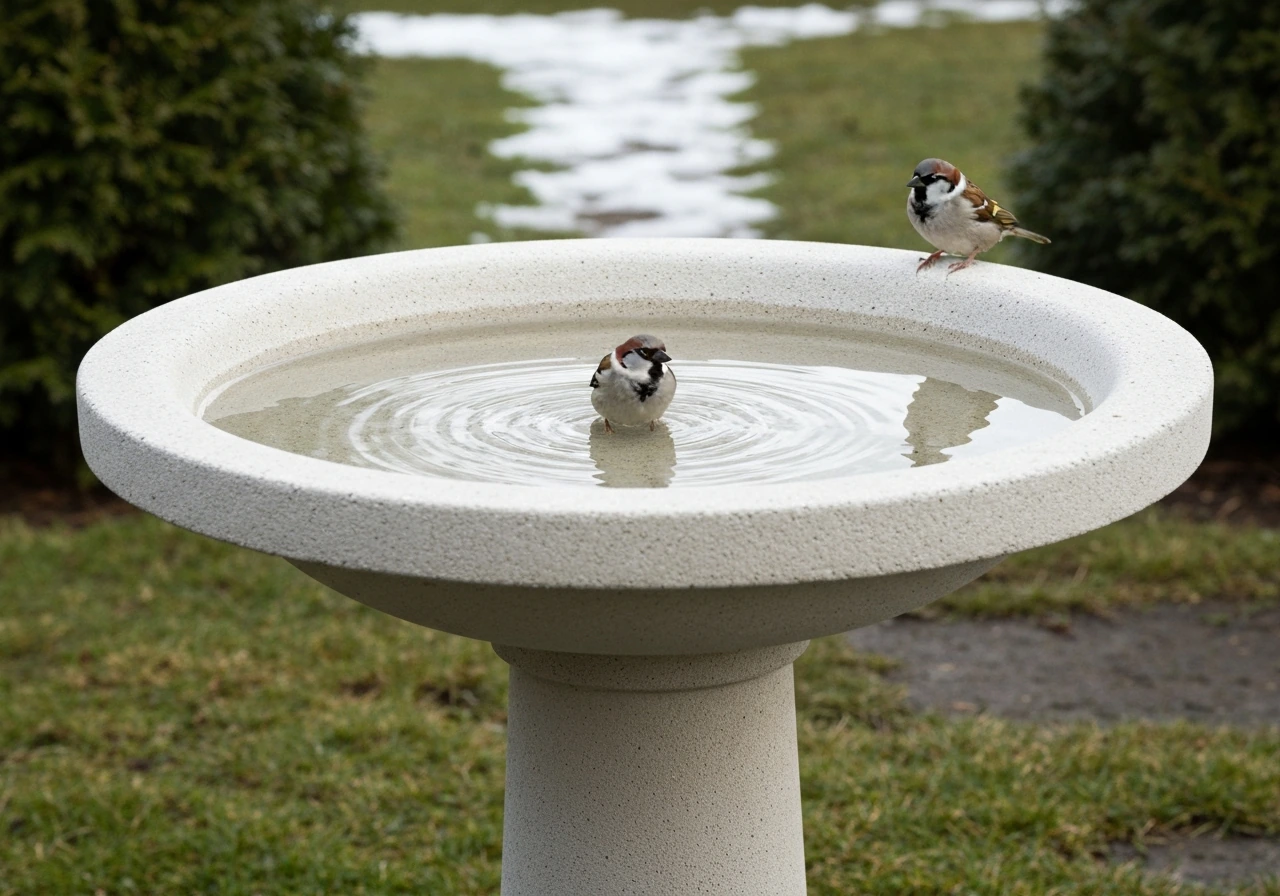
You can put quite a few things in and around a bird bath besides plain water, and getting this right makes a real difference in how often birds actually use it. The short answer: safe water additives like a tiny splash of apple cider vinegar, moving-water features like a drip or aerator, and physical items like flat rocks or gravel for grip and depth variation. Around the bath, things like nearby shrubs, perching branches, and thoughtful placement all count as much as what's in the water itself. Here's a practical breakdown of everything worth knowing.
What to Put in a Bird Bath Besides Water

Marcus Henley
18 Apr 2026
Safe additions you can put directly in the water
Most of what you'll read about water additives falls into a few categories: things that actually help, things that do nothing, and things that can hurt birds. Let's focus on what genuinely works.
Apple cider vinegar
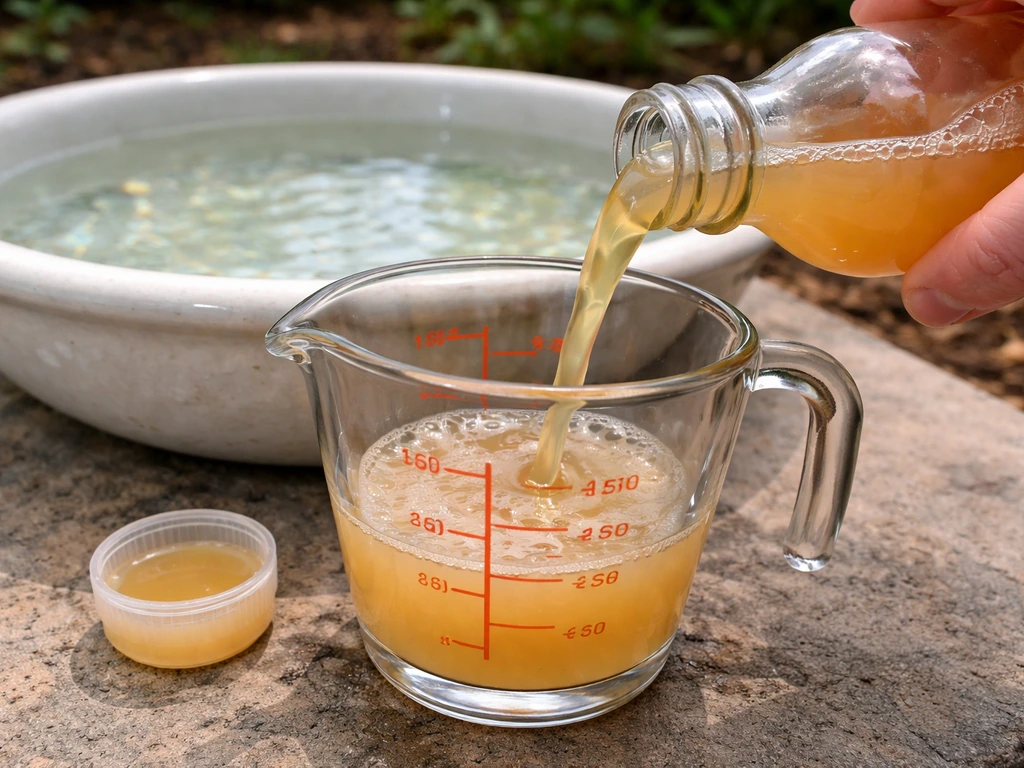
A small amount of raw apple cider vinegar (ACV) is one of the most commonly recommended safe additives. A ratio of about one capful (roughly one tablespoon) per gallon of water is enough to mildly acidify the water, which makes it slightly less hospitable to algae and bacterial growth without harming birds. Birds tolerate weak acid fine. Don't overdo it, though. If you can smell it strongly, you've added too much. At the right concentration, birds won't notice it.
Moving water: drippers, misters, and aerators
This isn't technically "in" the water in the additive sense, but adding a dripper, wiggler, or small solar-powered aerator is genuinely the single most effective thing you can add to any bird bath. Moving water does three things: it attracts more bird species (many birds locate water by sound), it slows algae growth by reducing stagnation, and it helps deter mosquitoes from laying eggs. All About Birds specifically recommends adding an aerator or slow drip to attract a wider variety of birds. Even a simple solar fountain pump from a garden center can transform a static bath into a busy one.
What NOT to put in the water
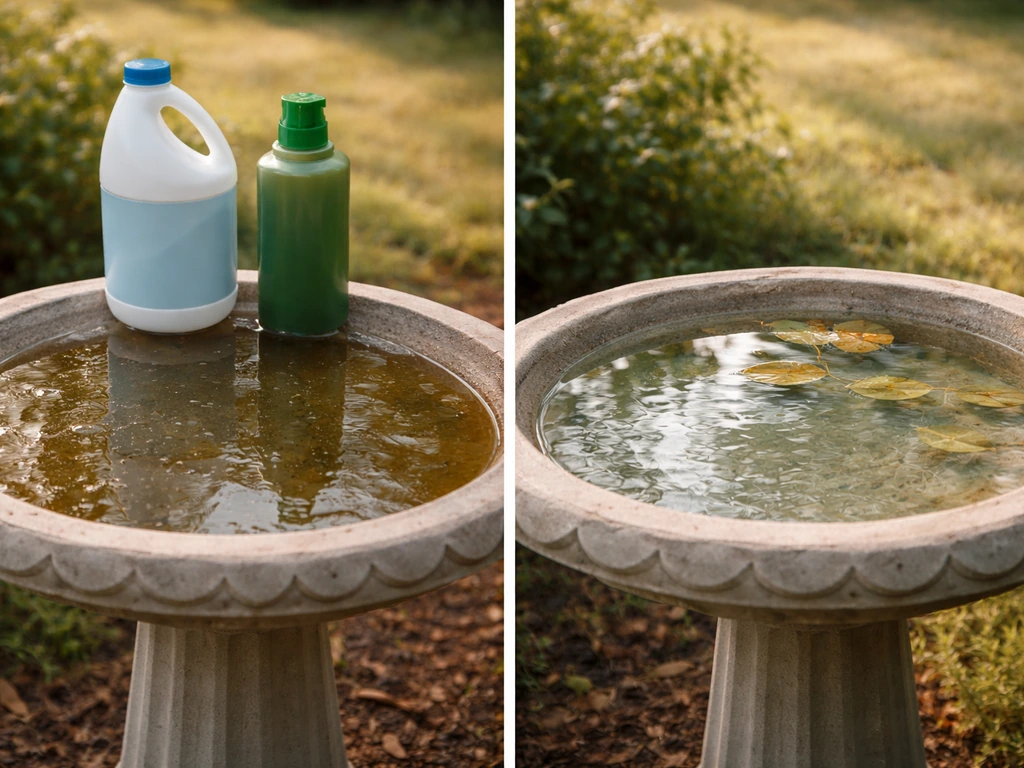
Bleach, dish soap, essential oils, and chemical algaecides all come up in online discussions, but none of them belong in the water while birds are using the bath. Bleach is a great cleaning agent but must be rinsed out completely before refilling. A standard cleaning protocol is a 10% bleach solution (one part bleach to nine parts water) used to scrub the basin, followed by thorough rinsing. That residue-free rinse is the key step. Never leave bleach or soapy water in an active bath. Similarly, copper coins are sometimes suggested as an algae deterrent, but the copper leaching into the water can be toxic to birds over time, so skip them.
Items to put around and near the bath for better bird access and safety
What you put near a bird bath matters almost as much as what's in it. Birds are prey animals, and they won't use a bath that feels exposed or unsafe no matter how clean the water is.
- Nearby shrubs or brush piles: Washington Department of Fish and Wildlife specifically recommends placing a small shrub pile within 10 feet of a bird bath to give birds accessible shelter. Low shrubs let birds dart in and out quickly, which they strongly prefer.
- Perching branches: A tree with low branches or a simple garden stake within a few feet gives birds a place to land, survey the area, and shake off water after bathing. Without a perch nearby, many species won't commit to using the bath.
- Height off the ground: Georgia DNR suggests placing a bird bath at least 3 feet above ground to improve birds' odds of escaping ground predators like cats. Pedestal baths naturally achieve this, but if you're using a ground-level saucer, consider placing it on a flat stone or low platform.
- Distance from dense cover: There's a balance here. You want shelter nearby but not so close that a cat can crouch behind it and ambush bathing birds. A few feet of open space between cover and the bath is ideal.
- Shade: Partial shade, especially afternoon shade, keeps water cooler in summer and slows bacterial growth. Just avoid spots directly under trees where debris and bird droppings from above land in the bath constantly.
Texture and structure: rocks, stones, and bath surfaces
Most commercial bird baths are too slippery and too deep for smaller birds to use comfortably. Adding physical structure to the basin solves both problems at once.
Rocks and gravel in the basin
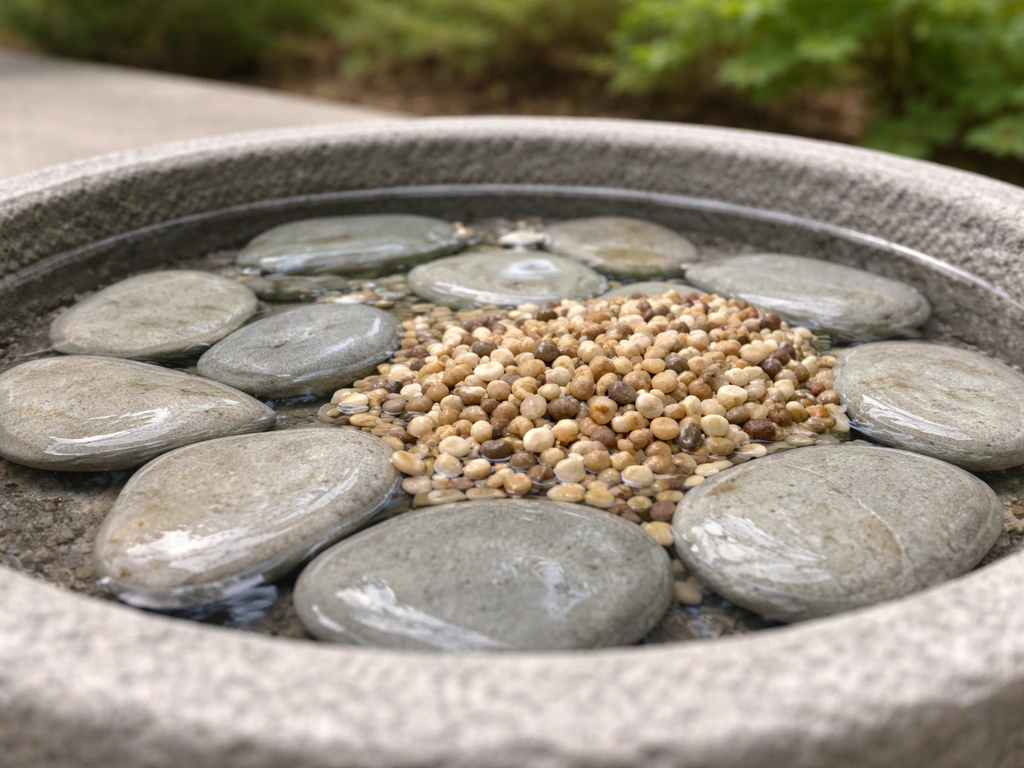
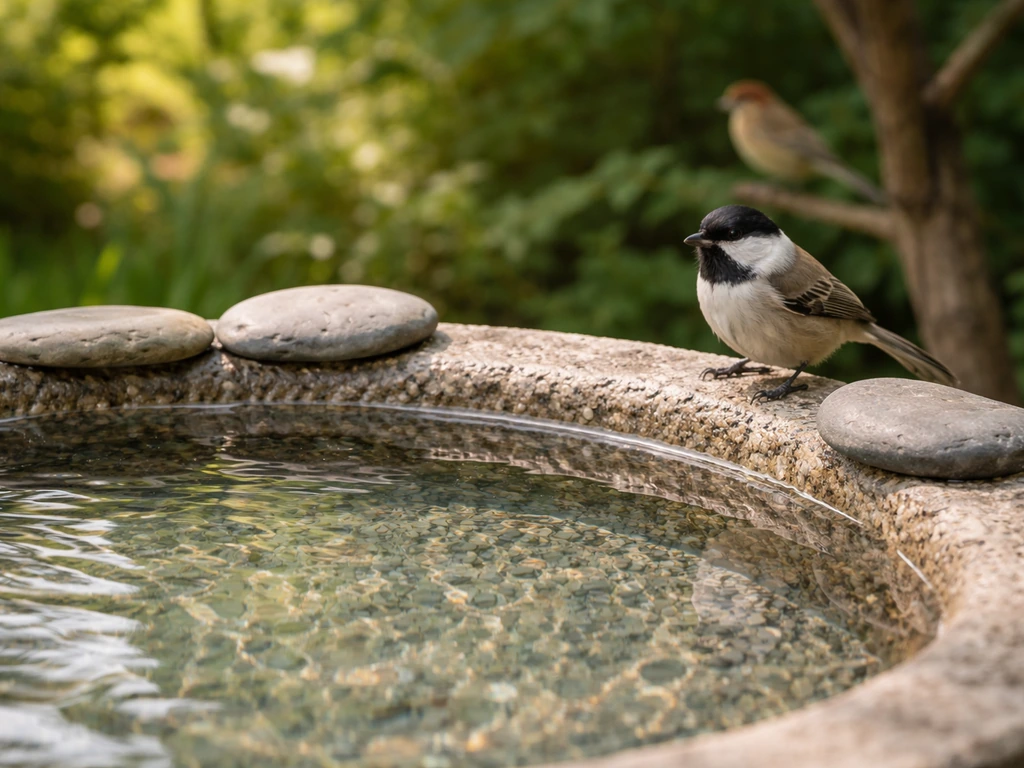
Flat stones or a handful of pea gravel placed in the bottom of the basin serve two purposes: they create traction on smooth surfaces, and they raise the effective water depth in spots so smaller birds can wade in shallower areas. Ideal water depth for most songbirds is about 1 to 2 inches. If your bath is deeper, a large flat rock partially submerged in the center gives smaller birds a usable landing platform with shallower water around the edges.
There's a full discussion worth exploring on the best rocks for bird baths and whether rocks in a bird bath are a good idea, but the short version is: uncoated, natural stone is always safe. Avoid painted rocks, rocks with rough edges that could trap debris, and anything that might leach chemicals.
Bath surface texture
If you're choosing or replacing a bird bath, surface texture is worth considering. Concrete and rough-textured ceramic naturally provide grip. Smooth glazed ceramic and many metal baths are slippery when wet, which is exactly when birds need traction most. If you already own a slippery bath, adding gravel or a rough stone solves the problem without replacing the whole basin. The best bird bath material article goes deeper on this, but for our purposes: rough texture inside the basin is always a plus.
Keeping the water fresh and fighting algae
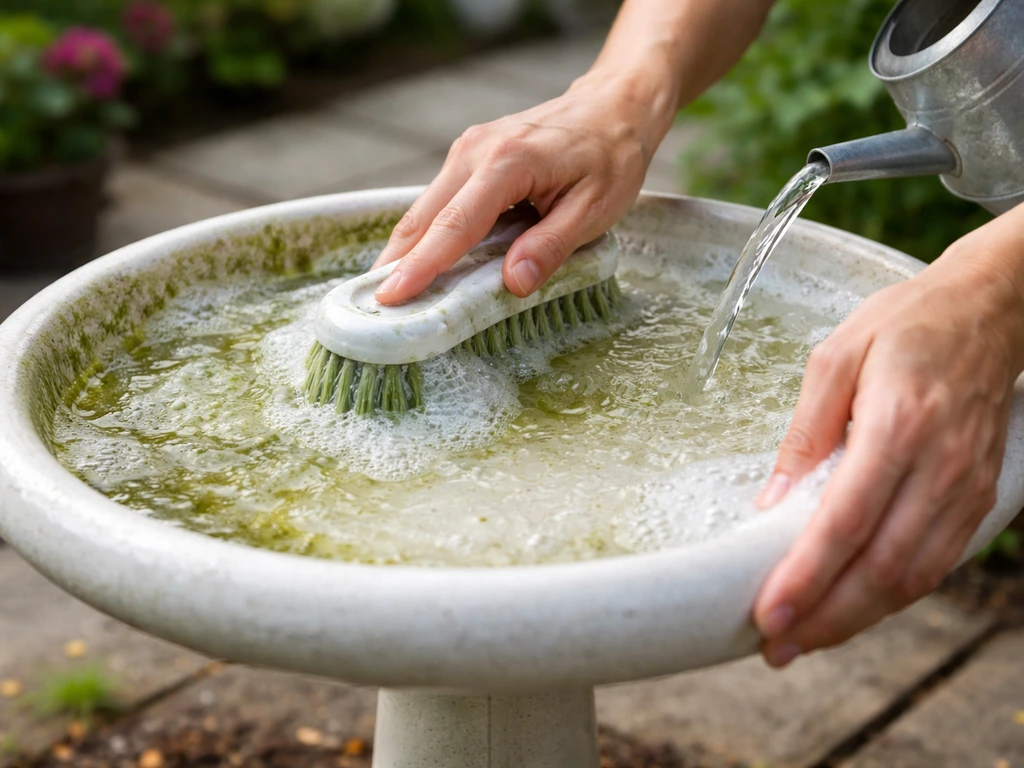
Algae is the most common complaint I hear from bird bath owners, and the solution is more about routine than products. All About Birds advises scrubbing your bird bath immediately when algae starts to appear, not waiting until it's a visible layer. The longer you wait, the harder the scrubbing and the more ingrained the algae becomes in porous surfaces.
Iowa DNR recommends fresh water and a thorough scrub at least once per week. In summer or in warm climates, you'll need to do this more often, sometimes every two to three days. The cleaning process is straightforward: empty the basin, scrub with a stiff brush and the 10% bleach solution mentioned earlier, rinse very well (two or three rounds of rinsing is not overkill), then refill with fresh water. That's it. No specialty products needed.
If algae is a persistent problem despite regular cleaning, check your sun exposure. A bath sitting in full sun all day in summer is going to grow algae faster than you can clean it. Moving the bath to a spot with afternoon shade can dramatically reduce the frequency of algae scrubs. Apple cider vinegar at low concentration can also help slow regrowth between cleanings.
Managing mosquitoes and debris without harming birds
Standing water in a bird bath is a potential mosquito breeding site, and this is a real concern. The good news is there's a safe, EPA-registered solution that's been used by mosquito control professionals for decades.
Bti larvicide tablets
Bti (Bacillus thuringiensis var. israelensis) is a naturally occurring soil bacterium that kills mosquito larvae but is completely harmless to birds, pets, people, and other wildlife. CDC notes that when used according to the product label instructions, larvicides including Bti do not harm people, pets, or the environment [Bti kills mosquito larvae but is completely harmless to birds, pets, people, and other wildlife. ](https://www.
cdc. gov/mosquitoes/mosquito-control/larvicides. html). The EPA has it registered specifically for use in standing water containers, including bird baths, and the CDC also recognizes it as a standard mosquito control tool.
The Washington State Department of Health summarizes Bti (such as Mosquito Dunks or Mosquito Bits) as an available mosquito control option and provides guidance for using it in standing-water containers like birdbaths. It comes in small donut-shaped tablets (Mosquito Dunks is the most widely available brand) that you can break into pieces.
A quarter of a tablet is typically enough for a standard bird bath. Drop a piece in and replace it about once a month or after heavy rain. It doesn't affect water quality or appearance, and birds won't know it's there. Importantly, the EPA notes there's no documented resistance to Bti in mosquito populations, making it reliably effective long-term.
Moving water is your best mosquito deterrent
Mosquitoes need still water to lay eggs and for larvae to survive. A drip, wiggler, or solar fountain eliminates this by keeping the surface in constant motion. If you're already adding a dripper to attract more birds (which you should be), you're simultaneously solving your mosquito problem. These two goals align perfectly.
Dealing with debris
Leaves, seeds, and other debris fall into bird baths constantly, especially under trees. Debris speeds up bacterial growth and makes the water unappealing faster. A few practical fixes: position the bath away from directly under heavy tree canopy (near trees, not under them), use a bath with a smoother basin that's easier to rinse, and check it every day or two in fall when leaves are dropping. A quick dump-and-rinse takes about 30 seconds and can buy you a couple extra days between full cleanings.
Seasonal changes: what to adjust in summer and winter
Hot weather
Heat is hard on bird baths in multiple ways. Delaware Audubon notes that during heatwaves, you may need to replenish water twice a day because it heats up and evaporates quickly. Hot water is less useful to birds for cooling down, and it also accelerates algae and bacteria growth dramatically. Audubon's broader guidance is that birds need access to cool, clean water during heat events when natural sources dry up.
Practical steps for summer: top up water in the morning and again in the afternoon, move the bath to a shadier spot if possible, clean more frequently (every 2 to 3 days instead of weekly), and consider adding a drip or mister that both cools the water and attracts birds stressed by the heat.
Cold weather and freezing
Winter bird baths come with their own set of tradeoffs. A r/birds discussion thread also focuses on winter safety for a blank" rel="noopener noreferrer">heated bird bath, reflecting the practical question many owners have about how to keep birds safe in freezing temperatures. The Canadian Wildlife Federation advises caution with heated bird baths in very cold winters, noting that in extreme cold, a heated bath can actually be dangerous because birds may bathe when temperatures are low enough that wet feathers could lead to hypothermia before they can dry off. This doesn't mean you should skip water in winter entirely, but it does mean using some judgment about temperature and setup.
One practical low-tech option from the National Wildlife Federation: a heavy-duty plastic plant saucer (around 18 inches wide and 3 inches deep) works well as a winter bird bath because it flexes when ice expands rather than cracking. You can simply pop the ice disk out in the morning, refill with fresh water, and let birds use it during the warmer part of the day. For heated baths, use a thermostatically controlled de-icer that only activates near freezing, which keeps water available without overheating it.
| Season | Top priority | What to add or adjust | What to watch for |
|---|---|---|---|
| Spring | Get the bath ready and clean | Fresh water, flat rocks for grip, nearby perches | Algae starting to grow as temps rise |
| Summer | Keep water cool and topped up | Twice-daily refills, drip or mister, ACV if algae is recurring | Evaporation, algae, heat stress in birds |
| Fall | Manage debris and maintain access | More frequent debris checks, Bti if mosquitoes persist | Leaves contaminating water quickly |
| Winter | Prevent freezing while avoiding harm | Flexible plastic saucer or thermostatically controlled de-icer | Wet feathers in extreme cold if heated bath is too warm |
Quick-start checklist for right now
If you're reading this today and want immediate action steps, here's what to do in order of impact:
- Add a flat rock or some pea gravel to the basin so smaller birds have grip and a shallow wading area.
- Set up a drip, wiggler, or small solar fountain to create water movement. This is the single biggest upgrade you can make.
- Place a shrub or garden stake within 10 feet of the bath so birds have a landing and escape spot.
- Drop in a quarter of a Bti tablet (Mosquito Dunk) to handle mosquito larvae safely.
- Add one tablespoon of apple cider vinegar per gallon if algae is a recurring issue between cleanings.
- Commit to a weekly scrub with a 10% bleach solution followed by thorough rinsing, and bump that to every 2 to 3 days in summer.
- Check placement: aim for partial shade, at least 3 feet off the ground, and a few feet of clear space between the bath and any dense cover.
None of these steps require special equipment or a big budget. A flat river stone from your yard and a cheap solar fountain from a garden center will do more for bird activity than any commercial bath additive you'll find on a shelf. If you are wondering what goes in a bird bath but never gets wet, it is the moving-water setup like a drip or aerator that keeps the water surface in constant motion without leaving it stagnant. Start there, watch what happens over a week, and adjust from there.
FAQ
Can I use bleach to treat algae if birds are still visiting the bath?
Yes, but only for short periods and with perfect rinsing. If you scrub with a 10% bleach solution, do a rinse that removes all residue (often two or three rounds), then wait until there is no bleach smell before refilling. Do not add any bleach directly into an active bath where birds are currently using it.
Will apple cider vinegar alone solve an algae problem?
Not in most cases. Instead of “treating” the water, switch to a moving-water setup (slow drip or aerator) and shorten cleaning intervals. If you must use ACV, use the low-dose capful-per-gallon rate, and don’t rely on it as a substitute for scrubbing when algae starts.
Are there any safe “natural” additives like essential oils?
Avoid anything that could cause harm if a bird bites, ingests, or gets residue on its skin. In particular, do not add essential oils, detergents, or chemical algaecides. If you are having to “add chemicals” to keep the bath usable, that usually means you need better placement (less sun, less debris) or a better surface and texture for easier cleaning.
What should I do if my bird bath is too deep for smaller birds?
If the basin is deeper than about 2 inches, use physical structure. Flat stones or pea gravel create shallow wading spots, and a large partially submerged flat rock can act like a landing platform. The goal is consistent traction and access to 1 to 2 inches of usable depth near the edges.
My bird bath sits near a tree, how do I manage the debris?
Don’t put it directly under a heavy tree canopy, especially if leaves drop often. Position it near shrub cover for safety but not directly beneath falling debris. If the bath is under a tree anyway, plan on a quick daily dump-and-rinse during peak leaf drop to prevent bacterial buildup and clogged surfaces.
How can I tell if my ACV concentration is too strong?
A light scent can be hard to judge, so use a clear rule: if you can smell the vinegar strongly, reduce the dose next time. Also, add it gradually to a bath that is already being cleaned and refilled, not as a continuous additive that accumulates. Birds tolerate weak acid, but strong acid odor is a sign you overdid it.
Do I still need Bti if I install a drip or solar fountain?
Use Bti only for mosquito larvae in standing water, and replace it on the schedule you can maintain (about monthly, and after heavy rain). If the bath is kept moving with a drip or fountain, you may not need Bti because mosquitoes lose the still-water habitat they need.
Will Bti affect the water or deter birds from using the bath?
Bti should be fine when used as directed. It is meant for standing-water containers and does not change the look or quality of the water. Still, keep a consistent routine, and do not combine multiple “mosquito products,” since the extra treatments can complicate what is actually working.
Is it safe to use a heated bird bath in very cold weather?
For winter, consider whether birds can dry their feathers before temperatures drop too far. If you use a heated bath, choose a thermostatically controlled de-icer that activates near freezing, and avoid keeping water warm in extreme cold. A flexible winter dish option (like a plant saucer) can reduce cracking and limits the need for active heating.
My bath looks fine but birds splash and seem to slip, what should I change first?
Yes, but focus on easier-to-manage design choices. Choose a basin with rough texture or add grip via gravel or an unglazed stone, and keep water depth accessible for waders. Also, if the bath is slippery, prioritize traction because “clean water” alone does not prevent falls.
Next Article
Best Bird Bath Material: Outdoor and Winter Options Guide
Best bird bath material guide: outdoor picks and winter-safe options, plus maintenance tips for safe, non-frozen water.