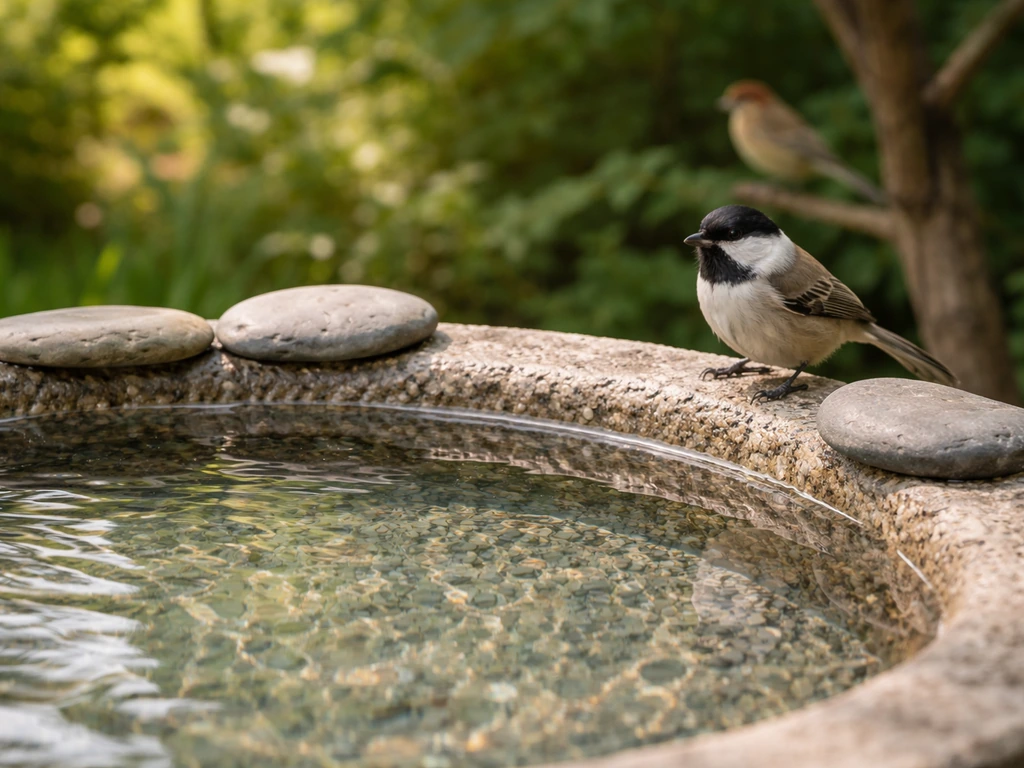
The best rocks for a bird bath are smooth river rocks, granite chunks, slate pieces, and lava rock. River rocks and granite give birds a stable, grippy surface without messing with water chemistry. Slate adds a flat, shallow ledge birds love. Lava rock has incredible texture for grip but needs a good rinse first. Any of these work well as long as you avoid limestone, painted or coated stones, and anything with sharp edges.
Best Rocks for a Bird Bath: Safe, Stable Placement Guide

Marcus Henley
23 May 2026
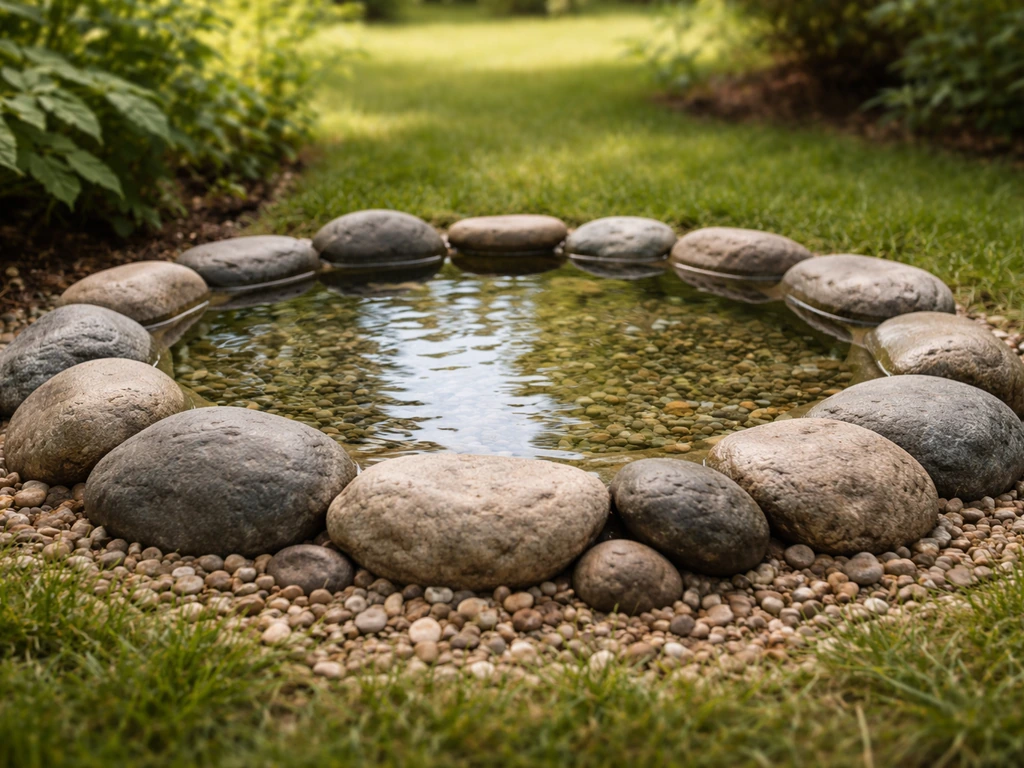
How to choose rocks for a bird bath
Three things matter most when picking rocks: safety for birds, grip underfoot, and whether the rock changes your water chemistry. Let's break each one down.
Safety first
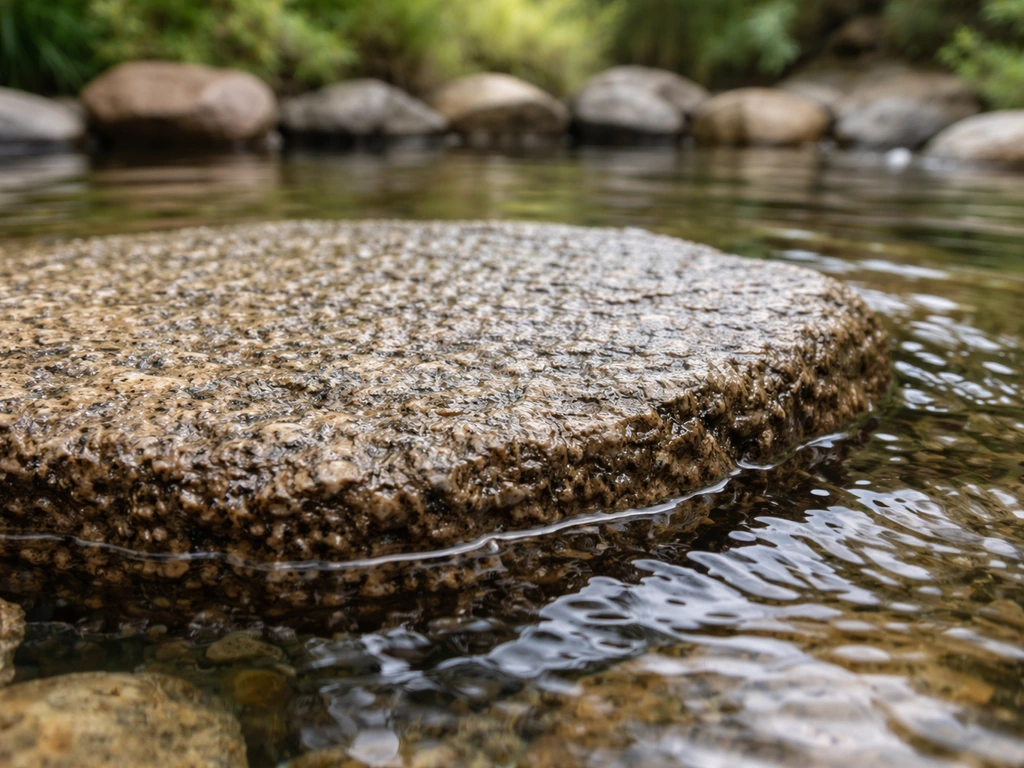
Rocks sitting in standing water slowly interact with that water. Most igneous and metamorphic rocks (granite, basalt, slate) are chemically stable and won't leach anything harmful. The trouble starts with carbonate rocks like limestone. According to the USGS, when water flows over limestone it picks up calcium carbonate, which raises the water's pH and alkalinity. In a small bird bath, that effect is concentrated and can make the water less inviting and harder to keep clean. Stick with inert rock types and you sidestep this problem entirely.
Grip and texture
The Washington Department of Fish and Wildlife specifically notes that birds prefer baths with a textured bottom that gives them some grip so they don't slip. A smooth ceramic or metal basin is like an ice rink for small birds. Adding rocks with a slightly rough surface solves this immediately. You want texture, not sharpness. There's a big difference between a lightly pitted granite surface and a jagged broken stone.
Water chemistry
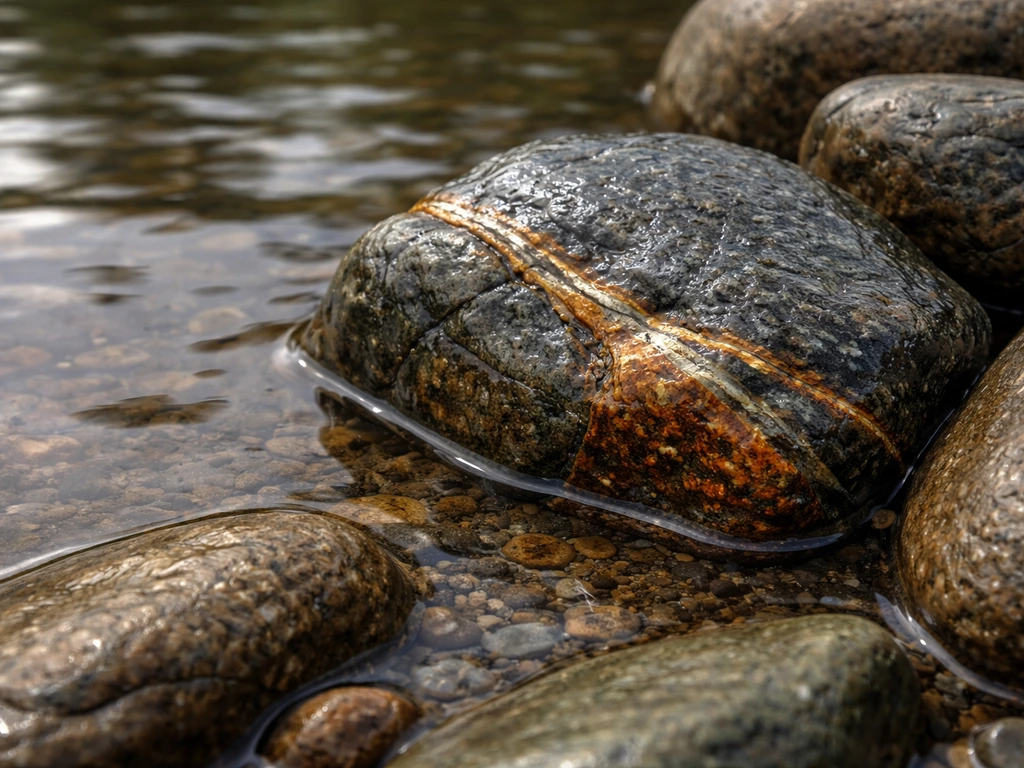
Beyond limestone, watch out for rocks with visible metallic veining or rust-colored mineral deposits. These can slowly leach iron or other minerals. In small volumes of standing water, even modest leaching can affect pH or leave staining. When in doubt, do the soak test in the DIY testing section below before committing a rock to your bath.
The best rock types for bird baths
Here's what I actually recommend and why each one earns its place in the bath.
| Rock Type | Texture/Grip | Water Chemistry Impact | Durability | Best Use |
|---|---|---|---|---|
| River Rock | Smooth to moderate | Neutral (inert) | Excellent | General footing, shallow perching |
| Granite | Moderate to rough | Neutral (inert) | Excellent | Stability anchors, grip surfaces |
| Slate | Flat, slightly rough | Neutral (inert) | Very good | Shallow ledges, stepping stones |
| Lava Rock | Very rough/porous | Neutral (inert) | Good | Maximum traction, natural look |
| Sandstone | Moderate, gritty | Slightly alkaline (mild) | Fair (can erode) | Decorative edge use only |
| Limestone | Variable | Raises pH (avoid) | Variable | Not recommended |
River rock
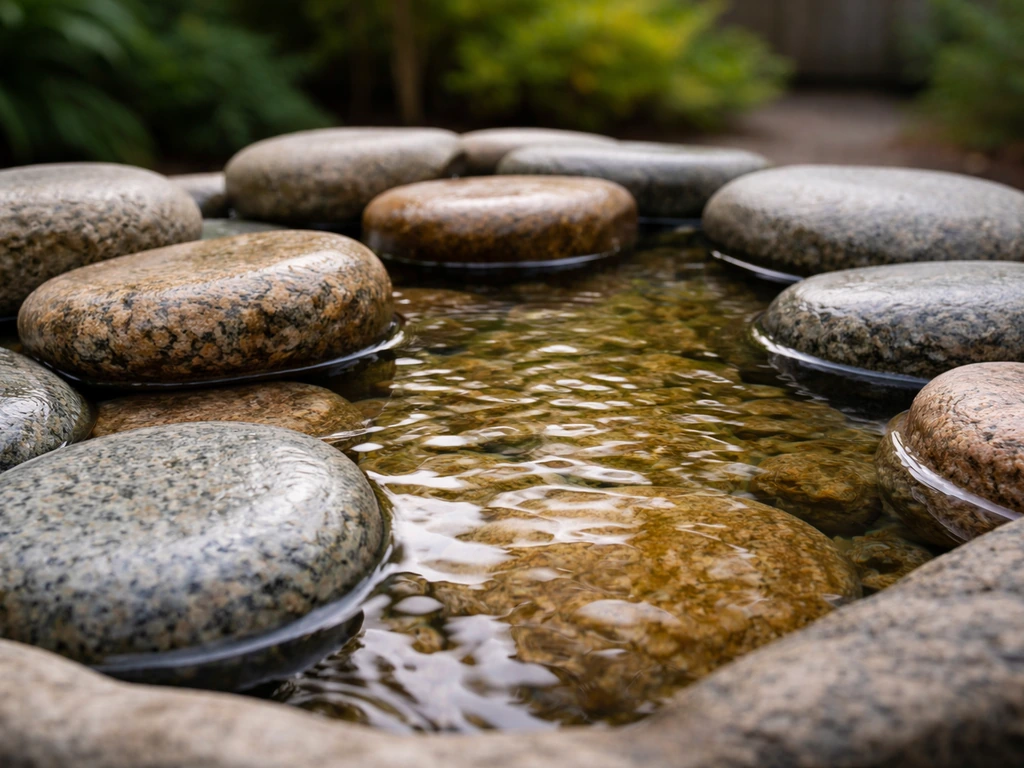
River rocks are my go-to. They're naturally tumbled smooth, which means no sharp edges, and they're almost always inert granite or quartzite. Their rounded shape lets you stack and arrange them easily to create shallow areas for small birds and slightly deeper zones. You can find bags of mixed river rock at any garden center for a few dollars. They look natural, they last forever, and birds take to them immediately.
Granite
Granite is one of the most chemically stable rocks you can use. It's dense, doesn't absorb water, and the natural surface provides decent grip, especially if you pick pieces with some texture rather than polished faces. Larger granite pieces are great as anchor stones to raise the floor of a deep basin to a more bird-friendly 1 to 2 inch depth. Granite also handles freeze-thaw cycles well, which matters if you're using a heated bird bath in cold climates.
Slate
Slate breaks into flat, thin pieces that are perfect for creating shallow shelves inside a bath. A piece of slate angled gently toward the center gives small birds like warblers and finches a comfortable perch right at the water's edge. Slate is a metamorphic rock, chemically inert, and the natural cleavage surface has just enough roughness for grip without being harsh on feet. It does chip over time if you're rough with it, so handle it carefully when cleaning.
Lava rock
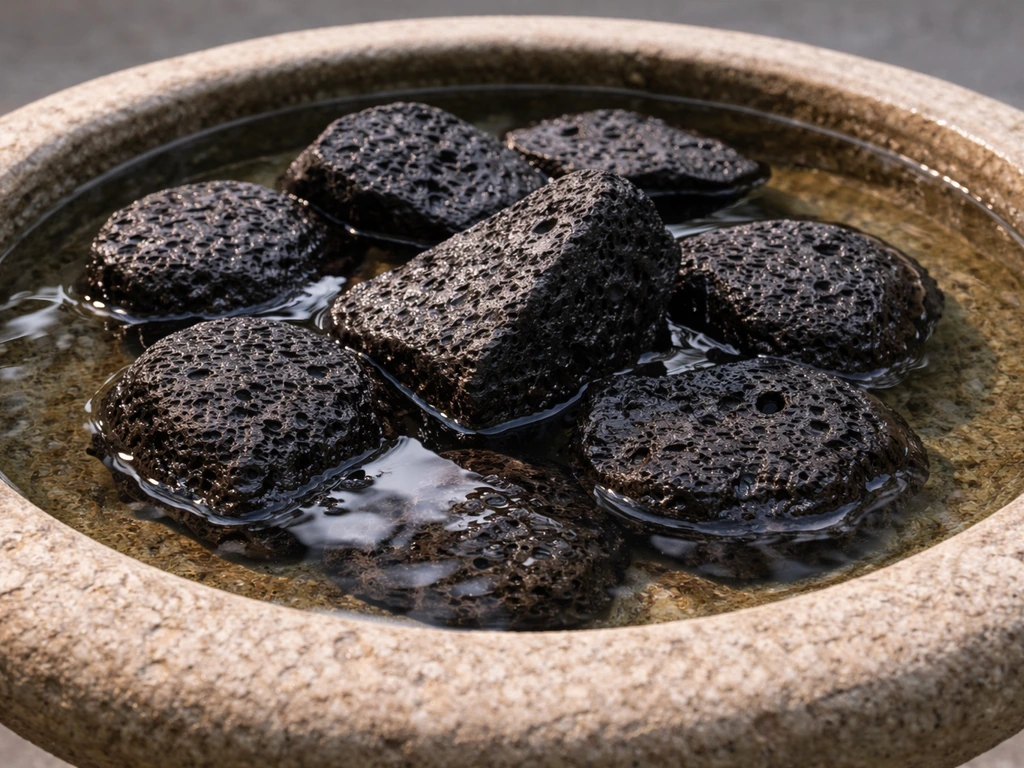
Lava rock has the best grip of anything on this list. The porous, pitted surface is almost non-slip even when wet. The downside is those same pores trap debris, algae, and biofilm faster than smoother rocks. You'll need to scrub it more often. It's also lightweight, so larger pieces can shift around in moving water or when birds land on them. A good fix is to place lava rock pieces between heavier river rocks to keep them in place.
Sandstone
Sandstone looks beautiful and has a naturally gritty texture birds like, but it's a softer sedimentary rock that can slowly erode in standing water, leaving grit behind. It also contains some carbonate content depending on where it was sourced. I'd use it sparingly, maybe as a decorative edge piece that's partially submerged rather than as a primary footing rock. If you use sandstone, check it every few months and replace it if it starts showing erosion.
Best rocks for specific goals
Best for traction and preventing slipping
Lava rock wins here, followed by unpolished granite. If your bath has a glazed ceramic or metal bowl that birds keep avoiding because it's too slippery, place two or three lava rock pieces flat on the basin floor. They don't need to cover everything, just enough to give birds a landing zone. Birds will figure it out quickly.
Best for stability and keeping depth right
Large granite river rocks work best here. Birds prefer water that's 1 to 2 inches deep. Birds also prefer shallow water, around 1 to 2 inches, and textured surfaces with grip so they can stand securely Birds prefer water that's 1 to 2 inches deep. If your basin is deeper than that, stack granite pieces to raise the floor. Use flat-bottomed rocks on the base layer for stability, and place a layer of smaller river rocks on top to fine-tune the depth. The weight of granite also means the arrangement won't shift when birds splash around.
Best for a natural look
A mix of river rocks in different sizes, with one or two slate pieces for a ledge effect, looks like a natural stream bed. Vary the sizes intentionally: larger rocks toward the edges and back, smaller ones in the center. This isn't just aesthetic. It creates microhabitats within the bath, shallow spots for small birds and slightly deeper zones for bigger birds like robins.
Best for cold-weather setups
In heated bird baths, dark-colored rocks like basalt or dark granite absorb more heat during daylight and release it slowly, which can marginally slow ice formation on very cold nights. This isn't a substitute for a real heater, but it's a nice passive bonus. Avoid porous rocks like lava rock in climates with hard freezes because water trapped in the pores can expand and crack them.
What to avoid putting in your bird bath
- Limestone and marble: Both are carbonate rocks that raise water pH and alkalinity over time, making the water harder to manage and potentially less attractive to birds.
- Painted or coated rocks: Any paint, sealant, or decorative coating can leach chemicals into the water. Even 'non-toxic' craft paints aren't formulated for prolonged water contact.
- Sharp-edged rocks: Freshly broken stones with jagged edges can cut birds' feet. If a rock has any sharp points, either smooth them with sandpaper or don't use it.
- Rocks with rust staining or metallic veining: These indicate iron or other mineral content that can leach into the water and stain your bath.
- Collected rocks from unknown sources: Rocks from roadsides, construction sites, or chemically treated areas may carry pesticide residue, road salt, or industrial contamination.
- Very small pebbles: Anything smaller than about 1 inch tends to shift around, creates uneven footing, and traps debris in the gaps. Stick to rocks at least 1 to 2 inches in diameter.
- Pumice if used in freezing climates: Like lava rock, pumice is highly porous and can crack when trapped water freezes.
How to place and secure rocks in the bath
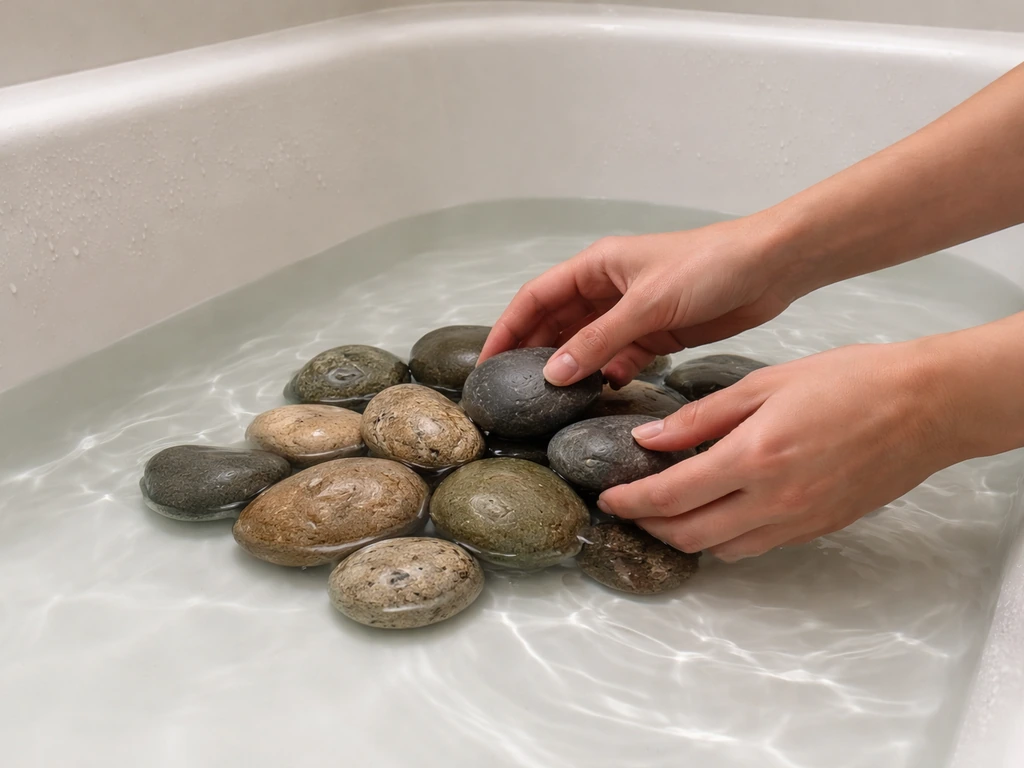
Placement is where most people underdo it. A single rock dropped in the middle of a bath doesn't help much. You want the rocks to create a functional landscape inside the basin.
- Start with the depth goal. Target 1 to 2 inches of water over the rock surface. If your basin is 3 to 4 inches deep, you need rocks that fill the difference. Measure the basin depth first so you know what size rocks you need.
- Layer from the bottom up. Put your heaviest, flattest rocks on the basin floor first. These are your foundation. Then stack smaller rocks to fine-tune the height. Think of it like building a shallow platform.
- Leave the center slightly lower than the edges. Birds often approach from the edge and wade in. A gentle slope toward the center mimics a natural pond edge and lets birds choose their comfort depth.
- Cover at least 50 to 70 percent of the basin floor. You want birds to land on rock, not bare slippery basin material. Gaps between rocks are fine as long as most of the landing area is textured rock.
- Add one or two larger anchor rocks near the rim. These give birds a dry perching spot to survey the water before committing, which is especially helpful for nervous species.
- Check stability before filling. Push each rock gently. Nothing should shift or tip. If something wobbles, restack it until the arrangement is solid.
- Fill slowly and recheck. As you add water, rocks can shift slightly. Fill partway, check, adjust, then fill to your target depth.
For drainage around the bath itself, placing a ring of larger rocks or gravel around the base of a pedestal bath improves drainage and keeps the area from getting muddy, which is another thing birds actively avoid.
Cleaning and maintaining your rocks
Rocks in a bird bath get dirty fast, especially porous ones like lava rock. Algae and biofilm build up on the surface, and if you're not on top of it, the rocks become the source of the problem rather than part of the solution.
Weekly cleaning routine
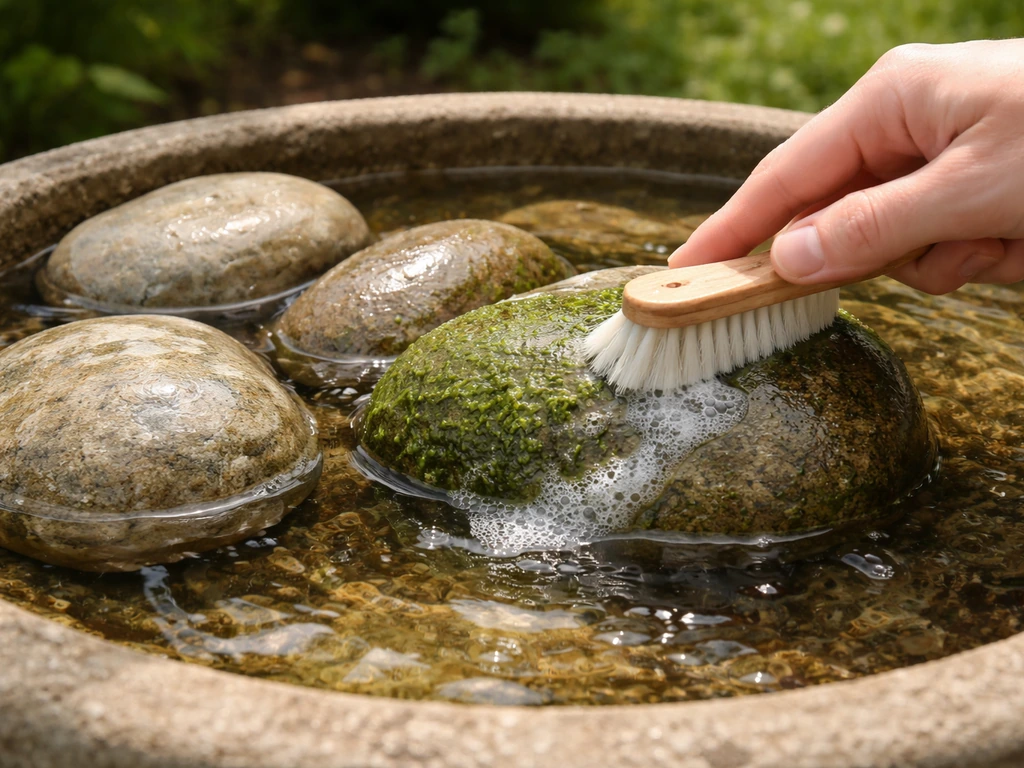
Penn State Extension recommends scrubbing bird baths weekly with a brush, mild soap, and water to remove algae. The RSPB adds that daily water changes reduce algae buildup and disease risk overall. My routine: dump the water daily in summer, do a full scrub of the rocks and basin once a week. Pull the rocks out, scrub each one with a stiff brush, rinse thoroughly, then put them back. It takes about five minutes once you have the habit.
Monthly disinfection
Every few weeks, do a deeper clean. Soak the rocks in a diluted bleach solution (roughly 1 part bleach to 9 parts water) for about 10 minutes, scrub with a brush, then rinse extremely thoroughly. This is the same approach Project FeederWatch recommends for disinfecting bird equipment. Make absolutely sure there's no bleach smell left before returning rocks to the bath. Bleach dissipates quickly after a thorough rinse and dry, but don't rush it.
Algae and biofilm control
Algae is partly a sunlight problem and partly a cleaning problem. If you're getting green or red algae buildup on your rocks quickly, the bath is probably getting too much direct afternoon sun. Moving it to partial shade slows algae growth dramatically. The RSPB notes that color changes in algae (green, red, black) are normal indicators that cleaning is overdue. Beyond cleaning, the rocks themselves don't prevent algae, but smoother rocks like river rock and granite are easier to scrub clean than porous lava rock.
Mosquito control
Rocks don't create mosquito problems, but they can hide stagnant water in their crevices if not cleaned. The Washington State Department of Health recommends changing bird bath water at least twice a week to reduce mosquito risk. In summer I do it daily.
If you have a still-water bath with no dripper or fountain, consider adding Mosquito Dunks (Bti product), which both the Washington State DOH and Pennsylvania DEP confirm are safe for birds, mammals, and aquatic life when used as directed. Mosquito Dunks/Mosquito Bits (Bti products) can be used for standing water such as birdbaths, and the Washington State Department of Health states that Bti is nontoxic to mammals, birds, and fish when used as directed Mosquito Dunks (Bti product).
Drop a piece of a dunk in the water, and mosquito larvae can't survive even if you miss a water change.
DIY testing and troubleshooting
How to test if a rock is safe before using it
Before any rock goes in your bird bath, do this simple test at home. A common question is what goes in a bird bath but never gets wet, and the answer is typically a carefully placed surface cover or insert that keeps water from reaching it. It takes 48 hours but could save you a lot of trouble.
- Rinse the rock thoroughly under tap water to remove surface dirt and dust.
- Fill a clean jar or bucket with plain tap water and note or measure the pH if you have a basic aquarium test kit (this is optional but helpful).
- Submerge the rock completely and leave it for 48 hours at room temperature.
- After 48 hours, look for: any discoloration in the water (yellowish tint suggests iron leaching, milky white suggests calcium carbonate), any visible crumbling or surface erosion on the rock, and any unusual smell.
- If you measured initial pH, test it again. A rise of more than 0.5 pH units suggests the rock is leaching carbonate minerals and is probably limestone or similar. Skip it.
- If the water looks clear, smells normal, and the rock looks intact, it's almost certainly safe to use.
Troubleshooting common problems
If birds are avoiding the bath after you added rocks, the most common reason is that the rocks are unstable and birds felt them shift underfoot. If you're wondering whether you should put rocks in a bird bath, the answer is usually yes, as long as you choose safe, inert stones and place them so birds can stand securely add rocks. Rebuild the arrangement more solidly, and give birds a few days to rediscover the bath.
If the water is going green faster than before you added rocks, the new rocks are almost certainly porous (lava rock especially) and harboring algae. Increase your cleaning frequency or switch to smoother rock types. If you notice white mineral deposits building up on the rocks, that's usually from hard tap water rather than the rocks themselves, but it's worth doing the pH soak test to rule out carbonate leaching from the rocks.
One thing worth noting: rocks alone don't solve everything. If you're wondering more broadly about what else to add to improve your setup, the question of what to put in a bird bath besides water covers other additions like drippers, misters, and safe treatments that work alongside rocks rather than instead of them. And if you're still deciding on the bath itself, the rock type you choose may influence which bath material works best for you, since some materials like metal get slippery faster and benefit more from added texture. Choosing the best bird bath material helps you balance grip, drainage, and safe water quality for visiting birds.
FAQ
Can I use glass, river-rock mulch, or decorative rocks from craft stores in a bird bath?
Only if they are truly uncoated and unpainted. Craft or decorative stones are often sealed, dyed, or lightly coated, which can create slick surfaces or introduce chemicals. Stick to bare, natural rock, and do the 48-hour soak test in a bucket of water to check for color leaching or residue.
How many rocks should I put in the bird bath, and what coverage is best?
Aim for a functional standing area, not full coverage. Start with enough rocks to form one to two stable landing shelves, then leave open water for bathing. Overfilling with rocks can reduce swimming space and make cleaning harder, especially with porous stones.
Should I place rocks directly in the water, or can they be on a grate/insert?
Placing them directly in the water is fine if they are inert and stable. If your goal is to prevent mineral staining or make cleaning easier, consider an insert or shallow liner that keeps rocks from grinding against the basin, but avoid anything that changes water chemistry or has coatings.
Why do birds sometimes ignore the bath after adding rocks, even if the rocks seem safe?
Usually it is movement or a footing problem. If rocks wobble, shift when a bird lands, or create a steep edge, birds may avoid it. Rebuild the layout with a stable base layer (flat-bottom stones), press stones snugly together, and give birds a few days to retest.
Do I need to worry about parasites or bacteria from rocks, not just algae?
Yes, even inert rocks can become contaminated with biofilm if cleaning is delayed. That is why a weekly scrub plus a deeper disinfecting soak every few weeks matters. Also remove any floating scum promptly, since it is often where microbes concentrate.
What is the safest way to disinfect rocks if I do not want to use bleach?
You can scrub thoroughly with mild soap and water first, but if you need disinfection, bleach is the most effective quick option. If you avoid bleach, you will generally have to clean more often because you are relying on removal rather than killing pathogens. If you ever use any cleaner, rinse until there is no residue and no lingering smell.
How can I tell whether my rocks are raising water pH without specialized lab gear?
Watch for rapid water alkalinity symptoms and residue patterns. If the bath water consistently goes cloudy and you see mineral buildup quickly, run a simple pH and alkalinity test with pond or pool strips, then do the soak test described in the article before deciding to keep or remove the rock.
Are there any rocks that look similar to granite or slate but are riskier?
Be cautious with carbonate-rich stones (anything limestone-like or chalky), and with stones showing visible metallic streaks or rust-colored deposits. Also avoid “mosaic” or “landscaping” stones that are tumbled with fillers or sealed for appearance. When in doubt, soak and inspect the water for color change and the stone for shedding.
Is lava rock safe in winter, and will it crack in freeze-thaw weather?
It can be risky in hard freezes because trapped water in the porous pores can expand and fracture pieces over time. If you use lava rock in cold climates, check it after freezing spells and swap to denser, non-porous stones like river rock or granite for the main footing area.
Should I choose rocks based on the depth of the bird bath?
Yes. For typical bird access, keep the usable standing depth around 1 to 2 inches. Use larger, heavier stones (often granite) to raise the floor in deeper basins, and only add smaller top rocks to fine-tune. Too much height or uneven steps can discourage small birds.
How often should I scrub rocks if I use porous stones like lava rock?
Porous rocks usually need more frequent attention because they trap debris and algae faster. If you notice green buildup returning within days, increase scrubbing frequency (or switch to smoother river rock/granite for the main footing) to keep the rocks from becoming the cleaning burden.
Will adding a rock ring around the pedestal bath affect bird use or drainage?
A ring of larger rocks around the base can improve drainage without interfering with birds if it stays outside the basin. Keep the drainage rock ring separated from the bath water level so it does not alter the bath footing or create new slippery surfaces inside.
Next Article
What to Put in a Bird Bath Besides Water
Add safe rocks, textured liners, bath additives, and nearby protections to keep water fresh, prevent algae, bugs, and fr