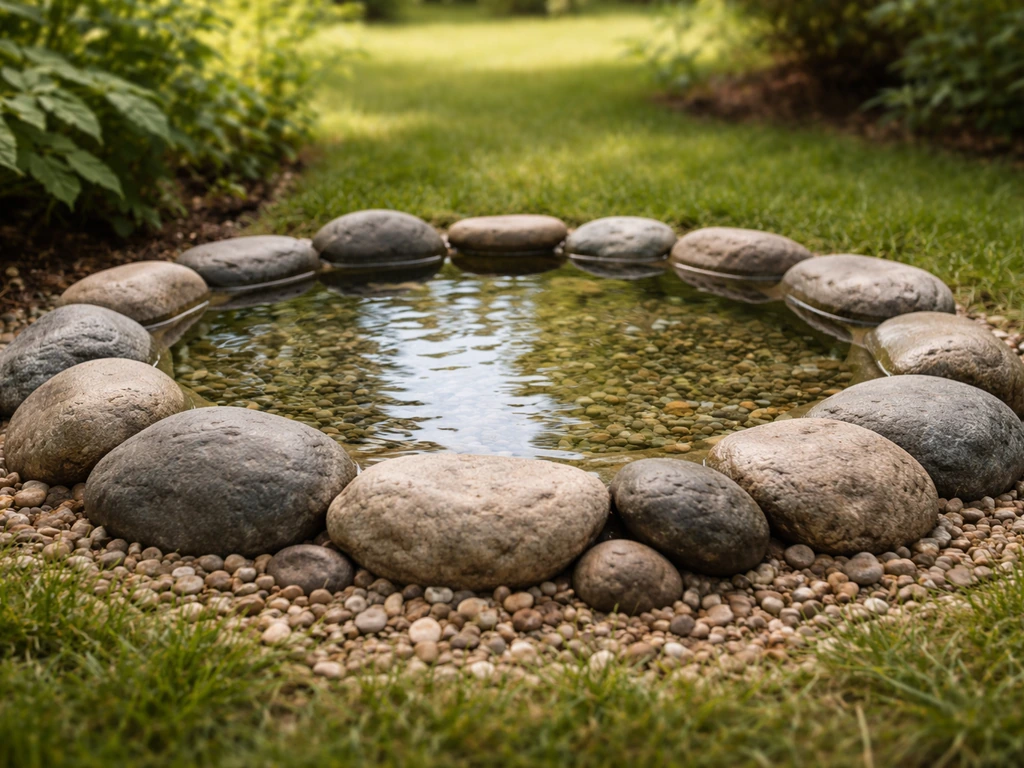
Yes, you should put rocks or pebbles in your bird bath, but only a few and only the right kind. A couple of large, smooth stones or flat rocks placed in the basin give birds secure footing, help smaller birds access deeper water safely, and make the whole setup more inviting. The RSPB, Audubon, and the Washington Department of Fish and Wildlife all recommend it. The key is doing it right: a handful of well-chosen rocks improves the bath, but the wrong rocks or too many of them can create hygiene problems, trap debris, or even hurt birds.
Should You Put Rocks in a Bird Bath? Safe Setup Tips

Marcus Henley
1 Jun 2026
Why people add rocks to a bird bath
The main reason is access. Birds want something the RSPB describes as a wide, safe, shallow puddle. The RSPB describes what birds want from a bird bath as “a wide, safe and shallow puddle” and says you can include “[a rock or two for perching on](https://www. rspb.
org. uk/helping-nature/what-you-can-do/activities/make-the-perfect-bird-bath). ”. A lot of bird baths, especially decorative ones, are deeper in the center than birds are comfortable with.
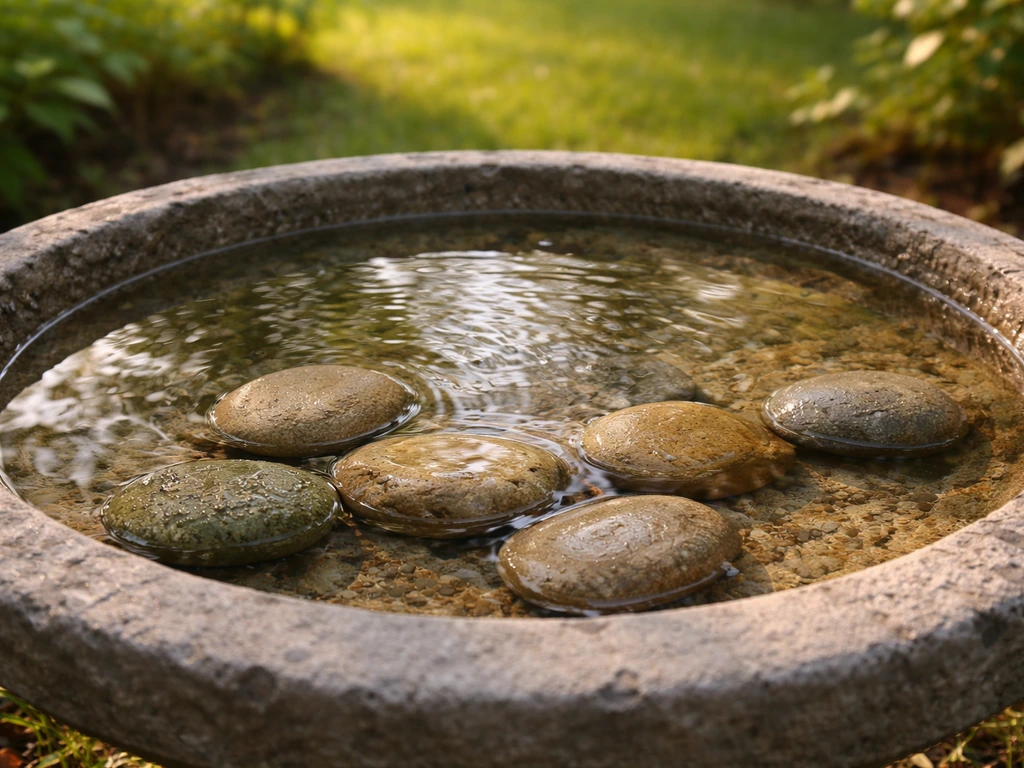
A flat rock or a cluster of large pebbles in the middle fixes that instantly. It creates a raised platform where birds can stand, test the water, and bathe at whatever depth works for them. Smaller species like finches and wrens especially benefit because they can perch on the stone and dip in from the edge rather than wading into water that comes up over their bodies.
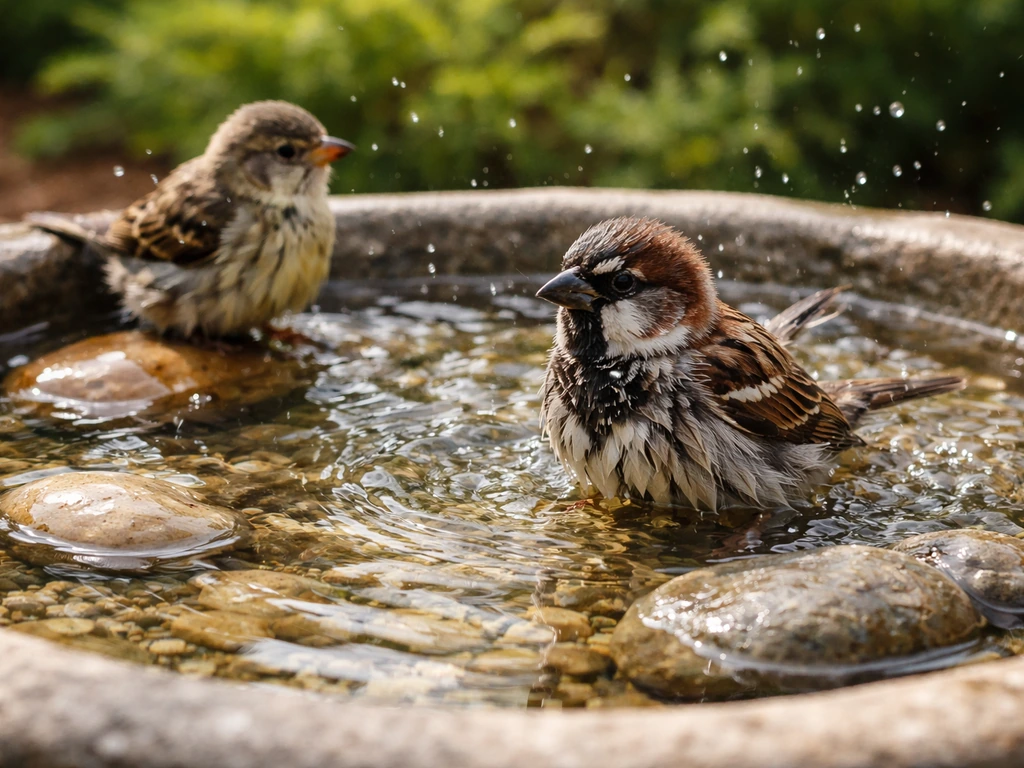
There is also a confidence factor. Birds are cautious around water. A rock that breaks the surface gives them a visual reference point and something to land on before committing to a full bath. You will often notice birds land on the stone first, look around, then hop into the shallows. That behavior tells you the rock is doing exactly what it should.
For deeper basins specifically, rocks placed in the center effectively convert what would be an unusable pool into something with a safe wading depth of 1 to 2 inches around the perimeter. All About Birds recommends a shallow bath with a gentle slope so birds can wade in gradually. Rocks help you recreate that slope even when the basin does not have one built in.
When you should skip the rocks
Rocks are not always the right call. If your bird bath is already shallow (1 to 2 inches deep with a gradual slope), rocks may not add much and can just get in the way of cleaning. They also create more surfaces for algae and biofilm to grow on, which means more scrubbing during your weekly clean. If you are already struggling to keep up with maintenance, adding rocks makes that harder.
Sharp-edged rocks are a real hazard. Birds have thin, delicate skin on their feet, and a rock with a jagged edge can cut them. Avoid rough gravel, broken stone, shells with sharp edges, or anything that feels scratchy when you run your hand across it. The same goes for small decorative pebbles: anything small enough for a bird to swallow should stay out of the bath.
Unstable rocks are another problem. A wobbly stone that tips when a bird lands on it can startle birds away and discourage them from coming back. Worse, if the rock tips and traps a small bird against the basin wall in deep water, it becomes a drowning risk. Test every rock before you put it in the bath. It should sit flat and stay put when you press down on one edge.
Finally, filling the basin with a lot of rocks creates pockets where water stagnates, debris collects, and cleaning becomes nearly impossible. More rocks does not mean more benefit. A few well-placed pieces outperform a basin packed with gravel every time.
What rocks to use (and what to avoid)
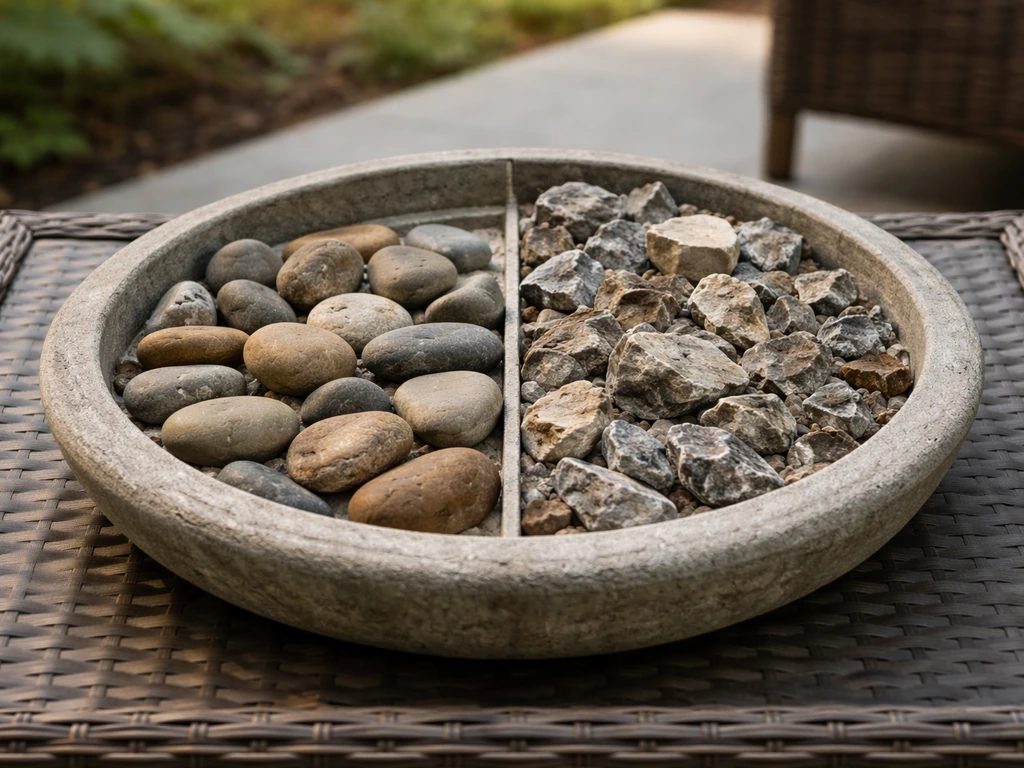
The best options are smooth river rocks, flat flagstone pieces, or tumbled landscape stones. River rocks are ideal because they are naturally rounded and polished, easy to find at garden centers, inexpensive, and come in sizes that work well for bird baths. Look for stones that are at least 2 to 3 inches across so birds can actually perch on them comfortably and so there is no risk of ingestion.
| Rock Type | Good or Bad? | Why |
|---|---|---|
| Smooth river rocks | Good | Rounded edges, safe for feet, easy to find and clean |
| Flat flagstone pieces | Good | Stable platform, large perching surface, easy to scrub |
| Tumbled landscape stones | Good | Polished surface, no sharp edges, variety of sizes |
| Sharp gravel or crushed stone | Avoid | Can cut bird feet and skin |
| Small decorative pebbles under 1 inch | Avoid | Choking risk, trap debris, hard to clean |
| Rough or porous lava rock | Avoid | Jagged surface, harbors bacteria in pores |
| Painted or treated stones | Avoid | Chemicals can leach into water and harm birds |
| Shells with sharp edges | Avoid | Can cut feet, hard to clean properly |
One thing worth noting: if you want to go deeper on choosing the best rocks for your specific bath setup, there is a lot more to consider depending on basin size and bird species. To find the best rocks for bird bath use in your setup, consider basin size, water depth, and the birds you want to attract. The material and surface texture make a bigger difference than most people expect.
How to place rocks in your bird bath
Less is more here. The WDFW recommends tossing in a few large pebbles or a flat stone, not filling the basin. Audubon also recommends tossing in a few large pebbles or a flat stone rather than filling the basin with rocks. A single flat rock in the center of a deeper bath, or two to three smooth stones of varying heights along one side, is usually all you need. The goal is to provide perching options and create a shallow zone, not to carpet the bottom.
- Empty and rinse the bath before adding rocks so you are starting with a clean surface.
- Choose one flat rock or two to three smooth river rocks for a standard 12 to 18-inch diameter basin.
- Place the largest, flattest rock in the center of deeper baths to act as a mid-basin perch.
- Add one or two smaller rocks near the edge to create a gradual wading gradient.
- Press each rock firmly down and wiggle it slightly to confirm it sits stable and does not rock.
- Fill the bath to your target depth (1 to 2 inches is ideal) and check that at least the edge rocks are partially exposed above the waterline.
- Watch the bath for the first few visits to see how birds interact with the rocks and adjust placement if needed.
Adjustments for different bath types
Concrete baths are heavy and sturdy, so you can use larger flat stones without worrying about damaging the basin. Ceramic and glazed baths are more fragile. Lower rocks in gently rather than dropping them, and avoid anything heavy enough to chip the glaze. For metal baths, check that the rocks you choose are not creating galvanic or rust issues by sitting against bare metal edges. A rubber basin liner under the rocks can protect the finish in any bath type and makes cleanup easier.
Keeping it clean after you add rocks
Rocks do not change the cleaning schedule, but they do add surfaces that need attention. The RSPB recommends washing the bath weekly and replacing the water daily. With rocks in the basin, that weekly scrub needs to include lifting each rock and scrubbing underneath it. Algae and biofilm love the shaded, wet undersides of stones, and that is where bacteria build up fastest.
- Change the water daily, or every other day at minimum. This is the single most important thing you can do.
- Once a week, remove all rocks from the bath.
- Scrub the rocks themselves with a stiff brush under running water. A diluted white vinegar solution (1 part vinegar to 9 parts water) helps break down algae without leaving harmful residue.
- Scrub the basin floor and walls, paying extra attention to any spots where rocks were resting.
- Rinse everything thoroughly. Soap and vinegar residues can irritate birds, so a good rinse is non-negotiable.
- Let the rocks air dry briefly if possible before replacing them, especially in warm weather.
- Refill the bath with fresh water and replace the rocks.
If you are seeing green algae building up faster than usual after adding rocks, that is a sign you may have too many rocks or they are positioned in a way that slows water circulation. Try reducing the number of stones or repositioning them so water can flow more freely around them.
Rocks, freezing, and mosquitoes: what you need to know
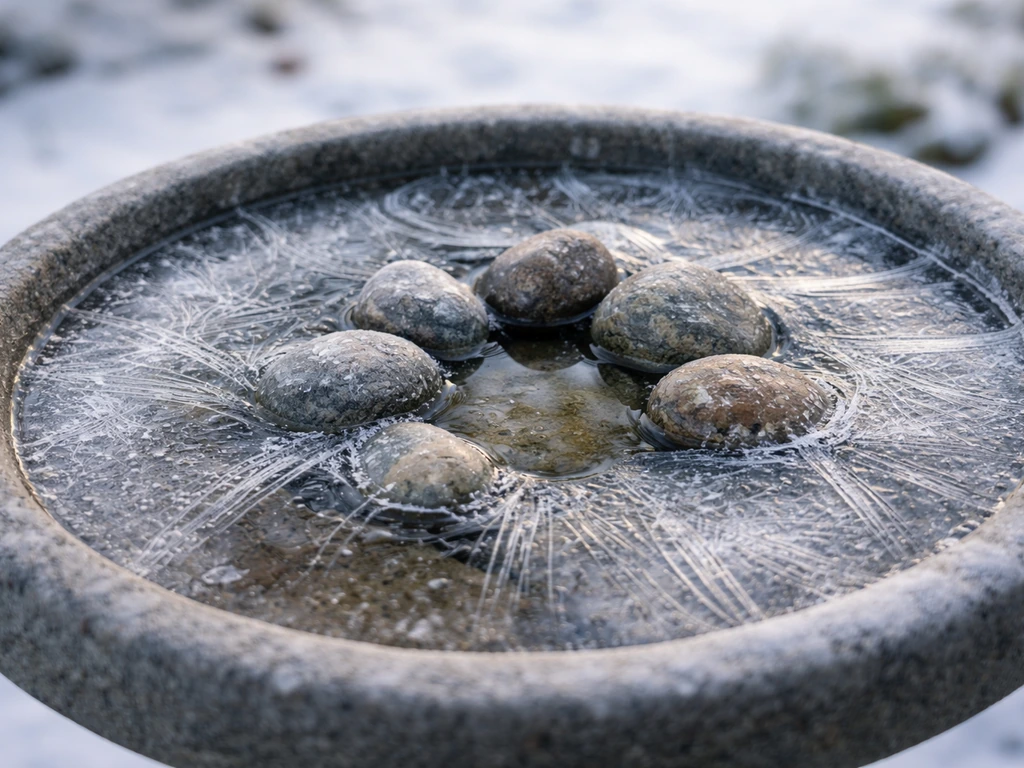
Rocks do not prevent freezing and they do not cause it either. In winter, the main concern is whether birds can access liquid water at all. Rocks can actually help here slightly: because they absorb and radiate heat during the day, dark-colored stones in a sunny bath can marginally slow the rate at which water freezes in mild cold. That said, if your temperatures drop below freezing regularly, a heated bird bath or a bath heater/de-icer is the real solution. Rocks are a supplement, not a fix for winter water access.
One thing to watch in winter: when water freezes around rocks, it can expand and crack ceramic or glazed baths. If you use a non-heated bath in a cold climate, either remove the rocks before the first hard freeze or switch to a more durable material like concrete or resin.
On the mosquito side, rocks are a neutral factor as long as you are already changing the water every 1 to 7 days. Mosquitoes need still, undisturbed water for at least 7 days to complete their breeding cycle, according to public health guidance from Michigan and Minnesota mosquito control programs. Daily or every-other-day water changes eliminate that risk entirely, rocks or no rocks. Where rocks can be a small problem is if they create hidden pockets in the basin corners where a small amount of stagnant water sits even after you dump and refill the main basin. Check those spots when you do your water change and make sure everything gets flushed out.
Watch the birds and adjust
After you set up the rocks, give the bath a week or two and pay attention to what birds actually do. If you see birds landing on the rocks, then hopping into the water, the setup is working. If birds seem hesitant to enter the bath or keep avoiding the area around the rocks, try moving a stone to a different spot, reducing the number, or switching to a flatter profile that does not take up as much surface area. Bird behavior is the most honest feedback you will get.
It is also worth thinking about what else you can add or adjust beyond just rocks. Things like a gentle dripper or wiggler to keep water moving, or choosing a different water depth, can have just as much impact on how many birds visit. Rocks are one tool in a broader toolkit for making a bird bath genuinely useful to the birds in your yard.
The bottom line
Put rocks in your bird bath, but keep it simple. One flat stone in the center of a deeper basin, or two to three smooth river rocks along the edge of a shallower one, is the right amount. Use smooth, rounded stones that are at least 2 to 3 inches across, make sure they sit stable, and include them in your weekly scrub routine. That small addition can meaningfully improve how many birds use the bath and how comfortable they are doing it, which is the whole point.
FAQ
How many rocks should I add to a bird bath for the safest results?
Start with one flat stone in the center of a deeper bath, or two to three smooth stones along one side of a shallower basin. If birds use it comfortably, stop there. If you see faster algae growth or you struggle to scrub underneath, you likely added too many or placed them in a way that reduces water movement.
What size should the rocks be, and how can I tell if they are too small?
Choose stones that are at least 2 to 3 inches across so birds can perch without slipping and so pieces are not small enough to be swallowed. Avoid tiny decorative pebbles and anything that you could easily pick up and tip with one finger.
Can I use river rocks from outside, or do I need to clean them first?
Use smooth river rocks, but rinse them thoroughly before adding. Debris and soil can add nutrients that feed algae, and any sharp grit can harm feet. After they are in the bath, include lifting and rinsing around the stones during weekly cleaning.
If my bird bath is already shallow, will rocks make it worse?
They can. When water is already about 1 to 2 inches deep with a gradual slope, rocks may not add much and can make cleaning slower by increasing surfaces that hide algae and biofilm. If maintenance is hard for you, consider skipping rocks in that setup.
Where should I place rocks in a deeper bird bath?
Place them to create a raised, perching platform without trapping pockets of stagnant water. A common approach is one flat stone in the center (for visibility and footing) or a few stones with different heights along one side. After adding, check the corners and underside areas for small areas that do not flush out.
How often do I need to clean the bath if there are rocks in it?
Keep the usual schedule, daily water refill and weekly washing, then add extra scrubbing steps. For rocks, lift each stone and scrub underneath because shaded wet undersides collect algae and biofilm faster than exposed areas.
What should I do if algae grows faster after I add rocks?
First, reduce the number of rocks or move them so water can circulate more freely. If algae is concentrated around the stone undersides or between stones, that usually means too many surfaces are blocking flow or creating shaded, still pockets.
Are rocks helpful in winter, or will they crack the bath?
Rocks do not prevent freezing, but dark stones in a sunny bath can slightly slow freezing in mild cold. The bigger winter risk is expansion when water freezes around rocks, which can crack ceramic or glazed baths. In cold climates, remove rocks before the first hard freeze or switch to a sturdier base like concrete or resin.
Do rocks increase mosquito risk?
Not if you are already changing the water regularly (every 1 to 7 days). Mosquitoes need still, undisturbed water for at least about 7 days to complete development. Rocks can create small hidden pockets, so during each change, check corners and crevices to ensure all water is flushed.
Will rocks stop birds from using the bath if they do not like them?
Sometimes. If birds avoid the area or only hop around without entering, adjust the layout. Try moving a stone to a different spot, lowering or flattening the profile, or removing one stone to reduce how much surface area interrupts shallow flow.
How can I quickly test whether a rock is safe before placing it permanently?
Press down on each candidate stone and make sure it stays put and does not wobble. Also do a quick tactile check by running your hand over the surface, it should feel smooth with no jagged edges or sharp grit that could cut feet.
Can I use a rubber liner or other protection under rocks?
Yes, a rubber basin liner can protect the finish and reduce the chance of chipping or wear, especially on ceramic, glazed, or metal baths. It can also make cleanup easier because you can lift rocks and wipe the liner surface more consistently.
Next Article
Best Rocks for a Bird Bath: Safe, Stable Placement Guide
Choose safe, stable rocks for bird baths, with types to use or avoid, placement steps, and algae-free maintenance tips.