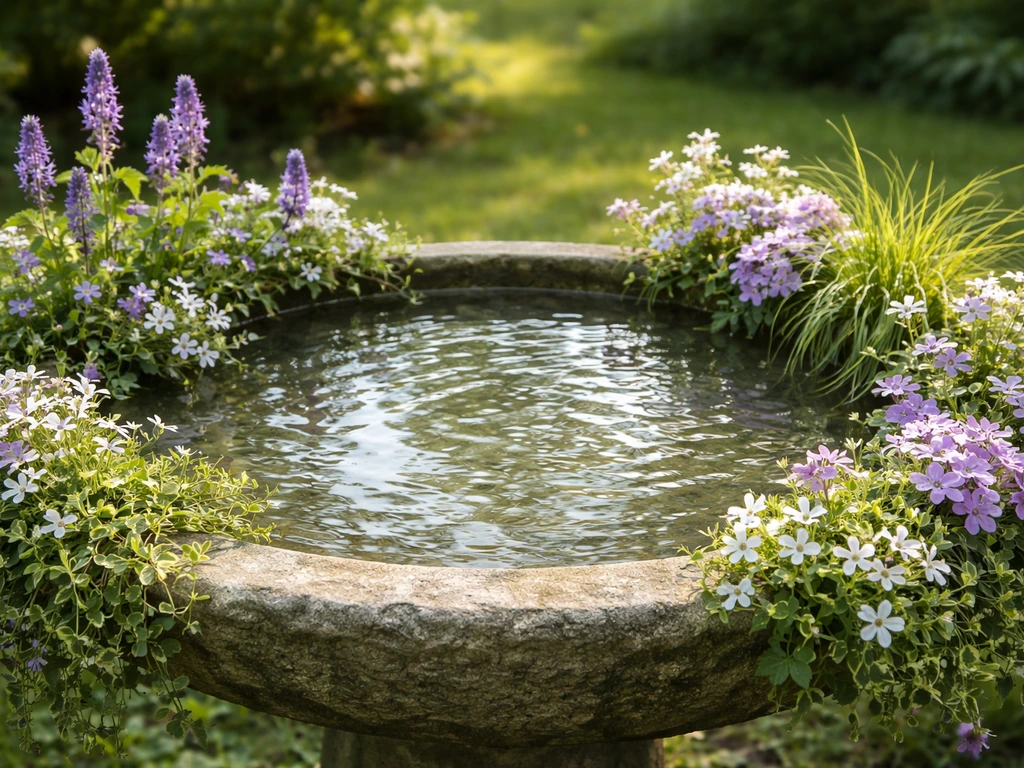
The best plants to put around a bird bath are coneflowers, beebalm, Joe-Pye weed, and black-eyed Susans for sunny spots, with hostas, astilbe, and ferns working well in shadier locations. Frame the basin with low groundcovers like creeping thyme or moss, and place a small native shrub (think spicebush or native viburnum) about 5 to 10 feet away to give birds a quick escape route and preening perch.
What to Plant Around a Bird Bath for More Birds

Marcus Henley
6 Jun 2026
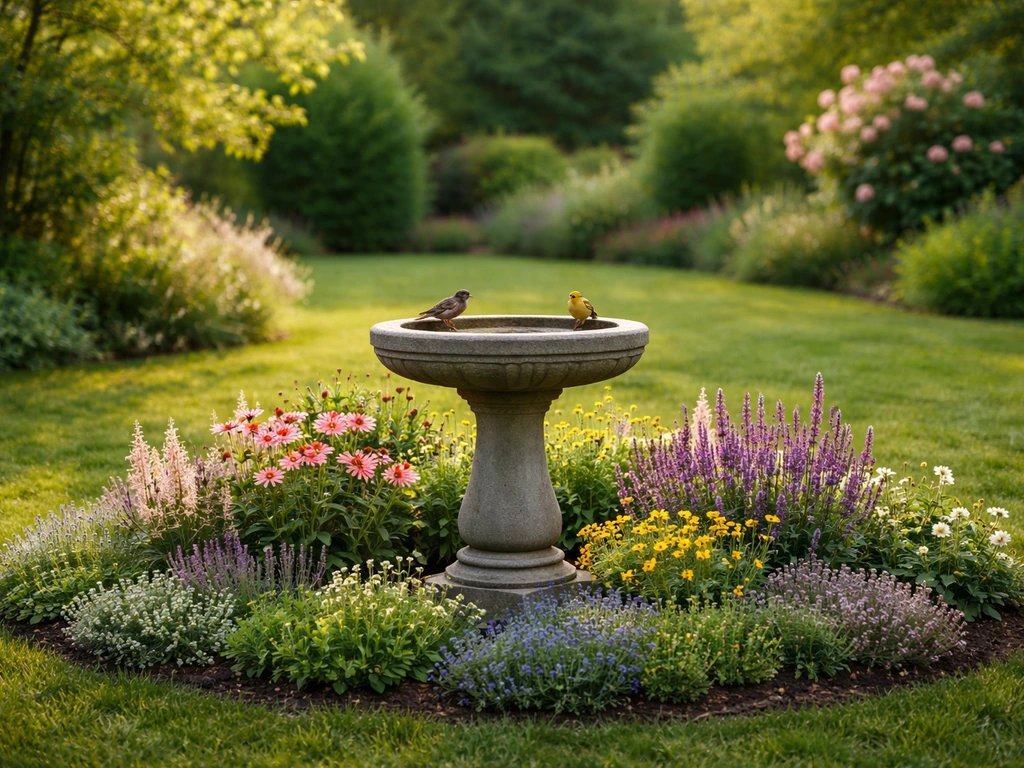
Keep plants out of the water itself, aquatic plants in a bird bath cause more problems than they solve. The goal is a layered ring of plants around the bath that looks natural, draws birds in, and doesn't make your algae or mosquito situation worse. For a step-by-step layout that ties the rings of plants together with nearby pathways and hardscape, see our guide on how to landscape around a bird bath.
Should you plant anything in the bird bath water itself?
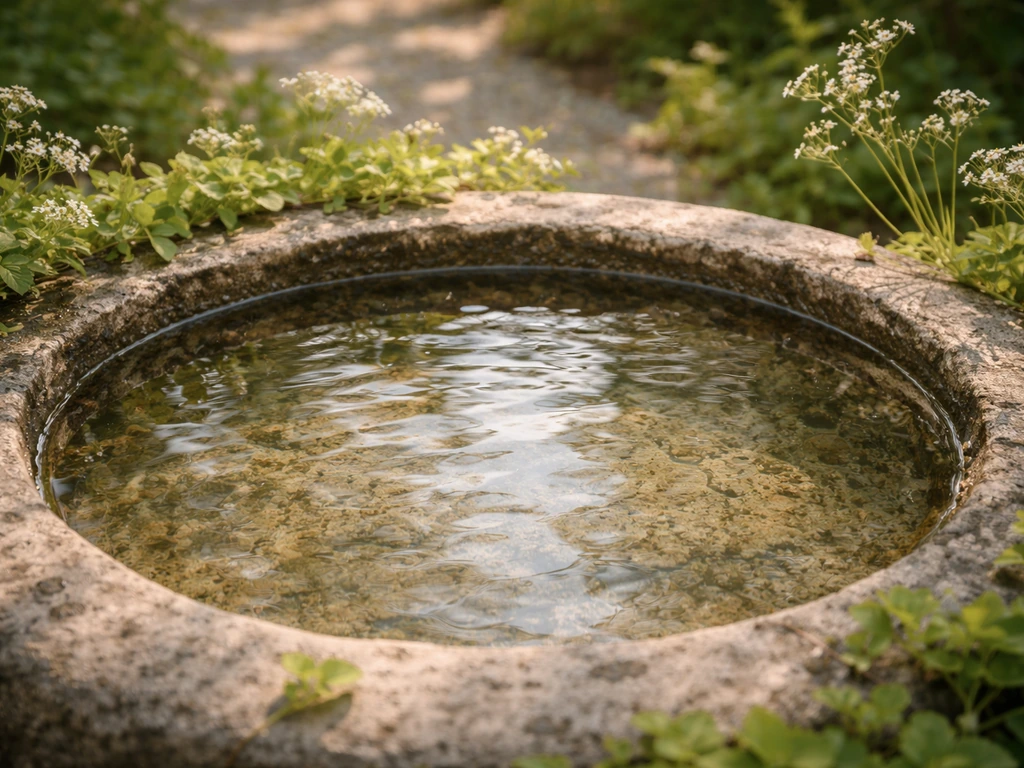
This comes up a lot, so let's settle it quickly: no, you generally should not put live plants directly in your bird bath basin. Unlike a backyard pond, a bird bath is a shallow, low-volume water feature that depends on frequent cleaning and water changes to stay safe for birds. Aquatic plants root into debris, trap organic matter, and create exactly the stagnant, nutrient-rich conditions that feed algae blooms and give mosquitoes a place to breed. Mosquito larvae actively use aquatic plant stems as oxygen pathways, which makes a planted basin a genuine mosquito nursery. You'd also be fighting yourself every time you clean the bowl.
There are sibling topics on this site about planting flowers in a bird bath or planting succulents in a repurposed basin, those projects treat the bath as a planter, meaning no water is involved. That's a fun garden DIY, but it's a completely different use case from a functioning water feature. For an active bird bath that you want birds using daily, keep the basin clear and focus all your planting energy on the surrounding area.
If you want step-by-step guidance on the process, see our full guide on how to plant flowers in a bird bath. If you want a no-mess approach, the guide to how to plant succulents in a bird bath covers setup ideas for making the bath act like a planter, not a water feature.
How to choose plants for your specific bird bath setup
Before picking any specific plant, look at three things: how much sun your bird bath gets, how close the planting bed will be to the basin edge, and what your main goal is (more birds, better looks, less maintenance, or all three). These factors determine almost every plant choice.
Sun exposure is the biggest variable. A bird bath in full sun heats up fast, promotes algae, and can stress birds during summer. If you have the option, using taller plants on the south or west side to create partial afternoon shade is one of the most practical things you can do for water quality. All About Birds specifically recommends shaded placement during hot months, and this is something your plant selection can directly influence even if you can't physically move the bath. Partial or dappled shade is a good practical default for most climates.
Distance from the basin matters too. Avoid planting right up against the edge where leaves, petals, and seeds will constantly fall into the water. A clear buffer of roughly 12 to 18 inches around the rim keeps debris out of the bowl and gives birds room to approach from any direction without fighting through foliage. Beyond that buffer, you can plant as densely as you like.
Finally, think about plant size at maturity, not at purchase. A small viburnum at the garden center becomes a 6-foot shrub. A Joe-Pye weed can hit 5 to 6 feet tall. Plan your spacing with final sizes in mind so you're not constantly cutting things back to keep the bath accessible and visible.
Best flowers to plant around a bird bath
Flowering perennials are the workhorses of a bird bath garden because you plant them once and they come back year after year, providing nectar for pollinators that birds also follow. If you want a quick list, use this flower guide for what to plant around a shallow bird bath so you get the right height, placement, and bloom time what to plant in shallow bird bath. Here are the ones that consistently perform well and work practically around a water feature.
For sunny spots
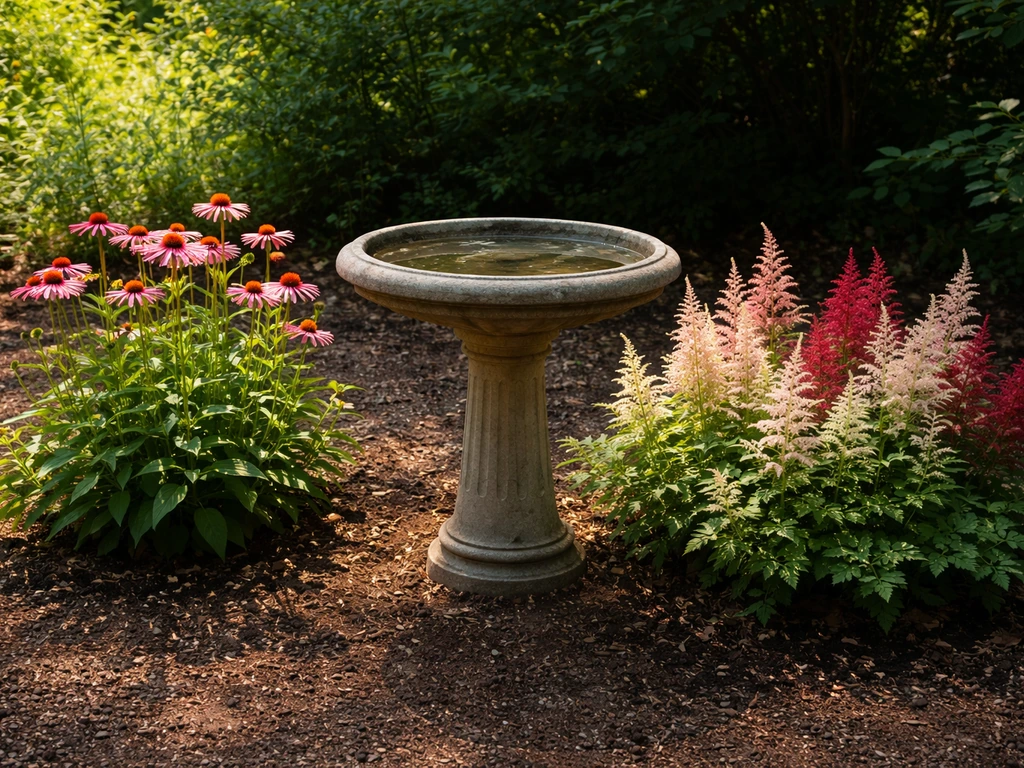
- Coneflower (Echinacea): Blooms June through August, thrives in full sun and well-draining soil, and the seed heads stay on through winter feeding goldfinches and chickadees. Plant 18 to 24 inches from the basin edge. Heights range from 2 to 4 feet depending on variety.
- Beebalm (Monarda): Works in full sun or partial shade, blooms July through August in red, pink, or purple, and is a magnet for hummingbirds. It spreads, so give it room or use a border to contain it. Illinois Extension confirms it tolerates partial shade, which makes it a flexible choice if your bath is in a transitional light zone.
- Black-eyed Susan (Rudbeckia): Cheerful, low-fuss, blooms July through September. Pairs well with coneflowers and provides a dense mid-height layer (2 to 3 feet) that birds can perch on or move through.
- Joe-Pye weed (Eutrochium): Blooms July through September and reaches 4 to 6 feet tall, giving it real presence as a backdrop plant. It's a native species with strong pollinator value and late-season interest that extends into fall when many other flowers are done.
- Salvia: Long-blooming (often May through frost), available in heights from 18 inches to 3 feet, and loved by hummingbirds. Blue or purple varieties like 'May Night' are especially attractive and visible from a distance.
For shaded or partially shaded spots
- Astilbe: Feathery plumes in pink, red, or white, blooms June through August, and thrives in moist partial shade. Works well close to a shaded bird bath where soil moisture is consistent.
- Hosta: Primarily a foliage plant but offers reliable structure, keeps weeds down, and comes in enormous size variety. The large-leaved varieties create a lush, layered look around a shaded bath.
- Bleeding heart (Lamprocapnos): Blooms in spring (April through May), tolerates deep shade, and provides early-season interest before summer perennials take over.
- Coral bells (Heuchera): Low-growing with colorful foliage year-round and small flower spikes that attract hummingbirds in late spring. Works well as the front-row plant in a shade planting.
Annuals to fill gaps and add color
Annuals like zinnias, marigolds, and petunias give you flexibility to change the look each season and fill in while perennials establish. Zinnias in particular draw butterflies and finches. Plant annuals in the second or third ring out from the bath, not the front edge, so spent blooms don't drop constantly into the water.
Groundcovers and shrubs to frame the bird bath
Low groundcovers for the immediate ring
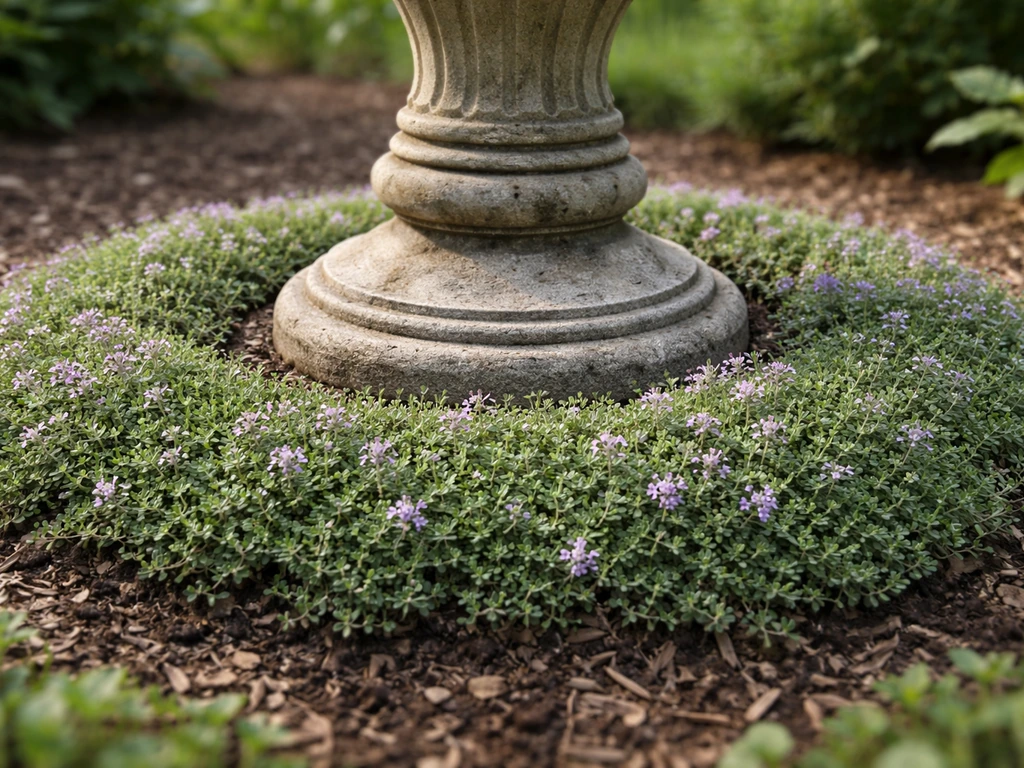
The area directly around the pedestal or basin base is a great place for low, tidy groundcovers that suppress weeds without dropping much debris. Creeping thyme is one of the best options: it stays under 3 inches tall, handles foot traffic, and its tiny flowers attract pollinators. Mondo grass and creeping Jenny also work well for this zone, especially in shadier settings. Avoid anything that seeds aggressively into the basin area or that grows tall enough to block bird sightlines.
Small to medium shrubs for structure and bird cover
This is where you have real impact on bird behavior. WDFW recommends having a small shrub or brush pile within 10 feet of the bird bath to give birds accessible shelter. Bob Vila echoes this with advice to keep shrubs a few feet away (not crowded right up to the bath) so birds can escape to cover quickly after bathing without giving predators a dense hiding spot right at the water's edge.
- Spicebush (Lindera benzoin): Native, 6 to 12 feet tall at maturity (can be kept smaller with pruning), provides berries for migrating birds, and works in partial shade. One of the best all-around choices.
- Native viburnum (Viburnum dentatum or V. trilobum): Dense branching, white flowers in spring, berries in fall, and excellent cover structure. Keeps birds 6 to 10 feet from the bath where they can preen safely.
- Serviceberry (Amelanchier): Doubles as a fruiting shrub and a perching station. Birds eat the berries and use the branches as a landing zone before and after bathing.
- Native roses (Rosa carolina or similar): Provide dense thorny cover that small birds love for nesting and shelter, plus hips in fall and winter. Keep pruned so they don't sprawl toward the basin.
- Dwarf varieties of flowering shrubs like dwarf fothergilla or buttonbush: Useful for smaller gardens where a full-size shrub would overwhelm the space.
If you're landscaping the full area around the bird bath, the sibling topic on how to landscape around a bird bath goes deeper into layout and hardscape options that complement these plant choices.
Perennials vs annuals, and how sun or shade changes everything
The perennial vs annual decision is mostly about how much replanting you want to do each year. Perennials are the long-term investment: you plant them once, they come back, and over two to three seasons they fill in and reduce your maintenance load significantly. Annuals are great for the first year while perennials establish, for seasonal color flexibility, and for trying things out before committing. A practical approach is to build a perennial backbone (coneflowers, beebalm, groundcovers, shrubs) and plug annuals into gaps.
| Condition | Best perennials | Best annuals |
|---|---|---|
| Full sun, hot climate | Coneflower, black-eyed Susan, salvia, Joe-Pye weed | Zinnia, marigold, portulaca |
| Partial shade | Beebalm, astilbe, coral bells, bleeding heart | Impatiens, begonia, torenia |
| Full shade | Hosta, fern, astilbe, foamflower | Impatiens, caladium, coleus |
| Dry/drought-prone | Coneflower, salvia, black-eyed Susan | Zinnia, moss rose (portulaca) |
| Moist/consistent moisture | Joe-Pye weed, astilbe, cardinal flower | Lobelia, impatiens |
Sun placement is also directly connected to water quality. A bird bath in full sun all day will grow algae faster and heat up in summer to temperatures that discourage birds. If you can position taller perennials or a shrub to cast afternoon shade on the west side of the bath, you'll slow algae growth and keep the water cooler without blocking morning light, which birds prefer for bathing activity. This is one of those cases where a planting decision and a maintenance decision are the same decision.
Planting for bird behavior: perches, shelter, and safe landing zones
Birds are cautious animals. They won't use a bird bath that feels exposed or that puts them at risk from a predator. The way you plant around the bath directly affects whether birds feel safe enough to linger, bathe, and return. Understanding a few basic bird behavior patterns makes your plant choices a lot more intentional. If you're wondering where to put a bird bath, blank" rel="noopener noreferrer">start by placing it where birds feel safe and have quick access to perches and cover plant choices.
Birds almost always scan the area before approaching water. They want a perching spot at a height where they can assess the scene, ideally 5 to 15 feet away. A shrub with sturdy branching, a small ornamental tree, or even a dedicated garden stake works for this. Without a staging perch nearby, many birds will simply fly past the bath.
After bathing, birds are wet and temporarily less able to fly efficiently. This is when they're most vulnerable to cats and hawks. They need dense cover within a few feet to retreat to for preening and drying. A shrub placed 5 to 10 feet from the bath (not right next to it) gives them that escape route.
Birdbathhowto. com advises that birds should have nearby escape cover, referencing guidance that emphasizes the need to be able to escape quickly to the safety of a tree or shrub dense cover within a few feet to retreat to for preening and drying. The reason you don't want the shrub directly against the basin is that it also gives cats and other predators a hiding spot.
The gap between the bath and the nearest dense cover is a deliberate safety zone.
Here's how to think about the planting in concentric zones:
- Zone 1 (0 to 18 inches from basin rim): Keep this open. Low groundcover like creeping thyme or bare mulch is fine. No tall plants that block bird sightlines.
- Zone 2 (18 inches to 4 feet): Low to mid-height flowers like coneflowers, coral bells, or black-eyed Susans. Visible, colorful, and doesn't create hiding spots for predators.
- Zone 3 (4 to 10 feet): Taller perennials like Joe-Pye weed or beebalm, and the small shrubs that provide escape cover and preening perches.
- Zone 4 (10+ feet): Larger shrubs, ornamental grasses, or small trees that create the backdrop and additional staging perches.
WDFW's habitat guidance supports layering plants from high to low around water features exactly this way, describing it as creating the high, medium, and low layers that allow birds and other wildlife to forage and move through safely. WDFW recommends planning habitat in layers, using high, medium, and low plant levels and including ground cover so prey animals can forage safely around water features plan habitat in layers. It mirrors how birds actually use natural habitat near water.
Avoiding harmful plants and keeping things clean
Plants to avoid near a bird bath
Not every beautiful garden plant is safe to have near a bird bath. The main concerns are plants with toxic compounds that could leach into the water or be ingested by birds eating fallen seeds, berries, or foliage. VCA's list of toxic plants for birds includes oleander, lilies, and a range of common ornamentals. Oleander is particularly worth calling out because it's widely used as a landscape shrub in warm climates and is genuinely dangerous, not just mildly irritating, to birds. Avoid it entirely near a bird bath.
- Oleander (Nerium oleander): Highly toxic to birds and other wildlife. Avoid entirely.
- Lilies (many species): Various lily species are toxic to birds. Daylilies are particularly problematic.
- Yew (Taxus): Berries and foliage are toxic. A common hedging plant that shouldn't be adjacent to a bird bath.
- Lantana: Popular ornamental but toxic berries. Use with caution or avoid near the basin.
- Wisteria: Seeds and pods are toxic. Lovely vine but not a good choice for overhead planting near water.
Bird safety lists can vary by species, so if you're uncertain about a specific plant, check it against a reputable source before planting it in your bird bath garden. What's fine for wild songbirds may be different from what's safe for pet parrots, so make sure you're referencing guidance for wild birds specifically.
How your planting choices affect algae and mosquitoes
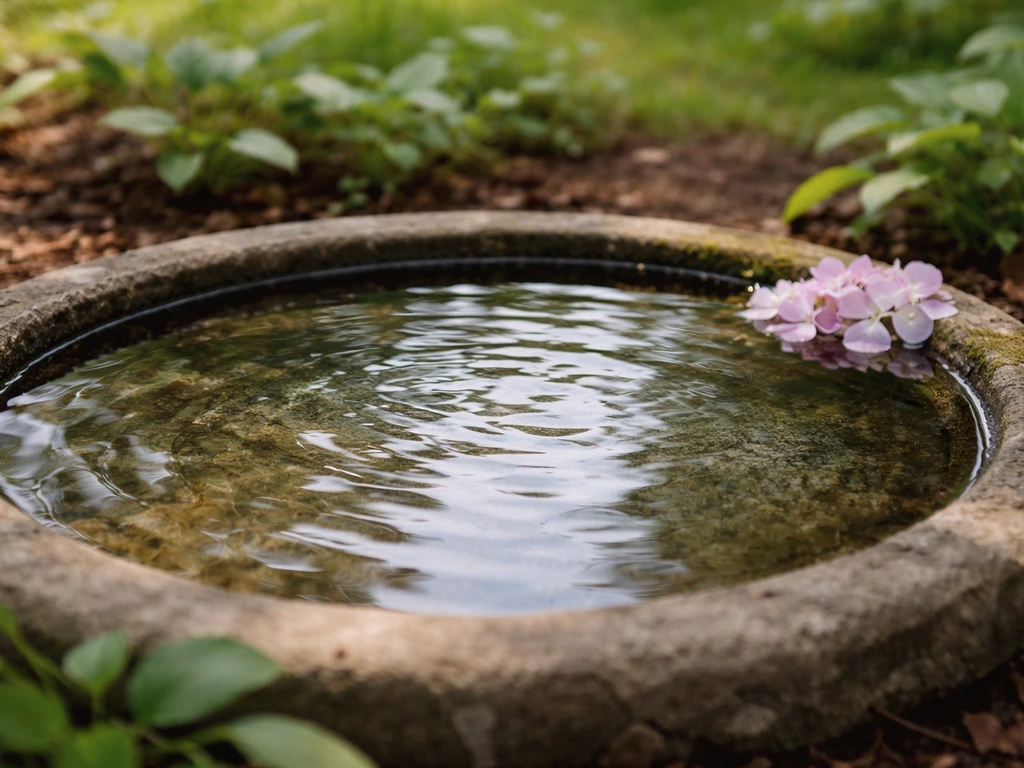
This is the connection most planting guides skip, but it's important if you're using this bird bath as an actual water feature. Algae and mosquitoes are the two biggest maintenance headaches with bird baths, and your plant choices make them better or worse.
Leaf litter and flower petals falling into the water add organic nutrients that feed algae and create the stagnant, debris-rich conditions mosquitoes need to breed. This is another reason the 12 to 18 inch clear buffer around the basin matters. Avoid planting heavy-dropping trees directly overhead (like cottonwood or silver maple). Deciduous trees that drop small, dry leaves are much less of a problem than ones that drop large, wet, slow-decomposing matter.
Shade from plants reduces algae growth by limiting the sunlight that algae needs to bloom, but too much shade with no air circulation creates its own issues. Aim for dappled or partial afternoon shade rather than deep canopy cover. A moving-water feature like a dripper or aerator paired with your shading plants is an even better combination: All About Birds recommends slow drips or aerators to keep water moving and discourage both algae and mosquito egg-laying, since mosquitoes prefer still water.
Regardless of how well you plant the area, you still need to refresh the water every two to three days during warm months and scrub the basin weekly. No planting arrangement eliminates the need for routine maintenance, and any guide that suggests otherwise is overselling. Think of your plants as reducing how quickly the water degrades, not as a substitute for cleaning.
Suggested plant mixes for common garden setups
If you want a starting point rather than building from scratch, here are three practical combinations matched to the most common bird bath situations.
Full-sun backyard, average soil
Groundcover ring: creeping thyme. Middle ring: purple coneflower and 'May Night' salvia. Back ring: black-eyed Susan and Joe-Pye weed (if space allows). Shrub at 8 to 10 feet: native viburnum or serviceberry. This combination gives you blooms from June through October, seeds through winter, and reliable shrub cover.
Partial shade, moist soil
Groundcover ring: creeping Jenny or moss. Middle ring: astilbe and coral bells. Back ring: beebalm and large-leaved hosta. Shrub at 8 to 10 feet: spicebush. This mix stays lush through summer heat and provides color from May through August, with the hosta and spicebush adding structure through fall.
Small garden or patio setup
If you're working with limited space around a pedestal bath on a patio or in a small garden bed, simplify: one dwarf shrub (dwarf fothergilla or a compact viburnum variety) placed 5 to 6 feet away, a ring of low salvia or coral bells at 2 feet out, and creeping thyme at the base. It's a minimal footprint but still gives birds a staging perch, shelter, and visual interest without overwhelming a small space. If you need a container-based setup, follow these flower pot bird bath instructions to keep the water feature stable and bird-friendly.
Getting started: planting and maintaining the bird bath garden
The best time to plant perennials and shrubs around your bird bath is spring (after last frost) or early fall, when cooler temperatures give plants time to establish roots without heat stress. Summer planting works but requires more watering. For most of the perennials listed here, you'll dig a hole twice the width of the root ball and at the same depth, amend with compost if your soil is poor, water in well, and mulch to 2 to 3 inches to retain moisture and suppress weeds. Keep mulch away from the basin edge itself.
Give your plants a full growing season before judging them. Perennials especially follow the old rule of thumb: sleep the first year, creep the second, leap the third. You'll fill gaps with annuals in years one and two, and by year three most of the perennial planting should be self-sustaining and low-maintenance.
Keep up with the bird bath itself while you're doing all this. Refresh the water every two to three days, scrub the basin weekly with a stiff brush, and skip any chemical additives that could harm birds. Add a solar-powered dripper or wiggler if mosquitoes are a consistent problem in your area. A beautiful planted setting around a neglected, algae-caked bath won't bring birds back, but a clean bath in a thoughtfully planted garden will have birds visiting within days.
FAQ
How close should plants be to the bird bath rim so birds can still approach easily?
Aim for a clear buffer of about 12 to 18 inches around the rim, this keeps falling leaves and petals out of the water and makes the approach feel open for birds. If your plants are already planted right up to the pedestal, consider relocating anything that drops debris or blocks the line of travel.
Can I plant annuals right next to the basin edge to get more blooms faster?
It’s usually better to place annuals in the second or third ring rather than at the front edge. Annuals can shed spent blooms, seeds, or pollen, which increases organic buildup in the water, raising algae risk and cleaning frequency.
What should I do if my bird bath sits under a tree that drops lots of leaves or fluff?
Avoid overhead species that drop large, wet, slow-decomposing matter, and increase your rim buffer. You can also use a regular skimming routine (quickly remove floating debris) and swap weekly scrub for twice-weekly during peak drop periods.
Do I need to worry about toxic plants if birds may eat berries or seeds that fall in?
Yes. Even if the plant never gets submerged, birds can ingest fallen foliage, seeds, or berries. Use a bird-safety check for each plant variety, and avoid commonly risky landscaping shrubs like oleander entirely near the bath.
How much shade is ideal around a bird bath, and what if I get too much of it?
Partial or dappled afternoon shade is the goal. Too much deep canopy shade with poor air movement can slow drying and contribute to water stagnation, so if your site is very shaded, prioritize airflow and consider pairing planting with a gentle dripper or aerator.
Will a dripper or aerator change what I should plant around the bath?
It can. With moving water, algae and mosquito problems typically decrease, so you can focus more on bird-safe structure and less on extreme algae suppression. Still keep the rim buffer and avoid debris-heavy plants, because leaf fall remains a nutrient source.
What plants are best if I have a pedestal bath in a small patio space?
Use a minimal “triangle” layout: one dwarf shrub 5 to 6 feet away for escape cover, a low ring at about 2 feet out (like salvia or coral bells), and a low groundcover at the base (like creeping thyme). This preserves sightlines and reduces maintenance without trying to build a full concentric landscape.
How do I prevent mosquitoes if I want dense plantings for birds?
Dense cover is helpful, but still water plus plant debris is the issue. Keep aquatic plants out of the basin, maintain the rim buffer to reduce nutrient-rich detritus, refresh water every two to three days in warm weather, and add a dripper or wiggler if mosquitoes persist locally.
How do I choose plants if my bird bath gets full sun all day?
In full sun, prioritize plants that can tolerate heat and help create afternoon shading with taller layers on the south or west side. Also expect higher cleaning demands, and plan to refresh and scrub on schedule rather than assuming plants alone will stop algae.
When is the best time to plant around the bird bath, and does it change with perennials vs shrubs?
Spring after last frost or early fall is best for most perennials and shrubs because establishment happens with less heat stress. Summer planting is possible but requires more consistent watering during root establishment, so budget extra time and checks if you plant in hotter months.
Next Article
Flower What to Plant in a Shallow Bird Bath
Best flowers and plant options for a shallow bird bath, plus safe planting, algae control, and seasonal maintenance tips