A plastic bird bath top is a replaceable bowl or basin insert that sits on top of a pedestal, base, or stand to form a complete bird bath. Many people also ask about resin bird baths, which are made from resin materials designed to mimic stone or ceramic while staying lighter plastic bird bath top. You can buy one as a standalone replacement when your original bowl cracks or fades, or choose one as the main basin for a new setup. Plastic tops are lightweight, inexpensive, freeze-resistant compared to concrete or ceramic, and easy to pull off for cleaning. If you want something durable, bird-safe, and low-maintenance, a good UV-stabilized plastic top is genuinely one of the most practical options out there.
Plastic Bird Bath Top Buyer Guide: Choose, Size, Install

Marcus Henley
7 Jun 2026
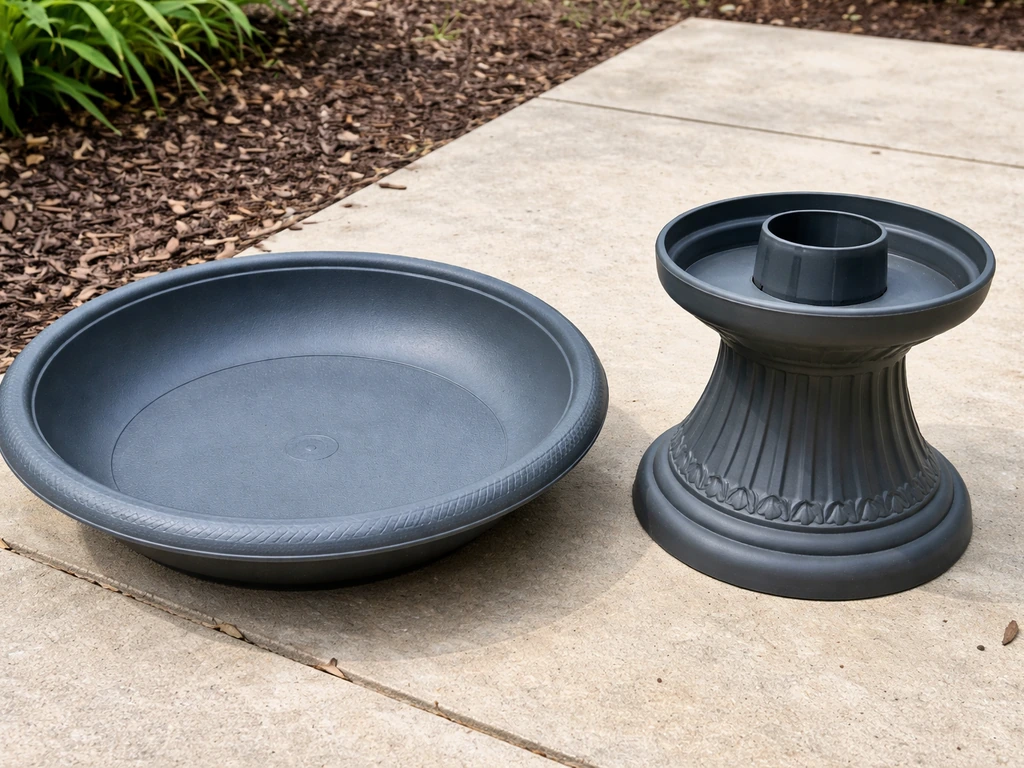
How a plastic bird bath top fits your setup
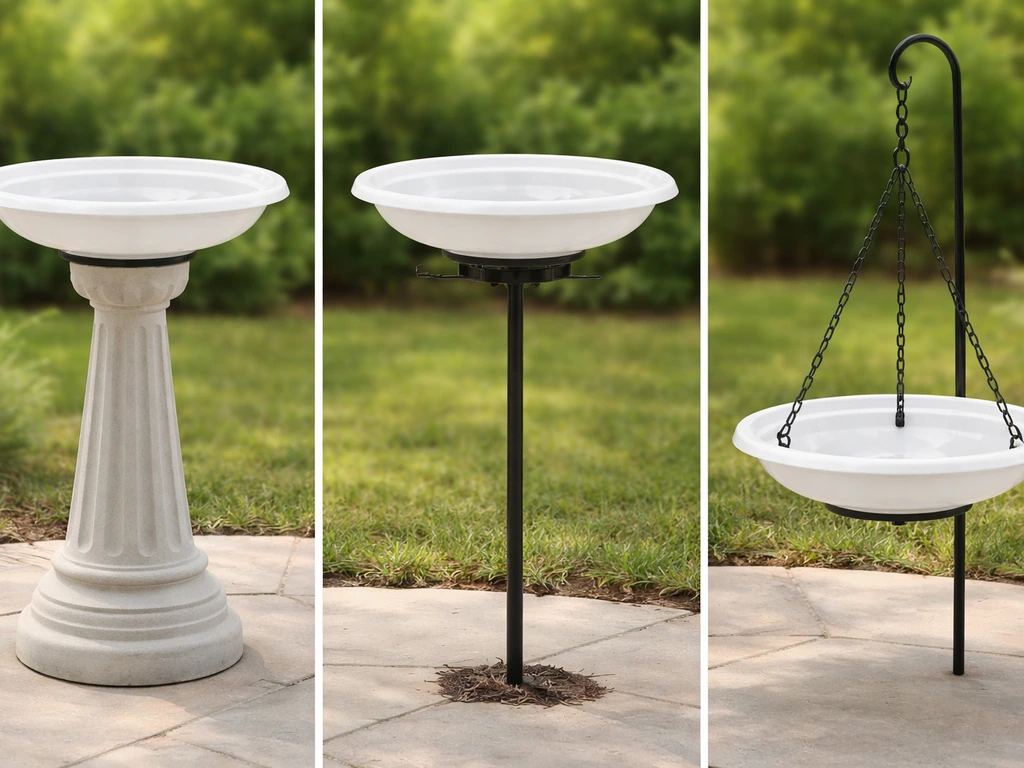
Think of a bird bath as two parts: the base (pedestal, stake, ground mount, or hanging hardware) and the top (the bowl or basin where the water actually sits). The top is what birds interact with. When people search for a plastic bird bath top, they're usually either replacing a broken bowl on an existing pedestal or shopping for a basin to pair with a base they already own. Either way, the top is the part you'll be cleaning, refilling, and swapping out seasonally, so it's worth choosing carefully.
Plastic tops work with most pedestal styles, including concrete, metal, and resin bases. Some systems use a twist-and-lock interface where you place the bowl on the pedestal and give it a firm twist to seat it into place. Others use a tab-and-groove system on the underside of the bowl that aligns with matching slots on the base top. A few designs have a recessed circle on the bottom of the bowl that simply sits over a raised ring on the pedestal to keep it centered. Before you buy a replacement top, check what your base uses and make sure the bowl's underside geometry is compatible.
Plastic tops also work well with heated bird bath setups, since many submersible de-icers and clip-on heaters are designed to sit inside a plastic basin without cracking it the way they sometimes can with ceramic. If you're running a solar-powered dripper or fountain pump, a plastic bowl is easy to drill for a grommet or pump cord without fear of shattering. Compared to a stone bird bath top or a ceramic bowl, plastic gives you more flexibility for DIY modifications. If you’re deciding between materials, comparing a stone bird bath top versus plastic can help you choose the most practical option for your yard.
What to look for in the best plastic bird bath top
Not all plastic is equal. The biggest factor for outdoor durability is UV stabilization. Cheap plastic bowls will fade, become brittle, and start cracking within a season or two of direct sun exposure. Look for products that specifically mention UV-resistant or UV-stabilized polyethylene or polypropylene. Those materials hold up for years, keep their color, and don't leach anything harmful into the water.
- UV-stabilized material: Look for UV-resistant polyethylene or polypropylene so the bowl doesn't crack or fade after a season in the sun.
- Textured interior surface: Birds need grip. A smooth, glossy interior is slippery and will cause birds to avoid the bath. Look for a matte or lightly textured finish, or plan to add gravel or flat stones.
- Proper depth and slope: The bowl should slope gradually from shallow edges to a deeper center, with the deepest point no more than about 2 inches. More on sizing below.
- Drainage compatibility: If your base or stand doesn't have a drain, check whether the bowl has one, or make sure it's easy to tip and empty for cleaning.
- Weight and handling: One of the main advantages of plastic over concrete or stone is that it's light enough to carry to a hose for scrubbing. A good plastic top should feel sturdy but not heavy.
- Color and heat absorption: Dark-colored plastic bowls absorb heat and can warm water quickly in summer, which accelerates algae. Lighter colors or earth tones stay cooler.
- Anti-algae coatings or treatments: Some bowls come with a surface treatment that slows biofilm buildup. This is a nice bonus but not essential if you're committed to a regular cleaning routine.
- Base compatibility: Confirm the bowl's underside matches your pedestal's locking or seating system before ordering.
If you're comparing plastic to other materials, here's a quick reference. Resin bird bath tops are often plastic-adjacent but may include fillers that add weight and texture. Stone tops are heavier and more porous. Each has trade-offs worth understanding depending on your priorities.
| Feature | Plastic Top | Resin Top | Stone/Concrete Top |
|---|---|---|---|
| Weight | Very light (easy to handle) | Medium | Heavy (harder to move) |
| Durability (freeze/thaw) | Good (flexible, less cracking) | Good to moderate | Can crack in hard freezes |
| UV resistance | Good if UV-stabilized | Moderate | Excellent |
| Texture for bird grip | Often smooth (may need gravel) | Usually textured | Naturally textured |
| Ease of cleaning | Excellent | Good | Moderate (porous surface) |
| Price | Budget-friendly | Mid-range | Higher |
| DIY modification (drilling, heaters) | Easy | Moderate | Difficult |
Sizing, depth, and bowl shape for bird species
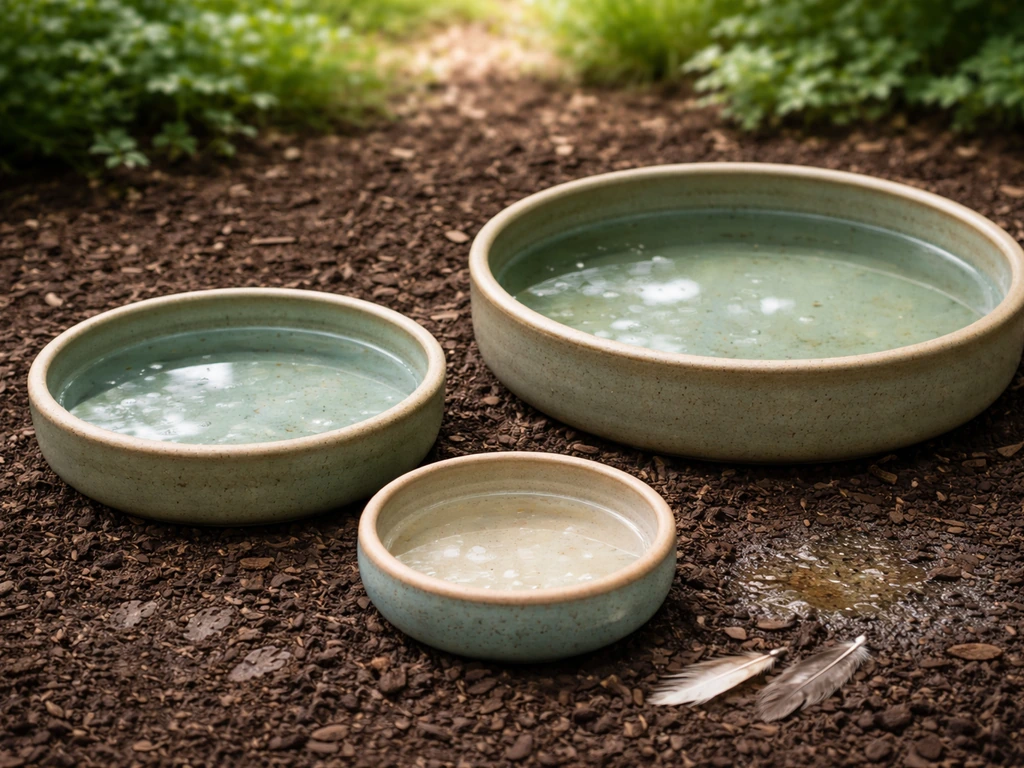
Diameter matters more than most people think. A 14-inch bowl is fine as a replacement insert for a small hanging or stake-mounted bath, but it won't attract larger species and will get fouled faster because there's less water volume. Replacement tops in the 16 to 22-inch diameter range give you more birds and longer water quality between changes. If you're buying a new setup from scratch, aim for at least 18 inches in diameter and ideally wider if space allows. The RSPB recommends a basin more than 30 centimeters (about 12 inches) across at minimum, but bigger is genuinely better.
Depth is where most people go wrong. Birds don't need or want deep water. The ideal depth is no more than about 2 inches at the very deepest point, with edges sloping up gradually from about half an inch to 1 inch near the rim. That gentle slope lets small birds like sparrows and warblers wade in at the edge, while robins and jays can stand in the deeper center. If a bowl is too deep and steep-sided, small birds simply won't use it. The risk of drowning is real for tiny species, especially fledglings.
Bowl shape also affects how birds approach the water. A wide, flat-bottomed bowl with slightly sloped sides (sometimes called a saucer shape) is the most universally accessible. Steep-sided bowls look nice but are less functional. If you end up with a bowl that's deeper than ideal, adding a few flat river stones or a section of non-slip mesh to the interior creates shallower areas birds can stand on safely.
| Bird Size / Type | Ideal Depth | Ideal Diameter | Notes |
|---|---|---|---|
| Small songbirds (sparrows, finches, warblers) | 0.5–1 inch at edges | 14–18 inches minimum | Need very gradual slope; slippery surfaces deter them |
| Medium birds (robins, starlings, jays) | 1–2 inches center | 18–22 inches | Prefer wider, open basins with room to splash |
| Large birds (crows, pigeons, doves) | 1.5–2 inches center | 22+ inches | Need space; shallow lip still required for safe entry |
| Hummingbirds | 0.25–0.5 inch max | 10–14 inches (misters preferred) | Almost exclusively use misters or drippers over still water |
Placement and installation tips to prevent splash, algae, and freezing
The first rule is level. A tilted bowl drains unevenly, creates deeper pockets on one side, and wobbles when birds land. Put the base on flat, firm ground and double-check it before filling. A bird bath that seesaws even slightly will send water splashing and discourage birds from landing confidently.
Sunlight and shade is a balance. Full sun all day speeds up algae growth and heats water quickly, both bad outcomes. Deep shade keeps the water cooler but makes the bath less visible to passing birds and can encourage moss. The sweet spot is partial shade: morning sun with afternoon shade, or dappled light under a tree canopy. Just be mindful of trees that drop sap, seeds, or large quantities of leaves directly into the bowl.
Predator safety matters more than most new birders realize. Place the bath in an open area where birds can see approaching cats or hawks from all directions. The RSPB recommends avoiding long grass or dense low shrubs nearby where cats can crouch and wait. A distance of about 6 to 10 feet from the nearest shrub cover gives birds a safe landing zone while still offering a quick escape route.
For freezing climates, a plastic top has a real advantage: it's flexible enough to survive mild freezes without cracking, unlike ceramic or concrete. But you still need to deal with ice. The easiest solution is a submersible de-icer or a heated bird bath base. Most de-icers designed for bird baths work fine in a plastic bowl, but check the wattage and the manufacturer's notes. Alternatively, floating a dark-colored rubber ball on the water surface creates movement that slows freezing on mild nights. In serious cold snaps, bring the plastic bowl inside overnight and swap in a second bowl you've pre-filled indoors.
To reduce splash, don't overfill. Leave at least an inch of freeboard (space between the water surface and the bowl rim). Birds splash a lot, and an overfilled bowl empties itself and creates a muddy mess around the base. Splash also accelerates the need to refill, which is fine, but if you're getting a lot of it, check that the bowl sits level and that there's no wobble in the pedestal connection.
Cleaning, maintenance, and deodorizing the plastic top
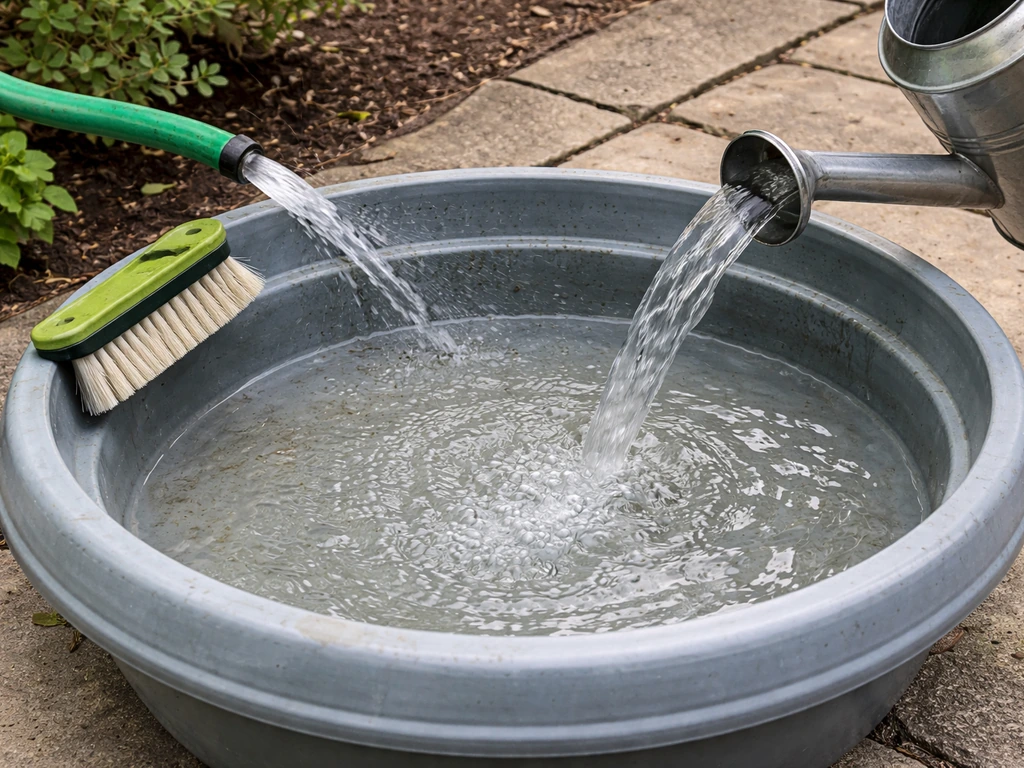
Plastic bird bath bowls are genuinely easy to clean, which is one of the best things about them. The baseline routine is simple: change the water every two to three days in cool weather, every day or two in hot weather when algae and bacteria multiply fast. If you see a greenish film or slimy coating starting, don't wait. Scrub it immediately before it establishes.
- Empty the bowl completely and rinse it with a hose to knock out loose debris, droppings, and feathers.
- Scrub the interior with a stiff-bristle brush (keep a dedicated bird bath brush and never use it for anything else). A nylon brush works well on plastic without scratching. Avoid steel wool or abrasive pads that will scratch the surface and create micro-grooves where biofilm hides.
- For mild algae or slime, a solution of one part white vinegar to nine parts water works well. Let it sit for five to ten minutes, then scrub and rinse thoroughly.
- For heavier buildup or disinfection, use a diluted bleach solution: 1 part household bleach (5 to 9 percent sodium hypochlorite) to 9 parts water. Soak for at least 10 minutes, scrub, then rinse extremely thoroughly. Let the bowl air dry before refilling. Never return birds to a bowl that smells like bleach.
- Rinse at least two to three times with clean water after any bleach treatment and let the bowl sit in fresh air and sunlight for 15 to 20 minutes before refilling.
- Refill with fresh water and return the bowl to the pedestal.
A full deep-clean like this once a week is the CDC-recommended baseline. In summer heat or if you have heavy bird traffic, you may need to do a quick scrub-and-refill every two to three days. The Oklahoma Department of Wildlife Conservation puts it bluntly: a neglected bird bath becomes a bowl of germ-infested slush fast, especially when droppings and debris accumulate in warm water.
For bad odors, the vinegar soak usually handles it. If a plastic bowl has developed a persistent musty smell, it may have scratches deep enough to harbor biofilm you can't fully scrub out. At that point, replacing the bowl is the right call. Plastic tops are inexpensive enough that replacement makes more sense than fighting a bowl that's past its useful life. If your current setup is beyond saving, you can also swap in a trash can lid bird bath style basin as an affordable adjacent option for small-scale water features replacement makes more sense.
Winterizing a plastic top is straightforward. At the end of the season, give it a final bleach clean, rinse thoroughly, and store it indoors or in a dry shed. Plastic holds up to cold storage much better than ceramic or concrete, but prolonged freeze-thaw cycling outdoors can still cause stress cracking over several years, especially at any weak points or around the drain hole.
Water quality, mosquito prevention, and troubleshooting
Still, stagnant water is the enemy on two fronts: algae and mosquitoes. The good news is the same basic strategies fight both. The most effective thing you can do is add water movement. A simple dripper, a solar-powered fountain pump, or even a battery-operated aerator keeps the surface agitated, which slows algae and makes the water much less attractive to mosquitoes looking for a flat surface to lay eggs. Birds are also strongly attracted to moving or dripping water, so this is a win all around.
Mosquitoes typically need about seven to ten days of still water to complete their breeding cycle from egg to larva to adult. If you change the water every two to three days, you break that cycle before it completes. That alone goes a long way. If you want extra insurance, Bti (Bacillus thuringiensis israelensis) dunks or bits are an excellent option. The EPA has registered Bti in multiple residential products specifically for use in standing water including bird baths. It targets mosquito larvae with no toxicity to people, birds, or other wildlife when used according to label directions. Drop a Bti dunk or a few bits into the bowl and it handles larvae for up to 30 days.
Never use chemical mosquito treatments other than Bti in a bird bath. The All About Birds guidance is clear: avoid harmful chemicals in bird baths entirely. Bti is the exception because it's specifically safe for this use case.
Common problems and fast fixes
| Problem | Likely Cause | Fix |
|---|---|---|
| Green algae film forming quickly | Too much sun, warm water, infrequent changes | Move to partial shade, change water every 2 days, add water movement, scrub with vinegar solution |
| Birds not using the bath | Surface too slippery, water too deep, or no water movement | Add flat stones or gravel for grip, reduce water depth, add a dripper or fountain |
| Water disappearing fast | Evaporation in heat, heavy splash, or leaking drain | Add an auto-filler or check more frequently; reduce overfill; check drain seal |
| Mosquito larvae visible | Stagnant water left too long | Change water immediately, add Bti dunk, add aerator or dripper |
| Bad odor from bowl | Biofilm in scratches, decaying organic matter | Deep vinegar or bleach clean; if odor persists, replace the bowl |
| Bowl won't stay seated on pedestal | Mismatch between bowl underside and base locking system | Check tab/groove or twist-lock compatibility; use a non-slip pad or waterproof adhesive as a temporary fix |
| Plastic fading or becoming brittle | Non-UV-stabilized plastic exposed to direct sun | Replace with a UV-stabilized bowl; use lighter color to reduce heat absorption |
One more tip on troubleshooting bird avoidance: if you've set everything up correctly but birds still aren't coming, try adding a few flat river stones to create perching spots inside the bowl. Then drip water into the bowl from a slow-drip container or a hose set to a trickle. Birds are remarkably responsive to the sound of moving water. Give it a few days before concluding there's a bigger problem.
Plastic bird bath tops aren't glamorous, but they're one of the most practical tools in a backyard birder's kit. They're light, affordable, easy to clean, and surprisingly durable when you choose the right material. Get the sizing right, keep the water moving, and stay on top of the cleaning schedule, and you'll have a bath that birds use every single day.
FAQ
Will a plastic bird bath top fit any pedestal base, or do I need an exact match?
You usually need compatibility with the bowl’s underside design. Check whether your base uses a twist-and-lock, tab-and-groove, or centered ring-and-recess system, then confirm the replacement top matches that geometry (and the bolt or drain location if your system has one). If you are unsure, measure the top opening and the bowl’s mating diameter before ordering.
How do I know what diameter plastic bird bath top I should buy for my yard and bird types?
Use the water surface diameter as your guide, not the overall height. For small birds you can start around 14 to 16 inches, but expect faster fouling and fewer larger visitors. If you want more variety and longer time between refills, choose 18 to 22 inches when space allows, and keep the bowl shallow rather than chasing diameter alone.
What’s a safe way to shallow a bowl that is too deep without making it slippery?
Add a few flat river stones or small, aquarium-safe pebbles at the bottom to create shallower edges, then avoid stacking stones so tightly that birds can get trapped. If you use mesh, choose non-slip, UV-stable material and keep it flat so debris does not accumulate underneath.
Can I use a heater or de-icer in a plastic bird bath top all winter?
Many heaters and submersible de-icers are designed to work in plastic bowls, but you should still verify wattage and manufacturer guidance for plastic use. Run cords in a way that prevents tugging, and periodically check that the water level stays high enough to keep the device submerged where required.
How much should I overfill or underfill a plastic bird bath top to prevent mess and algae?
Leave at least about an inch of freeboard so the rim is not constantly splashed over. Underfilling can make the water warm faster and foul sooner in sun, but the bigger issue is uneven depth if the top is not level, so recheck the pedestal connection if you see pooling on one side.
What should I do if the plastic bird bath top wobbles after installation?
A wobble usually means the base is not level or the bowl is not fully seated in its connection system. Turn off the water, remove the bowl, clean the mating surfaces, reseat it firmly (especially for twist-and-lock types), then set the base on firm, level ground or add a shim under the pedestal if needed.
Is it better to clean a plastic bird bath top with bleach or vinegar?
Vinegar helps with mild odor and early film, but it may not fully remove heavy biofilm. For deep-cleaning, bleach can be effective, then you must rinse thoroughly to eliminate residue. If the smell persists after scrubbing, scratches may be holding biofilm, and replacement is often the most reliable fix.
How often should I change the water when using a plastic bird bath top if I add a fountain dripper?
Moving water slows algae and mosquito activity, but it does not eliminate buildup. As a rule, still plan on a full change every two to three days in cooler weather and every day or two in hot weather, then adjust if you see film, odor, or debris accumulating quickly.
Will Bti dunks or bits stain or affect the water that birds drink?
Bti is formulated to target mosquito larvae and is generally safe when used exactly as directed for bird bath standing water. It should not be treated as a substitute for cleaning, because debris and biofilm still build up, so keep up with your regular water changes and scrubbing schedule.
When should I replace a plastic bird bath top instead of trying to scrub it?
Replace it if you cannot remove persistent odors, if the bowl has deep scratches or crazing that traps biofilm, or if it is cracking around stress points. Because plastic tops are typically inexpensive, replacement is often faster and more hygienic than repeated chemical or abrasive cleaning attempts.
How do I winterize a plastic bird bath top if I cannot bring it indoors?
After a final bleach clean and thorough rinse, store it in a dry place if you can. If you must leave it outside, use a heated base or an appropriate de-icer to prevent freezing damage, and avoid repeated freeze-thaw exposure near the drain hole or any weak seam where stress cracking often starts.
What are common reasons birds do not use a plastic bird bath top even when it is clean?
Three frequent issues are poor visibility (place in partial shade but not hidden), lack of safe approach (too much cover nearby, or the bath is in a dead-end corner), and water sound (still water can underperform). Add perching spots inside the bowl and try a slow dripper for several days before assuming the birds are not interested.