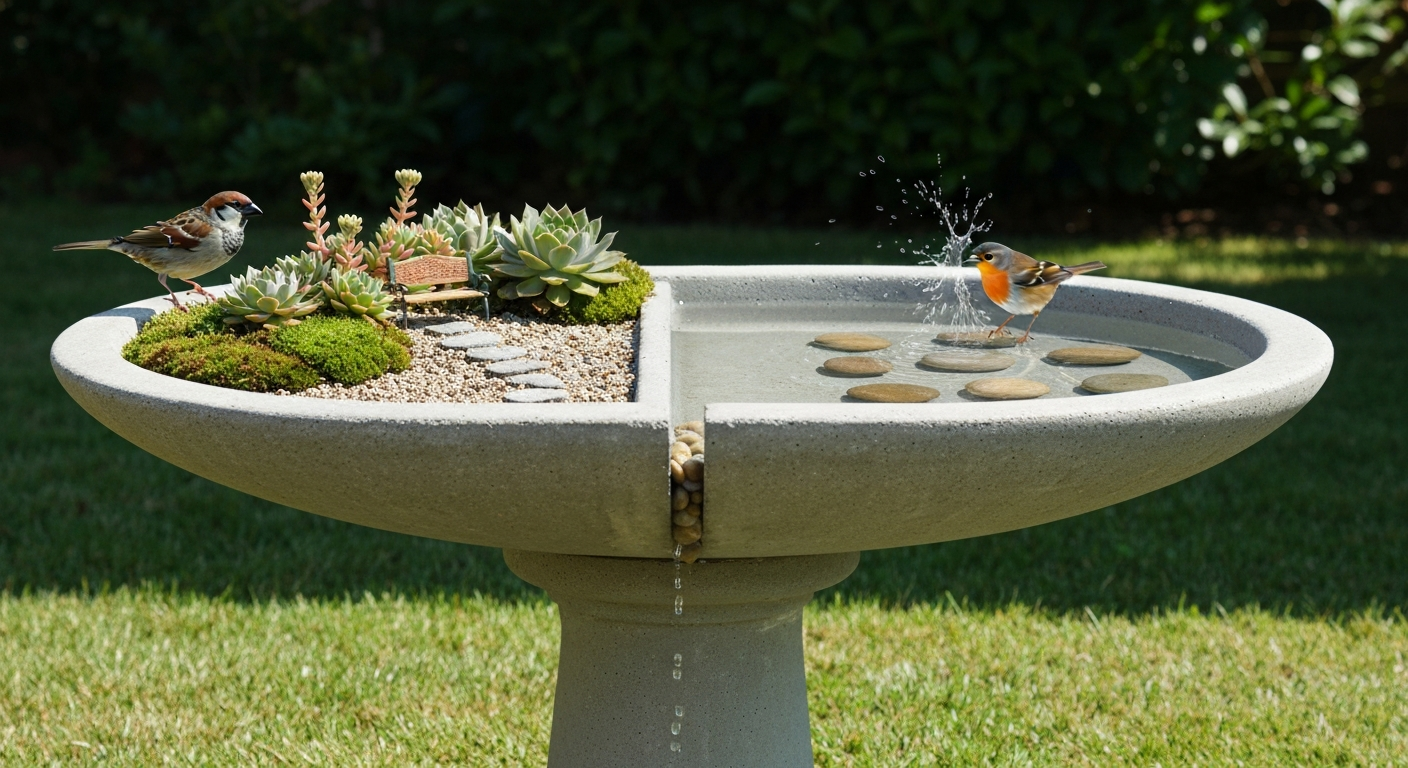
To replace just the top of a stone bird bath, you need three measurements before you buy anything: the outer diameter (or width and length if it's square), the depth of the bowl, and the mounting interface at the bottom of the top. That last one is what most people forget. Some tops sit flat on a pedestal, some have a copper pipe stub that drops into a hollow pedestal, and others bolt down with a center bolt and washers. Get those three numbers and you can find a compatible replacement top without buying an entirely new bird bath.
Stone Bird Bath Top Replacement Guide: Measure, Buy, Install

Marcus Henley
15 May 2026
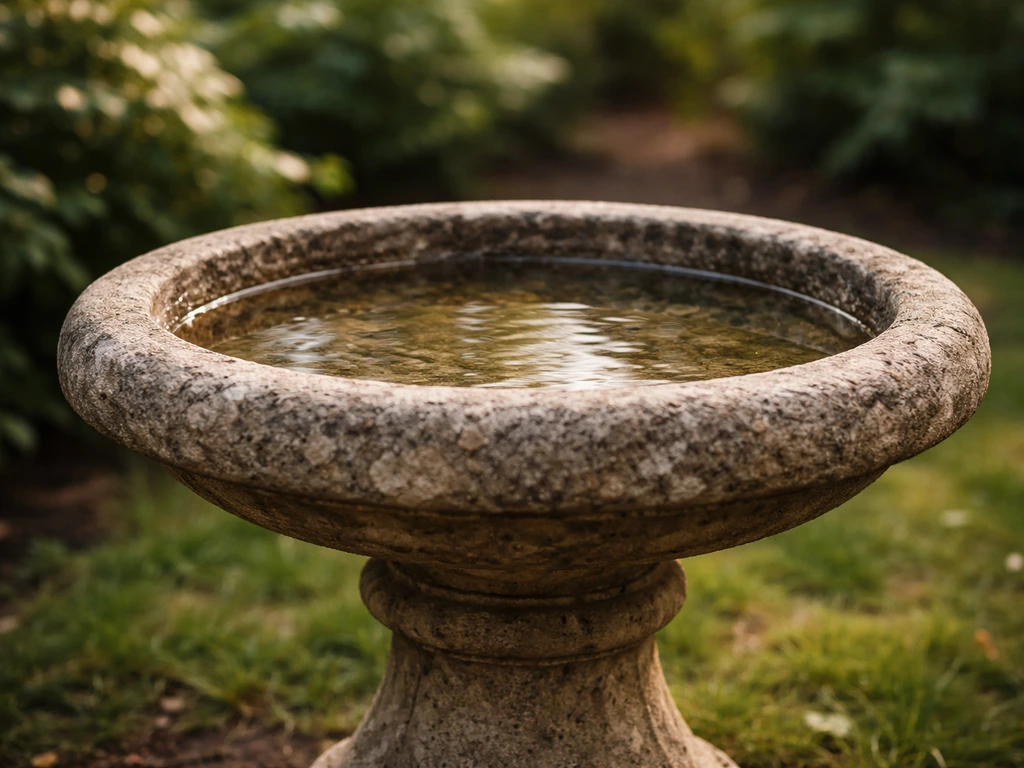
Identify your stone bird bath top type and measurements
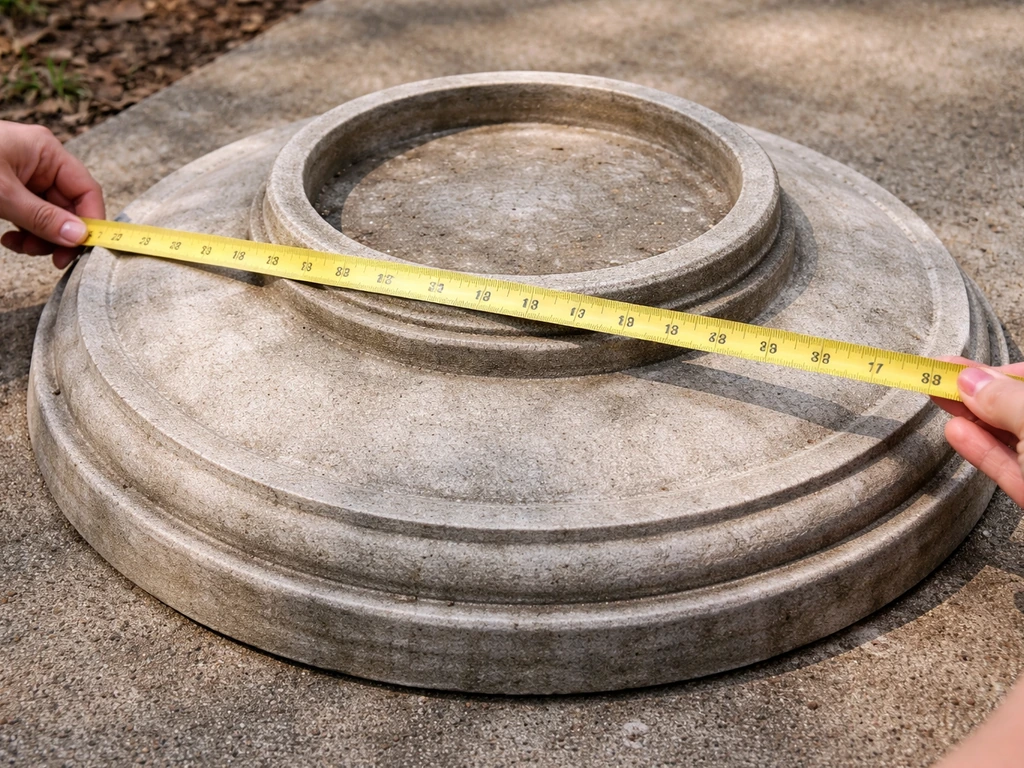
Flip the existing top upside down before you do anything else. You're looking for one of three mounting styles: a flat base with no hardware (top just rests on the pedestal), a short copper or metal pipe stub protruding from the underside (drops into a hollow pedestal column), or a center hole designed for a bolt-through mounting with washers and a nut tightened from underneath. Knowing which you have saves you from buying an incompatible replacement.
Now take your measurements. For a round top, measure the outer diameter across the widest point. For a square top, measure both sides (they should be equal, but confirm). Also measure the bowl depth from the rim down to the lowest point inside.
A typical reconstituted stone replacement top runs around 33 cm wide and 7 cm high, while larger stone composite basins can be 40 x 40 x 15 cm with 20mm walls. One example “top only” listing for a reconstituted-stone octagonal bird bath top gives dimensions of about 33 cm wide and 7 cm high and describes the bowl and fixing setup for matching an existing stand reconstituted-stone top listed as 33 cm wide and 7 cm high.
You want your replacement to be within about 1 to 2 cm of your original dimensions so it looks proportional on your existing base and doesn't create a top-heavy wobble risk.
If your top has a copper pipe stub, measure the pipe's outer diameter and how far it protrudes. Replacement tops with this style are often available with or without the pipe, so you can order the version that matches your pedestal's hollow column. If your pedestal uses a center bolt, note whether there are also set screws on the sides of the mounting adapter, since some pedestals lock the top in place with both a center bolt and lateral set screws.
Replacement vs full bird bath: when it makes sense
Replacing just the top makes sense when your pedestal is structurally solid and you're dealing with a cracked, chipped, or stained basin. Stone and ceramic tops are especially vulnerable to freeze-thaw cracking, so a good base with a ruined top is a totally normal situation. If the pedestal is also cracked, tilted, or has a broken mounting post, you're better off buying a complete unit. The math is simple: a replacement stone top only typically costs a fraction of a full bird bath set, so if the base is fine, there's no reason to replace it.
Also consider why the original top failed. If it cracked from winter freezing, you might want to choose a frost-resistant material for the replacement rather than the same vulnerable stone. If the damage was from impact or a simple fall, the same material is fine. If you're just upgrading aesthetics, that's a great reason to swap tops without touching the base.
Finding the right replacement (material, shape, compatibility)
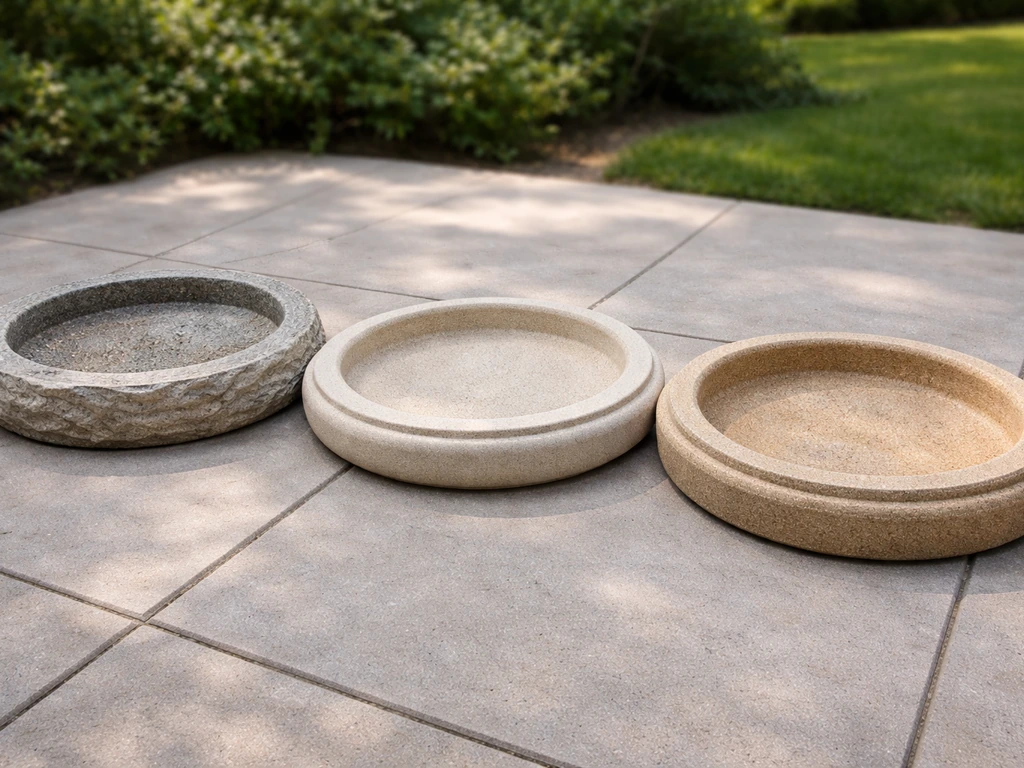
When you search for a replacement stone bird bath top, you'll encounter a few material types that look similar but behave differently. Natural cut stone is heavy and durable but expensive. Reconstituted or composite stone (crushed stone bonded with cement or resin) is the most common replacement option and strikes a good balance of weight, durability, and cost.
If you want something lighter and more freeze-resistant, resin bird bath tops are worth considering, though they look and feel different from stone. For a direct comparison of resin options, the resin bird bath top category covers those in detail. For a quick overview of how resin is used in these replacements, see what is a resin bird bath resin bird bath top category.
Resin bird bath top options vary by finish and mounting style, so compare dimensions and compatibility before you buy.
| Material | Weight | Freeze Resistance | Typical Cost | Best For |
|---|---|---|---|---|
| Natural stone | Very heavy | Moderate (can crack) | High | Matching original look |
| Reconstituted/composite stone | Heavy | Moderate (some frost-resistant grades) | Mid-range | Most standard replacements |
| Resin/poly stone | Light to medium | Good | Low to mid | Cold climates, easy DIY swap |
| Concrete | Heavy | Variable | Low | DIY casting or budget replacement |
| Plastic | Light | Good | Low | Lightweight setups, easy handling |
When reading product listings, check for the mounting interface description explicitly. Good listings will state whether the top has a copper pipe stub, a flat base, or bolt holes. One reliable way to verify compatibility before buying is to contact the seller with your pedestal's hollow column diameter or bolt spacing. Reputable stone garden suppliers will tell you if their top fits your base. If a listing doesn't mention the mounting method at all, assume it's a flat-sit top and confirm your pedestal can accommodate that style.
Square vs other shapes: sourcing the correct top
Square bird bath tops are less common than round or octagonal ones, which means sourcing takes a bit more effort. Most garden centers and big-box stores stock round tops as their standard replacement. For a square top, you'll generally get better results from specialist stone garden suppliers, online marketplaces with individual garden suppliers, or made-to-order reconstituted stone producers.
The critical thing with square tops is measuring both dimensions, not just one side. Even tops listed as square can be slightly off, and a top that's 40 x 38 cm will look noticeably askew on a round pedestal. If your pedestal is round and your original top was square, also check that the pedestal's mounting point is centered relative to the square top's footprint, otherwise it'll look off-balance even if it's technically stable.
If you absolutely can't find a matching square replacement, a round or octagonal top with the same outer measurement (treating the square's side length as the diameter) will usually look intentional rather than mismatched. Octagonal tops in particular pair well with both square and round pedestals.
DIY swap steps: remove old top and install new
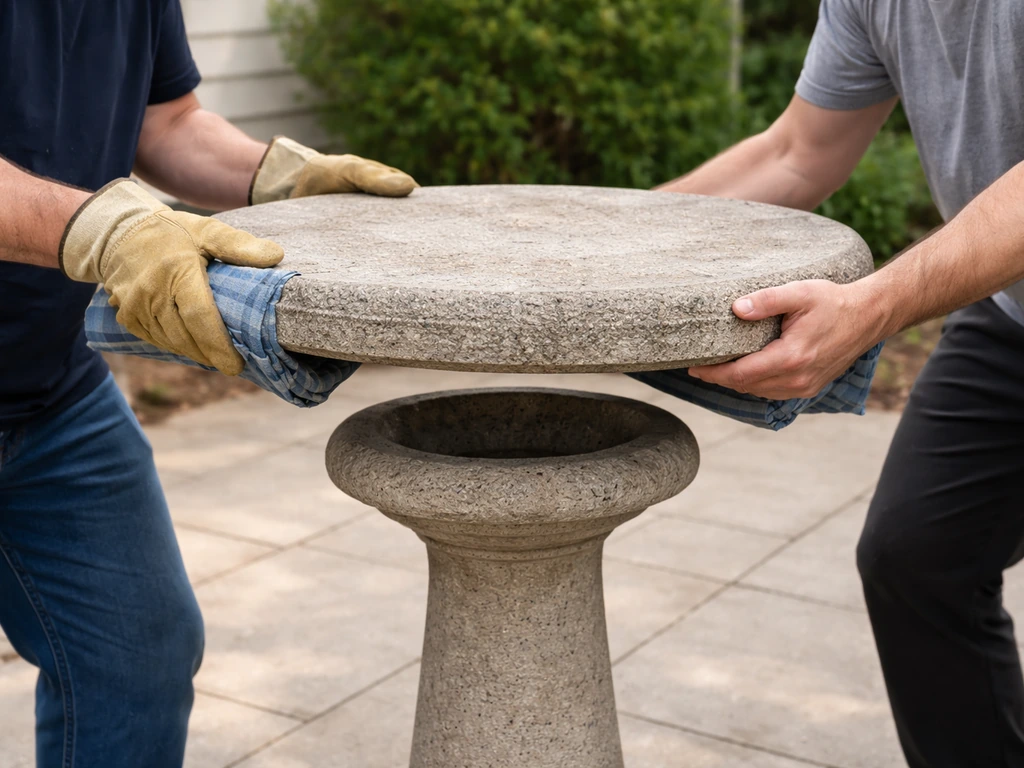
Stone tops are heavy. A 33 cm reconstituted stone top can weigh 5 to 8 kg or more, and larger composite basins can exceed 15 kg. Have a second person on hand and clear a padded surface nearby to set the old top down safely.
- Empty and dry the existing top completely. Water adds weight and makes gripping slippery.
- Inspect the underside before lifting. If there's a center bolt, use an appropriately sized wrench to loosen the nut from underneath. If set screws are present on the mounting adapter, back them out first.
- If the top has a copper pipe stub, lift straight up without twisting. The pipe slides out of the pedestal column. If it feels stuck, light wiggling while lifting usually frees it.
- If the top just rests on the pedestal, grip both sides firmly and lift straight up. Don't tilt it sideways as you lift, since that can destabilize the pedestal.
- Clean the top of the pedestal column or mounting surface before installing the new top. Remove any debris, old calcium deposits, or mortar remnants.
- For bolt-through installations: thread the center bolt through the new top's center hole, add the washer and gasket on top of the pedestal's mounting flange, lower the basin onto the pedestal, add the lower washer and nut, and hand-tighten. Then snug with a wrench, but don't overtighten on stone or you risk cracking around the hole.
- For copper pipe stub tops: lower the pipe straight down into the pedestal column. If the fit is loose, wrap the pipe with two or three layers of plumber's PTFE tape to create a snug fit that prevents lateral wobble.
- For flat-sit tops: set the top centered on the pedestal. Check that the pedestal is on a flat, level surface before you set the basin, since an unlevel base causes the top to rock and eventually fall.
- Do a stability check by pressing down firmly on opposite edges of the top. There should be no rocking or movement. If there is, shim the pedestal base or use a rubber non-slip pad between the top and pedestal.
If the new top sits slightly off-center or rocks despite a level surface, the pedestal's mounting column may be slightly worn or the new top's base geometry may differ from your original. A thin rubber gasket cut to fit between the pedestal top and the basin underside usually solves minor rocking and also protects both surfaces from abrasion.
Maintenance after replacement: cleaning, algae, and stability
Cleaning the stone top
Stone and reconstituted stone surfaces are porous, which means algae and biofilm get into the texture faster than they do on smooth glazed surfaces. Plan on a thorough clean every one to two weeks during warm months. A trash can lid bird bath can also benefit from the same regular cleaning routine to keep algae and residue from building up. Empty the basin, scrub with a stiff brush, then treat with a blank" rel="noopener noreferrer">diluted white vinegar solution (1 part white vinegar to 9 parts water). Let it sit for a few minutes, scrub again, then rinse thoroughly before refilling. That rinse step matters: residue from cleaning products, even vinegar in large amounts, is not something you want birds drinking.
Avoid bleach unless you dilute it heavily and rinse extremely well afterward. Bleach residue can poison birds, and synthetic soaps or detergents can strip the protective oils from feathers, which is the opposite of what a bird bath should do. If you want something stronger than vinegar for a particularly bad algae buildup, a hydrogen peroxide application works well: apply it to the algae-covered areas, let it bubble for a few minutes, scrub, and rinse completely before putting the bath back in service. Hydrogen peroxide can be used by soaking or applying it to algae, then ensuring there is no hydrogen-peroxide residue left before refilling the birdbath Hydrogen peroxide application works well.
Keeping algae and mosquitoes under control
The best algae prevention is simple: place the bath in partial shade and change the water every two to three days. Stagnant water in full sun turns green fast. If you get persistent algae despite regular changes, check that the basin is draining fully when you empty it since water sitting in low spots accelerates regrowth in those areas.
For mosquitoes, the same water-change frequency is your first defense since mosquitoes need standing water for several days to complete their larval cycle. If you want extra protection, Bacillus thuringiensis israelensis (Bti) dunks are a bird-safe biological option. Bti specifically targets mosquito larvae and has minimal toxicity to birds and other wildlife, so you can use it without worrying about harming the visitors you're trying to attract.
Stability and leveling over time
Check the top's stability every few weeks, especially after rain or if the bath is on a surface that can shift (gravel, soft soil, or grass). Ground movement can tilt the pedestal enough that the top starts to rock. If you notice any instability, deal with it immediately rather than waiting, since a rocking stone top is a fall waiting to happen and a heavy stone basin can crack your pedestal or injure a pet.
Winter care for your stone top
If you're in a climate where temperatures drop below freezing, take the top off the pedestal before winter and bring it under cover. Stone and reconstituted stone are vulnerable to freeze-thaw cracking: water seeps into the porous surface, freezes, expands, and fractures the material from within. This is exactly how most stone bird bath tops get damaged in the first place. Lifting the top off and storing it in a garage or shed is a five-minute job that extends the life of your replacement top by years. The pedestal can usually stay outside, but empty it of any water-retaining debris first.
If you want to keep the bath running through mild winters, use a submersible bird bath heater in the basin to prevent freezing rather than relying on the stone itself to withstand freeze-thaw cycles. This keeps water available for winter birds while protecting your stone top from the damage that brings most people to search for a replacement in the first place.
FAQ
My stone bird bath top cracked, but I cannot tell if it had a bolt-through or just sat flat. How can I identify the mounting style safely before ordering?
Look at the underside of the broken pieces for hardware marks. A bolt-through style usually leaves a centered circular recess, washer imprints, or a clear bolt hole shape, while a flat-sit top typically shows full, even contact with no centered opening. If the underside is too damaged, measure the pedestal top for a centered hole or pipe stub and match that to the listing’s mounting interface description.
The listing shows the right outer diameter, but the bowl depth seems different. Will that matter for fit or stability?
Depth mainly affects how the basin shape aligns, but it can matter if your pedestal has a specific drop-in depth or if the underside geometry is designed to sit on a ledge. If the new bowl is deeper by more than about 1 to 2 cm, confirm the underside will still rest correctly and not bottom out or create a gap that leads to rocking.
Can I replace a stone bird bath top with a resin top if my pedestal is made for stone?
Sometimes, but confirm the mounting interface is identical (flat base, pipe stub, or bolt-through) and that the new top’s underside geometry matches the pedestal surface. Resin tops are often lighter, which can reduce freeze-thaw stress, but mismatched bolt spacing or stub diameter can cause wobble even if the outer dimensions look close.
My replacement top rocks slightly. What’s the best fix if I do not want to disassemble everything again?
Start by checking the pedestal top is level and free of grit. Then add a thin custom-cut rubber gasket between the pedestal top and the underside of the basin (not so thick that it lifts the top off the correct mounting feature). If rocking persists, the pedestal mounting column may be worn or the replacement’s underside contour may differ from the original.
Is it okay to leave the old pedestal outdoors in winter if I remove only the stone bird bath top?
Yes in most cases, but empty the pedestal of any trapped water or debris first, since residual water can freeze and shift parts over time. Also inspect the mounting post or hollow column for cracks and replace any damaged mounting hardware before the next season to prevent repeat misalignment.
What should I do if the copper pipe stub diameter on the pedestal does not match the replacement top listing?
Do not assume compatibility, even if dimensions are close. Measure the pipe’s outer diameter and compare it to the replacement’s specified stub size, including whether the listing says ‘with pipe’ or ‘without pipe.’ If the fit is loose, the top may wobble or leak water into gaps that accelerate algae growth.
Do I need to worry about birds drinking from cleaning residues like vinegar or hydrogen peroxide?
Yes. Even diluted vinegar can be problematic if not fully rinsed. After any cleaning treatment, thoroughly rinse until there is no noticeable residue, then refill with fresh water before birds use it again. For persistent algae, rinse especially well after hydrogen peroxide treatments.
How often should I clean a porous reconstituted stone bird bath top compared with smoother surfaces?
Plan on a thorough clean every one to two weeks during warm months, because porous textures promote algae and biofilm buildup faster. In cooler weather you can stretch the interval, but if you see scum lines or green specks returning quickly, switch back to the shorter schedule and increase water change frequency.
Bleach made my bird bath look cleaner temporarily, but algae came back fast. Is that expected?
It can happen, and it is not a reliable approach for bird safety. Bleach residues can be harmful to birds if rinsing is incomplete, and some detergents can remove protective oils and affect feather-friendly surface conditions around birds. If algae is returning quickly, use the vinegar or hydrogen peroxide approach from the guide and focus on partial shade and more frequent water changes instead.
What’s the safest way to store a heavy stone bird bath top during winter without damaging it?
Set it on a padded surface so it does not crack from point pressure, and keep it dry and out of standing water. If possible, store it in a garage or shed, and avoid stacking heavy items on top. Handle with a second person due to typical weights of 5 to 8 kg for common reconstituted replacements and higher for larger basins.
If I cannot find an exact matching square top, how do I decide whether a round or octagonal top will look intentional?
Choose a replacement with the same outer measurement so the silhouette reads as deliberate. An octagonal top often pairs well with both square and round pedestals, and matching the outer size helps it look proportional even if the shape differs. If your pedestal is round but the original top was square, also confirm the mounting point is centered relative to the footprint to avoid a visually off-balance look.
Next Article
How to Make a Fairy Garden in a Bird Bath: Safe Build & Care
Create a bird-safe fairy garden in a bird bath: step-by-step build, plant choices, safety, care, troubleshooting