Yes, you can put vinegar in a bird bath, but only as a cleaning agent, not as a standing-water additive. White distilled vinegar diluted with water is one of the safest and most practical ways to scrub away algae, mineral rings, and grime between uses. The key rule: clean with it, rinse it out completely, then refill with fresh water before birds return. Leaving vinegar sitting in the basin is a different story, and one worth understanding before you grab the bottle.
Can You Put Vinegar in a Bird Bath? Safe Use & Cleaning Tips

Marcus Henley
11 Aug 2026
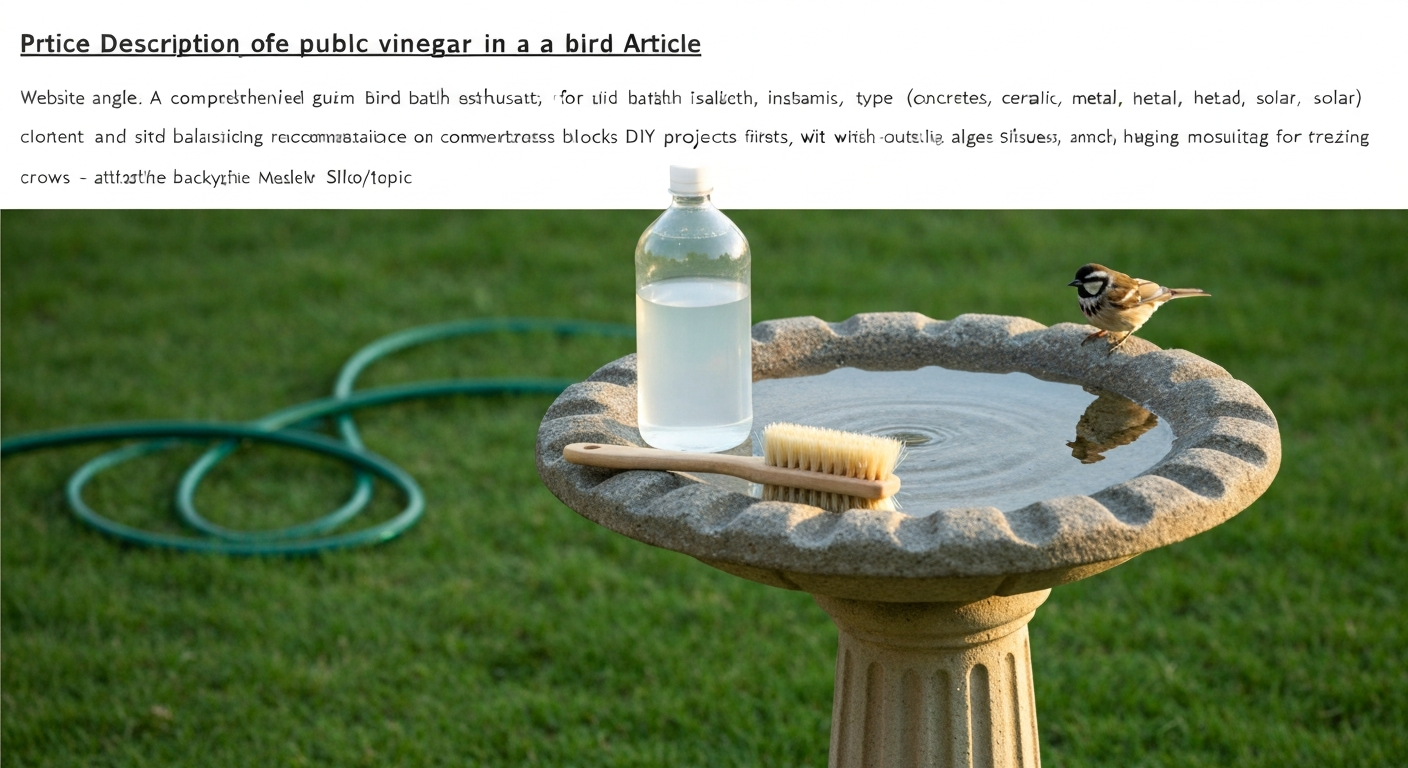
Vinegar as a cleaner vs. vinegar in standing water
This distinction matters more than most guides acknowledge. When you use a diluted vinegar solution to scrub a bird bath, let it sit for a few minutes, and then rinse everything away, you're using acetic acid exactly the way it was meant to be used: as a mild descaler and algae loosener that breaks down without leaving toxic residue. When you add vinegar directly to the standing water birds drink and bathe in, you're changing the water chemistry in ways that are hard to control and that haven't been tested in wild bird populations.
Some people add a splash of apple cider vinegar to bird bath water thinking it will deter algae or mosquitoes. In practice, the concentration you'd need to have any real effect on algae growth would also make the water genuinely acidic and unpleasant for birds. At very low concentrations it's likely harmless, but it also does very little. Peer‑reviewed poultry research (see: Effect of Acetic Acid and Sodium Bicarbonate Supplemented to Drinking Water on ... Broilers - PMC) tested about 0.4% acetic acid in broiler drinking water, indicating that low‑percent acetic acid has been experimentally studied for effects on water quality and growth parameters. Save the vinegar for scrubbing the bowl and keep the water itself plain and clean.
Which vinegar to use and at what strength
Plain white distilled vinegar is the right choice for bird bath cleaning. It's inexpensive, widely available, and contains roughly 4 to 5 percent acetic acid, which is enough to dissolve calcium carbonate deposits and lift algae without being dangerously corrosive. Apple cider vinegar (also around 4 to 5 percent acetic acid) works similarly and some birders prefer it because it feels more "natural," but it leaves a faint brown tint and residue that can be harder to rinse fully from porous surfaces. I'd stick with white distilled for cleaning.
You may have seen "cleaning vinegar" at hardware stores. These products typically run 6 to 8 percent acetic acid, giving them more descaling power. They're fine for stubborn mineral deposits on glazed ceramic or plastic baths, but I'd avoid using them at full strength on unglazed concrete or stone, which can be etched by prolonged acid exposure. Dilute cleaning vinegar at least 1:1 with water before using it on those surfaces. One thing to avoid entirely is horticultural vinegar or industrial acetic acid, which can run 20 to 30 percent acetic acid. That concentration will damage materials and is genuinely hazardous to handle.
| Vinegar Type | Typical Acetic Acid % | Best Use | Notes |
|---|---|---|---|
| White distilled vinegar | 4–5% | Routine cleaning, algae removal, mineral deposits | Best all-around choice; rinses clean |
| Apple cider vinegar | 4–5% | Routine cleaning | Works similarly but can leave brown residue on porous surfaces |
| Cleaning vinegar | 6–8% | Heavy mineral deposits on glazed/plastic surfaces | Dilute 1:1 before use on stone or concrete |
| Horticultural/industrial acetic acid | 20–30%+ | Do not use | Damages materials; hazardous to handle |
Step-by-step cleaning recipes and dilution ratios
The National Audubon Society recommends a 1:9 ratio of white vinegar to water (roughly 1.5 cups vinegar per gallon of water) for routine bird bath cleaning, and that's what I use as my baseline. Here are the four main approaches depending on what you're dealing with.
Routine clean (weekly or every few days in summer)
- Empty the bird bath completely.
- Mix 1 part white distilled vinegar with 9 parts water in a bucket or spray bottle.
- Apply to the entire basin, scrub with a dedicated stiff-bristle brush or old toothbrush for textured areas.
- Let sit for 5 minutes.
- Rinse thoroughly with a garden hose, flushing all surfaces at least 2 to 3 times.
- Refill with fresh water.
Heavy algae buildup
- Empty the bath and remove any debris.
- Mix 1 part white vinegar with 3 parts water (a stronger 1: 3 ratio).
- Pour the solution into the basin so it covers the stained areas, or apply generously with a scrub brush.
- Let it sit for 10 to 15 minutes. For very heavy green or black algae, you can extend to 20 minutes.
- Scrub vigorously with a stiff brush, then discard the solution away from plants and lawn.
- Rinse at least 3 times with a strong hose stream, flipping the basin if possible to rinse all surfaces.
- Allow to air-dry briefly before refilling.
Mineral deposit (hard water) soak
- Empty the bath completely.
- Mix 1 part white vinegar with 1 part water (50/50 solution) for calcium and lime-scale deposits.
- Fill or soak affected areas and let sit for 20 to 30 minutes. The acetic acid reacts with calcium carbonate, producing visible fizzing — that's the deposit dissolving.
- Scrub with a brush to break up remaining deposits.
- Rinse very thoroughly — at least 4 to 5 passes with a hose — since mineral-heavy baths often have porous surfaces that hold liquid.
- For stubborn rings on a removable basin, you can soak the entire bowl in a 50/50 vinegar-water solution for up to an hour.
Spot treatment
- For isolated stains or small algae patches between full cleans, use undiluted white vinegar applied directly with a cloth or spray bottle.
- Let it sit for 5 minutes, scrub the spot, then rinse that area well with water before birds return.
- Do this only when the bath is empty and birds are not present.
Cleaning different bird bath materials with vinegar
Not every bird bath handles vinegar the same way, and some materials need a patch test before you go scrubbing the whole basin. A patch test is simple: apply your diluted vinegar to a small, hidden area, wait 10 minutes, rinse, and check for discoloration, pitting, or surface changes before proceeding.
Glazed ceramic
Glazed ceramic handles routine vinegar cleaning well. The key caveat is older or antique glazes, which can contain lead compounds that acetic acid will leach out over repeated exposure. Research on historical ceramics has shown that 4 percent acetic acid (essentially standard household vinegar) measurably releases lead from certain antique glazes. If your bird bath is a vintage or handcrafted piece with an unknown glaze, use plain soapy water instead. For modern, commercially produced glazed ceramic baths, a 1:9 or 1:3 vinegar solution is fine. Rinse well.
Unglazed stone and concrete
Concrete and cast stone are porous and absorb liquid readily, which means they also hold cleaning residue if you don't rinse aggressively. Use a 1:9 dilution for routine cleaning and a 1:3 dilution for algae. Avoid the 50/50 soak method or extended contact times (over 15 minutes) because repeated acid exposure will gradually erode the surface and shorten the lifespan of the bath. Many cast-stone manufacturers actually list diluted vinegar as an approved cleaner in their care guides, so you're not off-limits here, just don't overdo it. Rinse with a strong hose stream at least 3 to 4 times.
Metal (copper, cast iron, galvanized steel, stainless steel)
This is where vinegar gets tricky. Copper bird baths are largely fine with vinegar, and many people use it to clean the green patina off the metal. Stainless steel handles brief vinegar exposure without trouble. Galvanized steel is a different matter: the zinc coating that protects galvanized metal is attacked by even weak acetic acid solutions, and repeated vinegar cleaning will degrade the galvanizing and expose the underlying steel to rust. If your bath is galvanized, stick to plain soapy water for routine cleaning and save vinegar for spot mineral deposits only, with very thorough rinsing immediately after. Cast iron is also vulnerable to acid-accelerated rust, so use the same caution there.
Plastic and resin
Plastic and resin baths are probably the most forgiving. They're non-porous, don't absorb acid, and rinse clean quickly. A 1:3 or even 1:1 solution works well for algae or staining, with a 5 to 10 minute contact time. Rinse thoroughly and you're done. One caution: rough, scratched plastic surfaces hold residue in micro-pits, so scrub and rinse more carefully if the basin surface is worn.
Fiberglass
Fiberglass baths are generally safe to clean with diluted vinegar at the 1:9 to 1:3 range. Avoid abrasive brushes that can scratch the gel coat, but the vinegar itself won't damage intact fiberglass. Rinse well.
Heated and solar baths
Heated bird baths and solar-powered fountains add electrical components to the equation. Before cleaning any heated bath, unplug it. For solar baths, disconnect or remove the pump and panel if accessible. You can clean the basin itself with diluted vinegar using the same approach as the underlying material (concrete, plastic, or metal), but keep the solution away from electrical fittings, cords, and heating elements. Rinse very thoroughly before reconnecting power, and make sure everything is fully dry before plugging back in.
Risks and cautions: birds, plants, and residue
The risk with vinegar isn't from a clean, well-rinsed bird bath. It's from shortcuts. If you spray vinegar and wipe it out without a proper hose rinse, birds that return quickly can be exposed to acetic acid residue in their drinking and bathing water. At household concentrations this is unlikely to cause acute harm to an adult bird taking a brief bath, but it's still acidic water and not something you want them ingesting regularly. If you’re wondering "can you put tap water in a bird bath", the short answer is yes, plain tap water is fine, just keep it fresh and clean. Nestlings, eggs, and fledglings are more vulnerable, and if you have a bird actively nesting nearby or visiting with young in tow, be especially careful that the bath is fully rinsed and fresh before they return.
Runoff from a vinegar rinse is mildly acidic and can affect nearby plants if it pools at root level. When you're dumping a vinegar cleaning solution or rinsing the bath, direct the runoff toward a drain, gravel path, or hardscape rather than directly onto garden beds or lawn. A single cleaning is unlikely to cause plant damage, but if you're cleaning weekly and always dumping near the same shrub, it may show effects over time. The CDC and many wildlife health agencies also recommend wearing disposable gloves when cleaning bird baths, since bird feces can carry Salmonella, Mycoplasma, and other pathogens.
Vinegar vs. other common cleaners
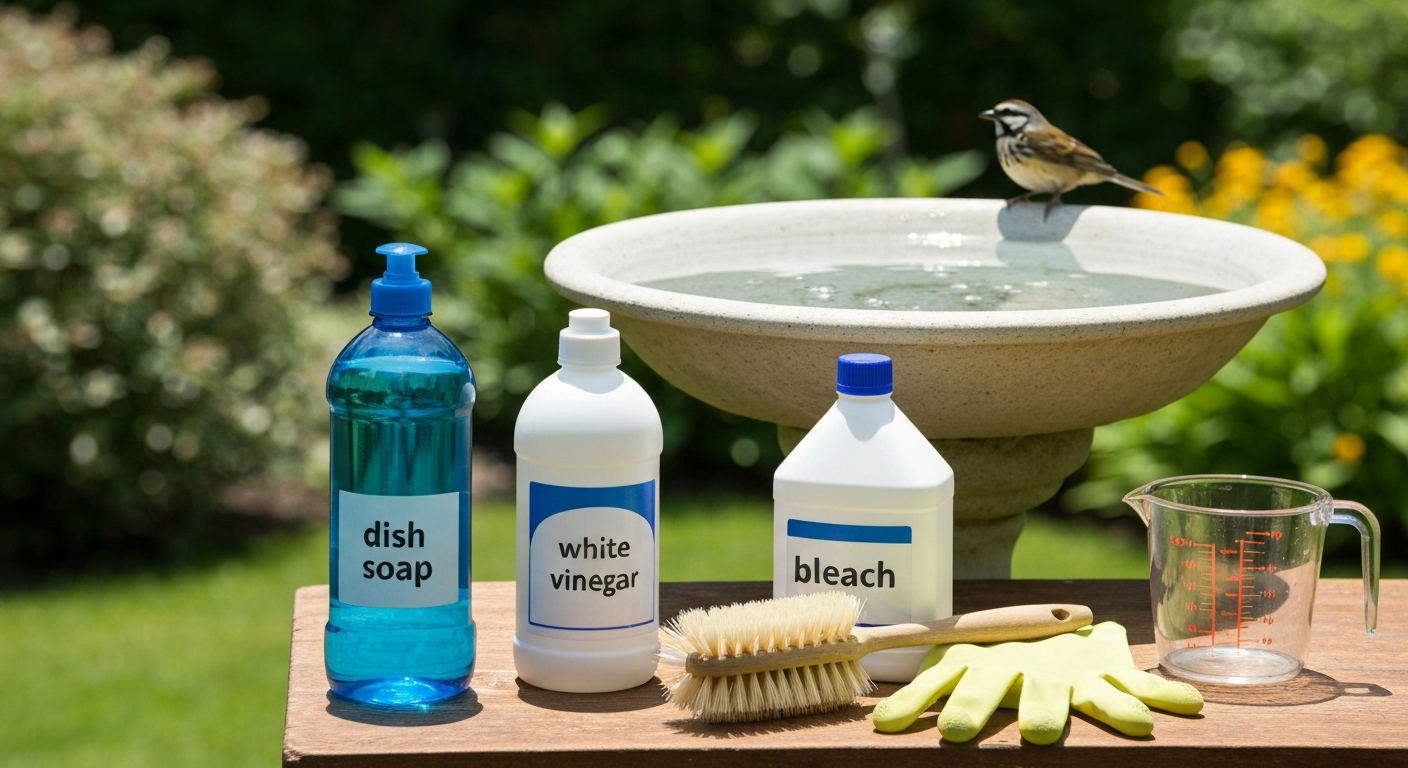
Vinegar is excellent for routine maintenance but it's not the only option, and for some situations it's not even the best one. Here's how it compares to the alternatives I reach for most often.
| Cleaner | Best For | Effectiveness on Algae | Effectiveness on Mineral Deposits | Disinfection | Pros | Cons |
|---|---|---|---|---|---|---|
| White vinegar (diluted) | Routine cleaning, mineral deposits, algae | Good | Excellent | Minimal (not EPA-registered disinfectant) | Safe, cheap, widely available, bird-safe when rinsed | Does not kill pathogens reliably; can etch some surfaces with extended contact |
| Bleach/chlorine (1:9 dilution) | Deep disinfection after disease concern | Excellent | Poor | Excellent (kills Salmonella, viruses) | Kills a wide range of pathogens; Cornell Lab-recommended for disinfection | Must rinse extremely thoroughly; can damage some materials; not for routine use |
| Dawn dish soap (diluted) | Light grime, routine cleaning | Fair | Poor | None | Gentle, widely available, safe for materials | Doesn't dissolve mineral deposits; leaves suds that need thorough rinsing |
| Commercial enzymatic/bird-bath cleaners | Algae prevention, routine maintenance | Good to excellent | Varies by product | Varies by product | Often bird-safe when used per label; some prevent regrowth | Cost more than DIY options; follow label instructions carefully |
| Baking soda paste | Spot stains, mild abrasive scrubbing | Fair | Fair | None | Very gentle on surfaces | Limited effectiveness on heavy algae or hard deposits |
My practical recommendation: use diluted white vinegar for weekly or biweekly routine cleaning and for tackling mineral rings. If you've had a sick bird visiting or want to deep-clean at the start or end of a season, follow up with the dilute bleach protocol recommended by Cornell Lab of Ornithology (1 part household bleach to 9 parts water, scrub, rinse thoroughly, and air-dry). For guidance on using chlorine or household bleach in bird baths, see the related topic: can you put chlorine in a bird bath. Dawn dish soap is a good middle-ground option for a quick rinse-down when you don't have time for a full clean. Commercial enzymatic cleaners are worth considering if algae is a persistent problem in a sunny location. The sibling topics on best bird bath cleaners and whether to use Dawn cover these alternatives in more depth.
Mosquito control: what works and what doesn't
Vinegar does not meaningfully control mosquitoes in a bird bath. The concentration needed to discourage mosquito larvae would make the water unsuitable for birds, and at the levels safe for birds, it has little to no effect on mosquito breeding. If mosquitoes are your concern, there are better-targeted solutions.
The most effective single step is changing the water every 2 to 3 days. Mosquitoes need still, standing water for at least 7 to 10 days to complete their larval cycle, so regular water changes alone will interrupt the cycle before larvae can develop. This is free, requires no chemicals, and has zero risk to birds.
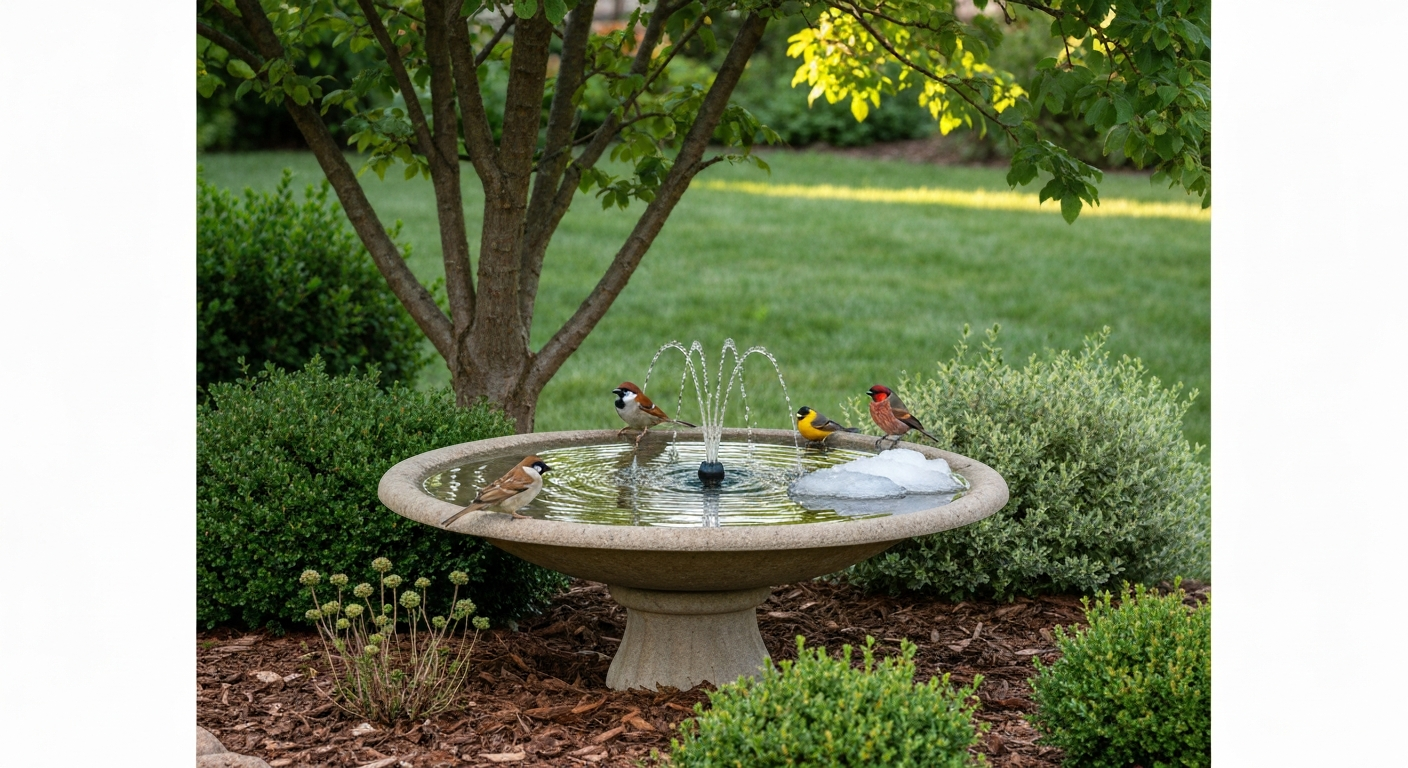
Adding a small fountain, dripper, or wiggler keeps the water surface moving, which physically prevents mosquitoes from laying eggs. Solar-powered fountain attachments are inexpensive and also help keep water fresher and cooler, which birds prefer. If you're in a hot climate or have algae problems compounded by heat, the section on keeping bird bath water cool is worth reading alongside this one. For more tips on how to keep bird bath water cool, see the linked guide for practical shading, circulation, and material choices.
If you need a chemical option, Bacillus thuringiensis israelensis (BTi) is the gold standard. Sold as Mosquito Dunks and similar products, BTi is a naturally occurring soil bacterium that kills mosquito and fungus gnat larvae specifically without harming birds, mammals, or other wildlife. Always follow product label instructions for dosing and frequency. BTi is EPA-registered for this use and has an excellent safety profile for wildlife. It's the only water-treatment option I'd recommend adding directly to a bird bath for mosquito control.
- Change water every 2 to 3 days to break the mosquito life cycle (most effective, free)
- Install a solar fountain, dripper, or wiggler to keep water moving
- Use BTi (Bacillus thuringiensis israelensis) products like Mosquito Dunks per label instructions
- Do not use vinegar, bleach, or essential oils in standing bird bath water for mosquito control
- Scrub the basin when you change water to remove any mosquito egg rafts laid on the walls
A simple maintenance schedule to keep things clean
Most bird bath problems, including algae, mineral buildup, mosquitoes, and water quality issues, come down to cleaning frequency. Here's the schedule I follow and recommend.
| Frequency | Task | Method |
|---|---|---|
| Every 2–3 days (summer) | Empty, scrub lightly, refill | Plain water rinse and scrub brush; change water before mosquito larvae can develop |
| Weekly (spring/fall) or every 2–3 days (summer) | Full clean | 1:9 vinegar:water scrub, rinse thoroughly, refill |
| Monthly or when deposits appear | Mineral deposit removal | 1:1 vinegar:water soak for 20–30 min, scrub, rinse 4–5 times |
| Start and end of season | Deep disinfection | 1:9 bleach:water solution, scrub, rinse very thoroughly, air-dry before refilling |
| After sick bird sighted | Emergency disinfection | 1:9 bleach:water soak, rinse extremely thoroughly, air-dry; wear gloves throughout |
In winter, if you're running a heated bird bath, clean it before the first freeze and again at the end of the cold season. Mineral deposits build up faster in heated water, so you may need to do the vinegar mineral soak monthly rather than occasionally. Always unplug before cleaning and confirm the basin is completely dry before restoring power.
Vinegar is genuinely one of the better tools in the bird bath maintenance kit. It's cheap, effective on the things that matter most (algae and hard water), and completely safe when you rinse it out properly. The mistake to avoid is treating it as a water additive or a shortcut that replaces a real rinse. Clean with it, rinse it away, and the birds will keep coming back.
FAQ
Quick answer: can you put vinegar in a bird bath?
Short answer: Yes — but only as a temporary cleaner or rinse, not as a long‑term additive left in standing water. Household white distilled vinegar (typically 4–5% acetic acid) is safe and effective for removing algae, mineral rings and grime when used in proper dilutions and rinsed thoroughly. Organizations like Audubon and RSPB endorse diluted vinegar for cleaning; for disinfection during disease outbreaks, they (and Cornell/C DC guidance) recommend dilute bleach or EPA‑registered disinfectants following their protocols.
What’s the difference between using vinegar to clean a bird bath and adding it to the bath water birds use?
Cleaning: Vinegar is used as a short‑contact cleaner to dissolve algae and mineral scale. Rinse it out completely after cleaning. Adding to standing water: Continuous presence of acetic acid changes pH and can stress or harm birds, plants and some materials — risk depends on concentration and exposure duration. Most wildlife and conservation groups do not recommend leaving vinegar in water birds use.
Which type of vinegar is appropriate — white distilled or apple cider? What concentrations are safe?
Preferred cleaner: plain white distilled vinegar (4–5% acetic acid) because it’s clear, inexpensive and less likely to stain. Apple cider vinegar (4–5%) can clean but may discolor light‑colored baths and attract ants. ‘‘Cleaning vinegar’’ products (6–8% acetic acid) are stronger — use with extra caution and shorter contact times. For cleaning, typical dilutions: 1 part vinegar to 9 parts water (10% vinegar solution) for routine cleaning, and up to 1:1 for tough mineral deposits — always rinse thoroughly.
Step‑by‑step routine cleaning recipe using vinegar (quick method)
1) Empty the bath and remove loose debris. 2) Mix 1 part white vinegar to 9 parts warm water (1:9). 3) Scrub surfaces with a soft brush or sponge and the solution. 4) Let sit 5–10 minutes if needed, then scrub again. 5) Rinse thoroughly with fresh water until no vinegar smell remains. 6) Refill with fresh water. Wear gloves and avoid inhaling spray.
Stronger descaling method for mineral deposits and algae (safe procedure)
1) Empty bath and remove loose debris. 2) For heavy calcium/mineral rings, use up to 1:1 white vinegar:water or undiluted white vinegar on a small test patch. 3) Apply and allow 5–30 minutes depending on buildup (monitor surface). 4) Agitate with a nylon brush or plastic scraper. 5) Rinse thoroughly multiple times to remove residue and neutralize acidity. 6) Do not leave concentrated vinegar soaking indefinitely, especially on porous or metal surfaces.
Rinsing guidance — how much rinse is 'thorough'?
Rinse until there is no perceptible vinegar smell and the water runs clear. For concrete or porous materials, flush multiple times because they can retain odor. As a rule, three full rinses (filling and emptying) are a practical minimum for most baths after a vinegar clean.