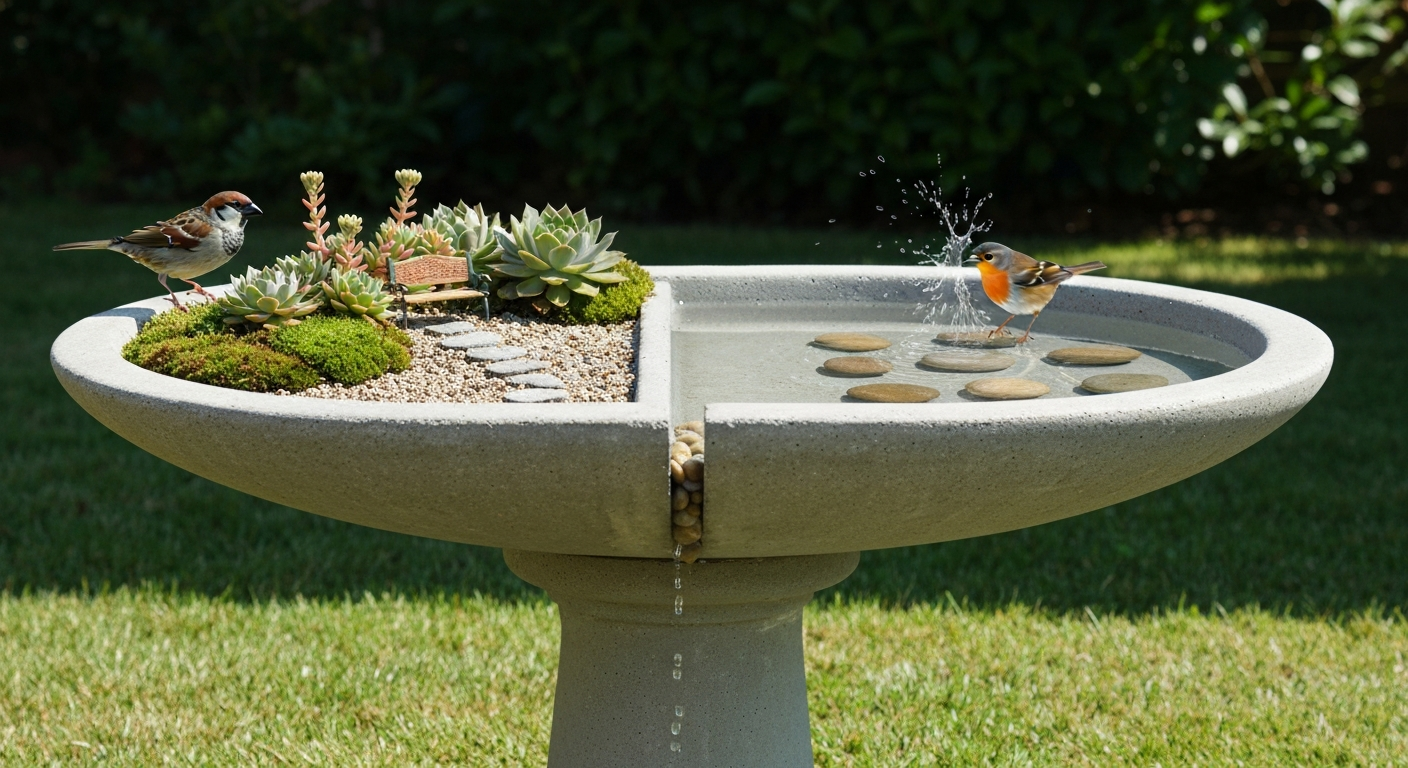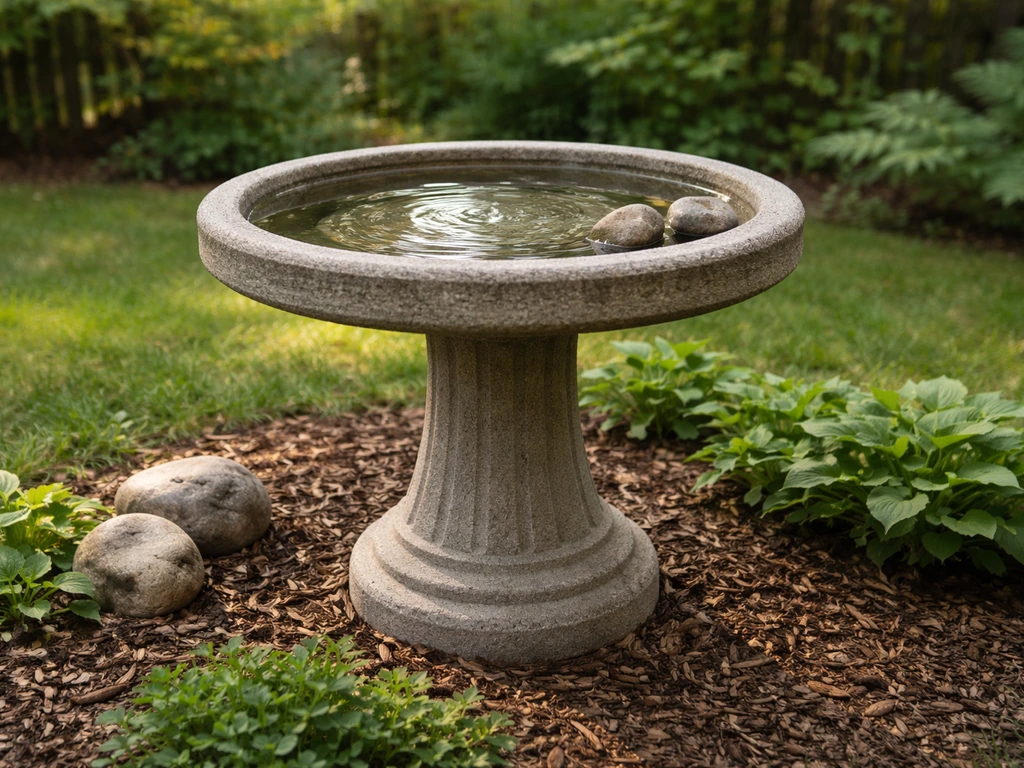
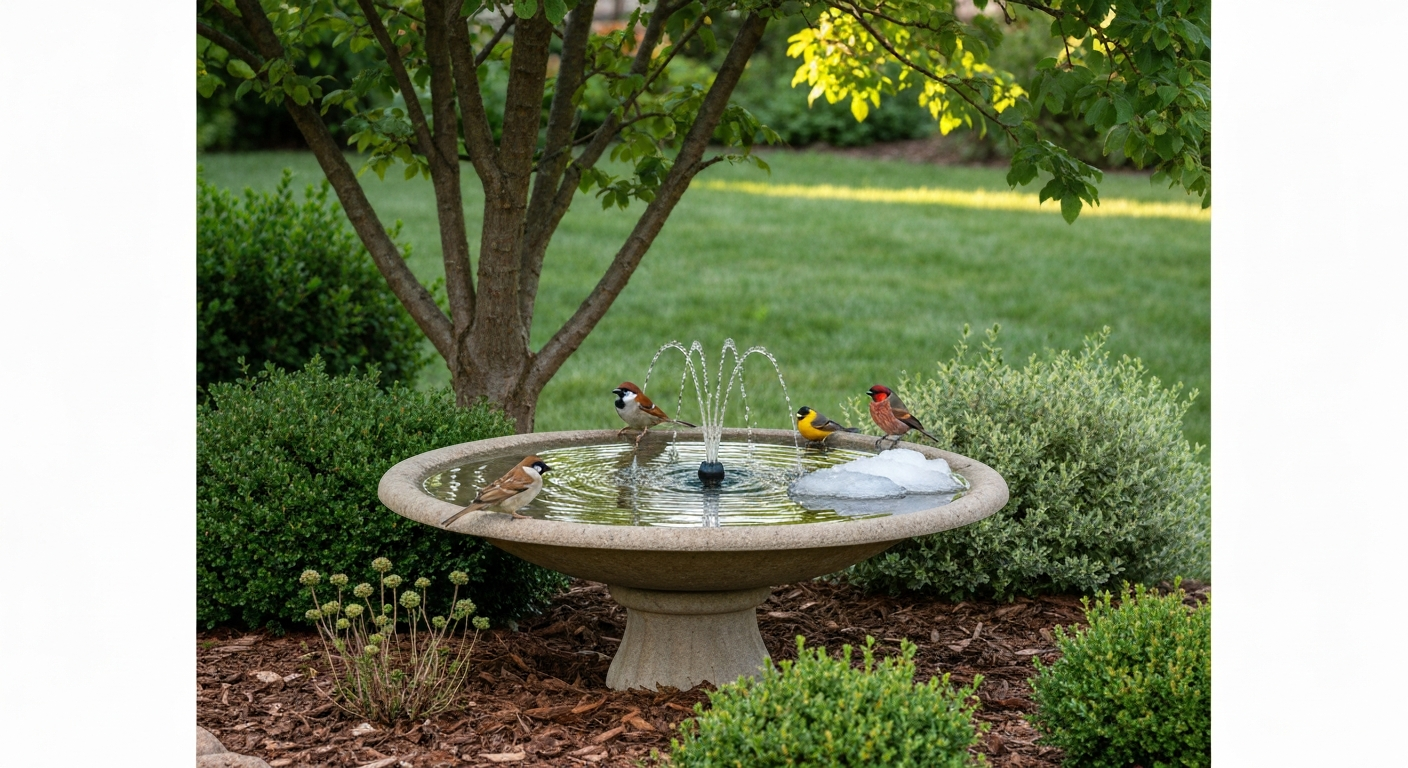
The fastest way to keep bird bath water cool in summer is to combine shade placement with moving water. Positioning your bath under a tree or shade structure cuts peak water temperature by several degrees, and adding a small solar-powered pump or dripper keeps the surface agitated so the water stays fresher and cooler through evaporative loss. On days when the temperature is really climbing, you can drop a few ice cubes in as an immediate fix. Those three things together, shade, movement, and cold top-ups, handle the bulk of the problem without any special equipment.
How to Keep Bird Bath Water Cool: 12 Practical Ways for Hot Summers

Marcus Henley
18 Jul 2026
Why cool water actually matters for birds
Birds depend on surface water for more than just drinking. They use birdbaths for bathing, grooming, and thermoregulation, all of which become critical when air temperatures spike. Small passerines manage heat partly through panting and a process called gular flutter (rapid throat vibration that increases evaporative cooling), but those mechanisms cost water. Research on desert birds has found that species with regular access to water have greater evaporative cooling capacity and higher heat-tolerance limits than those without. When a birdbath sits in full sun all afternoon and the water climbs well above air temperature, it stops being useful and can even become a hazard, hot water means faster bacterial and algae growth, faster mosquito larval development, and water that birds are less inclined to drink.
There is no single 'ideal' bird bath temperature, but cool-to-lukewarm water (roughly matching or staying below air temperature in shade) is the practical target. The goal is water that stays clean, doesn't smell, isn't uncomfortably warm to the touch, and gets refreshed often enough that it never supports mosquito larvae. In hot weather that means topping off or completely changing the water every two to three days at minimum.
Immediate fixes when the water is already too warm
If you go outside on a hot afternoon and find your bird bath water warm or even hot, here is what to do right now before making any longer-term changes.
- Dump and refill. Empty the basin completely and refill with fresh tap water. Municipal tap water in most U.S. systems contains only a very low chlorine residual (the EPA caps it at 4.0 mg/L and most utilities run well below that), so it is safe for birds straight from the tap.
- Add ice. A handful of ice cubes from your freezer drops water temperature quickly and melts cleanly. This is not a long-term fix, but on a 95°F day it buys several hours of cooler water.
- Move into temporary shade. If your bath is portable, shift it out of direct sun immediately — even parking it next to a fence or under an umbrella makes a measurable difference.
- Run the hose for a minute before filling. Your garden hose sitting in the sun holds hot water in the first few feet. Let it run until the water feels cool before topping off the bath.
- Cover the basin briefly. If you cannot refill right away, a light-colored cloth or piece of shadecloth draped over the basin while you handle other chores stops solar heat gain fast.
Placement and shade: the highest-impact change you can make
Site selection is the single most effective long-term strategy for keeping bird bath water cool. Urban forestry research documents that tree canopy reduces mean air temperatures by roughly 1 to 3°C locally, with even larger drops in surface temperature depending on leaf area. For a bird bath sitting in the open, moving it under a tree or large shrub can realistically cut peak water temperature by several degrees on a hot summer afternoon. That is not trivial, it is the difference between water that stays clean for three days and water that turns green in one.
The RSPB recommends partial or full shade, and I have found that 'dappled' shade from a deciduous tree is the sweet spot. Full shade from a dense evergreen keeps water cooler but also piles the basin with debris and blocks sightlines birds use for safety. A tree that shades the bath from roughly late morning through early afternoon, when solar gain is steepest, handles most of the heat load while still leaving the bath in gentler morning sun that birds tend to prefer for bathing. If you have no suitable trees, a patio umbrella, a shade sail, or a wooden pergola with open-weave lattice will all do the job. The key is blocking the midday and early afternoon sun rather than all light.
Placement near dense vegetation also gives birds essential escape cover. Birds are reluctant to visit a bath that sits in the open far from cover, so shrubs within a few feet serve double duty: they shade the ground around the bath (keeping the surrounding microclimate cooler) and give birds a quick escape route if a cat or hawk appears. Avoid placing the bath directly under heavy berry-producing shrubs if you can, falling fruit stains the basin and ferments in warm water fast.
Basin depth, shape, and water volume
The shape of your basin affects how quickly water heats up, and also determines which birds will actually use it. Cornell Lab of Ornithology recommends a basin depth of about 1 inch (2.5 cm) at the edges, sloping gradually to a maximum of 2 inches (5 cm) at the center. This suits small songbirds perfectly, they can wade in at the shallow edge and drink or bathe without going in over their heads. Deeper basins hold more water, which heats up more slowly (a larger thermal mass), but depths beyond 2 to 3 inches deter most small passerines.
Width matters too. A wide, shallow basin loses heat through evaporation across a large surface area, which actually helps keep it cool in moderate temperatures and moving air. A narrow, deep basin heats up more uniformly. If you are shopping for a new bath, I would lean toward a wider basin (18 to 24 inches across) with gently sloping sides rather than a steep-sided, narrow bowl. Adding a flat rock to a deeper basin creates a shallow perching zone near the edge and gives small birds a safe footing, which is worth doing if you already own a deeper bath.
Materials and how they handle heat
Bird bath material is one of the most-asked questions I get, and it genuinely matters for temperature. Here is a practical breakdown of how common materials behave in hot weather.
| Material | Heat absorption | Cooling behavior | Durability | Best for |
|---|---|---|---|---|
| Concrete | Moderate — absorbs and holds heat but more slowly than metal | Retains coolness in shade; stays warm if in sun; heavy thermal mass moderates swings | High — frost-resistant when sealed | Set-and-forget baths in partial shade |
| Ceramic / glazed pottery | Low to moderate — glaze reflects some radiation | Stays cooler than unglazed stone in direct sun; glaze slows absorption | Moderate — can crack in hard freezes | Attractive option in shaded patios |
| Metal (cast iron, copper, steel) | High — heats very quickly in direct sun | Cools fast when moved to shade; no insulation | High if sealed/galvanized; copper resists algae | Best only in full shade; avoid in full sun |
| Plastic / resin | Low — lightweight and less heat-retentive than stone | Heats quickly in direct sun but cools quickly too; thin walls | Moderate — UV degrades over years | Budget/portable option; needs shade |
| Glass / mosaic | Low to moderate — depends on thickness and color | Dark colors absorb more heat; lighter colors reflect better | Low — fragile in freeze/thaw | Decorative use in protected spots |
The practical upshot: in full sun, almost every material gets hot enough to be a problem. Metal is the worst offender, a copper or cast-iron bath left in full afternoon sun can reach water temperatures that are genuinely uncomfortable for birds. Concrete and ceramic in partial shade are the most forgiving because their thermal mass buffers against rapid temperature swings. If you already have a metal bath you love, the fix is straightforward: get it into shade or add a shade cover rather than replacing it.
Using plants and mulch to create a cooler microclimate
Planting around a bird bath is a longer-term investment, but it is one of the most effective and bird-friendly things you can do. Ground-level heat radiating from bare soil or concrete pavers raises the air temperature around the basin, which warms the water faster. Mulching the area immediately around the bath with 2 to 3 inches of wood chip mulch or shredded bark dramatically reduces ground-level radiant heat, keeps the soil moist (which helps with local evaporative cooling), and looks intentional rather than patchy.
Low-growing dense shrubs or ornamental grasses planted on the south and west sides of the bath block the angle of afternoon sun without obstructing the birds' view. Native plants are ideal here, they tend to attract the insects that also bring insectivorous birds to the area, creating a more complete habitat. Tall herbaceous plants like coneflowers or black-eyed Susans planted nearby provide overhead cover and seed heads that birds use after bathing. The combination of living mulch, shrub shade, and tree canopy creates a genuine microclimate that can run several degrees cooler than the surrounding yard on a hot day.
Reflective covers, shade structures, and insulating stands
Not every yard has a tree in the right spot, and not everyone wants to wait several years for planted shrubs to grow. Purpose-built shading products and some simple DIY options fill the gap.
Products worth knowing about
- Shade sails: inexpensive (usually $20 to $60 for a small triangle) and highly adjustable. A light-colored or white shade sail positioned a few feet above the bath blocks direct radiation without cutting airflow. Look for ones with UV-resistant fabric rated for outdoor use.
- Patio umbrellas: the simplest off-the-shelf option. A 6-foot umbrella on a weighted base can be positioned to shade the bath through the hottest hours and moved aside if needed. Light-colored canopies reflect more heat than dark ones.
- Decorative pergola stands: some pedestal bird baths come with or can be paired with a small lattice or pergola frame. Open-weave designs allow airflow while cutting direct sun. These look deliberate and purposeful in a garden setting.
- Reflective emergency blanket (DIY cover): a cut piece of Mylar emergency blanket placed loosely over a basin when the bath is not in use (say, overnight or during the hottest midday hours when birds are resting) reflects incoming solar radiation. Birds won't use the bath while it is covered, but it keeps water from pre-heating. This is a budget trick, not a permanent solution.
- Insulating bath pads: foam-backed mats sold for camping or yoga can be cut to size and placed under a plastic or metal bath to insulate the base from hot pavers or decking. This reduces conductive heat gain from hot surfaces beneath the bath.
A simple DIY shade frame
If you want a custom solution, a basic shade frame takes about an hour to build. Drive four wooden stakes into the ground around the bath, connect them at the top with scrap lumber or bamboo poles, and drape a piece of shadecloth (40 to 60 percent shade rating, available at garden centers) over the top, secured with zip ties. Leave the sides open for airflow and bird access. The whole project costs under $20 if you have scrap wood. You can angle the cover to specifically block the western sun in the afternoon, which is typically the most intense heat exposure.
Moving water: the best active cooling tool you can add
Adding moving water to a bird bath is the one upgrade that simultaneously cools the water, attracts more bird species, and prevents mosquito breeding. I put this near the top of my recommendation list for anyone willing to spend a little money. Cornell Lab of Ornithology explicitly recommends drippers or recirculating pumps as a meaningful attractant, and the mosquito-control benefit alone makes it worth it in summer. Cornell's Attract Birds With Birdbaths article recommends adding dripping or moving water to birdbaths to increase attractiveness to many species and to help deter mosquito egg-laying Attract Birds With Birdbaths — All About Birds (Cornell Lab of Ornithology). Warm, stagnant water shortens mosquito larval development time significantly, under hot summer conditions, Aedes and Culex larvae can complete their aquatic stages in as few as five to seven days. Moving water disrupts egg-laying and prevents larvae from completing development.
Solar-powered pumps and fountains
A solar-powered submersible pump is probably the easiest upgrade for most backyard birders. Small units (often called 'solar fountain pumps') cost $15 to $40, sit in the basin with a small solar panel on a short cord, and run whenever the sun is out, which is exactly when you need the cooling and mosquito-control effect most. They create a small fountain spray or a gentle bubbling effect, both of which cool the water surface through evaporation and keep it oxygenated. The main limitation is that they stop working on cloudy days and at night, but for most hot-weather use cases that is fine. Make sure the pump inlet sits fully submerged and the basin is deep enough (at least 1.5 to 2 inches) to keep the pump covered as water evaporates.
Plug-in pumps, drippers, and aerators
If you have an outdoor outlet nearby, a small plug-in recirculating pump gives you consistent flow regardless of cloud cover. These are common in garden ponds and work perfectly in larger bird baths. Drippers are an even simpler option, a slow-drip emitter connected to your garden hose can run on a timer, adding a constant drip that birds find irresistible and that keeps the surface moving. Misters are particularly worth mentioning for hummingbirds: hummingbirds do not typically immerse themselves like other birds do. They prefer fine mist sprays, drippers, or very shallow, gently moving water to fly through and perch in for bathing. A small hose-connected mister costs under $10 and makes your bath accessible to hummingbirds in a way a standard still basin never will.
Keeping mosquitoes under control
Moving water is the first line of defense, but if your bath has still sections or you go more than two to three days between water changes in hot weather, add a Bacillus thuringiensis israelensis (Bti) product as a backup. Bti is a naturally occurring soil bacterium that kills mosquito larvae specifically without harming birds, fish, or other wildlife. It is sold as 'mosquito dunks' or granules at most garden centers and hardware stores. Break off a small piece and drop it in the bath. UF/IFAS extension guidance endorses Bti as a safe, effective option for ornamental water features. It is not a substitute for regular water changes, but it provides coverage when life gets busy.
Keeping the water clean alongside keeping it cool
Cool water and clean water go together, algae and bacteria grow faster in warm, stagnant conditions, so the same strategies that cool the water also slow fouling. But a basic cleaning routine is still essential, especially in summer. Here is the schedule I follow and recommend.
| Task | Frequency in summer | Method |
|---|---|---|
| Dump and refill | Every 2 to 3 days | Empty completely, rinse basin with hose, refill with fresh tap water |
| Scrub and rinse | Weekly | Use a stiff brush (dedicated to the bath) to scrub surfaces; rinse thoroughly |
| Vinegar soak for algae | As needed (light buildup) | Fill with 9 parts water to 1 part white vinegar, soak 10 to 15 minutes, scrub, rinse well |
| Diluted bleach disinfection | Monthly or after disease concern | 1 part household bleach to 9 parts water; soak 10 minutes; rinse extensively; air-dry fully before refilling |
| Inspect pump or dripper | Weekly | Check for clogs, remove debris from inlet, wipe solar panel if present |
A quick note on cleaning products: diluted white vinegar is safe, effective for routine algae removal, and leaves no harmful residue after rinsing. Diluted bleach (1:9 with water) is appropriate for deeper disinfection but requires very thorough rinsing and full air-drying before the bath is put back into service, mix it fresh each time since a 1:10 bleach solution degrades within about 24 hours. Some birders use a small amount of dish soap like Dawn to help scrub stubborn residue; if you do, rinse until you cannot see any suds and then rinse again. Tap water is safe to use straight from the hose in virtually all municipal U. For product recommendations and reviews, see our guide to the best bird bath cleaner. S. If you’re wondering 'can you put tap water in a bird bath,' the short answer is yes, municipal tap water is generally safe to use straight from the hose for bird baths. systems. The chlorine residual that utilities maintain is well within safe limits for birds and dissipates quickly in an open basin anyway. For specific guidance on using chlorine safely in bird baths, see can you put chlorine in a bird bath for recommended concentrations and rinsing steps.
A practical summer maintenance schedule at a glance
Pulling everything together into a repeatable routine makes this manageable even during the busiest weeks of summer.
- Every morning: check water level, top off with cool tap water if needed, check that pump or dripper is running.
- Every 2 to 3 days: dump basin completely, rinse with hose, refill fresh. In very hot weather (above 90°F / 32°C), do this daily.
- Once a week: scrub basin with a dedicated brush, check for algae or slime buildup, inspect and clean pump inlet.
- Once a month: full vinegar or diluted bleach clean, check that shade structure is positioned correctly for the angle of summer sun, look for any cracks or rough spots in the basin that trap debris.
- After any sick bird sighting near the bath: immediate bleach disinfection, thorough rinse, and air-dry before returning to service.
Quick product shopping list
You do not need to buy everything at once. Start with shade and water changes, then add moving water when your budget allows. Here is a tiered list based on what will have the most impact per dollar spent.
- Solar fountain pump ($15 to $40): biggest single upgrade for cooling, attractiveness, and mosquito prevention combined.
- Shade sail or patio umbrella ($20 to $60): essential if you lack natural tree cover.
- Bti mosquito dunks ($8 to $12 for a pack): insurance against mosquito larvae on days you cannot change the water.
- Stiff scrubbing brush dedicated to the bath ($5 to $10): keeps cleaning quick and prevents cross-contamination.
- White vinegar (gallon jug, $3 to $5): sufficient for a full season of routine algae cleaning.
- Flat river rocks or pebbles for the basin ($5 to $15 at a garden center): create shallow perching zones and help small birds grip safely.
- Hose timer ($15 to $25): automates a slow-drip connection so moving water happens even when you forget.
Species-specific notes: hummingbirds, crows, and small songbirds
Most small songbirds, sparrows, finches, warblers, wrens, will use a properly sized shallow basin readily. Keep depths at the Cornell-recommended 1 inch at the edge sloping to 2 inches at center, add gentle movement, and you will attract a wide variety. Crows and larger corvids will use the same bath but need a deeper central section (up to 3 to 4 inches) and are less bothered by slightly warmer water than small birds, though they still prefer clean and fresh. Hummingbirds, as noted above, are the outlier: still water in a conventional basin rarely suits them for bathing. If attracting hummingbirds is a priority, add a mister head to a hose fitting near the bath or mount a small misting attachment on a tree branch near a feeder. They will fly through the fine spray repeatedly on a hot afternoon in a way that is genuinely entertaining to watch.
Troubleshooting the most common summer problems
Water turns green in two days
This is almost always a combination of direct sun and warm water accelerating algae growth. Fix the shade situation first. If the bath is already in shade and still greening fast, increase the cleaning frequency, make sure the pump is running and not clogged, and consider a vinegar rinse more regularly. Avoid adding bleach to active water as a preventive, it harms birds and degrades fast anyway. Clean, then refill.
Water evaporates faster than expected
In full sun and heat, a shallow basin can lose a significant amount of water to evaporation every day. This is actually a minor cooling mechanism, but it can leave the bath too shallow for the pump to work. Check levels every morning and top off. If evaporation is very fast, a slightly deeper basin or a larger water volume (bigger diameter) will help. Shade also dramatically reduces evaporation rate.
Birds stop visiting in peak afternoon heat
This is normal bird behavior. Most birds rest and reduce activity during peak midday heat. Do not be discouraged if the bath sits unused from noon to 3 p.m., birds will return in the late afternoon as temperatures drop. If visits are also low in morning and evening, look at the placement relative to escape cover, check for disturbances (cats, reflections), and make sure the water is clean and the basin depth is appropriate.
FAQ
Why keep bird bath water cool in hot weather?
Cooler bird bath water stays fresher longer, is more attractive for drinking and bathing, and helps birds thermoregulate (evaporative cooling). Shallow, cool water reduces stress for many small species and slows bacterial/algal growth compared with hot, stagnant water.
What is the ideal depth and shape for a bird bath to help keep water cool and safe?
Use a shallow bowl with a gently sloping profile: about 1 inch (2.5 cm) at the edge, up to 2 inches (5 cm) in the center. Shallow depth encourages safe perching and quick escapes for small birds and exposes more surface area to evaporative cooling and splash movement.
Where should I place a bird bath to minimize water temperature?
Place the bath in partial or dappled shade—under trees or near shrub layers—to reduce solar heating. Locating it near vegetation provides microclimate cooling (lower peak surface temperatures) and perching cover but keep nearby branches trimmed so predators can’t ambush birds at the bath.
Which materials help keep water cooler?
Materials with higher thermal mass and lighter surface color help: concrete, stone, or glazed ceramic hold temperature and resist rapid heating; light-colored surfaces reflect solar radiation. Avoid thin dark plastic or small metal bowls that can heat quickly in direct sun.
How can I passively cool bird bath water?
Passive strategies: place the bath in shade; use light-colored, high‑mass basins (concrete/stone/ceramic); keep the water shallow; situate the bath near plants that provide transpiration cooling; mount baths on shaded stands rather than exposed pedestals.
What active cooling methods work best?
Active options: run a small solar or plug‑in recirculating pump or fountain to move water; add a dripper, mister, or waterfall to increase evaporation and lower local temperature; float small sealed ice packs briefly during peak heat (monitor to prevent predator attraction).