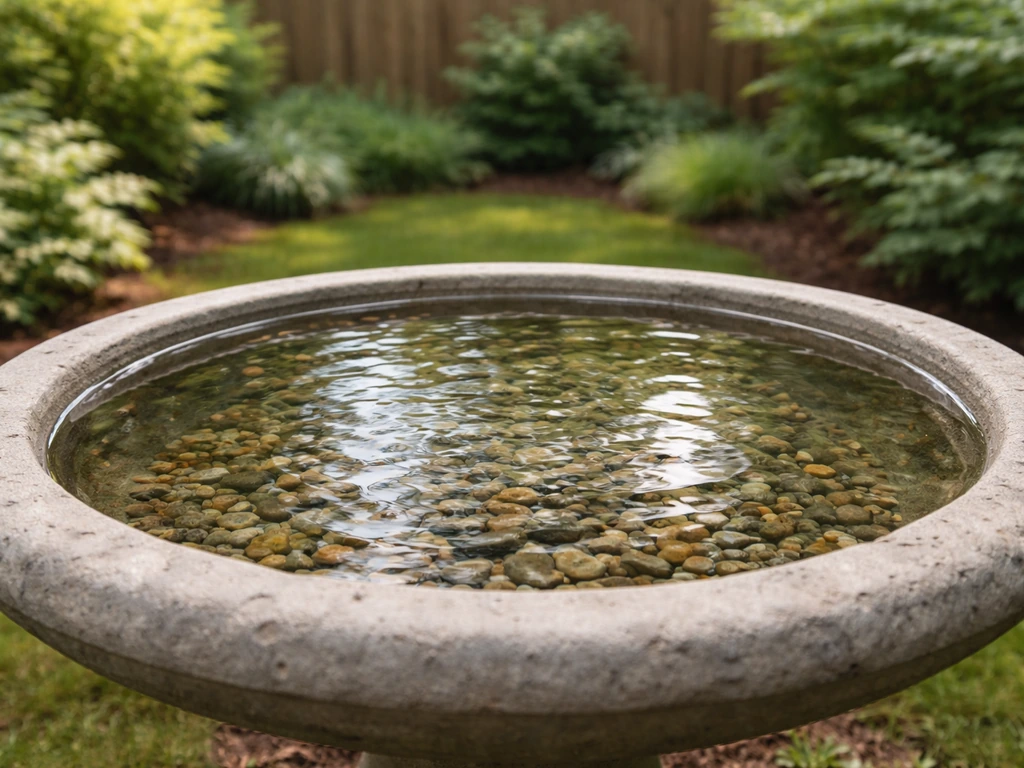
The most effective way to cat-proof a bird bath is to combine smart placement (at least 10 feet from any low cover), a raised or elevated basin, and a motion-activated sprinkler deterrent positioned nearby. No single trick does it alone, but those three together stop most cats cold while keeping birds happy to visit.
How to Make a Cat Proof Bird Bath: Step by Step

Marcus Henley
10 Jul 2026
Why cats are drawn to your bird bath in the first place
Understanding what pulls a cat to the bath helps you actually solve the problem instead of just guessing at fixes. If you still need the basics first, this guide on how to anchor a bird bath can help you start with a stable setup that animals cannot easily knock or climb. There are two main draws: water and birds.
A bird bath is a reliable, open water source that cats will drink from or paw at, especially in warm weather. Research from Vetstreet confirms that some cats are genuinely attracted to exposed water features because the movement and accessibility trigger their natural curiosity. On top of that, the regular parade of birds bathing and drinking turns your bird bath into an ambush point. Birds are focused on grooming and less alert, which makes them easy targets.
Cats figure this out quickly and return to the same spot day after day. The shallow, gently sloping edges that make a bird bath ideal for birds, as All About Birds recommends, also make the water easy for a cat to access. So the very design features that attract birds are the same ones attracting cats.
Placement and landscaping: your first and most important line of defense
Before you buy a single deterrent product, look at where your bird bath is sitting. If it's near a shrub, a fence line, a deck edge, or any low vegetation, you've essentially handed a cat a hunting blind. The fix is distance.
Multiple sources, including UF/IFAS Extension, the Washington Department of Fish and Wildlife, and Penn State Extension, all converge on the same number: keep at least 10 feet of open space between the bird bath and the nearest low cover. [Bob Vila puts it at 10 to 15 feet to be safe. ](https://www. bobvila.
com/articles/correct-birdbath-placement/) That open ground means a cat approaching from any direction is visible to birds before it can get close enough to strike. Penn State Extension advises placing a ground bath where birds can see a cat approaching, typically about 10 to 15 feet from the nearest hiding spot.
The RSPB reinforces this by recommending you specifically eliminate long grass and low bushes near the bath. This doesn't mean you need to nuke your whole garden. It means clearing a generous open radius around the bath itself. If your yard doesn't have that space, consider moving the bath to a more open area, even if it's less convenient or less pretty. If you need to know where the bird bath should be placed in Grounded, aim for an open, accessible spot with clear sightlines. Birds will still find it, and cats will hate the exposure.
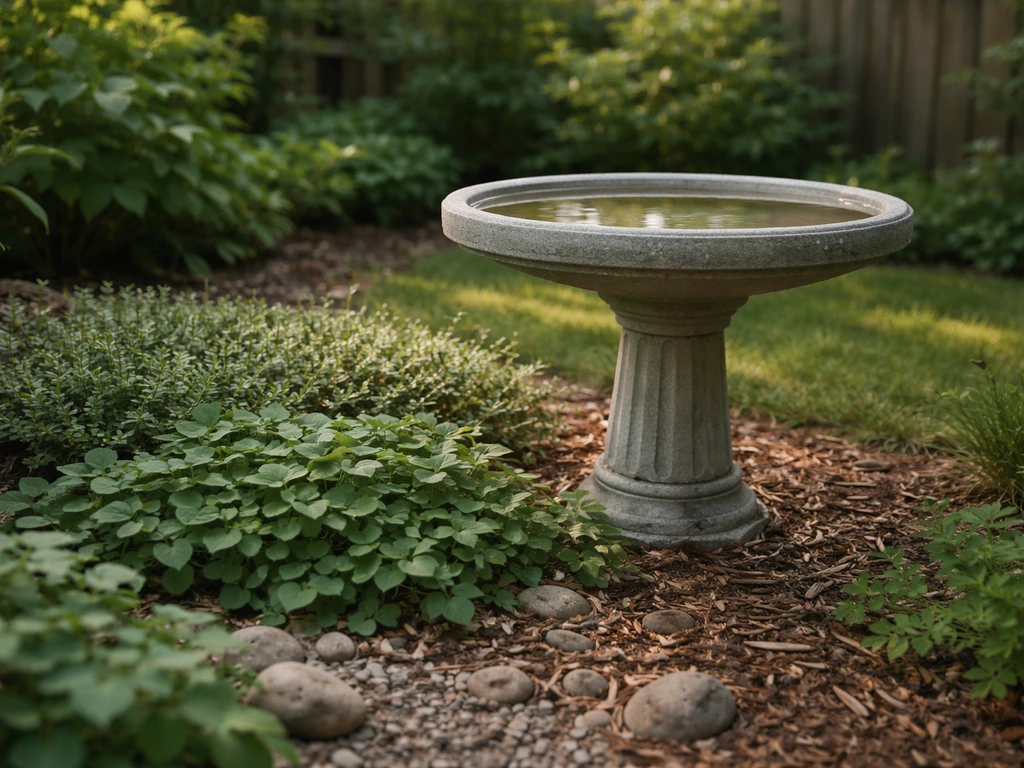
Elevation matters too. A pedestal or tall-stand bird bath is much harder for a cat to access than a ground-level one. If you're currently using a shallow ground dish, that's worth reconsidering. A bath raised 24 to 36 inches on a sturdy stand forces a cat to make a visible, committed jump rather than a subtle low-profile approach.
That alone deters many cats and gives perching birds a better sightline. You'll also want to make sure the bath is stable so it doesn't tip, which connects to broader setup concerns like leveling and anchoring the base properly. If you need help dialing in the setup, learn the steps for leveling a bird bath so it stays stable and comfortable for birds to use level a bird bath.
Physical barriers and covers that don't lock birds out
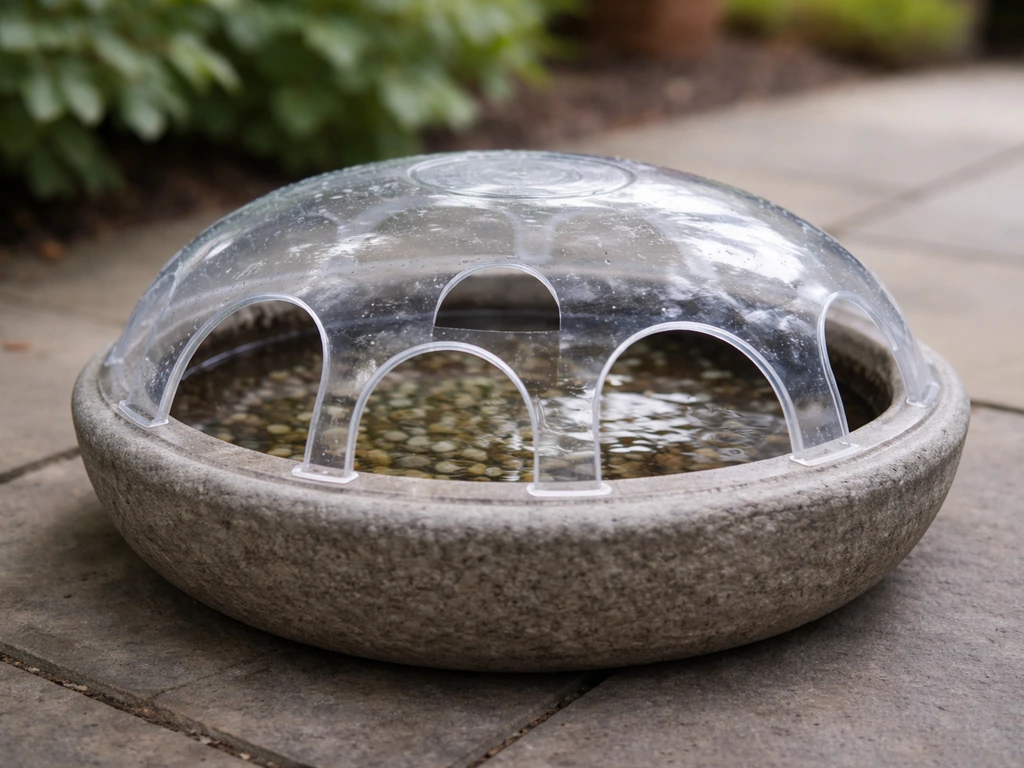
The tricky thing about physical barriers for bird baths is that anything aggressive enough to block a cat also risks making birds feel trapped or unable to escape. A full cage around the bath defeats the purpose. What actually works is a combination of height, open sightlines, and optional partial coverage.
The most impressive purpose-built option I've come across is the DENK Granicium cat-proof bird bath. It's designed specifically for this problem: the basin sits on a stainless-steel stand at a height that makes cat access difficult, and the open all-around design gives birds a full 360-degree view so they can see threats coming. It's marketed as species-appropriate and cat-safe, and the stainless-steel construction is genuinely durable. The tradeoff is cost, since it's a premium European product. But it shows what the target design looks like: elevated, open, structurally stable, with no corners a cat can use as a platform to launch from.
For a DIY version of this, you can use any bird bath with a thin, smooth pedestal that's hard for a cat to grip and climb. Slick metal or glazed ceramic pedestals work better than rough concrete for this reason. Some people add a cone-shaped baffle below the basin, similar to a squirrel baffle on a bird feeder pole. A 12-to-16-inch diameter cone mounted about 18 inches up the pole creates a physical barrier that most cats won't bother trying to navigate. It's inexpensive, it doesn't interfere with birds at all, and it works surprisingly well.
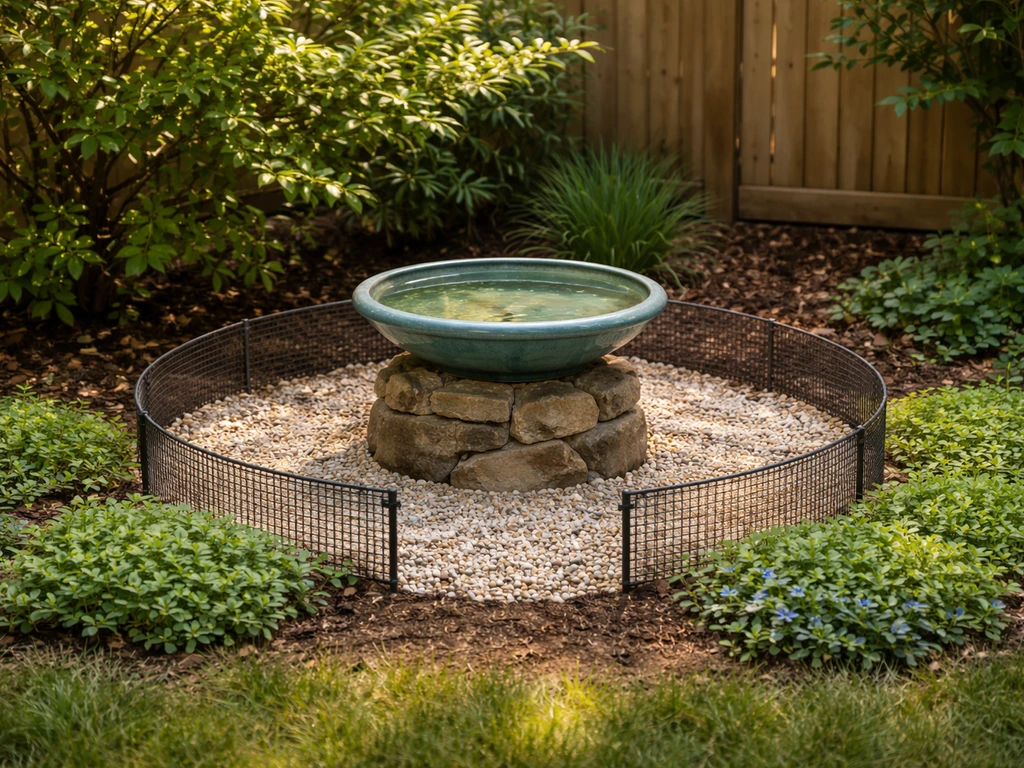
One thing to avoid: don't try to put wire mesh or netting over or around the basin itself. Birds can get tangled in it, and even if they don't, the enclosed feel tends to spook them away. The goal is to block the cat's approach path, not to cage the bath.
Deterrents that actually work (and won't harm your birds)
Motion-activated sprinklers are the single most effective deterrent I've seen for keeping cats away from bird baths, and they're humane for both cats and birds. Products like the Havahart Critter Ridder and the Sureguard ScareCrow work by releasing a short burst of water, about 5 seconds, when they detect movement. Havahart's version can spray up to 35 feet and lets you tune the sensitivity and spray radius so you're targeting cat-sized animals rather than triggering on every sparrow that lands.
Most cats absolutely hate being unexpectedly sprayed, and after a few encounters they stop coming back. The key word is 'most. ' Havahart notes that cats can habituate if the deterrent pattern becomes predictable, so vary the position of the sprinkler occasionally and make sure it's actually triggering when cats approach.
Position the sprinkler so it covers the cat's most likely approach path, not the bath itself. You don't want birds getting blasted every time they try to bathe. Usually pointing the sprinkler at the ground-level approach zone from the nearest cover works well. Birds flying in from above won't trigger a ground-level motion sensor.
Scent-based deterrents like citrus peel, coffee grounds, or commercial cat-repellent sprays can help as a secondary layer. Cats dislike strong citrus and certain essential oil smells. Scatter citrus peels around the base of the bath or use a commercial repellent granule around the perimeter. Just confirm whatever you use is labeled bird-safe and won't contaminate the water if it gets wet and runs toward the basin. Havahart's animal repellent guide confirms that scent deterrents are generally compatible with bird presence, but always check before applying anything close to open water.
Some people use ultrasonic deterrent devices. Results are mixed. Cats adapt to them faster than they adapt to sprinklers, and birds may react to the sound too, depending on frequency. I'd treat ultrasonic as a last resort or a supplementary tool rather than a primary strategy.
Keeping the bath clean and optimized so birds return (and cats lose interest)
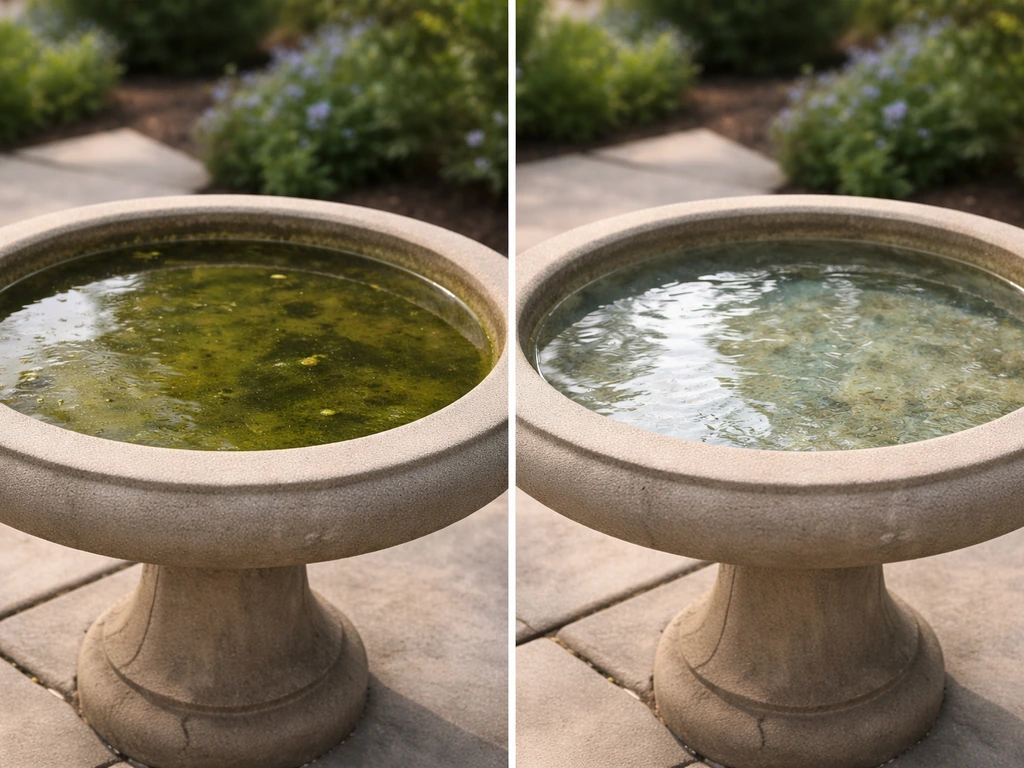
A fouled, algae-covered, stagnant bird bath actually draws more animals, not fewer. Cats are attracted to available water, and murky standing water can be just as appealing to them as clean water. Keeping the bath fresh and well-maintained is part of the cat-deterrent strategy, not just a bird-health issue.
Change the water daily in summer. If you want to keep water in your bird bath without it turning stale, change it regularly and keep the surface from getting stagnant how to keep water in bird bath. Penn State Extension recommends this specifically to prevent mosquito larvae from hatching, but it also keeps the water from going stagnant and smelly, which is one of the things that signals 'open water source' to wandering cats.
In winter, if you're running a de-icer or heated element, follow the manufacturer's electrical safety instructions carefully. A bird bath heater needs to stay submerged, must be connected to a properly grounded outdoor-rated outlet, and should never run dry. That's not a cat-proofing step, but a malfunctioning heater creates a safety hazard that makes the whole setup something you'd rather not have running unattended.
For deep cleaning, use a roughly 10% bleach solution (about 1 part bleach to 9 parts water) scrubbed in and thoroughly rinsed out, following guidance from Iowa DNR. Do this about once a month. Algae is a sign the cleaning cycle has fallen behind. As All About Birds notes, algae presence means it's time to clean before the problem compounds. A clean bath with fresh water is genuinely more attractive to birds and less appealing to cats as a casual drinking stop because there's no lingering scent or buildup to draw them in.
Keep the water depth at 1 to 2 inches maximum in the deepest part. This keeps it bird-accessible and also means there isn't a large pool of standing water that looks inviting to a thirsty cat. A gently sloped interior is ideal for birds, and the shallow depth reduces the bath's profile as a 'water feature' that attracts all animals equally.
DIY vs. buying a cat-proof setup: a clear comparison
| Approach | Cost | Effectiveness | Bird Impact | Best For |
|---|---|---|---|---|
| DIY baffle on existing pedestal | Under $20 | Good for most cats | None | Budget-conscious setups with existing bath |
| Relocate bath 10+ feet from cover | $0 | High (foundational fix) | Positive | Anyone, do this first regardless |
| Motion-activated sprinkler | $30–$70 | High, best option for persistent cats | Minimal if aimed correctly | Yards with regular cat visitors |
| Purpose-built cat-proof bath (e.g., DENK Granicium) | $150–$300+ | Very high, purpose-designed | Positive (open sightlines) | Serious birders wanting a long-term solution |
| Scent deterrents (citrus, repellent granules) | $5–$20 | Moderate, fades and needs reapplication | Generally safe | Supplementary layer, not a standalone fix |
| Ultrasonic deterrent | $20–$50 | Low to moderate, high habituation rate | Uncertain | Last resort only |
My honest recommendation: start with placement. Move the bath into the open, away from any shrubs or cover, and elevate it if it's currently at ground level. Add a motion-activated sprinkler for the approach zone. If you want to invest in a long-term, low-maintenance solution, a purpose-built raised bath with a smooth metal stand is worth the money. The DENK Granicium is the clearest commercial example of this design, but any bath with a slick, smooth pedestal and open sightlines achieves similar results.
Step-by-step troubleshooting when things still aren't working
If you've set things up and cats are still showing up or birds are still avoiding the bath, walk through this checklist before adding more products or deterrents. In addition to deterrents and maintenance, you should also stabilize the setup so your bird bath does not fall over keep bird bath from falling over.
- Measure the clearance. Is there actually 10 feet of open ground between the bath and the nearest low cover? Estimate generously. If not, move the bath or clear more vegetation.
- Check whether the motion sprinkler is triggering. Stand near the approach path yourself and confirm it activates. If the sensitivity is too low, it may be missing smaller animals.
- Rotate the sprinkler position. If a cat has been coming for more than a week and the sprinkler isn't stopping it, move the sprinkler to a different angle. Cats habituate to predictable threat positions.
- Look at the bath height. If cats are still reaching the water, add a baffle below the basin or switch to a taller, smoother pedestal. A rough concrete column is climbable; smooth metal is not.
- Check the water quality. If the bath looks or smells bad, clean it with the 10% bleach solution, rinse thoroughly, and refill with fresh water. Stagnant conditions attract animals of all kinds.
- Assess bird behavior separately from cat activity. If birds have stopped visiting but cats are gone, the deterrent setup is too aggressive or the bath feels exposed without nearby perching spots. Add a perch stake or small shrub about 15 feet away so birds have a staging area.
- Verify scent deterrents haven't washed into the basin. Rain or sprinkler overspray can carry deterrent granules into the water, which will keep birds away. Reposition any ground-level deterrents so they're outside the splash zone.
- In winter, confirm the de-icer is functioning and the bath isn't frozen solid. A frozen, unusable bath still attracts cats that smell residual bird activity. Either keep it running or drain and store it until thaw.
The system works best as layers: placement first, elevation second, active deterrent third, and maintenance ongoing. Adding one layer at a time also helps you identify which fix made the difference, so you can double down on what actually works in your specific yard rather than guessing.
FAQ
Can I place the sprinkler so it targets the birds only when cats come, or will it ruin bird visits?
Yes, but only if you relocate or redesign the approach zone. Sprinklers should be angled to spray the cat’s likely path on the ground near nearby cover, not the open water surface, because constant water hitting birds can make them avoid the bath even when cats are deterred.
What if the motion sprinkler doesn’t seem to stop the cat after a week?
Most cats will, but you still want a fallback. If a cat ignores the sprinkler, check for coverage gaps at night or after dark when motion patterns change, then adjust sensitivity and reposition the unit so the approach path from the nearest low cover is fully in range.
Will caging the bird bath with netting make it cat proof without scaring birds?
Avoid blocking the water with tight netting or a fully enclosed cage. Birds need a clear escape route and safe landing space, so use approaches that preserve openness, such as raising the basin, using a smooth pedestal, or adding a cone-style barrier below the basin.
What order should I apply these fixes in so I know what actually works?
Start with placement and elevation, then test one deterrent at a time. If you change everything at once, it’s hard to tell whether the cat problem is solved by distance, the raised stand, or the sprinkler. A simple sequence is move it to open ground, then elevate, then add sprinkler, then clean and adjust water depth.
My yard is small, how can I create the 10-foot open space if there isn’t room?
If the bath is in a spot with limited open yard, the key is to create sightlines, not just “some distance.” Trim the specific low shrubs and long grass that would conceal a crouching cat, and aim for the largest exposed radius you can maintain around the bath.
Are citrus peels and commercial repellent safe to use if rain washes it toward the basin?
Yes, but don’t assume “more coverage” is better. Fine particles of scent products can wash into the basin, and strong fragrances can cause birds to hesitate if they land where the smell is strongest. Always choose bird-labeled products and apply only around the perimeter or base, never inside the drinking area, and reapply after heavy rain.
Do ultrasonic devices or scent deterrents work long term, or will cats adapt?
Scent and ultrasonic devices often become inconsistent once cats learn the pattern of your yard. If cats keep returning, focus on removing approach cover and raising the basin, then use sprinkler deterrence as the primary layer rather than relying on sound or smell alone.
How do I set the water depth for birds while making it less appealing to cats?
Use a 1 to 2 inch depth target, and check the interior slope so birds can reach water without having to climb onto the lip. If the bath is too deep, it becomes an easier “pounce” target for cats and also increases the chance of stagnant water.
If I clean the bird bath daily, do I still need to worry about cat-proof placement?
Cleaning helps, but water freshness alone is not cat-proofing. Even a clean bath can draw cats if it’s accessible from cover, so clean on schedule and keep water shallow, then address placement and physical access.
How can I tell whether my bird bath is stable enough to stop a cat from knocking it?
If your bath is on a smooth stand and still wobbles, a cat can use that instability as leverage. Re-level the base, tighten connections, and anchor the pedestal so it cannot rock, then re-check for tipping after filling the basin.
Next Article
How to Keep Water in a Bird Bath Full
Step-by-step tips to keep a bird bath full, stop evaporation leaks, prevent algae, mosquitoes, and freezing.