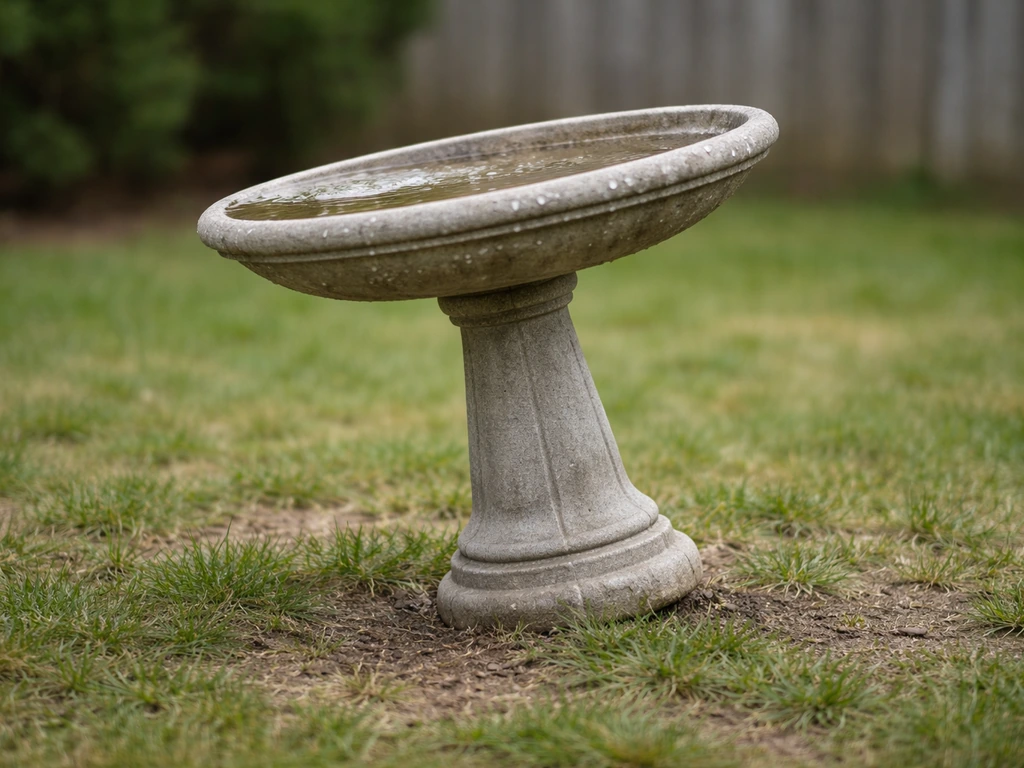
The fastest fixes are shade, shallower water, and a simple top-up routine. Most bird baths lose water to evaporation and splashing, not leaks, so the solution is usually about placement and habit rather than replacing the bath entirely. Get the bath out of direct afternoon sun, keep the water no deeper than two inches, and plan a quick refill every day or two in summer. Do those three things and you'll stop fighting a constantly dry bath.
How to Keep Water in a Bird Bath Full

Marcus Henley
6 Jul 2026
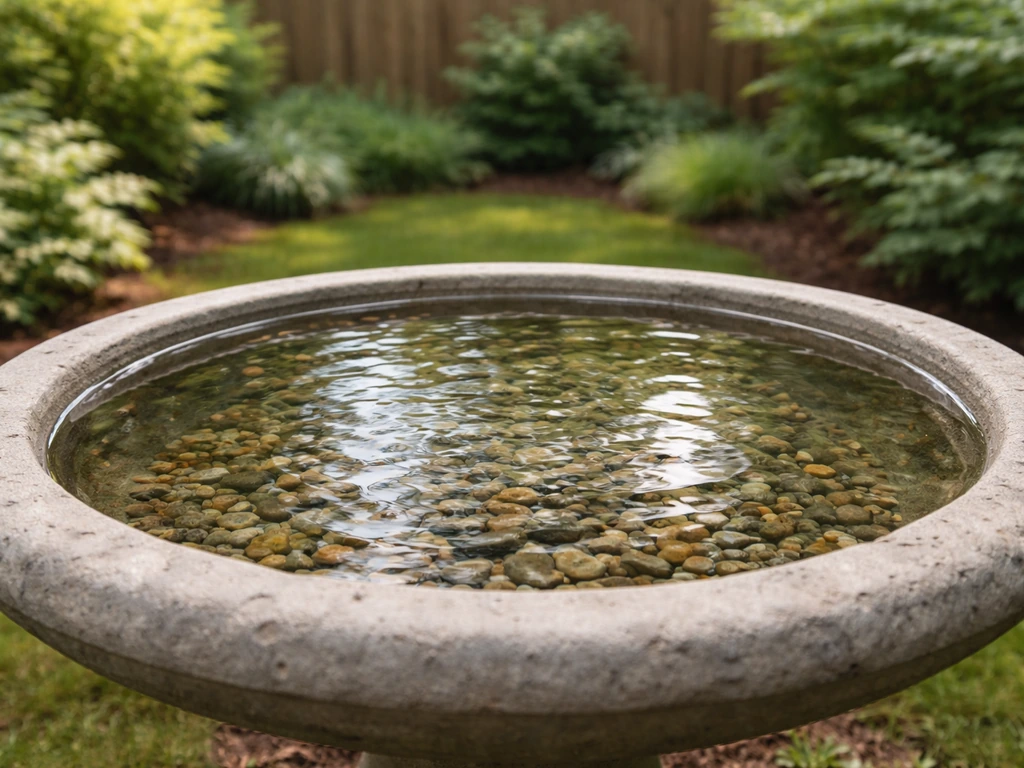
Why your bird bath keeps running dry
Before you fix the problem, it helps to know which one you're actually dealing with. There are four main culprits: evaporation, splashing, wind, and genuine leaks. You can also improve reliability by making sure the bird bath is anchored securely so it does not shift or tip in wind and splashing genuine leaks. In hot weather, evaporation alone can drop water levels by half an inch or more per day, especially if the bath sits in full sun. Wind accelerates that loss fast because moving air pulls moisture off the surface more aggressively. Splashing from active bathers (and birds really do throw water around) adds up surprisingly quickly. Leaks are less common but do happen, especially in concrete baths that have developed hairline cracks or in heated units where a seam has failed.
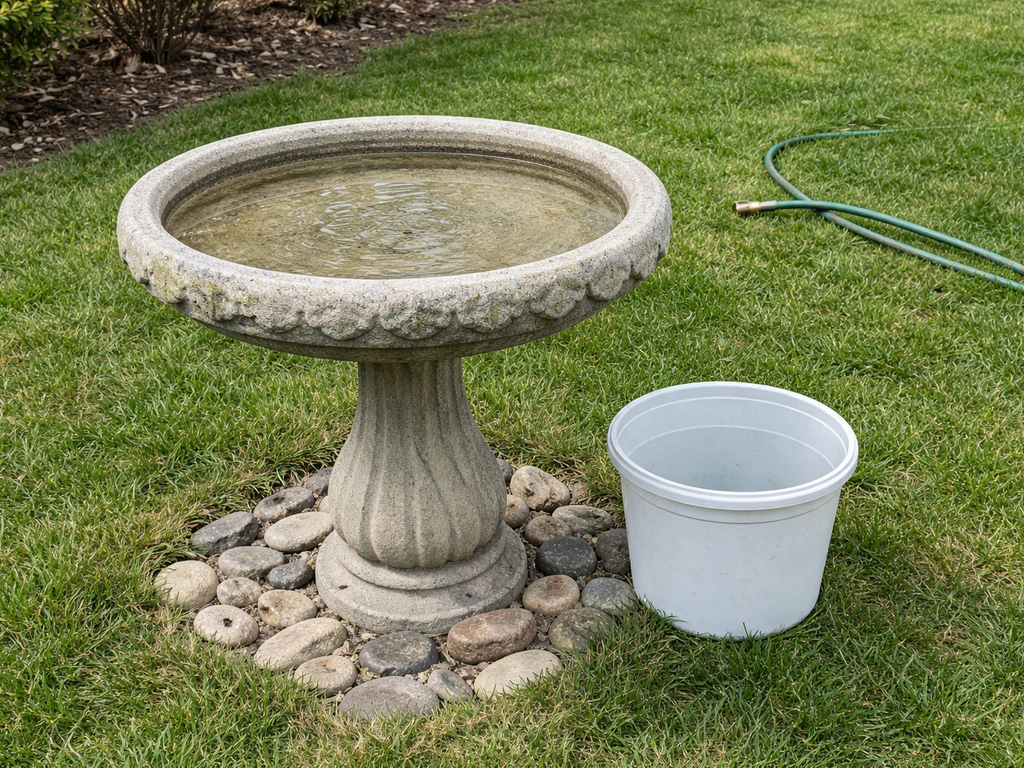
If you're not sure whether you have a leak or just heavy evaporation, do a simple bucket test. Fill a 5-gallon bucket with water, set it next to the bird bath, and mark the water level in both containers. Check back after 24 to 48 hours. The bucket will lose some water to evaporation, and that's your baseline. If the bird bath lost significantly more water than the bucket did, you likely have a leak. If they dropped by roughly the same amount, evaporation is your main problem and placement changes will help the most.
For leak troubleshooting specifically: check for visible cracks along the basin and seams, especially on older concrete baths or heated units. Hairline cracks in concrete can often be sealed with a waterproof pond sealant. Heated bird bath manuals commonly list cracked bases or failed seams as the primary leak source, so pay close attention to those areas if yours is a plugged-in model.
Make topping up easier with smarter routines
The single most effective thing you can do right now is build a quick refill habit. If you need a practical, step-by-step way to get on top of keeping your bird bath filled, focus on a consistent refill routine and the right water depth topping up. I keep a dedicated watering can near my bird baths so refilling takes thirty seconds rather than dragging a hose across the yard. If you're the type who travels or gets busy, a drip line from an outdoor spigot with a simple timer works well, especially for multiple baths. Some people attach a float valve (the same type used in livestock troughs) to maintain a consistent water level automatically. It's a small DIY project that pays off if you're serious about keeping the water at a constant depth.
In summer, plan to top up every one to two days at minimum. During a heat wave with wind and low humidity, daily refills may not be enough. Keep an eye on the level during those conditions and adjust. The good news is that if you've optimized placement and depth (more on that below), you'll be adding much less water each time.
Cut your water loss with smart placement and bath setup

Shade is your biggest lever
Placing your bird bath in shade is the most impactful single change you can make to reduce evaporation. Shaded water stays cooler, and cooler water evaporates more slowly. Michigan State University Extension specifically recommends shade placement to reduce how often you need to fill the bath. Morning sun with afternoon shade is an ideal setup in most climates: birds get the warmth early in the day, and you avoid the peak evaporation hours. A spot near shrubs or low tree branches also gives birds a quick escape route from aerial predators, which makes the bath more attractive to them as a bonus. If your bird bath keeps tipping, add a stable, level base and use anti-slip pads so it stays steady when birds land and splash keep a bird bath from falling over.
Keep the water shallow
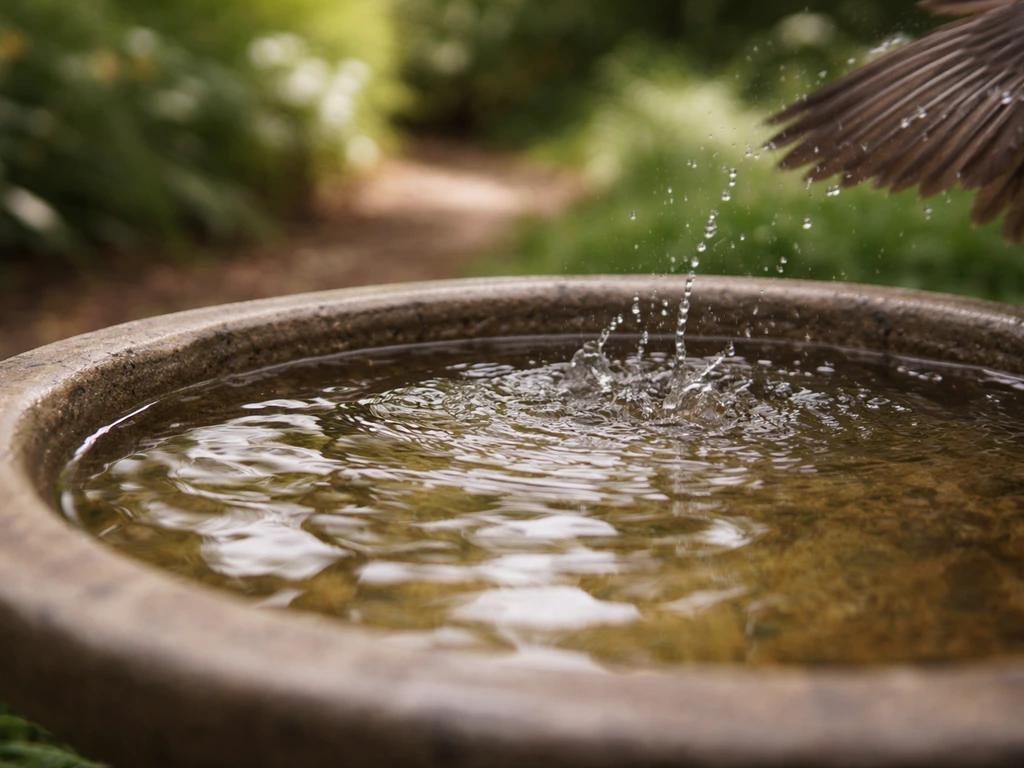
A deeper basin doesn't mean a better bird bath. Birds splash their wing water on their backs rather than submerging, so two inches in the center is plenty for most species. The Audubon Society recommends a gentle slope with a maximum depth of two to three inches. Keeping the water at one to two inches means less total water to evaporate, less to splash out, and safer bathing for smaller birds. If your basin is deeper than that by design, placing a flat stone or two in the center raises the effective floor and gives small birds a safe standing spot.
Think about wind exposure
Wind dramatically speeds up evaporation. If your bath is sitting in an exposed, windy spot, even shade won't fully compensate. A location with some wind-blocking from a fence, hedge, or wall on the prevailing wind side can make a real difference. Just make sure you're not creating a spot where cats can hide and stalk the bath. Low, dense cover right beside the bath is a predator problem; wind-blocking a few feet away is fine.
Choosing the right bath type and add-ons
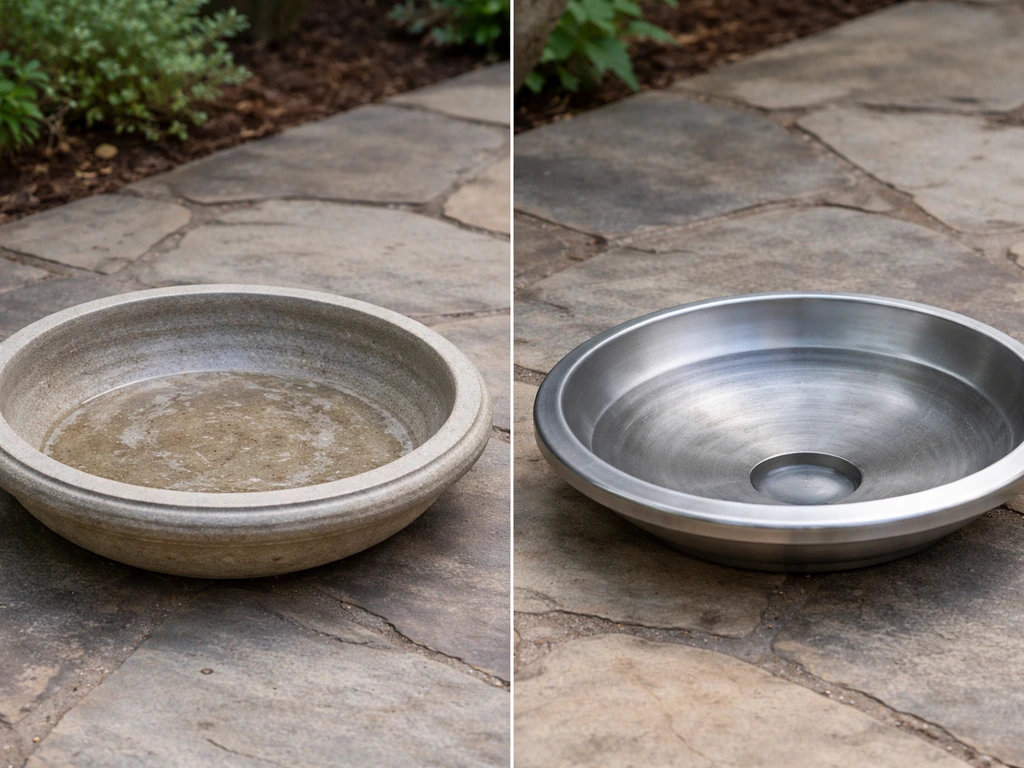
The style of bird bath you choose affects how hard it is to keep full. Here's a practical comparison of the main options and how they hold up on water retention.
| Bath Type | Water Retention | Best For | Main Drawback |
|---|---|---|---|
| Standard concrete/ceramic pedestal | Moderate (can develop cracks over time) | Most backyard setups, durability | Porous materials may wick water; crack risk |
| Plastic/resin basin | Good (non-porous) | Budget-friendly, lightweight | Tips over easily in wind; less stable |
| Recirculating/fountain style | Good (movement reduces algae, some evap added) | Attracting birds with sound and movement | Pump needs regular cleaning; electricity cost |
| Solar-powered recirculating | Good (no wiring needed) | Off-grid or hard-to-reach locations | Flow stops on cloudy days |
| Heated bird bath (winter use) | Good when functioning properly | Year-round access in cold climates | Higher upfront cost; check thermostat function |
Recirculating and fountain-style baths are worth the investment if you're tired of manually topping up, because moving water also deters mosquitoes. Solar-powered versions have come down in price and work well in sunny spots. If you're in a cold-winter climate, a heated bird bath is a game-changer for winter birding: thermostatically controlled models like the API BDT250 only activate when water temperature approaches freezing, so they don't run constantly or waste electricity.
Add-ons worth considering
- Misters and drippers: Attract more bird species and create gentle movement that slows algae growth. Hummingbirds especially love misters.
- Floating covers: Products like floating ball covers or shade screens can reduce evaporation by up to 95% but are generally better suited to larger water features than a typical bird bath basin.
- Float valves: A simple auto-fill valve attached to your outdoor water supply maintains a constant level without any daily effort.
- Shade cloth: If natural shade isn't available, a purpose-made shade sail mounted nearby can replicate the cooling effect.
Avoid creating new problems when you top up frequently
Staying ahead of algae
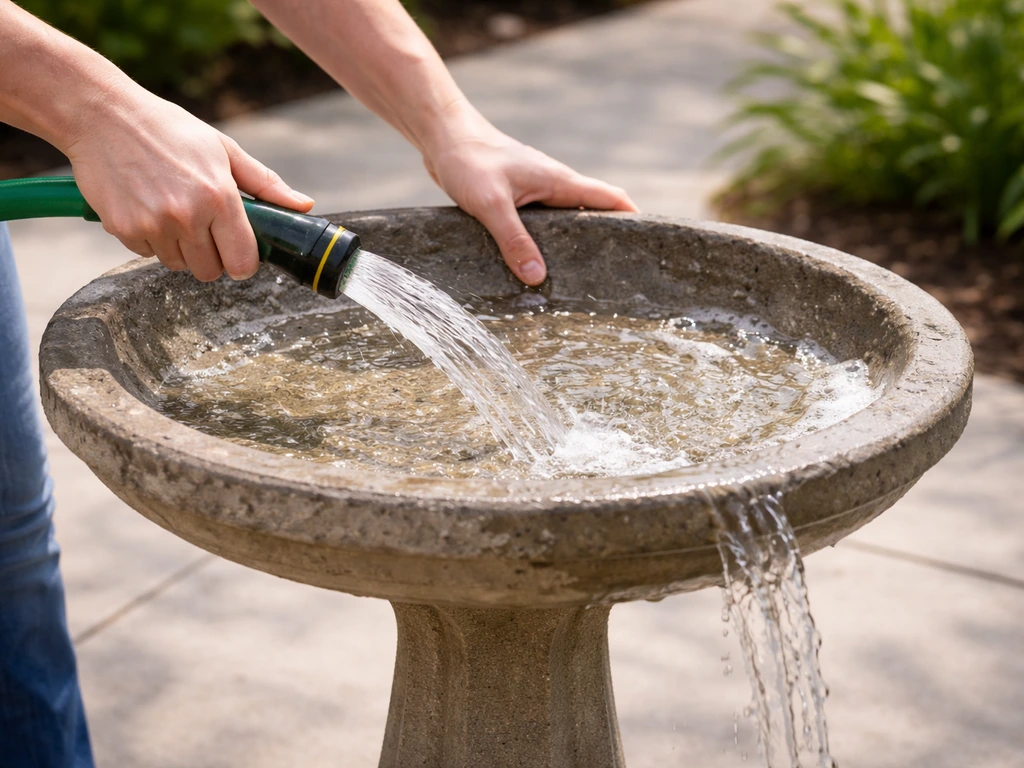
The more often you add fresh water, the more you're feeding the conditions that algae love, especially if the bath is in any sun at all. The fix is simple: change the water completely at least every three days, and scrub the basin with a stiff brush and hot water as soon as you see any green film starting. All About Birds recommends scrubbing with hot water and a good scouring brush at first sign. Penn State Extension suggests a weekly scrub with a brush and mild soap, followed by a thorough rinse. Do not use bleach as a routine treatment near birds; hot water and physical scrubbing are genuinely effective and much safer.
Keeping mosquitoes out
Standing water that sits for more than a few days becomes a mosquito breeding ground. The CDC recommends emptying and scrubbing bird baths at least once a week to break the mosquito life cycle, and Washington State DOH recommends changing the water at least twice a week in peak mosquito season. Wisconsin DHS specifically recommends replacing the water in birdbaths and fountains at least twice a week during mosquito season Wisconsin DHS recommends replacing the water in birdbaths and fountains at least twice a week. If you're using a recirculating pump, the moving water already discourages mosquito egg-laying. If you have a still-water bath, consider adding a Bti (Bacillus thuringiensis israelensis) mosquito dunk. It kills mosquito larvae before they develop and has very low toxicity to birds, other wildlife, and people. One dunk in a standard bath can last up to 30 days.
Winter and freezing
If you're in a cold climate, water access in winter matters a lot to birds because natural water sources freeze solid. A heated bird bath or a submersible bird bath water heater keeps the water liquid without you having to break ice every morning. The key is keeping it filled: a heated bath running low on water will run the heating element in air, which can burn it out. In winter especially, maintaining the water level is both a bird-care issue and an equipment-protection issue.
Your maintenance schedule and what to do if it still won't stay full
A simple routine that works
- Daily (summer): Visually check the water level and top up if needed. Takes 30 seconds with a watering can kept nearby.
- Every 2 to 3 days: Do a full water change. Dump the old water, give the basin a quick rinse, and refill with fresh water. This alone handles most algae and mosquito prevention.
- Weekly: Scrub the basin with a stiff brush and hot water or a mild soap solution. Rinse thoroughly before refilling.
- Monthly: Inspect the basin for cracks, chips, or rough spots that could harbor bacteria. Check any pump, dripper, or heater equipment for function.
- Seasonally: In late fall, deep-clean the basin and prepare for winter (switch to heated model or add a heater if needed). In early spring, inspect for winter damage before first use.
If the water level keeps dropping despite your best efforts
Run the bucket test described earlier to confirm whether you have a leak or just heavy evaporation. If it's a leak: inspect the basin carefully for hairline cracks, especially around the base and any seams. Concrete baths can be sealed with waterproof pond sealant or hydraulic cement. If the basin is beyond repair, a replacement basin or liner is often cheaper than a full new bath. For heated units, check the base and the cord entry point specifically, as those are the most common failure spots noted in product manuals.
If it's pure evaporation that's just too high to manage: move the bath to a shadier, more sheltered spot. If that's not possible, add a dripper or recirculating pump to keep the water cooler and in motion. In extreme climates with very low humidity and regular high winds, you may simply need to accept daily refills during peak summer, or invest in an auto-fill setup. Getting the bath leveled properly also matters here since a tilted basin loses water unevenly and may appear to lose more than it really does. If you want the bath to fill evenly, make sure the base is level before you adjust your depth or refill schedule leveled properly. If you're also dealing with the bath shifting or tipping, that's a separate stability problem worth addressing alongside water retention.
The bottom line: most bird bath water loss problems are solved by moving the bath to shade, keeping water depth at one to two inches, and building a two-to-three-day change habit. If you want to reduce refill frequency fast, use this same shade-and-shallow approach and focus on how to get to bird bath grounded conditions that limit evaporation. Everything else is optimization on top of those basics.
FAQ
How can I tell if my bird bath is losing water to evaporation or to splashing?
Use a quick “timing check” before you buy parts. If water drops mostly in the afternoon and evenings, it is usually evaporation and wind. If it drops right after birds splash, it is splashing, so lowering the water depth and adding a gentle slope helps more than adding a shade screen.
If I keep refilling daily, do I still need to empty and scrub the bird bath?
Don’t rely on topping up without changing the water. Even if algae are slow to appear, you should fully replace the water about every three days in warm weather, then scrub at first sign of green film, because constant partial refills keep feeding algae and scum.
My bath is deeper than two inches, what’s the safest way to keep enough water without risking smaller birds?
For most common bird bath designs, raise the floor without making it deeper. Place flat stones in the center so small birds can stand while keeping the effective water depth around one to two inches, then confirm the stone does not wobble and tip when birds land.
What should I watch for if I use a drip line or float valve to keep the bath full?
If you install an auto-fill (drip line or float valve), keep the outlet from directly splashing water into the basin rim. Aim for a steady inflow rate, then set a simple “maximum level” mark so the bath does not overflow and waste water or create extra splashing loss.
I suspect a leak, but I do not see cracks, how do I confirm and find the source?
Do not seal the problem based only on appearance. After a dry period, do a bucket test again for 24 to 48 hours, then inspect the base and any seams thoroughly, especially around cord entry points on heated units, since those are common failure spots.
Can I use a shade cloth to reduce evaporation, and how do I avoid still getting high water loss?
Yes, but placement can make the shade “look good” while still losing water. Morning sun with afternoon shade is ideal, but also check for wind channeling between fences, walls, or planters, since moving air can still pull moisture off the surface quickly.
In winter, how do I prevent a heated bird bath from failing when water drops below the ideal level?
If you’re using a heated bath, keep it from running low. A low-water condition can expose the heating element to air and shorten its life, so use a refill routine (or auto-fill) that maintains the waterline whenever temperatures drop.
My bird bath tips in wind, does fixing stability alone solve water-loss problems?
Treat the “anti-tipping” steps as separate from the “water retention” steps. A stable base and anti-slip pads stop uneven loss from tipping, but if the bath still loses water fast, you will still need shade, shallow depth, and a higher frequency refill schedule during heat waves.
If I want fewer refills without constant manual work, which bath type helps most?
A simple rule is to reduce the water exposed to sun and surface area. Use shade plus shallow depth first, then consider recirculating or fountain styles if manual refilling is too hard, because moving water can also reduce mosquito egg-laying in still-water baths.
Do mosquito dunks affect how long the water stays full or change my refill schedule?
If you use mosquito dunks or other larvicide products, follow the product’s timing so you do not under-treat or over-treat during warm periods. Check the bath weekly, and replace the dunk when it’s designed to expire, especially if birds are splashing heavily and changing water conditions.
Next Article
How to Keep a Bird Bath From Falling Over: Fixes That Work
Step-by-step fixes to stabilize a wobbly bird bath, level the base, anchor safely, and prevent tipping on any ground.