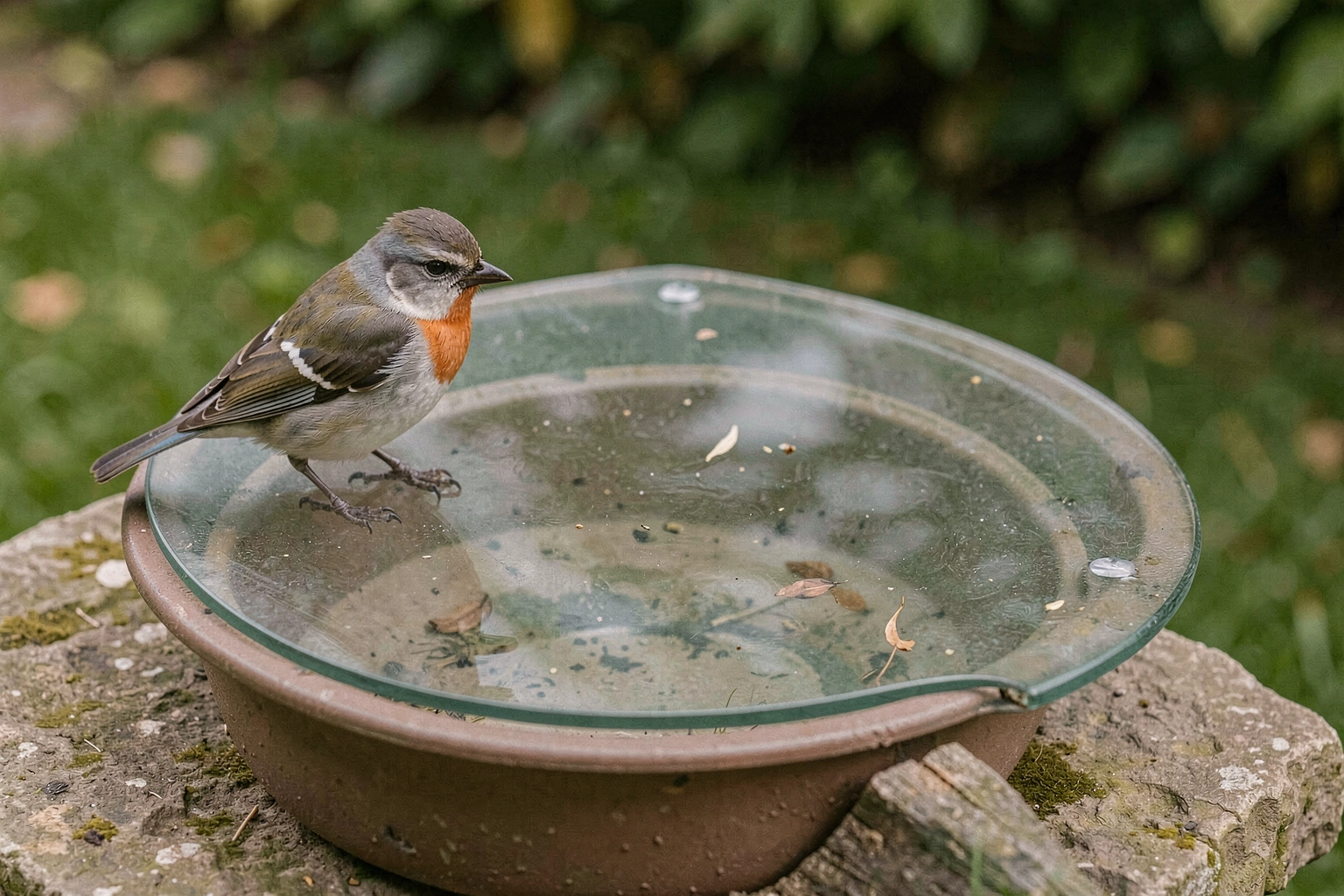
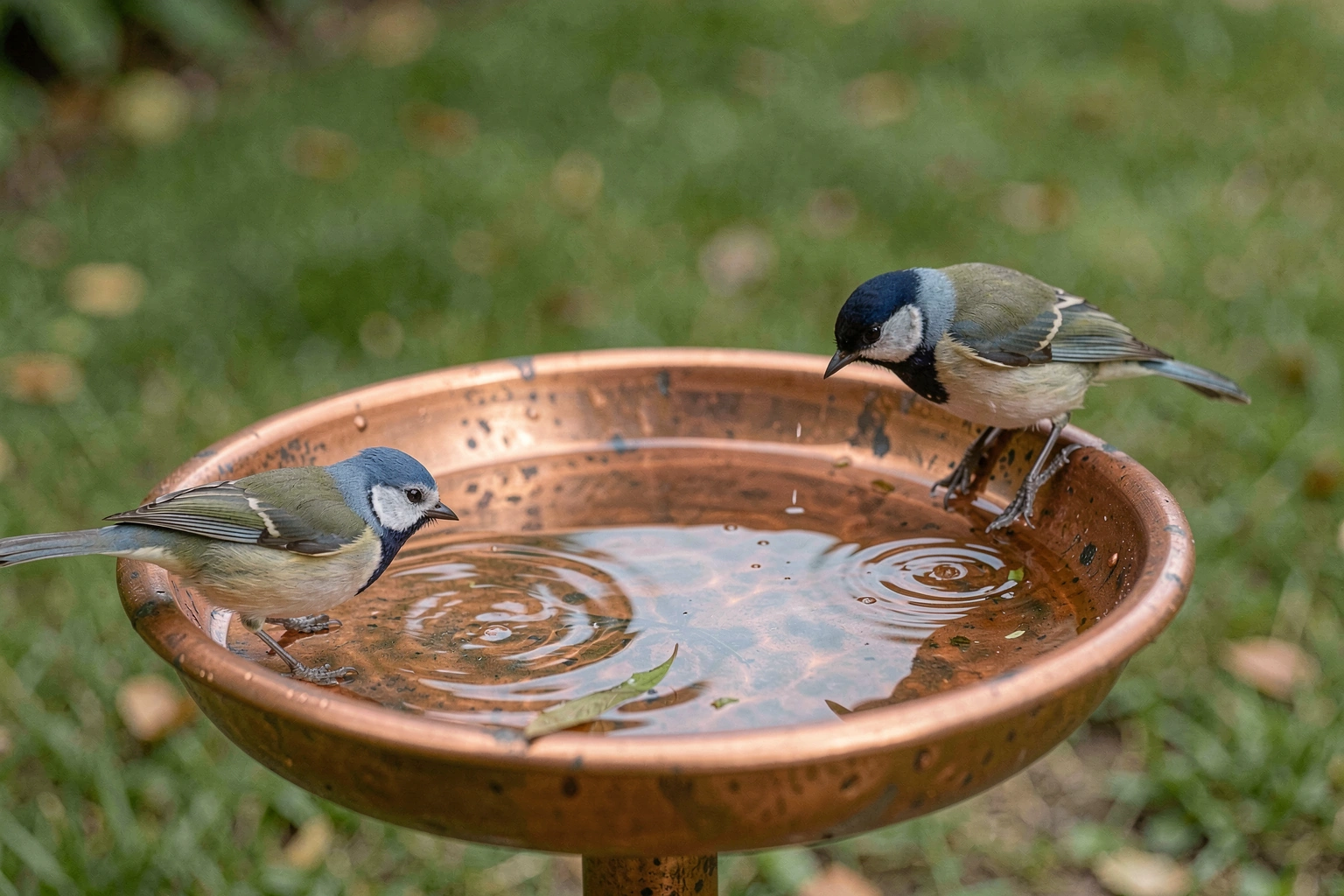
Short answer: no, not as-is. Bare copper bird baths are not reliably safe as a drinking water source for birds. Copper ions can leach into the water, and if birds drink enough of it, that exposure can cause real harm. The good news is that the fix is straightforward once you understand what's actually going on.
Why Copper Is a Problem in the First Place
Copper is a metal that reacts with water, especially when conditions favor it. When water sits in a bare copper basin, copper ions dissolve into it. Birds that drink from the bath are then ingesting those ions along with the water.
In small amounts, copper is actually an essential trace mineral for birds, just like it is for us. But the gap between a trace amount and a toxic amount is narrower than most people realize. Avian physiology is sensitive to heavy metal accumulation, and copper toxicity in birds can affect the liver, kidneys, and nervous system. The Merck Veterinary Manual notes that copper poisoning in birds can cause serious systemic damage, and the effects can build up over time rather than appearing all at once after a single exposure.
The key mechanism is this: copper doesn't just sit there passively. It oxidizes and corrodes, releasing copper ions into whatever liquid it contacts. The rate at which that happens depends heavily on the water chemistry and conditions around it.
What Makes Leaching Worse
Not all copper baths leach at the same rate. Several factors push leaching higher, and if your setup hits more than one of them, the risk compounds.
Acidic water is the biggest driver. The lower the pH of the water, the faster copper dissolves. Rainwater is naturally slightly acidic, and if you're in an area with acid rain or soft water, that matters. Even tap water in some regions runs acidic enough to accelerate leaching.
Warm water speeds up the reaction too. A copper bath sitting in full sun on a hot summer afternoon is leaching more copper than the same bath in cool shade. If you live somewhere with hot summers, this is worth taking seriously.
Long contact time is the third major factor. Water that sits in a copper bath for 24 hours or more has had much more time to pick up copper ions than freshly added water. This is why daily water changes matter so much if you're trying to reduce risk.
Acidic cleaning products are a trap many people fall into. Using vinegar or citrus-based cleaners to scrub a copper bath feels natural because they cut through grime well. But acid-based cleaners actively strip copper from the surface and leave the metal more reactive afterward. Avoid them entirely on bare copper.
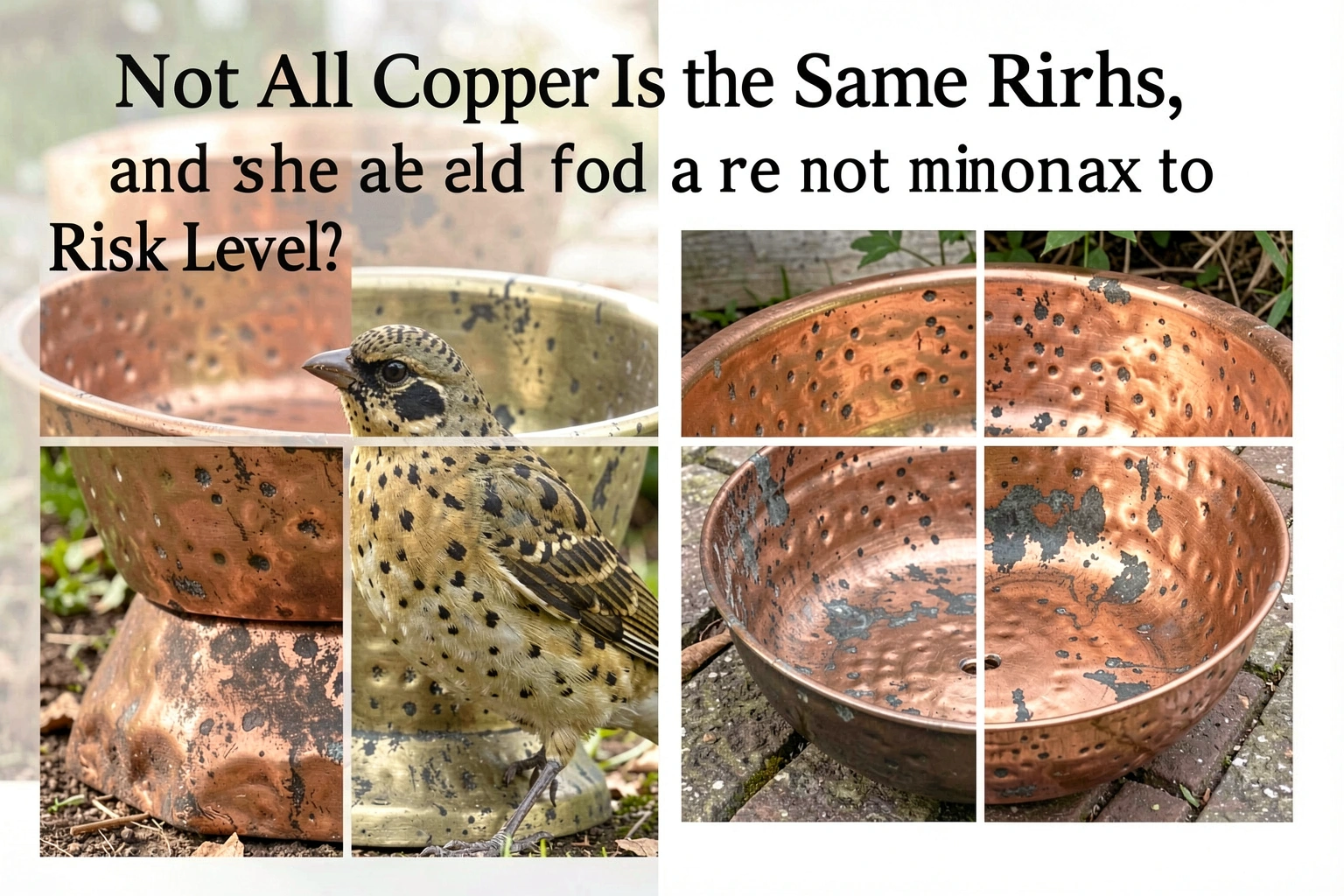
Not All Copper Is the Same Risk Level
The form of copper matters a lot, and this is where things get more nuanced.
Pure copper is the baseline risk. It leaches copper ions into water, and that's the primary concern. It's not the worst option on this list, but it's still not safe for drinking water contact.
Brass and bronze are copper alloys, meaning they're copper mixed with other metals. Brass typically contains zinc, and bronze can contain zinc, tin, or lead depending on the formulation. This is actually worse than pure copper for bird baths, because zinc toxicity in birds is a serious and well-documented problem. Zinc poisoning can cause vomiting, weakness, and organ damage in birds, and it can happen faster than copper toxicity. If your bird bath is brass or bronze rather than pure copper, treat it as a higher-risk item.
Copper-plated items are a mixed bag. If the plating is intact and thick, the underlying metal may not be exposed. But plating wears, chips, and scratches over time, especially with regular cleaning. Once the plating is compromised, you're exposing whatever base metal is underneath, which may be worse than copper.
Patinated copper (the green layer you see on aged copper) is often misunderstood. Many people assume the green patina is a protective seal that stops leaching. It isn't. Patina is a layer of copper oxides and carbonates, and while it does slow some surface reactions, it doesn't stop copper from leaching into water, especially when the bath is filled and the patina is submerged. Some patina compounds are themselves soluble in water. Don't rely on patina as a safety feature.
Practical Fixes If You Already Own a Copper Bath
If you have a copper bird bath you love and don't want to part with, you have a few real options. None of them involve just hoping for the best.
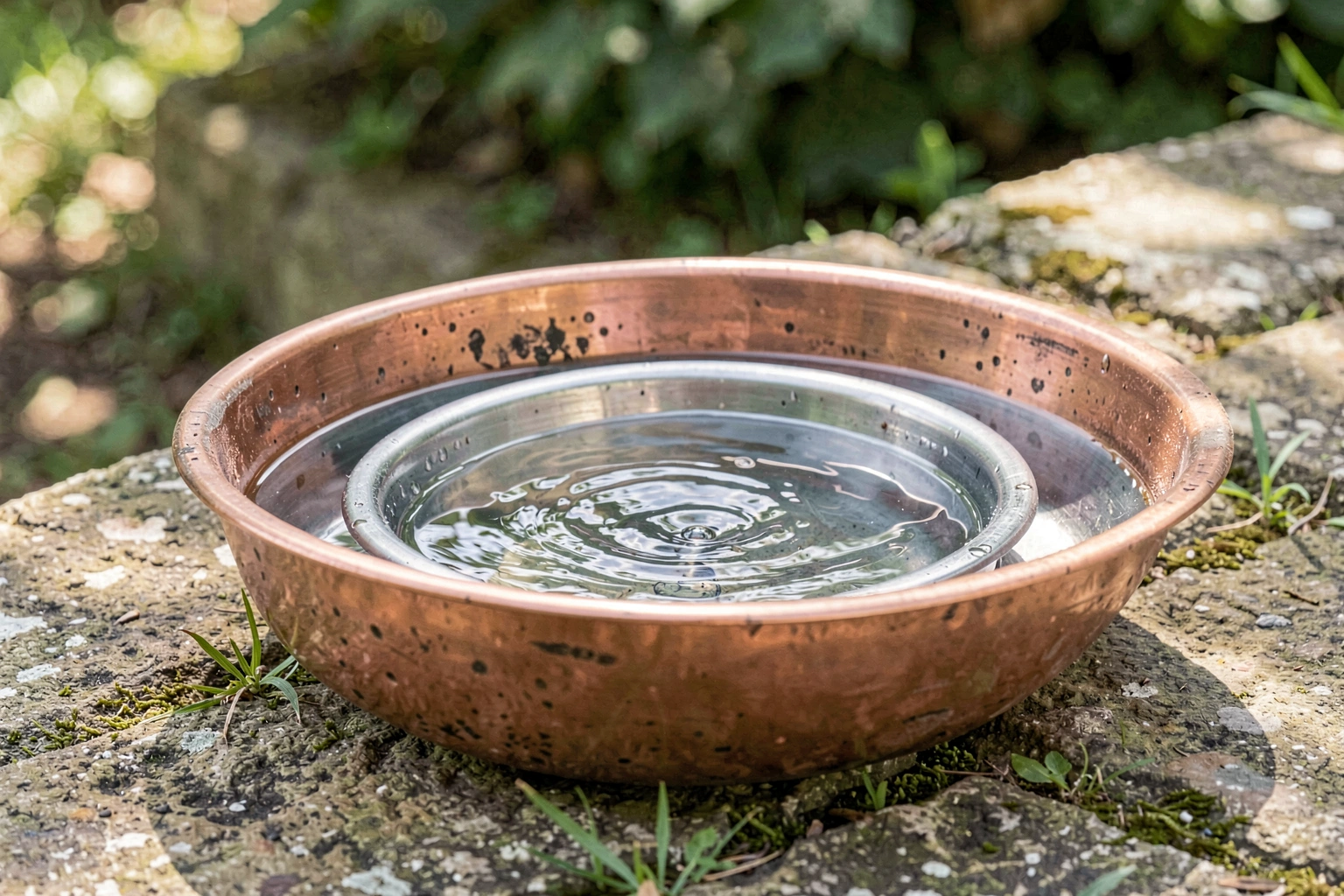
The most reliable fix is a liner. A food-grade plastic liner or a fitted stainless steel insert placed inside the copper basin creates a physical barrier between the water and the copper. Birds drink from the liner, not the copper. This works well as long as the liner stays intact and covers all water-contact surfaces. Check it regularly for cracks, chips, or gaps where water could sneak behind it.
A stainless steel tray insert is the more durable version of this approach. You can find shallow stainless steel trays at kitchen supply stores or online that fit inside many standard bird bath basins. Stainless steel is non-reactive, easy to clean, and won't leach anything into the water. This is the option I'd go with if I were keeping a copper bath for its looks.
Dedicate the copper bath to decoration only. If you have a beautiful antique copper bath that you don't want to modify, the cleanest solution is to stop using it as a water source and treat it as a garden ornament. Put a separate, non-reactive bath nearby for the birds to actually drink from and bathe in.
Replace it outright. If the copper bath is a newer purchase and you're not attached to it aesthetically, the simplest path is to swap it for a non-reactive option. This removes the risk entirely without any ongoing maintenance workarounds.
Safe Alternatives Worth Knowing About
If you're shopping for a replacement or a first bird bath, here's a quick comparison of the materials that are genuinely safe for birds.
| Material | Safety | Durability | Maintenance | Notes |
|---|---|---|---|---|
| Glazed ceramic | Excellent | Good (can crack in hard freezes) | Easy to clean | Look for food-safe glaze; avoid unglazed interiors |
| Stainless steel | Excellent | Very high | Very easy | Lightweight, won't rust, ideal for liners or full baths |
| Enamel-coated metal | Excellent (when intact) | Good | Easy | Check for chips; exposed base metal can be reactive |
| Concrete (sealed) | Good | Very high | Moderate | Seal with food-safe sealant; rough surface can harbor bacteria |
| Plastic (food-grade) | Good | Moderate | Very easy | UV degradation over time; replace when cracked or discolored |
For most backyard birders, a glazed ceramic or stainless steel bath is the easiest win. Glazed ceramic looks beautiful, is widely available, and is simple to scrub clean. Stainless steel is nearly indestructible and the easiest to sanitize. Both are available at garden centers and online in a wide range of styles and price points.
When buying, look for baths described as food-safe or with food-grade glazing. Avoid anything with decorative metallic paint on the interior, unglazed terracotta (which is porous and hard to keep clean), or any bath where the interior material isn't clearly identified.
Keeping Any Bird Bath Clean and Safe
Regardless of what material your bird bath is made from, maintenance is what keeps it genuinely safe. Here's what actually matters in practice.
Change the water every one to two days. Stagnant water is a problem for multiple reasons: it allows bacteria and algae to grow, it gives mosquitoes a breeding site, and in a copper bath it gives ions more time to accumulate. Fresh water daily is the single most effective thing you can do.
Scrub the basin weekly with a stiff brush and plain water or a diluted bleach solution (about one part bleach to nine parts water). Rinse thoroughly before refilling. For copper or lined baths, avoid any acid-based cleaners including vinegar, lemon juice, or citrus-based products. For non-reactive baths like ceramic or stainless steel, a mild dish soap works fine as long as you rinse well.
If you're using a liner inside a copper bath, inspect it every time you clean. Look for cracks, peeling edges, or any spot where water could be pooling behind the liner and contacting the copper. Replace the liner at the first sign of damage.
In winter, if you're in a freeze-prone area, bring ceramic baths inside or use a bath heater rated for the material. Freeze-thaw cycles crack glazed ceramic and can damage liners. A cracked liner in a copper bath is worse than no liner at all.
For patina on copper baths you're keeping as decorative items, you can leave it alone since you're not using it as a water source. If you're using a copper bath with a liner and patina is building up on the exterior, that's fine. Just don't scrub patina off the interior of a bare copper bath and then fill it with water, because freshly exposed copper leaches faster than aged copper.
Signs of Copper Toxicity in Birds
Knowing what to watch for matters, especially if you've had a copper bath in use for a while before reading this.
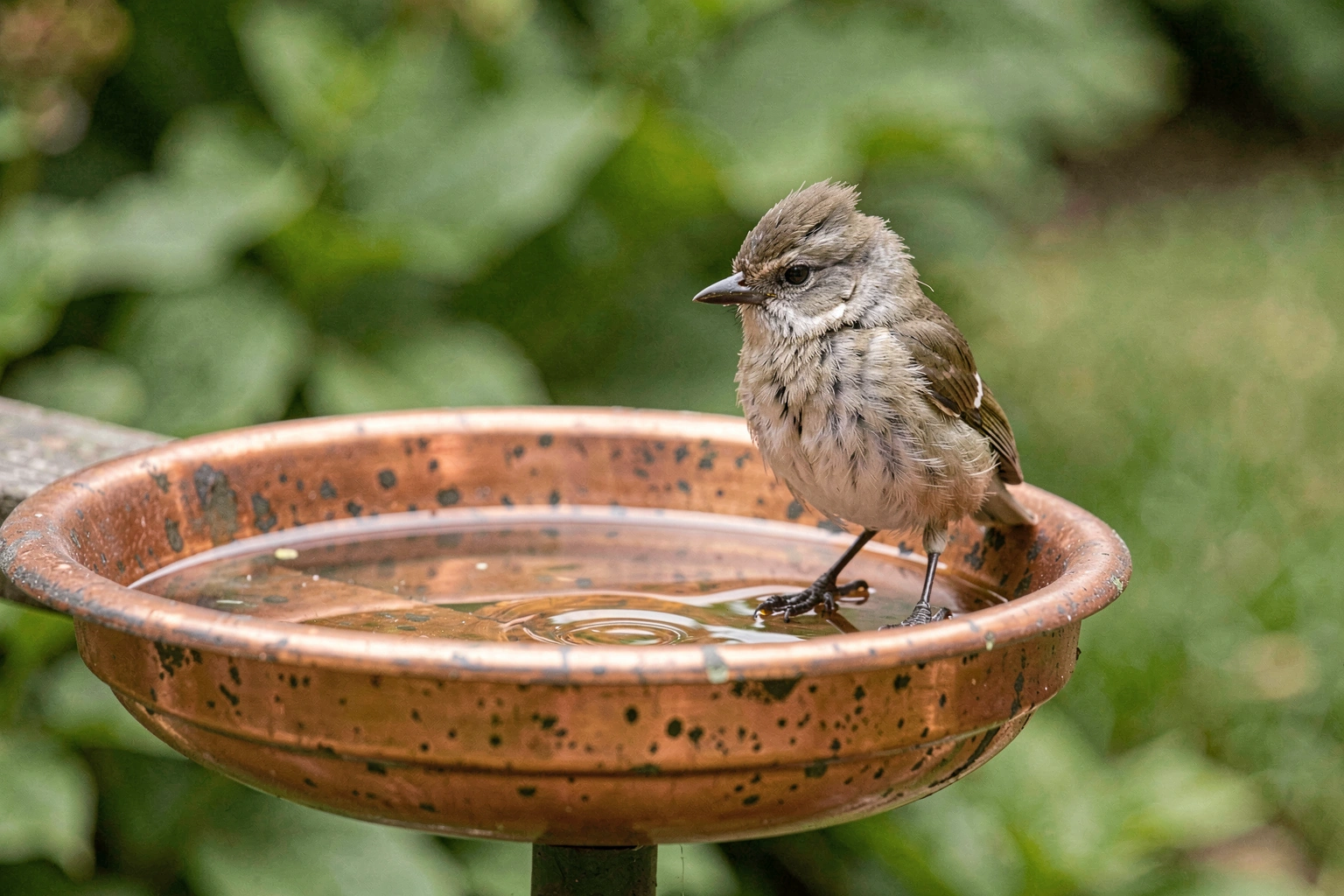
Copper toxicity in birds tends to show up gradually rather than as a sudden crisis. The signs to watch for include lethargy and reduced activity, weakness or difficulty perching, tremors or loss of coordination, decreased appetite, and digestive issues like regurgitation or loose droppings. In more severe cases, you may notice discoloration of droppings or visible distress.
The tricky part is that these symptoms overlap with many other health issues in birds, so copper toxicity isn't always the first thing that comes to mind. If you have a pet bird (a parrot, canary, or similar) that has been drinking from or near a copper water source and starts showing any of these signs, mention the potential copper exposure to your avian vet immediately. For wild birds visiting your garden, if you notice multiple birds appearing lethargic or unwell around the same bath, that's a signal to remove the water source and clean the bath thoroughly before refilling.
If you suspect copper poisoning in a pet bird, contact an avian veterinarian as soon as possible. Copper toxicity is treatable, especially when caught early, but it requires professional diagnosis and care. Don't wait to see if the bird improves on its own.
Your 24-Hour Action Plan
Here's what to do today if you have a copper bird bath in use right now.
First, empty the bath and don't refill it until you've decided on your approach. Don't leave birds drinking from it while you think it over.
Second, identify what your bath is actually made of. Is it pure copper, brass, bronze, or copper-plated? Check the product description or look for any markings on the base. Brass and bronze baths move to the top of the replacement list.
Third, decide: replace or retrofit? If you're attached to the bath aesthetically, order a stainless steel tray insert or food-grade liner that fits the basin. If you're not attached, start shopping for a glazed ceramic or stainless steel replacement.
Fourth, if you're retrofitting, install the liner before refilling. Make sure it covers every surface the water will contact and sits flush with no gaps.
Fifth, set a reminder to change the water every day or every other day going forward. This is the single easiest ongoing step you can take.
Sixth, if you have a pet bird that has been drinking from a copper source and is showing any of the symptoms above, call your avian vet today rather than waiting.
Seventh, if you're keeping the copper bath as a decorative piece, place a separate non-reactive bath within a few feet of it so birds have a safe water source nearby. They'll find it quickly.
The bottom line is that copper bird baths are a real but manageable risk. You don't need to panic, but you do need to act. A lined copper bath or a non-reactive replacement gives your birds clean, safe water without any ongoing worry, and that's worth the small effort it takes to get there.